Table of Contents
- What Is Spark Sensory Solutions?
- Understanding Different Types of Sensory Input
- Spark Sensory Solutions for Tactile Exploration
- Portable Sensory Kits
- Visual Sensory Tools
- Spark Sensory Solutions Ball Pits
- Why Ball Pit Size Matters
- Deep Pressure and Proprioceptive Equipment
- Spark Sensory Solutions for Movement
- Spark Sensory Indoor Therapy Gym
- Climbing and Sliding for Gross Motor Play
- Sensory Seating From Spark Sensory Solutions
- Rocking and Movement Seating
- Sensory Seating Is Not the Same as Positioning Seating
- Auditory Sensory Activities
- Sensory Wall Activities
- Spark Sensory Solutions for Autism
- Spark Sensory Solutions for Special Education Classrooms
- Building a Classroom Sensory Break Area
- Spark Sensory Solutions for Occupational Therapy
- Spark Sensory Solutions for Home
- Creating a Complete Sensory Room With Spark Sensory Solutions
- Avoid Overfilling a Sensory Space
- Choosing Spark Sensory Solutions Products
- Sensory Equipment Safety
- Observe How the User Responds
- Shop Spark Sensory Solutions at eSpecial Needs
- FAQs
Spark Sensory Solutions offers sensory equipment, therapy tools, active play products, sensory room equipment, seating, and portable sensory kits for children and adults with different sensory and developmental needs. The collection includes options for tactile exploration, movement, visual engagement, deep pressure, auditory activities, gross motor play, and quieter sensory experiences.
The Spark Sensory Solutions collection at eSpecial Needs includes products for homes, special education classrooms, occupational therapy programs, sensory rooms, clinics, and other supportive environments.
Rather than choosing sensory equipment based only on a diagnosis, families and professionals can use the collection to build around the individual's interests, sensory preferences, physical abilities, environment, and goals.
What Is Spark Sensory Solutions?
Spark Sensory Solutions includes a broad range of sensory and adaptive products designed to create opportunities for movement, touch, visual exploration, sound, pressure, relaxation, and active participation.
The collection includes products such as:
- Sensory kits
- Ball pits
- Indoor therapy gyms
- Squeeze and tactile toys
- Deep pressure equipment
- Rocking and sensory seating
- Vibro acoustic seating
- Climbing equipment
- Visual sensory tools
- Activity wall panels
- Therapy mats
- Movement equipment
- Sensory room products
Because the collection covers several types of sensory experiences, products can be selected individually or combined into a larger sensory environment.
For an introduction to different sensory systems and activities, read Sensory Development Activities and Tools for Children With Special Needs.
Rectangle Budget Ball Pit

$1,420.00
$1,595.00
The Rectangle Budget Ball Pit is a durable, lower-cost ball pit designed for sensory play, therapy activities, and active movement in homes, schools, clinics, and care settings. It offers the function and durability of larger recreational ball pits while providing… read more
Understanding Different Types of Sensory Input
Sensory support is not one single type of activity.
A sensory environment may include experiences involving:
- Touch
- Movement
- Balance
- Body awareness
- Light
- Color
- Sound
- Pressure
- Vibration
Different people may actively seek certain sensations while avoiding others.
One child may enjoy spinning and climbing but dislike loud sounds. Another may prefer tactile toys and slow visual effects while avoiding significant movement.
This is why sensory equipment should be chosen around the individual rather than simply trying to provide more sensory stimulation.
Large Razzle-Dazzle Marble LED Sensory Wall Panel - Visual & Tactile Stimulation

$1,500.00
$1,650.00
The Large Razzle-Dazzle Marble LED Sensory Wall Panel is an interactive sensory wall panel designed to support visual, tactile, and auditory stimulation in sensory rooms, therapy spaces, classrooms, and care environments. With more than 2,000 colored marbles, built-in LED lighting,… read more
Spark Sensory Solutions for Tactile Exploration
Tactile activities provide opportunities to explore sensations through the hands and skin.
Children may enjoy:
- Squeezing
- Stretching
- Manipulating
- Pressing
- Rolling
- Feeling contrasting textures
The Spark Sensory Squeeze Kit brings together several squeeze and manipulation activities in one portable bag.
A sensory kit can be useful because it provides several choices without requiring a large permanent sensory setup.
Tactile activities may fit into:
- Classroom sensory breaks
- Calm corners
- Therapy sessions
- Home routines
- Travel
- Waiting periods
Explore Tactile Stimulation for additional touch based sensory products.
Portable Sensory Kits
Not every sensory activity needs a dedicated room.
Portable kits can make sensory tools easier to organize and move between environments.
The Visual Sensory Kit, for example, combines several handheld visual products in a drawstring storage bag.
Portable sensory kits may be especially practical for:
- Teachers moving between classrooms
- Therapists visiting different locations
- Families traveling
- Classroom calm corners
- Community outings
- Waiting rooms
- Small sensory spaces
For additional ready to use collections, browse Sensory Bundles and Kits.
Visual Sensory Tools
Visual sensory products use light, color, movement, patterns, or reflective effects to create visual interest.
Depending on the product, visual sensory activities may encourage:
- Visual attention
- Tracking
- Cause and effect exploration
- Choice making
- Quiet observation
Spark Sensory Solutions offers options ranging from handheld visual toys to larger sensory room equipment.
Visual stimulation should remain adjustable whenever possible. Some users enjoy colorful moving light, while others prefer dimmer and simpler environments.
Explore Visual Stimulation for additional visual sensory products.
Visual Sensory Kit

$48.95
For children who delight in the dazzle of lights and movement, we present the Visual Sensory Kit from eSpecial Needs. This convenient bundle contains a collection of handheld sensory tools for those who respond to more visual sensory stimulus. Perfect… read more
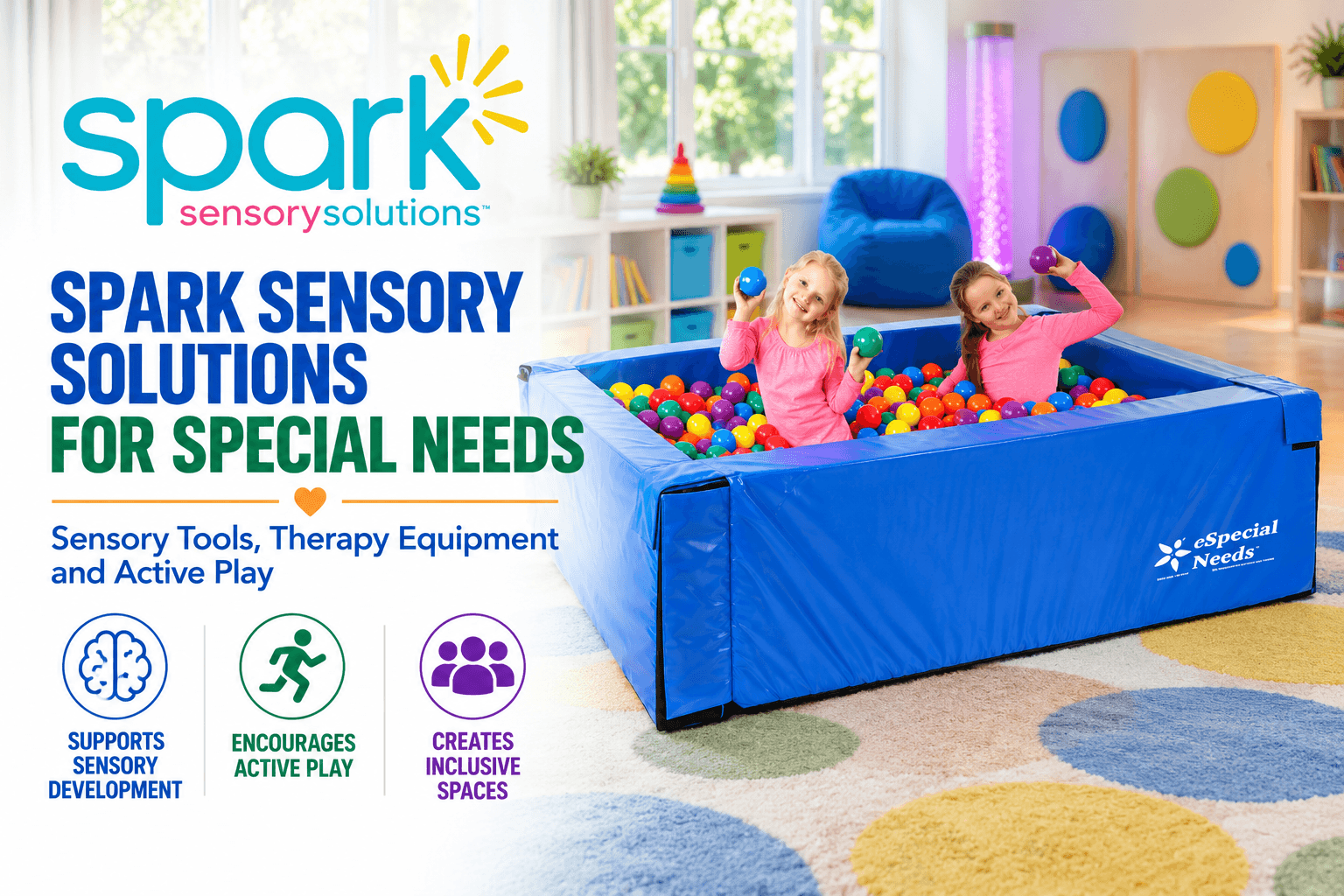
Spark Sensory Solutions Ball Pits
Ball pits combine tactile exploration with movement and gross motor play.
The Mini Budget Ball Pit provides a more compact option for sensory play in homes, schools, clinics, and therapy environments.
Ball pit activities may involve:
- Crawling
- Reaching
- Moving through resistance
- Throwing
- Catching
- Searching for objects
- Color activities
- Body awareness
- Social play
For schools or therapy spaces with more room, larger ball pit options may allow for expanded active play.
The article Sensory Ball Pits for Regulation: What to Know provides additional guidance on choosing and using ball pits.
Mini Budget Ball Pit

$1,353.13
The Mini Budget Ball Pit is a durable, lower cost ball pit designed for sensory play, therapy activities, and active engagement in homes, schools, clinics, and care settings. It offers a smaller footprint than larger recreational ball pits while still providing… read more
Why Ball Pit Size Matters
A larger ball pit is not automatically better.
Consider:
- Available floor space
- Number of users
- Child size
- Mobility
- Supervision
- Ball depth
- Cleaning
- Accessibility
A smaller ball pit may fit more easily into a classroom sensory room or clinic, while a larger model may make more sense in a dedicated sensory or recreation space.
Giant Budget Ball Pit

$1,718.95
$1,935.00
The Giant Budget Ball Pit is a durable, large-format ball pit designed for sensory play, active movement, and therapy use in homes, schools, clinics, and care settings. It offers the size and function of a larger recreational ball pit for… read more
Deep Pressure and Proprioceptive Equipment
Proprioceptive activities involve muscles and joints and often include pushing, pulling, squeezing, carrying, or resistance.
Some individuals actively seek this type of input.
The Single Squeeze Machine uses padded rollers with adjustable resistance to provide pressure during supervised use.
Equipment of this type may be incorporated into an individualized sensory or occupational therapy routine when appropriate.
Deep pressure products should not be treated as universally calming. User preference, positioning, tolerance, and professional recommendations should be considered.
Explore Deep Pressure Products for additional options.
Spark Sensory Solutions for Movement
Movement is a major part of the Spark Sensory Solutions collection.
Products may provide opportunities for:
- Swinging
- Climbing
- Rocking
- Crawling
- Sliding
- Balancing
- Bouncing
- Spinning
These activities can involve vestibular input, proprioception, gross motor skills, motor planning, and body awareness.
Movement preferences vary substantially. Some individuals actively seek movement, while others become dizzy or uncomfortable quickly.
For additional movement options, browse Vestibular Motion.
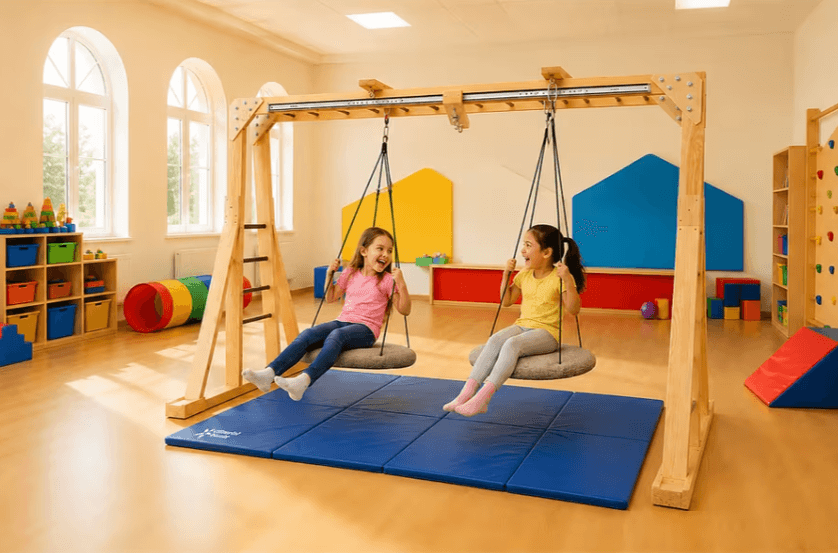
Spark Sensory Indoor Therapy Gym
Larger sensory and therapy environments may benefit from equipment that supports several types of movement within one area.
The Spark Sensory Indoor Therapy Gym provides a structure designed to accommodate different attachments and movement activities.
Depending on the selected setup, therapy gyms can create opportunities for:
- Swinging
- Climbing
- Rotational movement
- Linear movement
- Gross motor activities
A therapy gym requires considerably more planning than a small sensory toy.
Before installation, consider:
- Room dimensions
- Clearance
- User size
- Equipment attachments
- Protective surfaces
- Supervision
- Manufacturer installation requirements
Schools designing a larger sensory space can also read School Sensory Room Design for Autism Support.
Climbing and Sliding for Gross Motor Play
Climbing equipment can combine sensory input with active motor planning.
The Climb Roller Slide combines a climbing platform with a roller slide and adjustable setup.
Activities involving climbing and sliding may create opportunities to practice:
- Motor planning
- Bilateral coordination
- Transitions between positions
- Body awareness
- Gross motor movement
- Reaching
Active equipment requires sufficient space and supervision.
For additional indoor movement ideas, read Soft Play Equipment for Sensory, Motor and Indoor Play Support.
Sensory Seating From Spark Sensory Solutions
Sensory seating can provide another way to incorporate sensory experiences into everyday spaces.
The Vibro Acoustic Bean Bag combines a bean bag style seating surface with an integrated speaker system that can transmit music and vibration when used with the appropriate amplifier.
Vibro acoustic seating may create an experience involving:
- Sound
- Vibration
- Comfortable seating
- Quiet leisure activities
- Music
This type of product may fit into a sensory room, reading area, home relaxation space, or therapy environment.
The intensity and type of sound should be adjusted according to the user's preferences.
Rocking and Movement Seating
Spark Sensory Solutions also offers rocking seating designed to combine seating with controlled movement.
Rocking can be enjoyable for individuals who prefer repetitive movement while sitting.
Potential environments include:
- Sensory rooms
- Therapy clinics
- Reading areas
- Home sensory spaces
- School break areas
Rocking equipment should be placed where there is adequate room for movement and where nearby furniture will not interfere with use.
For more information about different types of sensory seating, read Sensory Seating vs Positioning Chairs for Kids.
Sensory Seating Is Not the Same as Positioning Seating
This distinction is important.
Sensory seating is generally selected for movement, comfort, tactile experiences, or other sensory preferences.
Adaptive positioning chairs are designed around physical support needs such as:
- Pelvic stability
- Trunk support
- Head positioning
- Alignment
- Postural control
A bean bag or rocker should not automatically replace a prescribed positioning chair.
The article Sensory vs Postural Support Seating for Children explains the difference in greater detail.
Auditory Sensory Activities
Spark Sensory Solutions also includes products that encourage sound exploration.
The Paradiddle Percussion Activity Wall Panel combines several musical activities into a wall mounted format.
Auditory activities can create opportunities for:
- Rhythm
- Cause and effect
- Listening
- Turn taking
- Creative play
- Sound exploration
Wall mounted equipment can also save floor space in classrooms and sensory rooms.
Not every user enjoys sound based activities, so quieter alternatives should remain available for students with auditory sensitivities.
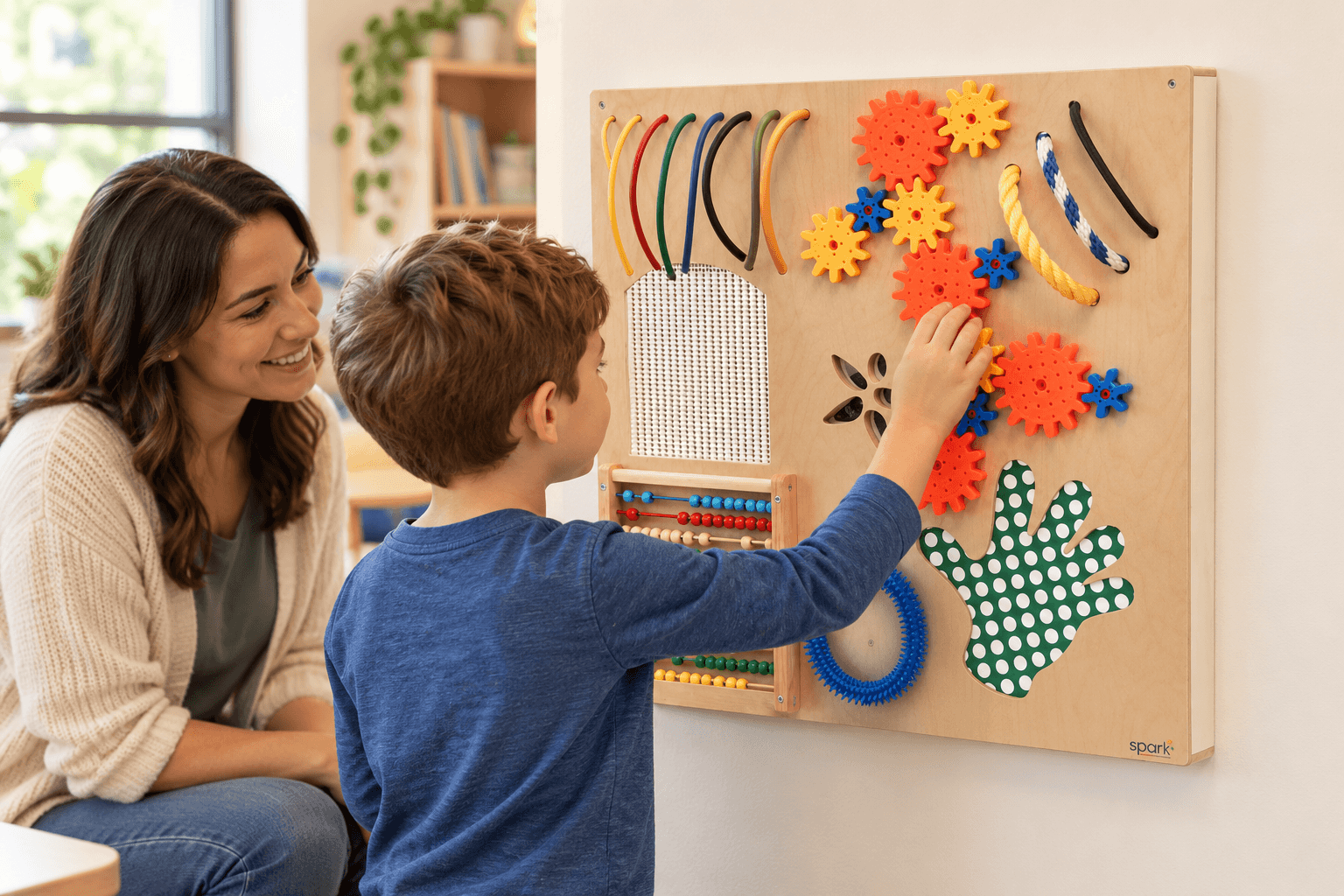
Sensory Wall Activities
Sensory wall equipment can add interactive play without filling the floor with equipment.
Depending on the panel, activities may involve:
- Turning
- Pressing
- Listening
- Matching
- Visual tracking
- Reaching
- Fine motor manipulation
- Cause and effect
Wall activities can be particularly useful in hallways, classrooms, waiting areas, therapy clinics, and sensory rooms where space is limited.
Explore Sensory Wall Panels for additional interactive options.
Paradiddle Percussion Activity Wall Panel

$856.95
Explore rhythm and sound as your child creates their own musical masterpiece on our new Paradiddle Percussion Busy Board. This wall panel comes jam-packed with lots of ways to "jam," such as bells, drum panels, a xylophone, and much more.… read more
Spark Sensory Solutions for Autism
Spark Sensory Solutions products may be useful for autistic children and adults when they match the individual's sensory preferences and abilities.
There is no universal sensory product for autism.
One autistic child may enjoy:
- Ball pits
- Swinging
- Rocking
- Visual lights
Another may prefer:
- Squeeze toys
- Quiet tactile activities
- Comfortable seating
- Predictable repetitive movement
Others may avoid some or all of these experiences.
Choose equipment around the individual rather than the autism label.
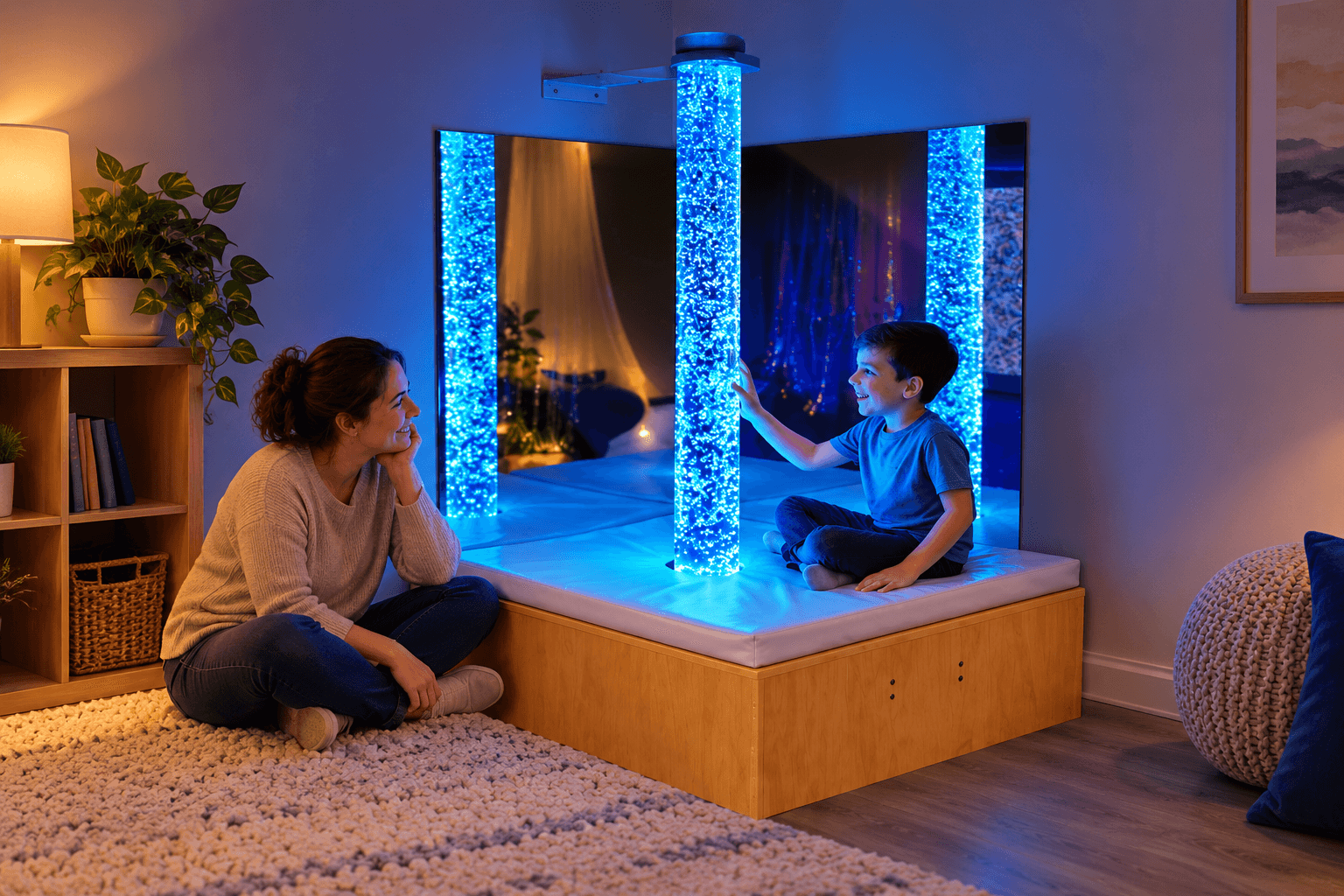
Spark Sensory Solutions for Special Education Classrooms
Classrooms can incorporate sensory support without becoming full sensory rooms.
Teachers may use Spark Sensory Solutions products within:
- Sensory breaks
- Calm corners
- Movement stations
- Fine motor stations
- Indoor recess
- Choice time
- Individual student routines
Smaller products such as sensory kits and squeeze toys may be easier to integrate into classrooms than large movement equipment.
Schools considering broader equipment needs can read Special Education Classroom Equipment Essentials.
Building a Classroom Sensory Break Area
A small sensory break area might include:
- A comfortable seat
- A few tactile tools
- Noise reduction
- A visual timer
- A portable sensory kit
- Simple communication supports
Keep the number of products manageable.
Too many choices can create visual clutter and make it harder for some students to decide what they want.
For additional setup ideas, see Designing Sensory Calm Corners for Autism, ADHD, and Emotional Regulation.
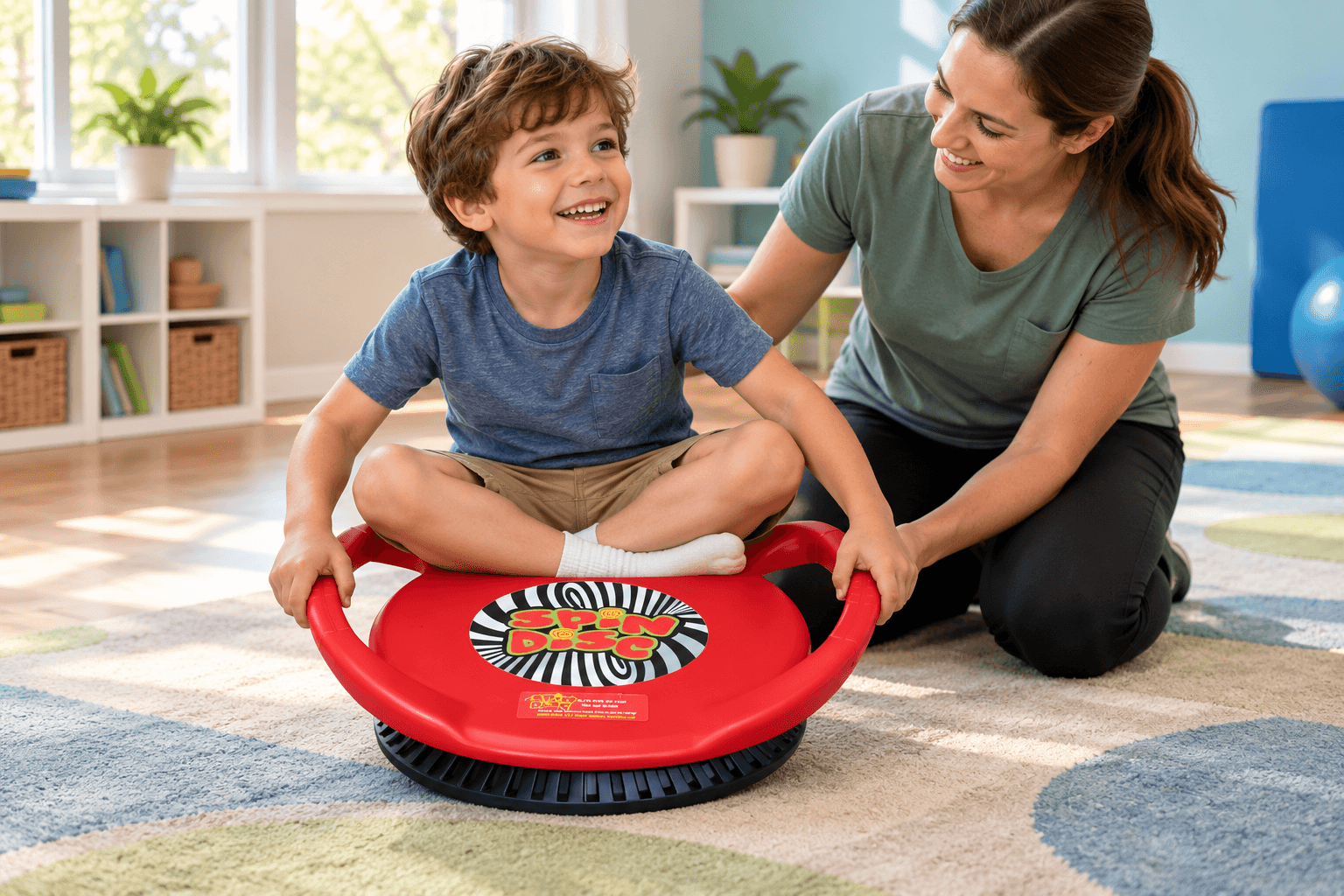
Spark Sensory Solutions for Occupational Therapy
Occupational therapists may incorporate sensory and motor products into individualized activities involving:
- Fine motor skills
- Gross motor skills
- Sensory exploration
- Motor planning
- Bilateral coordination
- Body awareness
- Movement
- Hand strengthening
- Participation in everyday routines
The equipment itself does not determine the therapy goal.
The therapist can select the activity and level of challenge according to the individual.
Spark Sensory Solutions for Home
Families do not need a full sensory room to use sensory equipment at home.
A home setup might include:
- A sensory kit
- Squeeze toys
- A small movement activity
- A bean bag
- Tactile products
- A visual sensory tool
Start by considering which activities the child already seeks or enjoys.
A small collection of frequently used sensory tools is often more practical than purchasing many different products at once.
The guide Sensory Integration Tools: A Parent's Starter Guide provides additional ideas for building a home sensory toolkit.
Creating a Complete Sensory Room With Spark Sensory Solutions
A dedicated sensory room may combine several types of equipment.
For example, a school or clinic might create:
A Quiet Area
Include comfortable seating, tactile tools, and adjustable lighting.
A Visual Area
Add visual sensory tools or larger light based equipment.
A Movement Area
Use swings, climbing equipment, therapy gym components, or other active sensory products.
A Deep Pressure Area
Provide appropriate pressure or resistance based equipment when it matches individual needs.
An Interactive Area
Use sensory wall panels, musical activities, or cause and effect equipment.
The Complete Guide to School Sensory Room Equipment provides additional guidance for organizing these different areas.
Avoid Overfilling a Sensory Space
One common mistake is assuming a sensory room should contain as much equipment as possible.
A crowded room can make:
- Movement less safe
- Wheelchair access more difficult
- Supervision harder
- Individual activities difficult to identify
- Visual stimulation more intense
Open space can be just as important as equipment.
Prioritize products that address actual needs and add more only when there is a clear purpose.
Choosing Spark Sensory Solutions Products
Before purchasing, consider:
- Who will use the product?
- What type of sensory experience does the user enjoy?
- What does the user tend to avoid?
- Is the activity active or quiet?
- How much space is available?
- Does the product require direct supervision?
- What size and weight limits apply?
- Is professional guidance appropriate?
- Will several people share the equipment?
- Can the product be cleaned easily?
- Does it require installation?
- Is adequate clearance available?
Matching the product to the user and environment is more important than choosing the most complex option.
Sensory Equipment Safety
Always review individual product instructions.
Depending on the product, safety considerations may include:
- Weight limits
- Age guidance
- Installation
- Fall protection
- Choking hazards
- Electrical components
- Suspension hardware
- Clear movement areas
- Cleaning
- Routine inspections
- Appropriate supervision
Equipment used for climbing, swinging, sliding, pressure, or other active sensory experiences may require additional precautions.
Schools can read 8 School Sensory Room Safety Factors to Know for additional planning guidance.
Observe How the User Responds
Sensory products do not produce identical responses in every person.
During use, observe for signs such as:
- Interest
- Enjoyment
- Relaxation
- Increased activity
- Avoidance
- Fatigue
- Dizziness
- Frustration
- Requests for more
- Attempts to stop
If the user appears uncomfortable, reduce or stop the activity.
Whenever possible, users should have a clear way to communicate more, less, stop, help, or finished.
Shop Spark Sensory Solutions at eSpecial Needs
Explore the complete Spark Sensory Solutions collection at eSpecial Needs for sensory toys, sensory room equipment, active play products, seating, therapy equipment, sensory kits, deep pressure products, and movement tools.
Related collections include:
- Sensory Motor Tools
- Sensory Bundles and Kits
- Sensory Room Equipment
- Tactile Stimulation
- Deep Pressure Products
- Vestibular Motion
- Sensory Wall Panels
FAQs
What types of sensory needs can Spark Sensory Solutions products support?
Spark Sensory Solutions includes products for several types of sensory experiences, including touch, movement, visual input, sound, pressure, vibration, body awareness, and active play.
The best choice depends on the individual rather than selecting a product simply because it is labeled sensory.
Are Spark Sensory Solutions products only for children?
No. Some products may be appropriate for teenagers or adults depending on the product dimensions, weight capacity, intended use, and individual needs.
Always review the specifications for the exact product before purchasing.
Can Spark Sensory Solutions products be used at home?
Yes. Smaller sensory kits, tactile tools, seating, visual products, and other compact equipment may work well in home sensory spaces. Families can explore the full Spark Sensory Solutions collection and choose equipment based on available space and the user's preferences.
Do I need a full sensory room to use Spark Sensory Solutions products?
No. Many products can be incorporated into a classroom corner, therapy area, bedroom, playroom, or portable sensory kit. A full sensory room is only one way to organize sensory equipment.
What is a good first Spark Sensory Solutions product for home use?
Start with the sensory experience the person already enjoys.
For example:
- Tactile seekers may enjoy squeeze or manipulation tools
- Visual seekers may prefer light or motion products
- Movement seekers may benefit from appropriately selected vestibular equipment
- Someone who prefers quieter activities may respond better to sensory seating or handheld tools
A small number of well chosen products is often more useful than purchasing many items at once.
Are Spark Sensory Solutions products appropriate for autism?
They can be when they match the individual's preferences, physical abilities, and sensory profile. There is no single sensory product that is appropriate for every autistic person.
For broader planning, see School Sensory Room Design for Autism Support.