Table of Contents
- Key Takeaways: Sensory Seating vs Positioning Chairs for Kids
- What Is Sensory Seating for Children?
- What Is a Positioning Chair?
- How Do Sensory Seating and Positioning Chairs Differ in Purpose?
- When Should You Choose Sensory Seating?
- When Is a Positioning Chair the Right Choice?
- Can a Child Benefit from Both Types of Seating?
- How Do You Assess a Child's Seating Needs in School?
- What Role Does Adaptive Seating Play in IEP Planning?
- Matching the Right Seat to the Right Child
- FAQs
Choosing the right chair for a child with special needs involves more than picking something that looks comfortable. Two categories of adaptive seating come up most often in school-based conversations: sensory seating and positioning chairs. Both serve children with physical or developmental needs, but they address very different goals. This article breaks down how each type works, when one fits better than the other, and how to match the right chair to a child's daily routine in the classroom.
eSpecial Needs offers both sensory seating and positioning chair options designed for school and therapy environments. Understanding the difference between these two categories can help your team make faster, more confident equipment decisions.
Key Takeaways: Sensory Seating vs Positioning Chairs for Kids
- Sensory seating encourages controlled movement and helps children regulate their nervous system during class.
- Positioning chairs hold the body in a stable alignment to support trunk control and upper-extremity function.
- The right choice depends on whether a child needs more movement input or more postural support.
- eSpecial Needs carries both sensory seating and adaptive positioning chairs for school and clinic use.
- Many classrooms benefit from having both types available to match each student's individual needs.
What Is Sensory Seating for Children?
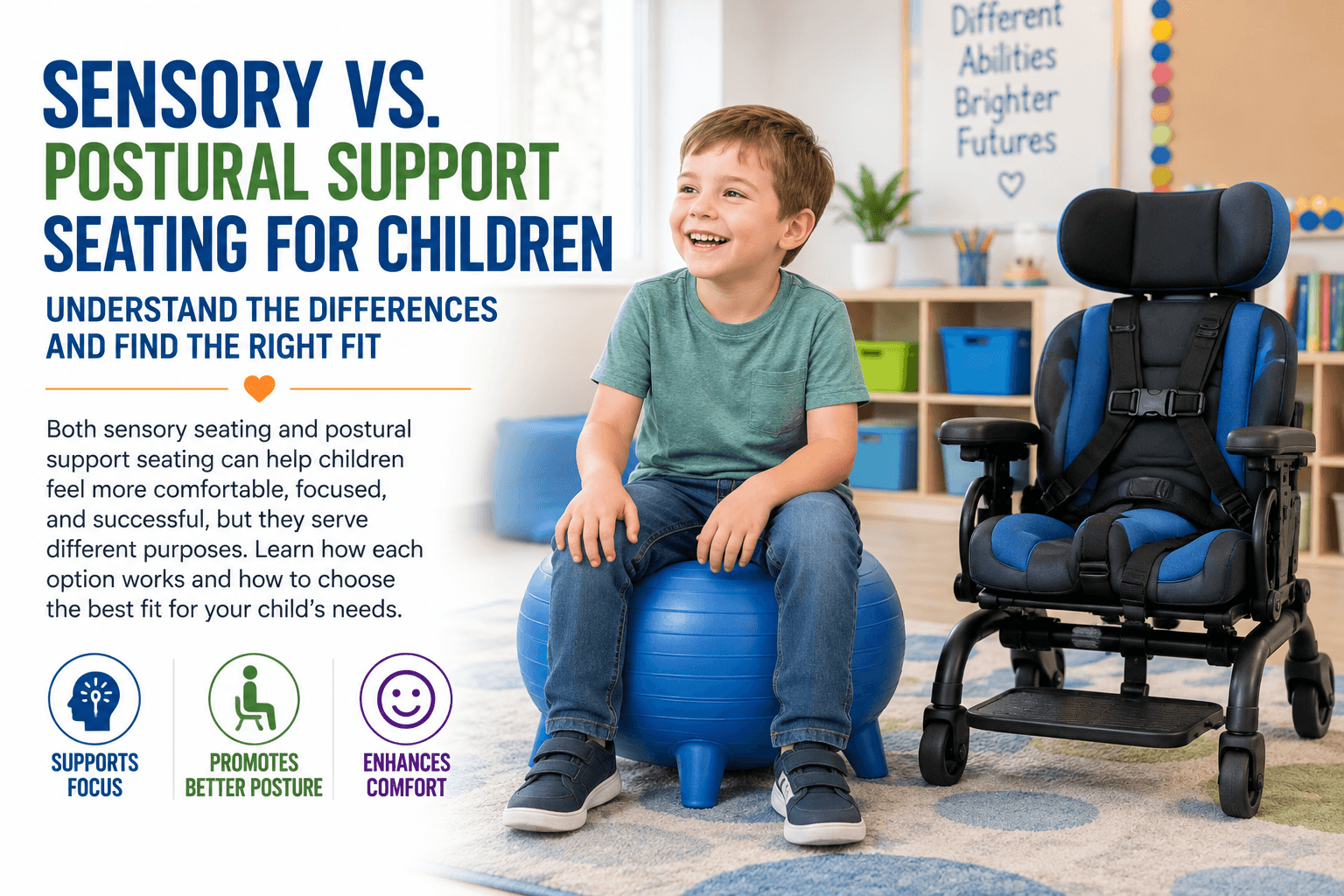
Sensory seating is any chair, cushion, or stool that allows a child to move while sitting. The purpose is to give the nervous system the movement-based input it craves, so a child can stay calm and focused during seated activities.
Common examples include wobble stools, balance disc cushions, therapy ball chairs, and bean bag seating. These options let children bounce, rock, or shift their weight gently without leaving their seat.
Occupational therapists often recommend sensory seating for students with autism, ADHD, or sensory processing differences. The gentle movement helps satisfy the proprioceptive and vestibular input these children need, which can reduce fidgeting and increase attention during lessons.
Inflatable Stability Balance Disc
$14.75
$28.99
This Inflatable Stability Balance Disc is an important strengthening tool that can be used by adults and children. The simple act of sitting on the disc activates core abdominal and trunk muscles. Flexor and extensor muscles work in tandem to… read more

What Is a Positioning Chair?
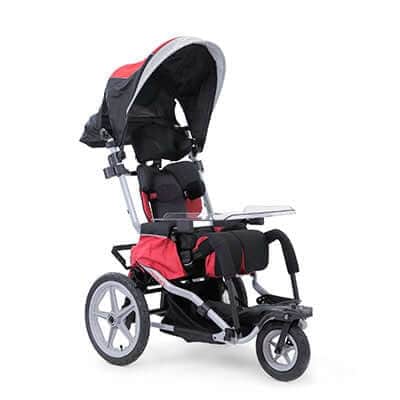
A positioning chair is designed to hold a child's body in proper alignment. It uses lateral supports, chest harnesses, footrests, pelvic belts, and adjustable backrests to stabilize the trunk, hips, and head.
Children with cerebral palsy, muscular dystrophy, low muscle tone, or other neuromuscular conditions often need this type of support. Without it, they may slump into a posterior pelvic tilt, which limits hand function, vocalization, and breathing.
Activity chairs like the Rifton Compass Chair or the Special Tomato Hi-Low MPS are common positioning options in school settings. These chairs include adjustable components so a therapist can fine-tune the fit as a child grows.
How Do Sensory Seating and Positioning Chairs Differ in Purpose?
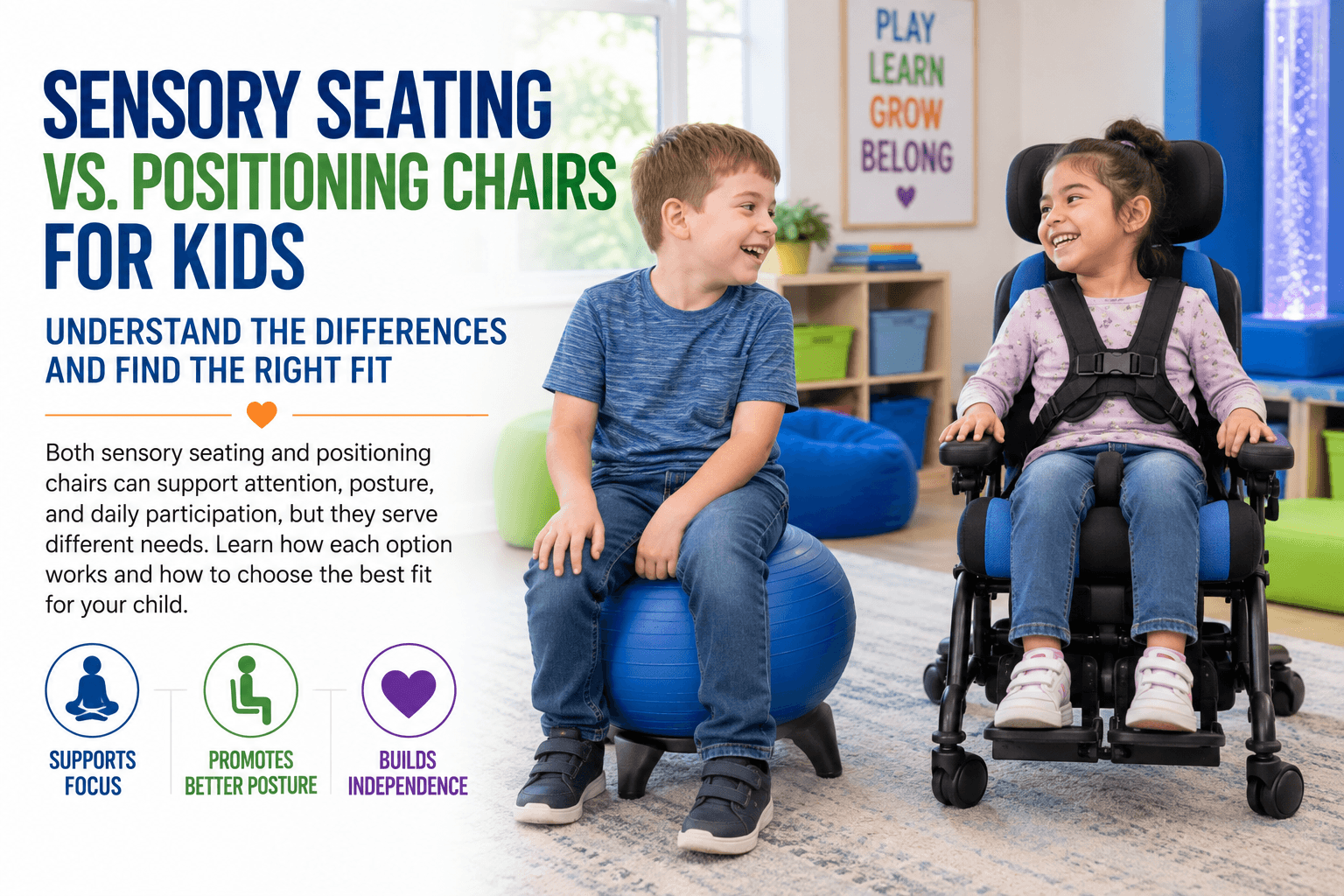
The core difference comes down to one word: movement. Sensory seating invites it. Positioning chairs control it.
A student who can sit independently but needs help staying focused may do well on a wobble stool or an active sitting stool. That same child probably does not need trunk supports or a pelvic belt.
A child who cannot maintain an upright posture on their own needs a positioning chair. Placing that child on a wobble cushion would not address their postural needs and could actually increase instability.
When Should You Choose Sensory Seating?
Sensory seating works well when a child has adequate trunk control but needs movement input to stay regulated. Look for these signs in the classroom:
- The student rocks, bounces, or leans constantly in a standard chair.
- Fidgeting increases when the child is asked to sit still for long periods.
- The child calms down noticeably after recess, swinging, or other movement breaks.
- An occupational therapist has identified a sensory-driven need for movement as a primary concern.
In these situations, something as simple as an active seating option can make a measurable difference in attention and participation.
When Is a Positioning Chair the Right Choice?
Positioning chairs are the right fit when a child's body needs external support to sit safely and participate in daily activities. Consider a positioning chair when:
- The child has difficulty holding their head or trunk upright without support.
- A therapist has documented a need for pelvic stabilization or lateral trunk support.
- The student's current seating causes skin redness, slouching, or asymmetrical posture.
- The child cannot access tabletop activities because poor posture limits hand and arm control.
A 2025 qualitative study published through Ulster University confirmed that clinicians view individualized custom-molded seating as an important factor in improving function and comfort for children with complex postural needs.
Can a Child Benefit from Both Types of Seating?
Yes, and many school-based therapy teams use both categories for the same student at different times of day. A child with mild low tone might use a positioning chair during handwriting and switch to a sensory cushion during circle time.
This dual approach allows the team to address postural alignment and sensory regulation without forcing one chair to do everything. eSpecial Needs makes it easy to pair products from both categories because the full seating and positioning catalog is organized by function and environment.
How Do You Assess a Child's Seating Needs in School?
Start with the child's therapy evaluation. An occupational therapist or physical therapist can assess trunk control, pelvic alignment, muscle tone, and sensory processing patterns. That assessment will point toward either sensory seating, positioning support, or a combination.
Next, observe the child across different classroom routines. A student might sit well during a five-minute snack but lose posture during a thirty-minute lesson. The seating solution needs to match the most demanding task.
Consider the environment too. A positioning chair with a hi-lo base works at a standard desk and during floor-level activities. A wobble stool may not fit at every table height. Teams that plan for multiple settings avoid buying equipment that sits unused in a corner.
What Role Does Adaptive Seating Play in IEP Planning?
Adaptive seating frequently appears in a child's Individualized Education Program as a related service or accommodation. When seating goals are written into the IEP, the school district is responsible for making the recommended equipment available.
Therapists can document measurable outcomes tied to seating. For example, an OT might note that a student maintains upright posture for ten minutes longer when using a Rifton Activity Chair compared to a standard classroom chair. That kind of data strengthens funding requests.
eSpecial Needs supports school purchasing teams with quote requests and product guidance, which can simplify the procurement process.
Matching the Right Seat to the Right Child
Sensory seating and positioning chairs both belong in the special education toolkit, but they are not interchangeable. Sensory seating helps regulated, mobile children stay focused through movement. Positioning chairs give children with physical support needs the stability they require to participate.
Work closely with your therapy team, review each child's assessment data, and match the seating type to the specific functional goals in the IEP. When you are ready to explore your options, the eSpecial Needs seating collection includes both sensory and positioning solutions designed for classroom and clinic environments.
FAQs
What is the main difference between sensory seating and a positioning chair?
Sensory seating allows movement to help a child regulate their nervous system. A positioning chair holds the body in stable alignment to support posture and function. The choice depends on whether the child needs movement input or structural support.
Can sensory seating help children with ADHD in the classroom?
Yes. Wobble stools, balance discs, and therapy ball chairs give students with ADHD the movement input their bodies need. This can reduce fidgeting and help them stay attentive during lessons. eSpecial Needs carries a range of active seating products for this purpose.
How does eSpecial Needs help schools choose the right adaptive seating?
eSpecial Needs offers product guidance and quote requests tailored to school budgets. Their team of special needs professionals can recommend seating options based on a child's therapy goals and classroom environment.
Do positioning chairs restrict a child's movement?
Positioning chairs support movement rather than restrict it. Features like dynamic backrests and adjustable seat angles help children build trunk strength while staying safely aligned. The goal is to use the fewest supports necessary so the child's muscles can still activate.