Table of Contents
- What Is Kore Design Active Seating?
- What Is a Kore Wobble Chair?
- Why Movement Based Seating Can Be Useful
- Kore Wobble Chairs for the Classroom
- Kore Kids Wobble Chair 14 Inch
- Kore Junior Wobble Chair
- Kore Pre Teen Wobble Chair
- Adjustable Kore Wobble Chairs
- Kore Adjustable Tall Wobble Chair
- Kore Wobble Chairs for Teens and College Students
- Kore Wobble Chairs for Adults
- Kore Floor Wobbler Balance Disc
- Kore Sit Stand Student Desks
- Pairing Kore Chairs With Classroom Tables
- Why Foot Contact Matters
- Kore Seating for Autism
- Kore Seating for Students With ADHD
- Kore Chairs and Sensory Seeking
- Active Seating vs Adaptive Positioning Chairs
- Kore Wobble Chairs Are Not Appropriate for Everyone
- Using Kore Chairs in Flexible Seating Classrooms
- Kore Chairs for Reading and Small Group Activities
- Kore Seating for Home Learning
- Kore Seating in Therapy Settings
- Fixed Height vs Adjustable Kore Chairs
- How to Choose the Right Kore Wobble Chair
- Introducing a Wobble Chair in the Classroom
- Creating a Balanced Special Education Classroom
- Shop Kore Design at eSpecial Needs
- FAQs
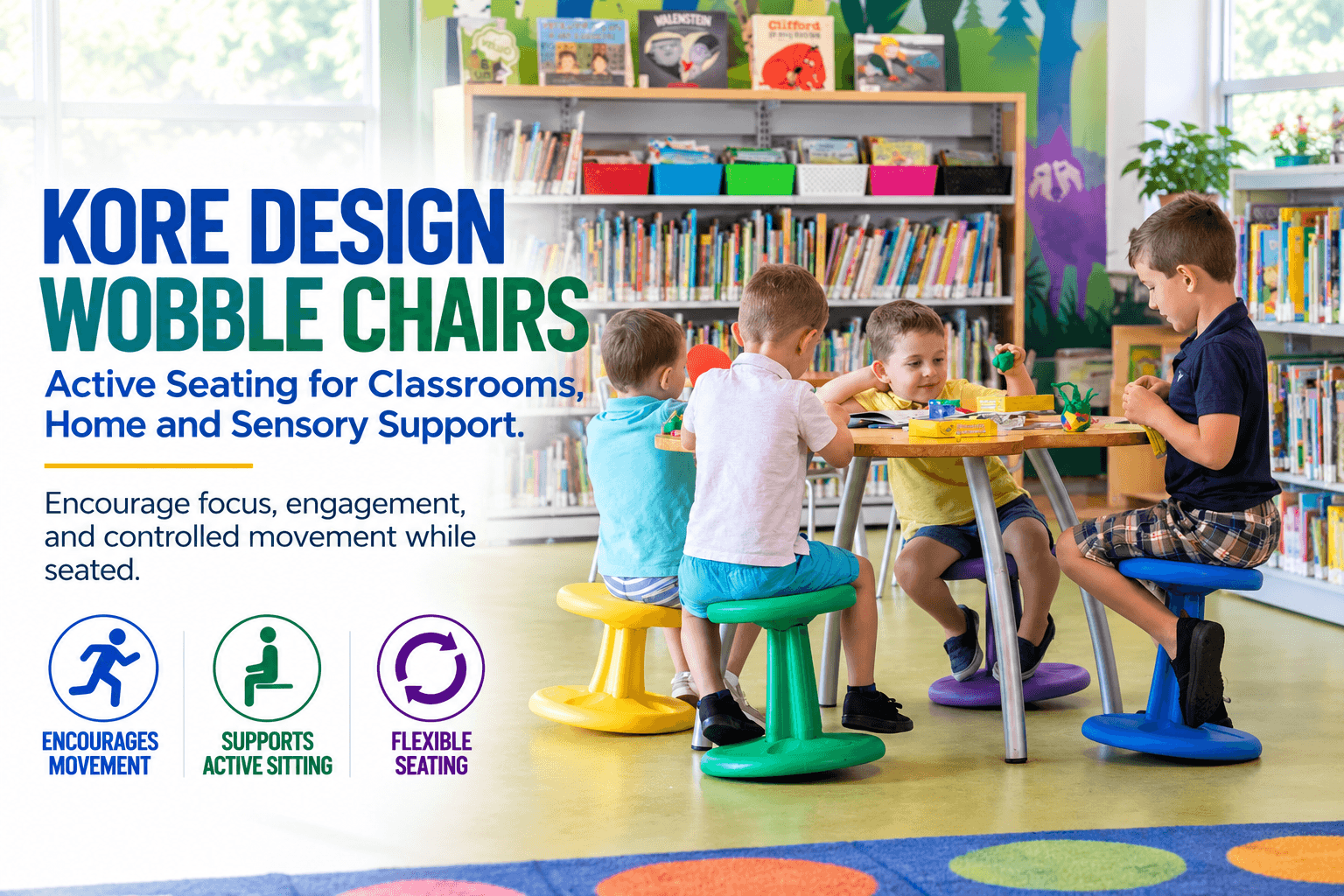
Kore Design creates active seating designed to let children, teens, and adults move while they sit. Best known for Kore wobble chairs, the brand offers fixed height and adjustable seating, floor wobblers, taller active stools, and flexible student workstations for classrooms, homes, therapy settings, and learning spaces.
Explore the full Kore Design collection at eSpecial Needs.
What Is Kore Design Active Seating?
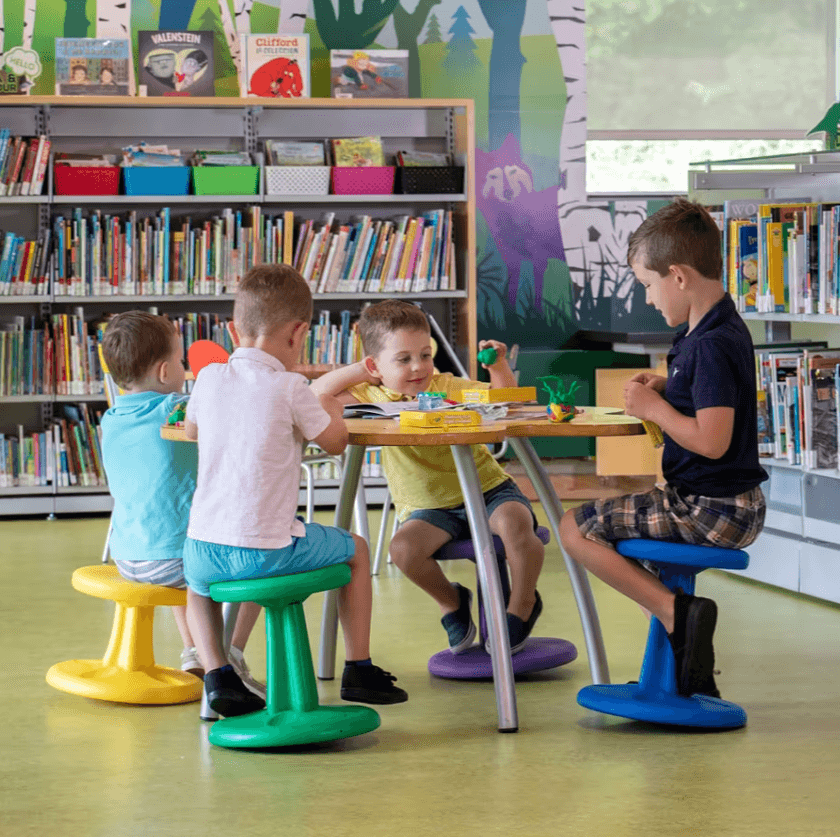
Kore Design focuses on active sitting, an approach that allows controlled movement instead of requiring the user to remain completely still in a traditional chair.
A gently rounded base allows the seated user to shift position and make small movements while remaining at a desk, table, learning station, or other workspace. Kore offers products sized for different stages from young children through teens and adults.
Active seating may be useful during:
- Classroom instruction
- Homework
- Reading
- Small group learning
- Art activities
- Computer work
- Therapy
- Homeschooling
- Office work
- Standing desk activities
For a broader introduction to this type of seating, read Active Seating in the Special Needs Classroom.
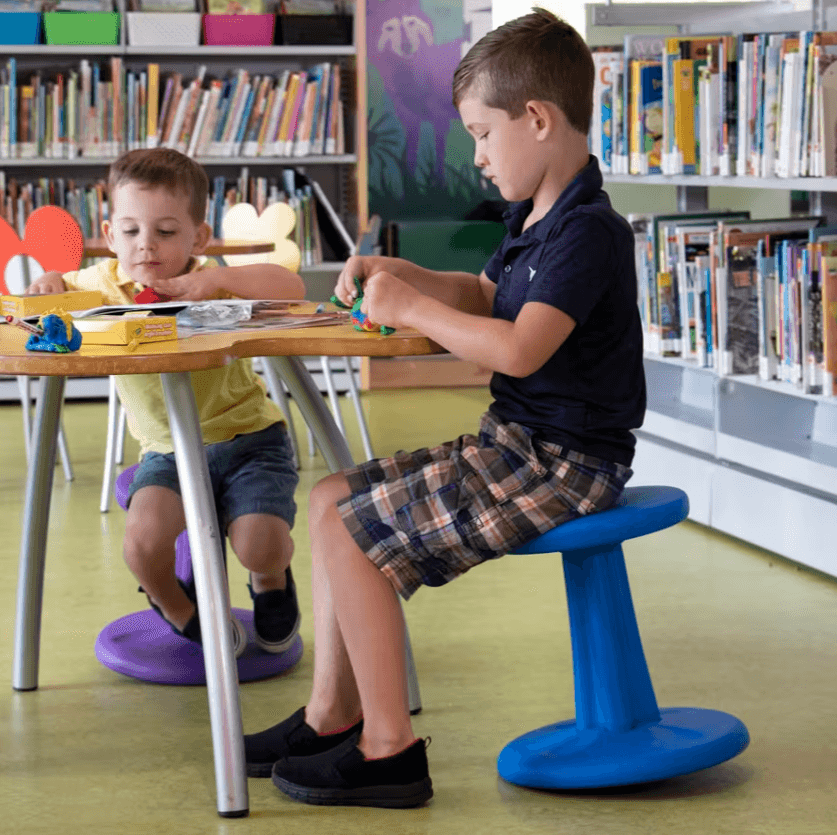
What Is a Kore Wobble Chair?
A Kore wobble chair replaces the flat base of a conventional chair with a gently rounded base.
Rather than locking the body into one position, the design allows subtle movement while the user remains seated. The user can shift weight and continuously make small adjustments instead of needing to leave the seat to move.
For some students, this creates an appropriate way to incorporate movement into activities that normally require sitting.
The Kore Kids Wobble Chair 14 Inch is one example. It uses a rounded base, recyclable plastic construction, and a 14 inch fixed seat height.
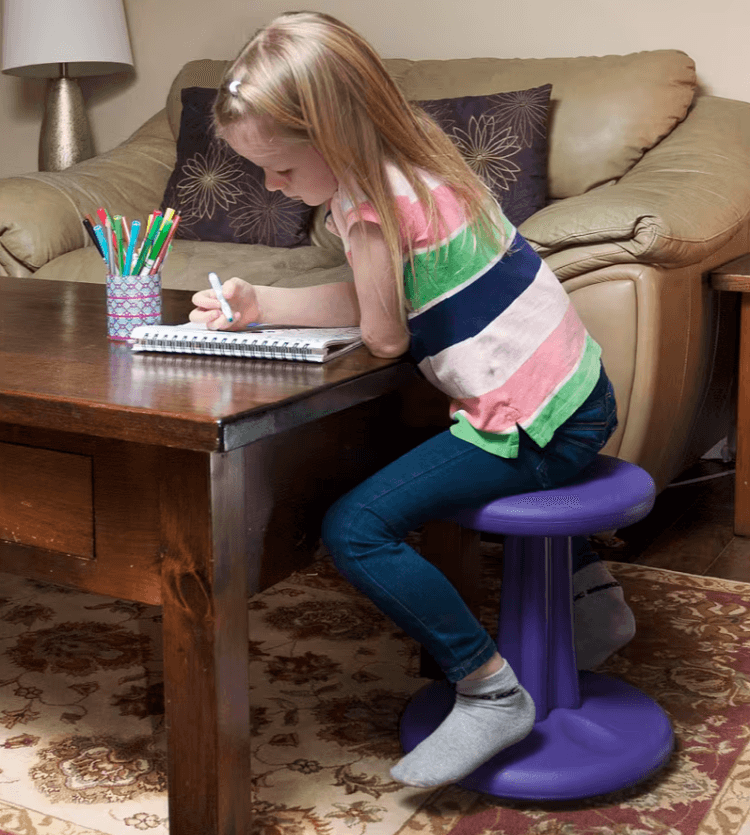
Why Movement Based Seating Can Be Useful
Some children naturally move while listening, reading, writing, or completing other seated tasks.
They may:
- Rock in their chair
- Shift positions frequently
- Swing their legs
- Lean forward and backward
- Get up repeatedly
- Seek movement between activities
Trying to eliminate all movement may not always be the most practical solution.
Active seating offers another option by allowing movement within the seated activity.
The eSpecial Needs guide Sensory Seating vs Positioning Chairs for Kids explains how this differs from seating intended to physically stabilize the body.
Kore Wobble Chairs for the Classroom
Wobble seating can fit into classrooms without requiring a completely different learning environment.
Students may use Kore chairs during:
- Independent work
- Reading
- Writing
- Math
- Computer activities
- Small groups
- Art
- Classroom centers
A wobble stool can provide movement without requiring a large exercise ball or other equipment that takes up considerable floor space.
This can make active seating particularly practical in classrooms where several different seating options need to coexist.
For ideas about creating a broader seating plan, see Classroom Chairs for Special Needs: Supportive Seating for Focus, Posture, and Learning.
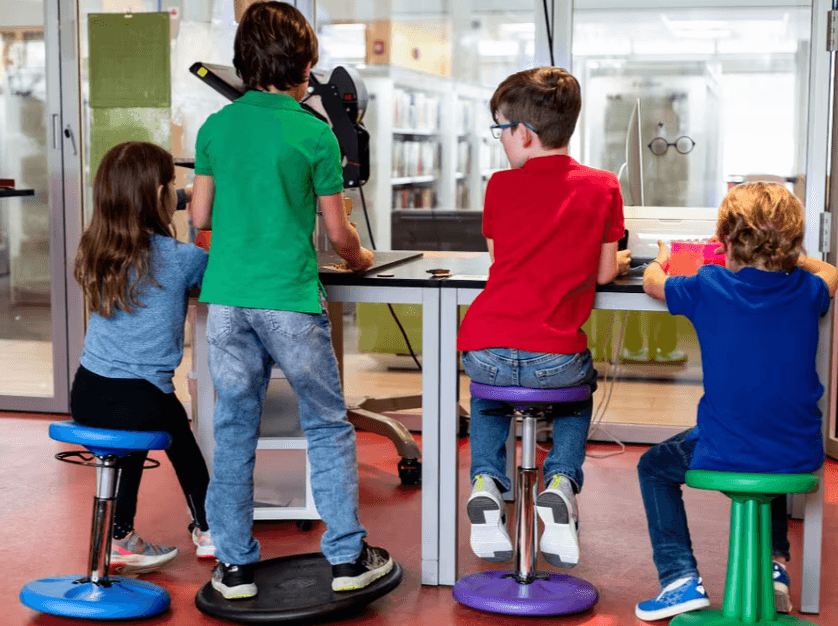
Kore Kids Wobble Chair 14 Inch
The Kore Kids Wobble Chair 14 Inch is a fixed height active chair designed for younger students.
Its rounded bottom permits continuous seated movement, while the current specifications list an 11 inch seat diameter, 13.75 inch base diameter, and 14 inch overall height. The chair is made from recyclable HDPE plastic and is designed to be wiped clean.
A fixed height chair can be useful when students consistently use tables or desks at the same height.
Kore Junior Wobble Chair
For students who need a taller fixed seat, the Kore Junior Wobble Chair 16 Inch provides the same basic active sitting concept at a 16 inch seat height.
The current manufacturer guidance shown by eSpecial Needs recommends this version for users approximately 50 to 53 inches tall.
Actual body measurements and desk height should still guide the final choice.
Kore Pre Teen Wobble Chair
As students grow, a taller chair may better align them with standard classroom work surfaces.
The Kore Kids Pre Teen Wobble Chair 18.7 Inch provides another fixed height option designed for older children.
Having several chair heights available can help schools avoid using one stool size for every student.
Adjustable Kore Wobble Chairs
Fixed height seating can work well when one user consistently uses the chair.
Adjustable chairs provide greater flexibility when:
- Several students share seating
- Students are growing
- Different table heights are used
- Classroom layouts change
- The chair moves between learning areas
The Kore 14 to 19 Inch Kids Standard Adjustable Wobble Chair provides adjustable seat height from 14 to 19 inches.
Its current specifications recommend it for users approximately 45 to 57 inches tall, with an adjustable pneumatic mechanism and rounded active sitting base.
Kore Adjustable Tall Wobble Chair
Older or taller students may need a greater adjustment range.
The Kore Kids Adjustable Tall Wobble Chair adjusts from 16.5 to 24 inches and is currently recommended for users approximately 53 to 70 inches tall.
This broader height range can be helpful in middle school environments, therapy programs, flexible learning spaces, and other settings where students vary significantly in height.
Kore Wobble Chairs for Teens and College Students
Active seating does not have to stop when a student reaches adolescence.
The Kore Teen and College Hi Rise Chair provides a taller adjustable seating option for older students and adults.
Its current specifications list an adjustable seat height from 22.5 to 31 inches and a 300 pound capacity, making it suitable for higher work surfaces when properly matched to the user.
This type of active seating may be useful in:
- High school classrooms
- College environments
- Libraries
- Therapy spaces
- Offices
- Home workspaces
Kore Wobble Chairs for Adults
Movement based seating is not limited to children.
Adults may also prefer the ability to shift, rock, or change position during work and other seated activities.
An adult considering active seating should evaluate:
- Seat height
- Desk height
- Foot contact with the floor
- Balance
- Weight capacity
- Comfort
- Duration of use
- Amount of movement desired
For adults who need physical postural support rather than movement based seating, a different category of chair may be more appropriate.
The guide Special Needs Furniture for Adults: What You Need to Know explains the difference between active seating, adaptive seating, and other supportive furniture.
Kore Floor Wobbler Balance Disc
Not every active seating option needs to look like a traditional stool.
The Kore Floor Wobbler Balance Disc provides a low profile surface designed for active sitting closer to the floor.
This may be useful during:
- Circle time
- Group reading
- Floor activities
- Flexible seating
- Learning centers
The Floor Wobbler uses a rounded base with an anti roll safety ring and can be stacked when not in use. Kore specifically warns that the product is intended for sitting rather than standing and should not be used by someone for whom a moving seat would be unsafe.
That distinction is important because active seating requires sufficient balance and seated control.
Kore Sit Stand Student Desks
Kore Design also extends movement beyond the chair.
The Kore Kids Sit Stand Mobile Student Desk is designed to support both seated and standing work.
The current desk adjusts from 31 to 38 inches high and includes locking casters, an adjustable work surface, storage features, and a tabletop that can tilt or fold for different classroom activities.
A sit stand desk can give students another way to change position throughout the day instead of relying exclusively on one chair.
Pairing Kore Chairs With Classroom Tables
Active seating works best when the stool and work surface fit together.
A chair that is too low may leave the student reaching upward.
A chair that is too high may make it difficult to comfortably position the arms or feet.
Before selecting a height, consider:
- Lower leg length
- Student height
- Table height
- Foot position
- Arm position
- Activity
- Expected growth
Explore Classroom Tables and Activity Tables when creating a complete learning station.
Why Foot Contact Matters
Kore's own safety guidance states that users should be able to rest the bottoms of their feet on the floor while seated on its wobble chairs.
This is one reason choosing the correct seat height is so important.
Do not automatically select the tallest chair simply because it offers more room for growth.
A chair should fit the student now.
Kore Seating for Autism
Some autistic students enjoy repetitive or subtle movement while sitting.
A Kore wobble chair may provide a way to access that movement during appropriate seated activities when the student has sufficient balance and trunk control.
However, autism alone does not determine whether active seating is appropriate.
One student may prefer movement, while another may prefer a stable chair with minimal motion.
The article Sensory vs Postural Support Seating for Children provides more guidance for distinguishing sensory movement needs from physical positioning needs.
Kore Seating for Students With ADHD
Students with ADHD may frequently shift position or seek opportunities to move during classroom activities.
For some students, a wobble chair offers a contained movement option without requiring them to leave their workspace.
It should still be treated as an individual seating choice rather than an automatic ADHD intervention.
Teachers can observe:
- Whether the student remains safely seated
- Whether movement supports or distracts from the activity
- Whether the student uses excessive movement
- Whether the chair improves participation
- Whether a different type of seating works better
A trial period can be useful before making active seating the student's primary classroom chair.
Kore Chairs and Sensory Seeking
A student who seeks movement may enjoy the subtle rocking and shifting available through active seating.
This can provide a different experience from larger sensory activities such as:
- Swinging
- Bouncing
- Spinning
- Climbing
- Running
Wobble seating can therefore be one part of a broader sensory environment without replacing movement breaks or other individualized supports.
Explore Active Seating for additional movement based seating options.
Active Seating vs Adaptive Positioning Chairs
This distinction is particularly important in special education.
Active seating encourages movement.
Positioning seating provides stability and external support.
A Kore wobble chair may be appropriate for a student who can sit independently but enjoys or benefits from movement.
A student who requires:
- Pelvic positioning
- Lateral trunk support
- Head support
- A positioning harness
- Specialized foot support
- Significant postural assistance
may need an adaptive positioning chair instead.
For help recognizing the difference, read When Does a Child Need Adaptive Seating at School?.
Kore Wobble Chairs Are Not Appropriate for Everyone
A moving seat requires balance.
Kore specifically warns that its wobble chairs should not be used by individuals with balance difficulties or disabilities that make a moving seat unsafe. Users should also keep their feet on the floor and should never stand on the chair.
If a student has significant physical positioning needs, consult the appropriate therapist or seating professional before choosing active seating.
Using Kore Chairs in Flexible Seating Classrooms
Flexible seating gives students access to different seating options based on the task and individual needs.
A classroom might include:
- Traditional classroom chairs
- Kore wobble chairs
- Floor seating
- Standing work areas
- Soft reading seating
- Adaptive positioning chairs
- Movement cushions
Students do not necessarily need to use the same chair for every activity.
A wobble chair might work well during independent reading but not during an activity requiring greater physical stability.
For a broader classroom setup strategy, read Special Education Classroom Setup: A Step by Step Guide.
Kore Chairs for Reading and Small Group Activities
Active seating can also be used away from a traditional desk.
Possible locations include:
- Reading groups
- Library areas
- Small group tables
- STEM stations
- Computer centers
- Homework areas
- Therapy tables
The low profile Kore Floor Wobbler can be especially useful for floor based group activities, while fixed and adjustable wobble chairs can pair with conventional work surfaces.
Kore Seating for Home Learning
Kore wobble chairs can also provide an alternative to conventional desk chairs at home.
Possible activities include:
- Homework
- Homeschool instruction
- Drawing
- Crafts
- Reading
- Computer activities
- Games
As in school, the chair should fit the child and work surface rather than simply being selected by age.
Kore Seating in Therapy Settings
Occupational and physical therapy settings may use active seating during selected activities when movement is appropriate for the individual.
A therapist might incorporate active sitting into tasks involving:
- Reaching
- Balance
- Weight shifting
- Seated movement
- Hand activities
- Tabletop tasks
- Body awareness
The wobble chair itself is not a therapy treatment. It is a seating option that may be incorporated into a larger individualized activity.
Fixed Height vs Adjustable Kore Chairs
Choosing between fixed and adjustable seating depends largely on how the chair will be used.
Fixed Height May Work Well When
- One child uses the chair
- The desk height stays consistent
- The child's measurements clearly fit the seat
- Simplicity is preferred
Adjustable Seating May Work Better When
- Several students share the chair
- The child is growing
- Multiple table heights are used
- The classroom changes configurations frequently
- The chair moves between learning spaces
The adjustable Kore models provide greater flexibility, while fixed models offer a simple lightweight seating option.
How to Choose the Right Kore Wobble Chair
Before purchasing, measure the user and evaluate the intended work surface.
Consider:
- User height
- Lower leg length
- Seat height
- Table or desk height
- Foot contact
- Balance
- Trunk control
- Weight capacity
- Whether several users will share the chair
- Fixed or adjustable height
- Home, classroom, or therapy use
Do not rely only on the product's age range.
Actual body size and physical ability are more important for determining whether the chair fits appropriately.
Introducing a Wobble Chair in the Classroom
Students may need time to learn how to use active seating appropriately.
Simple expectations can include:
- Sit on the seat
- Keep feet on the floor
- Use controlled movement
- Do not stand on the chair
- Keep an appropriate distance from classmates
Start with short activities and observe how the student uses the chair.
If movement becomes unsafe or interferes with participation, another seating option may be better.
Creating a Balanced Special Education Classroom
Kore wobble chairs can be useful additions to a classroom, but they should not replace every type of seating.
A special education classroom may need a combination of:
- Active seating
- Stable classroom chairs
- Adaptive positioning chairs
- Soft sensory seating
- Floor seating
- Accessible tables
- Standing work areas
Different students and different activities call for different levels of movement and support.
For a broader equipment plan, see Special Education Classroom Equipment Essentials.
Shop Kore Design at eSpecial Needs
Explore the Kore Design collection at eSpecial Needs for wobble chairs, adjustable active seating, floor seating, taller seating options, and flexible student workstations.
Popular options include:
- Kore Kids Wobble Chair 14 Inch
- Kore Junior Wobble Chair 16 Inch
- Kore Kids Pre Teen Wobble Chair 18.7 Inch
- Kore 14 to 19 Inch Kids Standard Adjustable Wobble Chair
- Kore Kids Adjustable Tall Wobble Chair
- Kore Floor Wobbler Balance Disc
- Kore Teen and College Hi Rise Chair
- Kore Kids Sit Stand Mobile Student Desk
You can also explore Active Seating, Classroom Seating, Classroom Chairs, and Chairs and Seating.
FAQs
What is the difference between a wobble chair and a traditional classroom chair?
A traditional classroom chair is designed to stay relatively still. A wobble chair allows controlled movement through its rounded base, giving the user a way to shift position while remaining seated.
This can make wobble seating useful for students who prefer some movement during classroom or homework activities.
Are Kore wobble chairs considered sensory seating?
They can be used as a form of sensory or active seating because they allow movement while sitting. They are different from adaptive positioning chairs, which are designed to provide more physical support and stability.
For a deeper comparison, read Sensory Seating vs Positioning Chairs for Kids.
Are Kore wobble chairs good for every student?
No. Active seating requires enough balance and trunk control to manage a moving seat safely. Some students may prefer or require a stable chair, while others may need specialized adaptive seating with additional positioning support.
Can a wobble chair replace an adaptive positioning chair?
Usually not. A wobble chair encourages movement, while an adaptive positioning chair may provide pelvic, trunk, head, or foot support. Students who require significant postural support should use seating selected around those needs.
See When Does a Child Need Adaptive Seating at School? for more guidance.
How do I know what height Kore wobble chair to choose?
The user's measurements and work surface height are more useful than age alone.
Consider:
- User height
- Lower leg length
- Desk or table height
- Whether the feet can rest on the floor
- Arm position while working
The seat should allow the user to sit comfortably without reaching excessively upward or downward.
Should a child's feet touch the floor while using a Kore chair?
Yes. Foot contact with the floor can help the user control movement and maintain a more stable sitting position.
A chair that is too tall may be difficult to use safely.