Table of Contents
- What Is Sensory Development?
- Why Sensory Development Activities Matter
- Tactile Sensory Development
- Sensory Development Through Movement
- Visual Sensory Development
- Auditory Sensory Development
- Proprioceptive Activities and Body Awareness
- Sensory Development and Fine Motor Skills
- Sensory Tables for Hands On Exploration
- Sensory Development in the Classroom
- Sensory Development in Calm Corners
- Sensory Development at Home
- Sensory Development for Children With Autism
- How to Choose Sensory Development Products
- Follow the Child's Response
- When to Involve an Occupational Therapist
- Shop Sensory Development Products at eSpecial Needs
- FAQs
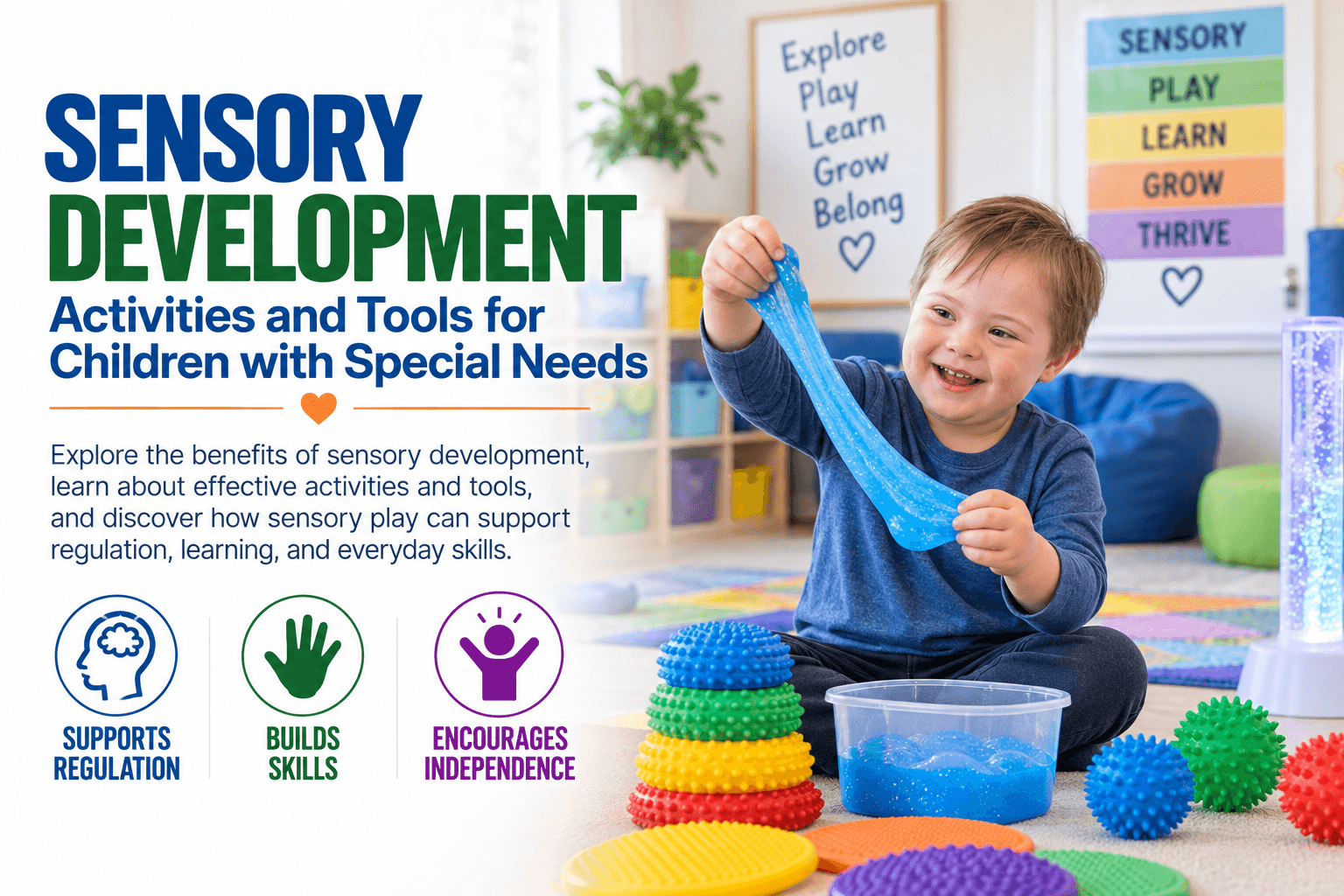
Sensory development is the process of learning how to receive, organize, and respond to information from the senses. For children with special needs, sensory development activities can create opportunities to explore touch, movement, sound, sight, body awareness, and other forms of sensory input in ways that support participation in everyday routines.
The Sensory Development collection at eSpecial Needs includes sensory tools and activities that can be incorporated into homes, classrooms, therapy spaces, sensory rooms, and early learning environments.
The goal is not to provide as much sensory input as possible. Effective sensory activities should match the child's individual preferences, abilities, and responses.
What Is Sensory Development?
Sensory development involves the nervous system receiving information from the environment and the body and learning how to respond appropriately.
Most people are familiar with the five traditional senses:
- Touch
- Sight
- Sound
- Smell
- Taste
Sensory development also involves important internal systems such as:
- Vestibular input related to movement and balance
- Proprioceptive input related to body position and force
- Interoception related to sensations occurring inside the body
Children experience these types of input throughout the day while playing, eating, moving, dressing, learning, and interacting with other people.
For a broader introduction to sensory support, Sensory Integration Therapy at Home provides ideas for incorporating sensory activities into everyday routines.
Why Sensory Development Activities Matter
Sensory activities provide opportunities for children to safely experience different textures, movements, sounds, visual effects, and body sensations.
Depending on the child and activity, sensory play may support:
- Exploration
- Body awareness
- Fine motor practice
- Gross motor development
- Motor planning
- Attention
- Participation
- Play skills
- Cause and effect learning
- Hand eye coordination
- Social interaction
- Familiarity with different sensory experiences
Sensory development happens naturally during play, but thoughtfully selected equipment can create additional opportunities for exploration.
Tactile Sensory Development
The tactile system processes information received through touch.
Children encounter tactile input through their hands, feet, skin, clothing, toys, food, and everyday objects.
Tactile activities may involve:
- Rough and smooth textures
- Soft materials
- Sand
- Water
- Putty
- Sensory dough
- Textured balls
- Brushes
- Fabrics
- Gel surfaces
The Tactile Stimulation collection includes additional products designed for touch based sensory exploration.
For children who enjoy hands on activities, Therapy Putty: A Complete Guide to Theraputty Exercises, Hand Strength and Sensory Use explains how putty can combine tactile play with hand strengthening and fine motor activities.
Sensory Development Through Movement
Movement provides vestibular and proprioceptive input.
Activities such as rocking, bouncing, climbing, crawling, balancing, swinging, and pushing can help children experience how their bodies move through space.
Movement activities may include:
- Therapy balls
- Balance equipment
- Swings
- Scooters
- Rocking equipment
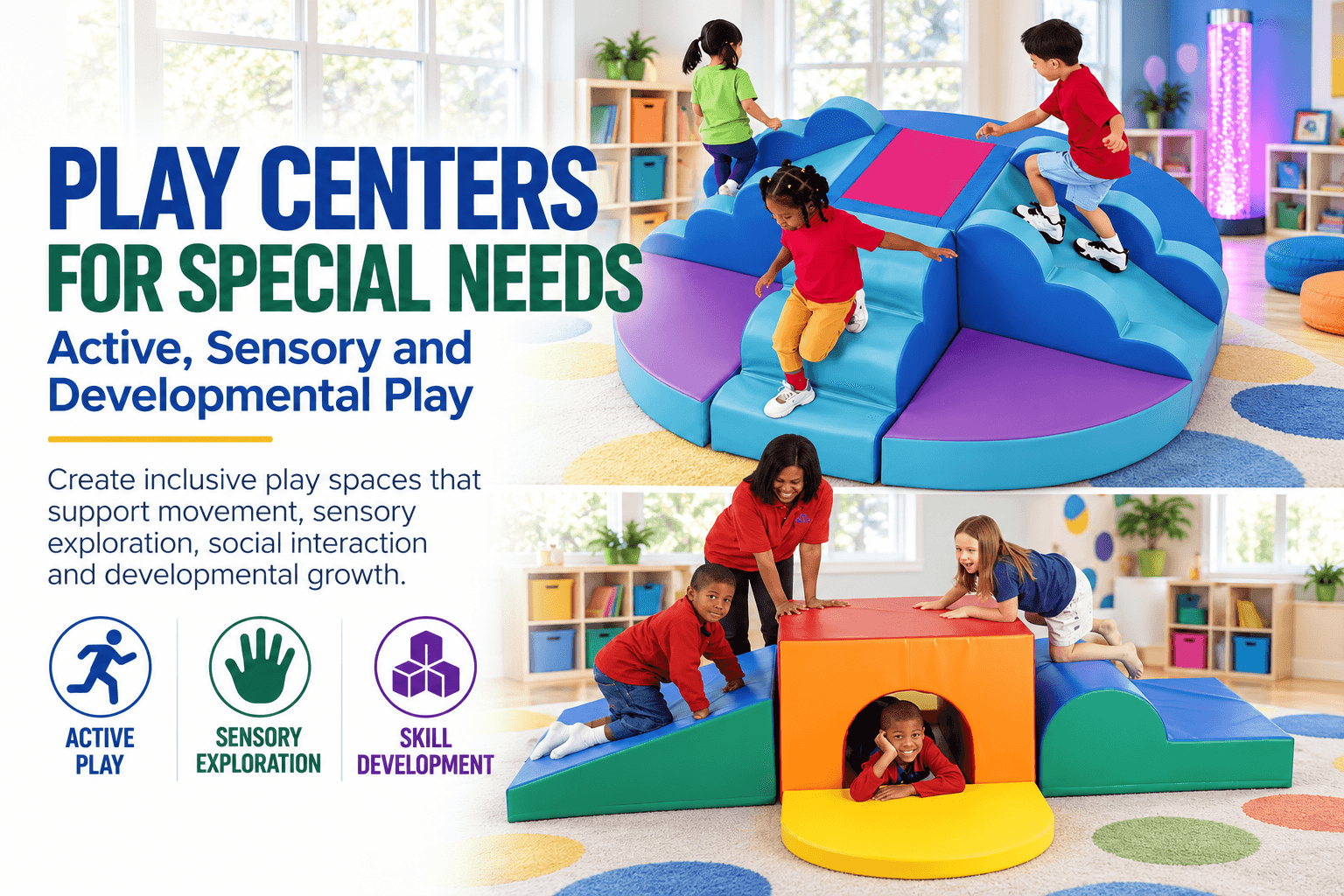
- Climbing structures
- Crawling activities
- Stepping stones
- Movement cushions
Explore Sensory Motor Tools and Vestibular Motion for equipment focused on movement and body awareness.
Visual Sensory Development
Visual sensory activities give children opportunities to explore light, color, movement, contrast, patterns, and cause and effect.
Examples may include:
- Bubble tubes
- Fiber optic lights
- Projectors
- Mirrors
- Light panels
- Color changing equipment
- Visual tracking toys
These tools are commonly found in sensory rooms, but visual sensory experiences can also be incorporated into classrooms and home environments.
Browse Visual Stimulation for additional visual sensory equipment.
For schools building a larger sensory environment, The Complete Guide to School Sensory Room Equipment explains how visual equipment can be balanced with movement, tactile, calming, and safety equipment.
Auditory Sensory Development
Sound is another important part of sensory development.
Children may explore:
- Music
- Rhythm
- Cause and effect sounds
- Musical instruments
- Recorded sounds
- Quiet versus loud sounds
- Repetitive patterns
Some children seek auditory input, while others are highly sensitive to it.
A child who enjoys musical toys may actively seek sound, while another child may benefit from Noise Reducing Headphones during loud activities.
Sensory tools should accommodate both sensory seeking and sensory avoiding responses.
Proprioceptive Activities and Body Awareness
Proprioception provides information about muscles, joints, force, and body position.
Activities involving pushing, pulling, squeezing, climbing, carrying, or resistance can provide proprioceptive input.
Examples include:
- Therapy putty
- Resistance activities
- Weighted products
- Climbing
- Crawling
- Pushing heavy objects
- Pulling resistance equipment
- Crash pads
- Stretch sacks
The Deep Pressure Products collection includes products that may be incorporated into calming and body awareness routines when appropriate.
For children who benefit from active sensory play, Sensory Ball Pits for Regulation: What to Know discusses how ball pits can combine tactile input, movement, body awareness, and gross motor activities.
Sensory Development and Fine Motor Skills
Many sensory activities also involve the hands.
Pouring, squeezing, pinching, scooping, sorting, manipulating, and grasping objects can create opportunities to practice fine motor skills during sensory play.
Activities may include:
- Sensory bins
- Putty
- Sand tables
- Water tables
- Peg activities
- Manipulatives
- Textured toys
- Sorting activities
Explore Fine Motor Tools for additional hand skill activities.
The article Fine Motor Skills Activities and Tools Every OT Recommends provides more ideas for developing grasp, dexterity, coordination, and everyday hand use.
Sensory Tables for Hands On Exploration
Sensory tables can create a contained area for tactile and exploratory play.
Depending on the activity, children may explore:
- Water
- Sand
- Dry rice
- Safe sensory fillers
- Scoops
- Cups
- Funnels
- Floating toys
- Sorting objects
The Sensory Tables collection includes options for classrooms, therapy programs, early learning spaces, and home environments.
For additional guidance, Sensory Table: A Complete Guide for Home, School, and Therapy explains how sensory tables can be used for tactile play, fine motor activities, learning, and social interaction.
Sensory Development in the Classroom
Sensory activities can be incorporated into the school day without turning the entire classroom into a sensory room.
Teachers may create opportunities through:
- Movement breaks
- Sensory bins
- Fidget tools
- Active seating
- Quiet spaces
- Fine motor stations
- Visual supports
- Tactile activities
The goal is to provide appropriate options that help students participate in classroom routines.
For schools planning sensory support across the entire learning environment, Special Education Classroom Equipment Essentials covers sensory equipment alongside adaptive seating, communication tools, daily living supports, and learning resources.
Sensory Development in Calm Corners
A classroom or home calm corner can provide access to a small selection of sensory tools without requiring a full sensory room.
A calm area might include:
- Soft seating
- Fidgets
- Weighted lap support
- Noise reduction
- Visual timer
- Tactile tools
- Quiet lighting
- Simple visual instructions
The space should remain simple enough that it does not become overstimulating.
For help setting one up, see Designing Sensory Calm Corners for Autism, ADHD, and Emotional Regulation.
Sensory Development at Home
Families do not need a dedicated sensory room to create sensory development opportunities.
Everyday activities can provide meaningful sensory experiences.
Examples include:
- Water play
- Bath time
- Helping prepare food
- Playing with dough
- Gardening
- Swinging outdoors
- Crawling through a tunnel
- Drawing with chalk
- Carrying household items
- Playing with textured toys
Structured sensory equipment can then be added when it addresses a specific need or interest.
Sensory Development for Children With Autism
Autistic children may experience sensory information differently.
Some may actively seek movement, pressure, sound, or tactile input. Others may avoid certain textures, noises, lights, movements, or environments.
Many children have a combination of sensory seeking and sensory avoiding preferences.
Sensory equipment should therefore be selected around the individual child rather than assuming there is one set of products that is appropriate for autism.
For additional guidance on choosing equipment around individual needs, Occupational Therapy Equipment for Autism: A Guide explores sensory, movement, calming, fine motor, and adaptive tools.
How to Choose Sensory Development Products
Before choosing equipment, think about what type of sensory experience you want to provide.
Ask:
- Does the child seek movement?
- Does the child avoid certain textures?
- Is tactile exploration the goal?
- Is the activity for fine motor practice?
- Does the child enjoy visual stimulation?
- Is sound calming or overwhelming?
- Does the child need active movement?
- Is a quiet sensory break needed?
- Will the equipment be used at home or school?
- How much supervision is available?
The answers can help narrow the options.
Avoid choosing products simply because they are marketed as sensory equipment. The tool should have a clear purpose within the child's environment or routine.
Follow the Child's Response
One of the most important parts of sensory development is observing how the child responds.
A sensory activity may appear calming but actually make a child more alert. Another activity may appear stimulating but help the child feel organized.
Watch for signs such as:
- Increased comfort
- Engagement
- Withdrawal
- Avoidance
- Excitement
- Fatigue
- Frustration
- Requests for more
- Attempts to stop the activity
Sensory input should never be forced.
When to Involve an Occupational Therapist
An occupational therapist may be helpful when sensory differences significantly affect:
- School participation
- Eating
- Dressing
- Sleep
- Play
- Daily routines
- Community activities
- Attention
- Motor skills
An OT can help identify patterns and develop strategies based on the child's individual needs.
Sensory products can then be selected as tools within that larger plan rather than being expected to solve sensory challenges independently.
Shop Sensory Development Products at eSpecial Needs
The Sensory Development collection at eSpecial Needs provides sensory tools for children and adults across home, classroom, therapy, and sensory environments.
You can also explore related categories including Sensory Products, Tactile Stimulation, Sensory Motor Tools, Visual Stimulation, Calming Sensory Products, and Sensory Room Equipment.
FAQs
What are the main sensory systems?
Sensory development includes the five familiar senses of touch, sight, hearing, smell, and taste, along with vestibular input for movement and balance, proprioceptive input for body position and force, and interception for sensations occurring inside the body.
Why is sensory development important for children?
Sensory development can support exploration, play, movement, body awareness, coordination, fine motor skills, attention, and participation in everyday routines. Children learn about themselves and their environment through repeated sensory experiences.
What are sensory development activities?
Sensory development activities give children opportunities to explore different types of input through movement, touch, sound, visual experiences, and hands on play.
Examples may include:
- Playing with putty
- Water play
- Sand activities
- Swinging
- Crawling
- Climbing
- Using therapy balls
- Exploring textured toys
- Drawing with chalk
- Playing with light and visual equipment
What is tactile sensory development?
Tactile sensory development involves learning through touch. Activities may include exploring different textures, squeezing putty, playing with sand or water, using textured balls, or handling different safe materials.
Explore Tactile Stimulation for additional touch based sensory tools.
Can sensory development activities help with fine motor skills?
Yes. Many sensory activities involve squeezing, pinching, pouring, scooping, sorting, grasping, and manipulating objects.
These activities can create opportunities to practice hand strength, coordination, dexterity, and grasp.
For additional ideas, see Fine Motor Skills Activities and Tools Every OT Recommends.
Are sensory tables helpful for sensory development?
Yes. Sensory tables can create a contained area for exploring materials such as water, sand, scoops, cups, and other safe sensory materials.
They may support tactile exploration, fine motor skills, imaginative play, and social interaction.
Read Sensory Table: A Complete Guide for Home, School, and Therapy for more ideas.