Table of Contents
- 1. Match Sensory Room Equipment to Student Needs
- 2. Plan the Room Layout Before Buying Products
- 3. Choose Protective Surfaces for Movement Areas
- 4. Review Swing, Ceiling, and Mounting Safety
- 5. Separate Calming Tools From Active Movement Equipment
- 6. Check Accessibility for Every Student Who Will Use the Room
- 7. Think About Cleaning, Durability, and Shared Use
- 8. Create Rules, Staff Training, and Supervision Plans
- Helpful Sensory Room Equipment Categories for Schools
- FAQs
Sensory room equipment can help schools create supportive spaces for regulation, movement, calming, focus, and sensory exploration. For students with autism, sensory processing needs, developmental delays, ADHD, physical disabilities, anxiety, or complex learning needs, a school sensory room can be a valuable special education resource when it is planned with safety, accessibility, and supervision in mind.
A sensory room should not be built by simply adding popular products into an empty classroom. School teams need to think carefully about who will use the room, what goals the space should support, how students will be supervised, and whether each product fits the student population. The best sensory room setup balances calming tools, movement equipment, visual supports, tactile activities, protective surfaces, and clear safety guidelines.
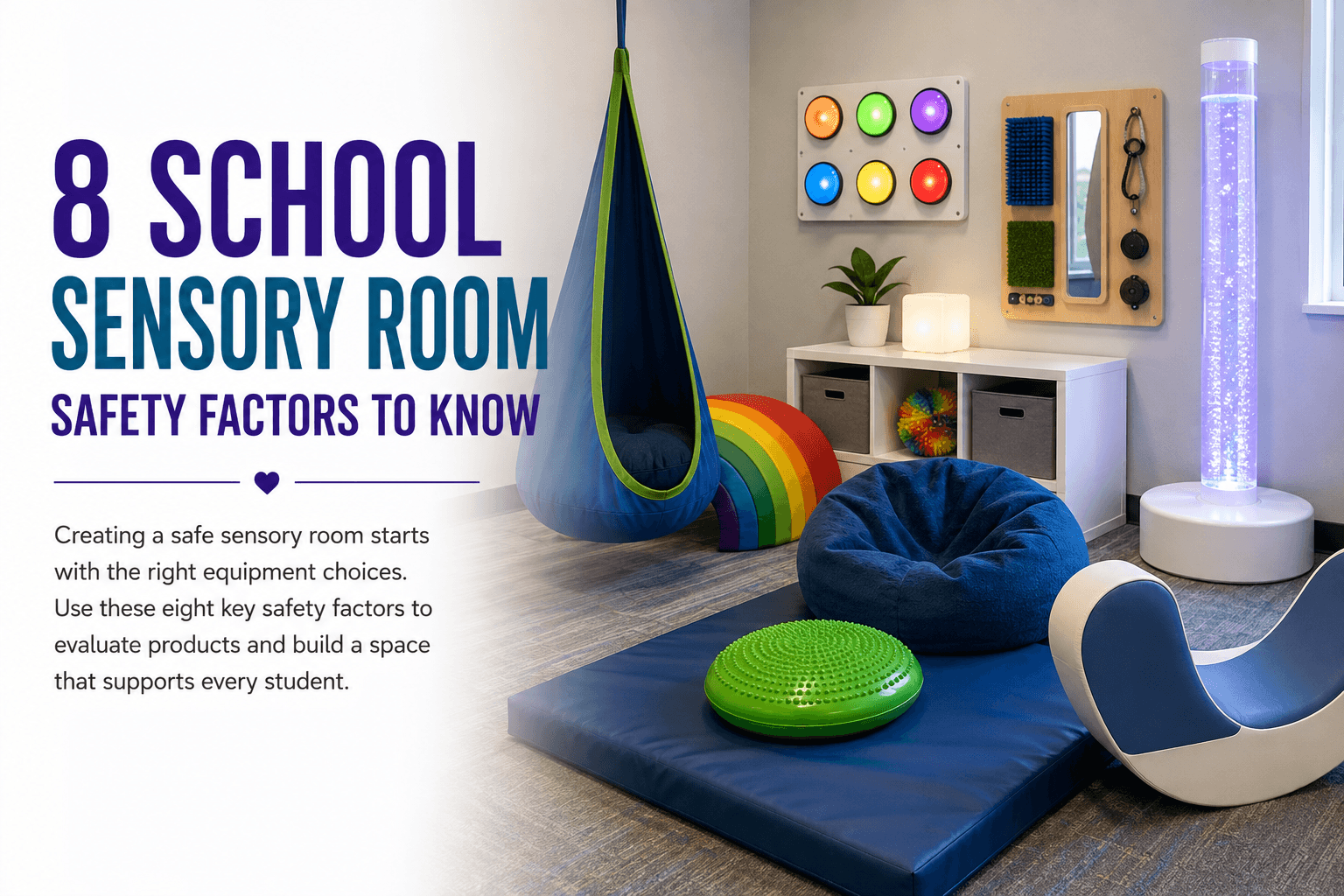
Below are eight important safety factors school teams should consider before choosing sensory equipment for students.
1. Match Sensory Room Equipment to Student Needs
The first safety factor is fit. Sensory room equipment should be selected based on the needs, ages, abilities, and goals of the students who will use the room. A product that works well for one student may be overstimulating, unsafe, or inaccessible for another.
Before purchasing equipment, school teams should ask:
Which students will use the room?
What sensory needs are being supported?
Will students use the space for calming, movement, focus, therapy, or transitions?
Are there students with mobility, vision, hearing, seizure, balance, or behavioral safety needs?
Will the room support individuals, small groups, or both?
Will an occupational therapist, physical therapist, special education teacher, or behavior team help guide equipment choices?
A classroom sensory tools list may include items like Calming Sensory Products, Sensory Products, Sensory Motor Tools, and Deep Pressure Products. The safest setup is the one that fits the students, not just the room.
2. Plan the Room Layout Before Buying Products
A safe sensory room setup starts with layout. School teams should measure the room, identify doors and exits, check outlets, consider supervision sightlines, and plan clear traffic paths before ordering equipment.
Sensory room equipment should not block exits, crowd movement zones, or create trip hazards. Active equipment should be separated from quiet calming areas whenever possible. For example, a swing or crash pad area should not be placed directly beside a reading nook or fragile visual sensory tool.
A thoughtful layout may include:
A calming area
A movement area
A tactile activity station
A visual sensory area
A quiet seating space
A clear entry and exit path
Storage for classroom sensory tools
Open floor space for staff support
Wall and floor padding where needed
Schools designing a larger space may benefit from eSpecial Needs support resources like Turnkey Sensory Room Installation, Quote Requests, and Schools and Government Agencies.
3. Choose Protective Surfaces for Movement Areas
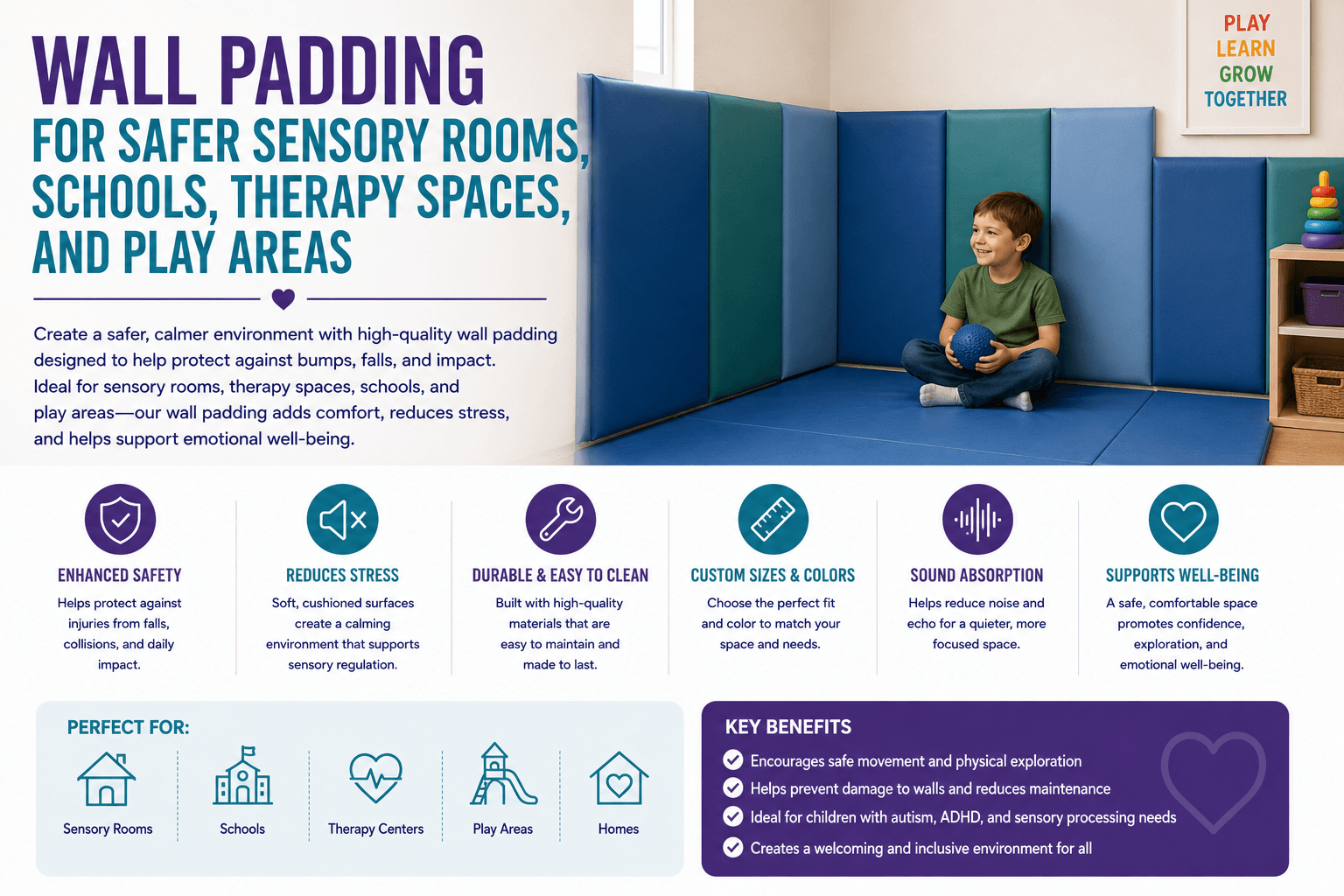
Any school sensory room with jumping, crashing, climbing, swinging, rolling, or balance activities should include proper protective surfaces. Hard floors and hard walls can create unnecessary risk, especially for students who seek strong movement input or have reduced body awareness.
Protective surfaces may include:
Wall padding
Floor mats
Crash pads
Soft play pieces
Protective matting around movement zones
The Wall Padding collection includes padded wall panel options for sensory rooms, therapy areas, schools, gyms, and play spaces. Wall padding can help soften hard surfaces around active movement areas. The Safety Mats collection includes protective floor solutions designed for comfort, support, and everyday safety in sensory, therapy, and activity spaces.
For students who need a safe place to jump, land, or crash during sensory motor play, Crash Pads and Soft Play Products can help create a more controlled movement area. These tools should still be used with supervision and clear rules.
4. Review Swing, Ceiling, and Mounting Safety
Swings and suspended sensory equipment can be powerful tools in a school sensory room, but they require careful planning. Improper mounting, poor clearance, or mismatched equipment can create serious safety concerns.
Before selecting Adaptive Swings and Gyms, Swinging Products, Adaptive Swing Seats, or Swing Frames, school teams should confirm:
Product weight limits
Student size and support needs
Ceiling or frame compatibility
Required hardware
Fall zone clearance
Floor matting needs
Staff supervision requirements
Whether installation must be handled by qualified professionals
Whether the equipment fits the school’s safety policies
A swing area should have enough space on all sides for safe movement. Students should not be able to swing into walls, furniture, shelves, doors, windows, or other students. If a school cannot safely install ceiling mounted equipment, a compatible swing frame may be a better choice.
Square Carpeted Platform Swing - Vestibular Sensory Swing
$164.95
The Spark Sensory square carpeted platform swing is useful in the development of a child’s sensory and vestibular systems! Different movement sensations and repetitive swinging motion has been known to help calm and regulate and over stimulated child. The platform… read more

5. Separate Calming Tools From Active Movement Equipment
A sensory room should not feel chaotic. When calming tools and active movement equipment are placed too close together, students may have difficulty understanding how to use the room safely.
For example, a bubble tube, fiber optic light, or quiet sensory seating area should be protected from running, jumping, or crashing zones. Movement tools belong in open areas with protective mats and clear boundaries. Calming tools should be placed where students can sit, breathe, watch, listen, or reset without being interrupted by high activity.
Helpful calming sensory room equipment may include:
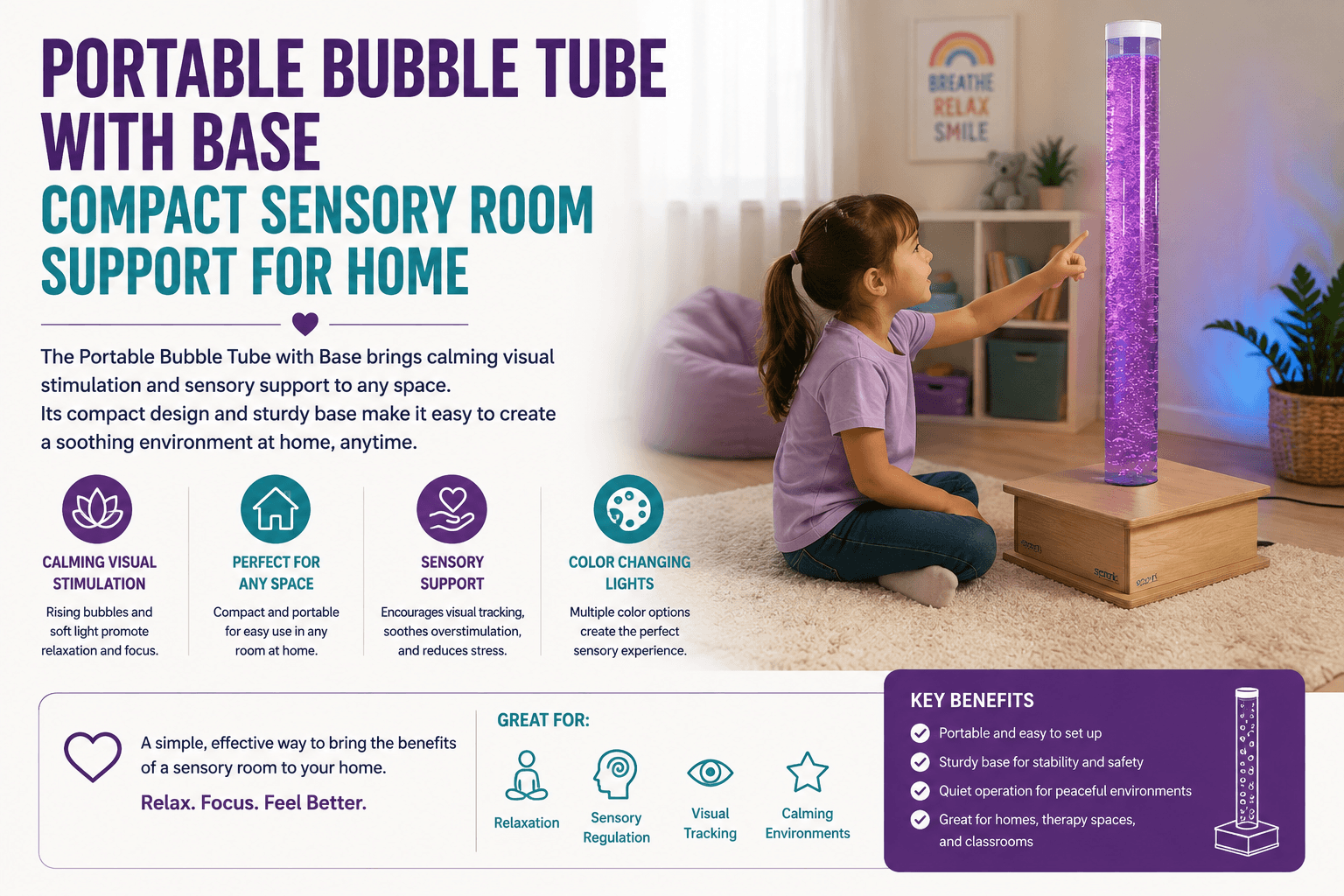
Products like the Portable Bubble Tube With Base can support calming visual engagement, but they should be placed in a stable, protected area where students will not climb on, pull, tip, or bump the unit.
Portable Bubble Tube With Base
$899.00
$950.00
The Portable Bubble Tube brings the calming experience of a larger sensory bubble tube into a more compact format. Its smaller footprint makes it a practical choice for homes, classrooms, therapy offices, sensory rooms, clinics, calming corners, and other spaces… read more

6. Check Accessibility for Every Student Who Will Use the Room
A school sensory room should be accessible, not just well equipped. Students who use wheelchairs, walkers, gait trainers, adaptive seating, braces, AAC devices, or other supports may need extra space and careful product placement.
Accessibility questions include:
Can a wheelchair enter and turn safely?
Are switches, lights, and sensory wall panels placed at reachable heights?
Can students access calming tools from seated positions?
Is there room for staff to assist with transfers?
Are cords secured and out of the path?
Are products usable by students with limited hand strength or motor control?
Can visual tools be seen from different positions?
Is there enough space for mobility equipment?
For inclusive sensory room setup, schools may consider Mobile Sensory Equipment, Sensory Wall Panels, Seating, Positioning Products, and Assistive Technology.
A room is safer when students can access the tools without unsafe reaching, climbing, crowding, or unnecessary transfers.
7. Think About Cleaning, Durability, and Shared Use
School sensory rooms are shared spaces. Products may be used by many students throughout the week, which makes cleaning, durability, and maintenance important safety factors.
Before purchasing classroom sensory tools, school teams should ask:
Can this product be wiped clean?
Does it have removable or washable covers?
Are there small parts that may be lost or mouthed?
Can it handle repeated school use?
Are there seams, straps, cords, or attachments that need regular inspection?
Does the product require water, batteries, charging, or special maintenance?
Is there a storage plan?
Shared sensory room equipment should be checked often for wear, damage, loose hardware, exposed foam, torn fabric, frayed straps, or broken parts. Equipment that is damaged should be removed from use until repaired or replaced.
For schools that want a more complete starting point, Sensory Room Packages may help simplify planning by grouping common sensory room elements. Some packages include visual, tactile, seating, padding, bubble tube, fiber optic, and interactive components, depending on the bundle.
8. Create Rules, Staff Training, and Supervision Plans
Even the best sensory room equipment is not safe without a supervision plan. A school sensory room should have clear expectations for how students enter, use, and leave the space.
A safety plan may include:
Maximum number of students in the room
Which staff members supervise the room
How long students use each activity
Which equipment requires direct adult supervision
Swing and movement rules
Cleaning steps after use
Visual rules posted in the room
Emergency procedures
Student specific sensory plans
Documentation for IEP or support team use when appropriate
Visual supports can help students understand expectations. For example, rules may include one student on the swing at a time, feet first on the crash pad, walking inside the room, ask before using equipment, and stop when staff says stop.
Sensory rooms work best when they are part of a larger support plan. School teams can include occupational therapists, physical therapists, special education teachers, administrators, paraprofessionals, nurses, and families when creating safe use guidelines.
Helpful Sensory Room Equipment Categories for Schools
School teams building or improving a sensory room can explore these eSpecial Needs categories:
FAQs
What is a school sensory room?
A school sensory room is a dedicated space where students can access sensory tools, calming activities, movement equipment, and regulation supports. It may be used for sensory breaks, therapy activities, classroom transitions, calming routines, or special education support.
What sensory room equipment should schools consider first?
Schools should start with sensory room equipment that matches student needs and safety goals. Common starting points include calming sensory tools, sensory seating, crash pads, safety mats, wall padding, tactile tools, bubble tubes, weighted products, and sensory motor equipment.
How do schools choose safe sensory equipment for students?
Schools should consider student age, size, mobility, sensory needs, balance, behavior support needs, supervision level, equipment weight limits, room layout, cleaning needs, and accessibility. Occupational therapists, physical therapists, special education teachers, and administrators can help guide equipment choices.
Does every school sensory room need wall padding?
Not every school sensory room needs wall padding, but it can be helpful in spaces with jumping, crashing, swinging, climbing, or high movement activities. Wall padding may help soften hard surfaces and create a more protective environment around active sensory areas.
What should be included in a sensory room setup plan?
A sensory room setup plan should include room measurements, product placement, supervision rules, safety zones, storage, cleaning routines, accessibility needs, staff responsibilities, and emergency procedures. Schools should also plan separate areas for calming activities and active movement when possible.
How many students should use a sensory room at one time?
The number of students depends on the size of the room, type of equipment, staffing, student needs, and school policies. Active sensory rooms often work best with limited users so staff can supervise safely and students have enough space to move.