Table of Contents
- What Is Soft Play Equipment?
- Why Soft Play Equipment Matters for Children with Special Needs
- Soft Play and Sensory Regulation
- Soft Play Equipment
- Soft Play Set Options
- Soft Play Blocks
- Soft Play Ball Pit
- Soft Play and Ball Pit Setups
- Toddler Soft Play Equipment
- Indoor Soft Play Equipment
- Soft Play Indoor Playground Equipment
- Soft for Play: Why Materials Matter
- Soft Play for Autism
- Soft Play for ADHD
- Soft Play for Low Muscle Tone
- Soft Play for Motor Planning
- Soft Play in Occupational Therapy
- Soft Play in Physical Therapy
- Soft Play for Schools and Daycares
- Soft Play for Home Sensory Rooms
- How to Choose Soft Play Equipment
- Soft Play Safety Tips
- How to Build a Soft Play Area
- Soft Play Equipment for Sale
- Soft Play Sets for Therapy and Learning
- Soft Play Ball Pit Activity Ideas
- Cleaning and Maintenance
- Soft Play Buying Checklist
- Where to Buy Soft Play Products and Sensory Equipment
- Final Thoughts
- FAQs
Soft play equipment gives children a safe, cushioned environment for climbing, crawling, rolling, balancing, jumping, building, and exploring movement. For children with autism, sensory processing needs, developmental delays, low muscle tone, ADHD, balance challenges, or motor planning difficulties, soft play can support active learning while reducing the risks that come with hard surfaces and traditional playground equipment.
A well designed soft play equipment area can be used at home, in a therapy clinic, preschool, daycare, sensory room, school, community center, or indoor play space. It may include soft play equipment, a soft play set, soft play blocks, padded mats, wedges, tunnels, climbers, slides, and a soft play ball pit. These products create an inviting space where children can move, problem solve, regulate, and build confidence through play.
Families, schools, and therapists can explore related support products through eSpecial Needs, including sensory room equipment, sensory motor tools, indoor therapy gyms, adaptive swings, toys, and gross motor products.
What Is Soft Play Equipment?
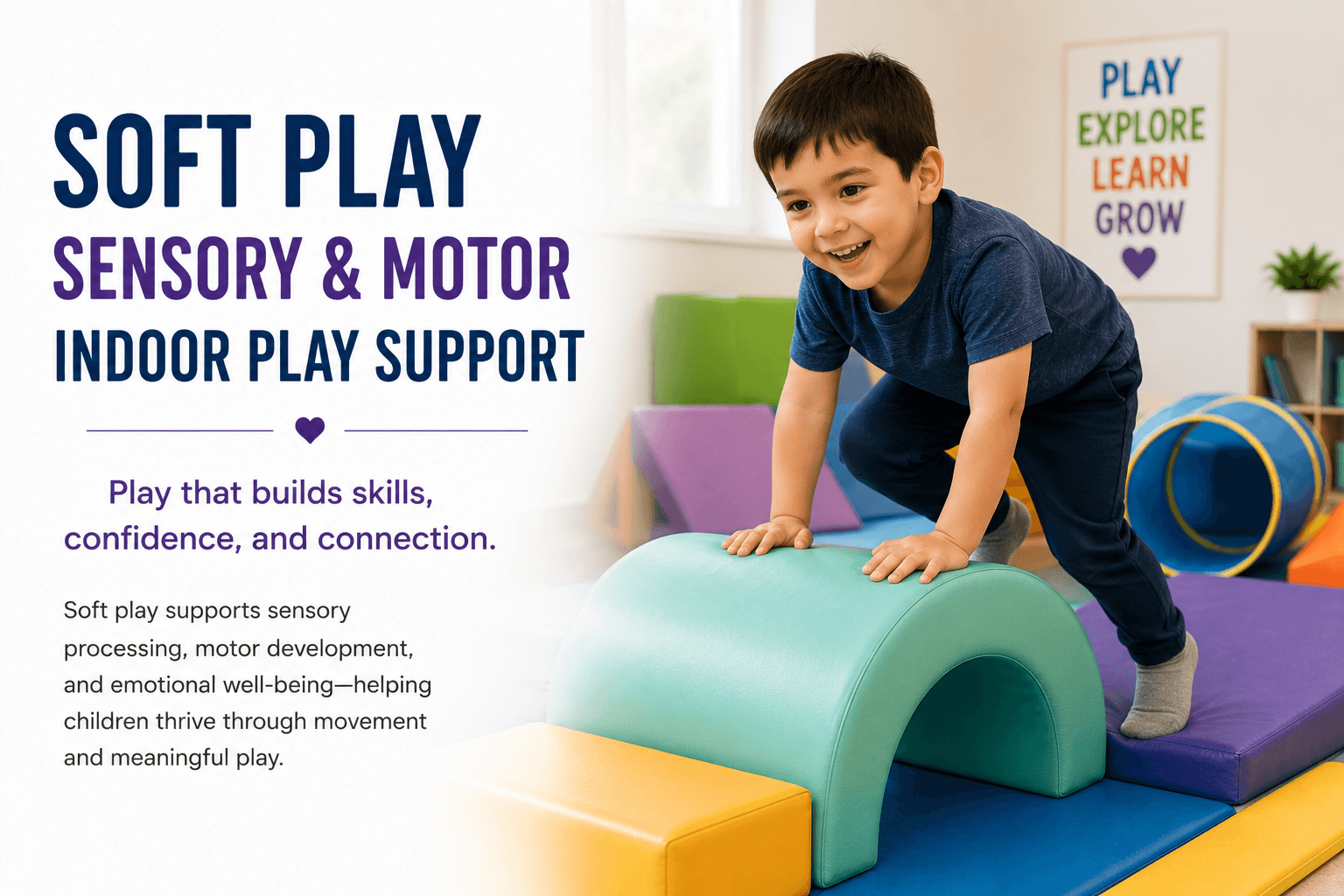
Soft play refers to padded play equipment and cushioned activity spaces designed for safer indoor movement. Instead of hard playground surfaces, soft play equipment uses foam, vinyl, padded blocks, mats, bolsters, ramps, tunnels, and other soft surfaces that are easier on the body during active play.
Soft play can support:
Rolling
Sliding
Building
Tactile exploration
Gross motor development
Sensory regulation
Social play
Early problem solving
Strength and coordination
For children who seek movement or deep pressure input, soft play can be an excellent way to provide safe, structured activity. For children who are hesitant movers, a soft play set can create a lower stress environment where they can practice motor skills at their own pace.
Soft Play Steps & Slide Combo
$1,135.90
The Soft Play Steps & Slide Combo gives toddlers and preschoolers a fun, approachable way to climb, step, slide, and explore movement indoors. The foam filled soft play pieces create a safer active play area for early learning classrooms, therapy… read more

Why Soft Play Equipment Matters for Children with Special Needs
Children with special needs often benefit from movement based play, but traditional play spaces may feel overwhelming, unsafe, or too difficult. A soft play area gives children a more supportive space to practice movement, coordination, balance, and body awareness.
Soft play equipment may be helpful for children with:
Autism
ADHD
Sensory processing differences
Developmental delays
Low muscle tone
Motor planning challenges
Cerebral palsy
Down syndrome
Balance concerns
Coordination difficulties
Anxiety around movement
Early gross motor delays
Soft play equipment can be especially useful for children who need a safer place to move but still require challenge, variety, and sensory input.
Soft Play and Sensory Regulation
Many children use movement to regulate their bodies. Some children need to climb, crash, crawl, roll, or squeeze to feel calm and organized. Others need gentle movement and soft textures to feel comfortable enough to engage.
Soft play may support sensory regulation by offering:
Proprioceptive input through climbing and pushing
Vestibular input through rolling and movement
Tactile input through different soft surfaces
Deep pressure when crawling through tunnels or leaning into cushions
Calming play after school or therapy
Active play before seated tasks
A predictable space for sensory breaks
A soft play and ball pit area can be especially engaging for children who enjoy tactile and movement input. Ball pits give children a full body sensory experience while supporting reaching, shifting weight, and body awareness.
Soft Play Equipment
Soft play equipment includes padded pieces that children can climb over, crawl through, stack, sit on, slide down, and move around safely. These products are commonly used in sensory rooms, therapy gyms, pediatric clinics, schools, daycares, and home play spaces.
Common soft play equipment may include:
Foam climbers
Soft ramps
Steps
Bolsters
Slides
Foam blocks
Balance pieces
Crawl spaces
Toddler play structures
The best equipment depends on the child’s age, size, ability level, supervision needs, and play goals.
Soft Play Corner Colossus Indoor Climber
$2,591.00
$2,850.00
The Soft Play Corner Colossus is a large indoor soft play activity center designed for climbing, sliding, crawling, and gross motor development. Built with oversized foam shapes, ramps, and platforms, it creates an engaging movement space for school-age children in… read more

Soft Play Set Options
A soft play set is a group of padded pieces designed to work together. A set may include steps, ramps, blocks, wedges, tunnels, or a small slide. Some sets are simple and best for toddlers, while others are larger and designed for therapy or active indoor play.
A soft play set may help children practice:
Crawling up a ramp
Climbing steps
Sliding down safely
Crawling through tunnels
Building obstacle courses
Stepping over blocks
Balancing on soft surfaces
Following directions
Taking turns
Problem solving through movement
Soft play sets are helpful because they can be rearranged. A teacher, therapist, or parent can create a new layout to match the child’s goals.
Soft Play Blocks
Soft play blocks are padded foam shapes that children can stack, climb, push, carry, arrange, and build with. They are useful for open ended play because children can use them in many ways.
Soft play blocks may support:
Motor planning
Hand strength
Bilateral coordination
Social play
Problem solving
Pretend play
Spatial awareness
Core strength
Creative building
Turn taking
For children with developmental delays or sensory needs, soft play blocks can provide movement and learning without the hard edges of traditional blocks or furniture.
Children's Factory 14-Piece Module Soft Play Block Set
$909.00
$1,000.00
The Children's Factory 14-Piece Module Soft Play Block Set offers kids hours of imaginative and creative fun. This oversized, giant-sized soft building block set is essentially ideal for developing gross motor skills, matching, and sorting. Blockplay will never be the… read more

Soft Play Ball Pit
A soft play ball pit gives children a contained space filled with lightweight balls. Ball pits are popular because they combine tactile input, movement, pressure, and visual engagement.
A soft play ball pit may support:
Body awareness
Tactile exploration
Reaching and grasping
Sitting balance
Core strength
Calming sensory input
Social play
Cause and effect games
Color sorting
Hide and seek activities
A ball pit should always be supervised, cleaned regularly, and matched to the child’s age and safety needs.
Giant Budget Ball Pit
$1,718.95
$1,935.00
The Giant Budget Ball Pit is a durable, large-format ball pit designed for sensory play, active movement, and therapy use in homes, schools, clinics, and care settings. It offers the size and function of a larger recreational ball pit for… read more

Soft Play and Ball Pit Setups
A soft play and ball pit setup can create a complete indoor movement space. Children may climb over foam shapes, crawl through tunnels, slide into a ball pit, or build obstacle courses around padded mats.
This type of setup can be useful for:
Sensory rooms
Preschool classrooms
Therapy clinics
Home playrooms
Daycare centers
Special education classrooms
Indoor playgrounds
Pediatric therapy spaces
A soft play and ball pit area can give children a safe place to release energy, practice motor skills, and enjoy calming sensory input.
Toddler Soft Play Equipment
Toddler soft play equipment should be low, stable, cushioned, and easy to supervise. Toddlers are still developing balance, coordination, depth perception, and motor control. Soft surfaces can help them explore movement while reducing injury risk.
Toddler soft play equipment may include:
Small foam climbers
Low ramps
Soft steps
Crawling tunnels
Padded mats
Mini slides
Foam blocks
Small ball pits
Soft seating
Activity cushions
For toddlers with special needs, soft play can be used to encourage crawling, kneeling, pulling up, climbing, reaching, and early balance skills.
Indoor Soft Play Equipment
Indoor soft play equipment is designed for use inside homes, clinics, schools, daycare centers, sensory rooms, and indoor playgrounds. Indoor options are helpful because children can move year round, regardless of weather.
Indoor soft play equipment may be used for:
Rainy day movement
Therapy activities
Sensory breaks
Gross motor practice
Preschool centers
Autism support rooms
Calm down spaces
Motor planning practice
Safe energy release
Indoor soft play can be especially helpful for children who need movement before seated learning tasks, homework, mealtime, or bedtime routines.
Children’s Factory School Age Tunnel Climber – Soft Play Climbing & Crawling Set
$1,704.50
$1,875.00
The School Age Tunnel Climber (MPN: CF322-083) is a dynamic soft play set designed to encourage active movement, coordination, and imaginative play for school-aged children. Ideal for classrooms, therapy rooms, and indoor play areas, this climber promotes gross motor development… read more

Soft Play Indoor Playground Equipment
Soft play indoor playground equipment is often larger and more structured than a small home set. It may include padded climbing structures, slides, tunnels, crawl spaces, foam obstacles, and ball pits.
This type of equipment can support:
Group play
Gross motor development
Social interaction
Turn taking
Motor planning
Confidence building
Active sensory input
Inclusive play spaces
Schools, therapy centers, and indoor play facilities may choose soft play indoor playground equipment because it can serve many children with different abilities.
Soft for Play: Why Materials Matter
Parents sometimes look for products that are soft for play because they want equipment that feels safer, more comfortable, and more supportive than hard plastic or wooden structures. Materials matter because children may fall, bump, lean, crash, or roll during active play.
Good soft play materials should be:
Cushioned
Durable
Easy to clean
Supportive
Non abrasive
Stable
Age appropriate
Resistant to daily wear
Comfortable for crawling and climbing
Vinyl covered foam is common because it is padded, wipeable, and durable for therapy or classroom use.
Soft Play for Autism
Soft play can be helpful for autistic children who need movement, tactile input, deep pressure, or a predictable sensory space. Some autistic children enjoy active climbing and crashing. Others prefer quiet crawling, gentle pressure, or enclosed play spaces.
Soft play for autism may support:
Sensory regulation
Safe movement seeking
Calming routines
Reduced overwhelm
Motor planning practice
Social play with clear boundaries
Transition support
Therapy participation
Body awareness
Confidence with movement
A soft play set can be part of a sensory room or calm down area where children choose movement activities that help them feel more regulated.
Soft Play for ADHD
Children with ADHD often need movement to stay engaged. Soft play can provide a safe way to climb, crawl, balance, and move before or between seated activities.
Soft play may help children with ADHD:
Release energy
Practice body control
Improve attention after movement breaks
Build coordination
Follow obstacle course directions
Work on impulse control
Engage in structured play
Transition back to learning tasks
Teachers and parents can use soft play activities as planned movement breaks rather than waiting until a child becomes restless or overwhelmed.
Soft Play for Low Muscle Tone
Children with low muscle tone may struggle with strength, posture, endurance, and coordination. Soft play can create a motivating way to build motor skills through play.
Helpful activities may include:
Crawling up a foam ramp
Climbing soft steps
Kneeling at a block
Pushing foam shapes
Rolling over a bolster
Sitting in a ball pit
Reaching for toys on a wedge
Crawling through a tunnel
Stepping over soft blocks
A physical therapist or occupational therapist can help choose activities that match the child’s ability level.
Soft Play for Motor Planning
Motor planning is the ability to think about, organize, and complete a movement. Some children have difficulty figuring out how to climb, step, crawl, or move through a space. Soft play can provide a safe and motivating way to practice.
Soft play activities can support motor planning through:
Obstacle courses
Crawling paths
Step climbing
Tunnel play
Block building
Rolling activities
Balance challenges
Follow the path games
Copy me movement games
Because the equipment is cushioned, children may feel more confident trying new movements.
Soft Play in Occupational Therapy
Occupational therapists may use soft play equipment to support sensory regulation, fine motor readiness, body awareness, strength, coordination, and participation.
OT goals may include:
Increasing body awareness
Improving sensory regulation
Supporting bilateral coordination
Improving postural control
Preparing the body for tabletop work
Supporting transitions
Reducing sensory seeking behavior during class
Encouraging social play
Improving attention through movement
Supporting self confidence
A soft play area can also be paired with fine motor tools, sensory toys, weighted products, and sensory seating.
Soft Play in Physical Therapy
Physical therapists may use soft play to help children practice movement skills in a fun and safe environment. Foam ramps, wedges, steps, and blocks can make therapy feel more like play.
PT goals may include:
Crawling
Climbing
Balance
Core strength
Weight shifting
Standing tolerance
Motor planning
Coordination
Endurance
Transitional movements
Walking over varied surfaces
A soft play set can make repetitive movement practice more engaging for children who resist traditional exercises.
Soft Play for Schools and Daycares
Schools and daycares may use soft play equipment to create safe indoor movement areas for young children and students with special needs. A soft play area can be used during centers, therapy sessions, recess alternatives, sensory breaks, or early childhood programs.
School benefits may include:
Safe indoor movement
Structured sensory breaks
Gross motor development
Inclusive play options
Social interaction
Calming spaces
Therapy carryover
Early learning support
Rainy day activity
Special education support
Schools may also pair soft play with education products, sensory room equipment, and adaptive furniture.
Soft Play for Home Sensory Rooms
A home sensory room does not need to be large to include soft play. Families can create a small movement area with mats, foam blocks, a tunnel, and a soft seating option.
A home soft play space may include:
Padded floor mat
Soft play blocks
Foam wedge
Tunnel
Ball pit
Crash pad
Weighted lap pad
Sensory toys
Soft lighting
Visual timer
Storage bins
A home setup can help children get movement and sensory input before school, after school, during breaks, or before bedtime routines.
How to Choose Soft Play Equipment
Choosing soft play equipment starts with the child’s age, size, needs, and setting.
Consider:
Age range
Weight capacity
Height of equipment
Available floor space
Supervision needs
Cleaning requirements
Sensory preferences
Motor goals
Balance level
Therapy recommendations
Number of children using it
Storage needs
Indoor or clinic use
Whether a ball pit is appropriate
Whether the child needs calming or active input
A toddler soft play equipment setup should be low and simple. A therapy clinic may need more varied pieces. A school may need durable items that support many children.
Soft Play Safety Tips
Soft play is designed to be safer than hard play structures, but supervision still matters.
Safety tips include:
Use equipment on a flat surface
Match products to the child’s age and size
Supervise climbing and ball pit use
Keep the area clear of sharp furniture
Clean surfaces regularly
Check foam for damage
Follow product weight limits
Avoid overcrowding
Teach safe climbing rules
Use mats under active areas
Remove broken pieces
Watch for sensory overload
Make sure children can exit tunnels or ball pits easily
Soft play should feel fun, safe, and supportive.
How to Build a Soft Play Area
A simple soft play area can be created in stages.
Start with:
Padded mat
Soft blocks
Small ramp or wedge
Tunnel
Ball pit if appropriate
Storage bin
Visual rules
Clear play boundary
Then add pieces based on the child’s needs, such as climbers, sensory toys, swings, weighted products, or indoor therapy gym equipment.
The best soft play space is one that supports real daily routines. It should be easy to set up, easy to clean, and inviting enough that children want to use it.
Soft Play Equipment for Sale
When looking for soft play equipment for sale, consider more than price. The best product should be safe, durable, easy to clean, and appropriate for the child’s needs.
Before buying, check:
Product dimensions
Weight capacity
Material quality
Cleaning instructions
Recommended age range
Indoor use requirements
Storage needs
Support level
Whether adult supervision is required
How the product fits into your space
Families, schools, clinics, and daycare centers should choose equipment that fits both the user and the environment.
Soft Play Sets for Therapy and Learning
Soft play sets can support both therapy and early learning. They create flexible activity spaces where children can practice movement, language, direction following, social skills, and problem solving.
Soft play sets may be used for:
Obstacle courses
Color matching
Counting steps
Following directions
Pretend play
Turn taking
Body awareness games
Balance practice
Crawling games
Calm down routines
A therapist or teacher can adapt the same set for many different goals.
Soft Play Ball Pit Activity Ideas
A soft play ball pit can be used for more than free play.
Try:
Color sorting balls
Find the hidden toy
Toss into a bucket
Reach and grab games
Sit and balance activities
Name the color games
Turn taking with peers
Hide and seek objects
Counting balls
Crossing midline games
Calm deep pressure breaks
Ball pit activities can support sensory regulation, communication, core strength, and fine motor practice.
Cleaning and Maintenance
Soft play equipment should be cleaned regularly, especially in schools, clinics, and shared play spaces.
General care tips include:
Wipe vinyl surfaces after use
Clean spills quickly
Let pieces dry fully
Inspect seams and foam
Replace damaged pieces
Wash ball pit balls regularly
Store pieces away from sharp objects
Follow manufacturer cleaning instructions
Rotate materials when needed
Keep shoes off soft play mats if appropriate
Clean equipment supports safer, more comfortable play.
Soft Play Buying Checklist
Before purchasing, ask:
Who will use the equipment?
What age range does it need to support?
Will it be used at home, school, daycare, or clinic?
Does the child need calming input or active movement?
Is a ball pit appropriate?
How much space is available?
Does the area need mats?
Will multiple children use it?
Is the material easy to clean?
Does the equipment support therapy goals?
Can pieces be rearranged?
Is storage available?
Is the product durable enough for frequent use?
A thoughtful setup will last longer and support more meaningful play.
Where to Buy Soft Play Products and Sensory Equipment
Families, schools, and therapists can build a supportive soft play space with related sensory and movement products from eSpecial Needs.
Helpful collections include:
These categories can help support soft play spaces, sensory rooms, therapy gyms, classrooms, and home movement areas.
Final Thoughts
Soft play offers a safe, engaging way for children to move, explore, build strength, regulate their bodies, and gain confidence. A soft play set, soft play blocks, soft play ball pit, or indoor soft play equipment setup can be especially helpful for children with autism, ADHD, developmental delays, sensory processing needs, low muscle tone, or motor planning challenges.
The best soft play equipment is safe, durable, easy to clean, and matched to the child’s age, size, sensory needs, and movement goals. Some families may start with a small home setup, while schools and clinics may need larger soft play indoor playground equipment or multiple soft play sets.
Whether used at home, school, daycare, or therapy, soft play can turn movement into meaningful support for growth, independence, confidence, and sensory regulation.
FAQs
How do I clean soft play equipment?
Cleaning depends on the product material. Many soft play products have wipeable surfaces, while others may require specific cleaning instructions.
For schools, therapy clinics, and shared spaces, create a regular cleaning routine and follow facility hygiene policies.
What safety tips should I follow with soft play equipment?
Soft play safety tips include:
- Supervise active play
- Use age appropriate equipment
- Follow manufacturer instructions
- Keep equipment on a stable surface
- Leave enough clearance around the play area
- Avoid overcrowding
- Remove hard furniture nearby
- Inspect equipment for damage
- Clean products as directed
- Keep small loose items away from young children
- Stop if a child becomes dizzy, tired, upset, or unsafe
- Match activities to the child’s motor abilities
What should I pair with soft play equipment?
Soft play pairs well with:
- Crash pads
- Sensory seating
- Weighted lap pads
- Fidgets
- Visual timers
- Noise reducing headphones
- Sensory wall panels
- Therapy balls
- Swings when available and safely installed
- Deep pressure products
- Calming sensory tools
Explore Weighted Products, Sensory Seating, Deep Pressure Products, and Sensory Wall Panels.
How do I make a soft play obstacle course?
Start with a few safe movement stations. For example:
- Crawl through a tunnel
- Climb over a foam wedge
- Step on soft blocks
- Roll across a mat
- Jump onto a crash pad
- Toss a ball into a basket
- Sit on a bean bag for a calm finish
Use visual directions when helpful and adjust the course based on the child’s ability and safety needs.
What soft play equipment is best for therapy rooms?
Therapy rooms may benefit from soft play equipment that supports many goals and can be rearranged easily.
Helpful options include:
- Therapy mats
- Crash pads
- Foam wedges
- Bolsters
- Soft steps
- Tunnels
- Climbing shapes
- Balance pieces
- Indoor therapy gym equipment
- Soft play obstacle course pieces