Table of Contents
- What Is Children’s Factory?
- Children’s Factory Classroom Furniture
- Children’s Factory Cube Chairs
- Creating Comfortable Early Learning Spaces
- Children’s Factory Soft Play Equipment
- Soft Play for Sensory and Motor Activities
- Children’s Factory Sensory Tables
- Why Sand and Water Play Can Be Valuable
- Children’s Factory Ball Pits
- Children’s Factory Building Blocks
- Children’s Factory Art and Easel Activities
- Children’s Factory Active Play Equipment
- Movement in Preschool and Special Education
- Children’s Factory Fine Motor and Dressing Activities
- Children’s Factory Products for Sensory Rooms
- Children’s Factory for Preschool Classrooms
- Children’s Factory for Special Education
- Children’s Factory for Therapy Spaces
- Children’s Factory for Daycare and Child Care Centers
- Designing an Early Learning Environment
- Choosing Children’s Factory Products
- Safety and Supervision
- Building a Balanced Classroom
- Shop Children’s Factory at eSpecial Needs
- FAQs
Children’s Factory products are designed for early learning environments where children can sit, move, explore, create, and play. From soft play climbers and sensory tables to classroom seating, easels, building blocks, ball pits, and active play equipment, the brand offers practical options for preschools, special education classrooms, therapy spaces, child care centers, and home learning environments. eSpecial Needs currently carries a broad Children’s Factory collection spanning furniture, sensory play, movement, creative activities, and developmental equipment.
Explore the full Children’s Factory collection at eSpecial Needs.
What Is Children’s Factory?
Children’s Factory is an early childhood furniture and play equipment brand focused on products for learning, movement, sensory exploration, and everyday classroom participation.
Its product range can help create environments where young children have opportunities to:
- Sit and work at an appropriate level
- Explore sensory materials
- Climb and move
- Create art
- Practice fine motor skills
- Participate in group activities
- Explore cause and effect
- Build and construct
- Engage in imaginative play
- Practice everyday skills
The current eSpecial Needs collection includes products for toddlers and early childhood learners as well as options that extend into later childhood and other age ranges.
Children’s Factory Classroom Furniture
Furniture can influence how easily young children access activities throughout the day.
Child sized seating and activity surfaces can help create spaces for:
- Reading
- Art
- Tabletop learning
- Small groups
- Snack time
- Fine motor activities
- Independent play
- Collaborative activities
Furniture should be selected according to the children using it, the available space, the intended activity, and any accessibility requirements.
For broader classroom planning, read Special Education Classroom Equipment Essentials.
Children’s Factory Cube Chairs
One of the versatile seating options in the collection is the Children’s Factory Cube Chair.
The Cube Chair can be positioned as a 6 inch toddler seat, flipped to create a 9 inch seat, or turned on its side for use as a small tabletop surface. The current product is made from recyclable LLDPE, has a nonporous surface designed for easy cleaning, and is rated for ages 12 months and older.
This type of flexible furniture can be useful in:
- Preschool classrooms
- Child care centers
- Early intervention programs
- Reading spaces
- Playrooms
- Small group areas
Being able to use one piece of furniture in several configurations can also help classrooms adapt as activities change during the day.
Creating Comfortable Early Learning Spaces
Furniture for young children should support the activity instead of becoming an obstacle.
Consider:
- Seat height
- Table height
- Foot positioning
- Child size
- Reach
- Stability
- Cleaning needs
- Available floor space
Children with more complex positioning requirements may need specialized adaptive seating rather than standard early childhood furniture.
For additional information about seating needs, see When Does a Child Need Adaptive Seating at School?.
Children’s Factory Soft Play Equipment
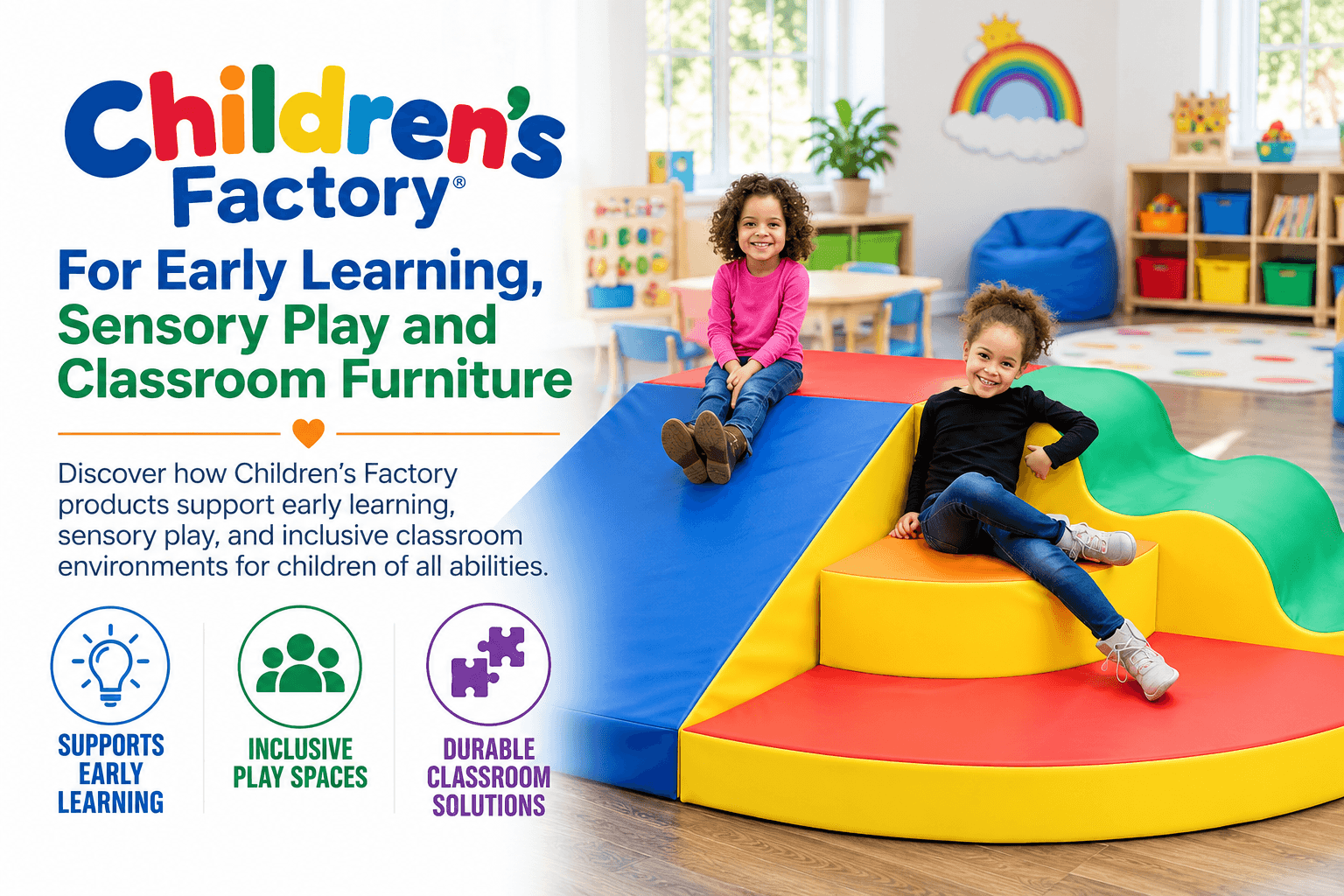
Soft play equipment creates opportunities for active indoor play using cushioned climbing, crawling, sliding, and movement surfaces.
These environments can encourage children to explore:
- Climbing
- Crawling
- Balance
- Coordination
- Motor planning
- Body awareness
- Gross motor movement
The Soft Play Corner Colossus Indoor Climber uses five foam and vinyl pieces that connect to form ramps, platforms, and climbing shapes. It is designed for indoor movement activities in settings such as sensory rooms, classrooms, therapy spaces, and indoor play areas.
Soft Play Corner Colossus Indoor Climber

$2,591.00
$2,850.00
The Soft Play Corner Colossus is a large indoor soft play activity center designed for climbing, sliding, crawling, and gross motor development. Built with oversized foam shapes, ramps, and platforms, it creates an engaging movement space for school-age children in… read more
Soft Play for Sensory and Motor Activities
Soft play products can be particularly useful when children enjoy movement but the environment needs cushioned surfaces.
Depending on the equipment, children may:
- Crawl across surfaces
- Climb onto different heights
- Slide down ramps
- Move over obstacles
- Transition between body positions
- Practice planning a route through the equipment
For additional ideas, read Soft Play Equipment for Sensory, Motor and Indoor Play Support.
Always follow product instructions and provide appropriate supervision during active play.
Children’s Factory Sensory Tables
Sand and water play can combine tactile exploration with pouring, scooping, measuring, sorting, and imaginative activities.
The Children’s Factory Neptune Sand and Water Sensory Table features two basins with drains and a mobile steel frame with casters. The table is available in two heights and is designed for indoor or outdoor use.
Sensory tables may be used with appropriate materials for:
- Water exploration
- Sand activities
- Scooping
- Pouring
- Floating and sinking activities
- Measuring
- Sorting
- Pretend play
- Fine motor practice
For more activity ideas, see Sensory Table: A Complete Guide for Home, School, and Therapy.
Why Sand and Water Play Can Be Valuable
Sand and water activities can provide multiple types of learning at the same time.
Children may practice hand control while pouring, learn early concepts such as full and empty, explore textures, and interact socially with classmates around a shared activity.
The activity can be kept simple for younger children and made more complex as skills develop.
Explore additional Sensory Tables for more options.
Mini Double Discovery Table

$227.25
$250.00
Lightweight, low profile tub tables for tactile experience. Each tub is 6.75" deep with its own snap lid. Easily removable for emptying or replenishing. Easy assembly (no tools required) with anti-slip heavy duty rubber floor protectors. Recommended for ages 23… read more
Children’s Factory Ball Pits
Ball pits combine movement with tactile and visual play.
The Corral Ball Pool Padded Sensory Ball Pit is designed for younger children and includes padded foam walls and 500 multicolored balls. The current product is intended for supervised sensory and active play in classrooms, clinics, preschools, and similar settings.
Ball pit activities may provide opportunities for:
- Crawling
- Reaching
- Throwing
- Searching
- Color matching
- Body awareness
- Social play
- Tactile exploration
For more guidance, read Sensory Ball Pits for Regulation: What to Know.
Corral Ball Pool Padded Sensory Ball Pit

$772.75
$850.00
The Corral Ball Pool is a padded ball pool designed for younger children who benefit from sensory play, movement, and active exploration. Sized for ages 3 to 6, it offers a supportive space for balancing, wading, and tactile play in… read more
Children’s Factory Building Blocks
Building activities allow children to experiment with size, shape, balance, stacking, and spatial relationships.
The Toddler Baby Building Blocks include 12 soft 5.5 inch cube blocks in six colors.
Large blocks can encourage:
- Stacking
- Sorting
- Matching
- Building
- Pretend play
- Two handed coordination
- Cooperative play
Open ended building toys are particularly useful because there is not only one correct way to play.
A child can use the same blocks differently as new skills and interests develop.
Toddler Baby Building Blocks

$159.00
$175.00
Teenie, tiny marshmallow soft building blocks for baby and toddler hands. Set of 12 blocks. Each block measures 5 1/2" cube. … read more
Children’s Factory Art and Easel Activities
Art gives children opportunities to explore color, movement, creativity, hand control, and self expression.
The Indoor Outdoor Molded Double Easel provides activity surfaces on both sides, including magnetic dry erase boards, paper clips, and trays for supplies. It folds for storage and can be used indoors or outdoors.
An easel may be used for:
- Painting
- Drawing
- Coloring
- Magnetic activities
- Letter practice
- Shape activities
- Collaborative art
Vertical surfaces can also create a different reaching and hand movement experience than working flat on a tabletop.
For more hand skill activities, read Fine Motor Skills Activities and Tools Every OT Recommends.
Indoor/Outdoor Molded Double Easel

$250.00
$275.00
This sturdy lightweight Indoor/Outdoor Molded Double Easel is easy to set up or fold away. Both sides have a magnetic/dry erase board, clips to hold paper for drawing or coloring and a handy tray for holding your markers, crayons or… read more
Children’s Factory Active Play Equipment
Young children often learn through movement.
Active play equipment can provide opportunities for:
- Riding
- Pushing
- Balancing
- Steering
- Climbing
- Crawling
- Gross motor play
The MyRider 3 Wheel V Scooter uses a three wheel design and V shaped footplate intended to support balance and stability during riding. The current model is recommended for ages 3 and older and has a listed 70 pound weight capacity.
When selecting riding toys, always compare the child's size and abilities with manufacturer age and weight guidance.
MyRider 3-Wheel V Scooter

$222.75
$245.00
Fresh air, sunshine and the exercise a child needs to burn off energy and stay fit are all just three wheel away with a MyRider 3-Wheel V Scooter! Its advanced design and unique V-shaped footplate promotes better balance and stability… read more
Movement in Preschool and Special Education
Active play can be incorporated into:
- Recess
- Gross motor stations
- Therapy
- Indoor movement breaks
- Outdoor play
- Structured obstacle activities
Movement equipment should have enough open space around it to be used safely.
For additional movement products, explore Active Play.
Children’s Factory Fine Motor and Dressing Activities
Play equipment can also be used to practice everyday hand skills.
The Manual Dexterity Dressing Vests provide activities involving fasteners such as buttons, snaps, and zippers. The current set is designed for ages 3 and older and specifically carries a small parts warning for children under age 3.
Dressing activities may provide opportunities to practice:
- Pinching
- Pulling
- Two handed coordination
- Finger control
- Fastener use
- Dressing routines
These skills can support participation in everyday self care activities.
For a broader look at independence skills, read Daily Living Skills and Best Adaptive Tools to Build Independence.
Manual Dexterity Boards - Set Of All 6 Boards

$120.00
$150.00
Individual boards of Masonite covered in heavy duty cotton blend, encourages children to practice basic skills. Play tasks reinforce basic learning. … read more
Children’s Factory Products for Sensory Rooms
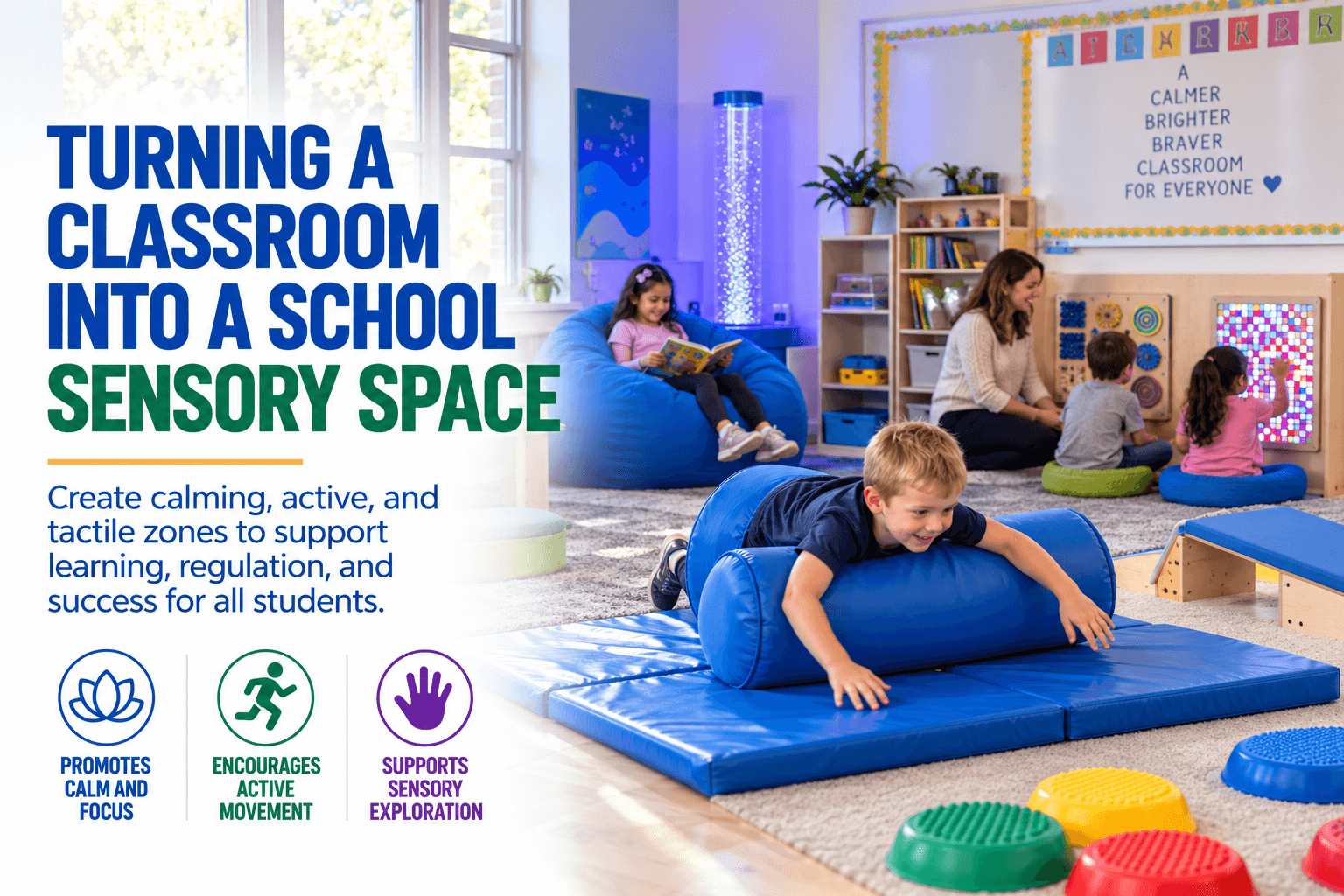
Some Children’s Factory products can also be incorporated into sensory rooms and sensory motor environments.
Depending on the room, useful options may include:
- Soft play equipment
- Ball pits
- Mirrors
- Sensory tables
- Building blocks
- Active play products
- Seating
The goal should be to choose equipment based on the students who will use the room rather than simply filling available space.
Schools planning a complete environment can read School Sensory Room Design for Autism Support and The Complete Guide to School Sensory Room Equipment.
Children’s Factory for Preschool Classrooms
Preschool classrooms usually need to support many activities within one room.
A single space may need areas for:
- Group learning
- Reading
- Art
- Sensory exploration
- Active play
- Pretend play
- Quiet activities
- Fine motor work
Children’s Factory furniture and play products can be used to help establish these different activity areas.
For example, a classroom might combine cube chairs for seating, a sensory table for tactile exploration, an easel for art, building blocks for open ended play, and soft play products for a separate movement area.
Children's Factory 21-Piece Module Soft Play Block Set

$1,136.25
$1,250.00
The Children's Factory 21-Piece Module Soft Play Block Set offers kids hours of imaginative and creative fun. This oversized, giant-sized soft building block set is essentially ideal for developing gross motor skills, matching, and sorting. Blockplay will never be the… read more
Children’s Factory for Special Education
In special education environments, furniture and play equipment should be evaluated around the individual students who will use it.
Consider:
- Mobility
- Physical size
- Motor control
- Communication
- Sensory preferences
- Reach
- Safety awareness
- Supervision
- Accessibility
Standard early childhood furniture may work well for some students, while others require adaptive seating, specialized positioning, or more accessible equipment.
The article What Equipment Does a Special Education Classroom Need? provides additional guidance for planning a complete classroom.
Children’s Factory for Therapy Spaces
Children’s Factory products may also fit into occupational therapy, physical therapy, early intervention, and pediatric therapy environments.
Depending on the activity, therapists may incorporate:
- Soft play climbers
- Fine motor activities
- Dressing practice
- Sensory tables
- Ball pits
- Art surfaces
- Riding toys
- Child sized seating
The equipment itself does not determine a therapy goal. Therapists can select and adapt activities according to the individual child's plan.
Children’s Factory for Daycare and Child Care Centers
Child care environments need furniture and play equipment that can support frequent use throughout the day.
When planning a daycare space, consider:
- Age range
- Group size
- Cleaning
- Storage
- Available floor space
- Indoor and outdoor use
- Supervision
- Activity transitions
A well organized environment can help children understand where different activities happen while making it easier for staff to supervise and manage materials.
Soft Play Mini Climber Ball Pit

$1,159.00
$1,275.00
Soft Play Mini Climber Ball Pit is a soft play climber and ball pit combined into one great activity center. The bright colors will attract curious young children to this soft corner climber. Soft Play Mini Climber Ball Pit is… read more
Designing an Early Learning Environment
Instead of selecting individual products without a plan, divide the room into activity zones.
Possible areas include:
Quiet Learning Area
Consider child sized seating, books, puzzles, and simple tabletop activities.
Creative Area
An easel, art supplies, and washable surfaces can create a dedicated art space.
Sensory Area
Sensory tables, tactile activities, or a ball pit may provide opportunities for sensory exploration.
Movement Area
Soft play products and gross motor activities can create a separate area for active play.
Building Area
Blocks and construction materials allow children to create and experiment.
Clear zones can make it easier to keep active movement separate from quieter activities.
Choosing Children’s Factory Products
Before purchasing, consider the specific setting and intended users.
Ask:
- What age group will use the product?
- What activity should it support?
- How much room is available?
- Is the product appropriately sized?
- Can it be cleaned easily?
- Will it be shared by many children?
- Does the activity require supervision?
- Will it be used indoors or outdoors?
- Does it need to move between rooms?
- Are there weight or age limits?
- Are there small parts?
- Does the child need adaptive support beyond what the product provides?
These questions can help narrow a large collection into equipment that fits the actual space.
Safety and Supervision
Follow the manufacturer's age recommendations, installation instructions, cleaning guidance, and user limits.
Pay particular attention to:
- Climbing equipment
- Riding toys
- Ball pits
- Equipment with small pieces
- Mobile furniture
- Outdoor products
- Products used by multiple children
Check equipment regularly for damage, loose parts, worn surfaces, or changes in stability.
Products intended for standard early childhood use should not be assumed to replace specialized adaptive equipment when a child needs additional positioning, mobility, or safety support.
Building a Balanced Classroom
A strong early childhood environment generally includes more than one type of activity.
Rather than filling a classroom with only tables or only active play equipment, consider a balance of:
- Seating
- Fine motor activities
- Art
- Sensory play
- Construction
- Movement
- Quiet play
- Social activities
This provides children with different ways to participate throughout the day.
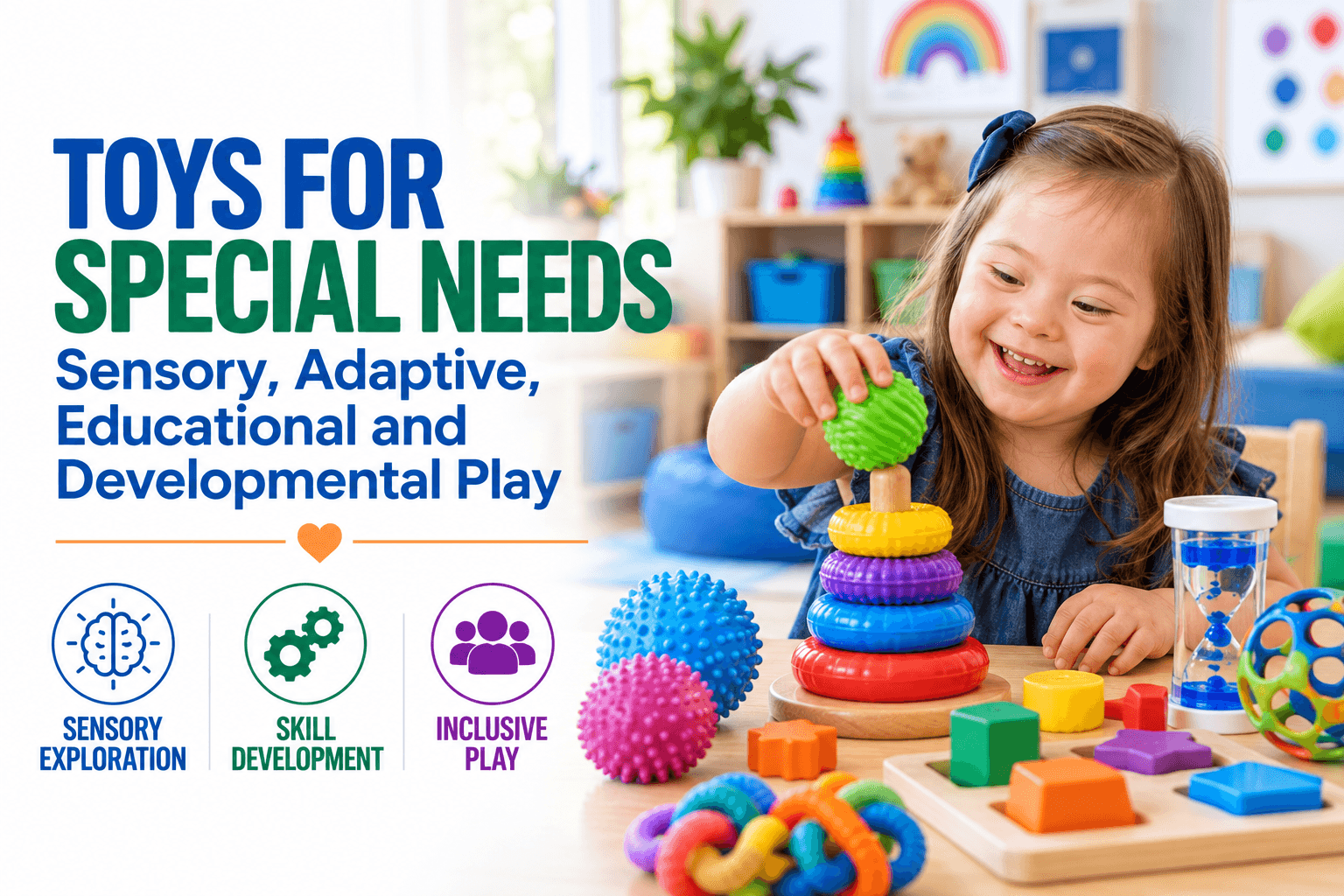
For more ideas about combining learning, sensory, communication, and movement supports, see Toys for Special Needs: Sensory, Adaptive, Educational, and Developmental Play.
Shop Children’s Factory at eSpecial Needs
The Children’s Factory collection at eSpecial Needs includes early childhood furniture, classroom seating, soft play equipment, sensory tables, ball pits, active play products, art equipment, building activities, and other learning and play solutions.
You can also explore related collections including Play Furniture, Activity Tables, Sensory Tables, Active Play, Toys, and Sensory Development.
FAQs
What age groups are Children’s Factory products designed for?
Children’s Factory offers products for a range of early childhood and school age settings. The appropriate age varies by product, so always check the manufacturer’s age recommendations, dimensions, and weight limits before purchasing.
Is Children’s Factory equipment suitable for special education classrooms?
Many Children’s Factory products can work well in special education classrooms, especially when students benefit from soft play, sensory exploration, child sized furniture, fine motor activities, or movement opportunities. Product selection should still be based on each student’s abilities, size, mobility, and support needs rather than diagnosis alone.
For broader classroom planning, see Special Education Classroom Equipment Essentials.
Can Children’s Factory products be used in sensory rooms?
Yes. Certain Children’s Factory products can be incorporated into sensory rooms, including soft play equipment, ball pits, sensory tables, mirrors, seating, and movement activities.
Schools planning a complete space can also read School Sensory Room Design for Autism Support.
What Children’s Factory products are good for toddlers?
Toddler appropriate options may include low seating, cube chairs, large soft blocks, soft play structures, sensory tables, and other products specifically rated for younger children. Always follow the individual product’s age guidance and supervision requirements.
Are Children’s Factory products only for schools?
No. They may also be used in:
- Child care centers
- Preschools
- Therapy clinics
- Early intervention programs
- Libraries
- Community centers
- Home playrooms
- Homeschool environments
The right setting depends on the specific product.
How do I know whether classroom furniture is the right size?
Consider:
- Seat height
- Table height
- Child height
- Foot placement
- Reach
- Knee clearance
- Ability to get in and out safely
Furniture should allow the child to participate comfortably without excessive reaching or awkward positioning.