Table of Contents
- What Is a Sensory Table?
- Why Sensory Tables Are Helpful
- Sensory Table Benefits for Children with Autism
- Types of Sensory Tables
- Water Sensory Table
- Sand Sensory Table
- Sensory Bin Table
- Light Sensory Table
- Outdoor Sensory Table
- Sensory Table Materials
- How to Choose a Sensory Table
- Sensory Table Safety Tips
- Sensory Table and Sensory Room Design
- Common Sensory Table Mistakes to Avoid
- Sensory Table Buying Guide
- FAQs
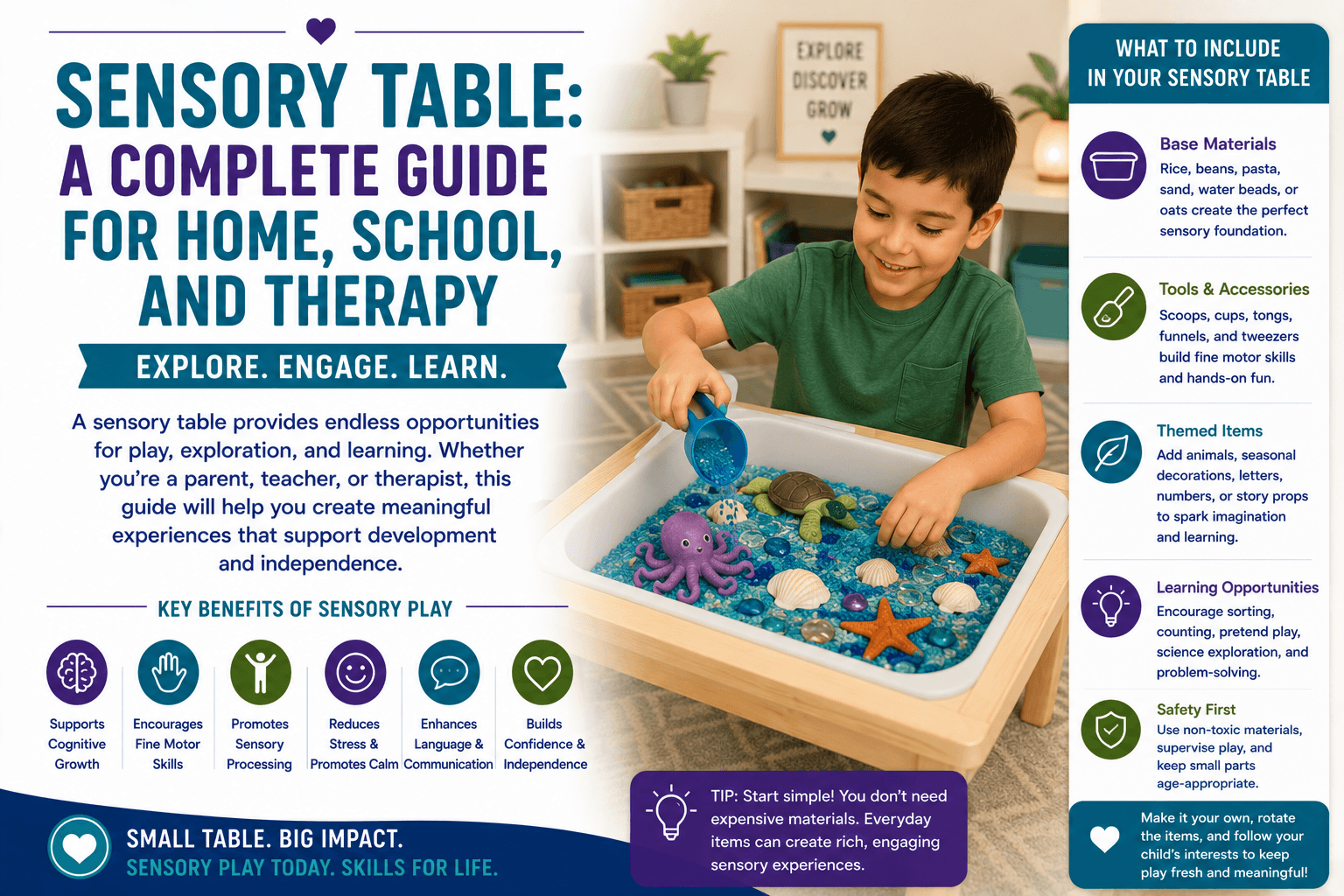
A sensory table is a hands on activity station that helps children explore touch, sight, sound, movement, and fine motor skills through sensory play. Whether it is used at home, in a preschool classroom, in an occupational therapy clinic, or inside a sensory room, a sensory table gives children a structured place to scoop, pour, sort, squeeze, splash, dig, feel, and explore materials in a safe and purposeful way.
For children with autism, sensory processing differences, developmental delays, ADHD, anxiety, fine motor challenges, or a need for calming sensory input, a sensory table can be more than a play space. It can become a tool for learning, regulation, communication, and daily skill development.
Families, teachers, and therapists can also pair a sensory table with other supportive tools from eSpecial Needs, including Sensory Room Equipment, Sensory Toys, Tactile Stimulation Products, Sensory Motor Tools, and Sensory Bundles and Kits.
What Is a Sensory Table?
A sensory table is a child sized table, tray, bin, or activity station designed to hold sensory materials. These materials may include water, sand, rice, beans, beads, foam, kinetic sand, pom poms, scoops, cups, textured toys, visual objects, or themed learning items.
A sensory table may be used for:
Tactile exploration
Fine motor practice
Calming sensory play
Preschool learning centers
Autism sensory activities
Occupational therapy sessions
Speech and language practice
Social play
Independent play
Cause and effect learning
Hand strengthening
Visual motor development
A sensory table is often used with toddlers, preschoolers, elementary students, and children with special needs, but older children and some adults may also benefit from sensory table activities when materials are chosen appropriately.
Why Sensory Tables Are Helpful
Sensory tables support learning through active exploration. Instead of only watching or listening, children use their hands, eyes, ears, muscles, and curiosity to interact with materials.
A sensory table may help support:
Fine motor skills
Hand strength
Bilateral coordination
Sensory regulation
Attention
Social interaction
Language development
Early math skills
Early science skills
Creative play
Problem solving
Calm down routines
Turn taking
Body awareness
For children who seek tactile input, a sensory table provides a safe place to touch and explore. For children who avoid certain textures, it can offer gradual exposure in a low pressure way.
Sensory Table Benefits for Children with Autism
A sensory table for autism can be especially helpful because many autistic children experience sensory input differently. Some children seek strong sensory input, while others avoid certain textures, sounds, or visual stimulation. A sensory table allows adults to adjust materials to match the child’s needs.
Possible benefits include:
Calming tactile play
Predictable sensory routines
Choice making
Reduced stress during transitions
Fine motor practice
Independent play opportunities
Social communication practice
Safe texture exploration
Sensory breaks during the day
Support for occupational therapy goals
For children who become overwhelmed by noisy or crowded spaces, a sensory table can also be part of a calming corner or sensory room. Pair it with products from Sensory Room Equipment, Calming Sensory Products, and Sensory Seating.
Types of Sensory Tables
There are several types of sensory tables. The best option depends on the child’s age, setting, space, supervision, and sensory goals.
Water Sensory Table
A water sensory table allows children to scoop, pour, splash, float, sink, and transfer materials. Water play is popular because it is calming for many children and easy to change for different learning activities.
Water sensory table ideas include:
Floating and sinking objects
Color mixing with washable water color
Sponge squeezing
Cup pouring
Boat play
Animal washing station
Ice cube exploration
Measuring cup activities
Water bead alternatives for younger children
Sink or float science activity
Water play should always be supervised. Empty and clean the table after use.
Sand Sensory Table
A sand sensory table provides tactile input and hand strengthening opportunities. Children can dig, rake, scoop, build, hide objects, and create patterns.
Sand sensory table ideas include:
Digging for letters
Construction vehicle play
Desert animal habitat
Shell hunt
Treasure search
Pattern drawing
Scoop and pour activities
Small world play
Use clean play sand and avoid dusty materials for children with respiratory sensitivities.
Sensory Bin Table
A sensory bin table holds bins or trays filled with different textures and objects. This is a flexible choice because materials can be changed often.
Popular sensory bin fillers include:
Dry rice
Dry pasta
Pom poms
Fabric scraps
Kinetic sand
Shredded paper
Foam pieces
Large beads
Smooth stones
Feathers
Cotton balls
Buttons when age appropriate
Sensory bin tables are useful at home, in classrooms, and in therapy settings because they can be customized for different needs.
Science Activity Table
$540.77
$584.99
Curious scientists can explore magnets, magnifiers and mirrors at this Science Activity table by Jonti-Craft. Ideal for children's science lessons in preschool classrooms or for use as sensory tables in kids' science museums. The science observation table has six sides… read more

Light Sensory Table
A light sensory table or light table uses illumination to create visual exploration. Children may use translucent shapes, colored tiles, gel bags, letters, or sensory objects on the glowing surface.
A light sensory table may support:
Visual attention
Color recognition
Shape sorting
Calm visual input
Fine motor play
Early literacy
Science exploration
Light based tools can also pair well with Sensory Lights, Bubble Tubes, and Fiber Optic Sensory Lights.
Outdoor Sensory Table
An outdoor sensory table allows for larger, messier sensory play. It may include water, sand, mud kitchen activities, leaves, pinecones, flowers, rocks, and nature objects.
Outdoor sensory table ideas include:
Mud kitchen play
Garden planting
Leaf sorting
Rock washing
Water painting
Nature texture trays
Flower petal sorting
Bug themed play
Outdoor construction play
Outdoor sensory play can add movement, fresh air, and natural textures to a child’s routine.
Sensory Table Materials
Choosing the right materials matters. Some children love messy textures, while others need a gradual introduction.
Popular sensory table materials include:
Water
Sand
Kinetic sand
Dry rice
Dry beans for older children
Dry pasta
Pom poms
Fabric pieces
Foam
Smooth stones
Play dough
Shaving cream when appropriate
Bubble foam
Leaves
Shells
Large buttons
Large beads
Sponges
Scoops
Cups
Funnels
Tongs
Tweezers
Measuring spoons
Always consider choking risk, allergies, skin sensitivities, mouthing behavior, and cleanup needs.
How to Choose a Sensory Table
The best sensory table depends on where it will be used and who will use it.
Consider:
Child age
User height
Table height
Bin depth
Storage space
Cleaning needs
Indoor or outdoor use
Number of children using it
Sensory goals
Fine motor goals
Safety needs
Materials used
Supervision level
Mobility access
Wheelchair access if needed
A sensory table for toddlers may be low and simple. A classroom sensory table may need multiple bins and sturdy construction. A therapy sensory table may need adjustable materials for individualized goals.
Sensory Table Safety Tips
Sensory table activities should always be safe and supervised.
Safety tips include:
Use age appropriate materials
Avoid choking hazards
Supervise water play closely
Check for allergies
Avoid materials that irritate skin
Clean and dry the table after use
Replace wet materials often
Keep floors dry
Teach clear table rules
Store materials safely
Avoid dusty fillers for children with breathing concerns
Do not use food items with children who may eat unsafe amounts
Watch for signs of distress or overload
Sensory play should feel safe and supportive. If a child becomes overwhelmed, switch to a calmer texture or take a break.
Sensory Table and Sensory Room Design
A sensory table can be a helpful part of a sensory room because it gives children a hands on activity station. It works especially well with other calming, tactile, movement, and visual tools.
A sensory room may include:
Sensory table
Bubble tube
Fiber optic lights
Sensory wall panel
Weighted lap pad
Crash pad
Soft seating
Fidgets
Swings
Visual timer
Noise reducing headphones
Tactile toys
Calming lighting
Browse Sensory Room Equipment, Bubble Tubes, Sensory Wall Panels, and Adaptive Swings.
See-Thru Mini Sensory Table
$580.31
$629.99
The See-Thru Mini Sensory Table features a clear, tough, nine-inch deep acrylic tub provides an interesting perspective on sensory play without taking up a lot of space. Great for teaching textures, colors, and lessons such as floating versus sinking. Bottom… read more

Common Sensory Table Mistakes to Avoid
Avoid these common mistakes:
Using too many materials at once
Choosing fillers that are unsafe for the child’s age
Forgetting about allergies
Making the activity too messy too soon
Expecting every child to like every texture
Leaving water play unsupervised
Not teaching cleanup routines
Using the sensory table only as free play
Ignoring signs of sensory overload
Choosing a table that is too tall or too low
Not adapting the activity for wheelchair users
Using strong scents without checking tolerance
A sensory table should be flexible. The goal is to support the child, not force a specific sensory experience.
Sensory Table Buying Guide
When shopping for a sensory table, look for features that match your setting.
For home use, look for:
Easy cleanup
Compact size
Safe height
Storage lid
Durable bins
Simple setup
For schools, look for:
Strong construction
Multiple child access
Easy sanitizing
Material storage
Stable frame
Clear classroom rules
For therapy clinics, look for:
Adjustable activities
Fine motor tool compatibility
Easy material changes
Accessible placement
Durable design
Individualized activity options
You can also build a sensory table station by combining a sturdy table or bin with tactile tools, fine motor tools, sensory toys, and visual supports from eSpecial Needs.
FAQs
How much space should I leave around a sensory table?
Leave enough space for children to stand, move, reach, and switch sides safely. In classrooms and therapy rooms, make sure there is also room for adult supervision, wheelchair access when needed, and a clear walking path around the table.
Can a sensory table be used for one child and small groups?
Yes. Sensory tables can work well for individual play, one on one therapy, partner activities, or small group learning. For groups, set clear rules for sharing tools, taking turns, keeping materials in the table, and cleaning up when finished.
What materials should I avoid putting in a sensory table?
Avoid materials that create choking risks, allergy concerns, sharp edges, strong odors, staining, excessive dust, mold risk, or difficult cleanup. For younger children or students who mouth objects, use larger safe items and close supervision.
How can I make sensory table play less messy?
Use smaller amounts of material, place a mat under the table, provide scoops instead of large containers, set clear boundaries, use trays or bins nearby for tools, and teach a simple cleanup routine. For water play, keep towels close and use the drain valve when available.
How often should sensory table materials be changed?
Materials should be changed whenever they become dirty, wet when they should be dry, mixed beyond use, or no longer safe. In classrooms and therapy settings, sensory materials should be refreshed regularly based on hygiene policies, number of users, and the type of material.
Where can I buy sensory tables and related sensory play products?
Families, schools, therapists, and care teams can shop Sensory Tables, Sandboxes and Sensory Tables, Sensory Products, Tactile Stimulation Products, Education Products, and Toys at eSpecial Needs.