Table of Contents
- What Are Toys for Special Needs?
- Why Play Matters for Children With Special Needs
- Sensory Toys for Special Needs
- Tactile Toys for Touch Exploration
- Fidget Toys for Busy Hands
- Sensory Kits for Home, School, and Travel
- Auditory Toys and Musical Play
- Fine Motor Toys
- Puzzles for Special Needs
- Bouncing and Jumping Toys
- Spinning and Balance Toys
- Crash Pads and Active Sensory Play
- Arts and Crafts Toys
- Safety When Choosing Special Needs Toys
- Do Not Assume a Therapy Toy Is Safe Without Supervision
- How to Choose Toys for Special Needs
- Build a Balanced Toy Collection
- Shop Toys for Special Needs at eSpecial Needs
- FAQs
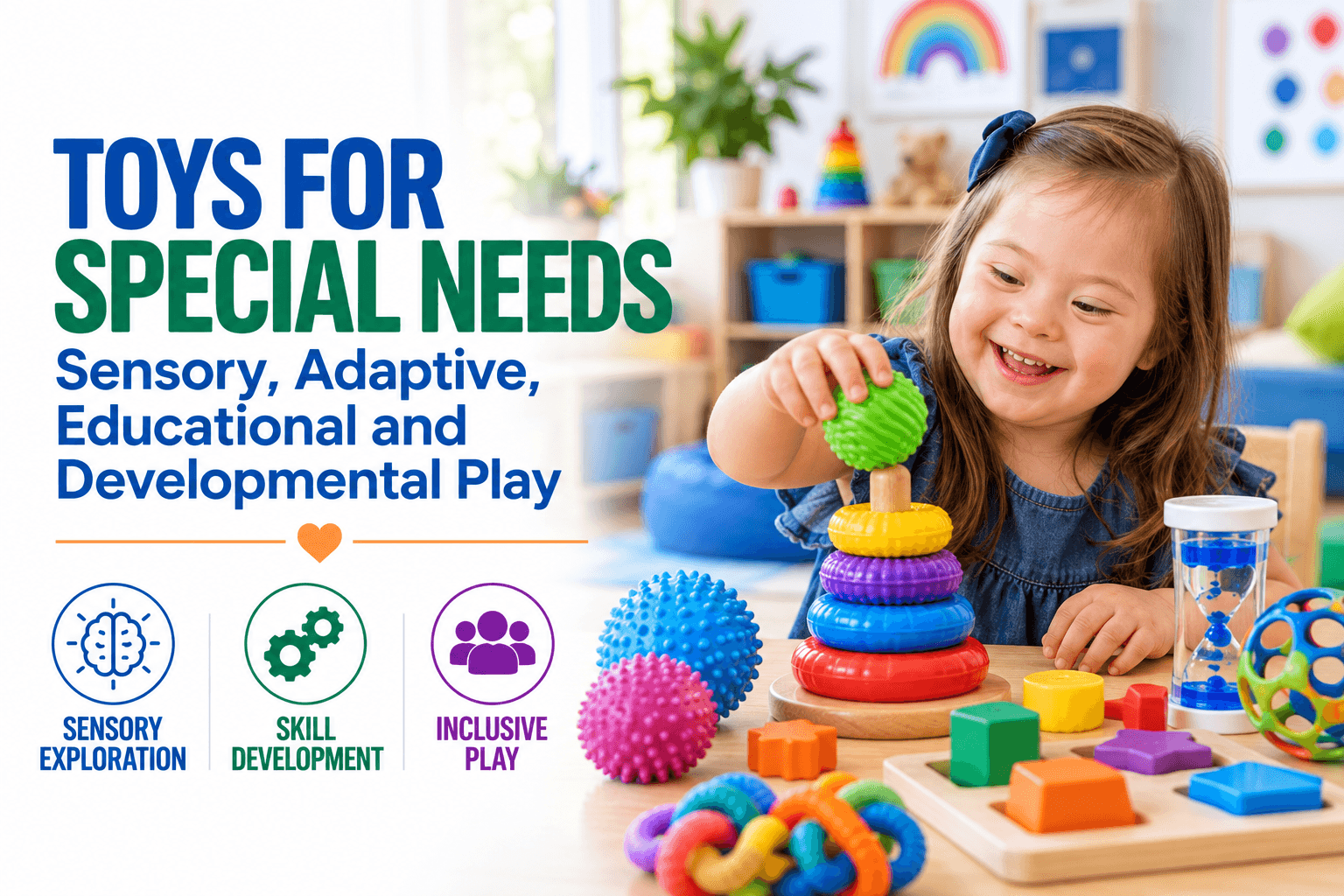
Toys for special needs can turn play into opportunities for sensory exploration, movement, communication, problem solving, creativity, and skill development. The right toy can help a child participate more independently, explore a preferred type of sensory input, practice fine motor or gross motor skills, or simply enjoy play in a way that matches their abilities.
The Toys for Special Needs collection at eSpecial Needs includes sensory toys, active play equipment, puzzles, fidgets, developmental toys, adapted toys, arts and crafts products, tactile activities, musical toys, and other play options for homes, classrooms, therapy programs, and sensory environments.
The best toy is not determined by a diagnosis or age alone. It should match the person's abilities, interests, sensory preferences, developmental level, and safety needs.
What Are Toys for Special Needs?
Toys for special needs are play products selected or designed to make play more accessible, engaging, or developmentally meaningful for people with different physical, sensory, cognitive, communication, and motor abilities.
Depending on the toy, it may encourage:
- Sensory exploration
- Fine motor development
- Gross motor movement
- Cause and effect learning
- Problem solving
- Communication
- Social interaction
- Visual attention
- Hand eye coordination
- Creativity
- Independent play
- Turn taking
Some toys are specifically adapted for accessibility, while others are traditional toys that happen to work particularly well for certain developmental or sensory goals.
Sensory Fidget Fun Kit

$54.95
Fidgeting is a common stimming activity from kids who use self-stimulatory behavior to sooth themselves. The Sensory Fidget Fun Kit provides a collection of simple fidget toys that allow a child to quietly fidget without distracting others, allowing them to… read more
Why Play Matters for Children With Special Needs
Play gives children opportunities to experiment, make choices, solve problems, move their bodies, communicate, and interact with other people.
A child may learn that pressing a button creates a sound, discover how puzzle pieces fit together, practice grasping objects, imitate another child's actions, or explore how different materials feel.
The developmental value does not have to make the activity feel like work.
In many cases, the most successful learning happens because the child is interested enough in the toy to continue playing.
Sensory Toys for Special Needs
Sensory toys provide experiences involving touch, movement, sound, light, pressure, texture, or other sensory input.
They may include:
- Fidget toys
- Squeeze toys
- Textured balls
- Putty
- Visual toys
- Musical toys
- Movement products
- Sensory kits
- Vibrating toys
- Tactile activities
Sensory preferences vary considerably. A toy that one child finds enjoyable may be distracting or uncomfortable for another.
For a more detailed explanation, read What Are Sensory Toys for Autism?.
You can also explore Sensory Development for toys organized around tactile, visual, and auditory exploration.
Tactile Toys for Touch Exploration
Tactile toys give children opportunities to explore different textures and resistance through their hands.
Activities may involve:
- Squeezing
- Stretching
- Pressing
- Rolling
- Pinching
- Manipulating
- Feeling contrasting surfaces
The Tactile Sensory Kit brings together multiple tactile experiences in one portable collection.
For individual tools, Panic Pete Squeeze Fidget Toy provides a simple squeezing activity, while the Squeeze Kit offers several options for hands on sensory play.
Explore Tactile Stimulation for additional touch based sensory products.
Fidget Toys for Busy Hands
Fidget toys provide small, repeatable hand movements that some children and adults find engaging.
Depending on the design, a fidget might involve:
- Squeezing
- Twisting
- Turning
- Pressing
- Sliding
- Matching
- Stretching
The Magic Fidget Ball combines hand manipulation with a color matching puzzle activity.
For a broader variety of options, browse Sensory Fidget Toys.
Fidgets should be selected around the user and the environment. A quiet hand fidget may work well during classroom activities, while a toy with strong sound or visual effects may be better suited to a designated play area.
Sensory Kits for Home, School, and Travel
Sensory kits can be useful when families, teachers, or therapists want several activities in one organized set.
The Sensory Fidget Fun Kit provides a collection of fidget activities, while the Travel Sensory Kit is designed to make sensory tools easier to bring between locations.
Portable sensory toys may be useful during:
- Travel
- Waiting periods
- Classroom breaks
- Therapy
- Appointments
- Community outings
- Homework
- Transitions
For families beginning to build a sensory toolkit, Sensory Integration Tools: A Parent's Starter Guide explains how different types of sensory equipment may fit into daily routines.
Auditory Toys and Musical Play
Sound based toys can encourage listening, rhythm, imitation, cause and effect learning, and shared play.
The Boomwhackers Music Therapy Percussion Tubes allow children to create different tones through movement and percussion.
Musical activities can also encourage:
- Turn taking
- Rhythm
- Group participation
- Motor coordination
- Listening
- Creative expression
Some children are sensitive to sound, so volume and predictability should be considered when choosing auditory toys.
Fine Motor Toys
Fine motor toys encourage controlled movements of the hands and fingers.
Children practice fine motor skills when they:
- Pick up small objects
- Turn puzzle pieces
- Squeeze putty
- Stack blocks
- Thread objects
- Manipulate switches
- Draw
- Build
- Sort
- Match
These skills are related to everyday activities such as dressing, writing, using utensils, opening containers, and managing classroom materials.
Explore Fine Motor Tools for activities focused more specifically on hand strength, coordination, dexterity, and manipulation.
The article Fine Motor Skills Activities and Tools Every OT Recommends also provides ideas for combining play with hand skill development.
Puzzles for Special Needs
Puzzles can support far more than matching pieces.
Depending on the design, puzzles may encourage:
- Visual discrimination
- Shape recognition
- Problem solving
- Fine motor control
- Persistence
- Matching
- Memory
- Early academic concepts
Large knob puzzles may be easier for children who find small puzzle pieces difficult to grasp.
Sound puzzles add auditory feedback, while matching and sorting puzzles can introduce categories, patterns, colors, numbers, animals, and other concepts.
Bouncing and Jumping Toys
Jumping can be highly motivating for children who enjoy active movement.
The Fold and Go Trampoline provides an indoor movement activity that can be incorporated into supervised home, school, or therapy play.
The Jungle Jumparoo combines bouncing, climbing, hanging, and movement within one active play structure.
Movement products require adequate space, appropriate supervision, and attention to manufacturer age, size, and weight recommendations.
Jungle Jumparoo – Indoor & Outdoor Bouncing and Climbing Play Structure

$449.00
The Jungle Jumparoo gives kids a fun, movement-rich way to bounce, climb, hang, and play while building balance, coordination, strength, and gross motor confidence. Designed for both indoor and outdoor use, this active play structure combines the excitement of bouncing with… read more
Spinning and Balance Toys
The Spin Disc provides a spinning and balance activity that can be used for sensory motor play.
Spinning creates vestibular input, which can affect individuals differently.
Some children actively seek spinning, while others become dizzy or uncomfortable quickly.
Movement intensity should be controlled, and the activity should stop if the child shows signs of discomfort.
Crash Pads and Active Sensory Play
Some children enjoy jumping, rolling, or landing onto cushioned surfaces as part of active play.
The Crash Pad provides a cushioned destination for supervised sensory motor activities.
Crash play may combine:
- Movement
- Body awareness
- Motor planning
- Gross motor activity
- Proprioceptive input
For additional active indoor equipment, read Soft Play Equipment for Sensory, Motor and Indoor Play Support.
Arts and Crafts Toys
Creative activities provide another form of play.
Drawing, painting, molding, coloring, and crafting can encourage:
- Hand strength
- Grasp
- Bilateral coordination
- Visual motor skills
- Creativity
- Self expression
- Choice making
Children who struggle with conventional art tools may benefit from larger writing tools, adaptive grips, easier to manipulate materials, or more accessible surfaces.
Browse Arts and Crafts for additional creative play products.
Safety When Choosing Special Needs Toys
Always consider safety before developmental goals.
Check:
- Manufacturer age guidance
- Weight limits
- Choking hazards
- Small detachable pieces
- Magnets
- Accessible batteries
- Sharp edges
- Breakable components
- Strings and cords
- Required supervision
- Physical space needed for active toys
Children who mouth toys may require different product choices than children of the same age who do not.
Inspect frequently used toys regularly and remove damaged products from use.
Do Not Assume a Therapy Toy Is Safe Without Supervision
A product used in therapy may still require active adult supervision.
This is particularly important for:
- Movement equipment
- Trampolines
- Spinning equipment
- Weighted items
- Small manipulatives
- Oral sensory tools
- Climbing toys
Follow the manufacturer's instructions for each individual product.
How to Choose Toys for Special Needs
A useful starting point is to identify what type of play the person enjoys and what makes participation difficult.
Consider:
- Sensory preferences
- Fine motor ability
- Gross motor ability
- Communication
- Vision
- Hearing
- Physical access
- Cognitive demands
- Interests
- Safety awareness
- Age
- Developmental level
Then choose toys that create opportunities for participation rather than focusing only on what skill the toy claims to develop.
Build a Balanced Toy Collection
A varied play environment does not require hundreds of toys.
Consider providing several different types of experiences:
- One tactile activity
- One fine motor activity
- One building or problem solving toy
- One creative activity
- One social game
- One movement activity
- One preferred calming or sensory toy
Rotate toys periodically rather than leaving everything available at once.
Rotation can reduce clutter and make familiar toys feel interesting again.
Shop Toys for Special Needs at eSpecial Needs
Explore the Toys for Special Needs collection at eSpecial Needs for sensory toys, developmental toys, active play products, puzzles, fidgets, adapted toys, arts and crafts activities, educational play, and movement equipment.
You can also browse related collections including:
- Sensory Development
- Sensory Fidget Toys
- Adapted Toys, Games and Equipment
- Fine Motor Tools
- Active Play
- Tactile Stimulation
FAQs
What makes a toy appropriate for a child with special needs?
A good toy should match the child's abilities, interests, sensory preferences, developmental level, and safety needs. The most useful toy is one the child can meaningfully interact with rather than one chosen only because it is marketed for a particular diagnosis.
Should I choose toys based on developmental age or chronological age?
Consider both.
Manufacturer age recommendations remain important for safety, especially for choking hazards and small parts. Developmental ability can then help determine whether the activity itself is appropriately challenging and accessible.
How can I tell if a toy is too difficult for my child?
A toy may be too difficult if the child cannot figure out how to begin, requires constant adult assistance, repeatedly abandons the activity, or becomes frustrated before meaningful play begins.
Sometimes a toy can be made more accessible by simplifying the activity, changing its position, or demonstrating one step at a time.
Can a toy be too easy?
Yes. A toy that offers no challenge may lose the child's interest quickly.
Look for toys that provide a manageable next step, such as moving from simple cause and effect play to matching, sorting, building, or multistep activities.
What are good toys for children with limited hand strength?
Consider toys with:
- Large handles
- Easy to press controls
- Lightweight pieces
- Large knobs
- Soft squeeze materials
- Stable bases
- Switch access
You can also explore Fine Motor Tools for activities designed around hand use and coordination.
What toys work well for children who have difficulty grasping small objects?
Large piece puzzles, stacking toys, blocks, large switches, textured balls, and toys with oversized controls may be easier to manipulate.
Avoid choosing tiny pieces simply because they match the child's chronological age.