Table of Contents
- What Is Special Needs Furniture for Adults?
- Defining Adaptive Furniture and Adaptive Seating
- Why Adaptive Furniture Is Essential for Adult Independence
- How Adaptive Furniture Differs From Standard Accessible Furniture Design
- Types of Adaptive Seating for Special Needs Adults
- Supportive Adaptive Chairs and Positioning Seats
- Comfy Chairs for Disabled Adults: Comfort Meets Functionality
- Special Needs Chairs for Adults With Postural Challenges
- Adaptive Seating for the Classroom and Therapy Settings
- Adaptive Bedroom Furniture for Disabled Adults
- Disabled Bedroom Layout: Planning for Safety and Accessibility
- Adaptive Beds, Transfer Aids, and Bedroom Positioning Equipment
- Adaptive Furniture for Daily Living
- Seating and Tables That Support Independent Daily Activities
- Bathing, Toileting, and Personal Care Furniture Aids
- Adaptive Seating by Disability or Condition
- Adaptive Seating for Cerebral Palsy Adults
- Adaptive Chair for Cerebral Palsy: What to Look For
- Adaptive Seating for Autism: Sensory and Postural Considerations
- Adaptive Seating for ADHD: Movement and Focus Support
- Adaptive Furniture for the Elderly: Aging in Place Solutions
- Key Features to Evaluate in Adaptive Furniture for the Disabled
- Postural Support, Positioning, and Trunk Stability
- Adjustability and Customization Options
- Accessible and Inclusive Furniture Design Principles
- Durability, Safety Standards, and Weight Capacity
- How to Get Funding for Special Needs Furniture for Adults
- Insurance, Medicaid, and Letters of Medical Necessity
- Grants, Nonprofit Programs, and Government Funding Resources
- Flexible Financing Options for Adaptive Furniture
- How to Choose the Right Adaptive Seating for Special Needs Adults
- Working With Occupational Therapists and Positioning Specialists
- Using Quote Request Services to Find the Right Equipment Within Budget
- Where to Buy Special Needs Furniture for Adults Online
- What to Expect From a Trusted Adaptive Equipment Provider
- B2B Purchasing: Schools, Clinics, and Government Agencies
- FAQs
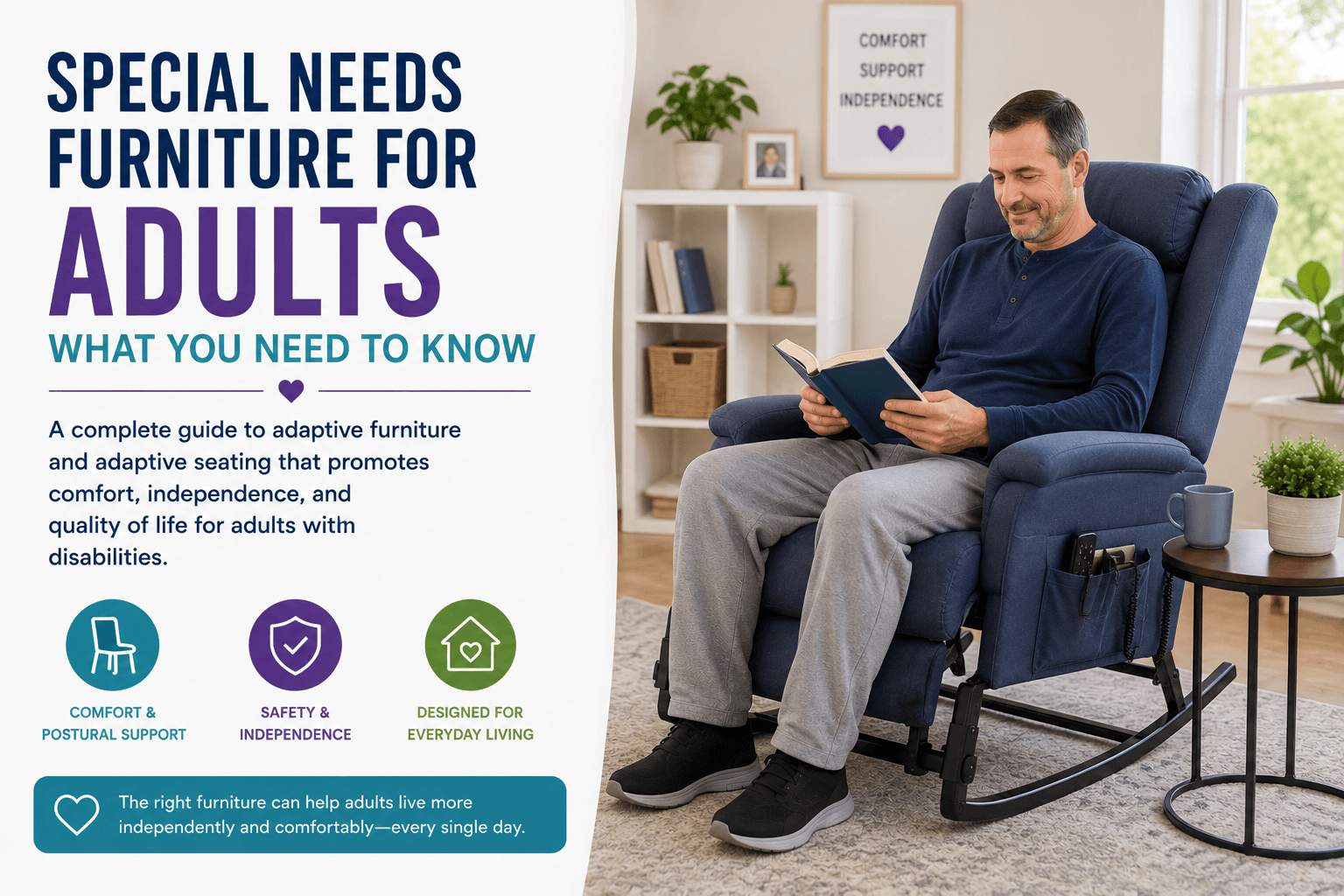
Special needs furniture for adults can support comfort, posture, safety, independence, and participation in daily routines. For adults with disabilities, chronic conditions, mobility limitations, sensory needs, postural challenges, or age related changes, standard furniture may not provide the support needed for sitting, transferring, resting, working, eating, bathing, toileting, or engaging in everyday activities.
Adaptive furniture is designed to do more than fill a room. It can help an adult sit more securely, maintain better alignment, reduce caregiver strain, access daily tasks, participate in therapy, and feel more comfortable at home, school, work, clinic, or in supported living settings.
The right adaptive seating or furniture solution depends on the person’s body size, posture, mobility, sensory needs, transfer ability, daily routines, care setting, and long term goals. Some adults may need a supportive chair for meals and activities. Others may need mobile seating, positioning supports, adaptive bathroom furniture, bedroom transfer aids, or active seating that allows gentle movement while seated.
Explore Adaptive Furniture, Adaptive Seating, Chairs and Seating, Seating Systems, Active Seating, and Mobile Seating at eSpecial Needs.
What Is Special Needs Furniture for Adults?
Special needs furniture for adults includes chairs, seating systems, beds, tables, transfer aids, positioning supports, bathing equipment, toileting equipment, and other adaptive products designed to support adults with disabilities or functional limitations.
This type of furniture may help adults who need support with:
- Posture
- Sitting balance
- Trunk stability
- Head control
- Transfers
- Pressure management
- Bathing
- Toileting
- Meal participation
- Work or school tasks
- Sensory regulation
- Mobility within a room
- Caregiver assistance
- Rest and relaxation
- Aging in place
Special needs furniture should be selected around the person’s needs, not just the room’s appearance. Comfort, access, function, and safety matter most.
Adult Therapy Rocker Chair
$1,099.95
The Adult Therapy Rocker Chair is a supportive sensory rocker chair designed to provide calming vestibular input for teens and adults who benefit from gentle rocking and secure body support. Its cradling shape helps users relax after sensory overload while… read more

Defining Adaptive Furniture and Adaptive Seating
Adaptive furniture is furniture designed or modified to make daily activities safer, easier, or more accessible for people with disabilities, mobility needs, sensory needs, or physical support needs.
Adaptive seating is a type of adaptive furniture focused on helping a person sit with better support, alignment, comfort, and function. Adaptive seating may include activity chairs, positioning chairs, mobile seating, tilt seating, high support chairs, active seating, classroom seating, therapy chairs, and supportive cushions.
Adaptive seating may support:
- Pelvic alignment
- Trunk control
- Foot positioning
- Head support
- Upper body function
- Hand use
- Feeding
- Communication
- Classroom or work participation
- Therapy activities
- Comfort during daily routines
A supportive seat can make it easier for an adult to use their hands, interact with others, eat, complete activities, or stay engaged for longer periods.
Why Adaptive Furniture Is Essential for Adult Independence
Adaptive furniture can support independence by helping adults access daily routines with less strain and more stability. When a chair, table, bed, or bathroom product is designed around a person’s abilities, the adult may be able to participate more actively in their own care and daily life.
Adaptive furniture may help adults:
- Sit more comfortably
- Reach a table or work surface
- Transfer more safely
- Participate in meals
- Complete daily living activities
- Use communication tools
- Engage in hobbies
- Reduce fatigue
- Improve body alignment
- Maintain personal care routines
- Access therapy goals
- Reduce hands on caregiver support
For some adults, adaptive furniture can make the difference between passively being positioned in a room and actively participating in daily routines.
How Adaptive Furniture Differs From Standard Accessible Furniture Design
Accessible furniture design often focuses on broad access. For example, a table may allow wheelchair clearance, or a chair may have arms that make standing easier. These features can be helpful, but they may not address the individual support needs of adults with more complex disabilities.
Adaptive furniture is more specialized. It may include custom positioning, adjustable components, added trunk support, headrests, footrests, pelvic belts, tilt features, lateral supports, mobile bases, or specialized materials.
Accessible furniture may ask, “Can most people access this?”
Adaptive furniture asks, “Does this person have the support needed to use it safely and comfortably?”
Both matter, but adaptive furniture is often more individualized.
Types of Adaptive Seating for Special Needs Adults
Adaptive seating for special needs adults can range from simple supportive chairs to advanced seating systems with multiple positioning components. The right category depends on the adult’s posture, strength, mobility, transfer needs, sensory needs, and daily activities.
Common types include:
- Supportive adaptive chairs
- Positioning seats
- Activity chairs
- Mobile seating
- Active seating
- Classroom seating
- Therapy seating
- Tilt or recline seating
- Adaptive lounge chairs
- Seating systems
- Chairs with trays
- Chairs with foot support
- Chairs with lateral support
- Sensory seating
Explore Adaptive Seating and Seating Systems for supportive options.
Supportive Adaptive Chairs and Positioning Seats
Supportive adaptive chairs and positioning seats are designed to help adults sit with better alignment and stability. They may be used during meals, therapy, work, school, communication activities, recreation, or daily living tasks.
Helpful features may include:
- Adjustable seat depth
- Adjustable seat height
- Trunk support
- Pelvic positioning
- Head support
- Footrests
- Armrests
- Lateral supports
- Tilt or recline features
- Tray options
- Mobile bases
- Easy clean materials
A well fitted chair can help reduce fatigue and make it easier to use the hands for eating, writing, communication, or hobbies.
Comfy Chairs for Disabled Adults: Comfort Meets Functionality
Comfy chairs for disabled adults should balance support with everyday comfort. A chair may need to provide structure without feeling clinical, especially when used in a living room, bedroom, supported living space, or adult day program.
Comfort focused adaptive chairs may include:
- Soft seating
- High back support
- Lounge style seating
- Bean bag or foam seating
- Reclining chairs
- Cocoon style seating
- Rocking or movement based seating
- Pressure relief cushions
- Supportive armrests
- Stable bases
Comfort is not separate from function. If a chair is uncomfortable, the person may avoid using it. If it is comfortable but unsupportive, it may not meet postural or safety needs. The best choice supports both.
Special Needs Chairs for Adults With Postural Challenges
Adults with postural challenges may need seating that provides more than basic comfort. Conditions such as cerebral palsy, scoliosis, low muscle tone, brain injury, muscular dystrophy, spinal cord injury, stroke, or neurological conditions may affect sitting balance and alignment.
Special needs chairs for adults with postural support needs may include:
- Pelvic support
- Trunk support
- Lateral supports
- Headrests
- Footrests
- Tilt options
- Recline options
- Adjustable seat angles
- Cushions for pressure support
- Harness or belt options when clinically appropriate
- Customizable components
Postural support should be selected carefully. A seating or positioning specialist, occupational therapist, physical therapist, or qualified clinician can help determine what level of support is appropriate.
Adaptive Seating for the Classroom and Therapy Settings
Adaptive seating is commonly used in classrooms, therapy clinics, adult day programs, vocational programs, and educational settings. Adults who attend college, transition programs, therapy sessions, or supported employment may need seating that helps them participate in tasks while maintaining comfort and alignment.
Adaptive seating may support:
- Focus during learning tasks
- Hand use at a table
- Communication access
- Therapy participation
- Reduced fatigue
- Better positioning for fine motor tasks
- Movement needs
- Safe participation in group activities
- Consistent posture across environments
Explore Active Seating, Mobile Seating, and Classroom Seating for supportive options used in learning and therapy environments.
Adaptive Bedroom Furniture for Disabled Adults
Adaptive bedroom furniture for disabled adults can support safer sleep routines, transfers, positioning, nighttime care, dressing, and access to personal items. Bedrooms should be planned around comfort, safety, mobility, and caregiver access.
Adaptive bedroom needs may include:
- Bed positioning support
- Transfer aids
- Bed rails when appropriate
- Accessible bedside storage
- Adjustable bed height
- Space for mobility devices
- Clear walking paths
- Lighting within reach
- Accessible charging stations
- Pressure management products
- Reachers
- Dressing aids
- Seating near the bed
A bedroom should allow the adult to move, transfer, rest, communicate, and call for help as safely as possible.
Disabled Bedroom Layout: Planning for Safety and Accessibility
A disabled bedroom layout should support clear movement, easy access, and reduced fall risk. The space should be organized so commonly used items are within reach and pathways remain clear.
Consider:
- Bed height
- Transfer side preference
- Wheelchair turning space
- Walker access
- Clear floor pathways
- Night lighting
- Access to switches and outlets
- Emergency call device placement
- Bedside table height
- Clothing storage height
- Doorway width
- Flooring type
- Caregiver working space
- Bathroom route
- Space for lifts or transfer equipment
Avoid placing furniture where it blocks mobility equipment, emergency access, or caregiver support.
Adaptive Beds, Transfer Aids, and Bedroom Positioning Equipment
Some adults may need adaptive bedroom equipment that helps with positioning, transfers, or caregiver support.
Helpful equipment may include:
- Adjustable beds
- Bed rails when appropriate
- Transfer poles
- Transfer boards
- Reachers
- Positioning wedges
- Support cushions
- Bedside commodes
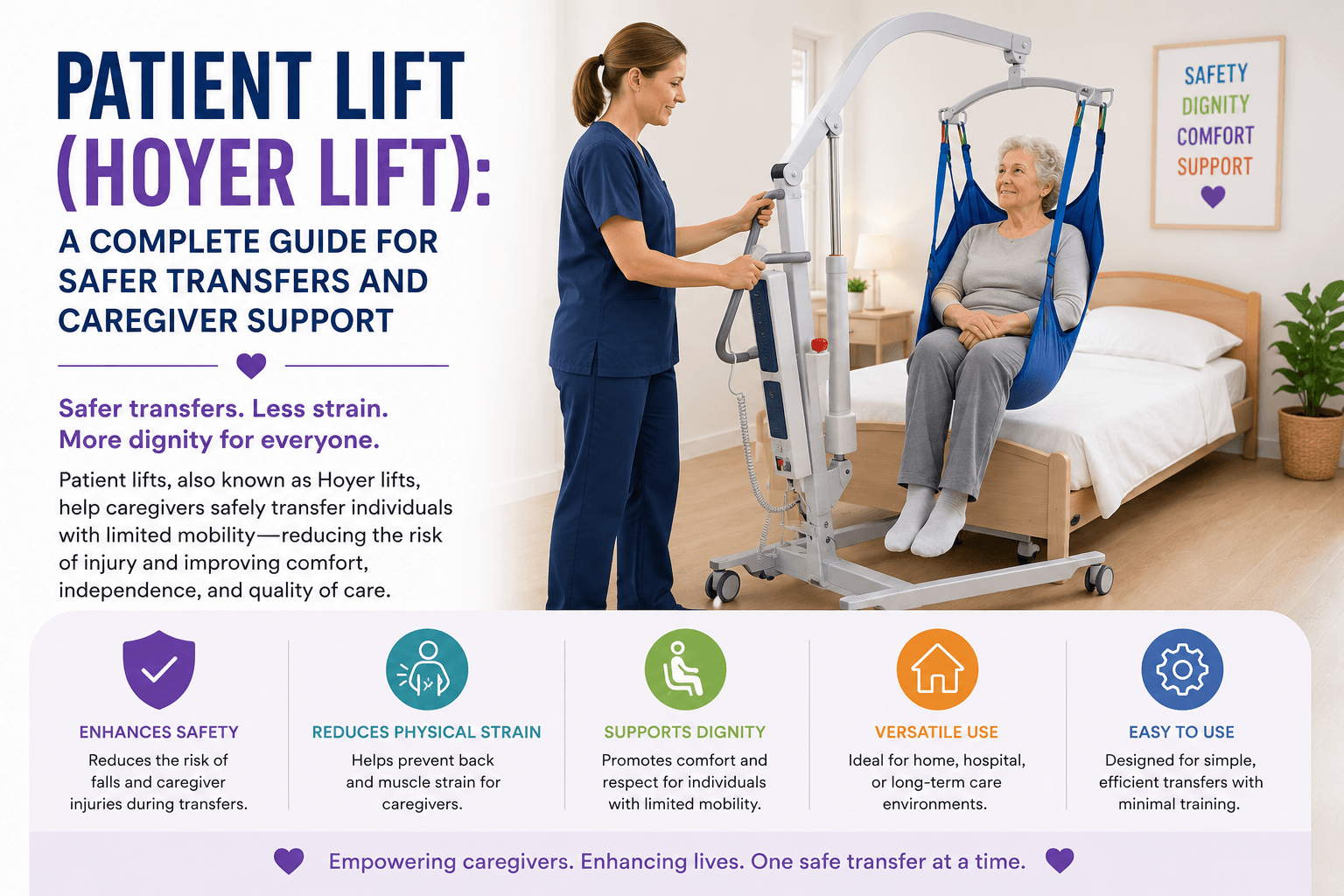
- Patient lifts
- Sit to stand lifts
- Slings
- Pressure relief supports
- Overbed tables
Explore Transfer Aids, Lifts and Slings, and Reachers for equipment that may support bedroom routines and caregiver assistance.
Adaptive Furniture for Daily Living
Adaptive furniture can make daily routines more accessible throughout the home. Adults may need support for eating, working, reading, using technology, bathing, toileting, dressing, relaxing, and engaging in hobbies.
Daily living furniture and equipment may support:
- Sitting at a table
- Using utensils
- Completing work tasks
- Accessing a computer
- Reading
- Grooming
- Dressing
- Bathing
- Toileting
- Transferring
- Resting
- Communication
- Sensory breaks
Explore Daily Living Aids, Grips and Holders, and Bathing and Toileting Products.
Seating and Tables That Support Independent Daily Activities
Supportive seating and accessible tables can help adults participate in meaningful daily tasks. The right setup may allow someone to eat with less assistance, use a communication device, work on a computer, complete crafts, write, read, or participate in group activities.
Consider:
- Table height
- Wheelchair clearance
- Chair height
- Arm support
- Foot support
- Seat width and depth
- Tray options
- Position of communication devices
- Reach range
- Lighting
- Need for adaptive utensils or grips
- Ability to transfer safely
- Space for caregivers or staff
A supportive chair paired with a poorly fitted table may still make activities difficult. Seating and surfaces should be considered together.
Bathing, Toileting, and Personal Care Furniture Aids
Adaptive bathroom furniture can support safety, dignity, hygiene, and caregiver assistance. Bathrooms often create higher risk because of wet floors, tight spaces, transfers, and low seating.
Helpful products may include:
- Shower chairs
- Bath chairs
- Transfer benches
- Commode chairs
- Raised toilet seats
- Toilet safety frames
- Over toilet chairs
- Reachers
- Long handled bathing tools
- Bathing supports
- Grab bars
- Patient lifts when needed
Explore Bathing Products, Toileting Products, and Commode Chairs.
Adaptive Seating by Disability or Condition
Adaptive seating needs vary widely. A person’s diagnosis can provide helpful context, but seating should be chosen based on actual function, posture, strength, sensory needs, environment, and goals.
Adaptive Seating for Cerebral Palsy Adults
Adaptive seating for cerebral palsy adults may need to address muscle tone, posture, balance, fatigue, head control, pelvic positioning, trunk alignment, and foot support. Adults with cerebral palsy may have changing seating needs over time due to growth into adulthood, pain, scoliosis, tone changes, or daily activity demands.
Helpful seating features may include:
- Pelvic positioning
- Lateral trunk supports
- Head support
- Footrests
- Adjustable seat depth
- Tilt options
- Recline options
- Pressure relief cushions
- Tray support
- Mobile base
- Easy caregiver adjustment
The right seating system may support comfort, safer positioning, hand use, communication, feeding, and participation in daily routines.
Adaptive Chair for Cerebral Palsy: What to Look For
When choosing an adaptive chair for cerebral palsy, consider:
- Trunk support
- Pelvic alignment
- Head and neck support
- Foot positioning
- Seat depth and width
- Adjustability
- Tilt or recline needs
- Pressure management
- Ease of transfers
- Tray compatibility
- Weight capacity
- Growth or size changes
- Caregiver access
- Cleaning needs
- Professional fitting recommendations
Because cerebral palsy can affect posture and movement in different ways, work with a qualified professional before choosing complex seating.
Adaptive Seating for Autism: Sensory and Postural Considerations
Adaptive seating for autism may need to support both sensory comfort and physical positioning. Some autistic adults benefit from seating that provides clear body boundaries, gentle rocking, movement, deep pressure, or a quiet retreat. Others may prefer simple seating that avoids too much texture, sound, movement, or visual stimulation.
Consider:
- Sensory preferences
- Texture tolerance
- Movement needs
- Need for calm seating
- Postural support
- Personal space
- Durability
- Noise level
- Ease of cleaning
- Adult appropriate design
- Ability to use the seat independently
Adaptive seating for autism should support comfort without forcing sensory input that the person dislikes.
Adaptive Seating for ADHD: Movement and Focus Support
Some adults with ADHD may benefit from seating that allows gentle movement while still supporting participation in work, learning, therapy, or daily tasks. Active seating may allow small movements that support attention and reduce restlessness for some users.
Options may include:
- Wobble chairs
- Therapy balls with bases
- Rocking chairs
- Movement cushions
- Active stools
- Flexible seating systems
- Foot movement supports
Explore Active Seating and Kore Wobble Chairs for movement based seating options.
Adaptive Furniture for the Elderly: Aging in Place Solutions
Adaptive furniture for the elderly can support safer movement, easier transfers, comfort, and independence at home. As adults age, furniture that was once comfortable may become too low, too soft, too unstable, or too difficult to rise from.
Helpful aging in place furniture features may include:
- Higher seat height
- Supportive armrests
- Firm cushions
- Stable bases
- Lift chair options
- Bed transfer aids
- Bathroom seating
- Raised toilet supports
- Accessible tables
- Reachers
- Clear pathways
- Good lighting
Adaptive furniture can help older adults continue daily routines with less strain and more confidence.
Key Features to Evaluate in Adaptive Furniture for the Disabled
When comparing adaptive furniture for disabled adults, look beyond appearance. A product should match the user’s support needs, body size, transfer ability, environment, and daily routines.
Postural Support, Positioning, and Trunk Stability
Postural support is one of the most important features in adaptive seating. Adults who cannot maintain a stable position may fatigue quickly, slide, lean, collapse forward, or struggle to use their hands.
Consider whether the user needs:
- Pelvic support
- Lateral trunk supports
- Head support
- Footrests
- Arm supports
- Seat belt or positioning belt when clinically appropriate
- Tilt or recline
- Pressure relief
- Firm seat base
- Adjustable back support
A stable seated position can support safer meals, communication, hand use, therapy, and comfort.
Adjustability and Customization Options
Adjustability allows furniture to fit changing needs. This can be especially important for adults with progressive conditions, fluctuating tone, aging related changes, or evolving therapy goals.
Useful adjustable features may include:
- Seat height
- Seat depth
- Seat width
- Back angle
- Footrest height
- Armrest height
- Headrest position
- Trunk support placement
- Tilt
- Recline
- Tray height
- Mobile base options
Customizable furniture may cost more, but it can provide better long term value when needs change.
Accessible and Inclusive Furniture Design Principles
Accessible and inclusive furniture design focuses on making products easier to use for people with different abilities, body sizes, and support needs.
Look for design features such as:
- Easy transfers
- Stable bases
- Wheelchair clearance
- Adjustable height
- Clear access from multiple sides
- Simple controls
- Easy to clean surfaces
- Comfortable support
- Durable materials
- Reachable components
- Space for caregivers
- Adult appropriate style
- Compatibility with daily routines
Inclusive design should support independence and dignity while reducing unnecessary barriers.
Durability, Safety Standards, and Weight Capacity
Before buying adaptive furniture, check product details carefully.
Review:
- Weight capacity
- Seat dimensions
- Product dimensions
- Materials
- Frame construction
- Cleaning instructions
- Warranty
- Replacement part availability
- Required assembly
- Installation requirements
- Safety guidance
- User age and size range
- Transfer instructions
- Caregiver support needs
Do not estimate weight capacity or fit. Measure carefully and follow manufacturer guidance.
How to Get Funding for Special Needs Furniture for Adults
Special needs furniture for adults can be a significant investment. Funding depends on the product type, diagnosis, documentation, insurance plan, Medicaid program, local rules, and whether the item is considered medically or functionally necessary.
Possible funding sources may include:
- Private insurance
- Medicaid
- Medicaid waivers
- Medicare for certain durable medical equipment
- State assistive technology programs
- Vocational rehabilitation programs
- Grants
- Nonprofit programs
- Community funding
- Health savings accounts
- Flexible spending accounts
- Direct purchase
- Financing
Coverage is not guaranteed. Always confirm requirements with the funding source before ordering equipment.
Insurance, Medicaid, and Letters of Medical Necessity
A letter of medical necessity may help support a funding request when adaptive furniture is connected to positioning, safety, mobility, transfers, daily living, hygiene, communication, therapy goals, or caregiver support.
A funding request may require:
- Provider prescription
- Letter of medical necessity
- Occupational therapy evaluation
- Physical therapy evaluation
- Seating assessment
- Product quote
- Product specifications
- Measurements
- Prior authorization
- Explanation of why standard furniture is not sufficient
Families and care teams can review Letters of Medical Necessity for general template guidance. Requirements vary, and approval is never guaranteed.
Grants, Nonprofit Programs, and Government Funding Resources
When insurance or Medicaid does not cover adaptive furniture, other resources may be available depending on location, age, disability, income, and equipment type.
Potential options may include:
- Disability focused grants
- Local community foundations
- Civic organizations
- State assistive technology programs
- Vocational rehabilitation
- Medicaid waiver programs
- Veterans programs
- School or therapy program funding
- Residential program budgets
- Community fundraising
- Nonprofit assistance programs
Grant programs often require documentation, product quotes, clinical recommendations, and proof of financial need. Application windows and eligibility rules vary.
Flexible Financing Options for Adaptive Furniture
Some families and individuals use financing when adaptive furniture is needed before other funding is available or when insurance coverage does not apply.
eSpecial Needs offers Affirm Financing for eligible purchases. Financing is not a funding guarantee. Review all payment terms, eligibility requirements, total costs, and any applicable interest or fees before selecting a financing option.
eSpecial Needs also offers a Price Match Guarantee, subject to current policy terms and product eligibility.
How to Choose the Right Adaptive Seating for Special Needs Adults
Choosing adaptive seating begins with understanding the person’s daily routine and support needs.
Ask:
- Where will the chair be used?
- How long will the adult sit each day?
- Does the adult need trunk, head, pelvic, or foot support?
- Can the adult transfer independently?
- Is caregiver assistance required?
- Does the chair need wheels?
- Is a tray needed?
- Is the chair used for meals, work, therapy, communication, or relaxation?
- Are there sensory needs?
- Does the adult need pressure support?
- What is the user’s height and weight?
- Is the equipment easy to clean?
- Will funding documentation be needed?
Start with function, then compare features.
Working With Occupational Therapists and Positioning Specialists
Occupational therapists, physical therapists, seating specialists, and rehabilitation professionals can help identify the right adaptive furniture for an adult’s needs.
They may support:
- Seating evaluations
- Postural assessments
- Transfer planning
- Pressure management
- Home layout recommendations
- Therapy goal planning
- Equipment trials
- Funding documentation
- Caregiver training
- Customization recommendations
- Product measurements
Professional guidance is especially important for adults with complex positioning needs, progressive conditions, skin integrity concerns, mobility limitations, pain, or high caregiver assistance needs.
Using Quote Request Services to Find the Right Equipment Within Budget
Adaptive furniture catalogs can feel overwhelming. A quote request can help buyers compare products, gather pricing, and prepare documentation for funding sources, schools, clinics, residential programs, or care teams.
Before requesting a quote, gather:
- User age
- User height and weight
- Diagnosis or functional needs when relevant
- Seating or furniture goals
- Room location
- Space measurements
- Transfer needs
- Mobility device use
- Budget range
- Product links if available
- Funding source requirements
- Timeline
- Delivery needs
Request support through eSpecial Needs Quote Requests.
Where to Buy Special Needs Furniture for Adults Online
When shopping online, choose a specialized adaptive equipment provider rather than a general marketplace whenever possible. Special needs furniture often requires more careful consideration than standard home furniture.
Look for a provider that offers:
- Adaptive seating categories
- Detailed product descriptions
- Weight capacity information
- Size and measurement details
- Product support
- Quote requests
- Purchase order options
- Financing options
- Price match policy
- Equipment for homes, schools, clinics, and care settings
- Experience with special needs and disability products
Explore Adaptive Furniture, Chairs and Seating, and Rifton Adaptive Equipment through eSpecial Needs.
What to Expect From a Trusted Adaptive Equipment Provider
A trusted adaptive equipment provider should help buyers understand product options, compare features, request quotes, and select equipment that fits the intended use.
Helpful provider features include:
- Broad adaptive product selection
- Clear product categories
- Quote request support
- Purchase order support
- Price match information
- Financing options
- Customer service access
- Equipment for individuals and institutions
- Familiarity with schools, clinics, and care programs
eSpecial Needs offers Quote Requests, Purchase Orders, Schools and Government Agencies, Affirm Financing, and a Price Match Guarantee.
B2B Purchasing: Schools, Clinics, and Government Agencies
Schools, therapy clinics, government agencies, hospitals, residential programs, and care organizations may need adaptive furniture for multiple users or shared spaces.
B2B buyers should consider:
- Number of users
- User age range
- Weight capacity needs
- Program goals
- Room layout
- Delivery requirements
- Assembly needs
- Product durability
- Cleaning procedures
- Purchase order requirements
- Quote approval process
- Funding deadlines
- Accessibility requirements
eSpecial Needs supports institutional purchasing through Purchase Orders, Schools and Government Agencies, and B2B Solutions.
FAQs
What is special needs furniture for adults?
Special needs furniture for adults includes adaptive chairs, seating systems, positioning supports, beds, transfer aids, bathing equipment, toileting products, and daily living furniture designed to support adults with disabilities, mobility needs, sensory needs, postural challenges, or age related changes.
The goal is to improve comfort, safety, posture, independence, and participation in everyday routines.
Who can benefit from adaptive furniture for adults?
Adaptive furniture may benefit adults with cerebral palsy, autism, ADHD, developmental disabilities, intellectual disabilities, spinal cord injuries, brain injuries, stroke recovery needs, muscular dystrophy, multiple sclerosis, arthritis, low muscle tone, reduced mobility, postural challenges, sensory needs, or aging related physical changes.
It can also help caregivers, therapists, schools, clinics, supported living programs, and residential care settings.
How is adaptive furniture different from standard accessible furniture?
Accessible furniture is usually designed to make a space easier for a broad range of people to use. For example, an accessible table may allow wheelchair clearance.
Adaptive furniture is more specialized. It may include positioning supports, adjustable seat height, tilt, recline, headrests, lateral supports, pelvic positioning, footrests, mobile bases, pressure support, or other features chosen for an individual’s needs.
What types of adaptive seating are available for special needs adults?
Common types of adaptive seating include:
- Supportive adaptive chairs
- Positioning seats
- Activity chairs
- Mobile seating
- Active seating
- Therapy seating
- Classroom seating
- Tilt or recline seating
- Adaptive lounge chairs
- Seating systems
- Chairs with trays
- Chairs with footrests
- Chairs with lateral supports
- Sensory seating
The best option depends on the person’s posture, mobility, transfer ability, sensory needs, daily routines, and environment.
What are supportive adaptive chairs?
Supportive adaptive chairs are chairs designed to provide better body positioning, stability, and comfort than standard chairs. They may include adjustable seat depth, trunk support, pelvic positioning, head support, armrests, footrests, trays, mobile bases, or easy clean materials.
They may be used for meals, therapy, communication, work, school, recreation, or daily activities.
What are comfy chairs for disabled adults?
Comfy chairs for disabled adults are seating options that combine comfort with functional support. They may include soft seating, high back chairs, lounge style chairs, foam chairs, bean bag style seating, rocking chairs, reclining chairs, supportive armrests, pressure relief cushions, or cocoon style seating.
The best comfy chair should be both comfortable and supportive enough for the adult’s needs.
What special needs chairs help with postural challenges?
Adults with postural challenges may need chairs with features such as pelvic support, lateral trunk supports, headrests, footrests, tilt, recline, adjustable back angles, pressure relief cushions, positioning belts when clinically appropriate, and customizable components.
A seating specialist, occupational therapist, physical therapist, or qualified clinician can help identify the right support level.
What adaptive seating is useful for adults with cerebral palsy?
Adaptive seating for cerebral palsy adults may need to support muscle tone, posture, balance, fatigue, head control, pelvic alignment, trunk stability, foot positioning, and pressure management.
Helpful features may include lateral supports, adjustable seat depth, head support, footrests, tilt or recline options, tray support, mobile bases, and easy caregiver adjustments.
What adaptive seating is helpful for adults with autism?
Adaptive seating for autism may support sensory comfort, posture, boundaries, calm routines, and participation. Some autistic adults may prefer rocking chairs, active seating, cocoon style seating, soft seating, or chairs that provide a sense of body awareness.
Others may prefer simple seating without extra texture, motion, sound, or visual stimulation. The best option should match the adult’s sensory preferences and comfort.
What adaptive seating may help adults with ADHD?
Some adults with ADHD may benefit from active seating that allows small, controlled movement while seated. Options may include wobble chairs, therapy balls with bases, rocking chairs, active stools, movement cushions, or flexible seating systems.
These products may support movement needs during work, learning, therapy, or daily tasks for some users.
What is adaptive bedroom furniture for disabled adults?
Adaptive bedroom furniture may include adjustable beds, transfer aids, bed rails when appropriate, positioning wedges, pressure relief supports, bedside commodes, overbed tables, reachers, patient lifts, and accessible bedside storage.
Bedroom furniture should support safe transfers, rest, nighttime routines, caregiver access, and clear pathways for mobility devices.
How should a disabled bedroom layout be planned?
A disabled bedroom layout should allow clear movement, safe transfers, easy access to personal items, and room for mobility equipment or caregiver support.
Consider bed height, wheelchair turning space, walker access, doorway width, lighting, flooring, bedside table height, clothing storage height, bathroom route, emergency call access, and space for lifts or transfer equipment when needed.