Table of Contents
- What Is a Play Center?
- Why Play Is Important for Children With Special Needs
- Play Centers and Gross Motor Development
- Play Centers for Sensory Exploration
- Jungle Jumparoo for Bouncing and Climbing
- Bouncing and Sensory Motor Play
- Climbing Play
- Koala Climbing Toy for Rocking, Rotating, and Creative Play
- Why Open Ended Play Equipment Can Be Valuable
- Children’s Factory Red Rocker Toddler Bridge
- Rocking Play and Movement
- Plug and Barrel for Crawling and Balance Activities
- Creating Simple Obstacle Courses
- Toddler Baby Building Blocks
- Building Play and Problem Solving
- Play Centers for Toddlers
- Play Centers for Preschool
- Play Centers for Autism
- Play Centers for Sensory Seeking Children
- Play Centers for Children Who Prefer Quieter Play
- Play Centers and Social Interaction
- Supporting Communication During Active Play
- Play Centers in Special Education Classrooms
- Play Centers in School Sensory Spaces
- Play Centers for Occupational Therapy
- Play Centers for Physical Therapy
- Indoor Play Centers
- Outdoor Play Centers
- Play Centers for Home
- How Much Space Does a Play Center Need?
- Mats and Protective Surfaces
- Choosing a Play Center by Ability
- Choosing a Play Center by Age
- Choosing Play Centers for Shared Environments
- Play Center Safety
- Avoid Overcrowding the Play Area
- Creating a Balanced Play Area
- Play Centers vs. Sensory Rooms
- Play Centers vs. Soft Play
- How to Choose the Right Play Center
- Shop Play Centers at eSpecial Needs
- FAQs
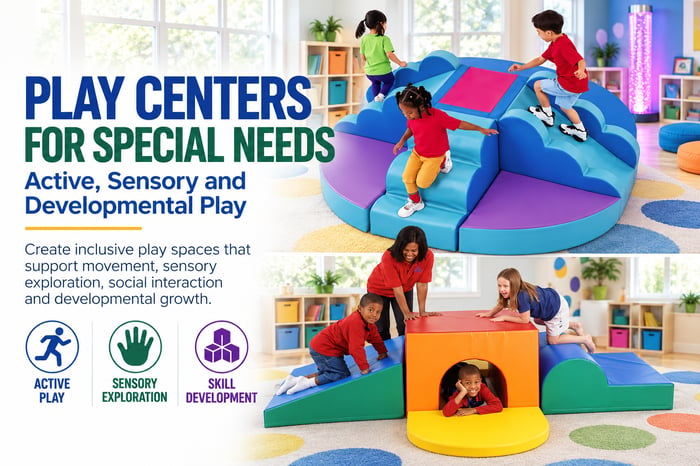
Play centers for special needs can create engaging opportunities for children to climb, crawl, balance, build, rock, bounce, explore, and interact with others through play. The right play center can combine movement, sensory exploration, gross motor activity, problem solving, and imaginative play in a way that feels naturally motivating rather than structured like an exercise.
The Play Centers collection at eSpecial Needs includes active play structures, climbing toys, balance activities, soft building products, rocking equipment, classroom play furniture, and other interactive products for homes, schools, therapy programs, sensory spaces, preschools, and child care environments. A good play center should match the child's abilities, interests, available space, and level of supervision. Bigger and more stimulating is not always better. The goal is to create meaningful opportunities to participate in play.
What Is a Play Center?
A play center is an activity space or piece of equipment designed to combine one or more types of play within a defined area.
Depending on the product, children may be able to:
- Climb
- Crawl
- Rock
- Balance
- Bounce
- Build
- Stack
- Explore movement
- Practice coordination
- Participate with other children
- Create imaginative games
Some play centers are large structures designed for full body movement, while others are compact enough for a classroom learning center or home playroom.
The Toys for Special Needs guide provides additional ideas for combining sensory, developmental, active, and educational play.
Why Play Is Important for Children With Special Needs
Play gives children opportunities to learn about their bodies, surroundings, objects, and other people.
During active play, a child might discover how to climb over an obstacle, judge how far to reach, decide where to place a foot, copy another child, or create a completely new way to use a piece of equipment.
Depending on the activity, play may provide opportunities to practice:
- Gross motor skills
- Balance
- Coordination
- Motor planning
- Body awareness
- Fine motor control
- Problem solving
- Communication
- Turn taking
- Creative thinking
- Social participation
These skills can develop through enjoyable repetition without turning every activity into a formal lesson.
Play Centers and Gross Motor Development
Many play centers encourage large body movements.
Gross motor activities may involve:
- Crawling
- Walking
- Stepping
- Climbing
- Jumping
- Reaching
- Pulling
- Pushing
- Rocking
- Balancing
A child moving through a play structure must constantly adjust body position in response to the environment.
For more movement focused equipment, explore Active Play.
Play Centers for Sensory Exploration
Active play can also provide several types of sensory experiences at once.
For example, climbing or bouncing may involve vestibular input related to movement and balance, while pushing, pulling, and climbing may provide proprioceptive input through muscles and joints.
Different surfaces may also add tactile experiences.
Children may respond very differently to these activities. Some actively seek significant movement, while others prefer slower, more predictable play.
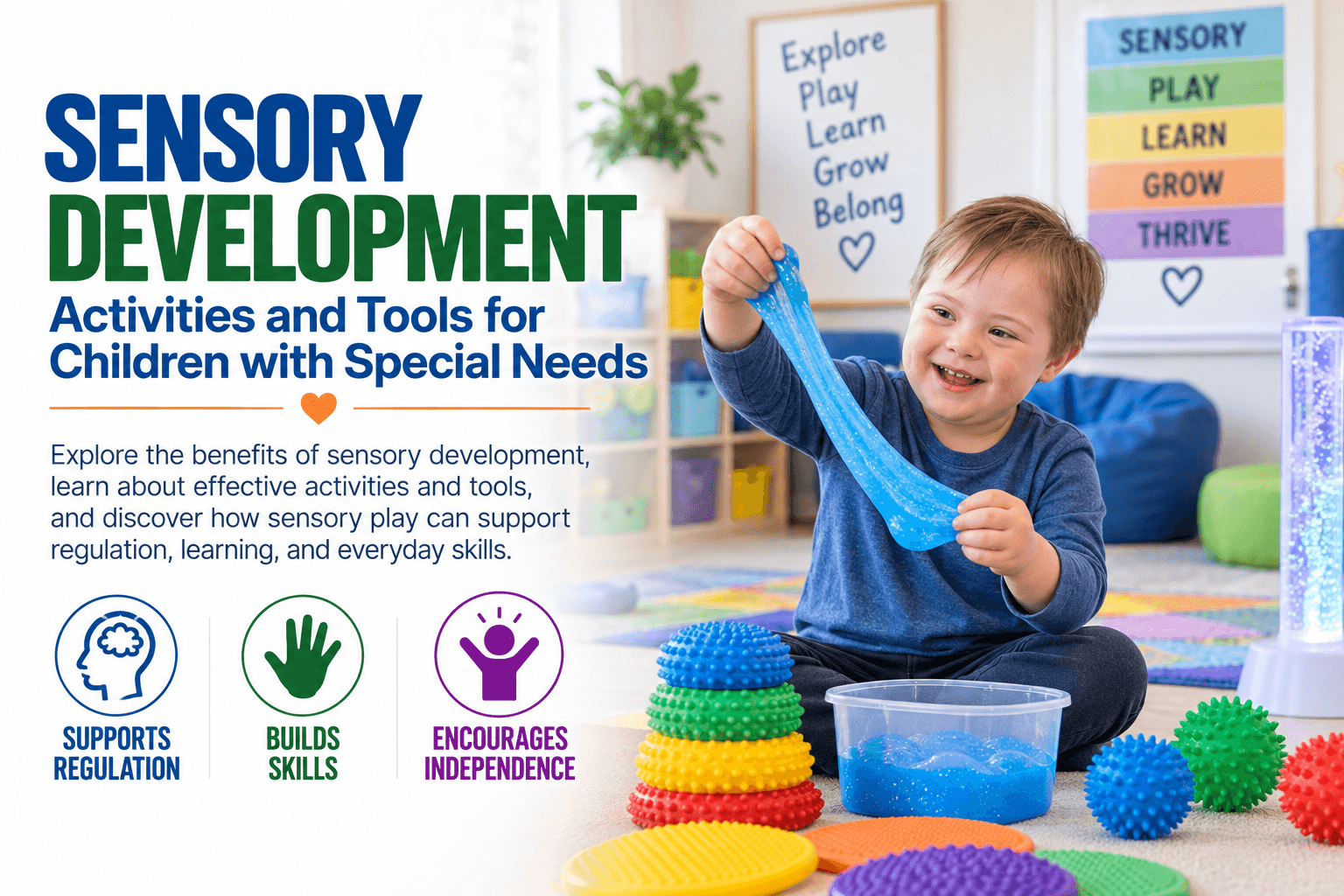
The article Sensory Development Activities and Tools for Children With Special Needs explains how tactile, visual, auditory, vestibular, and proprioceptive experiences can be incorporated into play.
Jungle Jumparoo for Bouncing and Climbing
The Jungle Jumparoo combines bouncing, climbing, gripping, hanging, and active movement in one structure. Rather than using a traditional trampoline surface, the design surrounds an inflatable inner tube with a steel frame and easy to grip bars.
Children can use the structure for activities such as:
- Bouncing
- Climbing
- Hanging
- Gripping
- Moving around the frame
- Creating active games
This combination can make it useful for children who enjoy full body movement and varied gross motor play. It is designed for both indoor and outdoor environments when adequate space and appropriate supervision are available.
Bouncing and Sensory Motor Play
Bouncing can provide significant movement input while requiring the child to continually adjust balance and body position. For some children, bouncing is highly motivating.
A bouncing activity may create opportunities to practice:
- Rhythm
- Balance
- Coordination
- Leg movement
- Body awareness
- Motor planning
The intensity should match the individual child, and adults should watch for signs of fatigue, dizziness, fear, or discomfort.
Climbing Play
Climbing requires children to plan movements before and during the activity.
They may need to determine:
- Where to place a hand
- Where to place a foot
- How much force to use
- How to shift body weight
- How to move around an obstacle
- How to safely get back down
This can make climbing an engaging way to combine physical movement with problem solving.
Explore Balance and Coordination for additional equipment focused on movement skills.
Koala Climbing Toy for Rocking, Rotating, and Creative Play
The Koala Climbing Toy is a versatile Gonge play product that can be used in several configurations. Children can sit inside it to rock or rotate. When turned over, it can become a small den, and multiple Koalas can be combined to create tunnels and other play arrangements. This flexibility encourages children to discover different ways to use the same object.
Activities may involve:
- Rocking
- Rotating
- Hiding
- Crawling
- Imaginative play
- Group play
- Balance
Open ended equipment like this can remain engaging because it does not dictate one single correct way to play.
Why Open Ended Play Equipment Can Be Valuable
A toy with one button and one response has a clear purpose. An open ended play center works differently.
Children may transform the same piece of equipment into:
- A tunnel
- A boat
- A hiding place
- An obstacle
- A bridge
- A pretend vehicle
- Part of an obstacle course
This can encourage creativity while allowing children of different developmental levels to interact with the equipment in different ways.
Children’s Factory Red Rocker Toddler Bridge
The Children’s Factory Red Rocker Toddler Bridge provides two types of active play in one structure. In one position, children can use it for rocking movement. When flipped, it becomes a bridge for walking, climbing, and balance activities. The design includes rails that can provide additional hand support for younger children exploring the bridge configuration.
Possible activities include:
- Gentle rocking
- Walking over the bridge
- Climbing
- Pretend play
- Balance practice
- Group activities
Multifunction play equipment can be especially useful in classrooms and playrooms where floor space is limited.
Rocking Play and Movement
Rocking provides a more predictable back and forth movement experience than many spinning or bouncing activities. Some children enjoy repetitive rocking, while others may prefer more active movement.
Rocking equipment can be incorporated into:
- Indoor play
- Gross motor activities
- Sensory exploration
- Pretend play
- Preschool movement areas
Observe the child's response rather than assuming that rocking will always be calming.
Plug and Barrel for Crawling and Balance Activities
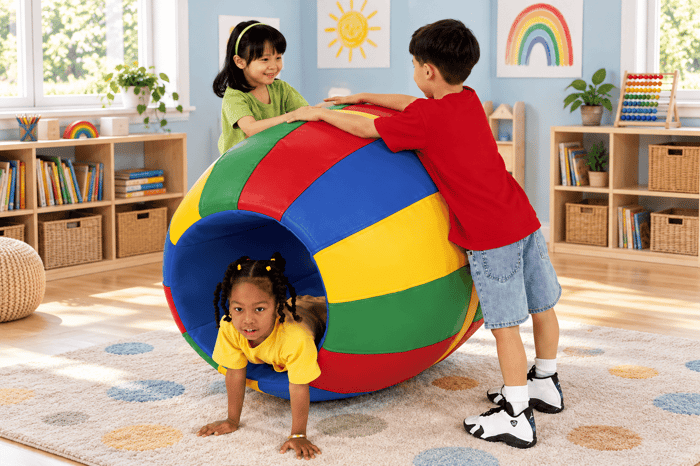
The Plug and Barrel from Spark Sensory Solutions combines components that can be used together or separately. Children can roll over the equipment, crawl through the tunnel, or arrange pieces as part of an obstacle course.
These activities may create opportunities for:
- Crawling
- Balance
- Coordination
- Motor planning
- Body awareness
- Problem solving
Because components can be rearranged, adults can change the activity rather than requiring the child to complete the same route repeatedly.
Creating Simple Obstacle Courses
Play centers can become part of a larger obstacle course using several movement activities.
A simple course might ask a child to:
- Crawl through a tunnel
- Step over an obstacle
- Cross a bridge
- Climb onto a soft surface
- Throw a ball into a target
- Return to the starting point
Activities can be simplified or expanded according to the child's abilities. For additional indoor movement ideas, Soft Play Equipment for Sensory, Motor and Indoor Play Support explores climbing, crawling, soft structures, and gross motor play.
Toddler Baby Building Blocks
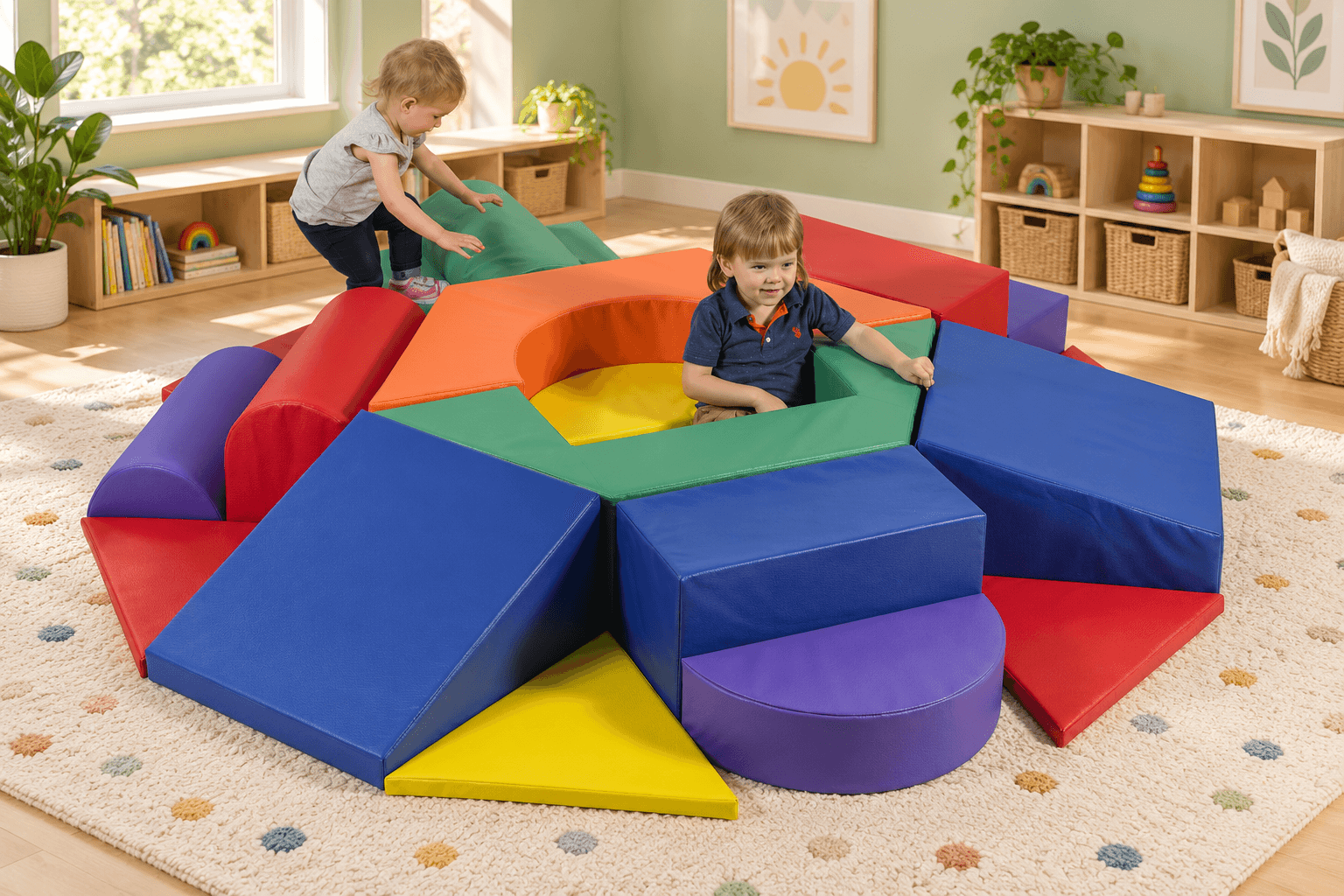
Play centers do not always need to involve climbing equipment. The Toddler Baby Building Blocks from Children’s Factory include 12 soft cube shaped blocks sized for young children.
Large soft blocks can be used for:
- Stacking
- Building
- Sorting
- Color activities
- Pretend play
- Knocking structures down
- Two handed activities
- Group construction
Because each block is relatively large, the activity creates a different movement experience from manipulating small tabletop blocks.
Building Play and Problem Solving
Building gives children immediate feedback. If a structure falls, they can try a different arrangement. If one block does not fit, they can rotate it or choose another location.
These simple decisions introduce early concepts related to:
- Cause and effect
- Spatial relationships
- Size
- Balance
- Planning
- Sequencing
Adults can participate by following the child's ideas instead of always providing a model to copy.
Play Centers for Toddlers
Toddler play equipment should be appropriately sized and designed around emerging motor skills.
Toddlers may be working on:
- Walking
- Climbing
- Stepping
- Crawling
- Squatting
- Carrying
- Reaching
- Balance
Low play structures, soft blocks, rocking equipment, and simple crawling activities can offer age appropriate challenges. Avoid selecting taller or more complex equipment simply because the child may grow into it. Equipment should fit the child's current abilities and manufacturer guidance.
Play Centers for Preschool
Preschool age children often begin combining physical play with more complex imagination and social interaction. A bridge may become part of a pretend adventure. Blocks may become a house. A tunnel may become a cave. An active play structure may become part of a game created by several children. This combination of physical and imaginative play can make versatile play centers especially useful in preschool classrooms.
Play Centers for Autism
There is no single play center that is best for every autistic child.
An autistic child may strongly enjoy:
- Repetitive rocking
- Bouncing
- Climbing
- Crawling
- Building
- Spinning
- Quiet enclosed spaces
Another child may avoid those same experiences. Choose equipment according to individual interests, physical skills, communication, sensory preferences, and safety needs.
Do not assume that a highly stimulating play center is automatically a better sensory choice.
Play Centers for Sensory Seeking Children
Children who seek movement may gravitate toward opportunities involving:
- Jumping
- Climbing
- Rocking
- Crawling
- Pushing
- Pulling
- Balancing
A play center can provide a defined area where some of these movement opportunities are available. However, movement should still be supervised and matched to the child's abilities. More movement is not automatically more beneficial.
Play Centers for Children Who Prefer Quieter Play
Not every play center needs to encourage intense movement.
Children who prefer quieter activities may enjoy:
- Building blocks
- Small enclosed play areas
- Pretend play
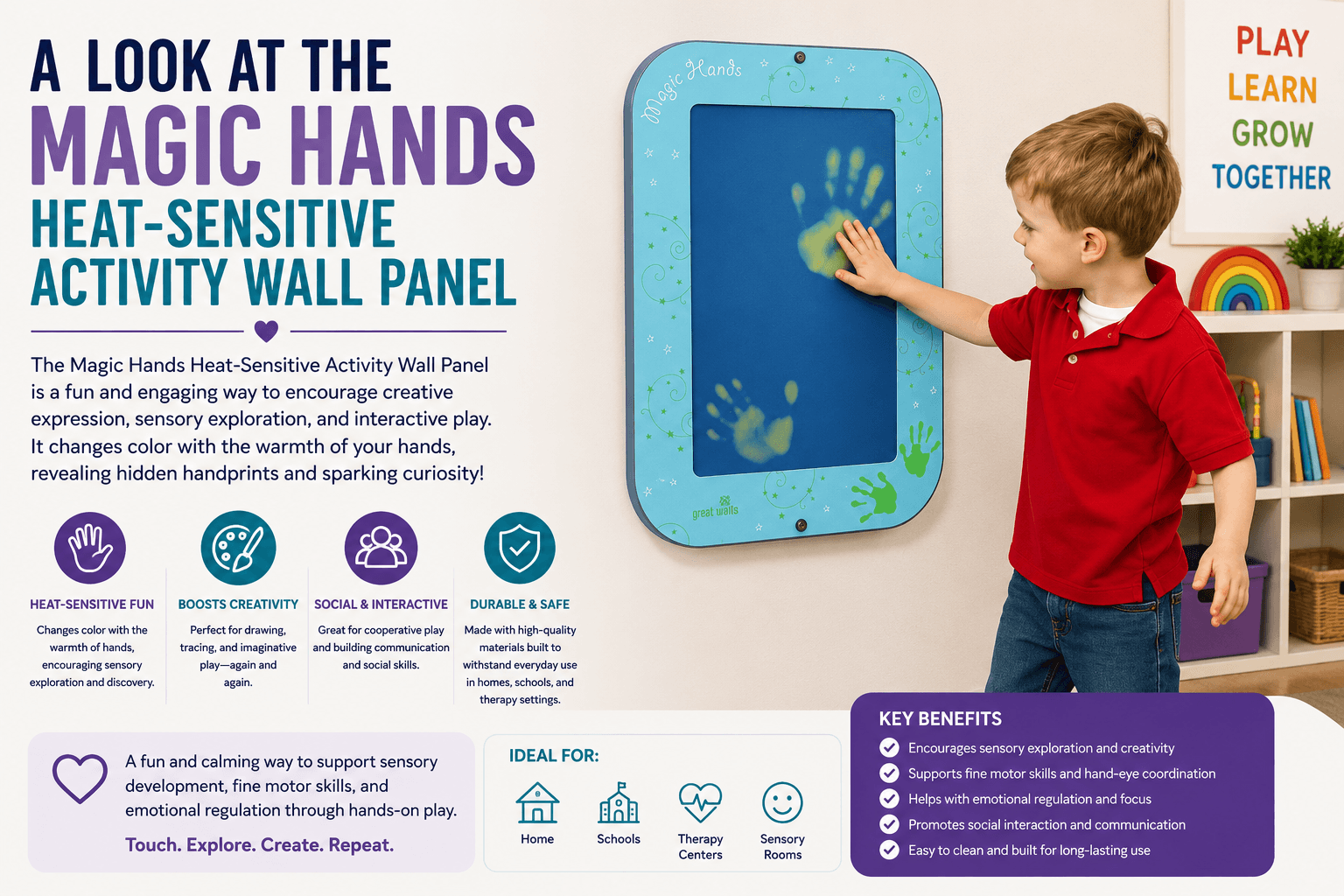
- Sensory wall activities
- Manipulatives
- Simple balance activities
Providing several types of play allows children to choose activities that match their preferences.
Play Centers and Social Interaction
Shared play centers can create opportunities for children to interact naturally.
They may practice:
- Waiting for space
- Taking turns
- Copying another child
- Sharing equipment
- Creating a game together
- Requesting help
- Communicating preferences
Adults can support interaction without requiring every child to play in exactly the same way. Parallel play, where children play near one another without directly cooperating, can also be meaningful.
Supporting Communication During Active Play
Movement activities create natural opportunities for useful communication.
Children may want to communicate:
- Go
- Stop
- More
- Again
- Help
- My turn
- Fast
- Slow
- Finished
Keep AAC systems available during play for children who use them. Play should not require giving up access to communication.
Play Centers in Special Education Classrooms
Play centers can provide movement and play opportunities within the school day.
Schools may use them during:
- Indoor recess
- Movement breaks
- Sensory activities
- Therapy
- Learning centers
- Choice time
- Gross motor groups
- Social activities
Larger equipment may work best in a dedicated movement or sensory room, while compact play products may fit directly into the classroom. For broader planning, read Special Education Classroom Equipment Essentials.
Play Centers in School Sensory Spaces
Active play products can also be incorporated into sensory rooms, but room layout matters.
Keep active movement equipment separated from:
- Fragile visual equipment
- Bubble tubes
- Quiet seating areas
- Shelving
- Doors
- Windows
Movement requires open space. The article School Sensory Room Design for Autism Support provides additional guidance for dividing rooms into movement, quiet, tactile, visual, and communication areas.
Play Centers for Occupational Therapy
Occupational therapists may incorporate play structures into individualized activities involving:
- Motor planning
- Bilateral coordination
- Sensory exploration
- Balance
- Body awareness
- Fine motor skills
- Reaching
- Transitions between positions
The play center itself does not determine the therapy goal. A therapist can modify how the equipment is used according to the individual child.
Play Centers for Physical Therapy
Physical therapists may also use appropriate play equipment to create motivating movement activities involving:
- Walking
- Climbing
- Standing
- Balance
- Reaching
- Weight shifting
- Crawling
- Coordination
Children with complex physical needs may require individualized assistance or specialized equipment.
Indoor Play Centers
Indoor play centers can help schools and families provide movement opportunities when outdoor play is limited by weather or available space.
Before adding large equipment indoors, measure:
- Floor dimensions
- Ceiling height
- Doorways
- Equipment dimensions
- Movement clearance
- Storage space
Consider how the rest of the room will function after the equipment is installed. For more active indoor products, browse Active Play.
Outdoor Play Centers
Some play structures are appropriate for outdoor use.
Outdoor play can add additional experiences involving:
- Different ground surfaces
- Fresh air
- Natural light
- Larger movement areas
- Group play
Only use equipment outdoors when the manufacturer indicates that it is appropriate for that environment. Check outdoor products regularly for weather related wear or damage.
Play Centers for Home
Families can create useful play spaces without turning an entire room into a gym.
A small home setup might include:
- One climbing or rocking activity
- Building blocks
- An activity mat
- A tunnel
- Balls
- A small balance activity
Rotating equipment may be more practical than leaving everything available at once. The larger Toys collection offers additional ways to combine active play with sensory, fine motor, creative, and educational activities.
How Much Space Does a Play Center Need?
Always consider more than the dimensions of the equipment itself.
Children need space to:
- Approach
- Climb
- Get off
- Crawl around
- Move between activities
- Play without colliding with furniture
Active structures need additional clearance around them. Do not use every inch of available floor space simply because the equipment physically fits.
Mats and Protective Surfaces
Certain climbing, balance, or active play products may require protective surfaces or mats. Follow manufacturer recommendations for the specific product. Mats should also be arranged so they do not introduce unnecessary trip hazards or block mobility routes.
Choosing a Play Center by Ability
Before selecting equipment, consider what the child can currently do.
Ask:
- Can the child walk independently?
- Can the child crawl?
- Can they climb safely?
- How is their balance?
- Can they follow basic safety directions?
- Do they need physical assistance?
- What movements do they enjoy?
- What movements do they avoid?
Choose a manageable challenge rather than equipment that requires skills the child has not yet developed.
Choosing a Play Center by Age
Age recommendations are particularly important for safety. However, age should not be the only consideration.
Two children of the same age may have very different:
- Heights
- Weights
- Coordination
- Balance
- Motor abilities
- Safety awareness
- Sensory preferences
Use manufacturer age guidance together with individual abilities.
Choosing Play Centers for Shared Environments
Schools, clinics, and child care centers should consider additional factors because many children may use the equipment.
Look at:
- Durability
- Cleaning
- Age range
- Number of users
- Supervision requirements
- Storage
- Available clearance
- Ease of inspection
Shared environments may benefit from equipment that can be used in several different ways.
Play Center Safety
Inspect active play equipment regularly.
Look for:
- Loose parts
- Cracks
- Torn coverings
- Unstable components
- Sharp edges
- Worn surfaces
- Loose fasteners
- Damaged connectors
Follow manufacturer guidance for:
- Age
- Weight
- Number of users
- Assembly
- Installation
- Indoor or outdoor use
- Supervision
Remove damaged equipment from use until it has been properly repaired or replaced.
Avoid Overcrowding the Play Area
A play center can become less safe when too many children use it simultaneously.
Consider:
- Equipment capacity
- Available space
- Different movement speeds
- Student size
- Supervision
Group play can be valuable without requiring every child to use the same piece of equipment at once.
Creating a Balanced Play Area
A strong play environment can include several types of experiences instead of focusing only on movement.
For example:
Active play: climbing, rocking, bouncing, balancing
Construction: blocks and building activities
Sensory exploration: tactile and visual activities
Quiet play: puzzles, books, manipulatives
Social play: shared games and pretend activities
The Play Furniture collection provides additional options for creating defined play and learning areas.
Play Centers vs. Sensory Rooms
A play center and a sensory room are not the same thing.
A play center generally focuses on play and movement.
A sensory room may combine:
- Calming equipment
- Lighting
- Tactile activities
- Movement
- Seating
- Communication supports
- Sensory wall panels
A play center can be one part of a sensory room when enough space is available. For schools planning a larger sensory environment, The Complete Guide to School Sensory Room Equipment provides additional guidance.
Play Centers vs. Soft Play
Soft play equipment is generally constructed with cushioned or padded materials and is often used for crawling, climbing, stepping, and gross motor activities.
Play centers are a broader category that may also include:
- Hard plastic equipment
- Building products
- Rocking toys
- Balance products
- Activity furniture
- Bouncing structures
Explore Play Furniture for additional soft and interactive play options.
How to Choose the Right Play Center
Before purchasing, ask:
- What type of play does the child enjoy?
- What are their current motor abilities?
- What sensory experiences do they seek or avoid?
- How much room is available?
- Will the product be used indoors or outdoors?
- How many children will use it?
- What are the age and weight recommendations?
- Is protective flooring required?
- How will the equipment be cleaned?
- Can adults supervise the entire play area?
- Does the equipment offer more than one way to play?
These questions can help narrow the options to products that will actually be used.
Shop Play Centers at eSpecial Needs
Explore the Play Centers collection at eSpecial Needs for active, sensory, developmental, and imaginative play equipment.
Current options include products such as:
- Jungle Jumparoo
- Toddler Baby Building Blocks
- Plug and Barrel
- Koala Climbing Toy
- Children’s Factory Red Rocker Toddler Bridge
You can also explore Active Play, Balance and Coordination, Toys, Play Furniture, and Sensory Development.
FAQs
What is a play center for special needs?
A play center is an activity area or piece of equipment designed to encourage movement, exploration, building, sensory play, imaginative play, or social interaction.
Depending on the design, children may climb, crawl, rock, bounce, balance, build, or move through different activities.
Are play centers only for children with disabilities?
No. Many play centers can be used by children with a wide range of abilities.
When selecting equipment for a child with special needs, consider individual motor skills, sensory preferences, physical support needs, communication, and safety awareness rather than diagnosis alone.
What skills can children practice with play centers?
Depending on the equipment, play centers may create opportunities to practice:
- Gross motor movement
- Balance
- Coordination
- Motor planning
- Body awareness
- Reaching
- Crawling
- Climbing
- Problem solving
- Communication
- Turn taking
- Imaginative play
Are play centers considered sensory equipment?
Some can be.
Play centers involving rocking, climbing, bouncing, crawling, or balance may provide movement and body awareness experiences in addition to traditional play.
For more sensory focused options, explore Sensory Development.
Are play centers good for sensory seeking children?
They may be useful for children who enjoy movement such as climbing, rocking, jumping, crawling, or balancing.
However, the amount and type of movement should match the individual child. More movement is not automatically better.
What if my child does not like active movement?
A play center does not have to involve intense physical activity.
Quieter options may include:
- Large building blocks
- Pretend play equipment
- Low balance activities
- Rocking products
- Tunnels
- Manipulative play
Providing different types of play can make the environment more flexible.