Table of Contents
- Why Adaptive Hygiene Tools Matter
- What Are Adaptive Hygiene Tools?
- Hygiene Tools for Limited Reach
- Hygiene Tools for Reduced Grip Strength
- Bathing and Hygiene Support
- Grab Bars and Bathroom Stability
- Toileting and Personal Hygiene
- Child Hygiene Tools and Accessories for Special Needs
- Sensory Considerations During Hygiene
- Oral Hygiene and Tooth Brushing
- Hygiene Tools for Adults With Disabilities
- Hygiene Tools for Seniors
- Occupational Therapy and Personal Hygiene
- Building a Safer Hygiene Routine
- Encouraging Independence Without Removing Support
- Choosing Hygiene Tools and Accessories for Special Needs
- Shop Hygiene Tools and Accessories for Special Needs
- FAQs
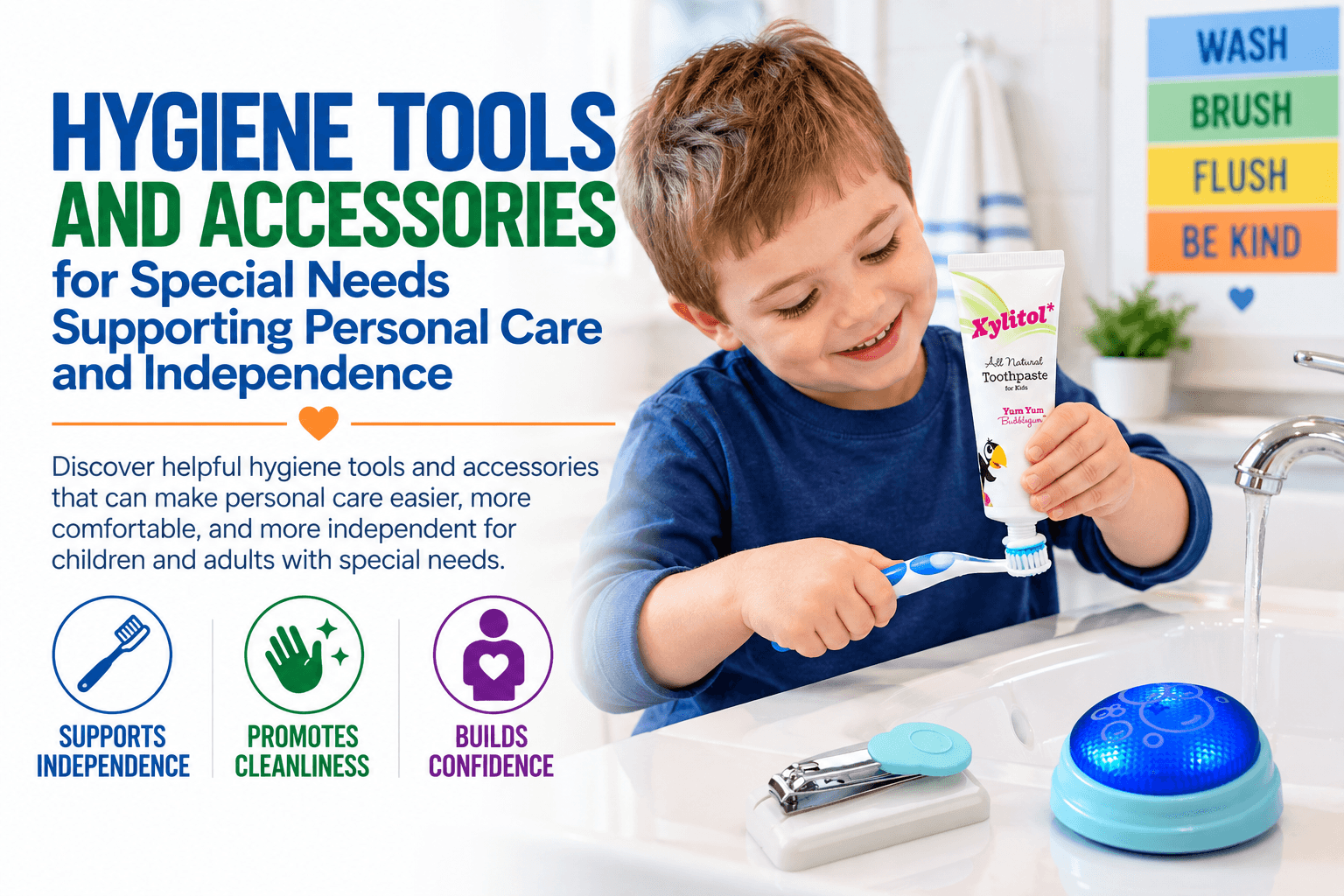
Hygiene tools and accessories for special needs can make everyday personal care easier, more comfortable, and more accessible for children, adults, seniors, caregivers, and individuals with disabilities. Tasks such as bathing, grooming, brushing teeth, washing hair, toileting, and skin care may become difficult when someone has limited mobility, reduced hand strength, sensory sensitivities, poor coordination, or difficulty completing multistep routines.
The Hygiene Tools and Accessories collection at eSpecial Needs includes adaptive personal care products designed to support everyday hygiene at home, school, therapy, residential programs, and care environments.
Why Adaptive Hygiene Tools Matter
Personal hygiene is an important part of daily living and independence. However, standard grooming and bathroom products are not designed around every person's strength, reach, coordination, or sensory needs.
Adaptive hygiene tools may help when a person has difficulty:
- Reaching different areas of the body
- Holding narrow grooming tools
- Maintaining balance
- Completing bathing routines
- Brushing teeth independently
- Washing or drying effectively
- Managing toileting routines
- Following multiple steps
- Tolerating certain textures
- Completing grooming without caregiver assistance
For a broader look at these everyday skills, Daily Living Skills and Best Adaptive Tools to Build Independence explains how adaptive equipment can support eating, dressing, grooming, bathing, toileting, and other daily activities.
What Are Adaptive Hygiene Tools?
Adaptive hygiene products modify ordinary personal care tasks so they require less reach, grip strength, dexterity, balance, or physical effort.
Depending on the user's needs, this may include:
- Long handled bathing tools
- Adaptive brushes
- Grooming aids
- Personal cleaning accessories
- Oral care supports
- Toileting accessories
- Easy grip hygiene tools
- Reachers
- Bathroom safety equipment
- Specialized washing aids
The most useful product is usually the one that addresses a specific barrier rather than simply adding more equipment to the bathroom.
Hygiene Tools for Limited Reach
Limited shoulder movement, reduced flexibility, arthritis, weakness, or mobility differences can make it difficult to reach the back, lower legs, feet, or other areas during bathing and grooming.
Long handled hygiene aids can extend the user's reach while reducing the need for excessive bending or twisting.
These tools may be useful during:
- Bathing
- Washing the back
- Applying lotion
- Grooming
- Drying
- Foot care
For individuals who also have difficulty reaching objects around the home, Reachers can provide additional support for daily living tasks.
Hygiene Tools for Reduced Grip Strength
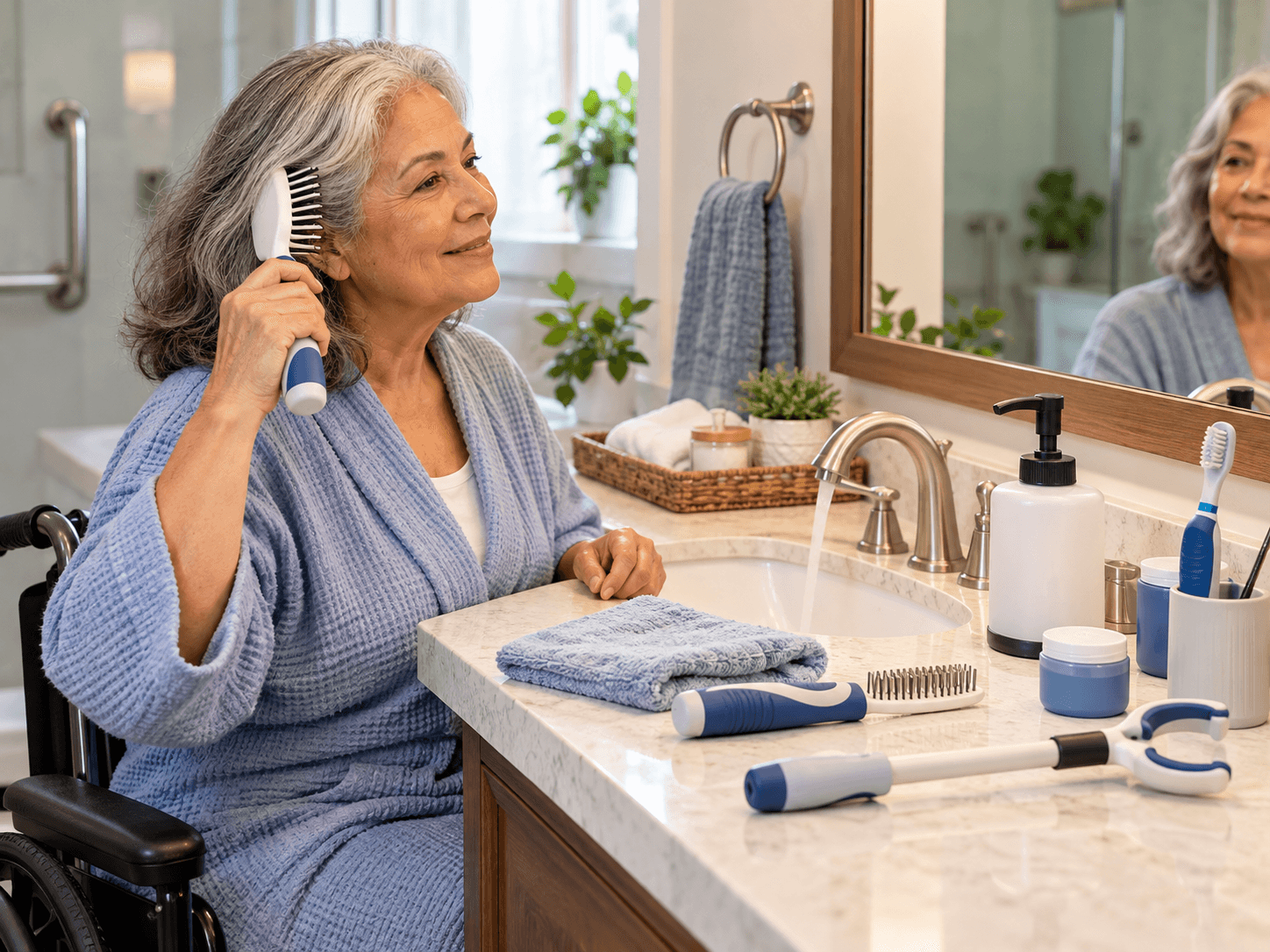
Holding a narrow toothbrush, brush, razor, sponge, or grooming tool may be difficult for someone with reduced hand strength or limited finger movement.
Larger handles and adaptive grips can make everyday tools easier to control.
Users with hand challenges may also benefit from Grips and Holders, which can help adapt eating utensils, writing tools, grooming equipment, and other everyday objects.
The guide Adaptive Grips for Better Hand Control, Comfort, and Independence provides more information about matching grip adaptations to different daily activities.
Bathing and Hygiene Support
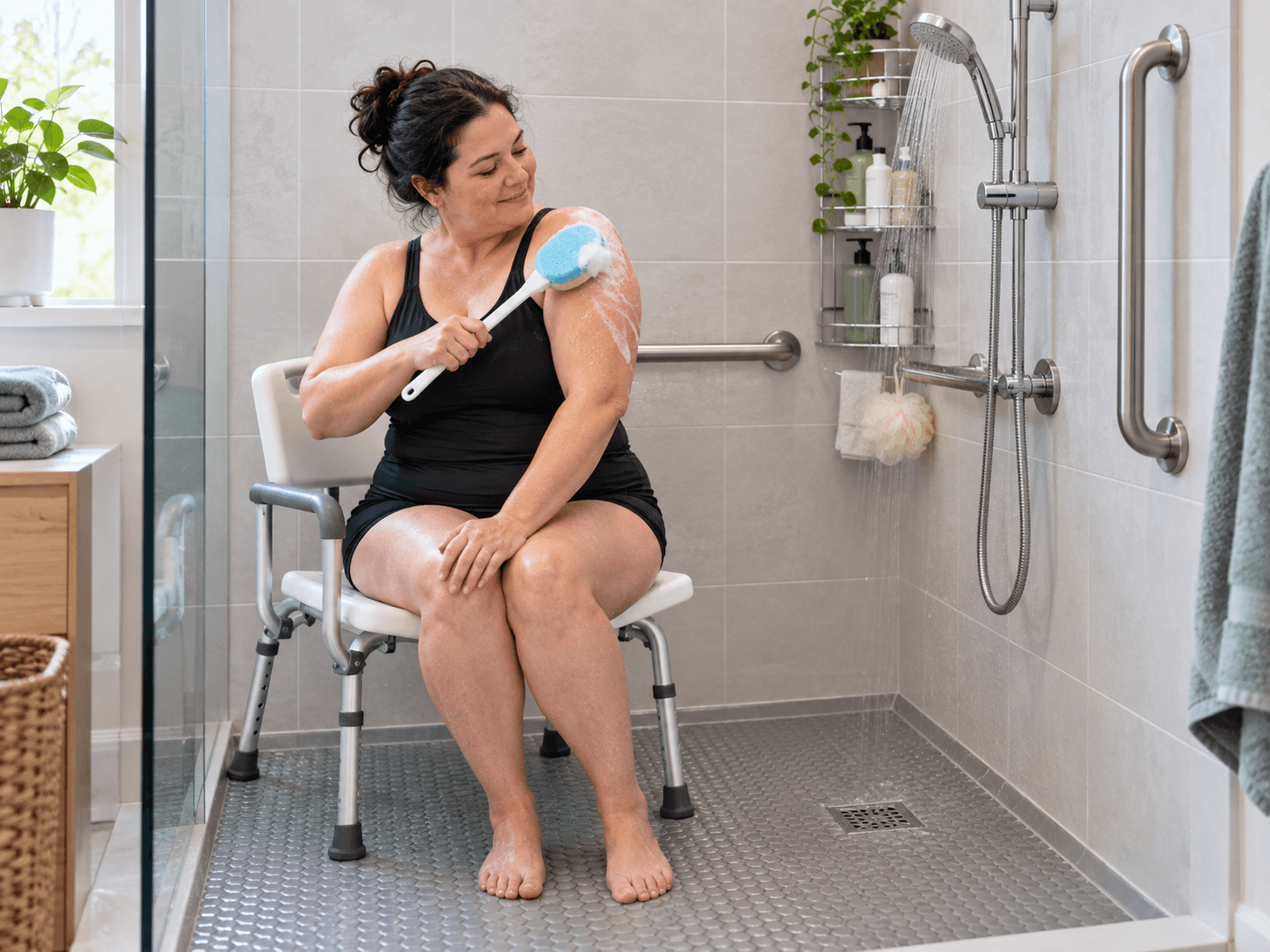
Bathing requires coordination between balance, reaching, grip, transfers, and personal care.
For someone with mobility limitations, even a simple shower routine may involve several challenges.
Helpful equipment may include:
- Bathing aids
- Long handled sponges
- Shower chairs
- Bath chairs
- Grab bars
- Transfer supports
- Non slip surfaces
- Accessible bathing accessories
Explore Bathing and Toileting for equipment that can complement adaptive hygiene tools.
For users who have difficulty standing safely during bathing, Shower Chairs and Bath Chairs can provide additional seated support.
Grab Bars and Bathroom Stability
Personal hygiene can become significantly more difficult when balance is uncertain.
A stable handhold may help during:
- Entering a shower
- Exiting a bathtub
- Standing during grooming
- Toileting
- Dressing
- Transfers
The Grab Bars and Rails collection includes options for adding stability around bathrooms and other transfer areas.
Grab bars should be selected and installed according to their intended use. A balance assist product should not automatically be treated as a full weight bearing transfer device.
Toileting and Personal Hygiene
Toileting combines several daily living skills, including transfers, clothing management, cleaning, balance, and hand use.
Adaptive hygiene accessories may help individuals who have difficulty reaching or completing personal cleaning independently.
Other useful equipment may include:
- Toileting aids
- Commode chairs
- Over toilet chairs
- Transfer supports
- Grab bars
- Adaptive clothing
Browse Toileting and Commode Chairs for additional bathroom support.
The Activities of Daily Living List for Special Needs also provides a broader explanation of how toileting and hygiene fit into everyday independence.
Child Hygiene Tools and Accessories for Special Needs
Children may need help developing grooming and hygiene skills for many different reasons.
A child may have difficulty with:
- Grip
- Fine motor control
- Sensory sensitivities
- Sequencing
- Attention
- Balance
- Reaching
- Body awareness
- Understanding routines
Adaptive hygiene tools can sometimes simplify the physical part of the task so the child can focus on learning the routine.
For example, a larger handle may make a grooming tool easier to hold, while a visual routine may help the child remember the steps.
The goal should be participation at the child's current ability level rather than expecting immediate complete independence.
Care + Me 3-Sided Toothbrush

$4.95
Change the way you clean your teeth with the Care + Me 3-Sided Toothbrush. With its 3-sided head and soft, flexible, gentle bristles it cleans all surfaces and the gum line simultaneously. This special needs toothbrush is a great alternative… read more
Sensory Considerations During Hygiene
Personal hygiene can involve strong sensory experiences.
Bathing, hair washing, tooth brushing, nail care, and grooming may involve:
- Water temperature
- Unexpected touch
- Strong smells
- Different textures
- Water near the face
- Loud bathroom sounds
- Vibrating grooming equipment
Children and adults with sensory differences may find certain routines uncomfortable even when the physical task is simple.
Gradual exposure, predictable routines, preferred products, and clear communication may help.
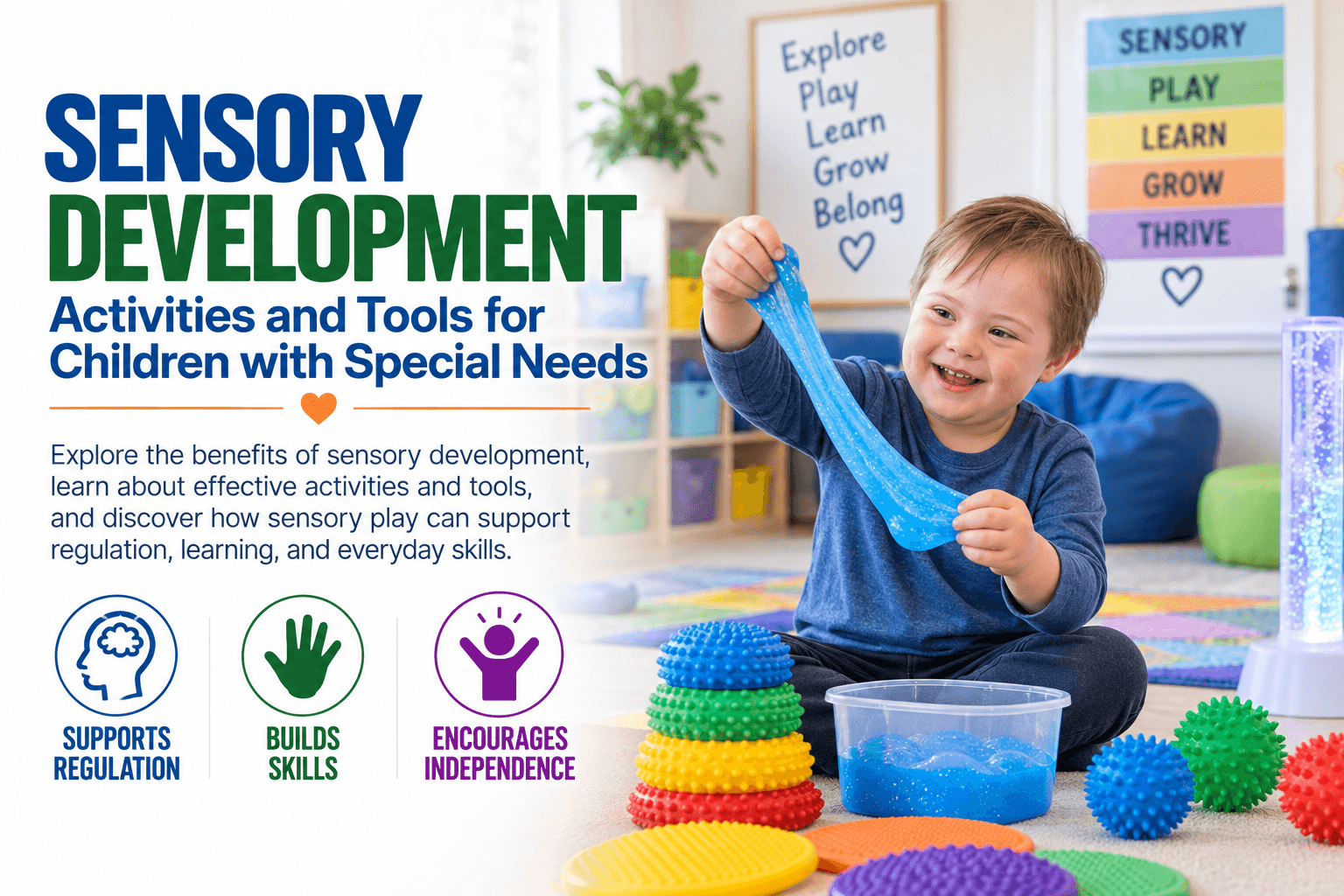
For additional ideas around sensory routines, Sensory Development Activities and Tools for Children With Special Needs explores tactile, movement, visual, and body awareness experiences.
Oral Hygiene and Tooth Brushing
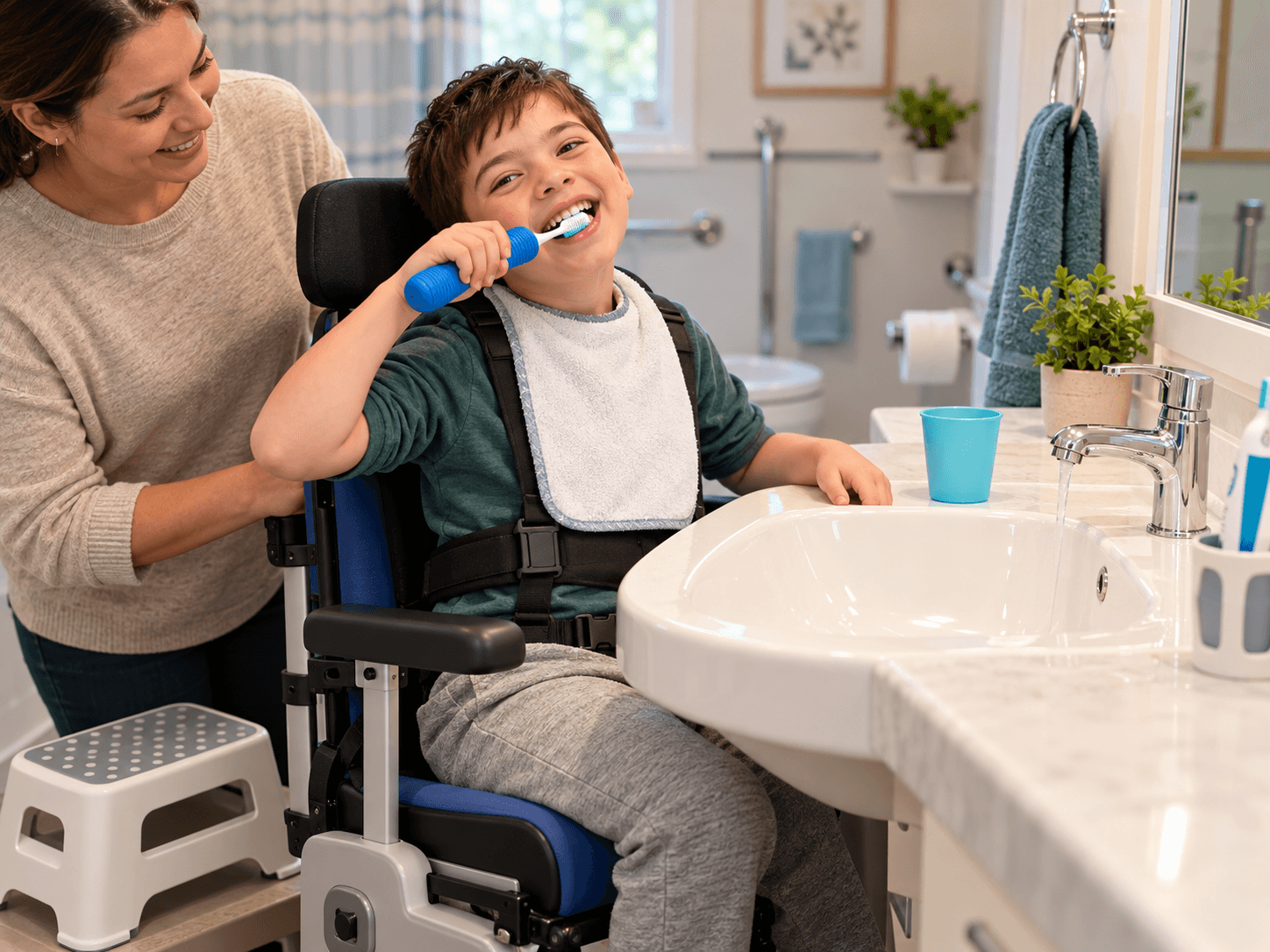
Brushing teeth requires grip, hand control, reaching, timing, sequencing, and tolerance of oral sensations.
Some individuals may benefit from:
- Larger handles
- Adaptive toothbrush grips
- Visual routines
- Timers
- Caregiver assistance
- Consistent positioning
If oral sensitivity is significant, introduce changes gradually and follow recommendations from the individual's dentist, occupational therapist, or other appropriate professional.
Hygiene Tools for Adults With Disabilities
Adults may use adaptive hygiene products because of injury, arthritis, neurological conditions, limited mobility, reduced hand strength, or changes in endurance.
Adaptive equipment can sometimes make it possible to complete more of a grooming or bathing routine independently.
For a wider overview of adult adaptive products, Understanding Adaptive Equipment for Adults in 2026 covers daily living equipment, bathroom safety, mobility, seating, and other supports.
Hygiene Tools for Seniors
Older adults may experience changes in balance, hand strength, flexibility, vision, coordination, or endurance.
Adaptive hygiene tools may reduce some of the physical effort involved in personal care.
Useful supports may include:
- Long handled bathing aids
- Larger grips
- Shower seating
- Grab bars
- Reachers
- Toileting supports
- Dressing aids
Equipment should be selected around the actual difficulty the person experiences rather than age alone.
Occupational Therapy and Personal Hygiene
Occupational therapists frequently work on activities of daily living, including bathing, grooming, dressing, toileting, and feeding.
An occupational therapist may evaluate:
- Grip strength
- Range of motion
- Fine motor control
- Balance
- Transfers
- Sensory responses
- Sequencing
- Endurance
- Cognitive support needs
- Bathroom setup
Sometimes a simple adaptive tool is enough. In other situations, the bathroom layout, seating, or transfer method may also need to change.
The guide Occupational Therapy Products for Adults: A Complete Guide provides additional examples of equipment used to support daily living skills.
Building a Safer Hygiene Routine
Adaptive hygiene tools work best when the entire environment supports the user.
Consider:
- Is the floor dry and stable?
- Can the user reach supplies?
- Is adequate lighting available?
- Is seating needed?
- Are grab bars positioned appropriately?
- Does the user need transfer assistance?
- Are supplies organized consistently?
- Can the user complete part of the routine independently?
- Is supervision required?
Simple environmental changes can sometimes make as much difference as specialized equipment.
Encouraging Independence Without Removing Support
Independence does not always mean completing an entire hygiene routine without help.
One person may independently brush their teeth but need help setting up supplies.
Another may wash their upper body independently while receiving caregiver assistance for harder to reach areas.
A child may complete the first few steps of a grooming routine using visual prompts.
Partial participation still supports skill development and independence.
The Adaptive Equipment for ADLs: A Caregiver's Guide provides additional ideas for identifying which parts of everyday activities can be adapted.
Choosing Hygiene Tools and Accessories for Special Needs
Start with the task that is difficult.
Ask:
- Is reaching the problem?
- Is grip strength limited?
- Is balance a concern?
- Is sensory sensitivity interfering?
- Does the user forget steps?
- Is bending difficult?
- Is a transfer required?
- Does the person fatigue easily?
- Is the bathroom accessible?
- Is caregiver assistance available?
Once the difficulty is clear, it becomes easier to choose appropriate equipment.
Shop Hygiene Tools and Accessories for Special Needs
The Hygiene Tools and Accessories collection at eSpecial Needs provides adaptive products designed to support personal care and everyday hygiene.
You can also explore related categories including Daily Living Aids, Bathing, Toileting, Grab Bars and Rails, Transfer Aids, and Grips and Holders.
FAQs
Who may benefit from adaptive hygiene equipment?
Children, adults, and seniors may benefit when standard personal care tools are difficult to use because of limited mobility, reduced hand strength, arthritis, developmental disabilities, sensory differences, neurological conditions, physical disabilities, or changes in coordination.
For a broader look at everyday adaptive equipment, see Adaptive Equipment for ADLs: A Caregiver's Guide
How do I know which hygiene aid someone needs?
Start by identifying which part of the routine is difficult. If reaching is the problem, a long handled tool may help. If grip is difficult, a larger handle or adaptive grip may be more useful. Balance concerns may require bathroom seating or grab bars rather than a handheld hygiene tool.
Can adaptive hygiene tools support greater independence?
They may help a person complete more of a personal care routine independently by reducing physical barriers. Independence can also mean completing only part of the routine without assistance.
Can adaptive grips be added to regular hygiene tools?
Some grips and holders can be added to existing grooming or personal care tools. Compatibility depends on the size and shape of the item being adapted.
For more information, read Adaptive Grips for Better Hand Control, Comfort, and Independence.
How can caregivers encourage independence during hygiene routines?
Caregivers can provide only the level of assistance needed, allow extra time, keep routines consistent, use visual cues when helpful, and choose equipment that reduces unnecessary physical barriers.
The Daily Living Skills and Best Adaptive Tools to Build Independence guide provides additional ideas.