Table of Contents
- What Are Activities of Daily Living?
- Why ADLs Are Critical for Individuals with Special Needs
- Who Uses the ADL Framework?
- Basic Activities of Daily Living
- Instrumental Activities of Daily Living
- Advanced Activities of Daily Living
- 1. Personal Hygiene and Grooming
- 2. Bathing and Showering
- 3. Oral Care and Dental Hygiene
- 4. Dressing and Undressing
- 5. Eating, Feeding, and Swallowing
- 6. Functional Mobility and Transfers
- 7. Toileting and Continence Management
- 8. Sleep and Rest Routines
- 9. Communication and Social Interaction
- 10. Home Management and Safety Awareness
- 11. Medication Management
- 12. Community Participation and Leisure
- ADL Challenges for Children with Autism Spectrum Disorder
- ADL Challenges for Children with Cerebral Palsy
- ADL Challenges for Individuals with Sensory Processing Disorder
- ADL Challenges for Children with Down Syndrome
- Adaptive Strategies to Support ADL Independence
- Task Analysis and Breaking Down ADL Steps
- Visual Schedules and Cues for ADL Routines
- Sensory Considerations When Building ADL Routines
- How to Use the ADL List to Build a Home Therapy Plan
- Printable Activities of Daily Living List PDF: What to Include
- FAQs
An activities of daily living list helps parents, caregivers, therapists, and educators understand which everyday self-care skills a child, teen, or adult may need support with at home, school, therapy, or in the community. For individuals with special needs, activities of daily living, often called ADLs, include essential routines such as dressing, eating, bathing, toileting, grooming, communication, mobility, sleep, and safety awareness.
For many families, ADLs are not just routine tasks. They are the foundation of independence, dignity, confidence, participation, and quality of life. A child who learns to brush their teeth, use adaptive utensils, follow a toileting routine, or communicate a need is building skills that can support greater independence over time.
This guide provides a practical activities of daily living list for special needs families, explains the different types of ADLs, gives examples by disability type, and outlines adaptive strategies, equipment, therapy supports, and funding options that can help individuals participate more fully in daily life.
What Are Activities of Daily Living?
Activities of daily living are the everyday tasks people perform to care for themselves and function in daily life. The term is often used by occupational therapists, physicians, nurses, schools, insurance providers, and care teams to describe a person’s level of independence with self-care and functional routines.
Common ADLs include:
- Bathing
- Dressing
- Eating
- Drinking
- Toileting
- Grooming
- Oral care
- Mobility
- Transfers
- Communication
- Sleep routines
- Safety awareness
For individuals with special needs, ADLs may require direct assistance, adaptive equipment, visual supports, therapy, environmental modifications, or a step-by-step teaching approach. An activities of daily living list can help caregivers identify which tasks are going well, which tasks are difficult, and which skills should become therapy or home practice goals.
Why ADLs Are Critical for Individuals with Special Needs
ADLs are important because they affect nearly every part of daily life. When a person can participate in self-care tasks, even partially, it can improve independence, confidence, safety, and caregiver routines.
ADL skills may support:
- Greater independence
- Improved self-esteem
- Reduced caregiver strain
- Better school participation
- Improved hygiene
- Safer transfers and mobility
- Better mealtime routines
- More successful toileting
- Stronger communication
- Better quality of life
For children with special needs, ADLs are often part of therapy goals, IEP planning, home routines, and long-term independence planning. For adults and seniors with disabilities, ADL performance may determine the level of support, adaptive equipment, home modifications, or caregiving assistance needed.
Who Uses the ADL Framework?
The ADL framework is used by many people involved in care, education, therapy, and medical planning. Parents and caregivers use an activities of daily living list to track daily routines, identify where help is needed, and practice skills at home. Occupational therapists use ADL assessments to evaluate independence, recommend adaptive equipment, and build therapy plans.
Special education teachers may use ADL goals to support functional life skills, classroom routines, hygiene, toileting, feeding, and communication. Clinicians and case managers may use ADL performance to determine care needs, funding eligibility, medical necessity, and support services. Schools and therapy clinics may use ADL goals to help students build practical independence beyond academics.
Basic Activities of Daily Living
Basic activities of daily living, or BADLs, are the most essential self-care tasks.
Examples include:
These are the core daily living tasks most often discussed in medical, therapy, and caregiving settings.
Spark Sensory Solutions Sippin' Bear Drinking Aid E10994 - Oral Motor Cup
$7.95
The Spark Sensory Solutions Sippin' Bear Drinking Aid (SKU: E10994) is a beloved, therapist-trusted adaptive drinking cup designed to support infants, toddlers, and young children who are learning to drink from a straw or developing oral motor skills. With its… read more

Instrumental Activities of Daily Living
Instrumental activities of daily living, or IADLs, are more complex tasks that support independent living.
Examples include:
- Preparing meals
- Managing medications
- Cleaning
- Laundry
- Shopping
- Using transportation
- Managing money
- Using a phone or communication device
- Home safety
- Following schedules
- Managing appointments
Individuals with special needs may need support, supervision, adaptive tools, or simplified routines for IADLs.
Advanced Activities of Daily Living
Advanced activities of daily living, or AADLs, are meaningful life activities that go beyond basic care. They may not be required for survival, but they are important for quality of life.
Examples include:
- Hobbies
- Recreation
- Social participation
- Volunteering
- Community outings
- Sports
- Creative activities
- Religious or cultural participation
- Leisure activities
- Work or vocational participation
For individuals with special needs, AADLs can support inclusion, emotional well-being, confidence, and connection.
The Complete Activities of Daily Living List for Special Needs
Below is a practical activities of daily living list that caregivers, therapists, and educators can use as a reference when planning support.
1. Personal Hygiene and Grooming
Personal hygiene includes everyday tasks that help a person stay clean, comfortable, and healthy.
Examples include:
- Washing hands
- Washing face
- Brushing hair
- Combing hair
- Nail care
- Skin care
- Applying deodorant
- Managing menstrual hygiene
- Shaving when appropriate
- Cleaning glasses or hearing devices
Common challenges may include poor fine motor control, sensory sensitivity to water or textures, difficulty sequencing steps, limited reach, or resistance to grooming routines. Helpful supports may include visual schedules, adapted toothbrushes, long-handled grooming tools, non-slip grips, step-by-step cue cards, sensory-friendly products, and consistent routines.
2. Bathing and Showering
Bathing and showering can be difficult for individuals with physical, sensory, cognitive, or behavioral challenges.
Barriers may include:
- Fear of water
- Sensitivity to water temperature
- Difficulty standing safely
- Poor balance
- Limited mobility
- Sensitivity to soap or shampoo
- Difficulty following steps
- Unsafe transfers
- Caregiver lifting strain
Adaptive bathing strategies may include bath chairs, shower chairs, tub benches, transfer benches, handheld shower heads, non-slip mats, grab bars, visual bath routines, sensory-friendly towels, and pediatric bath supports. Bathing is one of the most important items on an activities of daily living list because it directly affects hygiene, safety, dignity, and caregiver workload.
3. Oral Care and Dental Hygiene
Oral care includes brushing teeth, flossing, rinsing, tolerating dental tools, and attending dental appointments.
Children and adults with special needs may struggle with oral care because of:
- Oral sensitivity
- Gag reflex
- Difficulty holding a toothbrush
- Limited hand coordination
- Resistance to toothpaste texture or flavor
- Difficulty understanding the routine
- Anxiety around dental care
- Difficulty opening the mouth or staying still
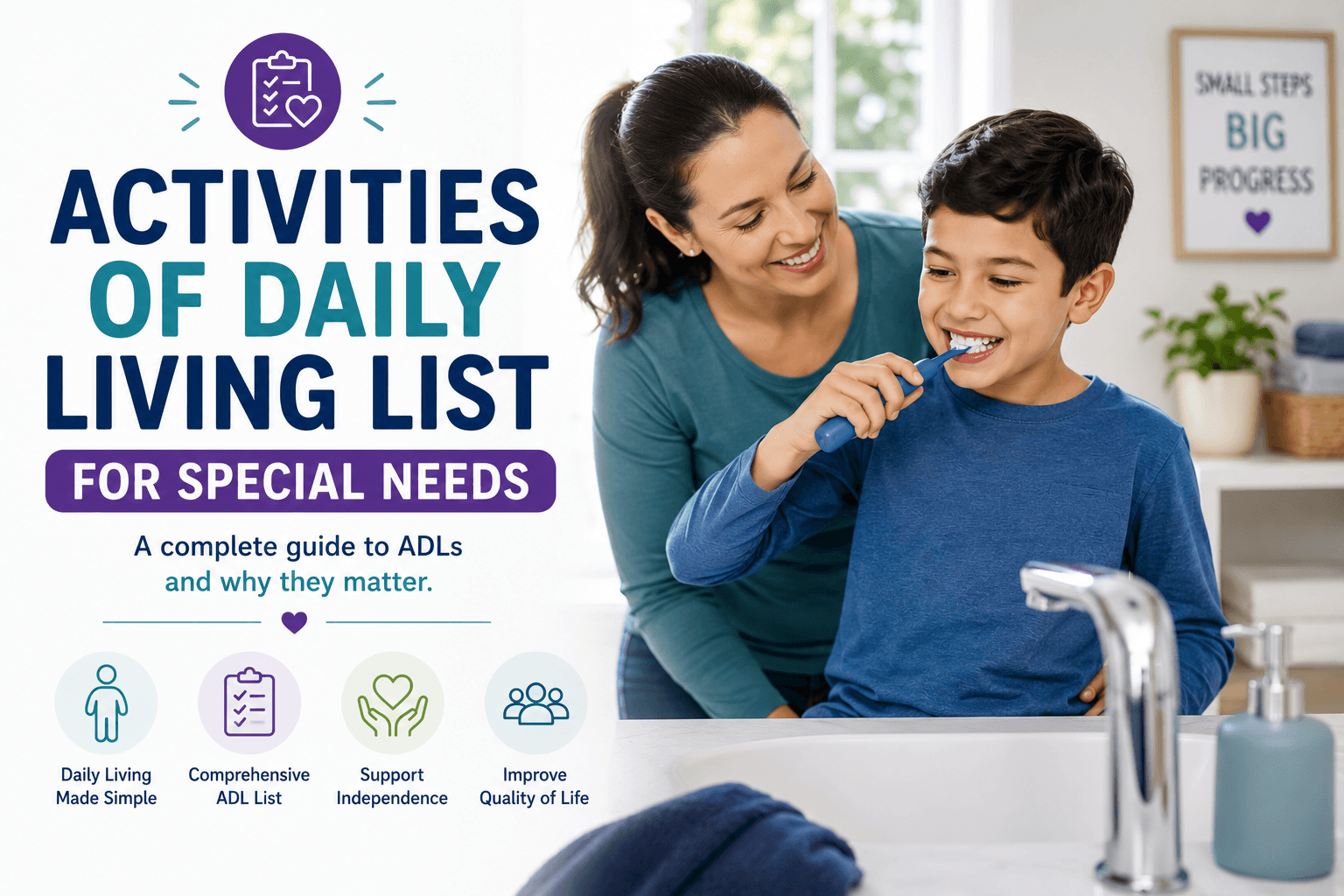
Helpful tools may include adaptive toothbrushes, built-up handles, electric toothbrushes, visual timers, flavor-free toothpaste, step-by-step picture schedules, mouth props when recommended by professionals, and gradual desensitization strategies.
4. Dressing and Undressing
Dressing requires strength, balance, sequencing, coordination, sensory tolerance, and fine motor skills.
Common dressing challenges include:
- Difficulty with buttons or zippers
- Trouble putting arms through sleeves
- Limited range of motion
- Poor balance while dressing
- Sensory discomfort from tags, seams, or fabrics
- Difficulty with socks or shoes
- Trouble identifying front and back of clothing
- Resistance to tight or textured clothing
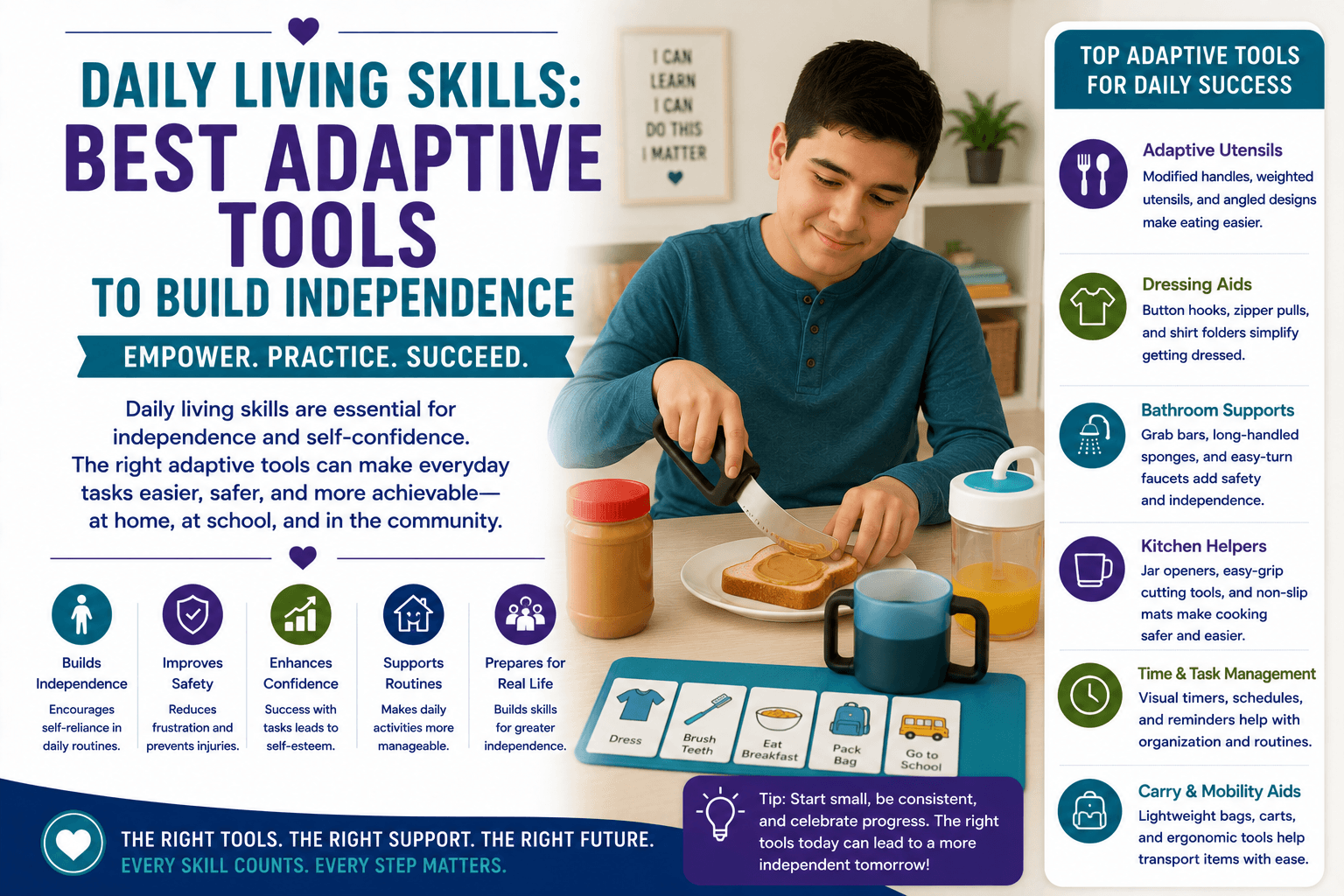
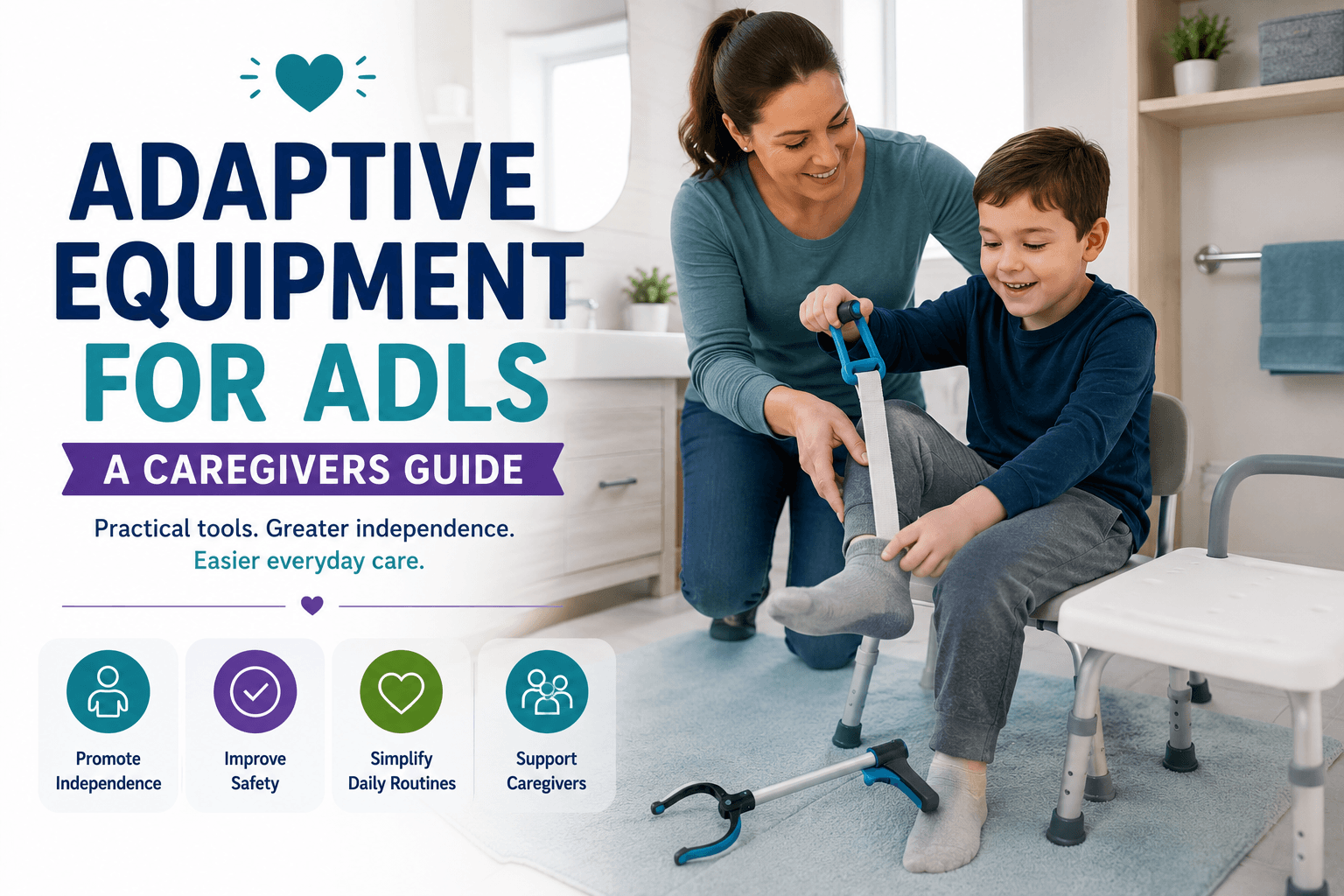
Adaptive dressing tools include dressing sticks, button hooks, zipper pulls, sock aids, long-handled shoehorns, elastic shoelaces, Velcro shoes, adaptive clothing, and clothing with magnetic or simplified closures. For children, dressing may be practiced as part of therapy and morning routines. For adults and seniors, dressing aids may support privacy and independence.
5. Eating, Feeding, and Swallowing
Eating and feeding include getting food to the mouth, chewing, swallowing, drinking, using utensils, and participating in meals.
Challenges may include:
- Weak grip
- Tremors
- Poor hand-to-mouth coordination
- Low muscle tone
- Difficulty sitting upright
- Sensory aversions to food textures
- Limited oral motor control
- Dysphagia or swallowing concerns
- Difficulty using utensils
- Messy or unsafe eating patterns
Adaptive feeding tools may include built-up utensils, weighted utensils, angled utensils, scoop plates, plate guards, non-slip mats, adaptive cups, nosey cups, straw holders, supportive seating, and feeding therapy tools. If swallowing safety is a concern, caregivers should consult a physician, speech-language pathologist, or feeding specialist.
6. Functional Mobility and Transfers
Functional mobility includes moving safely through daily environments. Transfers involve moving from one position or surface to another.
Examples include:
- Rolling in bed
- Sitting up
- Moving from bed to chair
- Getting in and out of a wheelchair
- Standing from a chair
- Walking short distances
- Using stairs
- Getting in and out of a bathtub
- Getting in and out of a car
- Moving around school or home
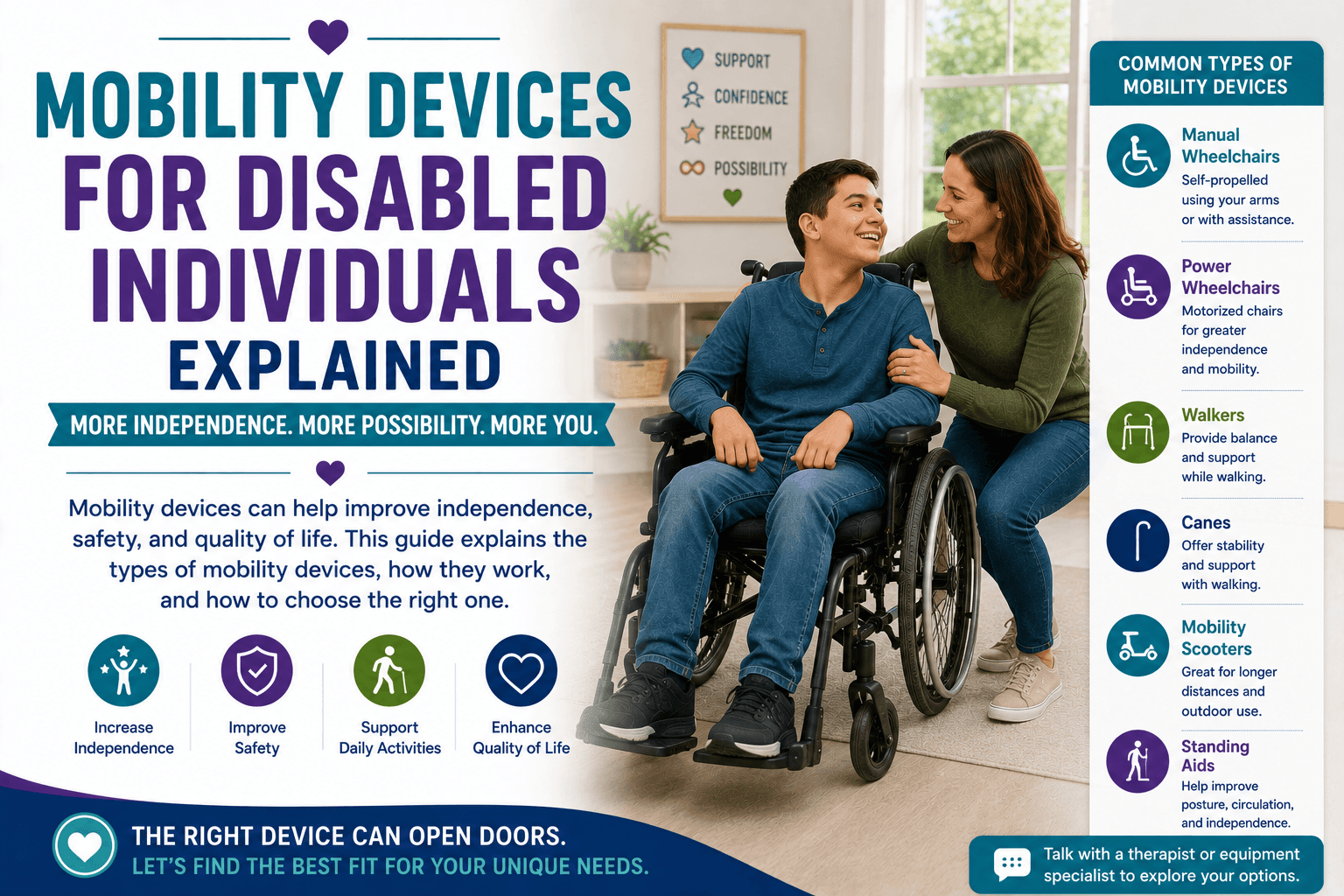
Mobility and transfer challenges may be related to weakness, balance, coordination, spasticity, fatigue, low tone, pain, or physical disability. Helpful equipment may include transfer boards, gait belts, adaptive strollers, walkers, standers, wheelchairs, grab bars, bath benches, positioning supports, and mobility aids.
7. Toileting and Continence Management
Toileting includes recognizing the need to use the bathroom, getting to the toilet, managing clothing, sitting safely, wiping, flushing, handwashing, and continence routines.
Common challenges include:
- Delayed toileting skills
- Incontinence
- Difficulty transferring
- Poor sitting balance
- Sensory sensitivity to bathrooms
- Fear of flushing sounds
- Difficulty wiping
- Trouble managing clothing
- Communication challenges
- Constipation or medical concerns
Helpful supports may include raised toilet seats, toilet safety frames, grab bars, commode chairs, pediatric toileting supports, footrests, visual toileting schedules, adaptive hygiene tools, and continence products. Toileting is often one of the most important ADL goals for families because it affects independence, school participation, hygiene, and caregiver routines.
8. Sleep and Rest Routines
Sleep is sometimes overlooked in ADL planning, but rest routines affect behavior, learning, health, and caregiver well-being.
Sleep challenges may include:
- Difficulty falling asleep
- Frequent night waking
- Sensory discomfort
- Unsafe wandering
- Poor bedtime routines
- Anxiety
- Difficulty calming the body
- Need for positioning support
- Medical sleep concerns
Helpful strategies may include consistent bedtime routines, visual schedules, calming sensory tools, weighted products when appropriate, blackout curtains, white noise, safe sleep environments, safety beds when medically necessary, and reduced stimulation before bed. For children with special needs, sleep support may require a team approach involving caregivers, therapists, and medical providers.
9. Communication and Social Interaction
Communication is a daily living skill because people need to express needs, choices, discomfort, pain, hunger, toileting needs, emotions, and preferences.
Communication ADLs may include:
- Asking for help
- Requesting food or drink
- Communicating pain
- Making choices
- Saying yes or no
- Using gestures
- Using picture cards
- Using AAC devices
- Understanding daily routines
- Participating in social interactions
Helpful supports may include communication boards, picture exchange systems, visual choice cards, speech-generating devices, AAC apps, social stories, visual schedules, and communication partner training. For nonverbal or speech-delayed individuals, assistive technology can be essential for daily independence.
10. Home Management and Safety Awareness
Home management and safety awareness are instrumental activities of daily living. These skills may require ongoing support depending on the person’s age, cognition, physical abilities, and safety judgment.
Examples include:
- Recognizing unsafe situations
- Staying away from hot surfaces
- Using appliances safely
- Cleaning up spills
- Putting items away
- Following household routines
- Understanding emergency rules
- Locking doors
- Avoiding wandering
- Using safety alarms
- Managing personal belongings
Individuals with cognitive, developmental, sensory, or mobility needs may require visual supports, supervision, environmental modifications, safety equipment, and repeated practice.
11. Medication Management
Medication management is an IADL that may be completed by the individual, caregiver, nurse, or support staff depending on safety and ability.
Skills may include:
- Knowing when medication is needed
- Taking the right dose
- Following a schedule
- Opening containers
- Swallowing pills or taking liquid medication
- Reporting side effects
- Using reminders
- Refilling prescriptions
Helpful tools may include pill organizers, medication reminder alarms, caregiver checklists, locked storage, visual schedules, pharmacy packaging, and medical supervision. Medication routines should always follow healthcare provider instructions.
12. Community Participation and Leisure
Community participation and leisure are advanced activities of daily living that support inclusion and quality of life.
Examples include:
- Going to parks
- Shopping
- Attending school events
- Participating in sports
- Visiting family
- Going to restaurants
- Joining social groups
- Attending therapy or appointments
- Using adaptive recreation equipment
- Participating in hobbies
- Volunteering
- Going to religious or cultural activities
Support may include adaptive strollers, mobility aids, communication tools, sensory supports, visual schedules, social stories, caregiver planning, and accessible transportation. A complete activities of daily living list should include these meaningful activities because independence is not only about self-care. It is also about participation.
ADL Challenges for Children with Autism Spectrum Disorder
Autistic children may experience ADL challenges related to sensory sensitivities, communication differences, routine rigidity, fine motor delays, anxiety, or difficulty with transitions.
Common challenges may include:
- Refusing certain clothing textures
- Difficulty tolerating toothbrushing
- Selective eating
- Trouble with bathing or hair washing
- Toileting delays
- Difficulty with transitions
- Sleep disruptions
- Trouble communicating needs
- Sensory overload during grooming
Helpful supports may include visual schedules, social stories, sensory-friendly clothing, adaptive toothbrushes, calm routines, AAC supports, and gradual exposure to difficult tasks.
ADL Challenges for Children with Cerebral Palsy
Children with cerebral palsy may have muscle tone differences, spasticity, weakness, poor coordination, limited mobility, or postural control challenges.
ADL challenges may include:
- Difficulty dressing
- Trouble holding utensils
- Limited hand use
- Poor sitting balance
- Difficulty transferring
- Need for bathing support
- Challenges with toileting positioning
- Fatigue during daily tasks
- Need for adaptive seating
Helpful equipment may include adaptive seating, positioning supports, feeding aids, bathing supports, transfer equipment, mobility aids, dressing tools, and therapy-based practice.
ADL Challenges for Individuals with Sensory Processing Disorder
Individuals with sensory processing disorder may struggle with ADLs because ordinary sensations feel overwhelming, uncomfortable, or hard to organize.
Challenges may include:
- Discomfort with water temperature
- Avoidance of toothbrushing
- Clothing sensitivity
- Sound sensitivity in bathrooms
- Food texture aversions
- Difficulty with grooming
- Need for deep pressure before tasks
- Overload during busy routines
Helpful strategies may include sensory diets, environmental modifications, predictable routines, tactile preparation, deep pressure tools, and gradual desensitization.
ADL Challenges for Children with Down Syndrome
Children with Down syndrome may experience low muscle tone, fine motor delays, cognitive delays, speech delays, and reduced endurance.
ADL challenges may include:
- Delayed dressing skills
- Difficulty with buttons and zippers
- Feeding challenges
- Low oral motor tone
- Toilet training delays
- Need for visual cues
- Difficulty with sequencing
- Reduced grip strength
Helpful supports may include adaptive utensils, dressing aids, visual schedules, step-by-step routines, supportive seating, speech and OT support, and repeated practice.
Adaptive Strategies to Support ADL Independence
Building ADL independence takes time, consistency, and the right supports. Progress may be small at first, but each step matters.
Task Analysis and Breaking Down ADL Steps
Task analysis means breaking a larger task into smaller steps.
For example, brushing teeth may be broken down into:
- Get toothbrush
- Turn on water
- Wet toothbrush
- Add toothpaste
- Brush top teeth
- Brush bottom teeth
- Rinse mouth
- Rinse toothbrush
- Put toothbrush away
This approach helps individuals learn one step at a time instead of feeling overwhelmed by the entire task.
Visual Schedules and Cues for ADL Routines
Visual supports can help individuals understand what to do and what comes next.
Helpful visual tools include:
- Picture schedules
- First-then boards
- Step-by-step cards
- Bathroom routine charts
- Dressing sequence cards
- Mealtime visuals
- Bedtime charts
- Timers
- Choice boards
- Social stories
Visual supports are especially helpful for autism, developmental delays, communication challenges, and cognitive disabilities.
Sensory Considerations When Building ADL Routines
Many ADL difficulties are sensory-related. Before assuming a child is refusing a task, consider whether the task feels uncomfortable or overwhelming.
Sensory questions to ask include:
- Is the water too hot or cold?
- Is the toothbrush too stiff?
- Does toothpaste taste too strong?
- Are clothing seams uncomfortable?
- Is the bathroom echo too loud?
- Is the lighting too bright?
- Is the food texture difficult?
- Does the child need movement before the task?
- Would deep pressure help before grooming?
Adjusting the sensory environment can make ADLs more successful.
How to Use the ADL List to Build a Home Therapy Plan
Caregivers can use an activities of daily living list to create a simple home practice plan.
Start by:
- Choose one or two ADLs to focus on
- Break each task into small steps
- Identify what part is hardest
- Add visual supports or adaptive tools
- Practice at the same time each day
- Track progress
- Celebrate small gains
- Adjust the routine as needed
- Share updates with therapists or teachers
For example, if dressing is the goal, focus first on pulling up pants, putting arms through sleeves, or using a zipper pull. Small wins build independence over time.
Printable Activities of Daily Living List PDF: What to Include
A printable ADL checklist can help caregivers, therapists, and teachers track daily living skills.
A useful PDF should include:
- Basic ADL checklist
- Instrumental ADL checklist
- Advanced ADL checklist
- Skill rating scale
- Notes section
- Equipment needed
- Support level required
- Therapy goals
- Progress tracking
- Caregiver comments
- School or home recommendations
A printable activities of daily living list can be especially useful during therapy visits, IEP meetings, medical appointments, and funding requests.
FAQs
What are activities of daily living?
Activities of daily living, often called ADLs, are the everyday self-care tasks people need to complete to care for themselves and participate in daily life. Common examples include bathing, dressing, eating, toileting, grooming, oral care, mobility, communication, and sleep routines.
What is an activities of daily living list?
An activities of daily living list is a checklist of daily self-care and functional skills used by caregivers, occupational therapists, schools, clinicians, and families to understand what support a person may need. It can help identify strengths, challenges, therapy goals, adaptive equipment needs, and areas where more independence can be built.
Why is an activities of daily living list important for special needs families?
An activities of daily living list helps families see which daily routines are going well and which ones need support. It can guide therapy goals, IEP planning, caregiver routines, adaptive equipment choices, and home practice. It also helps track progress over time.
What are examples of basic activities of daily living?
Basic activities of daily living include bathing, dressing, toileting, eating, feeding, drinking, grooming, oral care, transferring, and functional mobility. These are the core self-care tasks most often used to measure daily independence.
What are instrumental activities of daily living?
Instrumental activities of daily living, or IADLs, are more complex skills that support independent living. Examples include preparing meals, managing medications, shopping, cleaning, doing laundry, using transportation, managing money, following schedules, and maintaining home safety.
What are advanced activities of daily living?
Advanced activities of daily living, or AADLs, include meaningful activities that support quality of life, social participation, recreation, and personal fulfillment. Examples include hobbies, sports, volunteering, community outings, social activities, leisure, and vocational participation.
What is the difference between ADLs and IADLs?
ADLs are basic self-care tasks, such as dressing, bathing, eating, and toileting. IADLs are more complex daily living tasks, such as cooking, cleaning, managing medication, shopping, and using transportation. Many individuals with special needs require support in both areas.
What are the most important ADLs for children with special needs?
Important ADLs for children with special needs often include dressing, feeding, drinking, bathing, toileting, oral care, grooming, sleep routines, communication, mobility, and safety awareness. The highest priority depends on the child’s age, diagnosis, abilities, family routines, and therapy goals.
How do ADLs apply to special education?
In special education, ADLs may be included in functional life skills instruction, IEP goals, occupational therapy services, toileting plans, feeding support, communication goals, and classroom routines. ADLs help students build practical independence beyond academics.
Can ADLs be included in an IEP?
Yes. ADL skills can be included in an IEP when they affect a student’s ability to participate in school or build functional independence. Examples may include toileting, feeding, dressing, handwashing, communication, transitions, mobility, or classroom self-care routines.
Who assesses activities of daily living?
Occupational therapists commonly assess activities of daily living. Physicians, nurses, physical therapists, speech-language pathologists, special education teachers, case managers, and caregivers may also contribute information depending on the person’s needs.
How do occupational therapists assess ADLs?
Occupational therapists assess ADLs by observing daily tasks, interviewing caregivers, reviewing medical or developmental history, evaluating motor skills, assessing sensory needs, looking at the environment, and identifying barriers to independence. They may also use standardized assessment tools.
What ADL assessment tools do occupational therapists use?
Common ADL and functional assessment tools may include the PEDI or PEDI-CAT, WeeFIM, Vineland Adaptive Behavior Scales, School Function Assessment, Canadian Occupational Performance Measure, caregiver interviews, sensory profiles, and direct observation.
What ADLs are most difficult for autistic children?
Autistic children may struggle with ADLs that involve sensory sensitivities, transitions, sequencing, or communication. Common challenges include toothbrushing, hair washing, bathing, dressing, toileting, eating varied foods, sleep routines, and communicating needs.
How do sensory issues affect ADLs?
Sensory issues can make everyday tasks feel uncomfortable or overwhelming. A child may dislike water temperature, clothing seams, toothpaste flavor, hair brushing, bathroom sounds, food textures, bright lights, or strong smells. Adjusting the sensory environment can make ADLs easier.