Table of Contents
- What Are Activities of Daily Living?
- Basic vs. Instrumental ADLs
- How Disabilities and Aging Impact ADL Performance
- The Role of Adaptive Equipment in Regaining Independence
- Who Can Benefit from Adaptive Equipment for ADLs?
- Children with Developmental Disabilities and Special Needs
- Adults and Seniors with Mobility or Neurological Conditions
- Individuals with Cerebral Palsy, Stroke, or Spinal Cord Injuries
- Adaptive Equipment for Dressing
- What Is a Dressing Stick?
- How to Use a Dressing Stick for Shirts, Pants, and Socks
- Dressing Aids for Pants, Shoes, and Fasteners
- Adaptive Equipment for Upper Body Dressing
- Dressing Aids for Seniors with Arthritis or Limited Reach
- Occupational Therapy Adaptive Equipment for Dressing
- Adaptive Equipment for Eating and Drinking
- Overview of Adaptive Feeding Equipment
- Occupational Therapy Adaptive Equipment for Eating
- Adaptive Eating Equipment for Cerebral Palsy
- Assistive Eating Devices for the Elderly
- Adaptive Equipment for Drinking
- Adaptive Feeding Equipment PDF Resources and OT Guides
- Adaptive Equipment for Bathing and Toileting
- Bath Aids for Children and Adults with Disabilities
- Toileting Aids and Positioning Supports
- Adaptive Equipment for Hands and Fine Motor Tasks
- Tools for Grip, Reach, and Manipulation
- Fine Motor ADL Aids Recommended by Occupational Therapists
- How to Choose the Right Adaptive Equipment for ADLs
- Working with an Occupational Therapist to Assess ADL Needs
- Key Factors to Consider
- Requesting a Quote and Expert Consultation at eSpecial Needs
- How to Fund Adaptive Equipment for Daily Living
- Using Medicaid, Insurance, and Letters of Medical Necessity
- Purchase Orders for Schools and Government Agencies
- Financing Options and Price-Match Guarantee
- FAQs
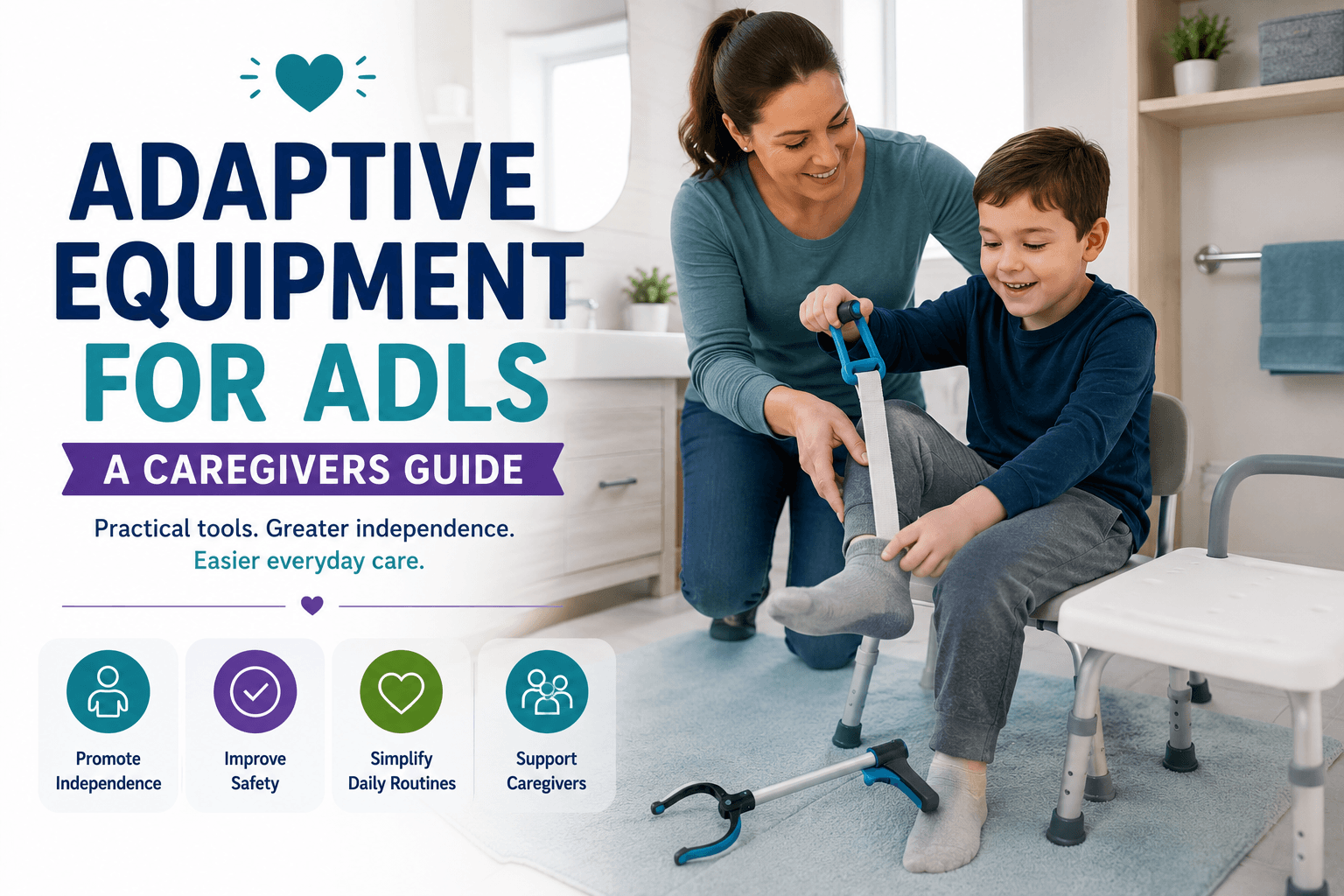
Adaptive equipment for ADLs helps children, adults, seniors, and individuals with disabilities complete everyday self-care tasks with more safety, comfort, and independence. ADLs, or activities of daily living, include essential routines such as dressing, eating, drinking, bathing, toileting, grooming, and moving through the day. When a person has limited strength, coordination, mobility, grip, balance, range of motion, or cognitive processing, even simple daily tasks can become frustrating or unsafe.
For caregivers, the right equipment can reduce physical strain and make daily routines more manageable. For the individual using the tools, adaptive equipment can support confidence, dignity, and participation. Whether a child is learning self-care skills for the first time, an adult is recovering after a stroke, or a senior is trying to remain independent at home, adaptive daily living tools can make a meaningful difference.
This guide explains what ADLs are, who benefits from adaptive equipment for ADLs, which tools support dressing, eating, drinking, bathing, toileting, and fine motor tasks, and how caregivers can choose and fund the right equipment.
What Are Activities of Daily Living?
Activities of daily living are the basic self-care tasks people need to complete each day. These are the routines that help a person care for their body, maintain hygiene, eat meals, get dressed, and participate in home, school, work, or community life.
Common ADLs include:
- Dressing Aids
- Eating
- Drinking Aids
- Bathing Aids
- Toileting Aids
- Grooming
- Brushing teeth
- Combing hair
- Moving from one position to another
- Getting in and out of bed or chairs
- Bathroom Safety
For many people, these tasks happen automatically. For individuals with disabilities, injuries, developmental delays, neurological conditions, or aging-related changes, ADLs may require extra support, adaptive strategies, or specialized tools.
Basic vs. Instrumental ADLs
There are two main categories of daily living skills: basic ADLs and instrumental ADLs. Basic ADLs are the personal care tasks needed for daily self care.
Examples include:
- Bathing
- Dressing
- Eating
- Toileting
- Grooming
- Transferring
- Personal hygiene
Instrumental ADLs, often called IADLs, are more complex tasks needed for independent living.
Examples include:
- Cooking
- Cleaning
- Shopping
- Managing medications
- Using transportation
- Handling money
- Doing laundry
- Using a phone or communication device
- Planning meals
- Managing appointments
Adaptive equipment for ADLs usually focuses on basic self-care tasks, while other assistive tools may support IADLs such as cooking, household tasks, or community participation.
How Disabilities and Aging Impact ADL Performance
ADLs can become difficult for many reasons. A child may need help learning self-care skills because of developmental delays, autism, cerebral palsy, low muscle tone, or fine motor challenges. An adult may lose independence after a stroke, spinal cord injury, traumatic brain injury, or surgery. A senior may struggle because of arthritis, balance problems, weakness, vision loss, or reduced range of motion.
Common challenges include:
- Difficulty reaching feet or lower body
- Weak grip strength
- Poor hand coordination
- Limited shoulder movement
- Tremors
- Low muscle tone
- Fatigue
- Poor sitting balance
- Difficulty chewing or swallowing
- Trouble standing safely
- Cognitive or sequencing challenges
- Sensory sensitivities
- Pain during movement
These challenges can make daily routines longer, more stressful, or more dependent on caregiver assistance.
The Role of Adaptive Equipment in Regaining Independence
Adaptive equipment is designed to make daily tasks easier, safer, or more accessible. These tools do not replace care, therapy, or supervision when needed. Instead, they help bridge the gap between what the person wants to do and what their body can currently manage.
Adaptive equipment may help users:
- Dress with less assistance
- Feed themselves more comfortably
- Drink with better control
- Bathe more safely
- Use the toilet with more stability
- Groom with less strain
- Reach items more easily
- Hold objects with weaker grip
- Practice independence during therapy
- Reduce caregiver lifting or physical strain
The best adaptive equipment for ADLs is chosen around the individual’s real daily routines, not just their diagnosis.
Who Can Benefit from Adaptive Equipment for ADLs?
Many people can benefit from adaptive daily living tools, including children, teens, adults, seniors, and individuals with temporary or long-term disabilities.
Children with Developmental Disabilities and Special Needs
Children with developmental delays, autism, cerebral palsy, Down syndrome, sensory processing challenges, low muscle tone, or physical disabilities may need adaptive tools to build self-care skills.
Adaptive equipment can help children practice:
- Feeding
- Drinking
- Dressing
- Toileting
- Bathing
- Grooming
- Hand use
- Fine motor control
- Independent routines
For children, adaptive equipment for ADLs should be safe, appropriately sized, easy to clean, and supportive of learning. The goal is often skill-building, not just task completion.
Grabease Baby Utensils
$13.95
Grabease are designed to give toddlers the opportunity to eat independently with a proportional tool for their natural hand grasp and motion with a choke protection shield. Great utensil starter for children in their baby and weaning stage to toddler… read more

Adults and Seniors with Mobility or Neurological Conditions
Adults and seniors may need adaptive equipment because of arthritis, Parkinson’s disease, stroke, multiple sclerosis, injury, weakness, balance problems, reduced vision, or aging-related changes.
Helpful equipment may support:
- Safer bathing
- Easier dressing
- Improved grip
- Better feeding control
- Reduced bending
- Safer toileting
- More independent grooming
- Lower fall risk
For seniors, adaptive tools can help support aging in place and reduce reliance on caregivers for every daily task.
Individuals with Cerebral Palsy, Stroke, or Spinal Cord Injuries
People with cerebral palsy, stroke, or spinal cord injuries may experience muscle stiffness, weakness, poor coordination, limited movement, spasticity, balance challenges, or one-sided weakness.
Adaptive equipment may help with:
- One-handed dressing
- Supported feeding
- Stable bathing
- Safe transfers
- Grip support
- Postural positioning
- Toileting support
- Reduced caregiver lifting
For these users, occupational therapists and physical therapists often play an important role in recommending the safest tools.
Adaptive Equipment for Dressing
Dressing can be difficult when a person has limited reach, pain, poor grip, balance issues, one-sided weakness, or difficulty sequencing steps. Dressing aids help users put on shirts, pants, socks, shoes, and fasteners with less bending, pulling, or assistance.
Common dressing aids include:
- Dressing sticks
- Button hooks
- Zipper pulls
- Sock aids
- Long-handled shoehorns
- Elastic shoelaces
- Reachers
- Pant loops
- Adaptive clothing
- Velcro closures
- One-handed dressing tools
What Is a Dressing Stick?
A dressing stick is a long-handled tool with hooks or shaped ends that help users push, pull, lift, or position clothing. It can be especially helpful for people who cannot bend easily, have limited shoulder movement, or need one-handed dressing strategies.
A dressing stick may help with:
- Pulling up pants
- Removing socks
- Positioning sleeves
- Pulling a shirt over the shoulder
- Pushing clothing off the body
- Retrieving clothing from the floor or bed
- Adjusting jackets or sweaters
Dressing sticks are simple but effective tools often recommended in occupational therapy.
How to Use a Dressing Stick for Shirts, Pants, and Socks
A dressing stick can be used in several ways depending on the garment.
For shirts:
- Use the hook to guide the sleeve over the hand or arm
- Pull fabric toward the shoulder
- Adjust the back of the shirt without twisting too far
- Push fabric off the arm when undressing
For pants:
- Use the hook to pull the waistband over the feet
- Guide pants up toward the knees
- Adjust fabric when bending is difficult
- Pair with a reacher or pant loops for easier lower-body dressing
For socks:
- Use the stick to push socks off the heel
- Pair with a sock aid to put socks on
- Use a long-handled shoehorn for shoes after socks are in place
A therapist can teach the best technique based on the user’s movement, strength, and balance.
Dressing Aids for Pants, Shoes, and Fasteners
Lower-body dressing often requires bending, balance, and hand coordination. Adaptive tools can make these tasks easier.
Helpful dressing aids include:
- Sock aids for pulling socks onto the feet
- Long-handled shoehorns for putting on shoes
- Elastic shoelaces for slip-on shoe access
- Reachers for pulling clothing into position
- Button hooks for small buttons
- Zipper pulls for easier gripping
- Velcro closures for simplified fastening
- Pant loops for pulling pants up with less grip demand
These tools can be especially helpful after hip surgery, stroke, spinal cord injury, arthritis flare-ups, or for individuals with poor balance.
Adaptive Equipment for Upper Body Dressing
Upper body dressing can be difficult for people with shoulder pain, limited arm movement, one-sided weakness, low tone, or poor coordination.
Helpful tools and strategies include:
- Dressing sticks
- Button hooks
- Zipper pulls
- Adaptive shirts
- Front-opening clothing
- Magnetic or Velcro closures
- Larger clothing loops
- One-handed dressing techniques
- Supportive seating while dressing
For safety, many users benefit from sitting while dressing instead of standing.
Dressing Aids for Seniors with Arthritis or Limited Reach
Seniors with arthritis may struggle with pain, stiffness, swelling, and reduced grip strength. Small buttons, tight socks, shoelaces, and stiff fabrics can become difficult.
Helpful dressing aids include:
- Button hooks with built-up handles
- Zipper pulls
- Elastic shoelaces
- Long-handled shoehorns
- Sock aids
- Reachers
- Easy-grip dressing sticks
- Adaptive clothing with simplified closures
These tools can reduce pain and help seniors maintain privacy and independence.
Occupational Therapy Adaptive Equipment for Dressing
Occupational therapists often recommend dressing aids after assessing the user’s strength, range of motion, coordination, balance, vision, cognition, and daily routine.
An OT may evaluate:
- Whether the person can sit safely while dressing
- Which body movements are difficult
- Whether one-handed techniques are needed
- Whether fasteners are a barrier
- Whether adaptive clothing would help
- Whether caregiver assistance can be reduced
- Whether the user needs practice with sequencing
OT-recommended adaptive equipment for ADLs is usually selected to match the user’s specific functional goals.
Adaptive Equipment for Eating and Drinking
Eating and drinking require hand control, grip strength, posture, coordination, oral motor skills, and safe positioning. Adaptive feeding tools can help children, adults, and seniors participate more independently at mealtime.
Overview of Adaptive Feeding Equipment
Adaptive feeding equipment may include:
- Built-up handle utensils
- Weighted utensils
- Angled spoons and forks
- Bendable utensils
- Adaptive plates
- Scoop plates
- Plate guards
- Non-slip mats
- Weighted cups
- Nosey cups
- Straw holders
- Adaptive bottle holders
- Feeding supports
- Specialized seating or positioning tools
The right tool depends on the user’s hand control, posture, coordination, vision, strength, and swallowing safety.
Occupational Therapy Adaptive Equipment for Eating
Occupational therapists may recommend adaptive feeding tools after observing how a person sits, reaches, grasps, scoops, brings food to the mouth, drinks, and manages the meal.
An OT may look at:
- Grip strength
- Hand tremors
- Range of motion
- Posture
- Head control
- Chewing and swallowing concerns
- Plate stability
- Cup control
- One-handed feeding needs
- Sensory issues with textures
- Caregiver assistance required
Adaptive equipment for ADLs related to feeding should support safety, comfort, and independence.
Adaptive Eating Equipment for Cerebral Palsy
Individuals with cerebral palsy may have muscle tone differences, spasticity, poor motor control, limited grip, or difficulty coordinating hand-to-mouth movements.
Helpful feeding tools may include:
- Built-up utensils
- Weighted utensils
- Angled utensils
- Non-slip bowls
- Scoop plates
- Plate guards
- Adaptive cups
- Stabilizing mats
- Supportive seating
- Tray systems
- Arm supports when recommended
Proper positioning is especially important. A child or adult may feed more successfully when seated with good trunk, foot, and head support.
Assistive Eating Devices for the Elderly
Seniors may need adaptive feeding tools because of arthritis, tremors, weakness, stroke, Parkinson’s disease, vision changes, or reduced endurance.
Helpful assistive eating devices include:
- Weighted utensils for tremors
- Built-up handles for weak grip
- Rocker knives for one-handed cutting
- Plate guards for easier scooping
- Non-slip placemats
- Adaptive cups with handles
- Nosey cups for limited neck movement
- Angled utensils
- Easy-grip bottle openers
These tools can help seniors eat with less frustration and more dignity.
Adaptive Equipment for Drinking
Drinking can be difficult when a person has limited hand control, poor head control, tremors, swallowing concerns, or reduced grip.
Adaptive drinking aids include:
- Weighted cups
- Two-handle cups
- Nosey cups
- Cut-out cups
- Spill-resistant cups
- Straw cups
- Long flexible straws
- Straw holders
- Bottle holders
- Cup holders for wheelchairs or trays
Some users may also need speech-language pathology guidance if swallowing safety is a concern.
Adaptive Feeding Equipment PDF Resources and OT Guides
Caregivers often benefit from printable resources that explain adaptive feeding tools and safe mealtime strategies. A helpful adaptive feeding equipment PDF may include:
- Common feeding challenges
- Recommended utensil types
- Plate and bowl options
- Cup and straw options
- Positioning tips
- Safety notes
- Questions to ask an OT or feeding therapist
- Space to track what works
These resources can be shared with caregivers, teachers, therapists, and support staff to keep mealtime strategies consistent.
Adaptive Equipment for Bathing and Toileting
Bathing and toileting require safety, privacy, balance, transfers, positioning, and hygiene. These tasks can be physically demanding for both the user and caregiver. Adaptive equipment for bathing and toileting can reduce fall risk, improve dignity, and make care routines easier.
Bath Aids for Children and Adults with Disabilities
Bathing aids may include:
- Bath chairs
- Shower chairs
- Tub benches
- Transfer benches
- Non-slip mats
- Grab bars
- Handheld shower heads
- Bath lifts
- Supportive bath seats
- Pediatric bath supports
- Long-handled sponges
- Adaptive wash mitts
For children with special needs, bath equipment may support positioning and caregiver access. For adults and seniors, bath aids often focus on fall prevention and safe transfers.
Toileting Aids and Positioning Supports
Toileting can be difficult when a person has limited balance, low tone, poor trunk control, mobility limitations, or difficulty transferring.
Helpful toileting aids include:
- Raised toilet seats
- Toilet safety frames
- Grab bars
- Bedside commodes
- Shower commode chairs
- Pediatric toileting supports
- Foot supports
- Transfer aids
- Positioning belts when appropriate
- Adaptive hygiene tools
Good toileting equipment can support safety, dignity, and routine independence.
Adaptive Equipment for Hands and Fine Motor Tasks
Many ADLs require fine motor control. When a person has weak grip, tremors, poor coordination, arthritis, one-sided weakness, or limited dexterity, daily tasks can become difficult.
Tools for Grip, Reach, and Manipulation
Helpful tools include:
- Reachers
- Built-up foam handles
- Grip aids
- Universal cuffs
- Adaptive scissors
- Key turners
- Jar openers
- Pen grips
- Weighted pens
- Long-handled grooming tools
- Button hooks
- Zipper pulls
- Non-slip mats
These tools reduce the effort required to hold, reach, turn, pull, push, or manipulate objects.
Fine Motor ADL Aids Recommended by Occupational Therapists
OTs may recommend fine motor aids for:
- Writing
- Brushing teeth
- Combing hair
- Holding utensils
- Opening containers
- Fastening clothing
- Using grooming tools
- Managing school supplies
- Completing household tasks
Adaptive equipment for ADLs can support hand function across many daily routines, not just one task.
How to Choose the Right Adaptive Equipment for ADLs
Choosing the right adaptive equipment for adls starts with the person’s goals. Avoid buying tools only because they look helpful. The best product is the one that solves a real daily problem.
Ask:
- Which task is difficult?
- Is the issue strength, reach, grip, balance, coordination, or cognition?
- Is the user a child, adult, or senior?
- Will the equipment be used at home, school, clinic, or community settings?
- Does the person need caregiver assistance?
- Is the product safe for the user’s abilities?
- Can it be cleaned easily?
- Does it support independence or reduce caregiver strain?
- Has an OT or therapist recommended it?
Working with an Occupational Therapist to Assess ADL Needs
An occupational therapist can evaluate ADL performance and recommend tools based on real function.
An OT assessment may include:
- Observing the task
- Measuring strength and range of motion
- Looking at balance and posture
- Assessing fine motor skills
- Reviewing home or school setup
- Identifying safety concerns
- Teaching adaptive techniques
- Recommending equipment
- Training caregivers
Professional guidance can prevent wasted purchases and improve safety.
Key Factors to Consider
When choosing adaptive equipment for ADLs, consider:
- Diagnosis
- Age
- Height and weight
- Strength
- Grip ability
- Mobility
- Range of motion
- Balance
- Vision
- Cognition
- Sensory needs
- Caregiver support
- Bathroom or kitchen layout
- School or home environment
- Long-term goals
The right equipment should match both the user and the setting.
Requesting a Quote and Expert Consultation at eSpecial Needs
Caregivers do not always know which product is the best fit. A quote request or expert consultation can help narrow options and make purchasing easier.
When requesting help, share:
- User age
- Diagnosis or condition
- Height and weight if relevant
- Daily task challenges
- Current equipment
- Therapy recommendations
- Budget range
- Funding source
- Setting where equipment will be used
eSpecial Needs can help families, schools, clinics, and agencies compare adaptive equipment options and find products that support daily living goals.
How to Fund Adaptive Equipment for Daily Living
Adaptive equipment for adls can sometimes be purchased out of pocket, but funding may be available depending on the product, diagnosis, and documentation.
Using Medicaid, Insurance, and Letters of Medical Necessity
Some adaptive daily living products may qualify for Medicaid, private insurance, waiver funding, or grant support when they are medically or functionally necessary.
A letter of medical necessity may include:
- Diagnosis
- Functional limitations
- Requested equipment
- Why the equipment is needed
- How it supports safety or independence
- Why standard tools are not sufficient
- Provider recommendation
- Product quote
A physician, occupational therapist, physical therapist, or other qualified provider may help prepare documentation.
Purchase Orders for Schools and Government Agencies
Schools, therapy clinics, government agencies, and institutions may use purchase orders to buy adaptive equipment.
Purchase orders may be used for:
- Adaptive seating
- Feeding equipment
- Bathing aids
- Toileting supports
- Fine motor tools
- Daily living aids
- Therapy supplies
- Classroom adaptive tools
Working with a supplier that accepts purchase orders can make procurement easier for institutions.
Financing Options and Price-Match Guarantee
Families may also explore:
- Financing options such as Affirm
- Price-match opportunities
- Grants
- Nonprofit assistance
- Flexible spending accounts
- Health savings accounts
- Community fundraising
- School or therapy program funding
These options can help make adaptive equipment for ADLs more affordable and accessible.
FAQs
What does ADL mean?
ADL stands for activities of daily living. These are the basic self-care tasks people do every day, such as dressing, eating, drinking, bathing, toileting, grooming, brushing teeth, combing hair, and moving safely from one position to another.
What is adaptive equipment for ADLs?
Adaptive equipment for ADLs includes tools and devices that help people complete daily self-care tasks with more safety, comfort, and independence. Examples include dressing sticks, button hooks, adaptive utensils, weighted cups, bath chairs, grab bars, raised toilet seats, reachers, and grip aids.
Who can benefit from adaptive equipment for ADLs?
Children, adults, seniors, and individuals with disabilities may benefit from adaptive equipment for ADLs. This includes people with cerebral palsy, autism, developmental delays, arthritis, stroke, spinal cord injuries, Parkinson’s disease, low muscle tone, reduced mobility, poor coordination, or limited grip strength.
How does adaptive equipment help with daily living?
Adaptive equipment helps reduce barriers that make daily tasks difficult. It may improve reach, grip, balance, positioning, safety, feeding control, dressing independence, bathing safety, toileting support, and caregiver access. The goal is to make daily routines easier and more manageable.
What is the difference between basic ADLs and instrumental ADLs?
Basic ADLs are personal care tasks such as dressing, bathing, eating, toileting, grooming, and transferring. Instrumental ADLs, or IADLs, are more complex daily tasks such as cooking, cleaning, shopping, managing medications, handling money, doing laundry, and using transportation.
What are examples of adaptive equipment for dressing?
Adaptive dressing equipment may include dressing sticks, button hooks, zipper pulls, sock aids, long-handled shoehorns, elastic shoelaces, reachers, pant loops, adaptive clothing, Velcro closures, and one-handed dressing tools.
What is a dressing stick?
A dressing stick is a long-handled tool with hooks or shaped ends that help users push, pull, lift, or position clothing. It can help with shirts, pants, socks, jackets, and clothing adjustments when bending, reaching, or arm movement is difficult.
Who should use a dressing stick?
A dressing stick may help people with limited reach, shoulder pain, one-sided weakness, arthritis, reduced mobility, balance issues, or difficulty bending. It is commonly recommended after surgery, stroke, injury, or when dressing independently becomes difficult.
How do you use a dressing stick?
A dressing stick can be used to pull clothing over the shoulder, guide sleeves onto the arm, push clothing off during undressing, pull pants upward, or help remove socks. The best technique depends on the user’s strength, mobility, and dressing routine.
What dressing aids help seniors with arthritis?
Seniors with arthritis may benefit from button hooks, zipper pulls, elastic shoelaces, long-handled shoehorns, sock aids, reachers, dressing sticks, built-up handles, and adaptive clothing with easy closures.
What adaptive equipment helps with shoes and socks?
Helpful tools include sock aids, long-handled shoehorns, elastic shoelaces, reachers, shoe removers, Velcro shoes, and adaptive footwear. These tools reduce bending and make lower-body dressing easier.
What adaptive equipment helps with buttons and zippers?
Button hooks, zipper pulls, large zipper tabs, magnetic closures, Velcro fasteners, and adaptive clothing can help people with weak grip, tremors, poor coordination, arthritis, or one-handed dressing needs.
What adaptive equipment helps with eating?
Adaptive eating equipment may include built-up utensils, weighted utensils, angled spoons, bendable forks, scoop plates, plate guards, non-slip mats, rocker knives, adaptive bowls, and supportive seating or trays.
What are built-up utensils?
Built-up utensils have larger, thicker handles that are easier to grip. They may help children, adults, and seniors with weak hand strength, arthritis, poor coordination, tremors, or limited finger control.
What are weighted utensils used for?
Weighted utensils may help some users with hand tremors or poor motor control by adding stability during meals. They are often used by people with Parkinson’s disease, essential tremor, neurological conditions, or coordination challenges.
What are angled utensils?
Angled utensils are spoons or forks with a bend in the handle or utensil head. They can make it easier to bring food to the mouth when wrist, elbow, shoulder, or hand movement is limited.
What is a scoop plate?
A scoop plate has a raised edge that helps users push food onto a spoon or fork more easily. It can support one-handed eating, poor coordination, limited motor control, or reduced vision.
What adaptive drinking equipment is available?
Adaptive drinking aids may include weighted cups, two-handle cups, nosey cups, cut-out cups, spill-resistant cups, straw cups, flexible straws, straw holders, bottle holders, and wheelchair cup holders.
What is a nosey cup?
A nosey cup has a cut-out section that allows the user to drink without tipping the head back as far. It may help people with limited neck movement, poor head control, swallowing concerns, or positioning challenges.
What drinking aids help people with tremors?
People with tremors may benefit from weighted cups, two-handle cups, spill-resistant cups, cups with lids, straw cups, non-slip bases, or cup holders that stabilize the drink.
Can adaptive feeding equipment help children with cerebral palsy?
Yes. Children with cerebral palsy may benefit from built-up utensils, angled utensils, weighted utensils, scoop plates, plate guards, non-slip mats, adaptive cups, supportive seating, trays, and arm supports when recommended by a therapist.
What adaptive equipment helps with bathing?
Bathing equipment may include bath chairs, shower chairs, tub benches, transfer benches, bath lifts, non-slip mats, grab bars, handheld shower heads, pediatric bath supports, long-handled sponges, and adaptive wash mitts.
Why is adaptive bathing equipment important?
Adaptive bathing equipment can improve safety, positioning, comfort, and caregiver access. It may reduce fall risk, make transfers easier, and help children, adults, or seniors bathe with more dignity and support.
What is a bath chair used for?
A bath chair provides seated support during bathing or showering. It may help users who have poor balance, limited endurance, low muscle tone, mobility limitations, or difficulty standing safely.
What is a transfer bench?
A transfer bench helps users move safely into and out of a bathtub. Part of the bench sits outside the tub and part sits inside, allowing the person to sit and slide across instead of stepping over the tub wall.
What adaptive equipment helps with toileting?
Toileting aids may include raised toilet seats, toilet safety frames, grab bars, bedside commodes, shower commode chairs, pediatric toileting supports, foot supports, positioning belts when appropriate, and adaptive hygiene tools.
What is a raised toilet seat?
A raised toilet seat increases the height of the toilet, making it easier to sit down and stand up. It may help people with arthritis, weakness, balance issues, hip precautions, limited mobility, or post-surgery restrictions.
What is a bedside commode?
A bedside commode is a portable toilet chair that can be placed near the bed or in another accessible location. It may help users who cannot safely reach the bathroom, especially at night.
What adaptive equipment helps with grooming?
Grooming tools may include long-handled combs, adapted toothbrushes, electric toothbrushes, built-up handle grooming tools, adaptive nail clippers, suction-based tools, non-slip mats, and universal cuffs.
What are grip aids?
Grip aids help users hold objects more securely. They may include built-up foam handles, universal cuffs, non-slip grips, adaptive gloves, jar openers, key turners, and utensil holders.
What are reachers used for?
Reachers help users pick up or move objects without bending, stretching, or standing from a seated position. They can be useful for dressing, retrieving items, household tasks, and reducing fall risk.
What is a universal cuff?
A universal cuff is a strap or holder worn around the hand that can hold utensils, toothbrushes, writing tools, or grooming items. It may help people with limited grip strength or hand control.
How do occupational therapists choose adaptive equipment?
Occupational therapists assess the person’s strength, range of motion, coordination, balance, posture, cognition, sensory needs, environment, and daily routines. They then recommend equipment that matches the person’s functional goals and safety needs.
Should I talk to an occupational therapist before buying ADL equipment?
Yes, whenever possible. An occupational therapist can help identify the right tools, teach proper use, prevent unsafe choices, and make sure the equipment supports the user’s actual daily routines.
What should caregivers consider before choosing adaptive equipment?
Caregivers should consider the task being addressed, the user’s age, diagnosis, strength, grip, range of motion, balance, cognition, sensory needs, bathroom or kitchen setup, caregiver support, cleaning needs, and long-term goals.
Can adaptive equipment help reduce caregiver strain?
Yes. Adaptive equipment can reduce lifting, bending, reaching, physical assistance, and repetitive strain for caregivers. Bathing aids, toileting supports, transfer tools, feeding aids, and dressing equipment can make care routines easier and safer.
Can children use adaptive equipment for ADLs?
Yes. Children with developmental delays, autism, cerebral palsy, low muscle tone, coordination challenges, or physical disabilities may use adaptive equipment to build self-care skills. Pediatric tools should be properly sized, safe, durable, and easy to clean.
Can seniors use adaptive equipment for ADLs?
Yes. Seniors commonly use adaptive equipment to maintain independence with dressing, bathing, toileting, eating, drinking, grooming, and household routines. These tools can support aging in place and reduce fall risk.
Can adaptive equipment help after a stroke?
Yes. After a stroke, adaptive equipment may help with one-handed dressing, feeding, bathing, toileting, grooming, transfers, and household tasks. An occupational therapist can recommend tools based on the person’s affected side, balance, cognition, and recovery goals.
Can adaptive equipment help people with arthritis?
Yes. People with arthritis may benefit from built-up handles, button hooks, zipper pulls, jar openers, adaptive utensils, elastic shoelaces, long-handled tools, reachers, and other products that reduce pain, grip strain, and joint stress.
Can adaptive equipment help people with cerebral palsy?
Yes. Adaptive equipment may support dressing, feeding, drinking, bathing, toileting, positioning, and daily routines for people with cerebral palsy. The best tools depend on tone, movement control, posture, strength, and functional goals.
Can adaptive equipment help people with spinal cord injuries?
Yes. Depending on injury level and function, adaptive tools may support dressing, grooming, feeding, bathing, toileting, transfers, and reach. A rehabilitation team can help identify the safest equipment.
Is adaptive equipment covered by insurance?
Some adaptive equipment may be covered by private insurance, Medicaid, waiver programs, or other funding sources when it is medically necessary. Coverage depends on the product, diagnosis, payer rules, documentation, and provider recommendation.
Can Medicaid pay for adaptive equipment for ADLs?
Medicaid or Medicaid waiver programs may cover some adaptive equipment when it supports medical or functional needs. Requirements vary by state and program, so families should check with their Medicaid case manager, waiver coordinator, or provider.