Table of Contents
Adaptive Grips can make a big difference for children and adults who have difficulty holding, controlling, or using everyday tools. For individuals with reduced hand strength, limited dexterity, fine motor delays, arthritis, tremors, poor coordination, developmental disabilities, or special needs, even simple tasks like writing, coloring, eating, brushing teeth, or using classroom supplies can become tiring or frustrating.
The Grips collection at eSpecial Needs includes practical adaptive tools designed to improve hand control, reduce strain, and support greater confidence during daily activities. These products can be used at home, school, therapy, care facilities, and community settings to make everyday items easier to hold and use.
What Are Adaptive Grips?
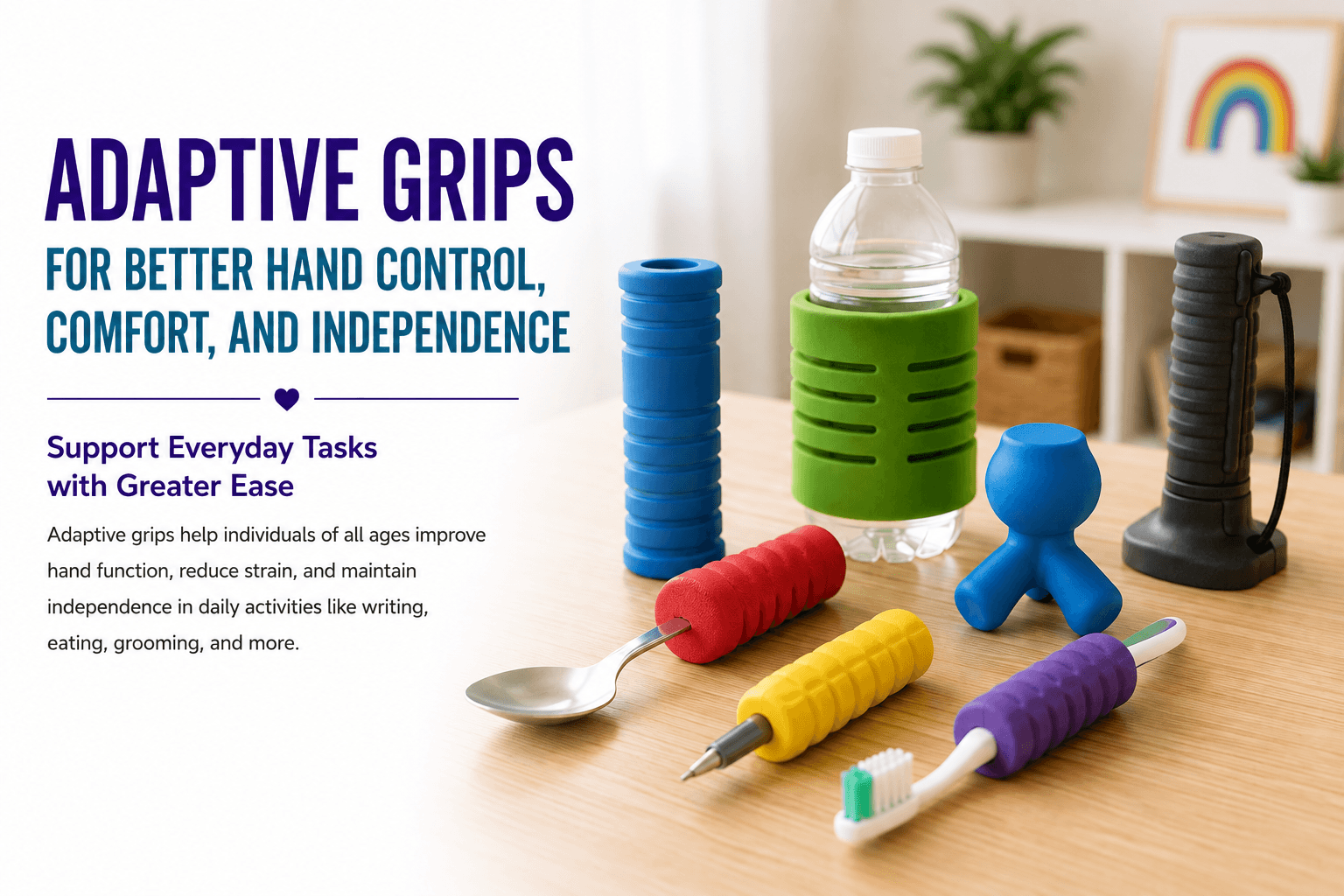
Adaptive grips are assistive tools that change the way an object fits in the hand. They may make a pencil, crayon, utensil, toothbrush, paintbrush, or other item wider, softer, heavier, easier to stabilize, or easier to position.
Some adaptive grips are designed for handwriting. Others support self feeding, grooming, therapy activities, art, play, or general daily living tasks. The goal is to help the user hold an item more comfortably and with better control.
Adaptive grips may include:
Pencil grips
Pen and pencil weights
Built up handles
Universal holders
Hand holders
Weighted holders
Grip aids
Adaptive writing aids
Flexible hand straps
Tool holders
The right grip depends on the user’s hand size, strength, coordination, sensory preferences, and activity goals.
Why Grips Matter
Hand control affects many parts of daily life. A child who struggles to hold a pencil may avoid writing. An adult with weak grip strength may have difficulty using utensils. A student with poor hand coordination may tire quickly during schoolwork. A person with tremors may need extra stability to use common tools.
Adaptive grips can help by making objects easier to hold, position, and control. They may reduce the amount of effort needed to maintain a grasp and make tasks feel more manageable.
Grips may support:
Handwriting comfort
Fine motor development
Pencil control
Self feeding
Grooming routines
Art activities
Classroom participation
Therapy goals
Reduced hand fatigue
Greater independence
Improved confidence
These tools are simple, but they can have a meaningful impact when matched to the user’s needs.
Pencil Grips and Handwriting Support
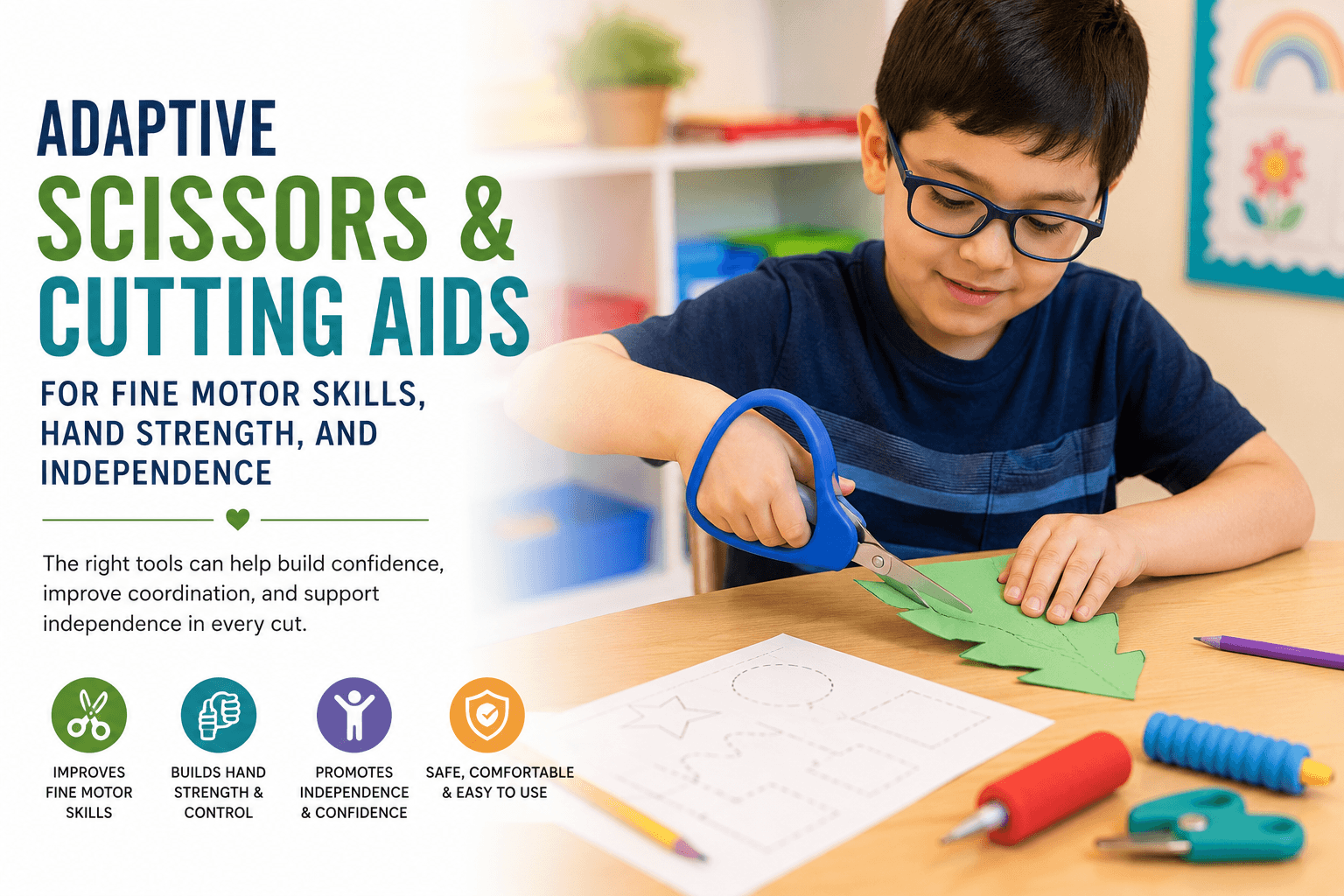
Pencil grips are often used by children learning to write and by users who need help with finger placement, pencil control, or writing endurance. A pencil grip can help guide the fingers into a more functional position while making the writing tool easier to hold.
Pencil grips may be useful for children with:
Fine motor delays
Poor pencil grasp
Weak hand strength
Hand fatigue
Motor planning challenges
Sensory needs
Learning disabilities
ADHD
Autism
Developmental delays
Explore related Handwriting Tools, Adaptive Pens and Pencils for Handwriting, and Grips and Holders for additional writing support options.
Built Up Handles and Universal Holders
Built up handles create a larger gripping surface. This can be helpful for people who have difficulty wrapping their fingers around small items. A wider handle may reduce the need for a tight grasp and make items more comfortable to use.
Universal holders and hand holders may help keep a utensil, pencil, toothbrush, paintbrush, or activity tool positioned in the hand. These tools can support users who have limited finger movement, reduced grip strength, or difficulty maintaining a secure hold.
Built up handles and holders may support:
Eating with utensils
Brushing teeth
Writing and drawing
Painting and art
Classroom activities
Therapy tasks
Self care routines
Independent daily living
These tools can be especially helpful in occupational therapy, special education classrooms, and home care routines.
Weighted Grips and Holders
Some users benefit from added weight because it can provide extra sensory feedback and stability. Weighted holders and pen or pencil weights may help some people feel the position of the tool more clearly in the hand.
Weighted grips may be useful for users who need support with:
Tremors
Hand control
Motor planning
Writing stability
Sensory feedback
Fine motor coordination
Hand awareness
The amount of weight should match the user’s ability and comfort. Too much weight can increase fatigue, so caregivers and therapists should choose carefully.
Grips for Home, School, and Therapy
Adaptive grips are useful in many settings because they support everyday participation. At home, they can help with meals, hygiene, homework, play, and hobbies. In school, they can support handwriting, coloring, classroom tools, art projects, and fine motor centers. In therapy, they can be used to build functional hand skills and help users practice real daily tasks.
Common settings include:
Homes
Special education classrooms
Occupational therapy clinics
Early childhood programs
Rehabilitation settings
Care facilities
Day programs
Homeschool spaces
Art rooms
Feeding programs
For more fine motor and hand support tools, browse Fine Motor Tools, Hand Strength and Manipulatives, Daily Living Aids, and Utensils.
How to Choose the Right Grip
The best adaptive grip is the one that fits the user, the activity, and the tool being used. A child working on handwriting may need a pencil grip that guides finger placement. An adult with reduced hand strength may need a built up handle. A user with tremors may benefit from added weight. A student who cannot maintain a grasp may need a universal holder or hand strap.
Before choosing a grip, consider:
What item needs to be held?
Is the task writing, eating, grooming, art, or play?
Does the user need a wider grip surface?
Does the user need help with finger placement?
Does the user have weak grip strength?
Does the user fatigue easily?
Is sensory feedback helpful or distracting?
Does the grip fit the user’s hand size?
Can the grip be cleaned easily?
Will the grip be used at home, school, or therapy?
When possible, an occupational therapist can help identify which grip style best supports the user’s goals.
Shop Grips at eSpecial Needs
The Grips collection at eSpecial Needs includes adaptive grip tools for children, adults, seniors, caregivers, educators, therapists, and care teams. These products are designed to support better control, comfort, and confidence during writing, eating, grooming, art, play, therapy, and daily routines.
You can also explore related categories, including Grips and Holders, Handwriting Tools, Fine Motor Tools, Hand Strength and Manipulatives, Dining Aids, Utensils, and Daily Living Aids.
FAQs
What are adaptive grips used for?
Adaptive grips are used to make everyday items easier to hold, control, and use. They can be added to pencils, pens, utensils, toothbrushes, art tools, grooming tools, and other daily living items.
Who can benefit from adaptive grips?
Adaptive grips may benefit children, adults, and seniors with weak grip strength, fine motor delays, arthritis, tremors, poor coordination, limited dexterity, developmental disabilities, or hand fatigue.
Are adaptive grips only for handwriting?
No. Some grips are made for handwriting, but others are designed for eating, grooming, art, therapy activities, classroom tools, and daily living tasks. The best grip depends on the activity and the user’s hand support needs.
How do pencil grips help with writing?
Pencil grips can help guide finger placement, make the pencil easier to hold, reduce hand strain, and support better pencil control. They may be helpful for children who tire quickly, grip too tightly, or struggle with writing comfort.
Can adaptive grips help with eating utensils?
Yes. Built up grips and adaptive holders can make forks, spoons, and other utensils easier to hold. A larger grip surface may reduce the need for a tight grasp and support more comfortable self feeding.
What is a universal holder?
A universal holder is an adaptive device designed to help secure an item in the user’s hand. It may be helpful for people who have difficulty maintaining a grip on tools during writing, eating, grooming, or therapy tasks.