Table of Contents
- Key Takeaways: Pediatric Adaptive Chairs for Positioning
- What Is a Pediatric Adaptive Chair?
- Why Postural Support Matters in the Classroom
- Key Features to Assess in Pediatric Adaptive Chairs
- How Adaptive Chairs Fit Into School Environments
- Matching an Adaptive Chair to a Student's Needs
- Common Positioning Mistakes to Avoid
- FAQs
Pediatric adaptive chairs are specialized seating systems designed to help children with physical disabilities, low muscle tone, or postural challenges maintain safe, functional positioning throughout the school day.
For many students, a standard classroom chair does not offer enough trunk support, pelvic stability, or adjustability to keep them engaged and comfortable during learning.
This article covers the key features educators and therapists should look for when choosing a pediatric adaptive chair. You will learn how postural support components work together, which settings benefit most from adaptive seating, and what to consider when matching a chair to a specific student's needs.
eSpecial Needs carries a range of adaptive seating options designed to support proper positioning for children in classrooms, therapy clinics, and home environments.
Key Takeaways: Pediatric Adaptive Chairs for Positioning
- Pediatric adaptive chairs support trunk alignment, pelvic stability, and head control during seated activities at school.
- Adjustable components like lateral supports, headrests, and footrests allow therapists to customize fit for each student.
- Proper seat depth and tilt angle can help reduce fatigue and improve a child's participation in classroom routines.
- eSpecial Needs offers adaptive seating systems with positioning features suited to school and therapy environments.
- Selecting the right adaptive chair depends on the student's motor function level, daily schedule, and growth needs.
What Is a Pediatric Adaptive Chair?
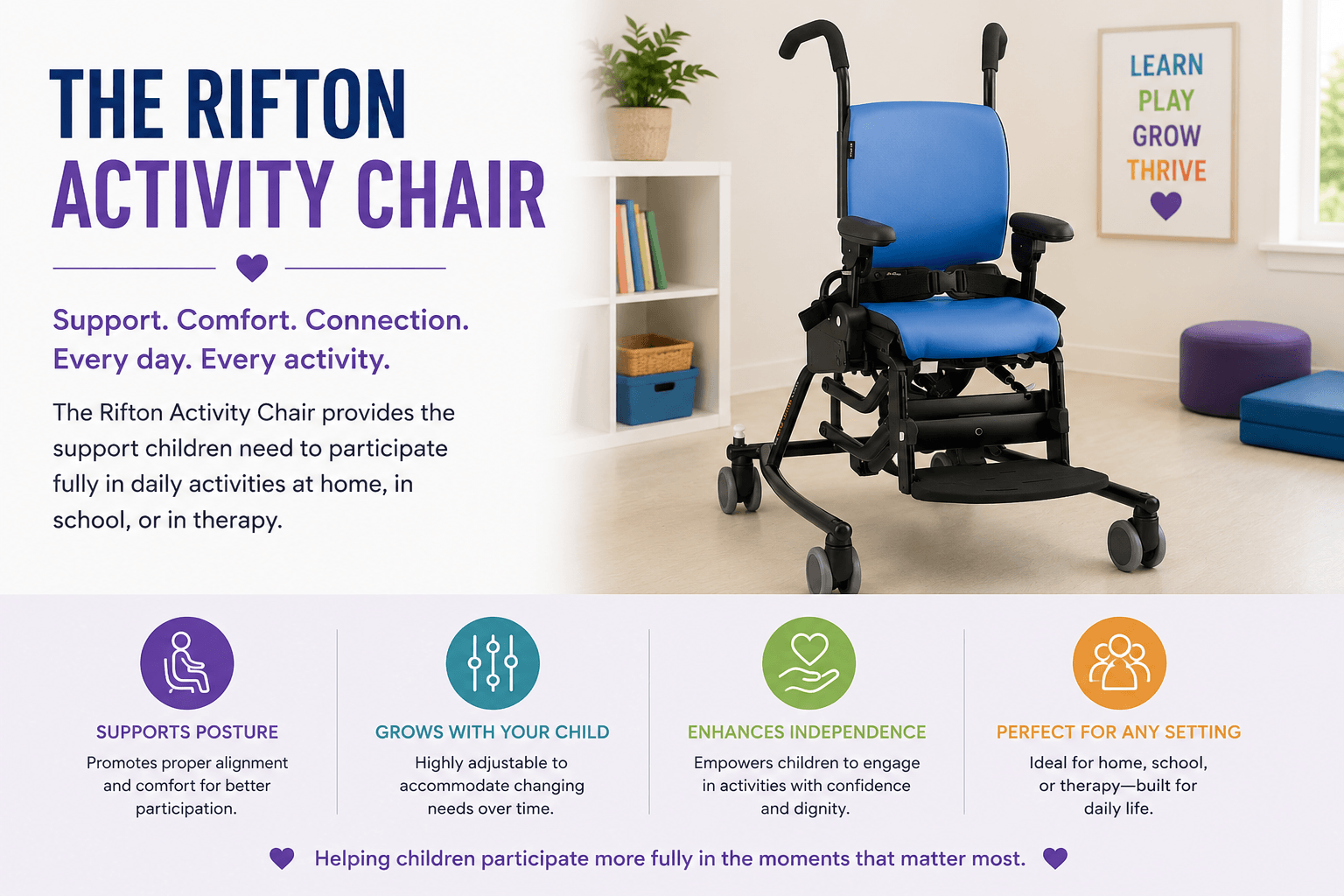
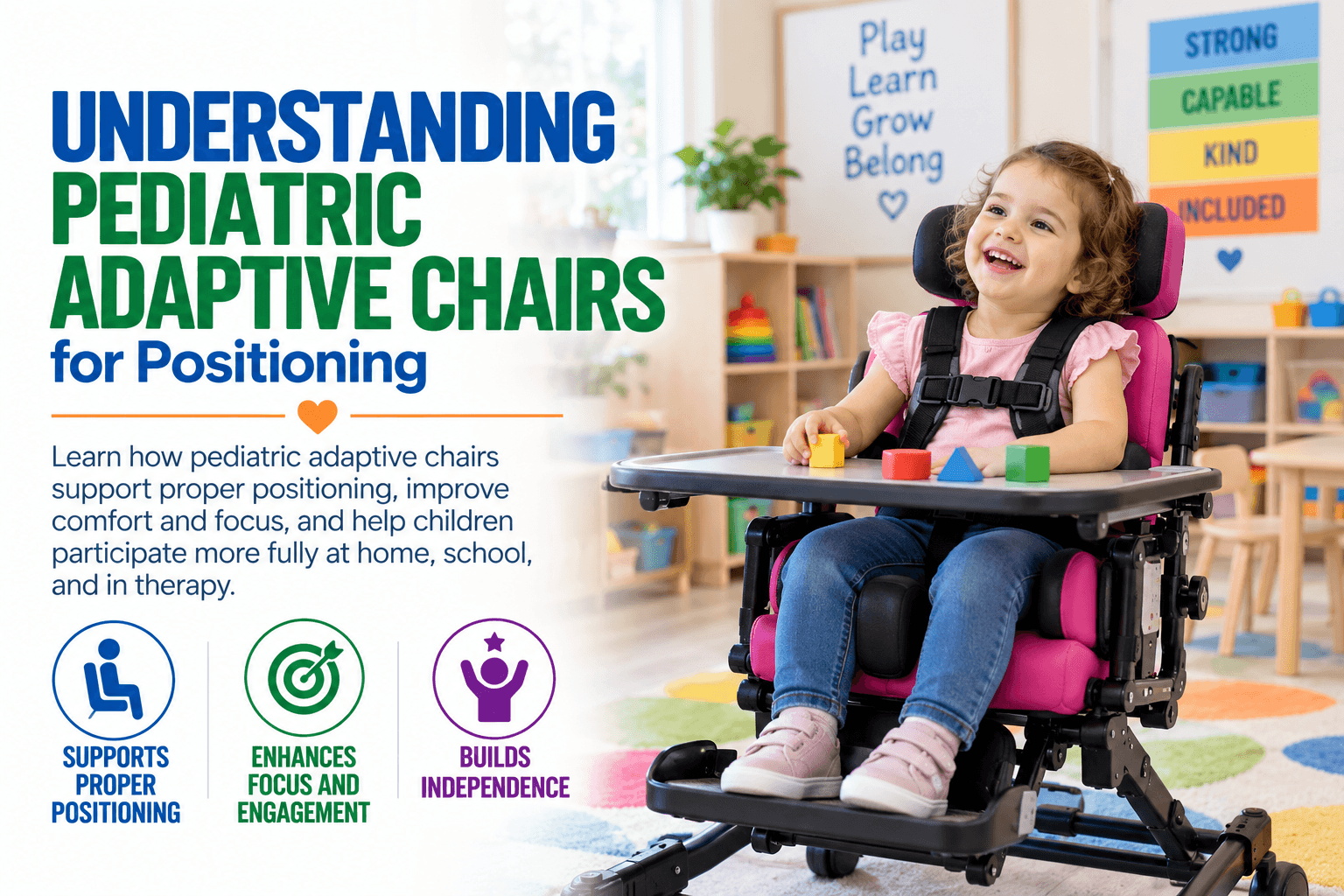
A pediatric adaptive chair is a seating device built specifically for children who need more postural support than a standard classroom chair can offer. These chairs typically include structured trunk supports, adjustable seat angles, and secure positioning components that help maintain alignment during learning and daily routines.
Children with conditions such as cerebral palsy, muscular dystrophy, or developmental delays often need adaptive seating to participate in school activities. The chair's design can help maintain pelvic stability and reduce the effort a child puts into simply staying upright, freeing them to focus on tasks at hand.
Adaptive chairs range from simple positioning seats with hip belts and lateral pads to complex modular systems with tilt-in-space, recline, and custom-contoured cushioning. The right fit depends on the individual child's motor function and daily needs.
Why Postural Support Matters in the Classroom
For students with motor impairments, sitting upright in a standard chair requires significant physical effort. When a child lacks adequate trunk control, they may lean, slide, or slump, which can affect breathing, swallowing, hand function, and attention.
A well-fitted adaptive chair can help reduce that physical effort by supporting the pelvis, trunk, and head in a more neutral alignment. This means the student's muscles do not have to work as hard to maintain an upright posture, and that energy can go toward classroom participation instead.
According to a 2023 systematic review published in Pediatric Physical Therapy, adaptive seating systems were effective at improving sitting posture and postural control in children with cerebral palsy.
The review also noted that parents and therapists reported reduced caregiver stress when appropriate seating was in place.
Key Features to Assess in Pediatric Adaptive Chairs
Pelvic Positioning and Hip Belt
A stable pelvis is the foundation for good seated posture. Look for chairs with a firm seat surface, anti-thrust cushioning, and a hip belt that holds the pelvis in a neutral position.
When the pelvis is properly aligned, it supports the rest of the spine and can help prevent posterior pelvic tilt.
Lateral Trunk Supports
Lateral supports are padded brackets positioned on either side of the trunk. They help keep a child centered in the seat and can reduce side-leaning.
Adjustable lateral supports are important because they allow the therapist to modify the level of support as the child's positioning needs change over time.
Headrest and Neck Support
For children with limited head control, a headrest can help keep the head upright and midline during classroom activities. Some headrests are contoured, while others use adjustable pads that can be positioned around the occipital area. Not every student needs a headrest, so this should be assessed individually.
Footrest and Lower Extremity Positioning
Feet should be flat and supported when a child is seated. An adjustable footrest can help maintain hip and knee alignment and can reduce pressure on the backs of the thighs.
For students who use adaptive chairs at classroom tables, footrest height should match the table height so the child sits at a functional working level.
Seat Depth and Tilt Adjustability
Seat depth should be long enough to support the thighs but short enough to allow the knees to bend comfortably.
Tilt-in-space adjustability allows the entire seating angle to shift, which can help with pressure relief for students who tire throughout the day. Forward tilt can promote activation of the postural muscles along the spine.
How Adaptive Chairs Fit Into School Environments
In the classroom, adaptive chairs need to work at desks, cafeteria tables, and during floor-level activities like circle time. Chairs with adjustable height bases allow the student to sit at the same level as their peers, which can support social participation and face-to-face communication.
Some schools use adaptive classroom chairs with standard bases that let a student transfer in and out more independently.
This option can be helpful for children at Gross Motor Function Classification System (GMFCS) levels II through IV who can bear weight and stand with support.
For students with more involved motor needs, a hi-low base chair may be a better fit. It allows caregivers to adjust the seat height during feeding, daily routines, and group activities.
The right base type depends on the student's functional mobility and the environments where the chair will be used.
Matching an Adaptive Chair to a Student's Needs
Choosing a pediatric adaptive chair starts with a thorough seating evaluation. An occupational therapist or physical therapist typically assesses the student's trunk control, pelvic alignment, head positioning, and range of motion.
The GMFCS can serve as a practical guide. Children who walk independently or with a handheld device (levels I through III) may need a chair with a standard base that encourages active sitting. Students at GMFCS levels IV and V often need more support, including tilt-in-space, recline, and a hi-low base for caregiver-assisted transfers.
Growth is another factor. Many adaptive seating systems are designed with adjustable components that accommodate changes in height and weight over time. eSpecial Needs carries seating systems with modular designs that grow with the student, reducing the need for frequent replacements.
Common Positioning Mistakes to Avoid
One common error is over-supporting a child with more straps and pads than they need. Excessive support can limit a child's ability to activate their own postural muscles, which may slow progress over time. The goal is to use the minimum support needed for safe, functional positioning.
Another mistake is setting the seat too deep or too shallow. A seat that is too deep can push the child into a slumped position, while a seat that is too shallow does not support the thighs enough. Checking seat depth against thigh length during each adjustment is a practical way to avoid this issue.
It is also important to remember that positioning straps are designed for support, not restraint. Straps should hold the child in a safe, comfortable position while still allowing functional movement.
FAQs
What is the difference between an adaptive chair and a standard wheelchair?
An adaptive chair is designed for seated activities at a desk, table, or on the floor. A wheelchair is designed primarily for mobility and transport. Adaptive chairs focus on postural support during stationary tasks, while wheelchairs prioritize movement from one location to another.
How do I know if a student needs an adaptive chair?
If a student slumps, leans, or has difficulty staying upright in a standard chair, an adaptive seating evaluation may be warranted. A school-based occupational or physical therapist can assess posture and recommend the right level of support.
Does eSpecial Needs carry adaptive chairs for school use?
Yes. eSpecial Needs offers adaptive seating systems designed for classroom, therapy, and home environments. Options include positioning chairs with adjustable supports, hip belts, and height-adjustable bases suited to school settings.
Can adaptive chairs accommodate a child as they grow?
Many adaptive seating systems feature adjustable seat depth, back height, and lateral supports. eSpecial Needs carries modular seating systems that can be modified as a child grows, extending the useful life of the chair.