Table of Contents
- What Is Tumble Forms 2?
- Why Positioning Matters
- Who May Use Tumble Forms Equipment?
- Tumble Forms 2 Deluxe Floor Sitter
- Why Floor Seating Can Be Useful
- Tumble Forms 2 Mobile Floor Sitter
- Tumble Forms Feeder Seat Positioner
- Feeder Seats vs Conventional Chairs
- Tumble Forms Universal Corner Chair
- Why Corner Seating Is Different
- Tumble Forms Wedges
- Using Wedges for Prone Positioning
- Using Wedges for Supine Positioning
- Tumble Forms 2 Rolls
- Therapy Rolls and Body Positioning
- Tumble Forms Barrel Crawl and Roll
- Crawling and Gross Motor Development
- Tumble Forms Therapist Starter Kits
- Why Therapy Kits Can Be Useful
- Tumble Forms Jettmobile
- Scooter Activities in Therapy
- Tumble Forms Tadpole Pediatric Positioner
- Tumble Forms Universal Grasshopper Systems
- Side Lying Positioning
- Tumble Forms and Early Intervention
- Tumble Forms for Occupational Therapy
- Tumble Forms for Physical Therapy
- Tumble Forms for Special Education
- Tumble Forms and Classroom Participation
- Tumble Forms Therapy Swings
- Tumble Forms Horse Swing
- Tumble Forms Vestibulator Roll Swing
- Prone Net Swing
- Sensory Movement Is Individual
- Positioning Equipment vs Sensory Equipment
- Positioning Equipment vs Adaptive Seating
- Tumble Forms for Children With Cerebral Palsy
- Tumble Forms for Children With Low Muscle Tone
- Tumble Forms for Developmental Delays
- Choosing the Right Tumble Forms Product
- Measure Before Ordering
- Do Not Choose by Weight Capacity Alone
- Avoid Excessive Support
- Consider Growth
- Consider the Environment
- Storage for Therapy Shapes
- Cleaning Tumble Forms Equipment
- Inspect Equipment Regularly
- Supervision During Therapy Activities
- When to Involve an Occupational Therapist
- When to Involve a Physical Therapist
- Tumble Forms for Home Therapy Programs
- Tumble Forms for Clinics
- Tumble Forms for Schools
- Documenting Individual Positioning
- Tumble Forms Is Not One Type of Equipment
- How to Build a Pediatric Therapy Equipment Area
- Funding Tumble Forms Equipment
- Tumble Forms Equipment for Schools and Organizations
- Popular Tumble Forms Products to Consider
- Shop Tumble Forms 2 at eSpecial Needs
- FAQs
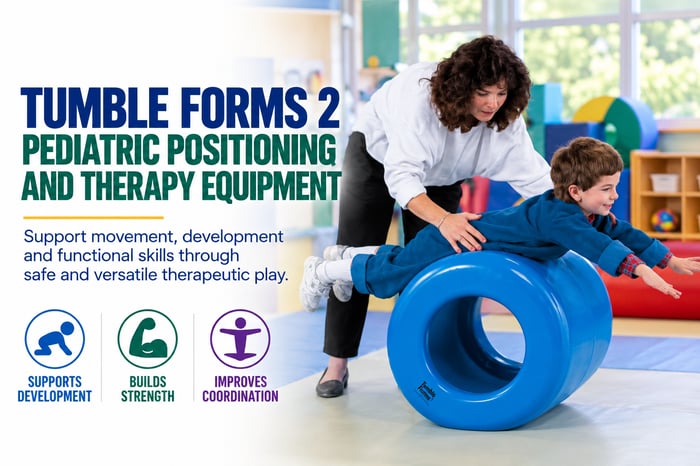
Tumble Forms 2 pediatric positioning and therapy equipment provides supportive solutions for children with special needs who may need additional help with sitting, floor positioning, developmental activities, movement, balance, and participation. The product line includes floor sitters, feeder seats, corner chairs, wedges, rolls, therapy shapes, mobility products, swings, and positioning systems used in homes, schools, occupational therapy, physical therapy, and rehabilitation settings.
The Tumble Forms 2 collection at eSpecial Needs includes equipment for a wide range of positioning and therapeutic activities. Some products provide structured support for sitting, while others help therapists create prone, supine, side lying, crawling, rolling, balance, or movement activities.
The right Tumble Forms product depends on the user's measurements, physical abilities, positioning needs, therapy goals, and environment. Equipment that affects posture or physical positioning should be selected carefully, with occupational therapy, physical therapy, or other professional guidance when needs are complex.
What Is Tumble Forms 2?
Tumble Forms 2 is a well established line of pediatric therapy and positioning equipment designed for children who need more physical support than conventional furniture or recreational products typically provide.
The collection spans several major areas:
- Adaptive seating
- Pediatric positioning
- Therapy wedges
- Positioning rolls
- Floor seating
- Crawling and gross motor equipment
- Scooter mobility
- Balance activities
- Sensory movement
- Therapy swings
- Clinical therapy tools
This broad range allows therapists, schools, and families to create activities around the child's individual abilities instead of expecting one piece of equipment to serve every purpose. Explore the complete Tumble Forms 2 collection to compare available products.
Why Positioning Matters
Positioning is about much more than sitting upright. The way a child's pelvis, trunk, head, arms, and legs are supported can influence how comfortably and effectively the child participates in an activity.
Appropriate positioning may help create better opportunities for:
- Reaching
- Hand use
- Visual attention
- Communication
- Classroom participation
- Play
- Feeding
- Therapy activities
- Head control
- Trunk control
- Weight bearing
- Movement practice
The goal is not to force every child into one standard posture. The goal is to provide the amount and type of support that helps the individual participate safely and comfortably.
For a broader introduction, read Positioning Equipment for Children: Top Picks.
Who May Use Tumble Forms Equipment?
Tumble Forms products may be considered for children with a wide range of physical and developmental support needs.
Depending on the individual, equipment may be used when a child has difficulty with:
- Independent sitting
- Trunk stability
- Head control
- Floor positioning
- Balance
- Motor planning
- Crawling
- Transitional movements
- Weight bearing
- Maintaining a functional position during activities
Diagnosis alone should not determine equipment selection.
Two children with the same diagnosis may need completely different levels of support.
Tumble Forms 2 Deluxe Floor Sitter
The Tumble Forms 2 Deluxe Floor Sitter provides supportive floor level seating for children who need additional help maintaining a seated position. Floor sitters can be useful because they bring the child closer to toys, peers, and activities occurring at floor level.
Possible uses include:
- Floor play
- Reading
- Communication
- Fine motor activities
- Therapy sessions
- Circle time
- Social interaction
Rather than requiring the child to maintain unsupported sitting, the system provides an external seating structure.
Why Floor Seating Can Be Useful
Many activities for younger children occur on the floor. A child who cannot independently maintain sitting may otherwise spend much of floor play lying down or being physically supported by an adult. A floor sitter can create another positioning option.
This may allow the child to participate in:
- Group activities
- Toys placed at midline
- Reaching games
- Books
- Communication activities
- Cause and effect play
For more supportive seating options, explore Floor Sitters.
Tumble Forms 2 Mobile Floor Sitter
The Tumble Forms 2 Mobile Floor Sitter expands the floor seating concept by adding mobility within the environment. A mobile base can make it easier for caregivers or professionals to reposition the child between activities without repeatedly moving the entire seating setup manually. This can be useful in classrooms, clinics, or therapy spaces where activities happen in several locations. Mobility does not mean the system functions as a wheelchair. It remains primarily a positioning and seating product.
Tumble Forms Feeder Seat Positioner
The Tumble Forms 2 Feeder Seat Positioner is designed to provide additional body support during seated activities. Despite the Feeder Seat name, the product may be considered for more than meals.
Depending on the user's needs and professional recommendations, supportive seating may be incorporated into:
- Feeding
- Play
- Communication
- Fine motor activities
- Therapy
- Classroom tasks
- Rest periods
Proper positioning during feeding can be especially important for individuals with swallowing or oral motor concerns, so feeding related positioning should follow recommendations from the child's healthcare or feeding team.
Feeder Seats vs Conventional Chairs
A conventional chair assumes the user can maintain much of their own sitting position. A positioning seat can provide more external support.
This distinction matters when a child:
- Slides forward
- Leans significantly
- Fatigues quickly
- Needs additional trunk support
- Has difficulty maintaining a stable pelvis
- Requires a more supported seating angle
Explore Feeder Seats for additional supportive seating options.
Tumble Forms Universal Corner Chair
The Tumble Forms 2 Universal Corner Chair provides an upright seating environment that uses the corner shape to add support behind and beside the child. Corner seating may be incorporated into activities where a child benefits from an upright position but still requires additional support around the trunk.
Possible activities include:
- Playing with toys
- Looking at books
- Communication
- Classroom activities
- Reaching
- Social interaction
- Fine motor tasks
A therapist can help determine whether corner sitting is appropriate for a particular child.
Why Corner Seating Is Different
Corner chairs surround part of the user's trunk with support from two sides. This can create a different positioning experience from a conventional chair with a flat back. For some users, that additional structure may make it easier to maintain an upright orientation while using their hands for an activity. It should still be selected according to body size, control, and individual positioning needs.
Tumble Forms Wedges
The Tumble Forms 2 Wedges are therapy positioning shapes that can be incorporated into a wide range of activities. Wedges can change the angle of the body during prone, supine, seated, or supported developmental activities.
Depending on how they are used, wedges may help create opportunities for:
- Reaching
- Head lifting
- Upper body support
- Weight bearing
- Prone play
- Transitional movements
- Position changes
The appropriate angle and position depend on the individual and activity.
Explore Positioning and Therapy Wedges for additional options.
Using Wedges for Prone Positioning
Prone means positioning on the stomach. A therapy wedge can raise the upper body and change how much weight is placed through the arms and trunk.
This may be incorporated into activities involving:
- Looking forward
- Reaching for toys
- Weight bearing through the arms
- Head control
- Upper body activity
Children should be supervised during prone positioning, particularly when physical control is limited.
Using Wedges for Supine Positioning
Supine means lying on the back. Wedges can also be used to change the angle of the body in this position. The exact setup should reflect the child's needs and the goal of the activity. Never assume that a position used for one child will be appropriate for another.
Tumble Forms 2 Rolls
The Tumble Forms 2 Rolls are soft yet firm therapy shapes designed for positioning, rolling, rocking, and developmental activities. Most sizes use a solid core that helps prevent the roll from flattening against the floor. Rolls are useful because one simple shape can be incorporated into many activities.
A therapist may use them for:
- Prone positioning
- Supported sitting
- Rocking
- Rolling
- Reaching
- Weight shifting
- Transitional movements
- Motor planning activities
Therapy Rolls and Body Positioning
The diameter of a therapy roll changes the activity. A smaller roll may provide relatively modest elevation, while a larger roll may substantially change the child's body position. That is why size matters. Choose therapy rolls based on the user's dimensions and intended activity rather than simply selecting the largest available option.
Browse Bolsters, Rolls and Half Rolls for additional positioning shapes.
Tumble Forms Barrel Crawl and Roll
The Tumble Forms 2 Barrel Crawl/Roll combines positioning with active gross motor play.
Barrel shaped therapy equipment may be incorporated into:
- Crawling
- Rolling
- Weight shifting
- Balance
- Motor planning
- Upper body activities
- Gross motor play
Unlike static positioning equipment, this type of product can introduce movement and changing body orientation.
That means supervision and appropriate activity selection become especially important.
Crawling and Gross Motor Development
Crawling requires coordinated movement between the arms, legs, trunk, and visual system. Therapy equipment can be used to create activities that encourage a child to move through or around an obstacle. A therapist might incorporate reaching, crawling, rolling, or transitional movement depending on the child's individual goals.
Explore Crawling for additional gross motor equipment.
Tumble Forms Therapist Starter Kits
The Tumble Forms 2 Therapist Starter Kits combine several therapy positioning shapes into coordinated sets.
A therapy kit can be useful for:
- Occupational therapy clinics
- Physical therapy clinics
- Schools
- Early intervention programs
- Rehabilitation programs
- Home therapy programs
Rather than purchasing individual positioning shapes one at a time, a kit gives professionals several options for adapting activities to different users.
Why Therapy Kits Can Be Useful
Different activities may require completely different shapes. A wedge may be useful for prone positioning. A roll may be better for rocking or transitional movement. Another shape may help support sitting or reaching. Having several positioning tools available allows the therapist to modify activities instead of trying to use one product for every child.
Tumble Forms Jettmobile
The Tumble Forms 2 Jettmobile brings movement into the Tumble Forms product line. Scooter and mobility activities can provide opportunities for gross motor participation, movement, coordination, and active play when appropriate for the user. The Jettmobile should be distinguished from a conventional wheelchair or everyday mobility device. Its role is more closely related to therapy and activity based mobility.
Scooter Activities in Therapy
Scooter based activities may involve:
- Propelling with the arms
- Changing direction
- Reaching
- Navigating around objects
- Gross motor coordination
- Movement through space
The setup and level of assistance should reflect the child's abilities.
Explore Scooters and Scooter Boards for additional movement equipment.
Tumble Forms Tadpole Pediatric Positioner
The Tumble Forms 2 line also includes pediatric positioning systems such as the Tadpole. These systems are designed to provide more comprehensive support than a simple wedge or roll and may allow therapists or caregivers to configure the child for specific developmental positions and activities. A pediatric positioning system may be worth considering when several support components need to work together rather than using one individual therapy shape. Complex positioning should be planned with professional input.
Tumble Forms Universal Grasshopper Systems
Universal Grasshopper systems are another example of more comprehensive Tumble Forms positioning equipment. These products can support developmental positioning and activity setups that require more structure than simple foam shapes alone.
When comparing larger positioning systems, consider:
- User height
- User weight
- Trunk control
- Head control
- Pelvic stability
- Range of motion
- Intended positions
- Caregiver assistance
- Available floor space
For a broader overview of pediatric support equipment, read Positioning Equipment for Children: Top Picks.
Side Lying Positioning
Tumble Forms also offers equipment designed for side lying. Side lying can be incorporated into individualized positioning programs when a child benefits from an alternative to sitting, prone, or supine positions.
A side lying position may provide a different orientation for:
- Reaching
- Play
- Hand use
- Visual attention
- Rest
- Therapy activities
The appropriate position and amount of support should be determined around the individual.
Tumble Forms and Early Intervention
Tumble Forms equipment can be particularly useful in early intervention because many products are designed around floor based developmental activities. Young children often learn and play close to the floor.
Equipment such as:
- Floor sitters
- Wedges
- Rolls
- Positioning systems
- Therapy shapes
Can provide different ways to support participation during early motor and play activities. The goal should not be to place a child in therapy equipment throughout the day. Children also need opportunities for free movement, exploration, play, and interaction appropriate to their abilities.
Tumble Forms for Occupational Therapy
Occupational therapists may use Tumble Forms products when working on activities involving:
- Sitting
- Hand use
- Reaching
- Bilateral coordination
- Motor planning
- Sensory motor activities
- Play
- Feeding position
- Classroom access
- Daily participation
The same positioning product may be used differently depending on the child's goals. For example, a wedge might support one child during a reaching activity while another child uses it during prone play.
Tumble Forms for Physical Therapy
Physical therapists may incorporate Tumble Forms equipment into programs involving:
- Head control
- Trunk control
- Weight shifting
- Crawling
- Rolling
- Supported sitting
- Transitional movements
- Weight bearing
- Balance
- Gross motor participation
The equipment provides a physical environment for the activity, while the therapist determines how it should be used.
Tumble Forms for Special Education
Tumble Forms products can also support participation within special education environments.
Possible uses include:
- Floor seating
- Classroom positioning
- Therapy sessions
- Gross motor activities
- Movement breaks
- Adaptive physical education
- Play
- Early childhood programs
Schools should consider where the equipment will be stored and how staff will know the correct setup for each student. The article Special Education Classroom Setup: A Step by Step Guide provides broader guidance on arranging positioning, mobility, therapy, and learning equipment.
Tumble Forms and Classroom Participation
A child may be physically present in a classroom without being well positioned for participation.
Positioning can affect access to:
- Toys
- Books
- AAC devices
- Art materials
- Classroom tables
- Computer screens
- Peers
- Teachers
Providing the appropriate seating or positioning support may make it easier for the student to interact with those activities. For children who need more structured classroom seating, explore Seating Systems.
Tumble Forms Therapy Swings
Tumble Forms also offers movement equipment for therapy environments.
Examples include products such as:
- Prone net swings
- Net swings with positioning seats
- Free swings
- Platform style swings
- Roll swings
- Horse swings
- Vestibulator products
Swinging introduces vestibular movement and should be approached differently from static positioning. Explore Adaptive Swings and Gyms for additional movement equipment.
Tumble Forms Horse Swing
The Tumble Forms Horse Swing provides a cylindrical swing surface that can be incorporated into supervised therapy activities. A therapist may use roll or bolster style swings in different body positions depending on the client's abilities and therapy plan.
Possible activities can involve:
- Balance
- Weight shifting
- Body awareness
- Flexion activities
- Movement through space
Vestibular activities should be individualized because people respond differently to swinging. Movement that one child enjoys may be uncomfortable or overwhelming for another.
Tumble Forms Vestibulator Roll Swing
The Tumble Forms 2 Vestibulator Roll Swing provides another option for occupational therapy and sensory motor environments. It is designed as part of the Tumble Forms Vestibulator system, so compatibility and installation requirements should be checked before ordering. Swing products require appropriate structural support, clearance, installation, inspection, and supervision.
Prone Net Swing
The Tumble Forms Prone Net Swing allows supervised movement activities in a different body position from conventional seated swings. Prone swing activities may involve reaching, visual attention, upper body activity, or movement experiences when appropriate for the individual. Therapy swings should be used according to the manufacturer's instructions and professional recommendations.
Sensory Movement Is Individual
Tumble Forms swing and movement products are sometimes incorporated into sensory based therapy activities. However, movement should not automatically be described as calming. One child may seek repetitive swinging. Another may become dizzy, fearful, disorganized, or uncomfortable. Observe the user's responses and adjust the activity accordingly.
For more information about sensory activities, read Sensory Development Activities and Tools for Children With Special Needs.
Positioning Equipment vs Sensory Equipment
Tumble Forms spans both categories, but they should not be confused. Positioning equipment primarily helps support body alignment, stability, and access to activities.
Examples include:
- Floor sitters
- Feeder seats
- Corner chairs
- Wedges
- Side lyers
Sensory motor equipment primarily introduces movement or other body experiences.
Examples include:
- Swings
- Scooter products
- Rolling equipment
- Balance products
Some products may contribute to both, but the intended activity should guide selection.
Positioning Equipment vs Adaptive Seating
Adaptive seating generally provides a defined sitting system. Positioning equipment is broader and may support the body during sitting, lying, prone play, side lying, therapy, or transitional activities. A child may therefore use both an adaptive chair and Tumble Forms positioning shapes at different times. For a detailed comparison of different seating purposes, read Sensory Seating vs Positioning Chairs for Kids.
Tumble Forms for Children With Cerebral Palsy
Some children with cerebral palsy may use positioning equipment because of challenges related to muscle tone, posture, motor control, balance, or movement. However, cerebral palsy varies considerably. One child may benefit from a floor sitter, while another may need a more complex seating system or stander. Product selection should be based on the individual's abilities and positioning evaluation rather than diagnosis alone.
Tumble Forms for Children With Low Muscle Tone
Children with low muscle tone may have difficulty sustaining positions against gravity. They may fatigue during sitting or need additional external support during floor activities. Positioning equipment can sometimes create a more stable starting point for play and participation. The correct amount of support should be individualized so that the child receives assistance without unnecessarily restricting movement.
Tumble Forms for Developmental Delays
Children with developmental delays may use therapy equipment during activities involving:
- Sitting
- Crawling
- Rolling
- Reaching
- Balance
- Motor planning
- Floor play
- Transitional movement
The type of equipment should match the developmental activity being addressed. A therapist can modify both the equipment and the activity as the child's abilities change.
Choosing the Right Tumble Forms Product
Start by identifying the activity that needs support.
Ask:
- Does the child need help sitting?
- Is floor positioning difficult?
- Is the goal prone play?
- Is side lying needed?
- Is crawling being practiced?
- Is movement or balance the focus?
- Does the child need a therapy swing?
- Is the equipment for home, school, or a clinic?
Then consider the user's physical measurements and level of control.
Measure Before Ordering
Sizing matters with pediatric positioning equipment.
Depending on the product, relevant measurements may include:
- Height
- Weight
- Hip width
- Seat depth
- Trunk height
- Lower leg length
- Shoulder height
Never choose equipment using age alone. Two children of the same age can have very different body dimensions and positioning requirements.
Do Not Choose by Weight Capacity Alone
A product can support the user's weight while still being too large or too small in other dimensions. For seating equipment, width and depth can be especially important. For wedges, rolls, and therapy shapes, dimensions affect the body position created by the equipment. Always review the complete sizing information.
Avoid Excessive Support
More support is not automatically better. A child who needs some assistance may still benefit from opportunities to actively control portions of their posture and movement. Too much external support may unnecessarily limit activity. The goal should be the appropriate amount of support for the specific task.
Consider Growth
Children grow quickly, and adaptive equipment can be a significant investment. Look for a reasonable growth range when available, but avoid selecting equipment that is substantially too large for the child now. Current fit should remain the priority.
Consider the Environment
Before ordering larger Tumble Forms products, consider where they will be used.
Measure:
- Floor space
- Doorways
- Storage areas
- Therapy rooms
- Classroom pathways
- Activity areas
A large positioning system may work well in a clinic but be difficult to store in a small home.
Storage for Therapy Shapes
Wedges, rolls, and therapy kits can occupy considerable space even though they are lightweight compared with mobility equipment. Schools and clinics may benefit from dedicated therapy storage areas.
Keep equipment:
- Dry
- Clean
- Away from sharp objects
- Clear of emergency exits
- Organized by size or activity
This can make equipment easier to inspect and use.
Cleaning Tumble Forms Equipment
Follow the manufacturer's cleaning instructions for each product. Many therapy products are designed around surfaces that are easier to wipe clean than conventional fabric equipment, which can be helpful in shared clinical and educational settings. Avoid using cleaning chemicals that could damage the covering or other materials.
Inspect Equipment Regularly
Before use, look for:
- Tears
- Cracks
- Exposed internal material
- Loose straps
- Damaged fasteners
- Unstable bases
- Worn suspension components
- Damaged swing hardware
Equipment with significant damage should be removed from use until it can be properly evaluated.
Supervision During Therapy Activities
Many Tumble Forms products are intended for activities that require adult supervision.
This is particularly important for:
- Swinging
- Rolling
- Crawling
- Balance activities
- Elevated positioning
- Children with limited head or trunk control
Follow the manufacturer's instructions and the child's professional care plan.
When to Involve an Occupational Therapist
An occupational therapist may be especially helpful when equipment is being considered for:
- Seating
- Feeding position
- Sensory motor activities
- Hand use
- Classroom participation
- Play
- Daily routines
The therapist can evaluate how positioning affects functional participation.
When to Involve a Physical Therapist
A physical therapist may be especially helpful when equipment decisions involve:
- Head control
- Trunk control
- Crawling
- Rolling
- Weight bearing
- Transfers
- Balance
- Gross motor movement
- Developmental positioning
Therapists can also help determine the appropriate size and amount of support.
Tumble Forms for Home Therapy Programs
Families may use selected Tumble Forms products at home when recommended activities are part of the child's routine. Home programs should be realistic. A few well chosen products that families understand how to use are generally more practical than filling a room with equipment that requires complicated setup.
Ask the therapist to demonstrate:
- Correct positioning
- How long to use the equipment
- What activities to perform
- What signs of discomfort to watch for
- When to stop the activity
- How to adjust the setup as the child grows
Tumble Forms for Clinics
Therapy clinics often need equipment that can support many different activities and users. Versatile products such as wedges, rolls, starter kits, swings, and positioning systems can allow therapists to modify sessions without requiring a completely different product for every activity. Shared equipment should be cleaned, inspected, and adjusted between users.
Tumble Forms for Schools
Schools considering Tumble Forms products should think about both therapy and everyday classroom participation.
Questions to consider include:
- Where will the equipment be stored?
- Who is trained to use it?
- Which student settings need to be documented?
- Is there enough floor space?
- Can the child access communication while positioned?
- Does the equipment interfere with classroom pathways?
- How will it be cleaned?
- Who performs safety inspections?
For broader planning, read Special Education Classroom Equipment Essentials.
Documenting Individual Positioning
When several adults work with the same child, it can be helpful to document the correct equipment setup.
A positioning plan might identify:
- Equipment size
- Strap placement
- Seat orientation
- Wedge angle
- Support locations
- Activity duration
- Required supervision
Photos may also help staff consistently reproduce the intended setup when permitted by school or facility policy.
Tumble Forms Is Not One Type of Equipment
One reason the brand is useful in pediatric rehabilitation is the breadth of the product line. A child might use a floor sitter for one activity, a wedge during prone work, a roll during another therapy activity, and a swing during supervised movement. Those products do not replace one another. Each addresses a different positioning or movement challenge.
How to Build a Pediatric Therapy Equipment Area
A basic therapy area may include equipment for several types of activities.
For example:
Positioning: wedges, rolls, floor sitters
Gross motor: barrels, crawlers, scooter products
Balance: boards and therapy shapes
Movement: swings and vestibular equipment
Floor work: mats and positioning systems
The exact setup should reflect the children served rather than trying to include every category.
Explore Exercise and Therapy Equipment for additional clinical and movement products.
Funding Tumble Forms Equipment
Some positioning equipment may qualify for funding depending on the user's needs, insurance plan, Medicaid program, school district, waiver program, or other funding source. Requirements vary considerably.
Documentation may need to explain:
- The functional problem
- Why conventional equipment is insufficient
- Which product is recommended
- How it addresses the user's needs
- Why the selected size and accessories are appropriate
eSpecial Needs provides information through its Letters of Medical Necessity resources.
Tumble Forms Equipment for Schools and Organizations
Schools, therapy centers, government agencies, and other organizations may require formal purchasing documentation.
eSpecial Needs provides resources for:
Having product names, sizes, quantities, and required accessories ready can make the quote process easier.
Popular Tumble Forms Products to Consider
The extensive Tumble Forms 2 collection includes products for several different needs.
For floor seating, consider the Tumble Forms 2 Deluxe Floor Sitter.
For supported upright floor activities, consider the Tumble Forms 2 Universal Corner Chair.
For prone, supine, and developmental positioning, explore Tumble Forms 2 Wedges.
For rolling, rocking, and positioning activities, consider Tumble Forms 2 Rolls.
For gross motor crawling and movement, consider the Tumble Forms 2 Barrel Crawl/Roll.
For clinics needing multiple therapy shapes, consider the Tumble Forms 2 Therapist Starter Kits.
For activity based movement, consider the Tumble Forms 2 Jettmobile.
Shop Tumble Forms 2 at eSpecial Needs
Explore the full Tumble Forms 2 collection at eSpecial Needs for pediatric positioning, adaptive seating, therapy shapes, movement equipment, swings, and rehabilitation products.
Related collections include:
- Positioning Systems
- Seating Systems
- Floor Sitters
- Positioning and Therapy Wedges
- Bolsters, Rolls and Half Rolls
- Adaptive Swings and Gyms
- Exercise and Therapy Equipment
FAQs
What age group is Tumble Forms equipment designed for?
Many Tumble Forms products are designed for pediatric use, but the appropriate product depends more on the user's measurements, physical abilities, and positioning needs than age alone.
Always check the size range and weight capacity for the exact product.
Can Tumble Forms equipment be used at home?
Yes. Many families use selected Tumble Forms products at home for positioning, floor play, therapy activities, or movement routines.
Home use should be based on clear instructions so caregivers understand how to position the child safely and when to stop an activity.
Can Tumble Forms equipment be used in schools?
Yes. Tumble Forms products are commonly used in special education, early childhood programs, therapy rooms, adaptive physical education, and classroom positioning.
Schools should document the correct setup for each student when equipment requires individualized positioning.
Can Tumble Forms equipment be shared between students?
Some products can be shared when each student fits within the product's size range and the equipment can be correctly adjusted for each user.
Shared equipment should also be cleaned and inspected between users.
Should each student's Tumble Forms setup be documented?
That can be very helpful.
Documentation may include:
- Product size
- Strap placement
- Seat position
- Wedge angle
- Support locations
- Duration of use
- Required supervision
Photos of the correct setup may also help staff maintain consistency when permitted by school policy.
Can a Tumble Forms floor sitter replace a classroom chair?
Not necessarily.
A floor sitter is designed for supported floor level positioning, while a classroom chair is generally intended for table height activities.
A child may use both for different parts of the day.