Table of Contents
- What Is a Mobo Tricycle?
- Why Choose a Recumbent Tricycle?
- Mobo Tricycles and Balance
- Mobo Recumbent Seating
- Mobo Mini Tricycle for Younger Children
- Who May Benefit From the Mobo Mini?
- Mobo Mobito Recumbent Adaptive Tricycle
- Mobo Mobito Back Support
- Mobo Mobito Stability
- Mobo Mobito Sizing
- Mobo Triton for Older Children and Teens
- Mobo Triton Features
- Mobo Triton for Growing Riders
- Mobo Mini vs Mobito vs Triton
- Is a Mobo an Adaptive Tricycle?
- Mobo vs Traditional Adaptive Tricycles
- Mobo for Children With Balance Challenges
- Mobo for Coordination Practice
- Mobo Tricycles and Exercise
- Mobo for Outdoor Recreation
- Can a Mobo Be Used on Grass?
- Mobo for Family Bike Rides
- Mobo for Special Education Programs
- Mobo for Therapy Programs
- Mobo and Sensory Movement
- Rear Steering on Mobo Tricycles
- Is Rear Steering Easy to Learn?
- Hand Brakes and Rider Ability
- Chainless Mobo Design
- Mobo Tricycle Safety
- Helmet Use
- Supervision
- Avoid Steep Hills
- Measuring for a Mobo Tricycle
- Do Not Choose by Weight Capacity Alone
- Planning for Growth
- Storage Considerations
- Transporting a Mobo Tricycle
- Mobo Accessories
- Mobo vs Upright Tricycles
- Mobo vs Two Wheel Bicycles
- Mobo vs Balance Bikes
- When a More Supportive Adaptive Tricycle May Be Better
- Choosing the Right Mobo
- Shop Mobo Tricycles at eSpecial Needs
- FAQs
Mobo recumbent tricycles offer a low profile, three wheel riding experience designed around stability, comfort, exercise, and outdoor recreation. Unlike a traditional upright bicycle, Mobo cruisers place the rider closer to the ground in a supportive seated position and use a distinctive rear steering system that reduces the balance demands associated with conventional two wheel cycling.
The Mobo collection at eSpecial Needs includes recumbent tricycles for children, teens, and adults, along with accessories designed to support riding, storage, visibility, and everyday use. For riders who have difficulty with balance, coordination, confidence, or upright bicycle positioning, a Mobo tricycle may provide another way to participate in cycling and outdoor movement.
What Is a Mobo Tricycle?
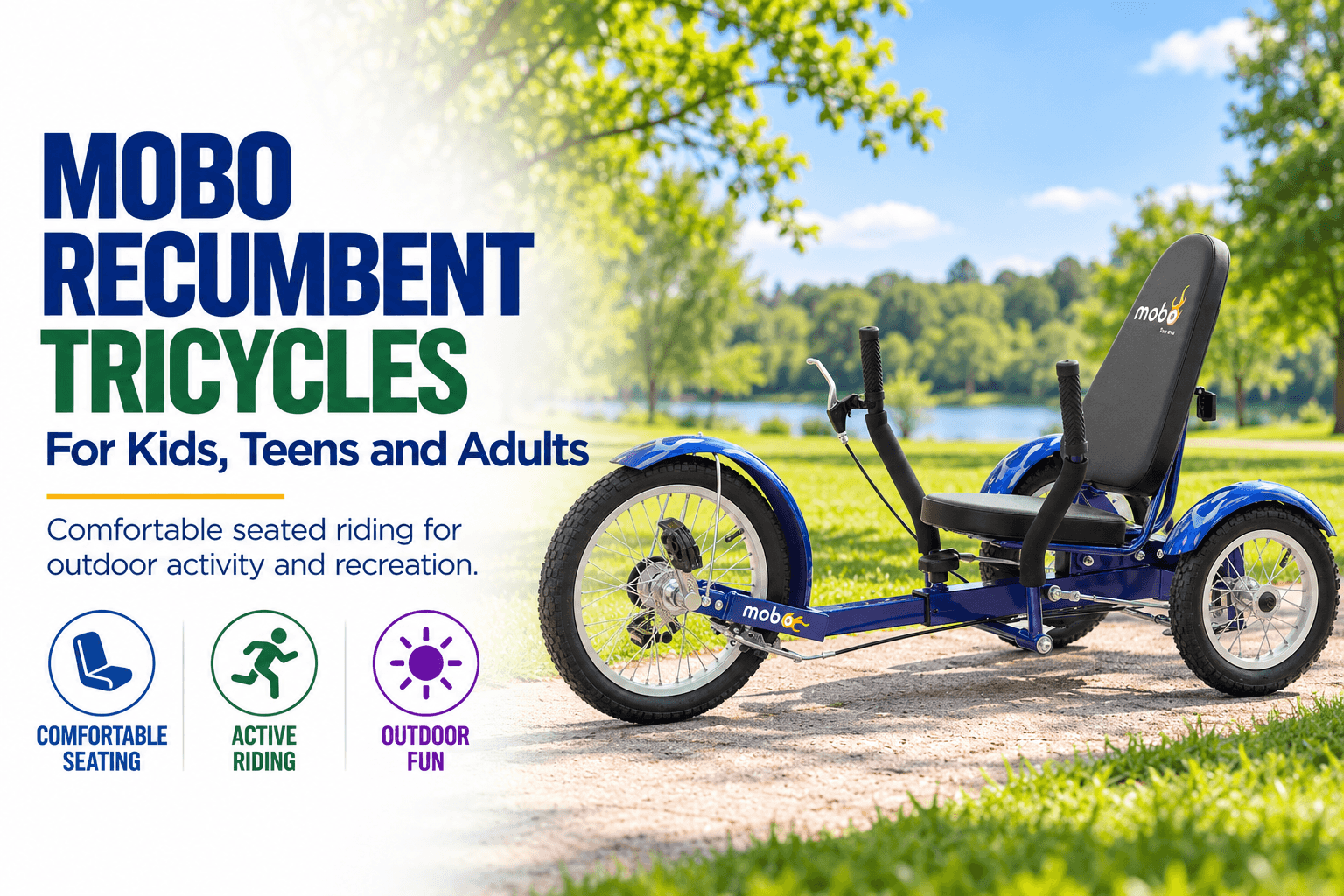
A Mobo tricycle is a three wheeled recumbent cruiser that places the rider in a low seated position rather than on a traditional upright bicycle saddle.
Mobo designs commonly feature:
- Three wheel stability
- A low center of gravity
- Recumbent style seating
- Rear steering handlebars
- Adjustable frames
- Chainless operation on several models
- Hand braking
- Cushioned seating
- Adjustable rider sizing
This combination creates a riding experience that feels very different from a standard bicycle.
Mobo Mini Tricycle
$269.00
Give your child a memorable first trike with the exciting Mobo Mini, an elite, top-of-the-line cruiser for kids between 2 1/2 and 5 years old. The Mobo Mini offers a versatile, safe ride packaged in an attractive design. Its unique… read more

Why Choose a Recumbent Tricycle?
A recumbent tricycle can reduce some of the balance demands associated with a traditional two wheel bike. Because three wheels remain in contact with the ground, the rider does not need to continuously balance the cycle from side to side in the same way they would on a conventional bicycle. The lower seating position may also feel more secure for riders who are uncomfortable sitting high above the ground.
Depending on the rider, recumbent cycling may provide opportunities for:
- Outdoor recreation
- Pedaling practice
- Coordination
- Lower body movement
- Hand and eye coordination
- Cardiovascular activity
- Family cycling
- Independent recreation
- Confidence building
For a broader overview of accessible cycling, read What Is an Adaptive Bike? A Complete Guide for Families, Adults, and Riders with Special Needs.
Mobo Tricycles and Balance
Balance is one of the biggest differences between a Mobo tricycle and a conventional bicycle. A standard two wheel bike requires the rider to maintain balance while steering and pedaling. A three wheel Mobo cruiser provides a stable base that does not rely on the same side to side balancing skill.
That does not mean every rider can automatically use one independently. Riders still need enough physical ability and safety awareness to pedal, steer, brake, remain seated appropriately, and navigate the environment.
Mobo Recumbent Seating
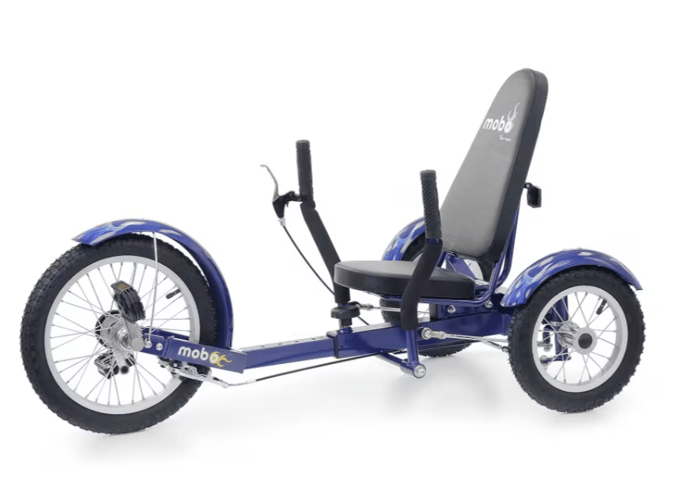
Mobo riders sit in a reclined or semi reclined position with their back supported rather than leaning forward over traditional bicycle handlebars. This design can provide a more relaxed posture for some riders. The seat also positions the body lower to the ground, which may make the tricycle feel less intimidating for someone who is hesitant about a traditional upright bike. Comfort still depends on proper fit, rider size, physical abilities, and individual positioning needs.
Mobo Mini Tricycle for Younger Children
The Mobo Mini Tricycle is designed for younger children beginning with a recumbent three wheel cruiser. It is recommended for children approximately 2½ to 5 years old and for riders roughly 30 to 42 inches tall. The adjustable steel frame allows the tricycle to accommodate some growth within its intended range.
Mobo Mini Features
The Mobo Mini includes:
- Low profile three wheel design
- Rear steering handlebars
- Chainless free wheel system
- Hand caliper brake
- Cushioned seat
- Adjustable frame
- Safety flag
- Stable recumbent positioning
Its low seat is positioned approximately 8 inches above the ground. The Mobo Mini is intended for flat, smooth riding surfaces.
Who May Benefit From the Mobo Mini?
The Mini may be worth considering for younger riders who enjoy cycling activities but are not ready for a conventional bicycle.
Possible users include children who:
- Prefer a lower riding position
- Have difficulty balancing on two wheels
- Want an alternative to a traditional tricycle
- Enjoy active outdoor play
- Can use rear steering controls
- Can safely access the hand brake
Adult supervision remains important, particularly with younger children.
Mobo Mobito Recumbent Adaptive Tricycle
The Mobo Mobito Recumbent Adaptive Tricycle is designed for children who need a larger and more supportive riding option than the Mini. The Mobito is recommended for riders age 4 and older and accommodates user heights from approximately 36 to 56 inches. Its adjustable frame provides several length settings, allowing the tricycle to accommodate growth.
Mobo Mobito Back Support
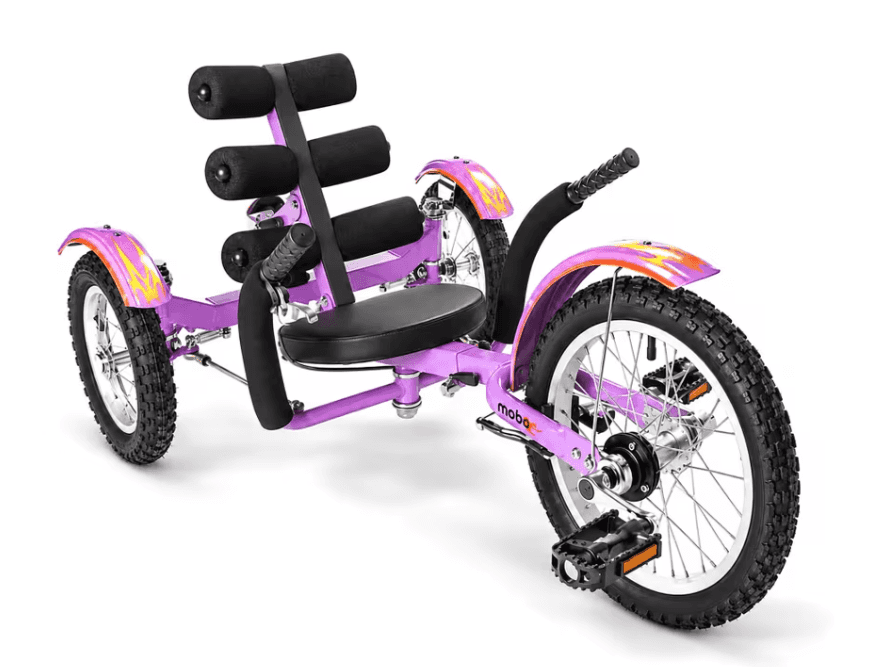
One of the Mobito's more distinctive features is its adjustable back support. The back can be configured through six angle settings, allowing the seating position to be adjusted according to rider preference and comfort. This can be useful for riders who benefit from more back support than a conventional bike saddle provides.
The Mobito should still be considered recreational cycling equipment rather than a specialized medical positioning system. Riders with complex postural needs may require an adaptive tricycle with more extensive trunk, pelvic, or foot support.
Mobo Mobito Stability
The Mobito uses a low frame and three wheel platform to reduce the balance demands of riding. Its seating position is approximately 9.5 inches above the ground, helping maintain a relatively low center of gravity. The tricycle also uses Mobo's rear steering approach, allowing the rider to guide the cycle using handles positioned beside the seat.
Mobo Mobito Sizing
Current specifications for the Mobito include:
- Recommended age: 4 years and older
- Recommended rider height: approximately 36 to 56 inches
- Weight capacity: 180 pounds
- Adjustable frame length
- 16 inch front wheel
- 12 inch rear wheels
Measurements should always be checked before purchasing. A rider being under the maximum weight does not automatically mean the frame will fit appropriately.
Mobo Triton for Older Children and Teens
The Mobo Triton is a larger Mobo cruiser designed for bigger riders. The Triton combines recumbent seating with a three wheel design, adjustable steel frame, rear steering handlebars, hand braking, and a chainless free wheel mechanism. It is designed for riders approximately 44 to 62 inches tall and has a current weight capacity of 200 pounds.
Mobo Triton Features
The Triton includes:
- Adjustable steel frame
- Rear steering handlebars
- Cushioned recumbent seat
- Chainless free wheel mechanism
- Caliper handbrake
- Low riding position
- Safety flag
- Single speed operation
The seat is positioned approximately 11 inches above the ground. Like the Mini and Mobito, the Triton is recommended for flat and smooth riding surfaces.
Mobo Triton for Growing Riders
The Triton includes multiple frame length settings to accommodate riders within its intended height range. That can make it appealing for families seeking a recreational tricycle that can adjust as a child or adolescent grows. Growth range should not replace proper initial fit.
The rider should still be able to comfortably reach the pedals, steering controls, and brake.
Mobo Mini vs Mobito vs Triton
The three models primarily differ in rider size, seating configuration, and intended age range.
| Mobo Model | Best For | Key Difference |
|---|---|---|
| Mobo Mini | Younger children | Compact frame for early riders |
| Mobo Mobito | Children needing additional back support | Six position back support |
| Mobo Triton | Older children and teens | Larger frame and higher capacity |
The most appropriate model depends on actual rider measurements rather than age alone.
Is a Mobo an Adaptive Tricycle?
Mobo tricycles can be useful for some riders with special needs because they reduce traditional bicycle balance demands and provide a low recumbent seat. However, Mobo products should not automatically be considered equivalent to highly specialized adaptive tricycles.
A dedicated adaptive tricycle may include additional features such as:
- Pelvic positioning
- Trunk supports
- Foot sandals or straps
- Caregiver steering
- Caregiver braking
- Specialized handlebars
- Transfer supports
- Extensive positioning accessories
If the rider requires these features, compare Mobo products with equipment in the Adaptive Tricycles collection.
Mobo vs Traditional Adaptive Tricycles
A Mobo may be a strong choice when the rider mainly needs:
- Three wheel stability
- A low center of gravity
- Comfortable recumbent seating
- Simple recreational cycling
- Adjustable frame length
A more specialized adaptive tricycle may be more appropriate when the rider needs significant postural support or caregiver control. The article Top 6 Adaptive Bikes and Tricycles for Special Needs compares several types of adaptive cycling equipment, including the Mobo Mobito.
Mobo for Children With Balance Challenges
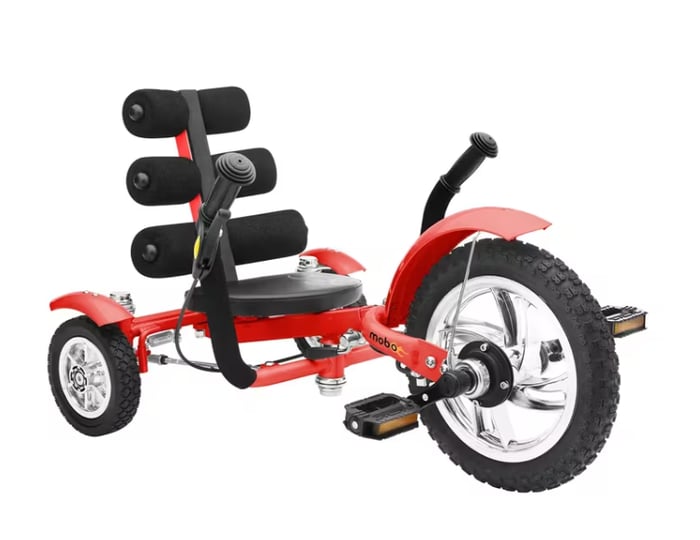
Children who struggle with a two wheel bicycle may find a three wheel cruiser easier to approach because the cycle does not require the same constant balance corrections.
This can allow the rider to focus more attention on:
- Pedaling
- Steering
- Braking
- Navigating
- Enjoying the activity
Balance is only one requirement, though. The rider must still be able to safely operate the controls and maintain an appropriate seated position.
Mobo for Coordination Practice
Cycling requires several actions to happen together.
A rider may need to:
- Pedal continuously
- Move the steering handles
- Watch the direction of travel
- Adjust speed
- Apply the brake
- Respond to obstacles
For some riders, this creates opportunities to practice coordination during a motivating recreational activity. Avoid treating recreational cycling as a guaranteed therapy outcome. Individual performance and needs vary.
Mobo Tricycles and Exercise
Riding a tricycle can provide physical activity while feeling more like recreation than structured exercise. Pedaling may involve repeated lower body movement, while steering requires active upper body participation.
The intensity depends on:
- Rider effort
- Terrain
- Duration
- Speed
- Physical ability
- Environmental conditions
Start gradually when a rider is new to cycling.
Mobo for Outdoor Recreation
Mobo tricycles can make outdoor activity more accessible for riders who prefer three wheel stability.
Possible settings include:
- Driveways
- Paved paths
- Parks
- School recreation areas
- Neighborhood sidewalks
- Large smooth outdoor spaces
Current Mobo Mini, Mobito, and Triton specifications recommend flat and smooth riding surfaces. They should not be assumed to be all terrain vehicles.
Can a Mobo Be Used on Grass?
Performance on grass can vary significantly depending on the surface. Smooth pavement is generally easier to ride on than soft grass, loose gravel, mud, sand, or rough terrain. Use the manufacturer's recommendations for the specific model rather than treating a recumbent tricycle as an all terrain cycle.
Mobo for Family Bike Rides
A Mobo can help some riders participate in family cycling activities in a different way from a standard bicycle.
Before riding together, consider:
- Rider speed
- Route length
- Traffic
- Hills
- Surface quality
- Turning space
- Brake ability
- Supervision
A rider on a recumbent tricycle may travel at a different pace and require more space than someone using a conventional bicycle.
Mobo for Special Education Programs
Schools may use recreational tricycles during:
- Adaptive physical education
- Outdoor recreation
- Gross motor activities
- Movement breaks
- School cycling programs
Before adding a Mobo to a school program, consider rider fit, supervision, storage, approved riding areas, and whether the student's needs require additional adaptive supports.
Mobo for Therapy Programs
A therapist may choose to incorporate recreational cycling into an individualized movement program when the equipment is appropriate for the rider.
Activities may involve:
- Pedaling
- Coordination
- Endurance
- Steering
- Outdoor participation
A Mobo should not be treated as a replacement for a specialized therapy bike when the rider requires extensive physical positioning or therapist controlled features.
Mobo and Sensory Movement
Cycling provides movement through space, changing visual scenery, body motion, and repetitive pedaling. Some riders may find this type of movement enjoyable or motivating. Others may dislike speed, outdoor sensory input, or the low riding position. Sensory responses vary, so cycling should be based on the individual's preferences and safety.
For additional movement based products, explore Vestibular Motion.
Rear Steering on Mobo Tricycles
One of Mobo's signature features is its rear steering system. Instead of using a conventional bicycle handlebar positioned in front of the rider, steering handles are located beside the seat. The rider moves these handles to guide the rear wheels and change direction. This creates a different steering experience from a traditional bike and may require practice.
Is Rear Steering Easy to Learn?
Some riders may quickly understand rear steering, while others may need repeated practice. Introduce the controls in an open area with plenty of room before riding near obstacles or other people. The rider should demonstrate reliable steering and braking before using the tricycle in more complex environments.
Hand Brakes and Rider Ability
Mobo models such as the Mini, Mobito, and Triton use a hand caliper brake.
Before selecting one, consider whether the rider can:
- Reach the brake
- Grip the control
- Apply enough force
- Understand when to brake
- Release the brake appropriately
A rider who cannot independently use the brake may require closer supervision or a different adaptive cycling system with caregiver braking.
Chainless Mobo Design
Several Mobo models use a chainless free wheel system. This reduces exposure to a traditional bicycle chain and simplifies the drivetrain design. The rider still needs to follow normal cycling safety practices and avoid placing hands or clothing near moving wheel and pedal components.
Mobo Tricycle Safety
Before every ride, check the tricycle for obvious problems.
Inspect:
- Tires
- Brakes
- Steering
- Seat
- Pedals
- Frame adjustment
- Fasteners
- Safety flag
- General stability
Do not use equipment with loose, damaged, or malfunctioning components.
Helmet Use
Appropriate protective headgear should be considered for cycling activities according to applicable safety guidance, school policies, and local requirements. A three wheel cycle provides more stability than a two wheel bike but does not eliminate the possibility of falls, collisions, or tipping.
Explore Head Protection and Support for additional head protection products.
Supervision
Supervision needs vary by rider.
Young children and riders with limited safety awareness may require close adult supervision.
Adults should also consider:
- Vehicle traffic
- Slopes
- Curbs
- Driveways
- Pedestrians
- Other cyclists
- Surface conditions
- Weather
Choose controlled riding areas whenever possible.
Avoid Steep Hills
A low three wheel design does not make a rider immune to loss of control on hills. Steep descents can increase speed and braking demands, while steep climbs may be difficult with a single speed recreational tricycle. Flat and smooth surfaces are generally the more appropriate environment for the Mini, Mobito, and Triton.
Measuring for a Mobo Tricycle
The rider's height is an important starting point, but it should not be the only consideration.
Also consider whether the rider can:
- Reach the pedals
- Maintain contact through the pedal cycle
- Reach the steering handles
- Operate the brake
- Sit comfortably against the back
- Enter and exit the seat safely
Compare current measurements with the exact specifications for the model being considered.
Do Not Choose by Weight Capacity Alone
The rider can be below the maximum weight capacity while still being too tall or too short for a particular frame. Height and reach are especially important because the rider needs functional access to both pedals and controls.
Planning for Growth
Adjustable Mobo frames can accommodate a range of rider heights. This can make them useful for growing children and teens, but avoid purchasing a model that is substantially too large simply for future use. The rider should be able to safely use the tricycle now.
For more information about equipment and growth, read From Toddlers to Teens: Adaptive Equipment for Growing Children.
Storage Considerations
Recumbent tricycles have a wider footprint than traditional bicycles.
Before purchasing, consider:
- Garage space
- Shed storage
- School equipment rooms
- Door width
- Hallway access
- Outdoor storage protection
Measure the actual storage area rather than assuming the tricycle will fit beside conventional bikes.
Transporting a Mobo Tricycle
A three wheel recumbent cycle can also require more cargo space than a standard bicycle. If the tricycle will regularly travel to parks, therapy appointments, schools, or recreation programs, compare its dimensions with the family's vehicle.
Consider whether:
- The trike fits through the cargo opening
- Seats need to be folded
- Other mobility equipment also needs space
- The caregiver can lift and position the cycle safely
Mobo Accessories
The Mobo collection also includes accessories that can support ownership and riding.
Available accessories can vary, but may include items related to:
- Tires
- Inflation
- Visibility
- Storage
- Comfort
- Replacement components
Check compatibility with the exact tricycle model before ordering an accessory.
Mobo vs Upright Tricycles
An upright tricycle keeps the rider in a more traditional bicycle posture. A Mobo recumbent tricycle places the rider lower and supports the back against a seat.
A recumbent design may appeal to riders who prefer:
- A lower center of gravity
- Back support
- A wider seat
- A less upright cycling position
An upright adaptive tricycle may be preferable for users who require a more traditional pedaling position or specialized postural accessories.
Mobo vs Two Wheel Bicycles
The primary difference is stability. A conventional bicycle requires the rider to balance on two wheels while steering and pedaling. A Mobo uses three wheels and remains upright without that same balancing requirement. This may make recreational cycling accessible to riders who are not successful on a two wheel bike.
Mobo vs Balance Bikes
Balance bikes are designed specifically to help children develop two wheel balance before progressing to a pedal bicycle. A Mobo serves a different purpose. Its three wheel design reduces the need to balance, which can be useful for riders who want to cycle without progressing toward two wheel riding.
When a More Supportive Adaptive Tricycle May Be Better
A Mobo may not provide enough support for every rider.
Consider a more specialized adaptive tricycle if the rider needs:
- Foot straps
- Pelvic positioning
- Significant trunk support
- Head support
- Caregiver steering
- Caregiver braking
- Extensive transfer assistance
- Highly customized positioning
Explore Adaptive Tricycles for more supportive cycling options.
Choosing the Right Mobo
For younger children, consider the Mobo Mini Tricycle. For children who need a larger frame and adjustable back support, consider the Mobo Mobito Recumbent Adaptive Tricycle. For older children and teens within the appropriate height range, consider the Mobo Triton. Always compare the user's measurements and abilities with the current specifications before purchasing.
Shop Mobo Tricycles at eSpecial Needs
Explore the complete Mobo collection at eSpecial Needs for recumbent tricycles and accessories for children, teens, and adults. You can also browse Tricycles and Bicycles, Adaptive Tricycles, Adaptive Bikes, and Mobility for additional cycling and movement options.
FAQs
What makes a Mobo tricycle different from a regular tricycle?
A Mobo tricycle uses a low recumbent seating position, three wheel platform, and rear steering system instead of the more traditional upright seat and front handlebar design.
This gives the rider a different posture and reduces the balance demands associated with a two wheel bicycle.
Are Mobo tricycles considered adaptive bikes?
They can work well for some riders with special needs, especially when three wheel stability and a lower riding position are helpful.
However, Mobo tricycles are not the same as highly specialized adaptive cycles with extensive pelvic, trunk, foot, or caregiver controls.
For more supportive options, browse Adaptive Tricycles.
Who may benefit from a Mobo recumbent tricycle?
A Mobo may be worth considering for riders who:
- Have difficulty balancing on two wheels
- Prefer a low seat
- Enjoy recumbent cycling
- Can pedal independently
- Can use the rear steering system
- Can operate the hand brake
- Want a recreational three wheel cycling option
Can someone ride a Mobo if they cannot ride a bicycle?
Possibly.
Because a Mobo uses three wheels, the rider does not need to maintain the same side to side balance required on a conventional bicycle. The rider still needs enough coordination and safety awareness to pedal, steer, brake, and navigate.
Is a Mobo good for children who are afraid of bicycles?
It may feel less intimidating because the rider sits closer to the ground and does not need to balance on two wheels. Some children may feel more confident starting with a three wheel recumbent design.
Does a Mobo stay upright when stopped?
A three wheel Mobo remains supported by its wheels when stationary, unlike a two wheel bicycle that must be balanced or supported.
This can make starting and stopping easier for some riders.