Table of Contents
- Understanding Seating and Positioning for Children With Special Needs
- What Does Proper Positioning Do for People With Disabilities?
- Wheelchair Positioning Goals: Key Examples and Outcomes
- The Role of Seating and Positioning in Occupational Therapy
- When Should You Work With a Seating and Positioning Clinic?
- Types of Positioning Equipment for Children
- Adaptive Seating Systems
- Modular Seating Systems for Wheelchairs
- Wheelchair Positioning Devices and Postural Support Accessories
- Positioning Wedges, Rolls, and Bolsters
- Corner Seats and Floor Sitters
- Standers and Prone Positioning Boards
- Assistive Technology for Seating and Positioning
- Top Picks: Best Positioning Equipment for Children
- Best Adaptive Seating for Children With Cerebral Palsy and Postural Challenges
- Best Positioning Wedges and Rolls for Therapy and Home Use
- Best Wheelchair Posture Support Devices for Pediatric Users
- Best Modular and Custom Wheelchair Seating Systems
- Best Floor Sitters and Corner Seats for Young Children
- How to Choose the Right Positioning Equipment for Your Child
- Assess Your Child's Postural and Mobility Needs
- Work With an Occupational Therapist or Physical Therapist
- Consider Environment: Home, School, or Clinic Use
- How to Take Wheelchair Measurements for Proper Fit
- Funding, Insurance, and Purchasing Options for Positioning Equipment
- Using a Letter of Medical Necessity for Adaptive Seating
- Medicaid, Insurance, and Durable Medical Equipment Coverage
- Purchase Orders for Schools and Therapy Clinics
- Flexible Financing and Price Match Options
- Shop the Best Positioning Equipment for Children at eSpecial Needs
- FAQs
Positioning Equipment for Children: Top Picks for Support, Comfort, and Daily Participation
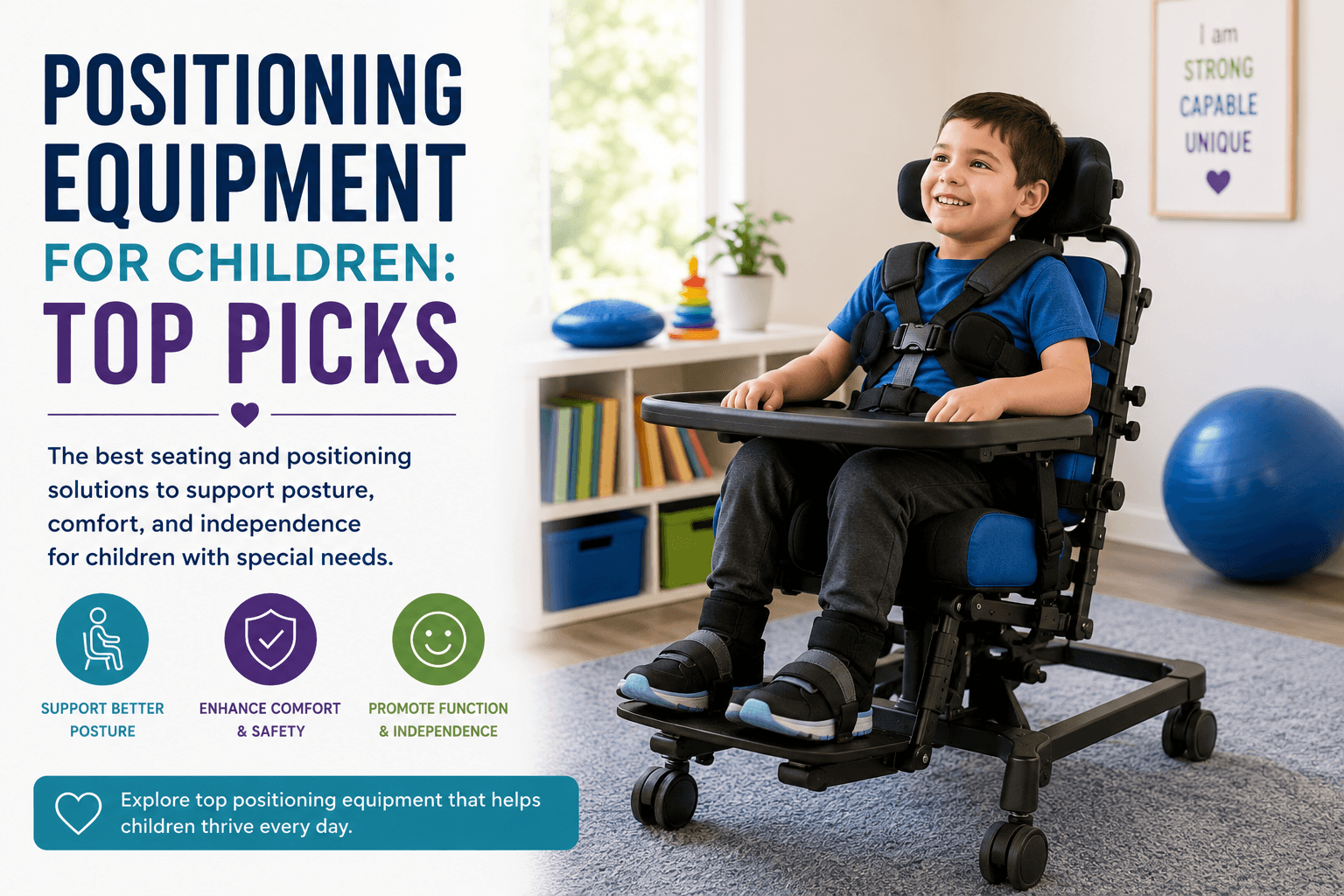
Positioning equipment for children can support safer sitting, standing, resting, therapy participation, mobility, and daily routines for children with special needs. When a child has difficulty maintaining posture, sitting upright, standing, using their hands, or staying comfortable in a chair or wheelchair, the right seating and positioning equipment may help improve alignment, comfort, function, and participation.
Positioning equipment may include adaptive seating systems, wheelchair supports, wedges, rolls, bolsters, corner seats, floor sitters, standers, prone boards, headrests, lateral supports, footrests, positioning belts, cushions, and other postural support tools. These products are often used at home, in schools, in therapy clinics, and in medical or care settings.
The best positioning equipment for children depends on the child’s age, diagnosis, muscle tone, posture, mobility, wheelchair use, therapy goals, caregiver support needs, and daily environment. A child with cerebral palsy may need trunk support and pelvic stability. A child with low muscle tone may need help sitting upright. A child who uses a wheelchair may need head support, foot positioning, lateral supports, or pressure relief. A child working on floor play may benefit from wedges, rolls, or a floor sitter.
Explore Seating Systems, Classroom Seating, Standers and Standing Aids, Dynamic and Mobile Standers, and Rifton Equipment at eSpecial Needs.
Understanding Seating and Positioning for Children With Special Needs
Seating and positioning refers to how a child’s body is supported during sitting, standing, lying, floor play, mobility, therapy, schoolwork, communication, feeding, and daily activities. Proper positioning helps place the child’s body in a safer and more functional alignment.
For many children with disabilities, posture is not just about sitting up straight. Positioning can affect breathing, swallowing, comfort, vision, hand use, communication, attention, endurance, pressure management, and participation.
A well supported position may help a child:
Sit with better alignment
Use their hands more effectively
Participate in meals
Access communication devices
Engage in play
Take part in classroom activities
Reduce fatigue
Stay more comfortable
Maintain safer positioning in a wheelchair
Support therapy goals
Reduce caregiver strain
Improve access to daily routines
Positioning needs can change over time as a child grows, gains strength, loses strength, develops new skills, changes equipment, or experiences changes in tone, mobility, or medical needs.
Height Adjustable Tilting Benches - Medium
$289.95
The Height Adjustable Tilting Benches - Medium provides supportive seating designed to help children maintain better posture, stability, and alignment during seated activities, therapy sessions, and everyday developmental work. Created for users who do not need full back support but… read more

What Does Proper Positioning Do for People With Disabilities?
Proper positioning may support body alignment, comfort, safety, and functional participation. For children with disabilities, positioning is often part of a broader care plan created by families, therapists, physicians, seating specialists, and school teams.
Proper positioning may help support:
Pelvic stability
Trunk alignment
Head control
Foot support
Shoulder and arm use
Breathing comfort
Feeding posture
Visual attention
Communication access
Pressure relief
Joint protection
Muscle tone management
Motor development
Safe transfers
Participation in school and play
When a child is not well supported, they may slide forward, lean to one side, slump, arch, twist, fatigue quickly, struggle to use their hands, or require more caregiver assistance.
The goal is not to make every child look the same. The goal is to provide the support each child needs to participate as comfortably and safely as possible.
Height Adjustable Tilting Benches - Small
$249.95
The Height Adjustable Tilting Benches - Small provides supportive seating designed to help young children maintain better posture, stability, and alignment during seated activities, therapy sessions, and early developmental work. Created for children who do not need full back support… read more

Wheelchair Positioning Goals: Key Examples and Outcomes
Wheelchair positioning goals vary based on the child’s needs. Some goals focus on comfort. Others focus on posture, safety, skin protection, breathing, feeding, mobility, communication, or participation.
Common wheelchair positioning goals include:
Keeping the pelvis stable
Supporting the trunk in midline
Helping the head stay upright
Supporting the feet and legs
Reducing sliding or leaning
Improving access to a communication device
Helping the child reach a tray or desk
Reducing fatigue during school
Supporting safer transport when appropriate
Reducing pressure on sensitive areas
Supporting visual attention
Improving hand use
Improving caregiver access for daily care
Examples of positioning outcomes may include:
A child sits longer during class because trunk support reduces fatigue
A child uses a communication device more easily because the tray height and seat position improve reach
A child eats more comfortably because pelvic and foot support improve stability
A child experiences fewer posture related discomforts because seating is adjusted to fit correctly
A caregiver has an easier time with daily positioning because the chair offers consistent support
Wheelchair positioning should be evaluated by qualified professionals, especially when the child has complex posture, tone, pressure, respiratory, feeding, or orthopedic concerns.
The Role of Seating and Positioning in Occupational Therapy
Occupational therapists often help children participate in daily activities such as feeding, dressing, bathing, schoolwork, play, communication, and self care. Seating and positioning can be an important part of that work because posture affects how a child uses their hands, attends to tasks, and interacts with the environment.
An occupational therapist may evaluate:
Sitting posture
Hand use
Fine motor skills
Feeding position
Sensory needs
Classroom access
Wheelchair tray setup
Bathing and toileting positioning
Home routines
Caregiver assistance needs
Equipment fit and use
Occupational therapists may work with physical therapists, seating specialists, physicians, teachers, assistive technology professionals, and caregivers to create a positioning plan. They may also help document the need for equipment when insurance, Medicaid, school funding, or grant support is being requested.
Height Adjustable Tilting Benches - Large
$339.95
The Height Adjustable Tilting Benches - Large provides supportive seating designed to help older children and larger users maintain better posture, stability, and alignment during seated activities, therapy sessions, and functional daily work. Created for users who do not need… read more

When Should You Work With a Seating and Positioning Clinic?
A seating and positioning clinic can provide a more detailed evaluation when a child has complex equipment needs. These clinics often include professionals such as physical therapists, occupational therapists, rehabilitation technology suppliers, seating specialists, and sometimes physicians or orthotists.
Consider a seating and positioning clinic evaluation if your child:
Uses a wheelchair or adaptive stroller
Leans, slides, or collapses in their current seat
Has difficulty holding the head upright
Has scoliosis or significant asymmetry
Has high or low muscle tone
Has pressure concerns
Has pain or discomfort while seated
Has outgrown current equipment
Needs a custom wheelchair seating system
Needs improved support for feeding or communication
Has changing posture or mobility needs
Requires multiple supports for safe sitting
Needs funding documentation for complex equipment
A clinic assessment may include measurements, posture assessment, equipment trials, pressure mapping when appropriate, caregiver input, review of daily routines, and recommendations for seating components.
Types of Positioning Equipment for Children
Pediatric positioning equipment comes in many forms. Some products are designed for wheelchair users. Others support floor sitting, standing, prone positioning, therapy play, classroom participation, or daily care.
Common categories include:
Adaptive seating systems
Modular wheelchair seating
Wheelchair positioning accessories
Headrests
Lateral supports
Footrests
Pelvic positioning belts
Harnesses when clinically appropriate
Cushions
Positioning wedges
Rolls and bolsters
Corner seats
Floor sitters
Standers
Prone positioning boards
Transfer and positioning aids
Seating technology
Adaptive Seating Systems
Adaptive seating systems are designed to support children who need more postural support than a standard chair can provide. These systems may be used at home, school, therapy, or in community settings.
Adaptive seating systems may include:
Adjustable seat depth
Adjustable seat width
Trunk support
Pelvic support
Head support
Footrests
Armrests
Tray options
Tilt or recline options
Mobile bases
Growth adjustments
Easy clean materials
Positioning accessories
Adaptive seating may be helpful for children with cerebral palsy, low muscle tone, developmental delays, muscular dystrophy, spinal muscular atrophy, brain injury, genetic conditions, orthopedic differences, or other diagnoses that affect posture and sitting balance.
Explore Seating Systems, Chairs and Seating, and Classroom Seating for supportive options.
Modular Seating Systems for Wheelchairs
Modular seating systems are adjustable seating setups that can be configured to meet a child’s body shape, support needs, and growth. Unlike a basic wheelchair seat, a modular system may include separate components for the cushion, back, head, trunk, pelvis, legs, and feet.
Modular systems are helpful because children grow and their needs may change. A system with adjustable components may be easier to modify over time.
Modular wheelchair seating may support:
Growth accommodation
Improved pelvic alignment
Better trunk support
Head positioning
Pressure management
Improved reach
Communication device access
Feeding support
Safer seated mobility
Customized comfort
Children with complex positioning needs should be evaluated by a seating and positioning team before selecting a modular wheelchair seating system.
Wheelchair Positioning Devices and Postural Support Accessories
Wheelchair positioning devices help support specific areas of the body. They are often used together to create a complete seating setup.
Common wheelchair positioning accessories include:
Headrests for head and neck support
Lateral supports for trunk alignment
Pelvic belts for pelvic stability when clinically appropriate
Harnesses for upper body support when recommended
Footrests for lower body stability
Ankle supports when needed
Arm supports
Tray systems
Hip guides
Abductor supports
Cushions for comfort and pressure management
Back supports
Calf panels
Each support should serve a clear purpose. Too little support may leave the child unstable. Too much support may limit function or comfort. A therapist or seating specialist can help balance alignment, freedom of movement, and safety.
Positioning Wedges, Rolls, and Bolsters
Positioning wedges, rolls, and bolsters are often used in therapy, home programs, early intervention, and floor based activities. They can support motor development, stretching, play, tummy time, side lying, sitting practice, and therapeutic positioning.
Wedges
Wedges may be used to support prone positioning, sitting support, stretching, or upper body weight bearing. A wedge can help position a child at an angle for reaching, visual attention, or strengthening activities.
Rolls
Rolls may support side lying, trunk control, prone activities, leg positioning, or supported sitting. They are often used in therapy activities that encourage controlled movement.
Bolsters
Bolsters may support balance, body awareness, stretching, therapy play, and supported sitting. They can also help children practice reaching or weight shifting.
Corner Seats and Floor Sitters
Corner seats and floor sitters help children sit upright at floor level when they need extra support for the trunk, hips, or pelvis. These products can be especially useful for young children working on sitting balance, floor play, circle time, therapy activities, and classroom participation.
Corner seats may help children:
Sit with support
Keep the trunk more upright
Engage in floor play
Use their hands
Participate in group activities
Interact with toys
Practice visual attention
Build sitting tolerance
Floor level positioning can support participation because many early childhood activities happen on the floor. A floor sitter can make those routines more accessible for children who cannot maintain independent sitting.
Standers and Prone Positioning Boards
Standers and prone positioning boards help children who cannot stand or walk independently access supported weight bearing and upright positioning. Standing programs are often guided by a physical therapist, physician, or rehabilitation team.
Standers may support:
Weight bearing
Stretching
Hip and knee alignment
Participation at eye level
Classroom engagement
Digestive routine support for some children
Bone and joint health goals
Social interaction
Hand use at a tray
Mobility in some dynamic standers
Types of standers may include:
Supine standers
Prone standers
Upright standers
Sit to stand standers
Dynamic standers
Mobile standers
Explore Standers and Standing Aids, Dynamic and Mobile Standers, and Rifton Equipment.
Assistive Technology for Seating and Positioning
Assistive technology can support advanced seating and positioning needs. These solutions may include powered, adjustable, or assessment based features that improve comfort and function.
Examples may include:
Power tilt
Power recline
Elevating leg rests
Seat elevation
Pressure mapping
Adjustable head arrays
Powered mobility seating controls
Communication device mounts
Custom trays
Environmental control access
Technology based positioning may be helpful when a child needs changes in position throughout the day, improved access to communication, pressure relief, or greater independence with mobility.
Top Picks: Best Positioning Equipment for Children
The best positioning equipment for children is not one single product. It is the product category that best matches the child’s goals, body support needs, environment, and professional recommendations.
When comparing top picks, consider:
Clinical usefulness
Adjustability
Growth potential
Comfort
Support level
Ease of cleaning
Durability
Home and school compatibility
Caregiver ease of use
Funding documentation needs
Professional recommendation
Fit with existing wheelchair or seating equipment
Best Adaptive Seating for Children With Cerebral Palsy and Postural Challenges
Children with cerebral palsy or significant postural challenges may need adaptive seating that supports the pelvis, trunk, head, legs, and feet. Seating should help the child maintain a comfortable and functional position for meals, learning, communication, and daily routines.
Look for:
Adjustable seat depth
Adjustable back support
Pelvic positioning
Lateral trunk supports
Headrests
Footrests
Tray options
Tilt or recline features
Growth adjustments
Pressure management
Stable base
Easy transfers
Caregiver friendly adjustments
Browse Seating Systems, Chairs and Seating, and Rifton Equipment for adaptive seating products often used in therapy, school, and home settings.
Best Positioning Wedges and Rolls for Therapy and Home Use
Wedges and rolls can be useful for therapy activities and caregiver guided home programs. They are often used for prone positioning, side lying, reaching, stretching, supported sitting, weight bearing through the arms, and motor development activities.
Look for:
Durable foam construction
Easy clean covering
Size options
Firm support
Lightweight handling
Stable shape
Therapy friendly design
Safe floor use
Appropriate height and angle
Compatibility with the child’s therapy goals
These supports should be used as recommended by a therapist when part of a specific positioning or exercise program.
Best Wheelchair Posture Support Devices for Pediatric Users
Wheelchair posture support devices should be selected based on the child’s posture, wheelchair frame, cushion, back support, movement patterns, and goals.
Helpful accessories may include:
Headrests
Lateral trunk supports
Pelvic belts
Chest supports when clinically appropriate
Footrests
Calf panels
Hip guides
Arm supports
Cushions
Back supports
Tray supports
Communication device mounts
A child’s wheelchair positioning should be reviewed regularly because growth, posture, skin tolerance, and mobility needs can change.
Best Modular and Custom Wheelchair Seating Systems
Modular and custom wheelchair seating systems may be best for children who need multiple support components or a fit that cannot be achieved with standard seating.
These systems may help support:
Complex posture
Asymmetry
Scoliosis management goals
Pelvic control
Trunk stability
Head control
Pressure distribution
Growth adjustment
Wheelchair access
Communication access
Feeding posture
Long term seating needs
Custom seating should be guided by a seating and positioning clinic or qualified rehabilitation team.
Best Floor Sitters and Corner Seats for Young Children
Floor sitters and corner seats can help young children participate in floor play, circle time, early learning, and family activities when independent sitting is difficult.
Look for:
Good trunk support
Proper pelvic positioning
Stable base
Comfortable materials
Easy cleaning
Lightweight design
Appropriate size
Tray compatibility when needed
Suitability for home, school, or therapy
Therapist input for fit and use
Floor seating should encourage participation without forcing a position that causes discomfort.
How to Choose the Right Positioning Equipment for Your Child
Choosing positioning equipment should begin with your child’s real daily needs. Think about where your child spends time, what activities are difficult, and what support would help them participate more comfortably.
Ask:
Does my child have trouble sitting upright?
Does my child lean, slide, arch, or slump?
Does my child need head support?
Does my child need trunk support?
Does my child use a wheelchair or adaptive stroller?
Does my child need support for floor play?
Does my child need a standing program?
Does my child have pressure concerns?
Does my child need a tray for communication, meals, or activities?
Will the equipment be used at home, school, or therapy?
Does the equipment need to travel?
Can caregivers use it safely?
Will insurance or Medicaid documentation be needed?
Assess Your Child's Postural and Mobility Needs
Start with how your child currently sits, stands, lies down, plays, and moves. Watch for signs that more support may be needed.
Signs may include:
Sliding out of the chair
Leaning to one side
Difficulty keeping the head upright
Feet not supported
Knees or hips positioned poorly
Fatigue during sitting
Discomfort or pain
Reduced hand use
Trouble accessing toys or communication
Difficulty staying upright in a wheelchair
Skin redness from pressure
Trouble participating at school
Caregiver difficulty positioning the child
Share these observations with your child’s therapist, physician, or seating team.
Work With an Occupational Therapist or Physical Therapist
Occupational therapists and physical therapists can help evaluate positioning needs and recommend appropriate products.
An OT may focus on daily activities, self care, feeding, hand use, sensory needs, classroom access, and functional participation.
A PT may focus on posture, movement, strength, transfers, standing, mobility, range of motion, gait, and wheelchair positioning.
Therapists may help with:
Equipment trials
Measurements
Positioning goals
Seating recommendations
Standing programs
Home use plans
School carryover
Caregiver training
Funding documentation
Letters of medical necessity
Equipment adjustments over time
Consider Environment: Home, School, or Clinic Use
The setting matters. A product that works well in a therapy clinic may not be practical for a small home. A product used at school may need to be durable enough for daily classroom routines.
Home Use
For home, consider:
Space available
Storage needs
Cleaning
Caregiver ease
Portability
Daily routine fit
Comfort
Transfer needs
School Use
For school, consider:
Classroom layout
Desk or table height
Transportation
Multi staff use
IEP goals
Therapy carryover
Durability
Safety procedures
Clinic Use
For therapy clinics, consider:
Multiple user sizing
Cleaning between users
Adjustability
Therapy goals
Storage
Durability
Ease of repositioning
How to Take Wheelchair Measurements for Proper Fit
Wheelchair measurements should be taken carefully, and professional guidance is strongly recommended. Poor fit can affect posture, comfort, skin protection, hand use, and safety.
Common measurements include:
Seat Width
Measure the widest part of the hips or thighs while the child is seated. The seat should allow enough room for comfort without being so wide that the child loses side support.
Seat Depth
Measure from the back of the pelvis to behind the knee, then allow space so the seat does not press into the back of the knees.
Back Height
Measure from the seat surface to the level of back support needed. Some children need lower support for active trunk use. Others need higher support for trunk or head control.
Lower Leg Length
Measure from the back of the knee to the bottom of the foot so footrests can support the child properly.
Armrest and Tray Height
Measure based on the child’s elbow position and functional reach. Proper tray height can affect feeding, writing, play, and communication device access.
Measurements should be reviewed as the child grows.
Funding, Insurance, and Purchasing Options for Positioning Equipment
Positioning equipment can be a major investment, especially when a child needs custom seating, wheelchair supports, standers, or adaptive chairs. Funding options may vary based on the product, diagnosis, payer, medical necessity, state rules, school needs, and documentation.
Possible options may include:
Private insurance
Medicaid
Medicaid waivers
Durable medical equipment coverage
School funding
Therapy clinic purchasing
Grants
Nonprofit programs
State assistive technology programs
Community funding
Health savings accounts
Flexible spending accounts
Direct purchase
Financing
Coverage is not guaranteed. Always confirm current requirements before purchasing equipment.
Using a Letter of Medical Necessity for Adaptive Seating
A letter of medical necessity is a document from a qualified provider that explains why a child needs a specific product or equipment category. It may help support an insurance, Medicaid, grant, school, or waiver request.
For adaptive seating or positioning equipment, the letter may include:
Child’s diagnosis
Functional limitations
Postural needs
Mobility needs
Current equipment problems
Safety concerns
Therapy goals
Daily activities affected
Requested product name
Required accessories
Why standard seating is not enough
Expected benefits
Provider credentials
Product quote
Supporting therapy notes or evaluations
Families can review Letters of Medical Necessity for general template guidance. Requirements vary by payer and location, and approval is never guaranteed.
Medicaid, Insurance, and Durable Medical Equipment Coverage
Some positioning equipment may be considered durable medical equipment when it is medically necessary and meets payer criteria. Coverage depends on the insurance plan, Medicaid program, state, diagnosis, provider documentation, prior authorization rules, and product type.
Tips for navigating coverage:
Ask whether the item is covered
Ask if prior authorization is required
Ask what provider must write the prescription
Ask if an OT or PT evaluation is required
Ask whether a specific supplier is required
Request documentation requirements in writing
Keep copies of all submissions
Track call dates and reference numbers
Ask about appeal rights if denied
Do not assume coverage before confirming with the payer.
Purchase Orders for Schools and Therapy Clinics
Schools, therapy clinics, hospitals, government agencies, and care programs may purchase positioning equipment through purchase orders. This can be helpful for classroom seating, therapy equipment, standers, wedges, floor sitters, and shared adaptive equipment.
Institutional buyers should consider:
Number of students or users
Size range
Daily use frequency
Cleaning procedures
Storage needs
Product durability
IEP or therapy goals
Budget approval process
Delivery requirements
Purchase order requirements
Quote documentation
eSpecial Needs supports Purchase Orders and Schools and Government Agencies.
Flexible Financing and Price Match Options
Some families choose financing when equipment is needed before insurance approval, when coverage is unavailable, or when they are purchasing items not covered by a payer.
eSpecial Needs offers Affirm Financing for eligible purchases. Review payment terms, eligibility, total cost, and any applicable interest or fees before choosing financing.
eSpecial Needs also offers a Price Match Guarantee, subject to current policy terms and product eligibility.
Shop the Best Positioning Equipment for Children at eSpecial Needs
Positioning equipment for children can support comfort, alignment, participation, therapy goals, caregiver support, and daily routines. Whether your child needs adaptive seating, wheelchair positioning accessories, wedges, rolls, bolsters, floor sitters, standers, or specialty seating, the right equipment should match their body, abilities, environment, and goals.
Explore eSpecial Needs categories for:
For families, schools, clinics, and care teams, eSpecial Needs can help with product options, quotes, institutional purchasing, and adaptive equipment support.
FAQs
What is positioning equipment for children?
Positioning equipment for children includes adaptive seating, wheelchair supports, wedges, rolls, bolsters, floor sitters, corner seats, standers, prone boards, cushions, headrests, lateral supports, footrests, and other products designed to support posture, comfort, mobility, therapy goals, and daily participation.
These products may be used at home, in school, in therapy clinics, in wheelchairs, or during daily care routines.
Why is positioning important for children with special needs?
Positioning is important because body alignment can affect comfort, breathing, feeding, hand use, communication, vision, attention, endurance, pressure management, and participation.
When a child is not supported well, they may slide, lean, slump, arch, fatigue quickly, have difficulty using their hands, or need more caregiver assistance. The right positioning equipment can help support safer and more functional participation in daily routines.
What does proper positioning do for people with disabilities?
Proper positioning may help support pelvic stability, trunk alignment, head control, foot placement, comfort, pressure relief, hand use, visual attention, communication access, feeding posture, and participation in school, therapy, play, and daily activities.
The goal is not to force every child into the same posture. The goal is to provide the support each child needs to function as safely and comfortably as possible.
What are common wheelchair positioning goals for children?
Common wheelchair positioning goals include:
- Supporting the pelvis
- Improving trunk alignment
- Helping the head stay upright
- Supporting the feet and legs
- Reducing sliding
- Reducing leaning
- Supporting pressure relief
- Improving access to trays or desks
- Improving communication device access
- Supporting safer feeding posture
- Reducing fatigue
- Improving classroom participation
- Making caregiver positioning easier
A therapist or seating specialist can help define the right goals for each child.
What are examples of wheelchair positioning outcomes?
Wheelchair positioning outcomes may include a child sitting longer during class, reaching a tray more easily, using a communication device with better access, eating more comfortably, leaning less, needing fewer caregiver adjustments, or feeling more comfortable throughout the day.
Outcomes should be realistic and based on the child’s needs, diagnosis, body size, mobility level, and daily activities.
What role does occupational therapy play in seating and positioning?
Occupational therapists may evaluate how posture affects feeding, dressing, bathing, writing, communication, play, classroom participation, sensory regulation, and daily routines.
An OT may recommend adaptive seating, positioning supports, trays, wheelchair accessories, floor sitters, bathing supports, or other products that help a child participate more comfortably and safely.
What role does physical therapy play in positioning equipment?
Physical therapists may focus on posture, movement, strength, range of motion, transfers, standing, mobility, gait, and wheelchair positioning.
A PT may help recommend standers, gait trainers, wheelchair supports, wedges, rolls, bolsters, adaptive seating, or other equipment connected to movement and physical function.
What types of positioning equipment are available for children?
Common types of pediatric positioning equipment include:
- Adaptive seating systems
- Modular wheelchair seating
- Wheelchair positioning accessories
- Headrests
- Lateral supports
- Footrests
- Pelvic positioning belts
- Harnesses when clinically appropriate
- Cushions
- Wedges
- Rolls
- Bolsters
- Corner seats
- Floor sitters
- Standers
- Prone positioning boards
- Transfer and positioning aids
The right product depends on the child’s posture, age, diagnosis, mobility, therapy goals, and environment.
How are modular wheelchair seating systems different from standard wheelchair seats?
A standard wheelchair seat may provide basic sitting support. A modular wheelchair seating system provides more individualized positioning through adjustable cushions, backs, laterals, headrests, foot supports, belts, and other accessories.
Modular seating may be useful for children with complex posture, asymmetry, pressure concerns, low tone, high tone, scoliosis, or changing growth needs.