Table of Contents
- What Is an Adaptive Swing Seat?
- Who May Benefit From an Adaptive Swing Seat?
- How Adaptive Swing Seats Differ From Standard Swings
- Vestibular Input and Swinging
- Swinging and Body Awareness
- Adaptive Swing Seats for Sensory Play
- High Back Adaptive Swing Seats
- Full Support Swing Seats
- Adaptive Playground Swing Seats
- Inclusive Swing Seats for Children and Adults
- Adaptive Swing Seats for Autism
- Adaptive Swings for Schools
- Adaptive Swing Seats for Therapy
- Adaptive Swing Seats for Home Use
- Choosing the Correct Adaptive Swing Seat Size
- Consider the Amount of Support Needed
- Review Harness and Restraint Systems
- Swing Frames and Mounting Systems
- Allow Enough Swing Clearance
- Watch the User's Response to Movement
- Adaptive Swing Safety
- Adaptive Swing Seat vs. Sensory Swing
- Creating More Inclusive Play Opportunities
- How to Choose an Adaptive Swing Seat
- Shop Adaptive Swing Seats at eSpecial Needs
- FAQs
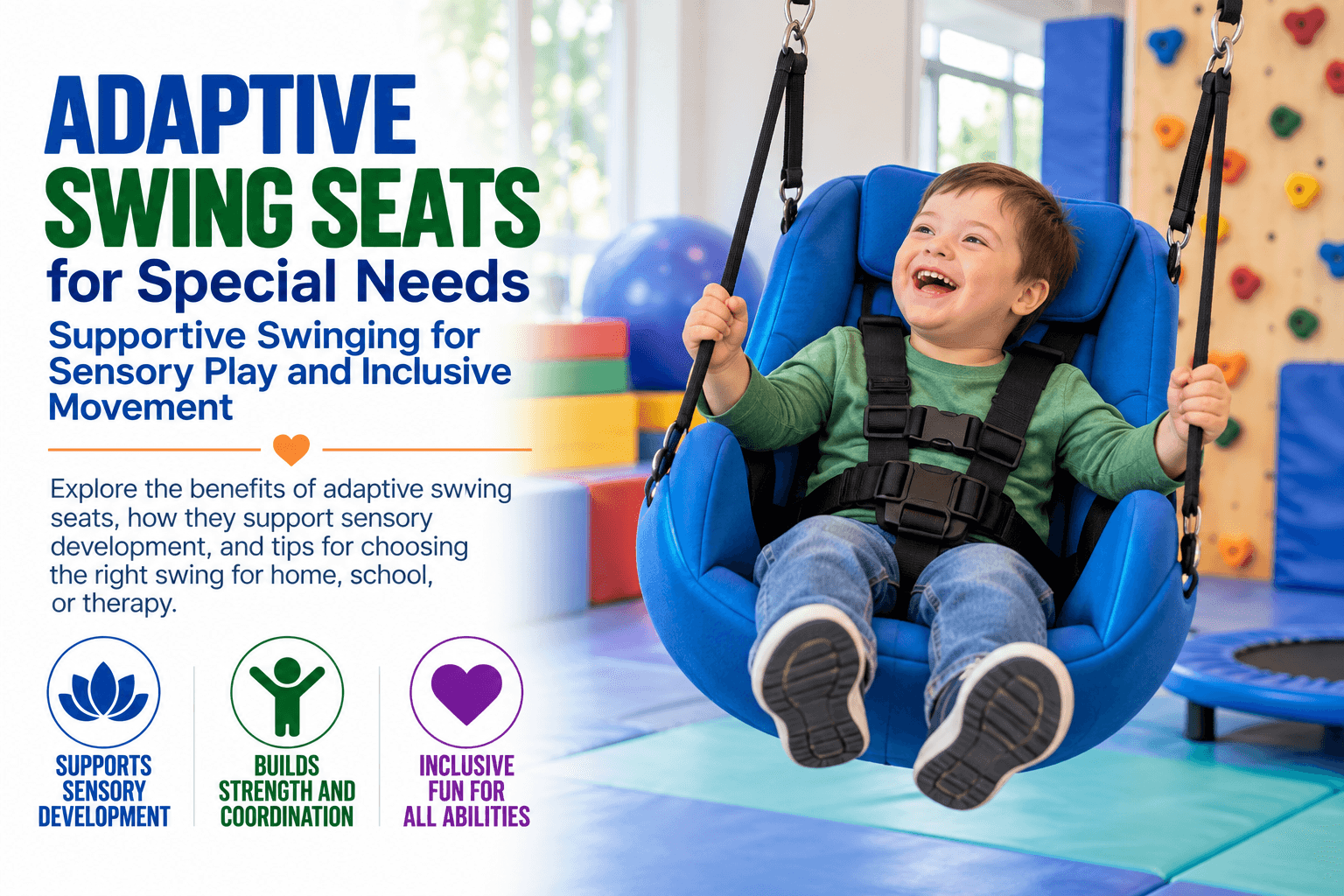
Adaptive swing seats for special needs can make swinging more accessible for children and adults who need additional positioning, trunk support, stability, or security during movement based play. Compared with a traditional flat swing, adaptive swing seats may include high backs, supportive sides, harness systems, contoured seating, head support, or other features designed to help the user maintain a more stable position.
The Adaptive Swing Seats collection at eSpecial Needs includes supportive swing options for homes, schools, therapy programs, sensory rooms, backyards, and inclusive playgrounds.
What Is an Adaptive Swing Seat?
An adaptive swing seat is a supportive alternative to a traditional playground or therapy swing seat.
Traditional belt swings generally require the user to independently maintain sitting balance, trunk control, and positioning throughout the activity. Some children and adults need additional support to participate comfortably.
Depending on the model, an adaptive swing seat may provide:
- A higher back
- Side support
- A positioning harness
- A pommel
- Head support
- A contoured seating surface
- Additional suspension points
- A deeper seating position
The amount of support varies considerably between products, which makes proper sizing and product selection important.
Square Carpeted Platform Swing - Vestibular Sensory Swing

$164.95
The Spark Sensory square carpeted platform swing is useful in the development of a child’s sensory and vestibular systems! Different movement sensations and repetitive swinging motion has been known to help calm and regulate and over stimulated child. The platform… read more
Who May Benefit From an Adaptive Swing Seat?
Adaptive swing seats may be appropriate for children and adults who have difficulty using traditional swings because of physical, developmental, or sensory support needs.
Users may include individuals with:
- Reduced trunk control
- Balance challenges
- Low muscle tone
- Physical disabilities
- Developmental delays
- Sensory processing differences
- Difficulty maintaining a safe seated position
- A need for additional positioning support
An adaptive swing should be selected according to the individual rather than diagnosis alone.
For a broader look at movement and sensory development, read Sensory Development Activities and Tools for Children With Special Needs.
How Adaptive Swing Seats Differ From Standard Swings
A standard playground swing usually provides relatively little physical support.
This works well for users who can independently:
- Maintain sitting balance
- Hold the swing
- Control trunk position
- Enter and exit safely
- Respond appropriately to movement
An adaptive swing seat adds varying levels of support around the body.
That support may help a user participate in swinging when a traditional seat would not provide enough stability.
However, an adaptive seat should not automatically be considered appropriate simply because it has a harness. Seat dimensions, positioning, user weight, trunk control, and installation all matter.
Carpeted Round Platform Swing

$164.95
Our Carpeted Round Platform Swing is useful in the development of a child's vestibular system by forcing them to accept more movement sensations. Different movement sensations and repetitive swinging motion has been known to help calm and regulate an over-stimulated… read more
Vestibular Input and Swinging
Swinging provides vestibular input, which relates to movement, balance, and the body's position in space.
Different swinging patterns can create very different experiences.
Movement may be:
- Slow
- Rhythmic
- Linear
- Faster
- More active
- Gentle and repetitive
Some users enjoy movement and actively seek it. Others may become uncomfortable or overwhelmed quickly.
For more movement based sensory equipment, explore Vestibular Motion.
Swinging and Body Awareness
Swinging can also involve proprioceptive and motor experiences as the user adjusts to movement and changes in body position.
Depending on the individual and activity, swinging may provide opportunities to work on:
- Body awareness
- Balance
- Coordination
- Postural control
- Motor planning
- Core engagement
- Movement tolerance
These experiences should be matched to the user's abilities and comfort level.
Adaptive Swing Seats for Sensory Play
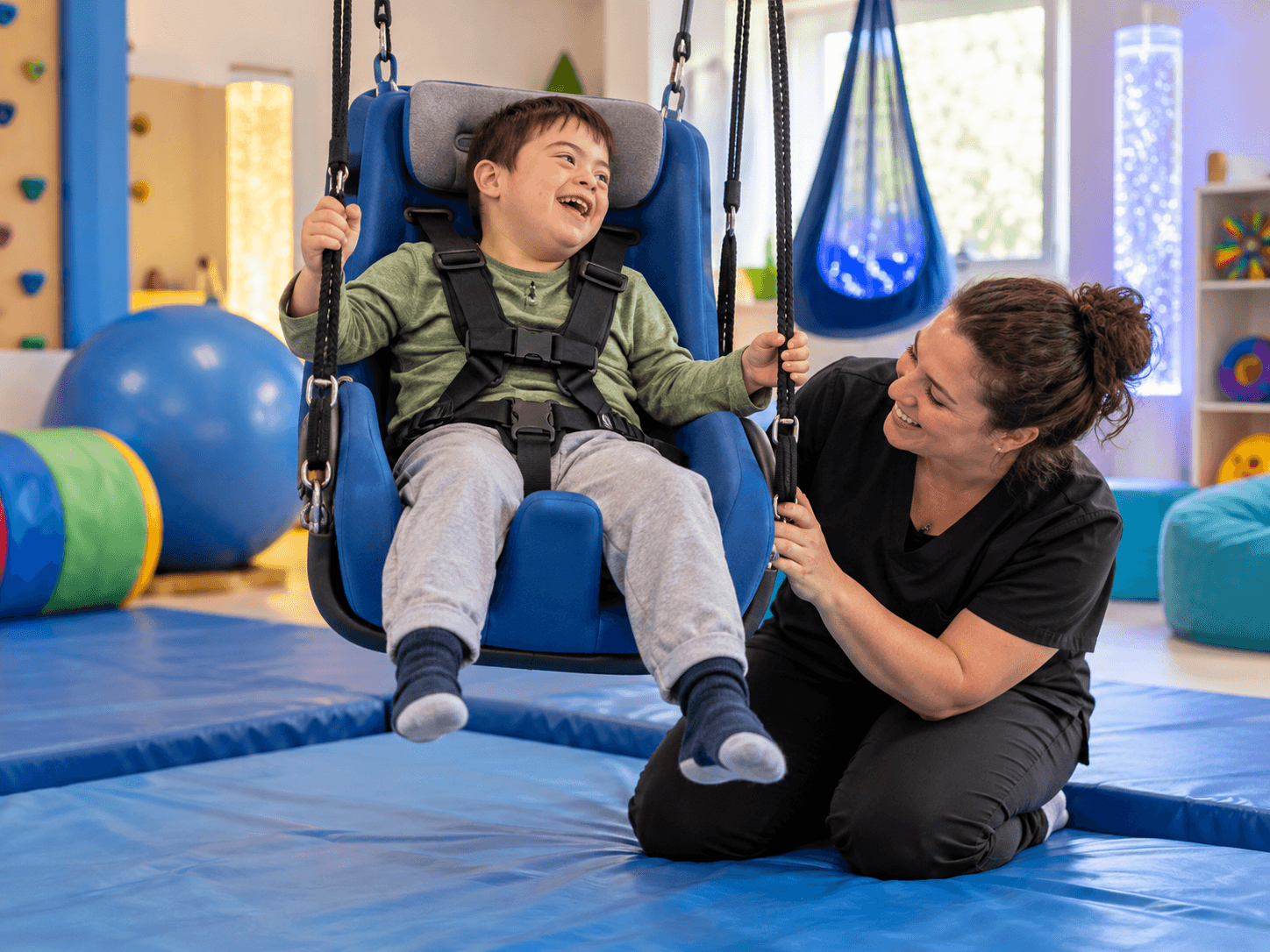
Adaptive swing seats are often incorporated into sensory spaces because they can provide predictable movement while supporting the user's seated position.
A swing might be incorporated into:
- A sensory break
- Occupational therapy
- A home sensory routine
- A school sensory room
- Outdoor play
- Recreation
- Gross motor activities
Movement is not universally calming. Some users may become more alert or overstimulated through swinging.
Start with controlled movement and observe how the individual responds.
For a deeper overview of adaptive swinging, read Adaptive Swing Seats for Special Needs, Sensory Play, and Supportive Movement.
High Back Adaptive Swing Seats
A high back can provide more support behind the trunk and head than a standard swing seat.
The TFH High Backed Adaptive Swing Seat is available in multiple sizes and uses a molded seat with an adjustable safety harness. Proper fit is based on measurements including hip width and seated height.
High backed options may be useful for users who need more surrounding support during swinging.
Full Support Swing Seats
Some users require additional support around the sides of the body as well as behind the back.
The SkillBuilders Full Support Swing Seats are available in sizes designed for children, teenagers, and adults.
The seats feature high backs and side support intended to provide greater positioning stability during movement activities.
When comparing full support swings, consider both interior seat dimensions and the manufacturer's stated weight capacity.
Adaptive Playground Swing Seats
Adaptive swinging is not limited to indoor therapy spaces.
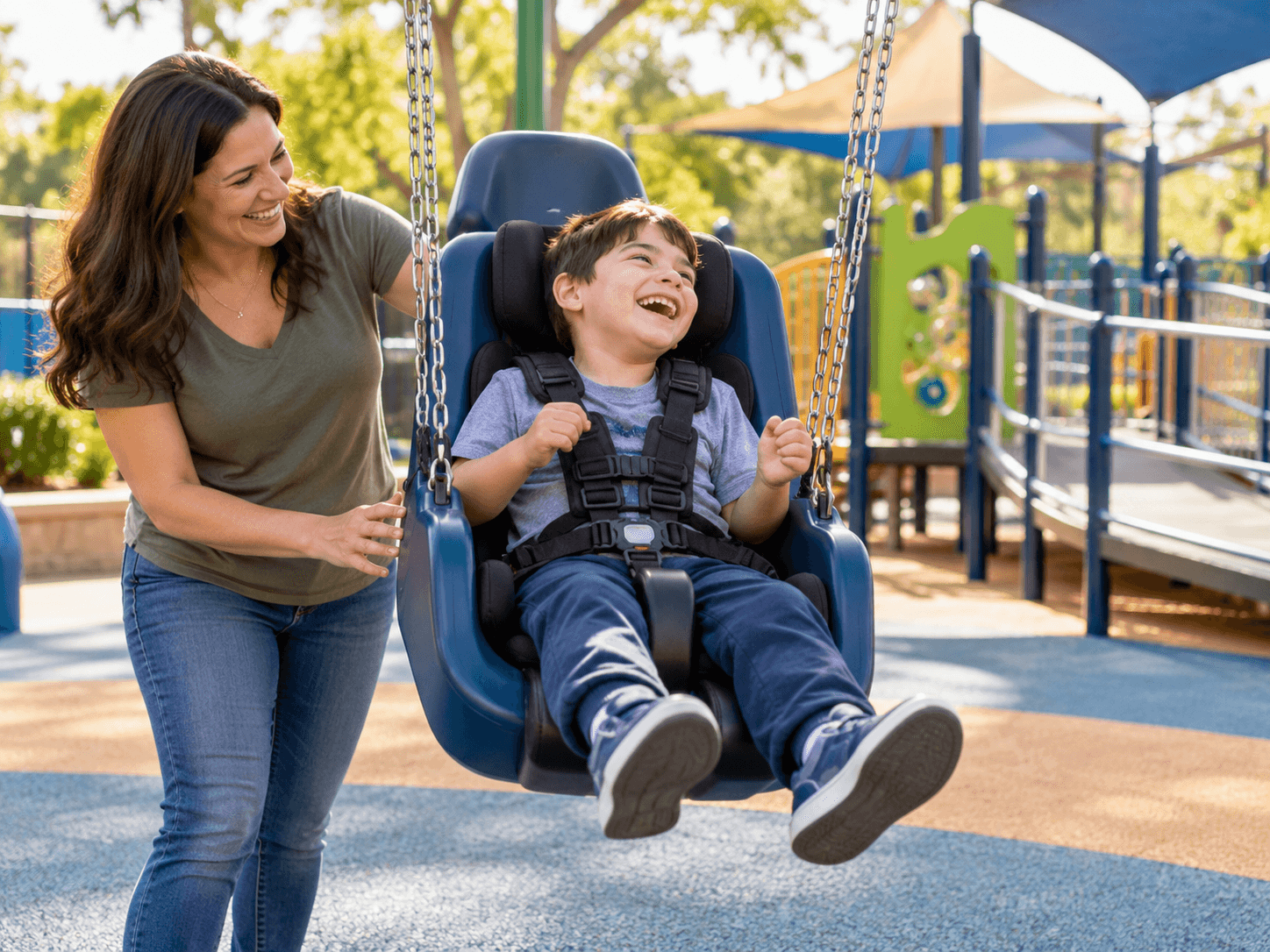
Supportive outdoor seats can help make playgrounds more inclusive for children who cannot comfortably use a traditional belt swing.
The SportsPlay JennSwing ADA Swing Seat provides a partially reclined supportive seating design with a positioning harness for outdoor swinging.
The Adaptive Swing Seat is another commercial grade option with a high back, headrest, and harness designed for supported playground swinging.
When selecting outdoor equipment, verify that the swing seat and supporting structure are designed to work together.
Inclusive Swing Seats for Children and Adults
Adaptive swinging is not exclusively for young children.
Some inclusive playground products accommodate larger users as well.
The Little Tikes Inclusive Swing Seat provides a deep supportive seating area, restraint system, swing away pommel, and four point suspension design intended to accommodate a broad range of users.
Always compare the manufacturer's dimensions and weight capacity with the individual who will use the swing.
Adaptive Swing Seats for Autism
Some autistic children and adults seek swinging, rocking, or other repetitive movement. Others are sensitive to movement and may strongly prefer to avoid it.
An adaptive swing seat may be useful when an autistic person enjoys swinging but also needs additional physical support.
When using a swing for sensory support, consider:
- Preferred movement speed
- Direction of movement
- Duration
- Noise
- Visual distractions
- Seat comfort
- Ability to communicate stop or finished
- Signs of discomfort
Do not assume that swinging will have the same effect on every autistic user.
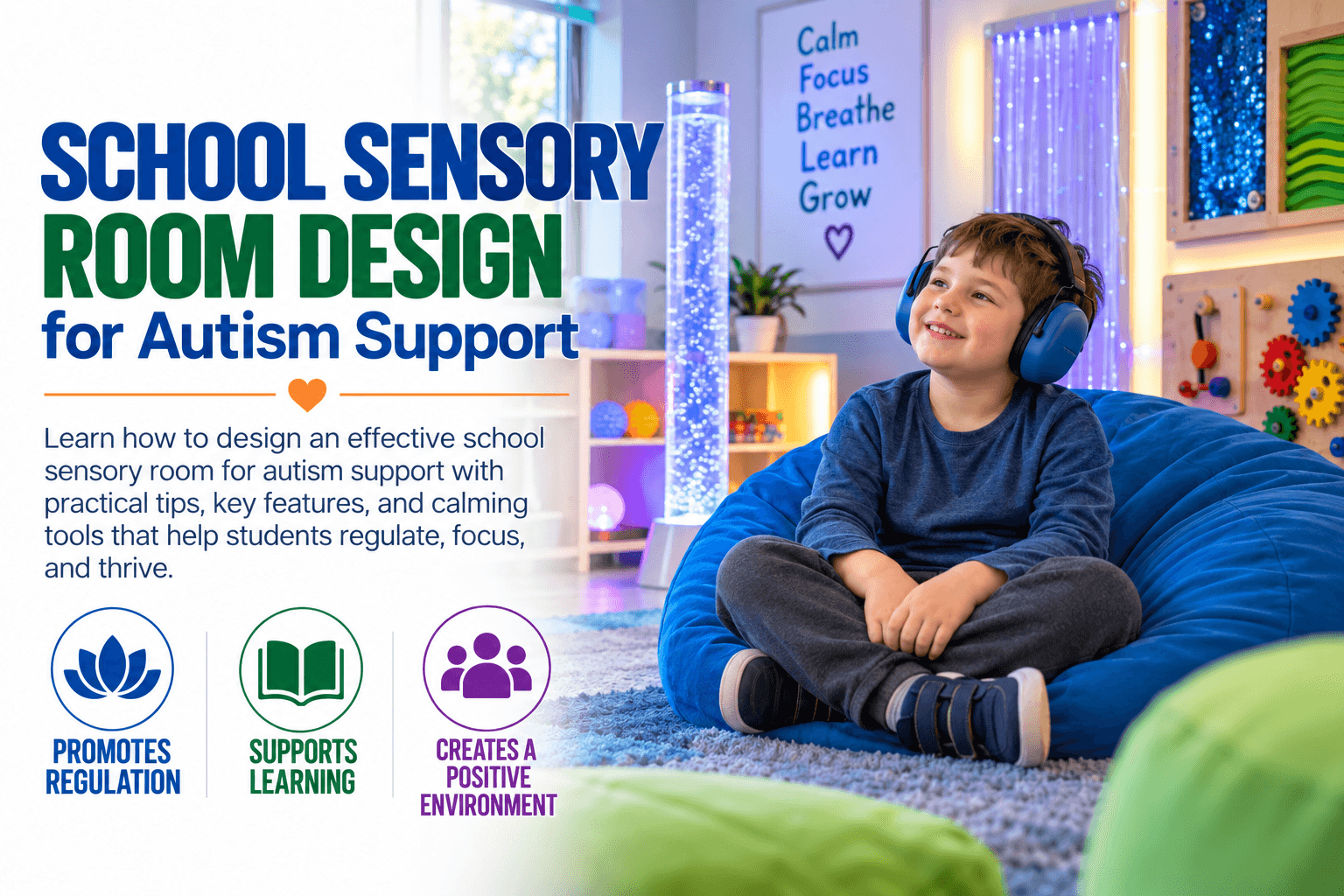
For school environments, School Sensory Room Design for Autism Support provides additional guidance on combining movement equipment with quieter sensory spaces.
Adaptive Swings for Schools
Schools may use adaptive swing seats in:
- Sensory rooms
- Therapy rooms
- Adaptive physical education
- Special education programs
- Inclusive playgrounds
- Recreation areas
Before installing a swing, schools should evaluate the complete system rather than purchasing only the seat.
Consider:
- Swing frame
- Ceiling or structural support
- Suspension equipment
- User weight
- Swing clearance
- Protective surfaces
- Accessibility
- Supervision
- Inspection procedures
Read 8 School Sensory Room Safety Factors to Know before adding suspended equipment to a school sensory space.
Adaptive Swing Seats for Therapy
Occupational and physical therapy programs may use swinging as part of supervised movement activities.
Depending on the individual, therapists may use swinging to create opportunities involving:
- Movement tolerance
- Postural control
- Balance
- Reaching
- Body awareness
- Motor planning
- Sensory exploration
The swing seat itself should be selected according to the level of physical support required.
An adaptive swing seat should not replace individualized positioning or therapy recommendations when those are needed.
Adaptive Swing Seats for Home Use
Families may also use adaptive swing seats in home sensory spaces or outdoor play areas.
Before purchasing, consider where the swing will be installed.
For indoor use, determine whether you have:
- An appropriate swing frame or mounting system
- Adequate ceiling height
- Sufficient movement clearance
- Protective flooring
- Room for safe entry and exit
For outdoor use, evaluate:
- Frame compatibility
- Weather resistance
- Ground surfacing
- Swing clearance
- Installation requirements
Explore Adaptive Swings for seats, frames, sensory swings, and related movement equipment.
Choosing the Correct Adaptive Swing Seat Size
Sizing is one of the most important parts of choosing an adaptive swing.
Do not rely on age alone.
Check the manufacturer's requirements for measurements such as:
- Hip width
- Seat width
- Seat depth
- Back height
- Seated height
- User height
- User weight
A seat that is too small may be uncomfortable or unsafe. A seat that is too large may not provide the intended positioning support.
Some adaptive swing systems are available in multiple sizes, making actual measurements especially important.
Consider the Amount of Support Needed
Not every user requires full body support.
One person may need only a deeper seat and high back. Another may require a harness and side support.
Consider whether the user needs help maintaining:
- Pelvic position
- Trunk position
- Head position
- Side to side stability
- Upright sitting
A therapist or other qualified professional can help when positioning requirements are complex.
Review Harness and Restraint Systems
Harnesses vary between swing models.
Depending on the product, a swing may include:
- Three point restraints
- Five point harnesses
- Adjustable safety straps
- Chest support
- Pelvic support
The presence of a harness does not eliminate the need for supervision.
Follow the manufacturer's instructions for adjustment, positioning, maintenance, and replacement.
Swing Frames and Mounting Systems
The adaptive seat is only one part of the complete swing system.
A compatible frame or suspension structure must safely support:
- The swing
- The user
- The movement forces created during use
Never assume that a ceiling beam, playground structure, or household swing frame is compatible.
Explore the broader Swinging collection for frames, swings, seats, and related equipment.
Allow Enough Swing Clearance
Swinging equipment requires open space.
The swing path should remain clear of:
- Walls
- Furniture
- Shelves
- Doors
- Windows
- Other equipment
- Other users
Indoor sensory rooms should avoid placing swings directly beside bubble tubes, wall panels, or quiet seating.
The Complete Guide to School Sensory Room Equipment provides more guidance on separating active movement areas from quieter sensory zones.
Watch the User's Response to Movement
The same movement can affect different users in very different ways.
Watch for signs such as:
- Enjoyment
- Relaxation
- Increased alertness
- Requests for more
- Dizziness
- Nausea
- Fear
- Fatigue
- Irritability
- Attempts to stop
Reduce or stop the activity if the user appears uncomfortable.
Users who can communicate should have a clear way to indicate more, stop, slower, faster, or finished.
Adaptive Swing Safety
Before every use, check the equipment and surrounding space.
Inspect:
- Harnesses
- Ropes
- Chains
- Suspension hardware
- Connectors
- Swing seat
- Frame
- Mounting points
- Protective surfaces
Follow all manufacturer weight limits and installation instructions.
Equipment showing damage, unusual movement, fraying, cracking, or loose hardware should be removed from use until it has been properly evaluated.
Adaptive Swing Seat vs. Sensory Swing
An adaptive swing seat and a sensory swing are not necessarily the same thing.
An adaptive swing seat generally emphasizes physical support and secure seated positioning.
A sensory swing may emphasize the type of movement or sensory experience and can include:
- Platform swings
- Pod swings
- Hammock swings
- Net swings
- Lycra swings
- Bolster swings
Some users need a supportive adaptive seat. Others can safely use a less structured sensory swing.
The appropriate choice depends on the individual's physical and sensory needs.
Creating More Inclusive Play Opportunities
Playgrounds should provide opportunities for children with different abilities to participate with their peers.
Adding supportive swing seats can expand the range of users who are able to experience swinging instead of limiting accessible recreation to ground level activities.
Inclusive planning should also consider:
- Accessible routes
- Transfer opportunities
- Surfacing
- Clear space
- Appropriate playground equipment
- Different levels of physical support
A swing seat is one component of a larger accessible play environment.
How to Choose an Adaptive Swing Seat
Before purchasing, answer these questions:
- Who will use the swing?
- What physical support is needed?
- What are the user's measurements?
- What is the user's weight?
- Will the swing be indoors or outdoors?
- Is a harness required?
- What frame or mounting system will be used?
- Is the seat compatible with that system?
- How much clearance is available?
- Will protective flooring or surfacing be needed?
- Who will supervise use?
The best adaptive swing seat is one that fits the individual, installation, and intended environment.
Shop Adaptive Swing Seats at eSpecial Needs
Explore the Adaptive Swing Seats collection at eSpecial Needs for supportive swing seats designed for sensory play, therapy, schools, home use, and inclusive playground environments.
Related categories include Adaptive Swings, Swinging, Vestibular Motion, and Sensory Room Equipment.
FAQs
How do I know if a child needs an adaptive swing seat instead of a regular swing?
A traditional swing generally requires the user to maintain sitting balance, trunk position, and a secure grip with relatively little external support.
An adaptive swing seat may be worth considering when a child has difficulty staying upright, slides out of a standard seat, needs additional trunk or head support, or cannot safely maintain position throughout swinging.
Is an adaptive swing seat the same as a special needs swing?
The terms are sometimes used interchangeably, but they can describe different products.
An adaptive swing seat usually refers specifically to a supportive seated swing with features such as a high back, side support, harness, or contoured seat.
A special needs or sensory swing may describe a broader range of movement products, including hammock swings, platform swings, pod swings, and supportive playground seats.
You can compare additional options in Adaptive Swings
Should I choose an adaptive swing based on age?
Age alone is usually not enough.
Two children of the same age can have very different body sizes and positioning needs. Use the manufacturer's measurements and weight limits instead.
Important measurements may include:
- Hip width
- Seat depth
- Back height
- Seated height
- Overall height
- Body weight
What happens if an adaptive swing seat is too large?
A seat that is significantly too large may not provide the intended positioning support. The user may have excessive space around the hips or trunk, which can affect stability and harness positioning.
Buying a much larger size simply so a child can grow into it is not always appropriate.
What happens if the swing seat is too small?
A seat that is too small may cause uncomfortable pressure, restrict positioning, or prevent the harness from fitting correctly.
Check the user's measurements periodically as children grow.
How often should I remeasure a child for an adaptive swing?
Remeasure whenever the seat begins to look tight, positioning changes, harness adjustment becomes difficult, or the child has experienced noticeable growth.
Regular measurement is especially important for children who are growing quickly.