Table of Contents
Changing tables for special needs provide a dedicated surface for dressing, changing, and assisted personal care. For families, schools, and care facilities, choosing an appropriate table means considering the person receiving care, the caregivers assisting them, and the space where daily routines take place. The eSpecial Needs Changing Tables collection includes fixed height, electrically adjustable, and mobile options. Understanding how these designs differ can help you select a table that fits current needs while allowing for changes in care over time.
Why a Dedicated Changing Table Matters
Personal care deserves a comfortable, private, and thoughtfully arranged environment. As children grow, an infant changing station may no longer provide enough room or an appropriate weight capacity. Teens and adults may need a longer surface, additional positioning features, or compatibility with transfer equipment. A dedicated changing area also gives caregivers a consistent place to organize supplies and prepare for care.
The right setup depends on more than the table itself. Consider how the person will reach the surface, how caregivers will assist, and whether everyone has enough room to move comfortably. Our article on Child and Adult Changing Tables: Safer Personal Care for Everyone offers additional background on planning an appropriate care space.
Fixed Height vs. Adjustable Height Changing Tables
One of the first decisions is whether a fixed working height will suit your routine or whether you need height adjustment.
| Table type | Main consideration | What to check |
|---|---|---|
| Fixed height | A consistent elevated care surface | Working height, transfer method, surface dimensions, and caregiver access |
| Electric height adjustment | Different heights for transfers and care tasks | Adjustment range, controls, power requirements, and clearance |
| Mobile changing table | Flexibility in positioning the equipment | Doorways, turning space, caster instructions, and storage |
| Table with storage | Supplies organized near the care surface | Accessible storage, cleaning access, and transfer equipment clearance |
A lower purchase price does not necessarily make a table the best fit. Compare how the design will work during the actual care routine.
Fixed Height Changing Tables for Everyday Care
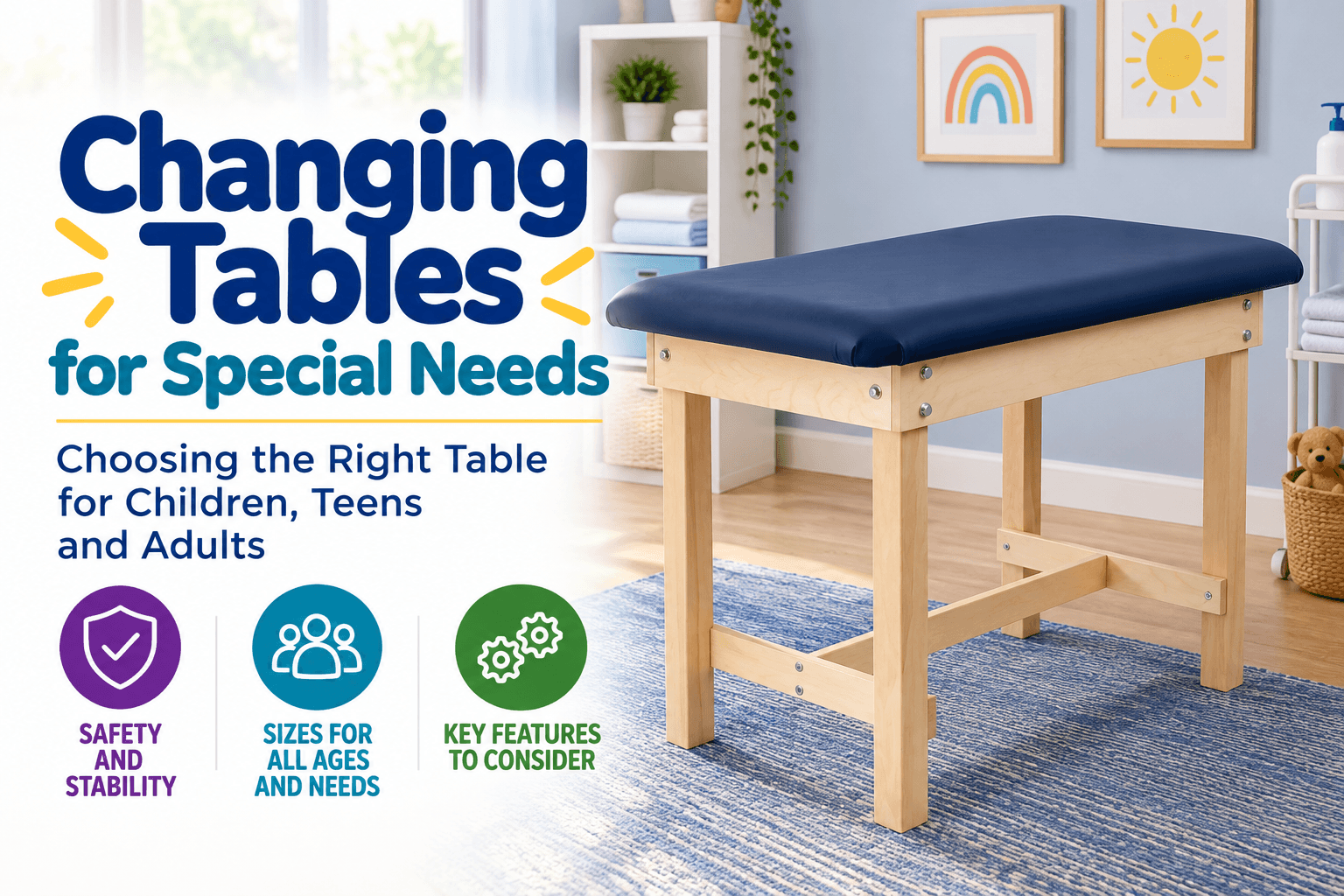
A fixed height table may be suitable when the working height, transfer arrangements, and available space match the user’s needs. The Spark Sensory Solutions Changing Table features a padded surface, solid wood legs, and supportive H braces. Its listed working height is 36 inches, with a 350 pound load capacity under normal use. Review the available surface sizes before selecting a configuration.
The Clinton Changing and Taping Tables offer several storage arrangements, including an open base, a lower shelf, and shelving options. These choices allow buyers to consider whether supplies should be stored at the table or elsewhere in the room. For both products, the person’s height and positioning needs matter as much as their weight. A table may meet a weight requirement while still being too short for comfortable care.
Electric Changing Tables for Flexible Working Heights
Height adjustment allows caregivers to choose different table positions for different parts of a routine. Before purchasing, check the lowest and highest settings against the planned transfer method and working position. The Armedica AM SX Changing Table Series includes motorized height adjustable options for care environments.
Another option is the Clinton Industries 80110-60 Open Base Power Changing Table, which features electric adjustment, foot controls, and an upholstered surface. Confirm the specifications for the exact model and configuration before ordering. Similar product names can refer to tables with different lengths, capacities, and adjustment ranges. Explore the broader Examination and Treatment Tables collection when comparing equipment for a room that also supports clinical or therapy activities.
Mobile Changing Tables for Flexible Spaces
A mobile table may be useful when equipment needs to be repositioned or stored between routines. The Smirthwaite Mobi Changer offers electric height adjustment, an angled backrest, and stowaway side rails. It is available in different sizes and frame options for dry or damp environments. Its design includes clearance intended to accommodate a range of hoists. However, compatibility must be checked against the specific lifting equipment and transfer procedure being used.
Mobility describes the table’s design and does not automatically mean it can transport an occupied user. Follow the manufacturer’s instructions about movement, caster operation, and use.
Choosing a Changing Table for Children
When selecting a pediatric changing table, consider the child’s current size, anticipated growth, positioning requirements, and how they participate in care.
Useful questions include:
- Is the surface long and wide enough for the child’s care routine?
- How will the child transfer onto the table?
- Can the caregiver reach necessary supplies?
- Does the child need additional positioning support?
- Will the table remain suitable as the child grows?
Invite the child to participate in decisions where possible. Familiar explanations, predictable routines, and opportunities to make choices can help make personal care more respectful. For a wider look at participation in everyday routines, read Daily Living Skills: Adaptive Tools to Build Independence.
Adult Changing Tables: Look Beyond Weight Capacity
An adult changing table should be selected around the person’s full care requirements. Check the usable surface length and width, transfer approach, positioning needs, and access for assisting caregivers. Also confirm whether the stated capacity refers to a working load, lifting capacity, or another manufacturer defined limit.
The Smirthwaite Mobi Changer and Clinton Power Table with One Piece Top are options to review when comparing larger care surfaces and adjustable designs. For related planning considerations, explore Special Needs Furniture for Adults: What You Need to Know.
Planning a Changing Area for Schools and Care Facilities
A shared changing space needs a clear operating plan alongside appropriate equipment. Before ordering, involve the staff who will use the table and the personnel responsible for facilities, cleaning, and purchasing. Review the needs of the people receiving care rather than selecting equipment only by room dimensions.
Plan for:
- Privacy during personal care.
- Space for the required number of caregivers.
- Wheelchair and transfer equipment access.
- Supplies within reach of assisting staff.
- Separation of clean and used materials.
- Cleaning between users.
- Staff instruction and routine equipment checks.
Schools and organizations can visit eSpecial Needs B2B Solutions for purchasing information and review the Frequently Asked Questions page for payment and purchase order details.
Measure the Room and Delivery Route
Measure more than the space where the table will sit. Check doorways, corridors, elevators, turning areas, and the route from the delivery location to the care room. Within the room, account for doors opening, storage access, table adjustment, and transfer equipment. A table that fits against a wall may leave insufficient room for the intended care procedure. Similarly, storage underneath a surface may interfere with equipment access.
Prepare a simple floor plan with the proposed table dimensions before placing an order.
Coordinate the Table With Personal Care Supplies
A changing area works best when the necessary supplies are organized before care begins. Explore the Bathing and Toileting collection for related equipment. Choose products according to their intended use and compatibility with the individual’s care plan. A padded changing table should not be assumed suitable for showering or wet use. Confirm the manufacturer’s approved environment and cleaning instructions.
Our article on Hygiene Tools and Accessories for Special Needs introduces additional personal care options. For a broader overview, read Adaptive Equipment for Activities of Daily Living: A Caregiver’s Guide.
Budget for the Complete Setup
When comparing changing table costs, include the expenses needed to put the equipment into service. Consider delivery, assembly, required accessories, room preparation, staff instruction, cleaning supplies, and ongoing maintenance. Ask for a quote covering the exact configuration rather than budgeting from a starting price alone. Families exploring assistance can read Funding for Adaptive Equipment: A Family Guide. Funding eligibility and coverage depend on the program and individual circumstances.
Find a Changing Table That Fits Your Care Routine
Begin with the person’s needs, the transfer plan, and the available space. Then compare surface dimensions, working heights, controls, storage, and maintenance requirements.
Explore the eSpecial Needs Changing Tables collection to compare options such as the Spark Sensory Solutions Changing Table, Clinton Changing and Taping Tables, Armedica Adjustable Changing Tables, and Smirthwaite Mobi Changer.
FAQs
What is a special needs changing table?
It is a care surface selected for someone who needs assistance with changing, dressing, or hygiene. Designs vary in size, height adjustment, mobility, storage, and positioning features.
Can adults use a changing table?
Yes, when the specific table’s dimensions, capacity, intended use, and positioning features meet the adult’s needs. Weight capacity alone does not establish suitability.
What is the advantage of an adjustable height changing table?
Height adjustment provides flexibility for different working positions and transfer arrangements. The appropriate adjustment range depends on the user, caregivers, and care procedure.
Will a mobile changing table work with a patient lift?
Possibly, but compatibility must be confirmed. Check the lift base, table clearance, approach space, and manufacturer instructions before purchasing.
Can a changing table be used for showering?
Only if the manufacturer approves that model for the intended wet environment and use. Standard upholstered changing tables should not be assumed suitable.
How do I choose between a fixed and electric changing table?
Compare the transfer method, caregiver working height, user size, frequency of use, room layout, and budget. An occupational therapist or equipment professional can help assess the setup when care requirements are complex.