Table of Contents
- Why Funding for Adaptive Equipment Is One of the Biggest Challenges Families Face
- Types of Adaptive Equipment That Typically Require Funding
- Mobility Equipment: Wheelchairs and Special Needs Strollers
- Adaptive Seating and Positioning Devices
- Sensory Room Equipment and Deep Pressure Products
- Assistive Technology and Communication Devices
- Bathing, Toileting, and Daily Living Aids
- Adaptive Equipment for Feeding and Eating
- Adaptive Equipment for Dressing
- Adaptive Cooking Equipment and Adaptive Kitchen Equipment
- Adaptive Exercise Equipment and Adaptive Gym Equipment
- Adaptive Playground Equipment and Adapted Physical Education Equipment
- Adaptive Swim Equipment and Adapted Aquatics Equipment
- A Complete Guide to Funding Sources for Adaptive Equipment
- Medicaid and Home and Community Based Services Waivers
- How to Buy Adaptive Equipment with Medicaid
- Private Health Insurance: What Is Covered and How to Appeal
- State Assistive Technology Programs
- Early Intervention and IDEA Funding for School Age Children
- Nonprofit Grants and Disability Specific Foundations
- Veterans Benefits and Military Family Programs
- Crowdfunding and Community Fundraising
- How to Get a Letter of Medical Necessity for Adaptive Equipment
- What Is a Letter of Medical Necessity?
- What Information Must Be Included?
- Which Healthcare Professionals Can Write One?
- How to Use It to Appeal Insurance or Medicaid Denials
- Nonprofit Organizations That Provide Free Adaptive Furniture
- Equipment Loan Closets and Lending Libraries
- Community and Faith Based Assistance Programs
- How to Appeal a Denied Funding Request Step by Step
- Common Reasons Funding Requests Are Denied
- How to Build a Strong Appeal with Documentation
- When to Involve an Advocate or Patient Rights Organization
- Flexible Financing Options When Funding Does Not Cover Everything
- Using Affirm Financing for Adaptive Equipment Purchases
- Price Match Support and Budget Friendly Quote Requests
- Purchase Orders for Schools and Government Agencies
- How eSpecial Needs Helps Families Navigate Funding for Adaptive Equipment
- Expert Quote Request Service Tailored to Your Budget
- Funding Resources and Letter of Medical Necessity Support
- FAQs
Funding for Adaptive Equipment: A Family Guide
Occupational therapy adaptive equipment can make daily life safer, more comfortable, and more independent for children, adults, seniors, and individuals with disabilities, but paying for it is often one of the biggest challenges families face. From adaptive equipment for feeding and dressing to adaptive bathroom equipment, mobility products, adaptive playground equipment, adapted physical education equipment, and sensory tools, many families need help finding funding sources that can reduce the financial burden.
Adaptive equipment is often essential, not optional. A child may need adaptive feeding equipment to eat more independently. A student may need adapted PE equipment to participate safely at school. An adult may need adaptive kitchen equipment to cook with less strain. A caregiver may need adaptive equipment for bathing or toileting to reduce fall risk and make personal care safer. When these products support health, function, safety, therapy goals, or school participation, families may be able to explore insurance, Medicaid, grants, school funding, financing, or purchase order options.
This guide explains what types of adaptive equipment often require funding, where families can look for financial assistance, how to use a letter of medical necessity, how to appeal denials, and how eSpecial Needs can help families, schools, clinics, and agencies find the right adaptive products within budget.
Why Funding for Adaptive Equipment Is One of the Biggest Challenges Families Face
Funding for adaptive equipment can feel overwhelming because families often have to manage several barriers at once. The equipment may be expensive. Insurance rules may be confusing. Medicaid coverage may vary by state. Grants may have long applications. Schools may need documentation before purchasing equipment. Caregivers may not know which product is most appropriate or which funding path to try first.
Common challenges include:
- High product costs
- Limited insurance coverage
- Medicaid approval rules
- Prior authorization delays
- Denied claims
- Lack of clear documentation
- Difficulty getting quotes
- Confusion about medical necessity
- Limited local equipment suppliers
- Out of pocket expenses
- Need for school or clinic purchase orders
- Caregiver stress during the process
Families should not have to navigate this alone. A strong equipment recommendation, a detailed product quote, and a well written letter of medical necessity can make the funding process easier.
Types of Adaptive Equipment That Typically Require Funding
Adaptive equipment can support many areas of daily life. Some items are low cost and purchased directly by families. Others are more expensive and may require insurance, Medicaid, grants, school budgets, or financing.
Common categories include:
- Mobility equipment
- Adaptive seating
- Positioning equipment
- Sensory room equipment
- Deep pressure products
- Assistive technology
- Communication devices
- Adaptive equipment for feeding
- Adaptive equipment for dressing
- Adaptive equipment for toileting
- Adaptive equipment for bathing
- Adaptive cooking equipment
- Adaptive kitchen equipment
- Adaptive exercise equipment
- Adaptive gym equipment
- Adaptive playground equipment
- Adaptive PE equipment
- Adapted aquatics equipment
- Adaptive swim equipment
Families can start by browsing Daily Living Aids, Adaptive Furniture, Special Needs Strollers, and Sensory Room Equipment at eSpecial Needs.
Mobility Equipment: Wheelchairs and Special Needs Strollers
Mobility equipment is one of the most common areas where families seek funding. Wheelchairs, adaptive strollers, gait trainers, walkers, and related mobility products can be costly because they often need strong frames, supportive seating, positioning components, high weight capacities, and accessories.
Special needs strollers may be needed when a child cannot safely walk long distances, fatigues easily, has low muscle tone, needs postural support, or requires a safe mobility option for school, travel, therapy, or community outings.
Explore eSpecial Needs options for Special Needs Strollers, Adaptive Mobility Equipment, and Adaptive Tricycles.
Adaptive Seating and Positioning Devices
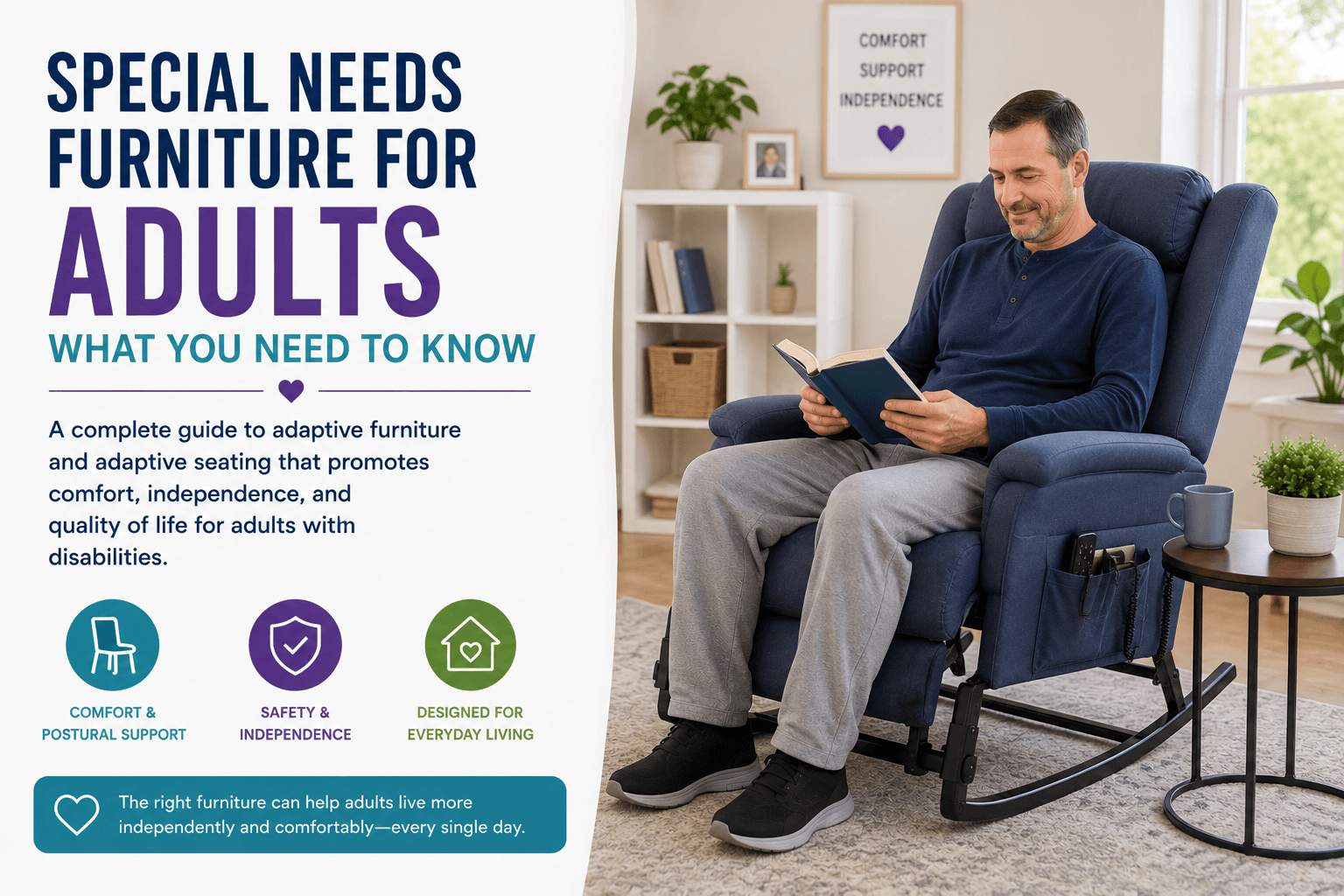
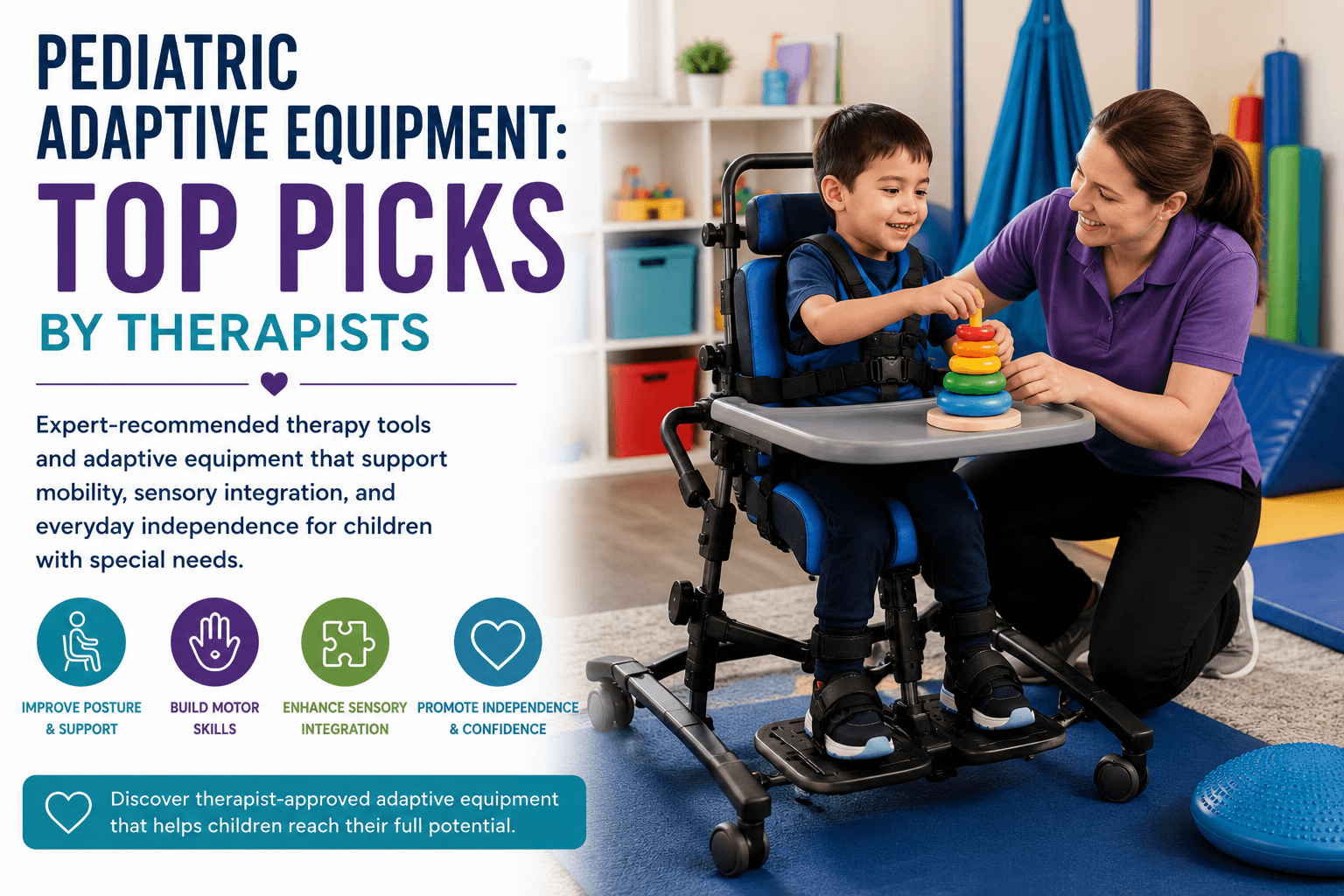
Adaptive seating and positioning devices help users sit safely, maintain posture, participate in daily activities, and reduce caregiver strain. These products may be recommended by occupational therapists, physical therapists, seating specialists, or school teams.
Adaptive seating may support:
- Trunk control
- Head support
- Hip alignment
- Foot positioning
- Feeding posture
- Classroom participation
- Fine motor activities
- Communication access
- Comfort and safety
Common products include activity chairs, positioning chairs, floor sitters, standers, wedges, adaptive furniture, and supportive seating systems.
Helpful eSpecial Needs collections include Adaptive Furniture, Positioning Equipment, and Benik Supports and Bracing.
Sensory Room Equipment and Deep Pressure Products
Sensory room equipment and deep pressure products may support children and adults with autism, sensory processing disorder, anxiety, developmental disabilities, or sensory regulation needs. These products are often used at home, in schools, in therapy clinics, and in calming spaces.
Common products include:
- Bubble tubes
- Fiber optic lights
- Sensory wall panels
- Sensory projectors
- Weighted blankets
- Weighted lap pads
- Compression tools
- Sensory swings
- Chill out chairs
- Sensory bundles
- Tactile panels
- Deep pressure tools
Families and schools can explore Sensory Room Equipment, Sensory Room Packages, Sensory Wall Panels, Sensory Lights, and Sensory Bundles and Kits.
Assistive Technology and Communication Devices
Assistive technology helps people communicate, learn, participate, access devices, and complete everyday tasks. For nonverbal children or individuals with limited speech, communication tools may be essential for expressing needs, choices, pain, hunger, emotions, and preferences.
Assistive technology may include:
- AAC devices
- Communication boards
- Switch adapted toys
- Voice output tools
- Mounting systems
- Visual schedules
- Adaptive learning tools
- Computer access products
- Cause and effect devices
Explore Assistive Technology, Adapted Toys and Games, and Educational Tools.
Bathing, Toileting, and Daily Living Aids
Adaptive equipment for bathing, toileting, eating, dressing, grooming, and hygiene is sometimes overlooked, but these products can be essential for safety, dignity, and independence.
Adaptive bathroom equipment may include:
- Bath chairs
- Shower chairs
- Tub benches
- Transfer benches
- Grab bars
- Toilet supports
- Raised toilet seats
- Commodes
- Pediatric bath supports
- Adaptive hygiene tools
Families can browse Bathing Aids, Toileting Aids, and Daily Living Aids.
Adaptive Equipment for Feeding and Eating
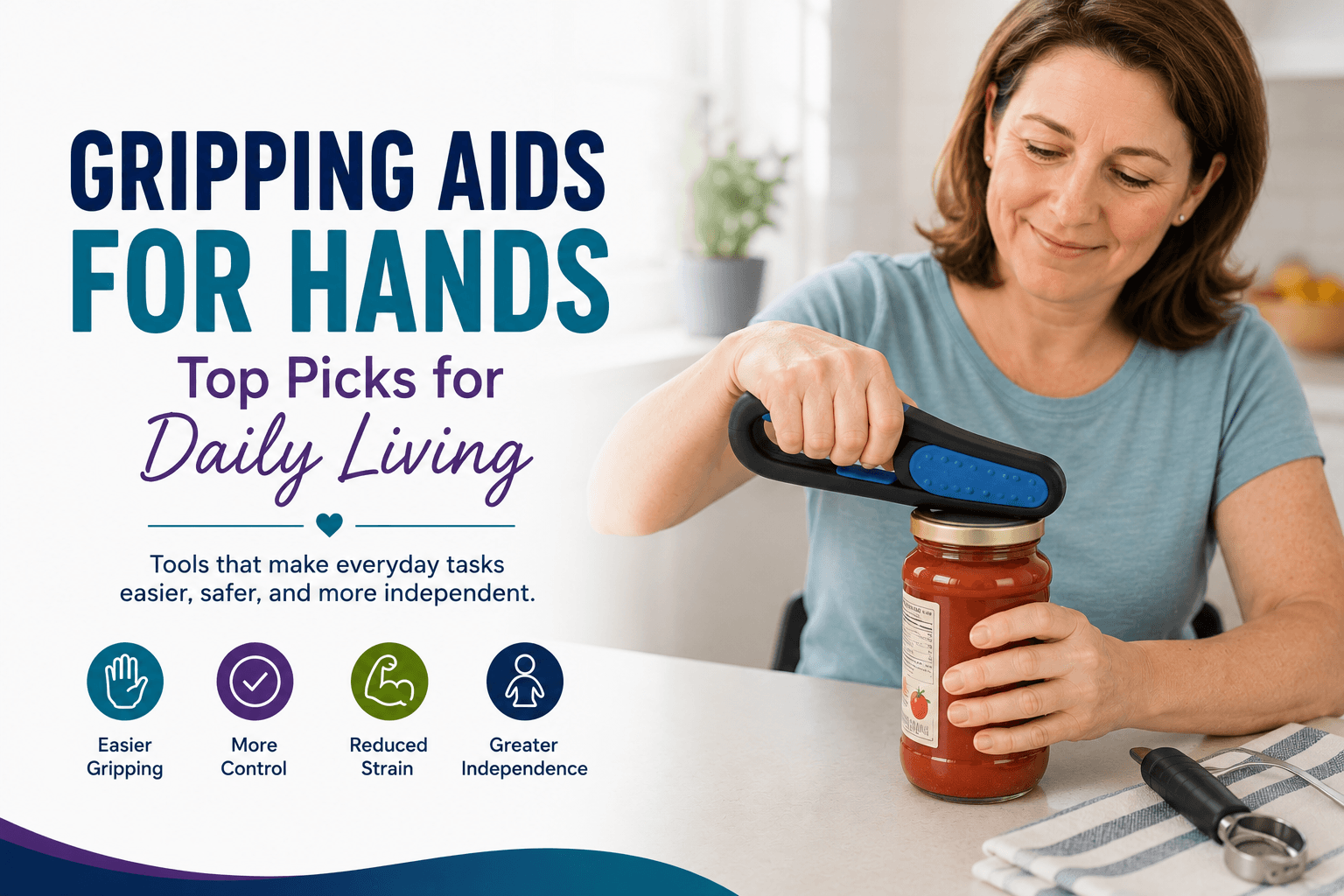
Adaptive equipment for feeding and adaptive equipment for eating can help children, adults, and seniors participate more independently during meals. These tools may be recommended when a person has weak grip, poor coordination, tremors, low tone, oral motor challenges, poor posture, or limited hand control.
Adaptive eating equipment may include:
- Built up utensils
- Weighted utensils
- Angled utensils
- Adaptive cups
- Nosey cups
- Scoop plates
- Plate guards
- Non slip mats
- Straw holders
- Feeding supports
- Supportive seating
Browse Adaptive Eating Utensils, Daily Living Aids, and Adaptive Furniture for mealtime support.
Adaptive Equipment for Dressing
Adaptive equipment for dressing can help users put on clothing, socks, shoes, and fasteners with less pain, bending, or caregiver assistance.
Common dressing tools include:
- Dressing sticks
- Button hooks
- Zipper pulls
- Sock aids
- Long handled shoehorns
- Elastic shoelaces
- Adaptive clothing
- Reachers
- Grip aids
For related support, visit Daily Living Aids, Grips and Holders, and Reacher Tools.
Adaptive Cooking Equipment and Adaptive Kitchen Equipment
Adaptive cooking equipment and adaptive kitchen equipment can help users prepare meals, open containers, hold utensils, stabilize bowls, cut food, and participate in cooking tasks with more safety and control.
Helpful products may include:
- Adaptive utensils
- Non slip mats
- Built up handles
- Reachers
- Cutting aids
- Jar aids
- Grip supports
- Adaptive cups
- Plate guards
- Kitchen positioning supports
Explore Adaptive Eating Utensils, Grips and Holders, Scissors and Cutting Aids, and Daily Living Aids.
Adaptive Exercise Equipment and Adaptive Gym Equipment
Adaptive exercise equipment and adaptive gym equipment can support strength, coordination, balance, motor planning, endurance, sensory regulation, and therapy carryover. These products may be used at home, school, therapy clinics, rehabilitation centers, or adaptive physical education programs.
Examples include:
- Therapy balls
- Balance tools
- Indoor therapy gym equipment
- Sensory swings
- Crash pads
- Climbing equipment
- Adaptive bikes
- Movement tools
- Resistance equipment
- Sensory motor tools
Helpful eSpecial Needs collections include Sensory Motor Tools, Indoor Therapy Gyms, Adaptive Tricycles, and Swings and Swing Frames.
Adaptive Playground Equipment and Adapted Physical Education Equipment
Adaptive playground equipment, adapted physical education equipment, adaptive PE equipment, and adapted PE equipment can help children with disabilities participate more safely in school, recreation, gross motor play, and physical education.
These products may support:
- Balance
- Strength
- Coordination
- Climbing
- Swinging
- Motor planning
- Inclusive play
- Sensory regulation
- Gross motor development
- Social participation
Schools can explore Indoor Therapy Gyms, Swings and Swing Frames, Sensory Motor Tools, and Adaptive Tricycles.
Adaptive Swim Equipment and Adapted Aquatics Equipment
Adaptive swim equipment and adapted aquatics equipment can help children and adults participate in water based therapy, swimming, pool routines, and adapted aquatics programs with more safety and support.
Adaptive swim products may support:
- Buoyancy
- Water confidence
- Trunk support
- Safe positioning
- Therapy participation
- Recreational inclusion
- Caregiver assistance
Families can browse Swimming Aids and Adaptive Aquatics for water based support products.
A Complete Guide to Funding Sources for Adaptive Equipment
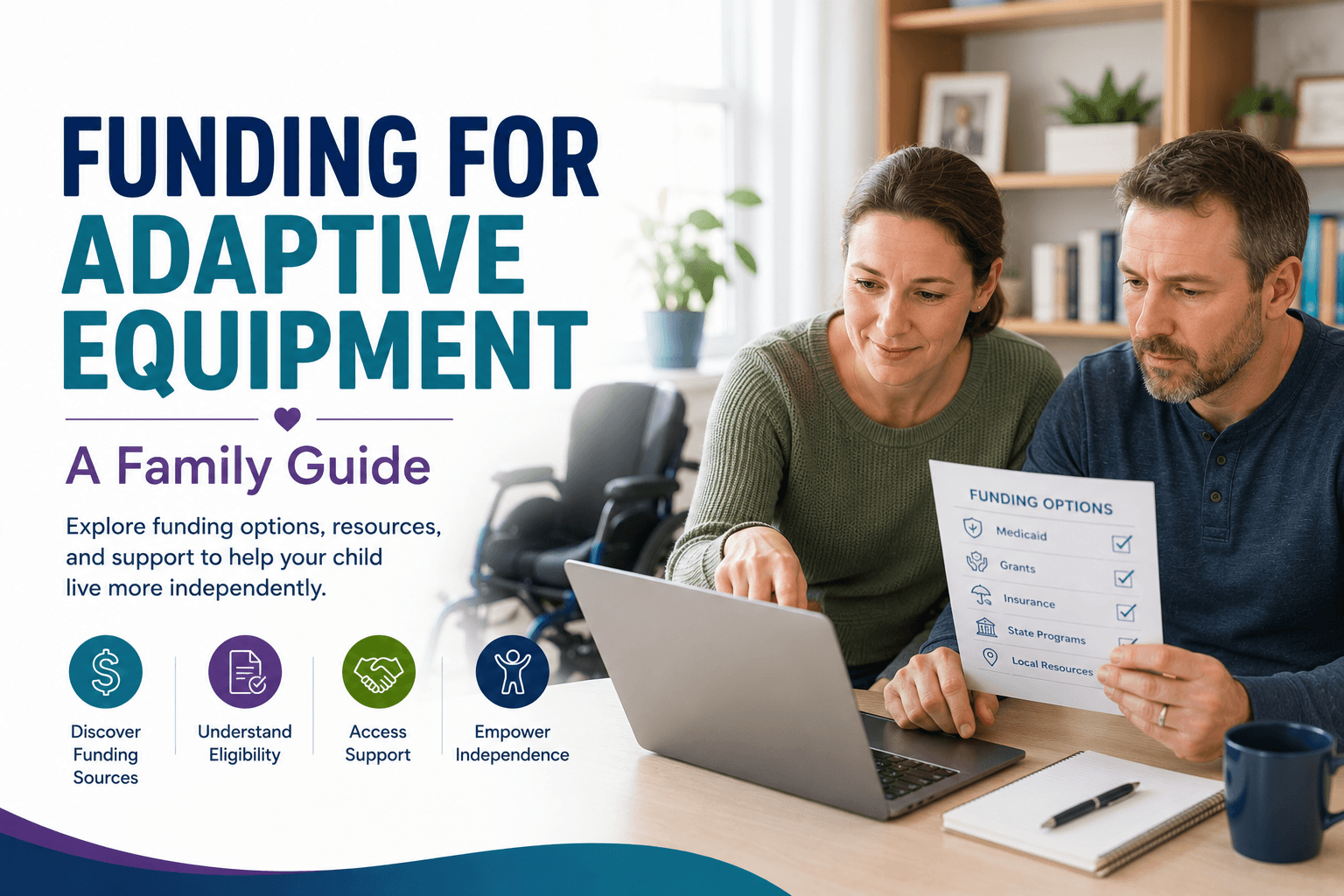
Funding for adaptive equipment may come from several sources. The best option depends on the user’s diagnosis, age, location, insurance plan, school eligibility, documentation, and equipment type.
Possible funding sources include:
- Medicaid
- Medicaid waiver programs
- Home and community based services waivers
- Private health insurance
- State assistive technology programs
- Early Intervention
- IDEA school based services
- Nonprofit grants
- Disability foundations
- Veterans benefits
- Military family programs
- School budgets
- Therapy clinic budgets
- Purchase orders
- Crowdfunding
- Community assistance
- Financing options
- Price match support
A strong product quote and letter of medical necessity can support many of these funding paths.
Medicaid and Home and Community Based Services Waivers
Medicaid and home and community based services waivers may help pay for adaptive equipment when it supports medical needs, safety, daily function, mobility, communication, home access, or community participation.
Coverage varies by state and program. Some waivers may cover equipment that standard Medicaid does not. Families should ask their case manager, waiver coordinator, or Medicaid office which categories are eligible.
Equipment may include:
- Mobility devices
- Adaptive seating
- Bathing equipment
- Toileting aids
- Feeding supports
- Communication tools
- Safety equipment
- Home access products
- Therapy related equipment
How to Buy Adaptive Equipment with Medicaid
The Medicaid purchase process often includes several steps:
- Identify the equipment need with a provider or therapist
- Get an evaluation or recommendation
- Request a product quote
- Obtain a prescription if needed
- Submit a letter of medical necessity
- Complete prior authorization
- Wait for approval
- Order through an approved supplier when required
- Keep copies of all paperwork
- Appeal if denied
eSpecial Needs can help families request quotes for products across many categories, including mobility, sensory equipment, adaptive seating, daily living aids, bathing aids, toileting aids, and therapy equipment.
Private Health Insurance: What Is Covered and How to Appeal
Private insurance may cover some adaptive equipment when it is medically necessary. However, many families experience denials because the payer may view the product as convenience based, educational, recreational, or not covered under the policy.
Insurance may be more likely to consider equipment when it supports:
- Mobility
- Positioning
- Feeding
- Bathing safety
- Toileting safety
- Communication
- Pressure relief
- Medical needs
- Functional independence
If a claim is denied, families can appeal with stronger documentation, therapy notes, medical records, a detailed letter of medical necessity, and a product quote.
State Assistive Technology Programs
Every state has an assistive technology program that may offer services such as equipment demonstrations, device loans, reuse programs, financing help, training, and referral support.
State assistive technology programs may help families:
- Try equipment before buying
- Borrow devices temporarily
- Find reused equipment
- Learn about funding options
- Compare assistive technology
- Connect with local resources
These programs can be especially useful when families are unsure which product is the right fit.
Early Intervention and IDEA Funding for School Age Children
Young children may access adaptive equipment through Early Intervention when the equipment is needed to support developmental goals. School age children may receive adaptive equipment through IDEA when the equipment is necessary for access to education, therapy, communication, mobility, self care, or participation.
School based equipment may include:
- Adaptive seating
- Communication tools
- Feeding supports
- Toileting supports
- Classroom mobility equipment
- Adapted PE equipment
- Sensory tools
- Positioning equipment
- Writing supports
- Therapy supplies
Families can request that equipment needs be discussed during IFSP or IEP meetings.
Nonprofit Grants and Disability Specific Foundations
Nonprofit grants may help families pay for equipment when insurance or Medicaid does not cover the full cost.
Grant sources may include:
- Diagnosis specific foundations
- Local disability organizations
- Community charities
- Faith based programs
- Children’s disability funds
- Civic groups
- Therapy scholarship programs
- Family support foundations
- National nonprofit organizations
Grant applications often require a product quote, diagnosis information, a letter explaining need, and sometimes a letter of medical necessity.
Veterans Benefits and Military Family Programs
Veterans and military families may have access to adaptive equipment funding through Veterans Affairs benefits, military family support programs, nonprofit organizations, or disability related grants.
Equipment may support:
- Mobility
- Home access
- Daily living
- Exercise
- Rehabilitation
- Bathing and toileting
- Communication
- Vehicle or community access
Eligible families should contact their VA care team or military family support office for program specific guidance.
Crowdfunding and Community Fundraising
When other funding options do not fully cover a product, families may use crowdfunding or community fundraising. This can be especially helpful for products that are considered recreational or not fully covered by insurance.
Tips for fundraising:
- Include a clear product quote
- Explain the daily need
- Share the functional benefit
- Include therapist or provider support if possible
- Be specific about the cost
- Share how the equipment will improve safety or independence
- Update donors after purchase
Community groups, schools, local businesses, and faith based organizations may also be willing to help.
How to Get a Letter of Medical Necessity for Adaptive Equipment
A letter of medical necessity is one of the most important tools for funding adaptive equipment. It explains why the product is needed and how it supports health, safety, independence, function, or therapy goals.
What Is a Letter of Medical Necessity?
A letter of medical necessity is a document written by a qualified provider that supports a request for adaptive equipment. It may be required by insurance, Medicaid, waiver programs, grants, or school funding sources.
The letter should connect the equipment directly to the user’s diagnosis, functional limitations, daily challenges, and expected outcomes.
What Information Must Be Included?
A strong letter of medical necessity may include:
- User name and date of birth
- Diagnosis
- Relevant medical history
- Functional limitations
- Current challenges
- Requested equipment
- Product quote
- Why the equipment is needed
- Why standard products are not enough
- Expected benefits
- Safety concerns
- Therapy or school goals
- Provider signature and credentials
The more specific the letter is, the stronger the request may be.
Which Healthcare Professionals Can Write One?
A letter of medical necessity may be written or supported by:
- Physician
- Occupational therapist
- Physical therapist
- Speech language pathologist
- Developmental specialist
- Rehabilitation specialist
- Nurse practitioner
- Seating specialist
- Other qualified provider
For occupational therapy adaptive equipment, an OT is often one of the best professionals to document daily function, self care, sensory needs, positioning, feeding, fine motor skills, and caregiver support needs.
How to Use It to Appeal Insurance or Medicaid Denials
If a funding request is denied, families can use the letter of medical necessity as part of an appeal. The appeal should address the denial reason directly and add more evidence.
Helpful appeal documents include:
- Updated letter of medical necessity
- Therapist evaluation
- Physician prescription
- Progress notes
- Photos or videos when allowed
- Product quote
- School or caregiver reports
- Safety documentation
- Prior authorization forms
- Policy language supporting coverage
Families should keep copies of every form, denial letter, and appeal submission.
Nonprofit Organizations That Provide Free Adaptive Furniture
Some nonprofits provide donated or discounted adaptive furniture, seating, home access products, or daily living equipment.
Look for organizations that support:
- Children with disabilities
- Adults with disabilities
- Veterans
- Cerebral palsy
- Autism
- Spinal cord injuries
- Muscular dystrophy
- Low income families
- Medical equipment reuse
Application requirements vary. A letter of medical necessity and quote may still be helpful.
Equipment Loan Closets and Lending Libraries
Equipment loan closets allow families to borrow adaptive equipment at little or no cost. Some are operated by nonprofits, hospitals, therapy clinics, state assistive technology programs, churches, or community groups.
Loan closets may offer:
- Bath chairs
- Adaptive seating
- Walkers
- Wheelchairs
- Standers
- Communication tools
- Daily living aids
- Therapy equipment
- Positioning products
Loan closets are also helpful when families need temporary equipment while waiting for insurance approval.
Community and Faith Based Assistance Programs
Local groups may help families buy or borrow adaptive equipment. These may include churches, civic organizations, community foundations, disability support groups, and local charities.
Families can ask about:
- Emergency assistance funds
- Medical equipment grants
- Community fundraising
- Donated equipment
- Short term loans
- Special needs family support programs
How to Appeal a Denied Funding Request Step by Step
Denials are common. A denial does not always mean the equipment is not needed. It may mean the payer needs more documentation, different wording, or clearer proof of medical necessity.
Common Reasons Funding Requests Are Denied
Funding requests may be denied because:
- Documentation is incomplete
- The letter is too vague
- The equipment is considered not covered
- The payer thinks a lower cost item is enough
- The diagnosis is not clearly connected to the request
- Functional limitations are not explained
- Prior authorization was missing
- The supplier was not approved
- The product was described as convenience or recreation
- Therapy notes did not support the need
Knowing the reason helps families build a stronger appeal.
How to Build a Strong Appeal with Documentation
A strong appeal may include:
- Denial letter
- Policy language
- Updated letter of medical necessity
- Therapist report
- Physician note
- Product quote
- Photos or videos when allowed
- Safety incident notes
- School documentation
- Caregiver statement
- Documentation of failed alternatives
The appeal should clearly explain why the requested equipment is necessary and why alternatives are not enough.
When to Involve an Advocate or Patient Rights Organization
Families may want help from an advocate when:
- The denial affects safety or basic daily care
- The payer gives unclear reasons
- Multiple appeals have failed
- The family does not understand policy language
- The request involves complex equipment
- School access is affected
- Medicaid waiver support is unclear
A disability advocate, case manager, patient rights organization, or legal aid program may help families understand next steps.
Flexible Financing Options When Funding Does Not Cover Everything
Sometimes insurance, Medicaid, grants, or school funding do not cover the full cost. Families may need a way to bridge the gap.
Using Affirm Financing for Adaptive Equipment Purchases
Affirm financing may allow eligible families to divide a purchase into manageable payments. This can be useful when equipment is needed quickly and families are waiting on funding or cannot pay the full amount at once.
Families can review available payment options during checkout at eSpecial Needs when Affirm is offered.
Price Match Support and Budget Friendly Quote Requests
A product quote can help families compare options, apply for grants, submit funding requests, or plan a purchase.
eSpecial Needs offers quote support for families, schools, clinics, and organizations. A quote request can help match the user’s needs, budget, and funding source.
When requesting a quote, include:
- User age
- Diagnosis or support need
- Height and weight when relevant
- Product category
- Therapy recommendation
- Funding source
- Budget range
- Setting where equipment will be used
Purchase Orders for Schools and Government Agencies
Schools, therapy clinics, government agencies, and institutions may use purchase orders to buy adaptive equipment.
Purchase orders may be used for:
- Adapted physical education equipment
- Adaptive PE equipment
- Adaptive playground equipment
- Adaptive seating
- Mobility products
- Sensory room equipment
- Daily living aids
- Communication tools
- Therapy equipment
- Adaptive feeding equipment
- Adaptive bathroom equipment
eSpecial Needs supports institutional purchasing and quote requests for schools, clinics, and agencies.
How eSpecial Needs Helps Families Navigate Funding for Adaptive Equipment
eSpecial Needs offers a broad catalog of adaptive equipment across daily living, mobility, sensory, seating, therapy, school, communication, bathing, toileting, feeding, recreation, and exercise categories.
Families can shop by category, request quotes, and explore equipment that supports home, school, therapy, and community participation.
Helpful starting points include:
- Daily Living Aids
- Special Needs Strollers
- Adaptive Furniture
- Sensory Room Equipment
- Bathing Aids
- Toileting Aids
- Adaptive Eating Utensils
- Sensory Motor Tools
- Indoor Therapy Gyms
- Adaptive Tricycles
- Swimming Aids and Adaptive Aquatics
Scooper Bowl with Suction Cup Base
$16.25
The Scooper Bowl simplifies independent dining while preventing spills and messes. Features Elevated rim and reverse curve on one side, helps to easily scoop food onto utensils Rubber suction base on the bottom of the dish to prevent skidding and… read more

Expert Quote Request Service Tailored to Your Budget
The eSpecial Needs quote request service can help families, schools, and clinics identify products that match the user’s needs and available budget.
A quote may support:
- Medicaid requests
- Insurance submissions
- Grant applications
- School purchase orders
- Clinic purchasing
- Funding appeals
- Family budgeting
A detailed quote can also help healthcare providers complete a letter of medical necessity.
Funding Resources and Letter of Medical Necessity Support
Families often need more than a product link. They need documentation, product details, and clear next steps. eSpecial Needs can help families gather product information and quotes that may be used with letters of medical necessity, grant requests, and funding applications.
FAQs
What is occupational therapy adaptive equipment?
Occupational therapy adaptive equipment includes tools that help children, adults, seniors, and people with disabilities complete daily activities with more safety, comfort, and independence. Common examples include adaptive equipment for feeding, adaptive equipment for dressing, adaptive equipment for bathing, adaptive equipment for toileting, adaptive kitchen equipment, gripping aids, seating supports, sensory tools, and mobility products.
Who uses occupational therapy adaptive equipment?
Occupational therapy adaptive equipment may be used by children with developmental delays, adults recovering from injury, seniors with arthritis or mobility loss, individuals with cerebral palsy, people with autism, stroke survivors, wheelchair users, and anyone who needs help completing daily living tasks.
What is the difference between occupational therapy adaptive equipment and regular adaptive equipment?
Occupational therapy adaptive equipment is often chosen or recommended by an occupational therapist to support a specific daily activity, therapy goal, safety need, or functional limitation. Regular adaptive equipment may include a broader range of products, but OT adaptive equipment is usually tied directly to daily living skills such as eating, bathing, dressing, toileting, writing, cooking, and self care.
Why is funding for adaptive equipment important?
Funding for adaptive equipment is important because many products can be expensive, especially mobility equipment, adaptive seating, sensory room equipment, adaptive playground equipment, adapted physical education equipment, adaptive bathroom equipment, and assistive technology. Funding can help families access equipment that supports safety, independence, therapy goals, and quality of life.
What types of adaptive equipment can funding help pay for?
Funding may help pay for mobility products, adaptive seating, positioning equipment, sensory room equipment, deep pressure products, communication devices, adaptive equipment for feeding, adaptive eating equipment, adaptive equipment for dressing, adaptive equipment for toileting, adaptive equipment for bathing, adaptive kitchen equipment, adaptive exercise equipment, adaptive PE equipment, and adaptive swim equipment.
Does private insurance cover adaptive equipment?
Private insurance may cover some adaptive equipment when it is considered medically necessary. Coverage is more likely when the equipment supports safety, mobility, positioning, feeding, bathing, toileting, communication, or daily function. Families should review their policy and ask about prior authorization requirements.
What is adaptive feeding equipment?
Adaptive feeding equipment includes tools that help a child or adult eat more safely and independently. It may support grip, hand control, posture, oral motor needs, tremors, one hand use, or limited coordination.
What adaptive equipment for dressing can be funded?
Adaptive equipment for dressing may include dressing sticks, button hooks, zipper pulls, sock aids, elastic shoelaces, long handled shoehorns, reachers, adaptive clothing, and grip supports. These tools may help users dress with less bending, pain, or caregiver assistance.
What adaptive equipment for bathing can help with safety?
Adaptive equipment for bathing may include bath chairs, shower chairs, tub benches, transfer benches, non slip mats, handheld shower heads, pediatric bath supports, and bathing transfer supports. Browse bathing aids at eSpecial Needs.
What is adaptive cooking equipment?
Adaptive cooking equipment includes tools that help people prepare food with limited grip, reach, coordination, strength, or balance. Examples include adaptive utensils, non slip mats, gripping aids, cutting aids, jar aids, reachers, stabilizing boards, and easy grip kitchen tools.
Can adaptive cooking equipment be covered by insurance?
Some adaptive cooking equipment may be difficult to cover through insurance unless it is clearly connected to medical necessity or daily living independence. Medicaid waivers, grants, disability programs, and flexible spending options may be more useful for some kitchen related products.
What is adaptive playground equipment?
Adaptive playground equipment is designed to help children with disabilities participate in inclusive play. It may include accessible swings, sensory panels, inclusive climbing equipment, balance tools, and products that support movement, social participation, and gross motor development.
Can schools fund adaptive playground equipment?
Schools may fund adaptive playground equipment through special education budgets, grants, district funding, community fundraising, or accessibility initiatives when the equipment supports inclusion, safety, or student participation.
What is adapted physical education equipment?
Adapted physical education equipment helps students with disabilities participate in PE activities with more safety and access. It may include adapted balls, balance tools, mobility supports, sensory motor products, adapted bikes, swings, therapy gym products, and movement tools.
Can schools use purchase orders for adaptive equipment?
Yes. Schools may use purchase orders to buy adapted physical education equipment, adaptive PE equipment, adaptive seating, sensory tools, toileting aids, feeding supports, communication tools, mobility products, and classroom therapy equipment through eSpecial Needs.
What are common reasons adaptive equipment funding is denied?
Funding requests may be denied because documentation is incomplete, the letter of medical necessity is too vague, prior authorization was missing, the payer does not consider the item covered, the product is viewed as recreational, or the request does not clearly connect the equipment to functional need.
How do I appeal a denied adaptive equipment request?
Start by reading the denial reason carefully. Then gather a stronger letter of medical necessity, therapy evaluation, physician note, product quote, functional documentation, safety concerns, and proof that lower cost alternatives are not enough. Submit the appeal before the deadline listed by the payer.
Can grants help pay for occupational therapy adaptive equipment?
Yes. Grants from nonprofit organizations, disability foundations, local charities, community programs, and diagnosis specific groups may help pay for occupational therapy adaptive equipment. Many grants require a product quote and an explanation of how the equipment supports daily function.
Can crowdfunding help pay for adaptive equipment?
Yes. Crowdfunding can help families raise money for adaptive equipment when insurance, Medicaid, grants, or school funding do not cover the full cost. A clear product quote and explanation of need can help supporters understand the goal.