Table of Contents
- What Are Adaptive Swing Seats?
- Why Adaptive Swing Seats Matter
- Sensory Benefits of Swinging
- Adaptive Swing Seats for Low Muscle Tone and Balance Support
- Where Adaptive Swing Seats Can Be Used
- Choosing the Right Adaptive Swing Seat
- Safety Tips for Adaptive Swing Seats
- Shop Adaptive Swing Seats at eSpecial Needs
- FAQs
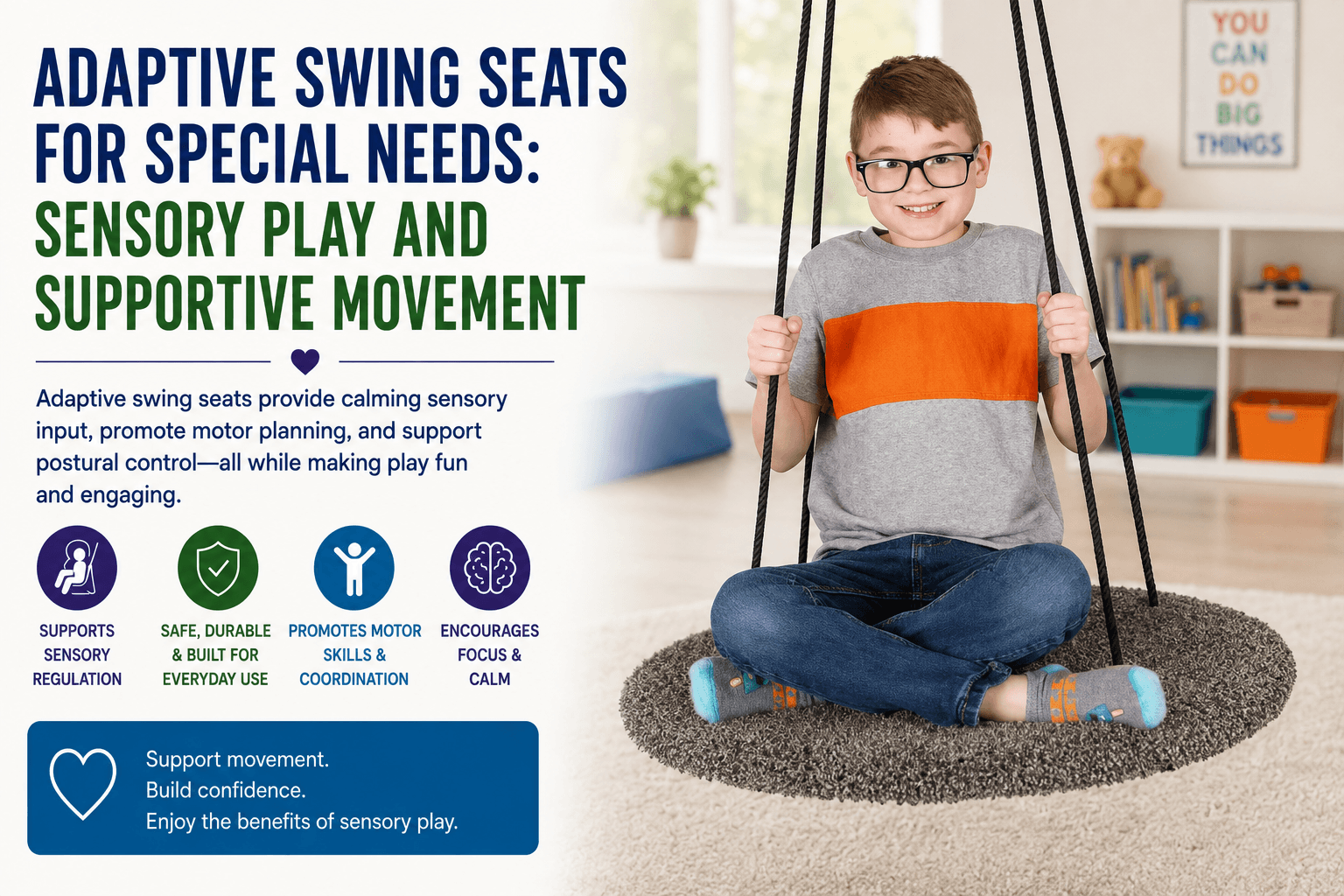
Adaptive swing seats make swinging more accessible for children and adults who need extra support, stability, or positioning during movement based play. For individuals with autism, sensory processing challenges, developmental delays, low muscle tone, balance difficulties, or physical disabilities, a standard swing may not provide enough security or comfort. An adaptive swing seat can help create a safer, more supportive swinging experience at home, school, therapy, or the playground.
Swinging is more than play. It can provide vestibular input, encourage body awareness, support balance and coordination, and offer a calming movement experience for many users. When the seat is designed with supportive features such as a high back, harness, side panels, or contoured shape, users may feel more secure while enjoying the motion of swinging.
At eSpecial Needs, the Adaptive Swing Seats collection includes supportive swing options for sensory rooms, therapy clinics, schools, playgrounds, backyards, and care settings.
What Are Adaptive Swing Seats?
Adaptive swing seats are supportive swing seats designed for users who need more positioning help than a traditional belt swing or flat swing seat can provide. They may include high backs, secure harnesses, full support panels, contoured seating, or other safety focused features that help the user stay better positioned while swinging.
These seats are often used by:
Children with special needs
Adults with physical support needs
Users with low muscle tone
Individuals with poor trunk control
Users with balance challenges
Children with sensory processing needs
Therapy programs
Special education classrooms
Inclusive playgrounds
Home sensory spaces
The goal is to help users experience movement, play, and sensory input in a way that feels more secure, supported, and enjoyable.
Carpeted Round Platform Swing
$164.95
Our Carpeted Round Platform Swing is useful in the development of a child's vestibular system by forcing them to accept more movement sensations. Different movement sensations and repetitive swinging motion has been known to help calm and regulate an over-stimulated… read more

Why Adaptive Swing Seats Matter
Many children love swinging, but not every child can safely or comfortably use a standard playground swing. Some users may slide forward, lean sideways, fatigue quickly, have trouble holding on, or need more trunk and pelvic support.
Adaptive swing seats can help by providing a more stable seated position. This may allow the user to relax into the activity, engage with caregivers or peers, and enjoy movement without feeling unstable.
Adaptive swing seats may support:
Sensory regulation
Vestibular input
Body awareness
Balance practice
Coordination
Relaxation
Postural support
Inclusive play
Therapy goals
Confidence during movement
Outdoor or indoor recreation
For many families, schools, and therapists, an adaptive swing seat helps make movement based play more accessible.
Sensory Benefits of Swinging
Swinging provides vestibular input, which comes from movement and changes in head position. This type of input can affect balance, spatial awareness, alertness, and regulation. Some users find gentle swinging calming, while others may feel more organized and ready to participate after movement.
Swinging may be used as part of:
Sensory breaks
Therapy sessions
Sensory room routines
Outdoor play
Classroom movement breaks
Home calming routines
Gross motor activities
Recreation programs
The direction, speed, duration, and intensity of swinging should always be matched to the user’s comfort level and needs. Some users prefer slow, rhythmic movement, while others may enjoy more active swinging. Caregivers and therapists should watch for signs of comfort, overstimulation, dizziness, fear, or fatigue.
Adaptive Swing Seats for Low Muscle Tone and Balance Support
Users with low muscle tone or balance challenges may need a swing seat that helps support upright sitting. A full support swing seat can provide added trunk support, side support, and a more secure seated position.
The SkillBuilders Full Support Swing Seats are designed to support children who need additional postural stability during vestibular and sensory therapy activities. The high back and supportive side panels help children remain seated while experiencing gentle swinging motion.
The Full Support Swing Seat is another adaptive equipment option designed to provide extra support for users with low muscle tone who need help sitting upright.
These types of supportive swing seats can be helpful in therapy clinics, schools, sensory rooms, and home therapy programs.
Where Adaptive Swing Seats Can Be Used
Adaptive swing seats can be used in many environments, depending on the product design and installation requirements.
Common use settings include:
Home sensory rooms
Backyards
Therapy clinics
Occupational therapy rooms
Physical therapy programs
Special education classrooms
Sensory gyms
Indoor movement spaces
Outdoor playgrounds
Recreation programs
Schools and care facilities
For indoor spaces, caregivers may need a compatible swing frame or properly installed ceiling mount. For outdoor spaces, the seat must be compatible with the swing structure and appropriate for weather conditions if used outside.
Explore related categories like Adaptive Swings and Gyms, Swing Frames, Swinging, Sensory Motor Tools, and Sensory Room Equipment.
Choosing the Right Adaptive Swing Seat
The best adaptive swing seat depends on the user’s size, support needs, sensory preferences, and where the swing will be used. Before choosing a swing, consider whether the user needs mild support, full support, a playground style seat, or a therapy focused seat.
Important factors include:
User height and weight
Trunk control
Head control
Muscle tone
Balance ability
Sensory preferences
Indoor or outdoor use
Harness or positioning needs
Seat depth and width
Swing frame compatibility
Hardware requirements
Caregiver supervision
Cleaning needs
Therapy recommendations
A therapist, seating specialist, or equipment professional can help determine which swing seat may be most appropriate, especially for users with complex positioning or safety needs.
Safety Tips for Adaptive Swing Seats
Safety should always come first when using any adaptive swing seat. Follow the manufacturer’s instructions for installation, setup, weight limits, hardware, supervision, and maintenance.
Helpful safety tips include:
Check the user weight limit before purchase
Confirm frame or mounting compatibility
Inspect hardware before use
Use harnesses and supports as directed
Supervise swinging at all times
Start with slow, gentle movement
Watch for signs of dizziness or distress
Keep the swing area clear
Use appropriate safety mats when needed
Stop use if the seat, straps, or hardware show damage
Follow indoor or outdoor use guidelines
Swinging should feel safe and comfortable for the user. If the user shows fear, discomfort, nausea, dizziness, fatigue, or overstimulation, stop the activity and reassess.
Shop Adaptive Swing Seats at eSpecial Needs
The Adaptive Swing Seats collection at eSpecial Needs includes supportive swing seats for children and adults who need added security, comfort, and positioning during swinging. Whether you are looking for a special needs swing, handicap swing, disabled swing, full support swing seat, playground swing seat, or therapy swing seat, this collection can help support safer and more inclusive movement.
You can also browse related movement and sensory categories, including Adaptive Swings and Gyms, Swing Frames, Swinging, Sensory Motor Tools, Sensory Products, Vestibular Motion, and Sensory Room Equipment.
FAQs
What is the difference between an adaptive swing seat and a regular swing seat?
A regular swing seat usually provides minimal support and requires the user to hold on, balance, and stay positioned independently. An adaptive swing seat is designed with added support features that may help the user sit more securely during swinging.
Who may benefit from an adaptive swing seat?
Adaptive swing seats may benefit children or adults who need extra support because of low muscle tone, poor trunk control, balance challenges, developmental delays, sensory processing needs, physical disabilities, or difficulty staying safely positioned on a standard swing.
How do I know which adaptive swing seat size to choose?
Choose a swing seat based on the user’s height, weight, sitting support needs, trunk control, hip positioning, and comfort. Product size charts and weight limits should always be reviewed before ordering.
What safety features should I look for in an adaptive swing seat?
Helpful safety features may include a high back, secure harness, supportive side panels, contoured seat, strong attachment points, durable materials, and compatibility with the correct swing frame or mounting system. The best features depend on the user’s individual needs.
Can swinging be overstimulating?
Yes. Swinging can be calming for some users and overwhelming for others. Fast movement, spinning, long sessions, or unexpected motion may cause dizziness, discomfort, nausea, anxiety, or sensory overload. Start slowly and stop if the user appears uncomfortable.
How long should a sensory swing session last?
There is no single correct time. Some users may only need a few minutes, while others may enjoy longer movement breaks. Start with short sessions, watch the user’s response, and follow guidance from an occupational therapist when sensory needs are complex.