Table of Contents
Why the right special needs bed matters in 2026
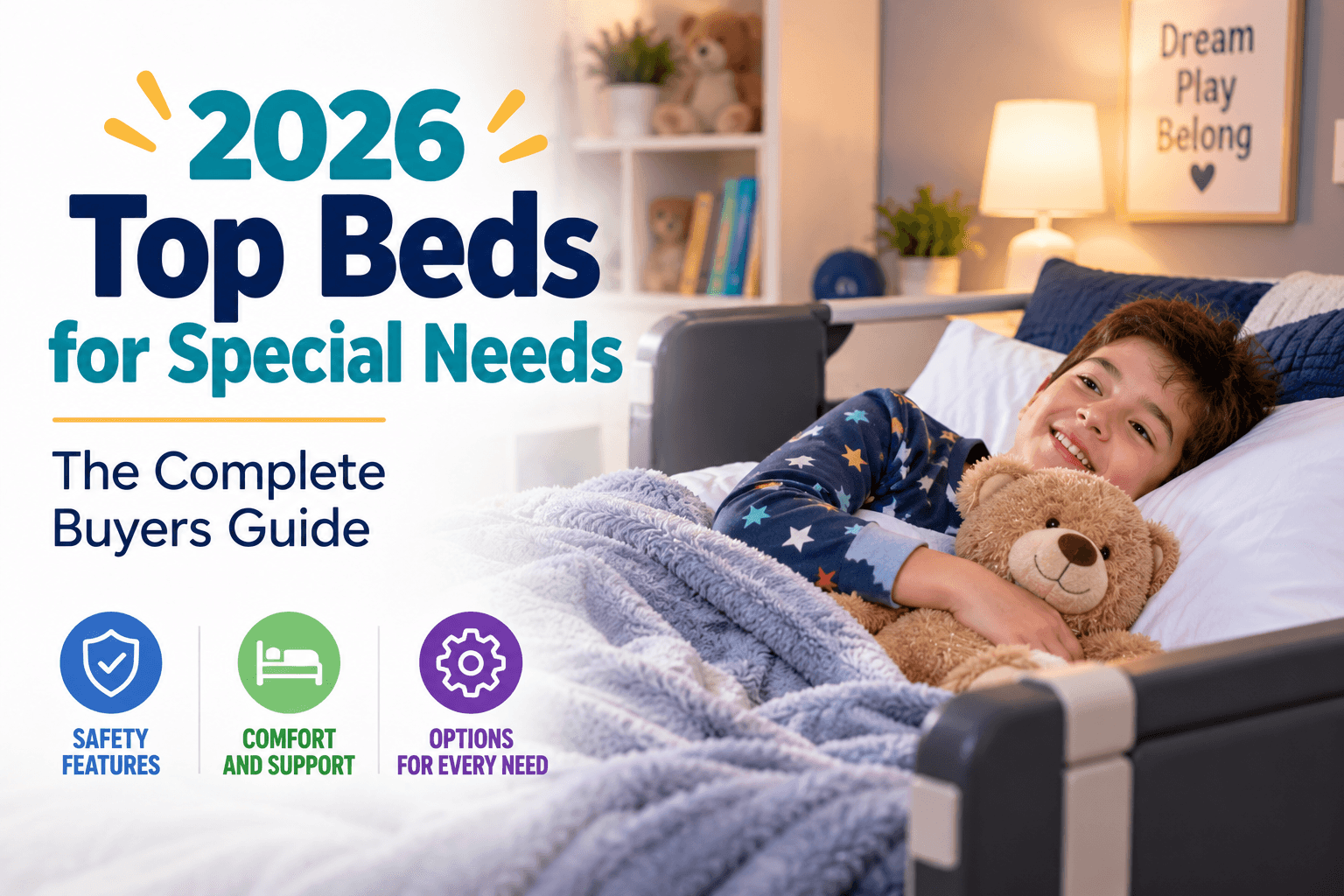
The best special needs beds of 2026 do one job above all: they keep your loved one safe through the night so the whole family can finally rest. For many caregivers, bedtime is the hardest part of the day. A child may wander, climb, fall, or have a seizure while everyone else is asleep.
A standard bed was never built for those risks. Beds for special needs add enclosed walls, tall rails, padding, adjustable heights, and entrapment protection that ordinary furniture lacks. The right one can turn bedtime from a nightly worry into a calm, predictable routine, and better sleep improves every other activity of daily living.
This guide covers our top picks for 2026, the features worth paying for, and how families get help with the cost. To compare every model side by side, browse the full eSpecial Needs beds collection.
What is a special needs bed, and who needs one?
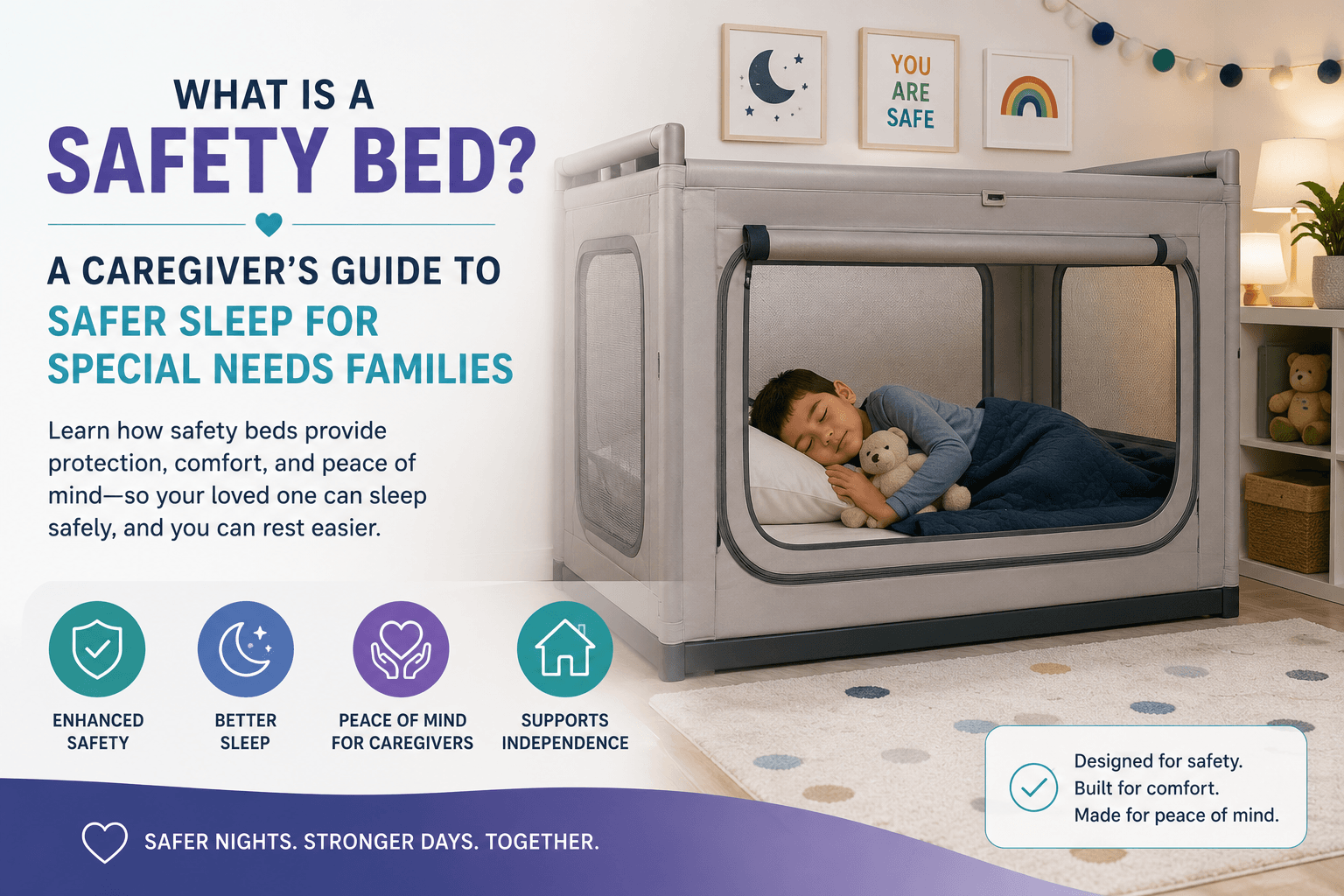
A special needs bed, often called a safety bed or enclosed bed, is an adaptive bed built to protect someone who can't sleep safely in a standard bed. It uses tall rails, solid or clear panels, padding, or a zippered enclosure to prevent falls, entrapment, and unsupervised exits. For a deeper look, read our caregiver's guide, What Is a Safety Bed?
Families most often choose a safety bed for children and adults with:
- Autism. Night wandering is a top safety concern, and an enclosed bed for autism also cuts down visual distractions that keep a child awake.
- Epilepsy and seizure disorders. Padded rails help prevent injury from striking a frame or rolling out during a seizure.
- Cerebral palsy and mobility impairments. Users can slip into gaps between the mattress and frame, so a gap-free design and easy caregiver access matter.
- Down syndrome, Angelman syndrome, and Rett syndrome. Each can bring sleep disruption, wandering, or climbing.
- Traumatic brain injury and dementia. Adults who become disoriented at night benefit from the same secure design.
If you're looking for a bed for a child who climbs out of bed at night, that alone may be a sign a safety bed is worth exploring. Many families pair the bed with calming bedtime tools from our Weighted Blankets collection. Our guides to deep pressure therapy benefits and sensory integration tools explain how these products can help some children settle before sleep.
1. Best overall enclosed bed for autism: The Safety Sleeper
The Safety Sleeper from Abram's Nation is a fully enclosed, zippered bed that stops unattended wandering. Its coverlet encases the mattress, which reduces distractions and helps a child fall asleep on their own. It packs into a travel bag, so your child sleeps in a familiar bed on trips, at respite care, or during hospital stays.
2. Best value: Safe Place Bedding
Safe Place Bedding offers the most affordable entry point. The Safe Place Bed Model 100 is an enclosed safety bed for children and adults at risk of wandering, falling, or injury during sleep. For everyday heavy use, the Safe Place Permanent Bed 200 pairs a handmade hardwood frame built to resist impact with an enclosed cooling memory foam mattress.
3. Best for climbers: the SleepSafe line
SleepSafe Beds come in three rail heights, so you can match protection to activity level. The SleepSafe Low suits users who roll but don't climb. The SleepSafe 2 Medium steps up to a 45.75-inch floor-to-rail height and offers a hi-lo foundation. For the most active users, the Sleepsafer Tall Bed and Sleepsafer Dual View Tall Bed raise rails 17 to 36 inches above the mattress. Every SleepSafe bed uses a precision-fit mattress with no room to burrow, and frames are solid maple or oak rated to 350 lbs.
4. Best-looking safety beds: Beds by George
Beds by George makes safety beds that look like bedroom furniture, which matters to many families and older users. The Haven Series offers a fully enclosed sleep space, while the Slumber Series adds fall protection with customizable features for users who wander or move at night.
5. Best special needs bed for adults and home nursing: KayserBetten
KayserBetten beds are built for non-ambulatory users who can't pull up or tall kneel. Both the Ida II and Ida IV have no gap between mattress and bed sides plus secure locking doors. The Ida II adds electric height adjustment; the Ida IV adds a fixed ergonomic height and built-in storage.
6. Best for transfers and positioning: Flex-A-Bed
For users who need positioning support more than an enclosure, Flex-A-Bed is a comfortable alternative to a hospital bed. The Flex-A-Bed Hi-Lo raises and lowers for safer transfers. The Value-Flex adjusts head and foot independently and attaches to an existing headboard.
See every option, including cots, in our Beds & Cots collection.
Key features to look for in a safety bed
Start with the specific behavior or medical need you're solving, then match features to it. A bed that's perfect for a wanderer may be wrong for someone who needs head-of-bed elevation.
- Rail or enclosure height. Low rails suit users who roll but can't climb, like the SleepSafe Low. Climbers need tall rails like the Sleepsafer Dual View Tall Bed or a full enclosure.
- Entrapment protection. Look for a precision-fit mattress with no gap between mattress and sides, so a head or limb can't get caught.
- Padding. Essential for seizures or self-injury. Many SleepSafe models are ordered with or without padding, so decide before you buy.
- Height adjustment and articulation. Hi-lo and electric head/foot adjustment make transfers, changing, and positioning easier, as on the KayserBetten Ida II.
- Visibility. Clear panels or mesh let caregivers check on a sleeper without opening the bed.
- Washability. Machine-washable or wipe-clean surfaces matter for incontinence, pica, or smearing.
- Portability. If you travel or use respite care, a bed that packs into a bag, like The Safety Sleeper, keeps sleep consistent away from home.
Find the right special needs bed for your family
The right special needs bed gives your loved one a safe, calming place to sleep and gives you the peace of mind to rest too. Start with the need you're solving, whether that's wandering, seizures, climbing, or easier caregiving, and choose the bed built for it.
Ready to compare? Shop the full eSpecial Needs beds collection, or browse by brand: SleepSafe Beds, Beds by George, Abram's Nation, Safe Place Bedding, KayserBetten, and Flex-A-Bed. Need help choosing or paying? Request a quote and our team will send product details you can use for funding paperwork.
Related reading
- What Is a Safety Bed? A Caregiver's Guide to Safer Sleep for Special Needs Families
- Letter of Medical Necessity for Adaptive Equipment: A Guide
- Free Letter of Medical Necessity Template for Caregivers
- Funding for Adaptive Equipment: A Family Guide
- Funding Resources for Special Needs & Adaptive Equipment
- Sensory Integration Tools: A Parent's Starter Guide
- Deep Pressure Therapy Benefits Every Parent Should Know
- Activities of Daily Living List for Special Needs
FAQs
What is the best bed for a child with autism?
A fully enclosed bed is often the best choice for a child with autism who wanders at night. The Safety Sleeper prevents unattended wandering and reduces visual distractions, which can help a child settle and stay asleep.
What is the best bed for a child who climbs out of bed?
A tall-rail safety bed works best for climbers. The Sleepsafer Dual View Tall Bed offers rails up to 36 inches above the mattress.
Are special needs beds safe?
Yes, when chosen and set up correctly. Look for a precision-fit mattress with no gaps, follow weight limits, and remember that a safety bed doesn't replace supervision or a care plan.
Can adults use special needs beds?
Yes. Many models come in full and queen sizes and support adults, including the SleepSafe line (rated to 350 lbs) and the KayserBetten Ida II for home nursing.
How much does a special needs bed cost?
Listed prices in our collection run from $499 for the Safe Place Bed Model 100 to about $10,600 for the KayserBetten Ida II. Final cost depends on size, padding, and options, so request a quote for exact pricing.