Table of Contents
- What Are Safety Beds?
- What Makes a Bed a “Safety Bed”?
- Who May Benefit From Adaptive Beds?
- Safety Beds vs. Hospital Beds: What’s the Difference?
- Common Types of Adaptive Beds
- Important Safety Features to Look For
- Can Insurance Cover Safety Beds?
- How Adaptive Beds Support Better Sleep for the Whole Family
- Adaptive Safety Beds Available at eSpecial Needs
- Why Safety Beds Matter
- FAQs
For many caregivers, nighttime can be one of the most stressful parts of the day. Children and adults with autism, cerebral palsy, seizure disorders, developmental disabilities, sensory processing challenges, or mobility limitations may be at risk for falls, wandering, entrapment, or nighttime injuries. That is where a safety bed, sometimes called an adaptive bed can help.
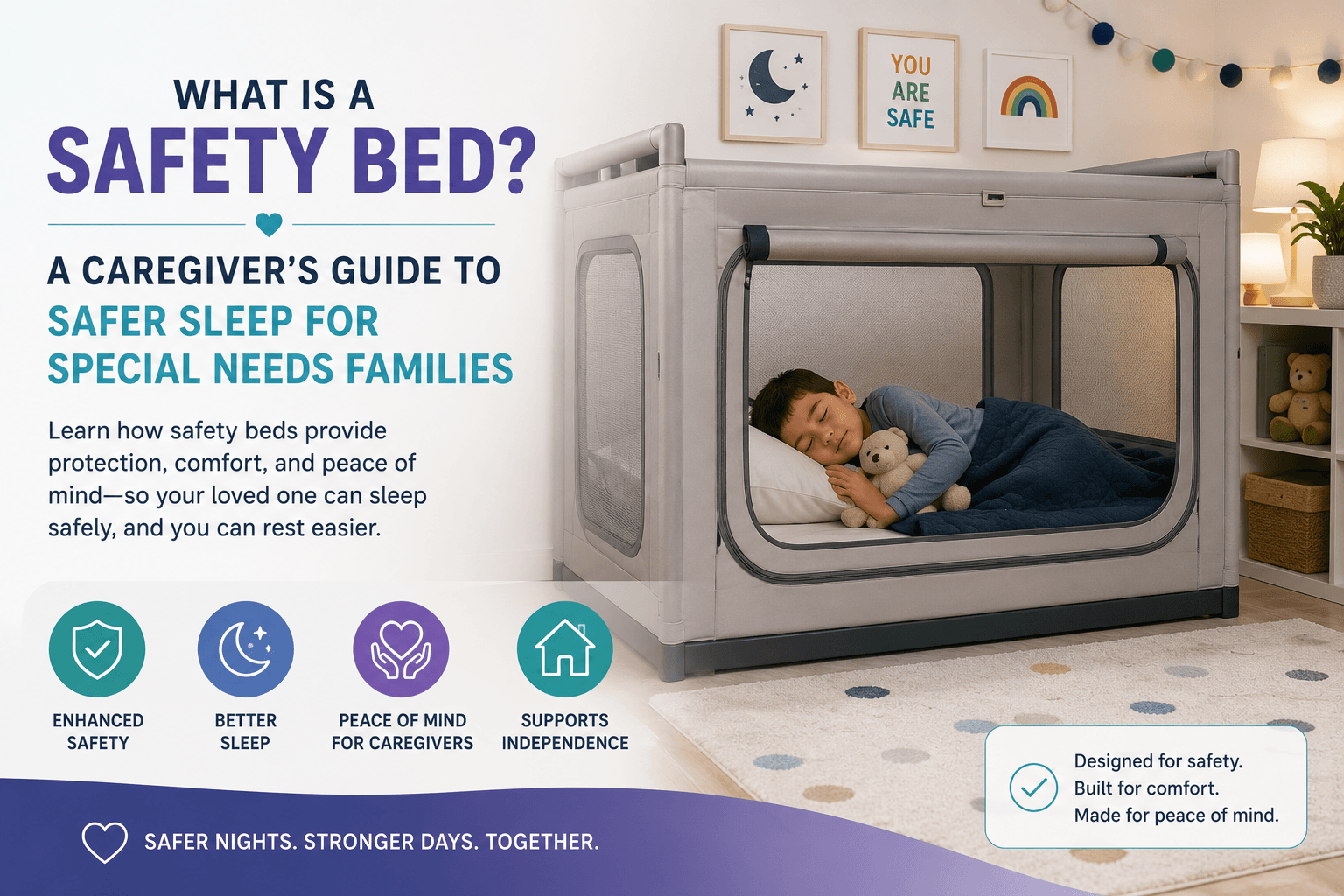
Unlike a traditional bed, a safety bed is specifically designed to create a safer sleeping environment for individuals who need additional protection, supervision, or positioning support. These beds often include high sides, enclosed designs, mesh panels, secure access doors, padding, and other specialized safety features that support both the individual and the caregiver.
For many families, the right adaptive bed can improve:
- Sleep quality
- Nighttime safety
- Caregiver peace of mind
- Injury prevention
- Independence
- Overall quality of life
What Are Safety Beds?
Safety beds are a specialized adaptive bed designed to help prevent falls, wandering, entrapment, and nighttime injuries for individuals with special needs or medical conditions. They often include enclosed sides, protective barriers, mesh panels, or secure access systems to create a safer sleep environment for children and adults who require additional nighttime supervision.
What Makes a Bed a “Safety Bed”?
The term “safety beds” is sometimes used broadly, but true safety beds are designed around specific protective features. A properly designed bed typically addresses four major areas:
1. Fall Protection
Many individuals with developmental or physical disabilities are at increased risk of falling from bed while sleeping, repositioning, or attempting to climb out independently.
These beds often include:
- High protective sides
- Enclosed sleeping areas
- Mesh or rigid barriers
- Secure access doors
- Low transfer heights
These features help reduce accidental nighttime falls and injuries.
2. Entrapment and Entanglement Protection
One of the most important and often overlooked safety concerns is entrapment. Entrapment occurs when part of the body becomes trapped between rails, mattresses, frames, or openings in the bed system.
Many adaptive beds are specifically designed to:
- Reduce dangerous gaps
- Minimize openings
- Maintain tighter mattress fit
- Improve enclosure safety
This is especially important for:
- Children with seizure disorders
- Individuals with limited mobility
- Users with involuntary movements
- Medically fragile individuals
3. Safe Containment and Wandering Prevention
Some children and adults with autism or cognitive disabilities may wander at night or leave their room unsafely without supervision.
For families dealing with:
- Elopement behaviors
- Night wandering
- Unsafe climbing
- Self-injury risks
- Sleep disruption
These beds may provide a more secure sleeping environment while caregivers sleep nearby. Many caregivers describe safety beds as life-changing for reducing nighttime wandering anxiety and improving household sleep routines.
4. Caregiver Accessibility
Good adaptive bed design also considers caregiver safety and ease of use.
Some features caregivers often look for include:
- One-handed door operation
- Quiet opening systems
- Adjustable bed positioning
- Easy transfers
- Washable materials
- Durable construction
Caregiver usability matters because difficult-to-operate equipment may not be used consistently or safely.
Who May Benefit From Adaptive Beds?
These beds may be appropriate for children, teens, or adults with conditions such as:
- Autism spectrum disorder
- Cerebral palsy
- Epilepsy or seizure disorders
- Developmental delays
- Intellectual disabilities
- Sensory processing disorders
- Traumatic brain injury
- Muscular disorders
- Mobility impairments
- Behavioral or self-injury risks
- Sleep disturbances
- Elopement tendencies
Every individual is different, so families should work with healthcare professionals and equipment specialists to determine the safest option.
Safety Beds vs. Hospital Beds: What’s the Difference?
| Feature | Safety Beds | Traditional Hospital Beds |
|---|---|---|
| Designed for fall prevention | Yes | Sometimes |
| Designed for entrapment reduction | Yes | Not always |
| Enclosed sleeping area | Often | Rarely |
| Wandering prevention | Often | No |
| Pediatric special needs use | Common | Limited |
| Home-style appearance | Often | Rare |
| Behavioral safety considerations | Yes | Minimal |
Some traditional hospital beds may actually create increased entrapment risks for smaller children or individuals with developmental disabilities if not properly configured.
Common Types of Adaptive Beds
Mesh Beds
Mesh-sided beds use breathable fabric panels stretched across a supportive frame.
Benefits may include:
- Softer surfaces
- Better airflow
- Reduced injury risk
- Visibility for caregivers
- Sensory-friendly environments
Some families prefer mesh beds for individuals prone to self-injury or sensory dysregulation.
Rigid-Side Beds
Rigid-side beds use hard protective panels or doors to create secure boundaries.
These may benefit individuals who:
- Climb aggressively
- Require stronger containment
- Need higher side protection
- Have significant nighttime mobility
Fully Enclosed Adaptive Beds
Some adaptive beds include enclosed canopies or zippered systems for individuals with severe wandering or safety concerns. These systems are often prescribed when caregivers need higher levels of overnight protection and supervision.
Important Safety Features to Look For
Entrapment Safety
Look for designs that minimize gaps between the mattress and frame.
Ventilation
Breathable materials and airflow are important for comfort and safety.
Ease of Cleaning
Washable mesh and removable components can simplify caregiving.
Durability
Some individuals place significant force on bed frames or doors.
Accessibility
Consider transfers, caregiver access, and emergency access.
Future Growth
Children may need beds that accommodate growth into adolescence or adulthood.
Can Insurance Cover Safety Beds?
In some cases, adaptive beds may qualify as durable medical equipment (DME).
Coverage varies depending on:
- Insurance provider
- Medicaid waivers
- Medical necessity documentation
- Physician prescriptions
- State regulations
Caregivers often work with:
- Physicians
- Occupational therapists
- Physical therapists
- DME providers
to obtain documentation supporting medical necessity.
How Adaptive Beds Support Better Sleep for the Whole Family
Sleep challenges affect the entire household.
When caregivers are constantly worried about:
- Falls
- Wandering
- Seizures
- Unsafe climbing
- Nighttime injuries
everyone’s sleep suffers.
Many caregivers describe improved peace of mind after transitioning to a properly designed bed because they are better able to monitor and protect their loved one overnight.
Adaptive Safety Beds Available at eSpecial Needs
eSpecial Needs offers adaptive beds and safety sleep solutions designed for children and adults with special needs.
Depending on the individual’s needs, caregivers may explore:
- Safety beds
- Adaptive beds
- Mesh enclosure beds
- Positioning beds
- Pediatric specialty beds
- Hospital-style adjustable beds
- Sensory-friendly sleep solutions
Many caregivers find that selecting the right bed involves balancing:
- Safety
- Comfort
- Accessibility
- Sensory preferences
- Caregiver usability
- Long-term durability
Why Safety Beds Matter
For families caring for children or adults with special needs, nighttime safety can be a major concern. Properly designed safety beds or adaptive beds may help reduce the risk of falls, wandering, entrapment, and nighttime injuries while improving sleep quality and peace of mind for caregivers.
Every individual has unique needs, so choosing the right adaptive sleep solution often involves balancing safety, comfort, sensory preferences, and caregiver accessibility. By understanding the different types of safety beds and the features available, caregivers can make more informed decisions that support safer and more restful sleep.
To explore adaptive beds and special needs sleep solutions, visit eSpecial Needs for products designed to support safety, comfort, and independence.
FAQs
What is a safety bed?
A safety bed is a specialized bed designed to help reduce the risk of injury, wandering, entrapment, falls, or unsafe nighttime movement for individuals with special needs, medical conditions, developmental disabilities, or behavioral safety concerns. Safety beds often include enclosed sides, padded surfaces, secure access points, and supportive design features that help caregivers create a safer sleep environment.
Who might need a safety bed?
A safety bed may be helpful for children, teens, or adults who have autism, cerebral palsy, epilepsy, developmental disabilities, traumatic brain injury, sensory processing challenges, mobility limitations, or conditions that increase nighttime safety risks. It may also support individuals who climb out of bed, wander at night, fall frequently, or need extra protection while sleeping.
How does a safety bed help special needs families?
A safety bed can help families create a more secure sleep environment by reducing the risk of falls, nighttime wandering, injury from hard surfaces, or unsafe exits from bed. For caregivers, it may also provide greater peace of mind and reduce the need for constant overnight monitoring.
Are safety beds only for children?
No. Safety beds are available for children, teens, and adults. The right bed depends on the user’s age, height, weight, mobility, medical needs, behavioral risks, and caregiver support requirements. Adult users may need larger sizes, stronger materials, higher weight capacities, and more durable construction.
What conditions may require a safety bed?
Safety beds may be used for individuals with autism, cerebral palsy, epilepsy, seizure disorders, developmental disabilities, intellectual disabilities, Angelman syndrome, Rett syndrome, Down syndrome, traumatic brain injury, mobility impairments, sleep disorders, or other conditions that affect safety during sleep.
Can a safety bed help prevent nighttime wandering?
A safety bed may help reduce unsafe exits from bed and limit nighttime wandering for some individuals. This can be especially important for children or adults who may leave the bedroom, access unsafe areas, or become injured while caregivers are asleep. Caregivers should choose a bed based on the individual’s behavior, size, and safety needs.
Can a safety bed help prevent falls?
Yes. Many safety beds are designed to reduce the risk of falls by providing enclosed sides, padded barriers, lower mattress heights, or secure rail systems. These features can be helpful for individuals who roll, move frequently, attempt to climb out of bed, or have limited body control.
What is the difference between a safety bed and a regular bed rail?
A regular bed rail provides limited side support and may not be enough for individuals with significant safety risks. A safety bed is designed as a more complete protective sleep system, often with full enclosure options, padding, secure access points, and features designed for special needs or medical use.
What is the difference between a safety bed and a hospital bed?
A hospital bed is usually designed for medical positioning, height adjustment, and caregiver access. A safety bed is designed primarily to create a safer sleep environment and may include enclosure, padding, and security features. Some individuals may need features from both types depending on medical and safety needs.
Are enclosed safety beds safe?
Enclosed safety beds can be safe when they are properly selected, correctly assembled, used according to manufacturer instructions, and matched to the individual’s needs. Caregivers should consider the user’s size, strength, mobility, medical conditions, breathing needs, behavior, and ability to tolerate enclosure before choosing a bed.
Can a safety bed be used for autism?
Yes. Safety beds are commonly used by families of autistic children and adults who have nighttime wandering, climbing, sensory seeking, sleep disruption, or safety risks. A safety bed may help create a predictable and secure sleep space, especially when combined with a consistent bedtime routine.
Can a safety bed help children with sensory needs?
A safety bed may help some children with sensory needs by creating a defined, secure, and calming sleep environment. Some users may feel more comfortable in an enclosed or padded space. However, sensory preferences vary, so the bed should be chosen based on the individual’s comfort and safety profile.
Can a safety bed be used for seizures?
Some families use safety beds for individuals with seizure disorders to help reduce injury risk during nighttime movement or seizure activity. The right bed depends on the type of seizures, medical recommendations, padding needs, monitoring requirements, and caregiver access. Families should consult the individual’s healthcare provider before choosing a bed for seizure related safety concerns.
What features should I look for in a safety bed?
Important features may include padded sides, secure enclosure, breathable materials, strong frame construction, appropriate height, easy caregiver access, mattress compatibility, durable zippers or latches, visibility, ventilation, and the correct size for the user. The best features depend on the person’s age, mobility, strength, and risk factors.
How do I choose the right safety bed?
Start by identifying the main safety concern. Consider whether the user is falling, wandering, climbing, getting trapped, having seizures, or needing extra positioning support. Then compare bed size, enclosure height, padding, access points, durability, weight capacity, portability, and medical documentation requirements. A healthcare provider or therapist can help guide the choice.
What size safety bed does my child need?
The right size depends on the child’s height, weight, age, movement patterns, and growth needs. Caregivers should avoid choosing a bed that is too small or too restrictive. If the child is growing quickly, consider a bed that allows for safe long term use while still meeting current safety needs.
Are safety beds portable?
Some safety beds are designed for travel or temporary use, while others are larger permanent home sleep systems. Portable safety beds may be helpful for trips, respite care, hospital visits, or overnight stays away from home. Permanent beds usually provide more structure and durability for daily use.
Can a safety bed replace caregiver supervision?
No. A safety bed can support safer sleep, but it does not replace appropriate caregiver supervision, medical care, monitoring, or emergency planning. Families should continue following healthcare provider recommendations and any safety plans related to wandering, seizures, breathing concerns, or behavioral risks.
Do safety beds require a prescription?
Some safety beds may require a prescription or medical documentation if a family is seeking insurance, Medicaid, waiver, or grant funding. If the bed is being purchased out of pocket, a prescription may not always be required. Requirements vary by funding source and product type.
Can insurance cover a safety bed?
Insurance may cover a safety bed in some cases if it is considered medically necessary. Coverage depends on the insurance plan, diagnosis, safety concerns, documentation, and prior authorization requirements. Families may need a prescription, therapy evaluation, letter of medical necessity, and product quote.
Can Medicaid pay for a safety bed?
Medicaid or Medicaid waiver programs may help cover a safety bed for eligible individuals when the bed is medically necessary and properly documented. Requirements vary by state and program. Families should contact their Medicaid case manager, waiver coordinator, or provider for guidance.
What is a letter of medical necessity for a safety bed?
A letter of medical necessity is a document from a qualified healthcare provider explaining why a safety bed is needed. It should describe the diagnosis, nighttime safety risks, history of falls or wandering if applicable, why a standard bed is not safe, and how the requested bed supports safety and daily care.
Who can write a letter of medical necessity for a safety bed?
A physician, pediatrician, neurologist, developmental specialist, occupational therapist, physical therapist, or other qualified healthcare professional may write or contribute to a letter of medical necessity. The required signer depends on the insurance plan, Medicaid program, or funding source.
What documentation helps support safety bed funding?
Helpful documentation may include a prescription, letter of medical necessity, diagnosis information, therapy notes, sleep safety concerns, fall history, wandering history, seizure history, caregiver statements, photos of unsafe sleep conditions if appropriate, and a quote for the requested safety bed.
What should caregivers do if a safety bed request is denied?
If a request is denied, review the denial reason carefully. Families can ask the provider to strengthen the letter of medical necessity, add therapy notes, include more details about safety risks, explain why standard beds or rails are not sufficient, and submit an appeal before the deadline.
How much does a safety bed cost?
The cost of a safety bed varies depending on size, enclosure type, materials, padding, durability, medical features, and customization. Basic safety solutions may cost less, while full enclosed medical safety beds can be a larger investment. Families should request a quote and explore funding options before purchasing.
Are safety beds worth it?
For families managing serious nighttime safety risks, a safety bed can be a valuable investment. It may help reduce injury risk, support safer sleep, and provide caregivers with greater peace of mind. The value depends on the individual’s needs, safety risks, and whether the bed is properly matched to those needs.
Where can families buy a safety bed?
Families should buy safety beds from a trusted adaptive equipment supplier that understands special needs, medical safety, caregiver concerns, and funding documentation. A specialized supplier can help families compare bed options, request quotes, and gather product details for insurance, Medicaid, waiver, or grant requests.
How can eSpecial Needs help families choose a safety bed?
eSpecial Needs offers safety beds and adaptive sleep solutions for children and adults with special needs. Families can compare options, request quotes, gather product information for funding documentation, and find equipment designed to support safer sleep, caregiver peace of mind, and special needs care at home.
Safe Place Permanent Bed 200 - Twin
$5,560.00
$6,620.00
Secure Enclosed Safety Bed for Safer Sleep The Safe Place Permanent Bed 200 Twin provides a durable, enclosed sleep space for children who need extra support staying safe through the night. Designed for families managing special needs, autism, epilepsy, climbing,… read more