Table of Contents
- Key Takeaways: What Is Adaptive Equipment for Adults in 2026
- What Does Adaptive Equipment Mean for Adults?
- How Adaptive Equipment Differs from General Assistive Devices
- Categories of Adaptive Equipment for Adults at Home
- Why Adaptive Equipment Matters for Daily Living at Home
- How to Start Evaluating Adaptive Equipment for Adults
- What to Look for in Adaptive Equipment Quality and Safety
- Choosing the Right Adaptive Equipment for Adults
- FAQs
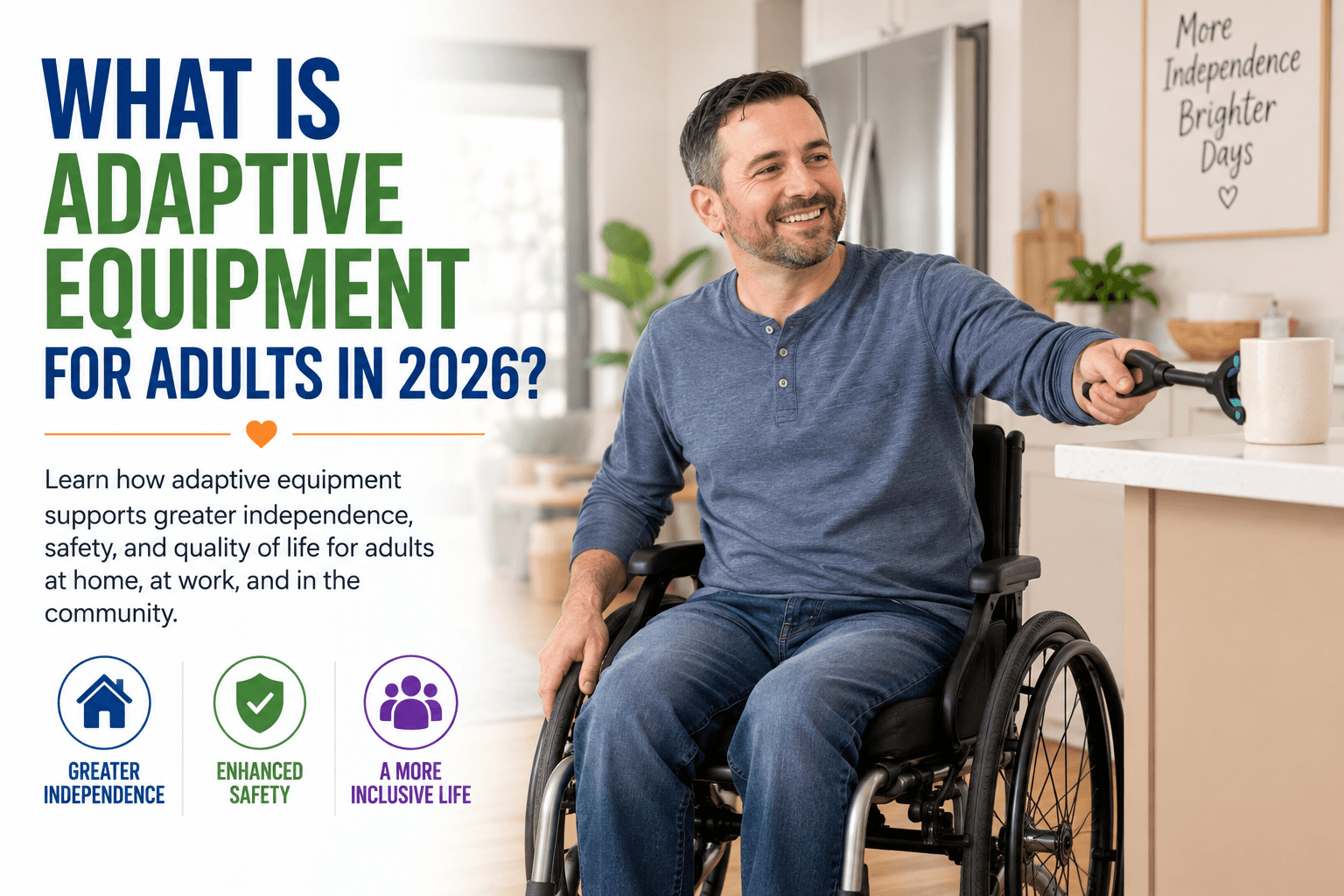
Adaptive equipment for adults with disabilities includes any tool or device designed to help someone complete everyday tasks more safely and independently. If you work in special education or therapy, you've likely recommended these products for students and may now be exploring options for adults. eSpecial Needs carries a full range of adaptive equipment for home, school, and clinical settings.
This article walks you through what adaptive equipment actually means, how it differs from general assistive devices, and which product categories matter most for adults living at home. You'll also find practical guidance on where to start when evaluating options for the people you support.
Key Takeaways: What Is Adaptive Equipment for Adults in 2026
- Adaptive equipment refers to tools and devices that help adults with disabilities perform daily living tasks more independently at home.
- Common categories include mobility aids, daily living tools, adaptive furniture, therapy products, and assistive technology devices.
- The right equipment reduces caregiver strain while increasing safety, dignity, and participation in everyday routines.
- eSpecial Needs offers adaptive equipment across every major category, from mobility aids to sensory room products and rehabilitation tools.
- Evaluating adaptive equipment starts with identifying specific daily living challenges and matching them to the right product type.
What Does Adaptive Equipment Mean for Adults?
Adaptive equipment is any product modified or specifically designed to help a person with a disability perform tasks that might otherwise be difficult or impossible. For adults, that often means tools supporting bathing, dressing, eating, mobility, and communication at home.
The term is sometimes used interchangeably with "assistive devices" or "assistive technology," but there's a useful distinction. Adaptive equipment typically refers to physical products that modify how a task is performed. Assistive technology is a broader category that includes software, apps, and electronic systems.
For school-based therapists and special education coordinators, understanding this distinction matters when writing IEP transition plans or recommending home-based supports for older students and adults.
How Adaptive Equipment Differs from General Assistive Devices
General assistive devices cover a wide spectrum, from hearing aids to screen readers to voice-activated home systems. Adaptive equipment is a subset of that spectrum, focused on physical tools that support activities of daily living (ADLs).
Think of it this way: a speech-to-text app on a tablet is assistive technology. A weighted, postural seating system that helps an adult sit upright during meals is adaptive equipment. Both are valuable, but they serve different functional needs.
According to the World Health Organization's Global Report on Assistive Technology, more than one billion people worldwide need at least one assistive product. That figure underscores how critical it is to match the right type of support to each individual's daily challenges.
Categories of Adaptive Equipment for Adults at Home
Adaptive equipment for adults generally falls into a few core categories. Each one targets a specific set of daily living challenges. Here's a breakdown of the most common types.
Mobility Equipment
Mobility aids include wheelchairs, walkers, gait trainers, canes, and transfer devices. These products help adults move safely through their home and community. For individuals with limited balance or lower-body strength, mobility equipment can reduce fall risk and support more confident movement throughout the day.
Daily Living Aids
Daily living aids cover everything from adapted utensils and dressing tools to bathing seats and grab bars. These products are designed for adults who need extra support with self-care routines like grooming, eating, and hygiene. Small adjustments, such as using a button hook or a long-handled sponge, can make a measurable difference in how independently someone manages personal care.
Easi-Grip All Purpose Knife
$11.85
Ideal for individuals with arthritis, weakened hands, or other hand mobility concerns. Thick upright ergonomic handle creates increased control, making preparing or enjoying meals a more plesant experience. Knife also includes “soft-feel” non-slip areas. Features non-slip handle makes cutting fruits… read more

Adaptive Furniture
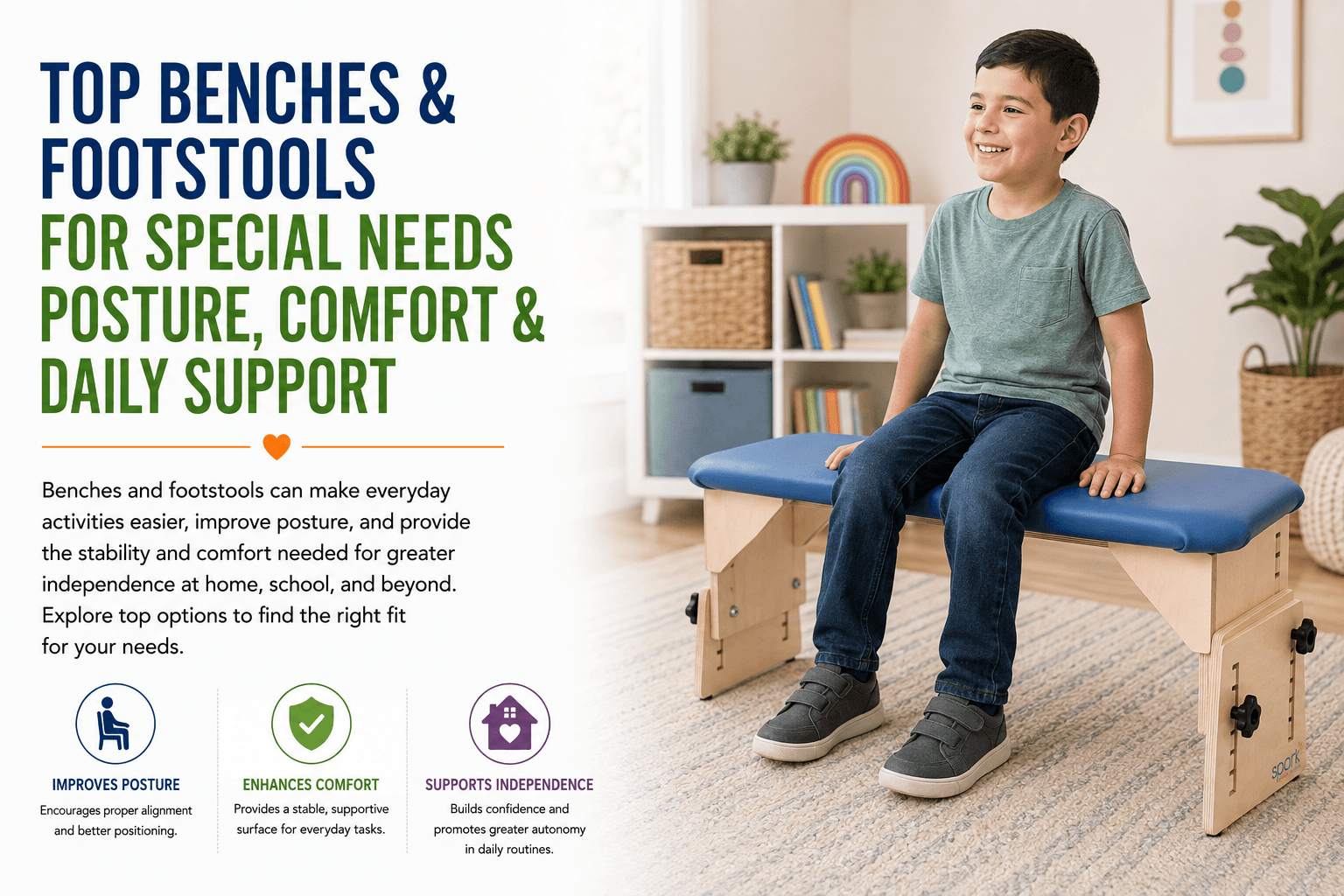
Adaptive furniture includes height-adjustable tables, positioning chairs, and therapeutic benches. These products help adults maintain proper posture during meals, work, or therapy sessions. For adults who spend long hours seated, the right furniture reduces discomfort and supports better alignment throughout the day.
Rehabilitation and Therapy Products
Rehabilitation equipment supports physical and occupational therapy goals at home. This category includes therapy swings, exercise tools, balance trainers, and resistance products. Adults recovering from surgery or managing progressive conditions often rely on these tools to maintain strength and range of motion between clinical visits.
Assistive Technology Devices
Assistive technology devices bridge the gap between physical adaptive equipment and digital tools. Communication boards, switch-activated devices, and environmental control units fall into this category. These products help adults with significant physical or cognitive disabilities interact with their surroundings and communicate more effectively.
QuickTalker FeatherTouch 23
$265.00
This dynamic speech device is easy to use, durable, and and goes everywhere with the user. QuickTalker FT 23 is perfect for use when reading a story, interacting during a lesson in the classroom, or communicating with a family member.… read more

Why Adaptive Equipment Matters for Daily Living at Home
For many adults with disabilities, home is where independence is built or lost. The right adaptive equipment turns a difficult task into a manageable one, whether that means getting dressed, preparing a meal, or moving safely from room to room.
Beyond independence, adaptive equipment also reduces the physical demands placed on caregivers and family members. A transfer aid, a well-chosen daily living product, or a properly fitted wheelchair can lower injury risk for everyone involved in the daily care routine.
The Administration for Community Living (ACL) notes that assistive technology and adaptive equipment play a central role in helping adults with disabilities remain in their communities rather than moving into institutional care settings.
How to Start Evaluating Adaptive Equipment for Adults
If you're a therapist, special education coordinator, or caregiver beginning the evaluation process, start by identifying the specific daily tasks where the adult needs support. Break those tasks into categories: personal care, mobility, communication, and home safety.
Next, consult with the occupational therapist or physical therapist involved in the individual's care. These professionals can recommend specific product types based on the adult's functional abilities, living environment, and long-term goals.
Finally, look for a supplier that carries products across multiple categories. eSpecial Needs stocks mobility aids, adaptive seating, rehabilitation tools, and daily living products, so you can compare options and find the right fit without searching across multiple vendors.
What to Look for in Adaptive Equipment Quality and Safety
Not all adaptive equipment is created with the same standards. When evaluating products, pay attention to a few key factors that affect long-term usability and safety.
Durability matters. Products used daily need to hold up under repeated use without losing structural integrity. Look for reinforced frames, medical-grade materials, and clear weight capacity ratings.
Adjustability is another priority. Adults' needs change over time, and equipment that can be modified, whether through height adjustments, removable supports, or interchangeable components, offers longer-term value.
Safety features like non-slip surfaces, locking mechanisms, and secure harness systems are non-negotiable for mobility and seating products. Always verify that the product meets relevant safety standards before purchasing.
Choosing the Right Adaptive Equipment for Adults
Adaptive equipment for adults with disabilities is about more than individual products. It's about building a support system that fits the way someone actually lives. The right mobility aid, daily living tool, or piece of adaptive furniture can open up routines that once felt out of reach.
Whether you're a therapist writing a recommendation, a coordinator planning for a student's transition to adulthood, or a family member researching options at home, the goal is the same: match the right equipment to the right need. eSpecial Needs makes that process simpler by offering adaptive equipment, therapy products, and mobility solutions all in one place.
FAQs
What is considered adaptive equipment?
Adaptive equipment includes physical tools and devices designed to help individuals with disabilities complete daily tasks like eating, bathing, dressing, and moving. These products modify how a task is performed, making it safer and more independent.
What is the difference between adaptive equipment and assistive technology?
Adaptive equipment typically refers to physical products that support daily living activities. Assistive technology is a broader term that also includes software, apps, and electronic systems. eSpecial Needs carries both, from physical daily living aids to technology-enabled communication devices.
Who should evaluate an adult for adaptive equipment?
An occupational therapist or physical therapist is typically the right professional to evaluate an adult's needs and recommend specific adaptive equipment. Special education coordinators can also initiate the process during IEP transition planning.
Does insurance cover adaptive equipment for adults?
Medicare, Medicaid, and some private insurance plans cover certain types of durable medical equipment when prescribed by a physician. Coverage varies by state and plan, so it's important to check eligibility before purchasing. eSpecial Needs offers quote requests to help you plan purchases.