Table of Contents
- What Are Benches and Footstools Used For?
- Why Foot Support Matters
- Supportive Benches for Therapy and Positioning
- Benches and Footstools for Home Use
- Benches and Footstools for Schools
- Benches for Bathroom and Personal Care Support
- Choosing the Right Bench or Footstool
- Safety Tips for Benches and Footstools
- Shop Benches and Footstools at eSpecial Needs
- FAQs
Benches and footstools can provide simple but important support for children and adults who need better stability, posture, comfort, or accessibility during daily routines. Whether used at home, school, therapy, a bathroom, or a care facility, the right bench or footstool can make sitting, transfers, dressing, learning, and personal care easier and more comfortable.
For individuals with special needs, physical disabilities, developmental delays, low muscle tone, balance challenges, or mobility needs, standard furniture may not always provide enough support. A sturdy bench can create a dependable place to sit, while a properly placed footstool or foot rest can help improve body alignment and seated comfort.
At eSpecial Needs, the Benches and Footstools collection includes supportive seating and foot support products designed for comfort, stability, positioning, and everyday function.
What Are Benches and Footstools Used For?
Benches and footstools are versatile support tools that can be used in many daily routines. A bench may provide a stable sitting surface for dressing, therapy activities, classroom work, transfers, or rest. A footstool may help the user keep their feet supported while sitting in a chair, at a desk, at a table, or during care routines.
Benches and footstools may support:
Better seated posture
Improved foot support
Safer transitions
Dressing routines
Therapy activities
Classroom participation
Daily living skills
Bathroom accessibility
Reduced caregiver strain
More comfortable sitting
Better alignment during tasks
Greater independence
Small changes in support can make a large difference. When feet are unsupported or the seat is too high, the user may slump, slide, lean, or fatigue quickly. A footstool or bench can help create a more stable base for daily activities.
Why Foot Support Matters
Foot support is often overlooked, but it plays an important role in seated posture. When a child or adult sits with feet dangling, the body may work harder to stay balanced. This can affect attention, comfort, hand use, and endurance during activities.
A footstool, foot rest, desk foot rest, or under desk foot rest can help create a more grounded sitting position. This may be especially helpful during classroom work, therapy sessions, meals, homework, computer use, or fine motor activities.
Foot support may help users:
Sit with better alignment
Feel more stable
Reduce dangling legs
Improve comfort during seated work
Support attention during tabletop activities
Participate more easily in therapy or learning
Reduce fatigue during longer sitting periods
For students who use classroom seating, adaptive chairs, or positioning systems, proper foot support can be an important part of the seating setup.
Supportive Benches for Therapy and Positioning
Therapy benches can be used during occupational therapy, physical therapy, early intervention, school based therapy, and home exercise routines. A bench may help position the child at the right height for reaching, balancing, standing practice, seated work, or strengthening activities.
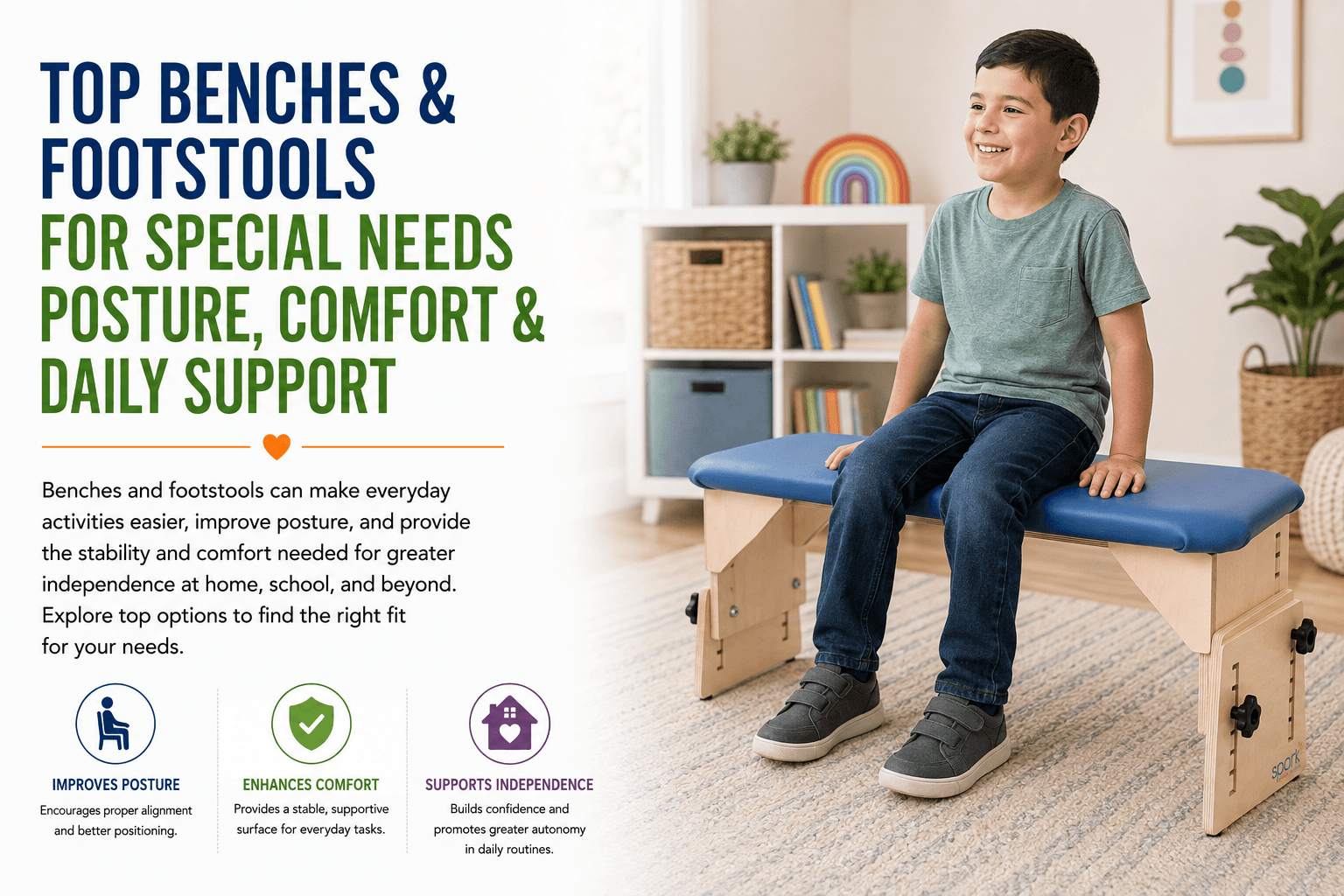
The Height Adjustable Tilting Benches are designed to support posture, seated stability, and functional development for children who need a firm, adjustable seating surface. Height adjustability can help therapists and caregivers match the bench to the user and activity.
Therapy benches may support:
Seated balance
Postural control
Core strength
Reaching activities
Sit to stand practice
Therapy exercises
Fine motor work
Weight shifting
Functional movement
Motor planning
A therapist can help determine the right bench height, tilt, and use plan for the child’s goals.
Height Adjustable Tilting Benches - Large
$339.95
The Height Adjustable Tilting Benches - Large provides supportive seating designed to help older children and larger users maintain better posture, stability, and alignment during seated activities, therapy sessions, and functional daily work. Created for users who do not need… read more

Benches and Footstools for Home Use
At home, benches and footstools can support everyday routines like dressing, grooming, bathing preparation, putting on shoes, homework, play, and seated activities. A child may use a bench while learning to dress more independently. An adult may use a footstool to improve comfort during seated tasks. A caregiver may use a bench to make personal care routines more organized and accessible.
Home uses may include:
Sitting while putting on shoes
Supporting feet during homework
Creating a stable spot for dressing
Helping with grooming routines
Supporting therapy carryover activities
Adding a safe rest spot in a bedroom or playroom
Improving seated comfort during meals or tabletop tasks
Because benches and footstools are simple products, they can often be added to daily routines without major changes to the home.
Height Adjustable Tilting Benches - Medium
$289.95
The Height Adjustable Tilting Benches - Medium provides supportive seating designed to help children maintain better posture, stability, and alignment during seated activities, therapy sessions, and everyday developmental work. Created for users who do not need full back support but… read more

Benches and Footstools for Schools
In school settings, benches and footstools can support classroom seating, therapy services, adaptive positioning, and special education routines. A footstool under a desk may help a student sit more comfortably when the chair or desk height does not fully match their body. A bench may provide an accessible seating option during small group instruction, therapy, dressing practice, or movement activities.
Schools may use benches and footstools in:
Special education classrooms
Therapy rooms
Reading areas
Fine motor stations
Adaptive seating setups
Calm spaces
Life skills rooms
Early learning classrooms
Gross motor areas
Related categories include Classroom Seating, Seating, Positioning Products, Furniture, and Education Products.
Height Adjustable Tilting Benches - Small
$249.95
The Height Adjustable Tilting Benches - Small provides supportive seating designed to help young children maintain better posture, stability, and alignment during seated activities, therapy sessions, and early developmental work. Created for children who do not need full back support… read more

Benches for Bathroom and Personal Care Support
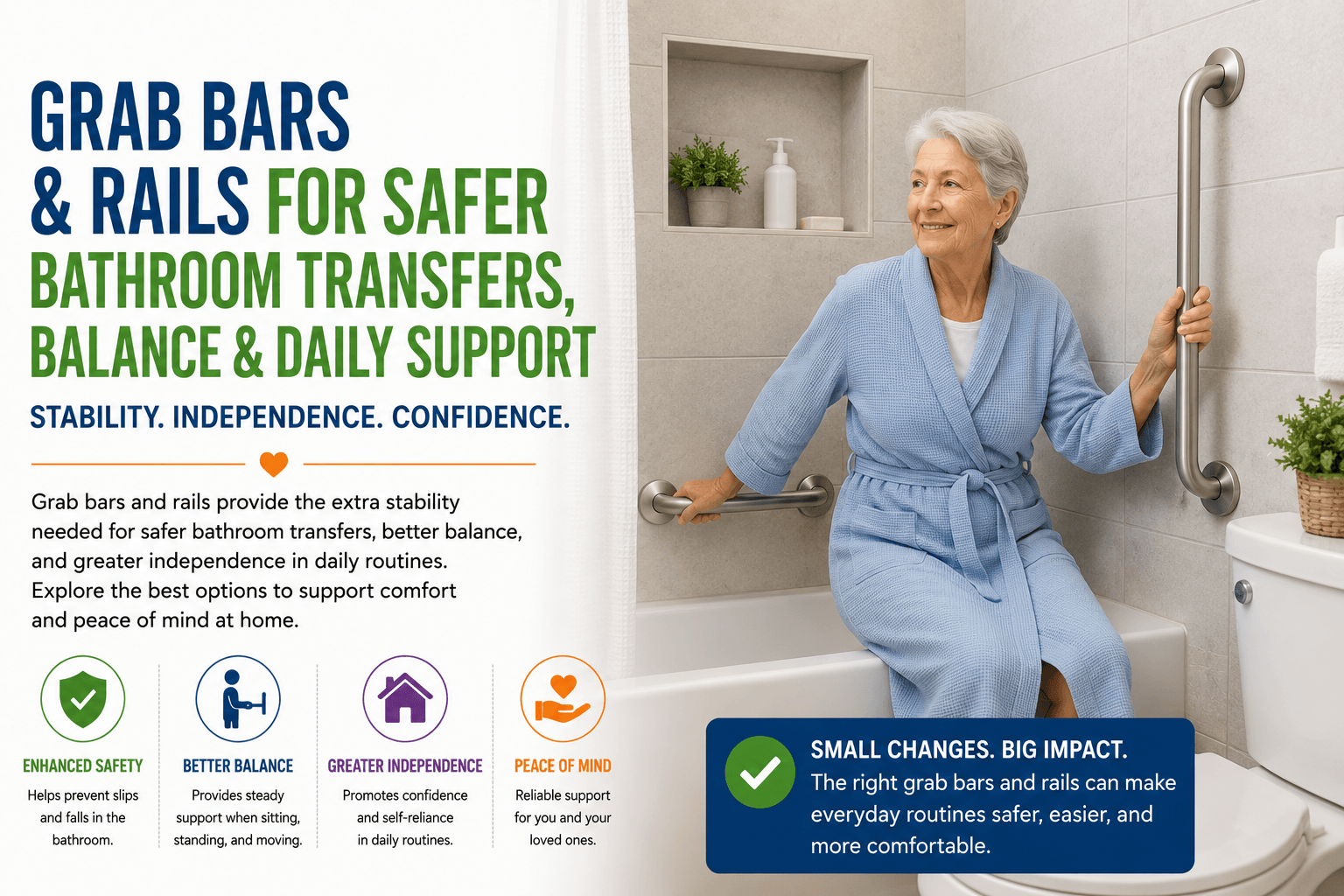
Some benches and stools are designed for bathing, toileting, and bathroom safety. These products can help users sit during washing, transfers, grooming, or personal care routines. Bathroom benches and stools should be chosen carefully because wet surfaces, transfers, and limited space can increase fall risk.
For bathroom related needs, browse Shower Benches and Stools, Bathing and Toileting, Bathroom Safety, Shower Chairs, Bath Chairs, and Grab Bars and Rails.
Bathroom support products should match the user’s transfer needs, balance, size, caregiver assistance level, and bathroom layout.
Choosing the Right Bench or Footstool
The best bench or footstool depends on the user, the activity, and the environment. A therapy bench may need adjustability. A classroom foot rest may need to fit under a desk. A bathroom stool may need non slip feet and water resistant materials. A home bench may need to be lightweight and easy to move.
Before choosing, consider:
User height and weight
Seat height
Foot support needs
Balance and stability
Transfer needs
Activity type
Indoor or bathroom use
Surface material
Non slip features
Adjustability
Cleaning needs
Portability
Caregiver support needs
Therapy or classroom goals
If the product will be used for transfers, bathroom routines, or users with complex mobility needs, professional guidance from an occupational therapist, physical therapist, or equipment specialist may be helpful.
Safety Tips for Benches and Footstools
Benches and footstools should be stable, properly sized, and used on appropriate surfaces. A product that is too high, too small, unstable, or used in the wrong location may increase fall risk.
Helpful safety tips include:
Use on a flat, stable surface
Check weight capacity before use
Choose non slip feet when needed
Keep the area clear of clutter
Supervise children when appropriate
Avoid standing on products not designed for standing
Use bathroom products only as intended
Inspect for cracks, loose parts, or worn surfaces
Match product height to the user
Stop use if the product feels unstable
The goal is to create better support, not a new tripping or transfer hazard.
Shop Benches and Footstools at eSpecial Needs
The Benches and Footstools collection at eSpecial Needs includes supportive benches, footstools, foot rests, desk foot rests, under desk foot rests, therapy benches, and daily living support products for children and adults with special needs.
You can also explore related categories, including Benches and Stools, Stools, Furniture, Seating, Daily Living Aids, Bathing and Toileting, and Transfer Aids.
FAQs
Are benches helpful for children with special needs?
Yes. Benches can help children with special needs during dressing, therapy, play, classroom routines, movement practice, and seated activities. The right bench should match the child’s size, balance, strength, and support needs.
What is a therapy bench used for?
A therapy bench may be used for seated balance, reaching, posture practice, sit to stand activities, core strengthening, weight shifting, and therapy exercises. Occupational therapists and physical therapists often use benches to support functional movement goals.
What is the difference between a bench and a stool?
A bench usually has a longer seating surface and may support more stable sitting, therapy activities, or transfers. A stool is often smaller and may be used for sitting, stepping, foot support, or specific personal care tasks depending on the product.
Can footstools be used under classroom desks?
Yes. Footstools or foot rests can be used under classroom desks when students need better foot support. They may help students sit more comfortably during writing, reading, fine motor work, or computer activities.
Are adjustable benches better than fixed height benches?
Adjustable benches can be helpful when the product will be used by multiple children or for different therapy goals. Fixed height benches may work well when the user and activity needs are consistent.
Can benches and footstools be used in therapy clinics?
Yes. Therapy clinics often use benches and footstools for positioning, strengthening, sitting balance, transfers, fine motor work, and functional activities. Therapists can choose products based on each client’s goals.
Where can I buy benches and footstools for special needs support?
You can shop Benches and Footstools at eSpecial Needs. You can also browse Benches and Stools, Stools, Furniture, Seating, Daily Living Aids, and Bathing and Toileting.