Table of Contents
- What Is an Adaptive Bike?
- Why Adaptive Bikes Matter
- Adaptive Bikes vs. Standard Bikes
- Who Can Benefit from Adaptive Bikes?
- Adaptive Bikes for Kids
- Adaptive Bikes for Special Needs Kids
- Adaptive Bike for Autism
- Adaptive Bikes for Cerebral Palsy
- Adaptive Bikes for Adults
- Adapted Bikes for Disabled Adults
- Rifton Adaptive Bike: Why Families and Therapists Search for It
- Adapted Bikes for Special Needs: Common Types
- Adaptive Tricycles
- Recumbent Adaptive Bikes
- Handcycles
- Tandem Adaptive Bikes
- Therapy Bikes and Stationary Adaptive Cycles
- What Is an Adaptability Bike?
- Adaptive Bike Equipment: Features to Look For
- How to Choose the Right Adaptive Bike
- Measuring for an Adaptive Bike
- Adaptive Bikes for Schools and Therapy Clinics
- Safety Tips for Adaptive Bike Use
- Funding Adaptive Bikes
- Letter of Medical Necessity for an Adaptive Bike
- Adaptive Bike Buying Checklist
- What Is An Adaptive Bike And Why It's Important
- FAQs
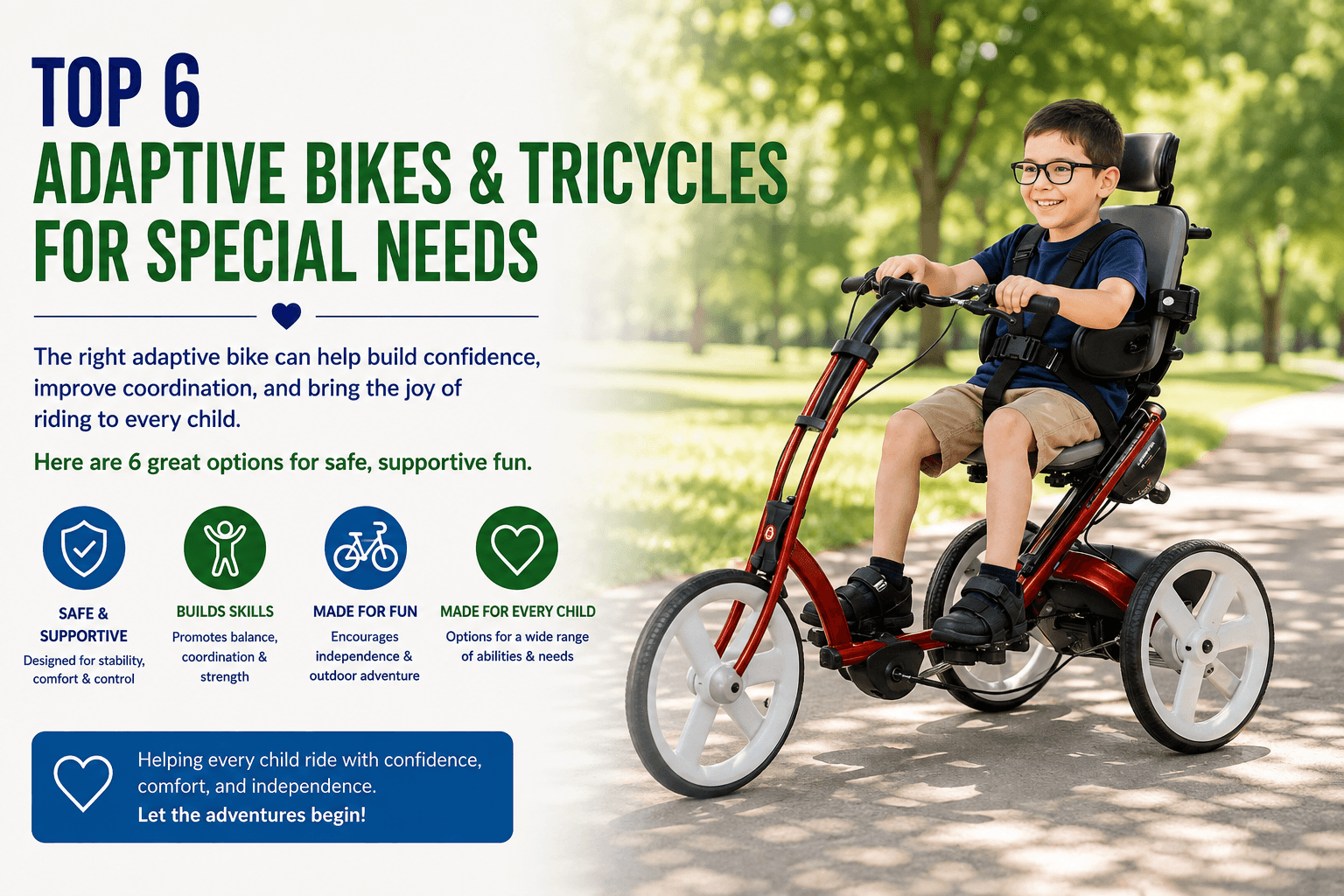
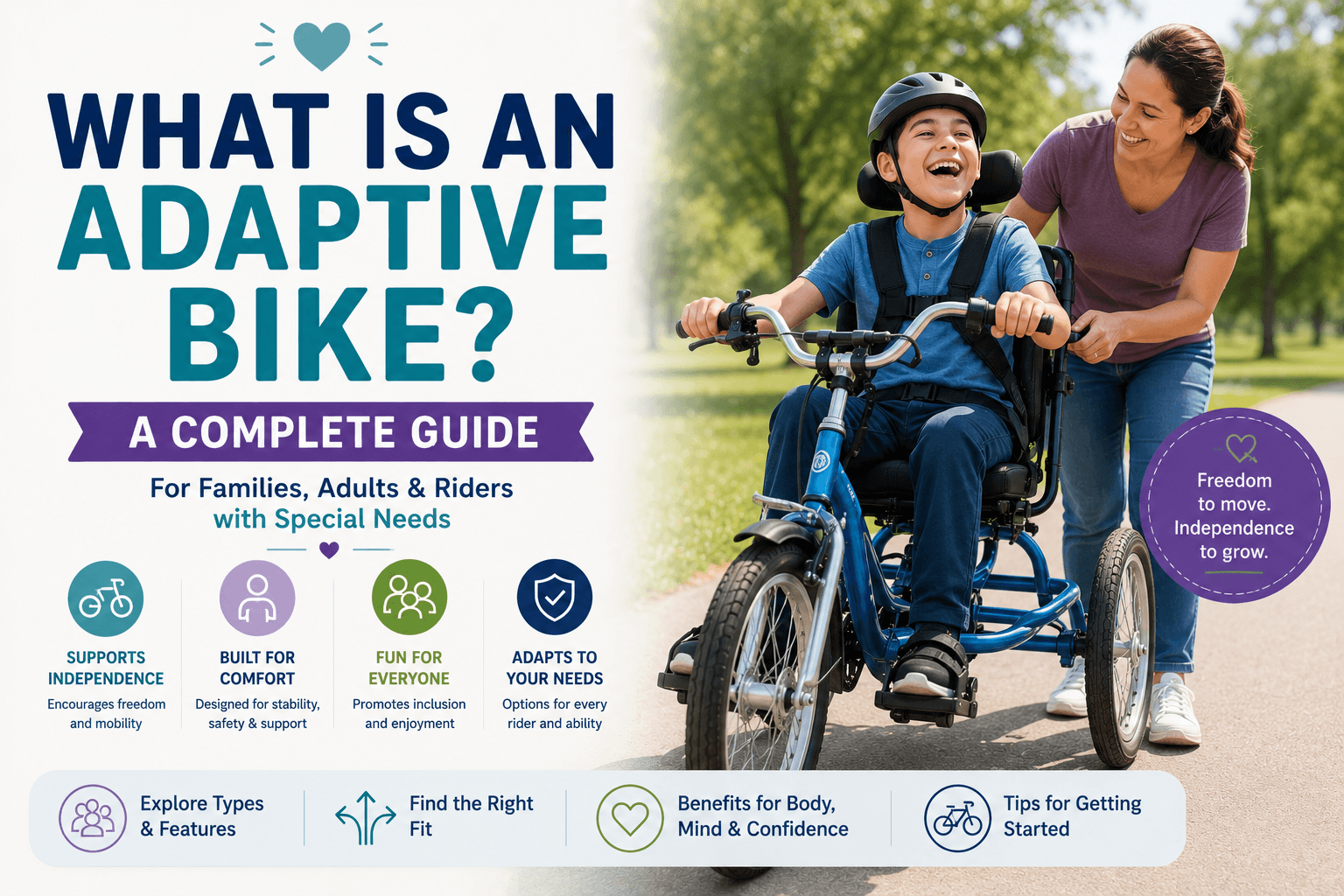
What is an adaptive bike? An adaptive bike is a specially designed bicycle or tricycle that helps children, teens, and adults with physical, developmental, sensory, or cognitive disabilities ride with more stability, support, comfort, and confidence. Unlike a standard bike, adaptive bikes may include three wheels, supportive seating, trunk support, straps, caregiver steering, hand pedals, adjustable handlebars, low step-through frames, or other adaptive bike equipment that makes riding safer and more accessible.
For many families, biking is more than recreation. It is a way to support movement, independence, outdoor play, exercise, social participation, and quality of life. Adaptive bikes can give riders who may not be able to use a traditional bicycle the chance to enjoy the freedom and fun of riding.
Whether you are researching adaptive bikes for kids, adaptive bikes for adults, adapted bikes for disabled riders, or an adaptive bike for autism, this guide explains how adaptive bikes work, who benefits most, what features to look for, and how to choose the right option for your child, student, client, or loved one.
What Is an Adaptive Bike?
If you find yourself asking what is an adaptive bike, you've come to the right place. An adaptive bike is a modified bicycle, tricycle, or riding system designed for people who need extra physical, sensory, or safety support while riding. Some adaptive bikes look similar to standard tricycles, while others are highly specialized for riders with complex positioning, balance, coordination, or mobility needs.
Adaptive bikes may support riders who have difficulty with:
- Balance
- Coordination
- Pedaling
- Steering
- Posture
- Trunk control
- Motor planning
- Endurance
- Muscle tone
- Safety awareness
- Sensory regulation
- Lower body strength
- Upper body strength
The goal is to make bike riding more accessible. For some riders, that means adding stability. For others, it means adding postural support, caregiver control, adaptive pedals, or a frame that is easier to mount and dismount.
Why Adaptive Bikes Matter
Adaptive bikes can support physical, emotional, and social development. For children with special needs, riding a bike may help build strength, confidence, coordination, and independence. For adults with disabilities, adaptive bikes may support recreation, exercise, community access, rehabilitation, and overall wellness.
Benefits may include:
- Improved leg strength
- Better coordination
- Increased endurance
- Outdoor exercise
- Improved confidence
- Better social participation
- Recreation with family or peers
- Sensory input through movement
- Practice with motor planning
- Greater independence
- A fun alternative to therapy-style exercise
For many families, an adaptive bike becomes one of the most motivating forms of movement because it feels fun instead of clinical.
Adaptive Bikes vs. Standard Bikes
A standard bike usually requires balance, steering control, strength, coordination, and quick safety reactions. Many riders with disabilities need more support than a standard bike can provide.
Adaptive bikes are different because they are designed around accessibility.
| Standard Bike | Adaptive Bike |
|---|---|
| Usually has two wheels | Often has three wheels for stability |
| Requires strong balance | Provides more support and control |
| Limited postural support | May include trunk, back, pelvic, or head support |
| Standard pedals and handlebars | May include adaptive pedals, straps, or hand supports |
| Rider controls everything | Some models allow caregiver steering or braking |
| Not designed for disability-specific needs | Designed for children or adults with special needs |
This is why adapted bikes for special needs users are often recommended when a traditional bicycle is not safe, comfortable, or functional.
Who Can Benefit from Adaptive Bikes?
Adaptive bikes can support a wide range of riders, including children, teens, and adults with disabilities or developmental needs.
Riders may include individuals with:
- Autism
- Cerebral palsy
- Down syndrome
- Spina bifida
- Developmental delays
- Low muscle tone
- Muscular dystrophy
- Traumatic brain injury
- Stroke
- Balance difficulties
- Coordination challenges
- Neuromuscular conditions
- Sensory processing challenges
- Intellectual disabilities
- Mobility limitations
Adaptive bikes for special needs kids can be especially helpful when a child wants to ride with siblings or classmates but needs more support than a regular bike offers.
Adaptive Bikes for Kids
Adaptive bikes for kids are designed to help children ride safely while supporting posture, stability, and control. Many pediatric adaptive bikes use a three-wheel design, which reduces the balance demands of riding.
Adaptive bikes for kids may include:
- Stable three-wheel frames
- Adjustable seats
- Supportive backrests
- Seat belts or pelvic straps
- Trunk supports
- Foot straps
- Adaptive pedals
- Caregiver steering handles
- Parking brakes
- Low step-through frames
- Adjustable handlebars
These features help children participate in riding even when they have motor delays, low tone, poor coordination, or limited safety awareness.
Dirt King Big Kid Dually Tricycle
$0.00
Dirt King® originally created the larger dually trikes for adults but discovered big kids from the ages 7 to 10 really enjoyed the look and ride. Some even preferred it over riding their bike! Due to the taller seat-riser frame… read more

Adaptive Bikes for Special Needs Kids
Adaptive bikes for special needs kids are often selected based on the child’s diagnosis, age, height, weight, strength, posture, and ability to pedal or steer. A child with autism may need predictable movement and added safety features. A child with cerebral palsy may need positioning support and foot straps. A child with low muscle tone may need trunk support and a stable frame.
The best adaptive bikes for special needs child users are not one-size-fits-all. The right bike should match the child’s current abilities while allowing room for growth and skill development.
Helpful questions include:
- Can the child sit upright safely?
- Does the child need trunk or back support?
- Can the child pedal independently?
- Can the child steer safely?
- Does the child understand stop and go cues?
- Does the child need caregiver control?
- Will the bike be used at home, school, therapy, or in the community?
- Does the child need foot, hand, or pelvic positioning support?
Adaptive Bike for Autism
An adaptive bike for autism may support children or adults who need more structure, stability, sensory input, or safety support while riding. Autistic riders may enjoy the repetitive movement of pedaling, the outdoor sensory input, and the independence that biking provides.
Adaptive bike features that may help autistic riders include:
- Stable three-wheel design
- Predictable movement
- Supportive seating
- Caregiver steering options
- Safety straps when appropriate
- Easy mounting and dismounting
- Quiet, smooth operation
- Comfortable handlebars and grips
- Clear stop-and-go routines
Some autistic riders are sensory seekers and enjoy movement-based input. Others may be cautious or sensitive to new experiences. A gradual introduction can help the rider build confidence.
Adaptive Bikes for Cerebral Palsy
Adaptive bikes for cerebral palsy often need to support muscle tone differences, coordination challenges, limited trunk control, balance difficulties, and leg positioning needs.
Helpful features may include:
- Supportive seat and backrest
- Lateral trunk support
- Adjustable footplates
- Foot straps or sandals
- Pelvic positioning belt
- Caregiver steering
- Smooth pedaling system
- Low step-through frame
- Adjustable handlebars
- Stable three-wheel base
For riders with cerebral palsy, proper positioning is especially important. The bike should support the rider without forcing uncomfortable alignment. A therapist may help determine which adaptive bike equipment is needed.
Adaptive Bikes for Adults
Adaptive bikes for adults are designed for larger riders who need stability, support, or modified access. Adults may use adaptive bikes for recreation, exercise, physical conditioning, therapy carryover, transportation, or community participation.
Adaptive bikes for adults may support individuals with:
- Balance limitations
- Neurological conditions
- Stroke recovery
- Cerebral palsy
- Developmental disabilities
- Spinal cord injury
- Low endurance
- Coordination challenges
- Joint pain
- Muscle weakness
An adaptive bike for adults should have an appropriate weight capacity, frame size, seat width, support level, and riding style. Adult riders may also need dignity-centered design, comfortable positioning, and durable construction.
Dirt King Adult Dually Tricycle
$449.00
For the inner child inside all of us! The Dirt King® Adult Dually Trike is hand welded and constructed of heavy duty 14 and 16 gauge steel. It comes equipped with all-terrain “dual” pneumatic tires mounted on heavy duty steel… read more

Adapted Bikes for Disabled Adults
Adapted bikes for disabled adults may include upright tricycles, recumbent trikes, handcycles, tandem adaptive bikes, or therapy-style adaptive cycles. The best choice depends on the rider’s mobility, transfer ability, posture, strength, and goals.
Adults may benefit from features such as:
- Larger frame sizes
- Higher weight capacities
- Comfortable adaptive seating
- Recumbent positioning
- Hand pedals if leg use is limited
- Adjustable handlebars
- Foot supports
- Parking brakes
- Easy-entry frames
- Caregiver or companion options
Adapted bikes for disabled adults should be chosen carefully, especially when the rider has complex medical, balance, or transfer needs.
Rifton Adaptive Bike: Why Families and Therapists Search for It
The Rifton adaptive bike is one of the most recognized names families and therapists often research when comparing adaptive cycling options. Rifton is known for adaptive equipment used in therapy, school, and home environments, and many caregivers look for Rifton-style features when shopping for adaptive bikes.
Families may search for a Rifton adaptive bike because they want:
- Therapeutic positioning
- Durable construction
- Pediatric sizing options
- Supportive seating
- Adjustable features
- Safety-focused design
- Use in school or therapy settings
- Options for riders with special needs
When comparing a Rifton adaptive bike or any other adaptive bike, focus on fit, support, adjustability, safety, and the rider’s actual daily needs.
Adapted Bikes for Special Needs: Common Types
Adapted bikes for special needs riders come in several styles. Each type serves a different purpose.
Adaptive Tricycles
Adaptive tricycles are one of the most common choices. They provide three-wheel stability and may include supportive seating, straps, adaptive pedals, and caregiver controls.
Best for:
- Children learning to ride
- Riders with balance challenges
- Riders who need stability
- Therapy and recreation
- Home or school use
Recumbent Adaptive Bikes
Recumbent bikes place the rider in a reclined position. This may help riders who need more trunk support, lower center of gravity, or comfort during longer rides.
Best for:
- Adults
- Riders with balance concerns
- Riders who fatigue easily
- Riders who need more seated support
Handcycles
Handcycles allow the rider to pedal with the arms instead of the legs. These may be useful for adults or teens with limited lower body function.
Best for:
- Some spinal cord injuries
- Lower limb weakness
- Adult fitness
- Upper body strengthening
Tandem Adaptive Bikes
Tandem adaptive bikes allow a caregiver, therapist, or companion to ride with the user. This can be helpful for riders who cannot safely steer or navigate independently.
Best for:
- Riders with safety awareness concerns
- Riders who need adult control
- Community recreation
- Family outings
Therapy Bikes and Stationary Adaptive Cycles
Some adaptive cycles are designed for therapy settings or indoor use. They may support repetitive pedaling, strengthening, endurance, and range of motion.
Best for:
- Therapy clinics
- Schools
- Home exercise
- Rehabilitation
- Riders who are not ready for outdoor biking
What Is an Adaptability Bike?
Some people search for “adaptability bike” when they mean adaptive bike, adapted bike, or special needs bike. The idea is the same: a bike that can adapt to the rider’s abilities and support needs.
An adaptability bike may include adjustable seating, special pedals, caregiver steering, trunk support, hand support, or other adaptive bike equipment that helps the rider participate safely.
Adaptive Bike Equipment: Features to Look For
Adaptive bike equipment can make riding safer, easier, and more comfortable. The right accessories depend on the rider’s body, motor skills, and safety needs.
Important features may include:
- Three-wheel stability
- Supportive seat
- Adjustable seat height
- Back support
- Lateral trunk supports
- Pelvic belt
- Chest support when appropriate
- Foot straps
- Adaptive pedals
- Hand grips
- Adjustable handlebars
- Caregiver steering handle
- Parking brake
- Low step-through frame
- Safety flag
- Basket or storage
- Growth adjustability
For children, growth adjustability is especially important. For adults, weight capacity and comfort are major factors.
How to Choose the Right Adaptive Bike
Choosing the right adaptive bike starts with the rider, not the product. The bike should match the person’s size, posture, strength, balance, coordination, and goals.
Consider:
- Rider age
- Height and weight
- Diagnosis
- Muscle tone
- Balance ability
- Trunk control
- Head control
- Pedaling ability
- Steering ability
- Safety awareness
- Transfer ability
- Sensory needs
- Riding environment
- Caregiver support
- Storage space
- Transportation needs
- Funding source
If possible, involve an occupational therapist, physical therapist, adaptive equipment specialist, or bike specialist before purchasing.
Measuring for an Adaptive Bike
Proper fit is essential. A bike that is too small may be uncomfortable. A bike that is too large may be unsafe or hard to control.
Common measurements include:
- Rider height
- Weight
- Inseam
- Seat-to-pedal distance
- Hip width
- Trunk support needs
- Arm reach
- Foot size
- Transfer height
Always check manufacturer sizing guidance and weight capacity before ordering.
Adaptive Bikes for Schools and Therapy Clinics
Schools and therapy clinics may use adaptive bikes to support gross motor development, recreation, physical education, therapy goals, and inclusive participation.
Adaptive bikes in school or clinic settings may help with:
- Strength building
- Coordination
- Motor planning
- Balance
- Endurance
- Social participation
- Adaptive PE
- Therapy carryover
- Outdoor recreation
- Confidence
Schools and clinics should choose durable bikes that can support multiple users, meet safety standards, and allow adjustability between riders when appropriate.
Safety Tips for Adaptive Bike Use
Safety should always come first.
Before riding:
- Check seat height
- Confirm straps are secure
- Inspect pedals and wheels
- Use a helmet
- Choose a safe riding area
- Avoid steep hills unless appropriate
- Supervise riders who need support
- Use caregiver steering when needed
- Check brakes
- Follow manufacturer instructions
- Do not exceed weight capacity
- Make sure the rider is positioned comfortably
Adaptive bikes should be used in safe environments with appropriate supervision based on the rider’s needs.
Funding Adaptive Bikes
Adaptive bikes can be a significant investment. Families may explore funding options when the bike supports mobility, therapy goals, exercise, participation, or quality of life.
Possible funding options include:
- Medicaid waiver programs
- Private insurance when applicable
- Disability grants
- Nonprofit funding
- School funding
- Therapy program funding
- Community fundraising
- Flexible spending accounts
- Health savings accounts
- Financing options
- Purchase orders for schools or clinics
A therapist or physician may be able to provide documentation when the adaptive bike is connected to medical, developmental, or therapeutic goals.
Letter of Medical Necessity for an Adaptive Bike
A letter of medical necessity may help support funding requests for adaptive bikes or adaptive bike equipment.
The letter may include:
- Diagnosis
- Functional limitations
- Therapy goals
- Requested bike or equipment
- Why a standard bike is not safe or appropriate
- Expected benefits
- Safety needs
- Positioning needs
- Provider recommendation
A physician, occupational therapist, physical therapist, or developmental specialist may write or support the letter depending on the funding source.
Adaptive Bike Buying Checklist
Use this checklist before purchasing:
| What to Check | Why It Matters |
| Rider height and weight | Ensures correct frame size and capacity |
| Balance needs | Helps determine two-wheel vs. three-wheel support |
| Trunk control | Determines seating and support needs |
| Pedaling ability | Helps identify foot straps or pedal adaptations |
| Steering ability | Determines whether caregiver steering is needed |
| Safety awareness | Helps decide supervision and control features |
| Sensory needs | Supports comfort and regulation while riding |
| Riding location | Impacts tire, frame, and stability needs |
| Growth adjustability | Helps children use the bike longer |
| Funding requirements | Helps prepare quotes and documentation |
What Is An Adaptive Bike And Why It's Important
Adaptive bikes open the door to movement, recreation, independence, and inclusion for children and adults who may not be able to ride a standard bike safely. From adaptive bikes for cerebral palsy to adaptive bike for autism options, the right equipment can help riders build strength, confidence, coordination, and joy.
Start by asking what the rider needs most: stability, posture support, caregiver control, adaptive pedals, sensory-friendly movement, or adult-sized equipment. Then compare options based on size, safety, support, and long term goals. With the right adaptive bike, riding can become more than exercise. It can become a meaningful way to participate in family life, therapy, school, recreation, and the community.
FAQs
What is an adaptive bike?
An adaptive bike is a specially designed bicycle, tricycle, or riding system that helps children, teens, or adults with disabilities ride with more stability, support, comfort, and safety. Adaptive bikes may include three wheels, supportive seating, adaptive pedals, foot straps, caregiver steering, hand pedals, trunk support, or other modifications that make riding more accessible.
Who can benefit from adaptive bikes?
Adaptive bikes may benefit children and adults with autism, cerebral palsy, Down syndrome, spina bifida, developmental delays, low muscle tone, muscular dystrophy, traumatic brain injury, stroke, balance challenges, coordination difficulties, sensory processing needs, or mobility limitations.
How are adaptive bikes different from regular bikes?
Regular bikes usually require balance, steering control, coordination, and quick safety reactions. Adaptive bikes are designed to provide extra support through features like three-wheel stability, supportive seats, straps, adjustable handlebars, caregiver steering, adaptive pedals, and easier mounting options.
Are adaptive bikes only for children?
No. Adaptive bikes are available for children, teens, and adults. Adaptive bikes for adults are designed with larger frame sizes, higher weight capacities, stronger construction, and features that support adult riders with physical, neurological, sensory, or developmental needs.
What are adaptive bikes for kids?
Adaptive bikes for kids are modified bicycles or tricycles designed to help children ride safely when they need extra balance, posture, coordination, or safety support. They may include supportive seating, foot straps, caregiver steering, adjustable seats, trunk support, and stable three-wheel frames.
What are adaptive bikes for adults?
Adaptive bikes for adults are accessible bikes designed for larger riders who need support with balance, strength, coordination, posture, or mobility. Options may include adult adaptive tricycles, recumbent bikes, handcycles, tandem bikes, or therapy-style cycles.
What are adapted bikes for special needs?
Adapted bikes for special needs are bicycles or tricycles modified for riders with physical, developmental, sensory, cognitive, or mobility challenges. They help riders participate in biking when a traditional bike is not safe, comfortable, or functional.
What are adapted bikes for disabled riders?
Adapted bikes for disabled riders are bikes designed to accommodate disabilities that affect balance, muscle tone, coordination, strength, endurance, posture, or limb use. They may include foot supports, hand pedals, supportive seating, three wheels, low-entry frames, and caregiver controls.
Are there adapted bikes for disabled adults?
Yes. Adapted bikes for disabled adults may include adult tricycles, recumbent trikes, handcycles, tandem adaptive bikes, or bikes with supportive seating and positioning features. The right model depends on the rider’s mobility, transfers, strength, posture, and riding goals.
What is a Rifton adaptive bike?
A Rifton adaptive bike is a well-known type of adaptive tricycle often used by families, schools, and therapy programs for children with special needs. Families often search for Rifton-style adaptive bikes because they are known for supportive positioning, adjustability, durability, and therapeutic use.
Are adaptive bikes good for autism?
Yes. An adaptive bike for autism may help riders who benefit from repetitive movement, structured outdoor activity, sensory input, stability, and safe physical exercise. Some autistic riders may also benefit from caregiver steering, predictable routines, and supportive seating.
How can an adaptive bike help an autistic child?
An adaptive bike may help an autistic child by providing movement-based sensory input, outdoor exercise, body awareness, routine, confidence, and a fun way to participate with family or peers. Stable three-wheel designs and caregiver controls may also support safety.
Are adaptive bikes helpful for cerebral palsy?
Yes. Adaptive bikes for cerebral palsy may support riders with muscle tone differences, poor coordination, limited balance, trunk weakness, or leg positioning needs. Helpful features may include supportive seats, foot straps, pelvic belts, caregiver steering, and stable frames.
Can a child with cerebral palsy ride an adaptive bike?
Many children with cerebral palsy can ride an adaptive bike when the bike is properly matched to their size, tone, posture, strength, and mobility needs. A physical therapist or occupational therapist can help determine what support features are needed.
What adaptive bike equipment is available?
Adaptive bike equipment may include foot straps, adaptive pedals, supportive seats, backrests, lateral trunk supports, pelvic belts, chest supports, caregiver steering handles, parking brakes, hand grips, low step-through frames, safety flags, and adjustable handlebars.
What is the best adaptive bike equipment for children?
The best equipment depends on the child’s needs. Children may need foot straps for secure pedaling, trunk support for posture, caregiver steering for safety, a pelvic belt for positioning, or adaptive pedals for better foot placement.
What is the best adaptive bike equipment for adults?
Adults may need larger supportive seating, higher weight capacity frames, hand pedals, recumbent positioning, foot supports, parking brakes, adaptive handlebars, or easy-entry frames depending on mobility, balance, transfer ability, and riding goals.
What is an adaptability bike?
Some people use the phrase adaptability bike when they mean adaptive bike, adapted bike, or special needs bike. It usually refers to a bike that can be adjusted or modified to fit the rider’s physical, sensory, developmental, or mobility needs.
What types of adaptive bikes are available?
Common types include adaptive tricycles, recumbent adaptive bikes, handcycles, tandem adaptive bikes, therapy bikes, and stationary adaptive cycles. Each type supports different riders and goals.
What is an adaptive tricycle?
An adaptive tricycle is a three-wheeled bike designed to provide extra stability and support. It may include adaptive seating, foot straps, caregiver steering, trunk support, and adjustable features for riders with special needs.
What is a recumbent adaptive bike?
A recumbent adaptive bike places the rider in a reclined or semi-reclined position. This may be helpful for adults or riders who need a lower center of gravity, more back support, or improved comfort during longer rides.
What is a handcycle?
A handcycle is an adaptive bike powered by the arms instead of the legs. It may be helpful for riders with limited lower body function, spinal cord injuries, lower limb weakness, or adult riders seeking upper body exercise.
What is a tandem adaptive bike?
A tandem adaptive bike allows a caregiver, therapist, or companion to ride with the user. This can be helpful for riders who cannot safely steer, brake, navigate traffic, or ride independently.
How do I choose the right adaptive bike?
Choose an adaptive bike based on the rider’s age, height, weight, diagnosis, balance, posture, strength, coordination, sensory needs, safety awareness, transfer ability, and riding environment. A therapist or adaptive equipment specialist can help match the bike to the rider’s needs.
What measurements are needed for an adaptive bike?
Common measurements include rider height, weight, inseam, seat-to-pedal distance, hip width, arm reach, foot size, and trunk support needs. Always review the manufacturer’s sizing guide and weight capacity before ordering.
Can adaptive bikes grow with a child?
Some adaptive bikes offer adjustable seats, handlebars, pedals, supports, or frame components to accommodate growth. Growth adjustability can help children use the bike longer, but the bike should still fit safely at the time of purchase.
Can adaptive bikes be used at school?
Yes. Schools may use adaptive bikes for adaptive physical education, therapy goals, recreation, gross motor development, coordination, endurance, and inclusive playground or outdoor activities. Schools should choose durable bikes that can support student needs and safety requirements.
Can adaptive bikes be used in therapy clinics?
Yes. Therapy clinics may use adaptive bikes to support strength, coordination, endurance, motor planning, balance, range of motion, and therapy carryover. Therapists can also help families trial equipment before purchasing.
How can eSpecial Needs help with adaptive bikes?
eSpecial Needs offers adaptive bikes, adaptive bike equipment, adapted bikes for special needs, adaptive bikes for kids, adaptive bikes for adults, and mobility products for families, schools, therapists, and caregivers. Customers can compare options, request quotes, and find adaptive bike solutions that support safer riding, exercise, recreation, and independence.