Adaptive equipment refers to tools, devices, or modifications designed to support individuals with disabilities in performing daily activities and improving their independence. When choosing adaptive equipment for a growing child, it's essential to consider their current developmental stage of communication and safety awareness, positioning needs, and abilities.
Just because a child has a disability, it does not mean they will not grow. It is important to consider growth when choosing adaptive equipment. Here's a general guideline for selecting adaptive equipment at different stages of your child's life:
Infancy and Early Childhood (0-5 years):
1. Feeding and Drinking:
Consider adaptive bottles and angled cups with handles for easier grasping.
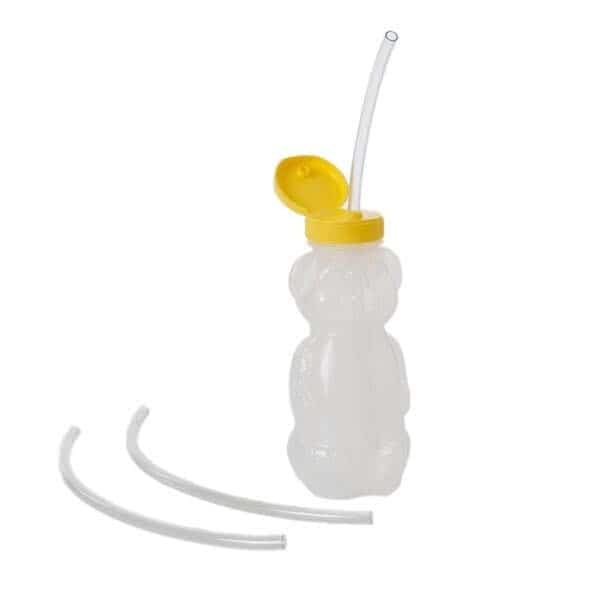
A honey bear straw training cup and improve independence and oral motor skills needed for drinking from a straw
Utensils:
- Feeding utensils that have flanges to prevent choking
- pre-spoons that have a webbed opening for dipping in purees and thicker blends
- silicone or textured spoons can provide more oral awareness
- EazyHold silicone straps can help support holding a utensil for a child with limited grasping abilities
Plates and Bowls
- Suction bowls and plates and improve independence, helping with providing stability for scooping and poking with utensils
- Sectioned plates can reduce anxiety about foods touching
2. Mobility Aids:
- For children with mobility challenges, explore adaptive strollers, positioning devices, or early mobility devices like crawling aids.
- Ride-on toys and baby balance bikes can be a universal form of mobility for some children
3. Car Seats:
Premature babies may need a car seat tolerance test to ensure they can safely tolerate sitting upright and maintain breath support without distress.
Keeping your child in a rear-facing position for as long as possible has many safety benefits. It can be especially beneficial if there are airway concerns, low muscle tone, and poor head control
4. Sensory Stimulation:
Toys with a variety of textures, lights, and sounds can be beneficial for sensory development and motivating for movement
Infant rattle socks and wrist rattles can encourage body awareness and reaching
Mirrors or water mats can be great sensory experiences for tummy time
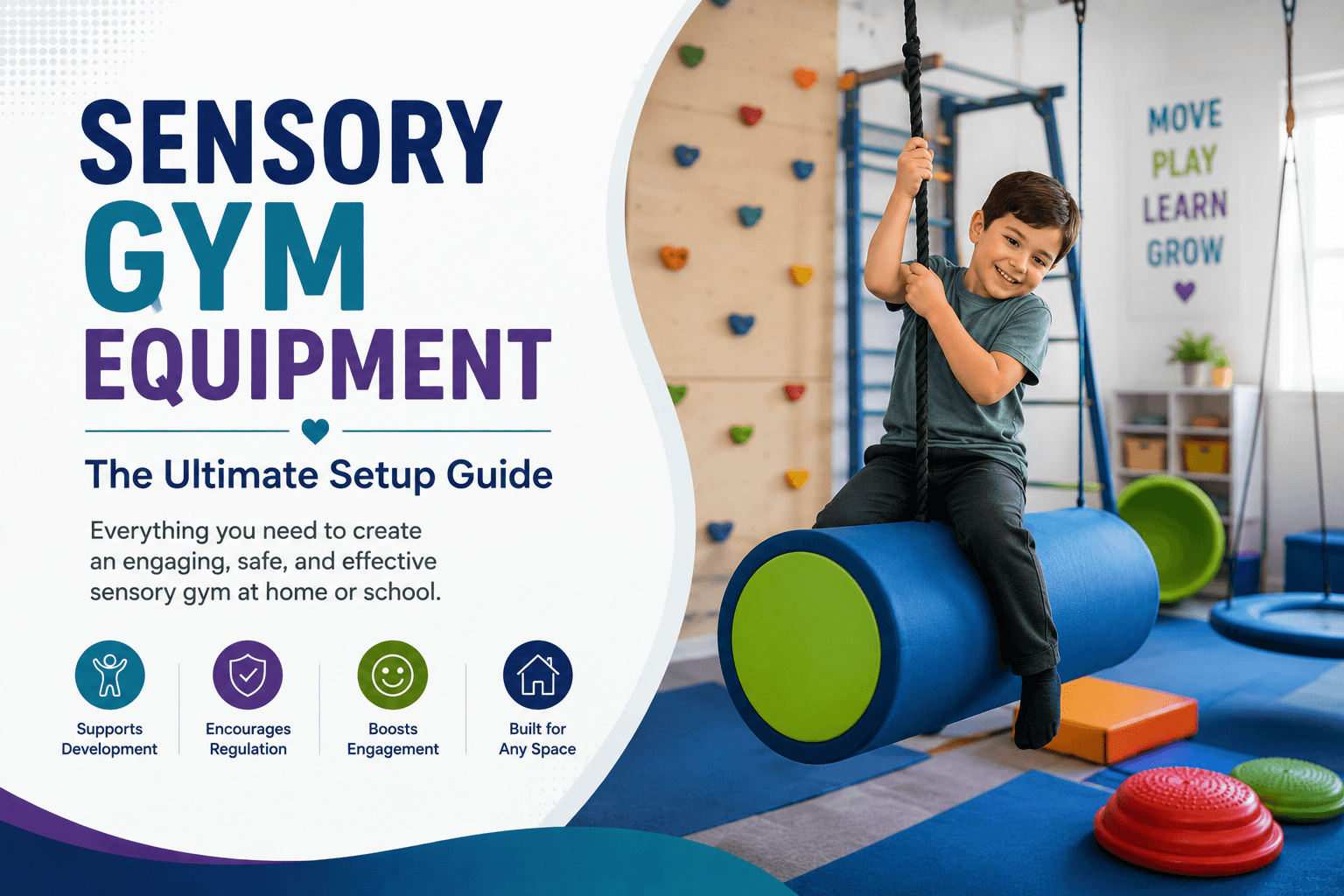
Swings and slides provide vestibular movement and can help improve body awareness and sensory regulation
School Age Children (6-12)
1. Feeding and Drinking:
- Universal Cuffs can help a child with a limited grasp hold and use feeding utensils'
- Nosey Cups can improve independence with open-cup drinking for those with difficulty maintaining proper neck and head positioning for safe swallowing.
- Built-up or angled food utensils can improve independence for individuals with limited grasp and range of motion
2. Mobility Aids:
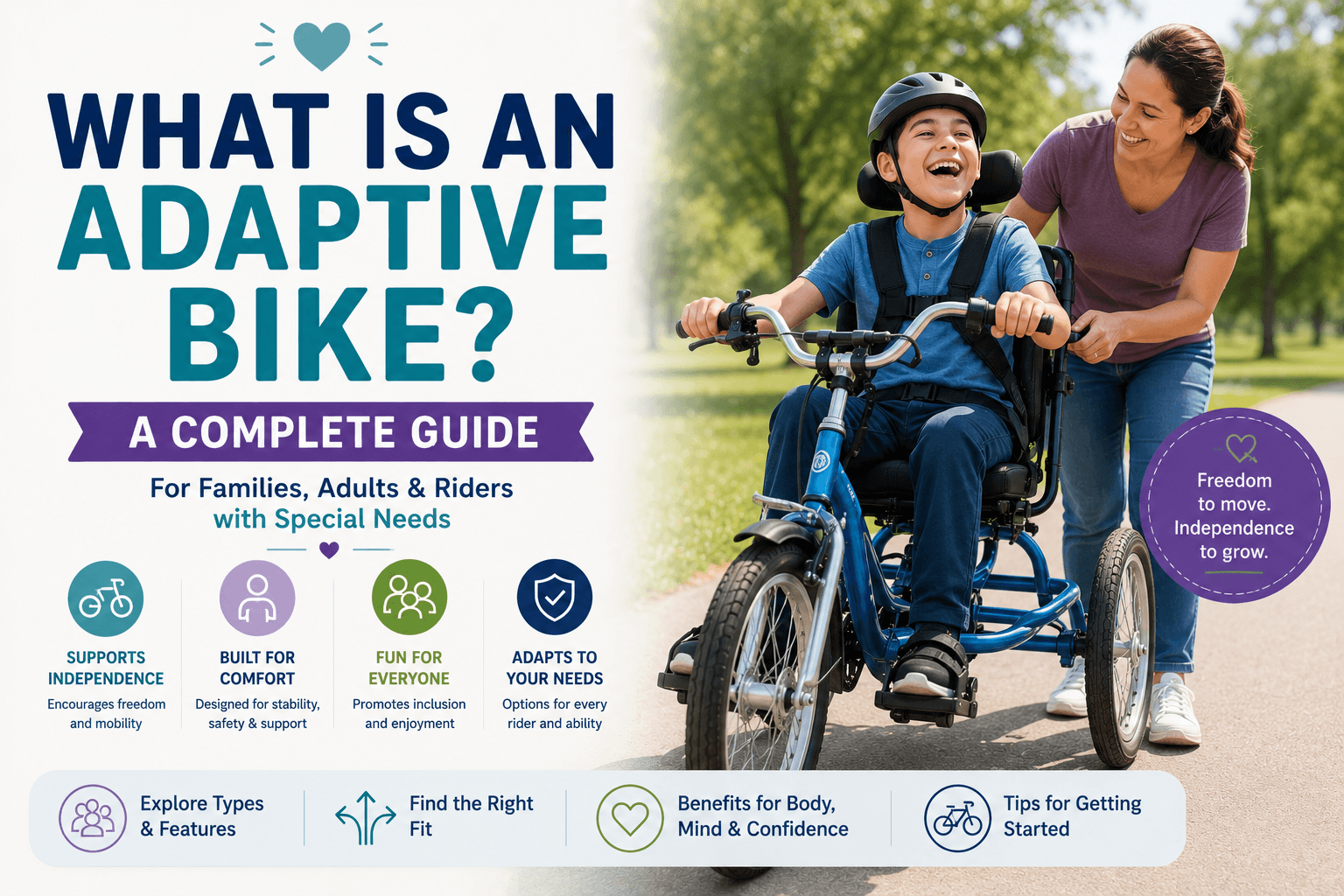
- Adapted Tricycles can provide children of all abilities to improve body coordination, strength, and mobility by riding a trike with adaptations and positioning support.
- Gait trainers or rear-facing walkers may be beneficial to improve the mobility independence for children with disabilities.
3. Car Seats and Safety:
- Consider a seat that has a swivel feature (rotates the car seat towards the door opening) to make loading and unloading much easier.
- Consider a Ride Safer Vest or EZ-On Vest to keep your child upright and secure in addition to preventing undoing of a standard seatbelt for safety.
- Consider a buckle guard to prevent the child from taking their seat belt off during transportation.
4. Sensory Stimulation:
- Sensory bins with wet or dry materials encourage hands-on sensory experiences. Digging, pouring, stirring, and scooping can also strengthen your child's hand muscles
- Pressure or weighted vests can provide calming input and improve attention for seated activities, transitions, or community outings
- Bubble columns or fiber optic lighting can encourage engagement and awareness, allow for visual development and tracking, progress communication skills, and create a sense of calm and relaxation.
Adolescents (13-17)
1. Feeding and Drinking:
- Food guards help a user guide food back onto utensils while stopping meals from sliding off a standard plate.
- Powder-coated utensils can improve safety for children who have a strong bite.
- Individuals with poor motor coordination may benefit from clothing protectors to prevent their clothes from getting dirty during meal times.
2. Mobility Aids:
- Evaluations for manual or power wheelchair's can improve the mobility independence and social participation of older children.
- Slide boards can improve independence of transferring from one seated surface to another.
3. Car Seats and Safety:
- Consider a buckle guard to prevent the individual from taking their seat belt off during transportation.
- Powered transfer seats can swivel, rotate, lower and lift and individual into and out of a vehicle.
- Wheelchair restraints and docking systems can secure a wheelchair to the floor of the vehicle. Once secured, it is locked in place like a standard car seat.
4. Sensory Stimulation:
- Large bean bags or crash pads can be good outlets for proprioceptive input
- Ball chairs or stools can improve attention for completing homework and also improve core strength.
- Noise canceling head phones can improve toleration of a variety of community environments.