Table of Contents
- Key Takeaways: What to Look for in Special Needs Strollers
- How to Evaluate Special Needs Strollers for Bigger Kids
- 1. Weight Capacity That Matches Your Child's Growth
- 2. Seating Support and Postural Positioning
- 3. Foldability and Transport Convenience
- 4. Terrain Handling and Wheel Configuration
- 5. Growth Adjustability for Long-Term Use
- 6. Harness and Safety Systems
- 7. Canopy, Sun Protection, and Weather Readiness
- 8. Accessories and Customization Options
- How to Find the Right Adaptive Stroller for Your Child
- FAQs
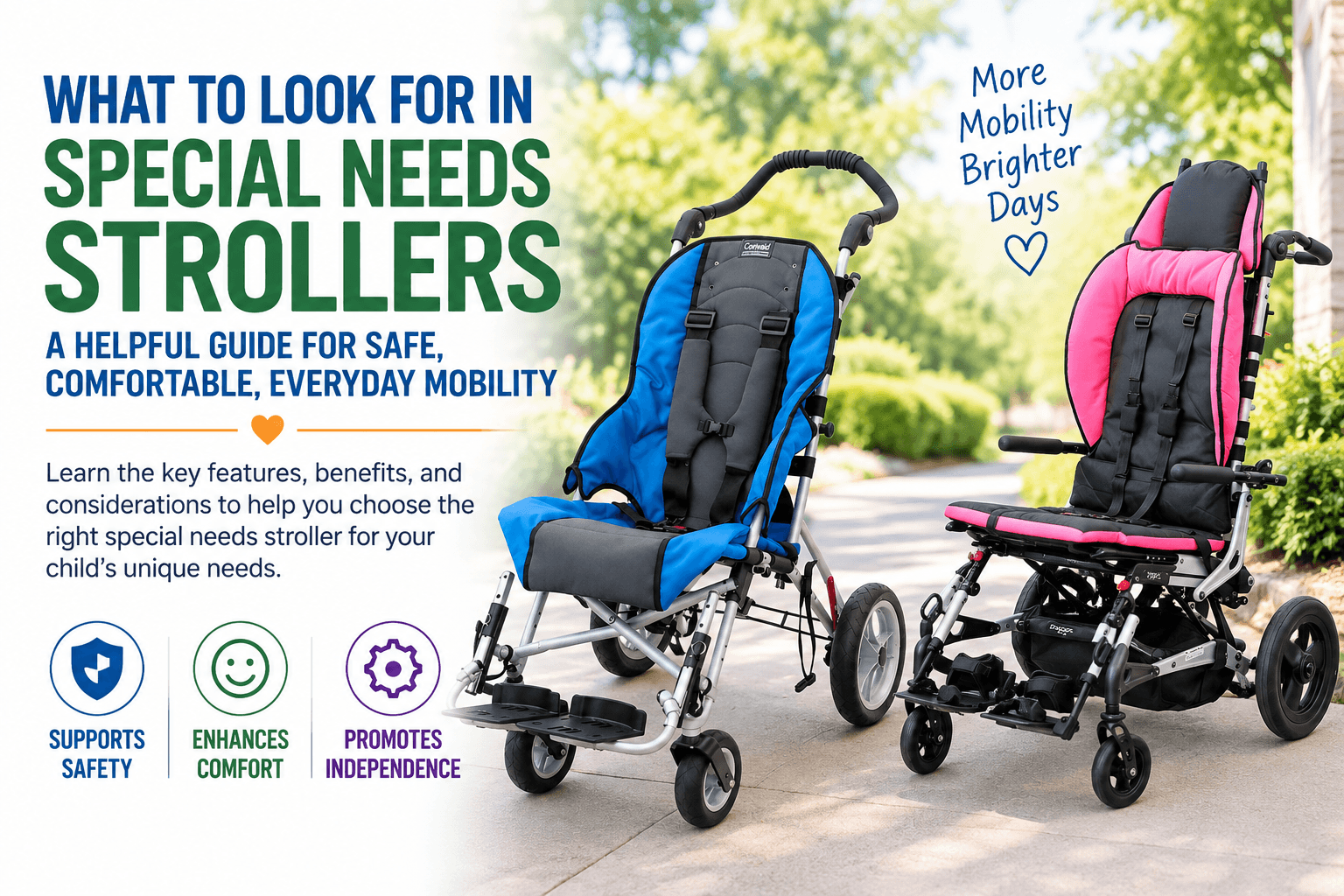
Choosing the right special needs strollers for a bigger kid means looking beyond basic features. You need a stroller that supports your child's posture, handles their weight safely, and still has room for growth over the next few years.
eSpecial Needs offers adaptive strollers designed to meet the mobility and positioning needs of older children and teens. This article walks you through the most important evaluation criteria so you can make a confident, informed decision.
Below, you'll find a breakdown of weight capacity, seating support, foldability, terrain readiness, and other factors that occupational therapists and physical therapists consider when recommending strollers for bigger kids.
Key Takeaways: What to Look for in Special Needs Strollers
- Weight capacity should exceed your child's current weight to allow for safe, long-term use and growth.
- Adjustable seating support, including tilt and recline, helps maintain proper posture during outings and transport.
- Foldability and transport ease matter for daily routines, car travel, and school bus compatibility.
- eSpecial Needs carries adaptive strollers from multiple manufacturers with options for every age and size.
- Therapists evaluate terrain handling, harness systems, and growth adjustability before recommending a stroller.
How to Evaluate Special Needs Strollers for Bigger Kids
1. Weight Capacity That Matches Your Child's Growth
Weight capacity is the first specification to check. A stroller rated too close to your child's current weight will wear down faster and may not support them safely during bumps or inclines.
Therapists recommend choosing a stroller rated at least 20 to 30 pounds above your child's current weight. This gives you a buffer for growth spurts and the added load of medical supplies or positioning accessories.
Many adaptive strollers for older kids range from 100 to 250 pounds in capacity, lasting well into the teen years.
2. Seating Support and Postural Positioning
Proper seating support keeps your child's spine aligned and reduces fatigue during longer outings. Look for strollers with adjustable seat depth, backrest angle, and lateral trunk supports.
Tilt-in-space is a feature that changes the seat's angle relative to the ground without changing the hip-to-back angle. This helps with pressure relief and can improve head control for children with limited trunk stability.
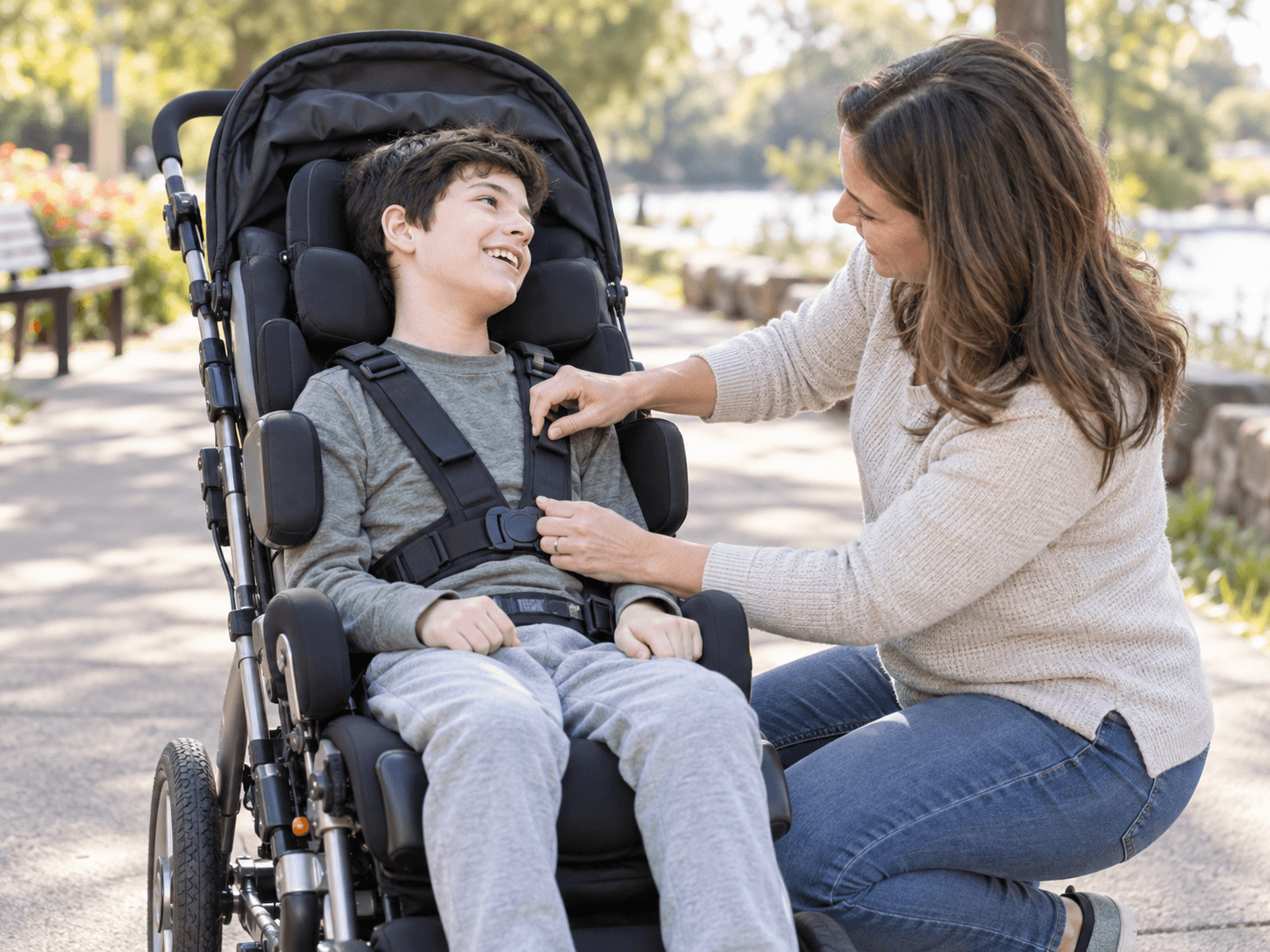
A five-point harness is standard on most adaptive seating systems and strollers. It distributes force across the shoulders, hips, and between the legs, keeping your child secure during transport.
3. Foldability and Transport Convenience
If you load and unload a stroller multiple times a day, folding ease matters. Umbrella-fold strollers collapse into a narrow profile that fits in most car trunks. Standard-fold models are bulkier but often include more positioning features.
Look for a one-hand fold mechanism if you frequently manage the stroller while holding your child's hand or carrying supplies. Quick-release wheels can reduce the folded size even further.
For families who rely on school bus transport, WC19 crash-test certification is an important safety feature. Strollers with this rating have been tested for use with vehicle tie-down systems.
4. Terrain Handling and Wheel Configuration
Where you use the stroller determines what wheels you need. Hard plastic wheels work on smooth indoor floors but have difficulty on gravel, grass, or cracked sidewalks.
Pneumatic (air-filled) tires absorb bumps and vibrations much more effectively. A suspension system adds another layer of comfort, especially for children who are sensitive to jarring movements.
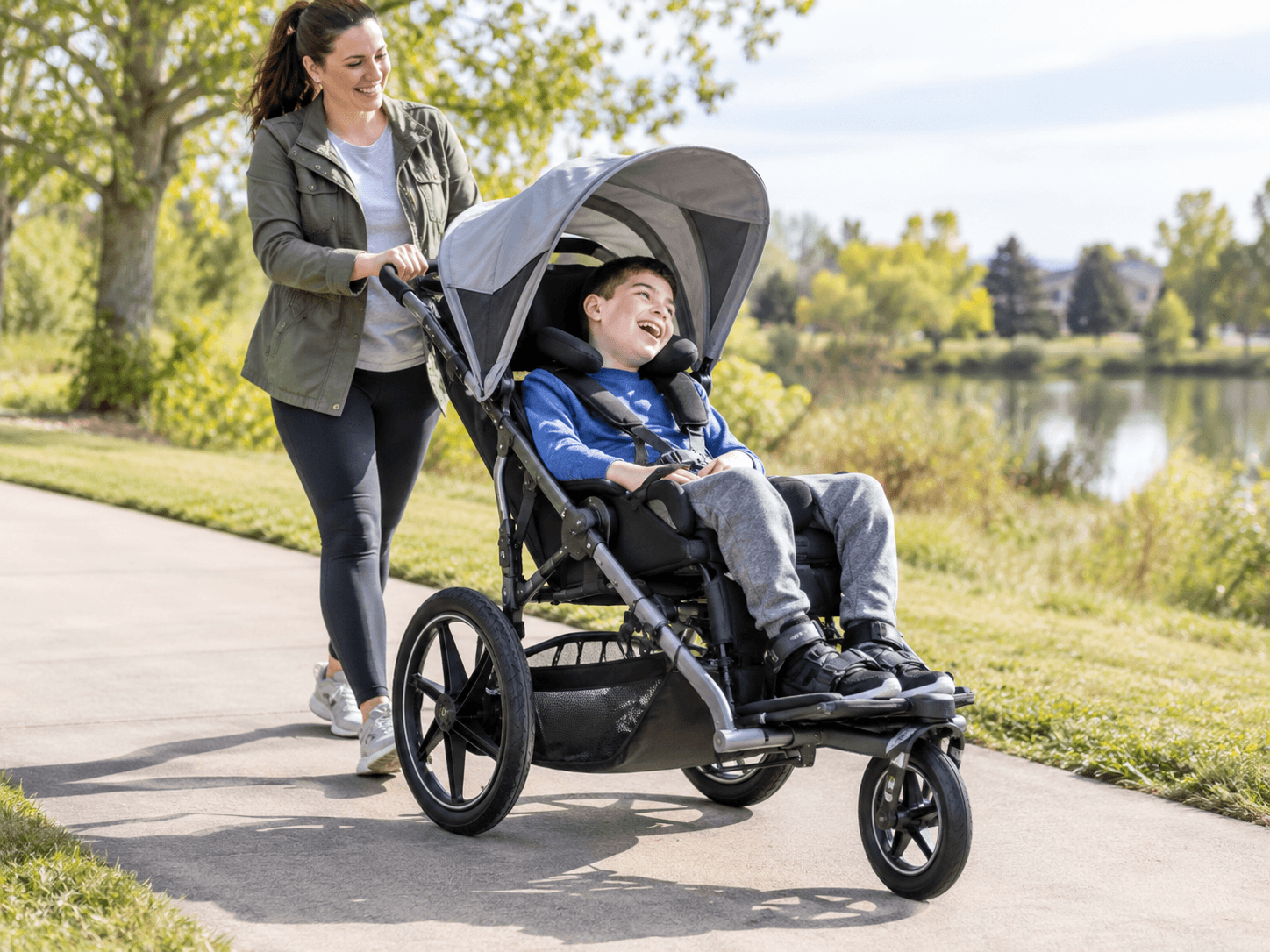
Three-wheel jogging strollers, like the Kool-Stride Jogging Stroller, handle outdoor trails and park paths with ease. Four-wheel designs are more stable on flat surfaces and in crowded spaces.
5. Growth Adjustability for Long-Term Use
Children grow quickly, and replacing a stroller every year or two adds up. Look for models with adjustable seat width, depth, and back height so the stroller fits your child at multiple stages.
Some strollers include seat depth extension kits that add inches as your child's legs grow longer. Adjustable footrests and armrest heights also help maintain a comfortable, supportive fit over time.
The Hoggi Bingo Evolution, for example, comes in four sizes and adjusts across multiple dimensions, allowing the stroller to grow with your child from early childhood through adolescence.
6. Harness and Safety Systems
A reliable harness keeps your child seated safely during transitions over curbs, ramps, or uneven ground. Five-point harnesses distribute restraint force evenly across the body.
Some strollers offer chest harnesses or positioning vests for children who need additional trunk support. Padded straps reduce skin irritation during extended use.
Braking systems also vary. Foot-operated brakes are standard, but some models include hand brakes for downhill control. According to a 2026 study in Disability and Rehabilitation: Assistive Technology, early access to well-fitted mobility devices supports participation and independence in children.
7. Canopy, Sun Protection, and Weather Readiness
Extended outdoor time requires protection from sun, wind, and rain. A retractable canopy with UV protection shields your child during walks, therapy sessions, and community outings.
Some canopies extend far enough to cover the full seat, while others only shade the head and shoulders. Removable canopies are easier to wash and can be stowed when not needed.
For families in warmer climates, breathable seat fabrics and mesh panels help with airflow. Washable upholstery is also worth considering if your child uses the stroller daily.
8. Accessories and Customization Options
Accessories turn a general stroller into a personalized mobility solution. Head supports, lateral trunk pads, abductor wedges, and tray tables are common add-ons that therapists recommend based on your child's positioning needs.
Storage is another factor. Many adaptive strollers include under-seat baskets or rear pouches for carrying medical supplies, feeding equipment, or everyday essentials during outings.
eSpecial Needs stocks positioning accessories alongside their stroller collection, so you can outfit the stroller to match your child's therapy goals and daily comfort requirements.
How to Find the Right Adaptive Stroller for Your Child
Start by working with your child's occupational therapist or physical therapist. They can take precise measurements of hip width, seat depth, and lower leg length to narrow down which strollers fit your child's body.
Think about your daily routine. If you need a stroller for school transport, prioritize WC19 certification. For weekend hikes or park visits, pneumatic tires and suspension matter more than a compact fold.
eSpecial Needs gives you access to adaptive strollers from multiple manufacturers, along with a quote request service that matches your child's measurements and positioning needs to the right equipment. Their team of specialists understands the clinical criteria therapists use, helping you find a stroller that works for your family's lifestyle.
FAQs
What weight capacity should I look for in a stroller for a bigger child?
Choose a stroller rated at least 20 to 30 pounds above your child's current weight. This allows room for growth and the added weight of positioning accessories or medical supplies carried along during outings.
What is tilt-in-space and why does it matter?
Tilt-in-space changes the seat angle without altering your child's hip-to-back position. It helps with pressure relief, head control, and overall comfort. eSpecial Needs carries several strollers with this feature.
Do special needs strollers fold for car travel?
Yes, many adaptive strollers fold compactly for transport. Umbrella-fold models collapse into a narrow shape, while standard-fold strollers may need more trunk space. Check folded dimensions before purchasing.
How do I know if a stroller is safe for school bus transport?
Look for WC19 crash-test certification. Strollers with this rating have been tested for use with vehicle tie-down systems on school buses and accessible vans. eSpecial Needs identifies transit-ready models in their listings.