Table of Contents
- What Are Crawling Aids?
- Why Crawling Matters
- Crawling Aids for Special Needs
- Featured Crawling Products at eSpecial Needs
- Crawling Aids for Therapy
- Crawling Aids for Home and Early Learning
- Pairing Crawling Equipment With Other Supports
- How to Choose the Right Crawling Aid
- Shop Crawling Aids at eSpecial Needs
- FAQs
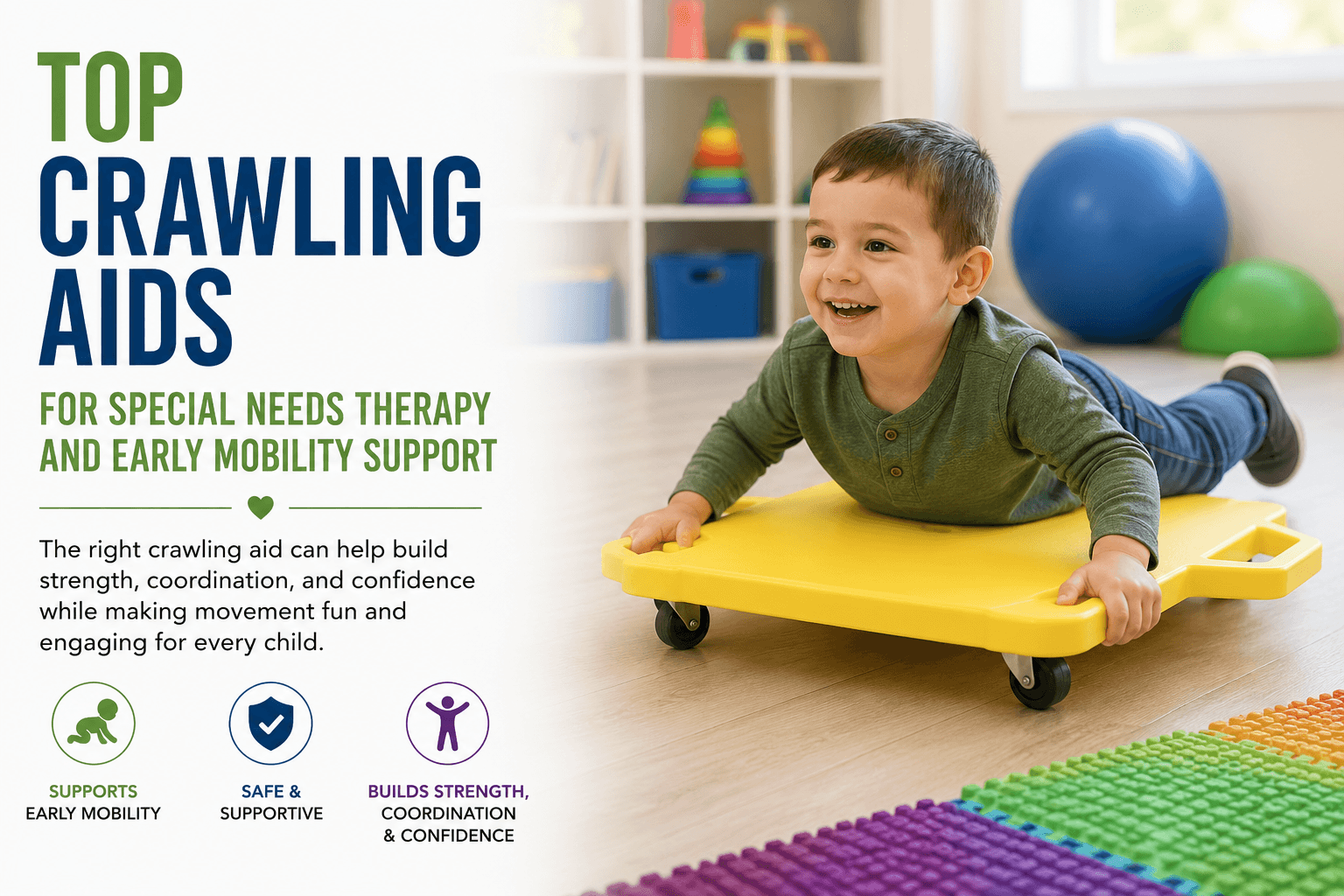
Crawling aids can help children and individuals with special needs practice early mobility, coordination, strength, and body awareness in a supported way. Crawling is an important developmental movement pattern because it helps connect the upper body, lower body, core, hands, knees, eyes, and brain during movement. For children with developmental delays, low muscle tone, physical challenges, or motor planning difficulties, crawling may require extra support.
The Crawling collection at eSpecial Needs includes supportive therapy crawling equipment designed for home, therapy clinics, early intervention programs, schools, and care settings. These tools can help users practice movement safely and comfortably while encouraging exploration, strength building, and greater independence.
What Are Crawling Aids?
Crawling aids are supportive mobility tools that help position the body for crawling, floor movement, and early motor practice. They may include padded supports, rolling bases, contoured body supports, adjustable frames, or therapy crawlers that reduce strain while encouraging active movement.
Crawling aids may support:
Early mobility practice
Core strength
Upper body strength
Coordination
Motor planning
Body awareness
Balance development
Floor based play
Therapy activities
Independent exploration
Confidence with movement
These tools are often used when a child needs help maintaining a supported crawling position or needs a more comfortable way to practice coordinated movement patterns.
Why Crawling Matters
Crawling is more than moving across the floor. It helps build foundational skills that can support later movement, posture, learning, and independence. When a child crawls, they use both sides of the body together, shift weight through the arms and legs, coordinate movement, and develop strength through the shoulders, hands, hips, and trunk.
Crawling may help support:
Shoulder stability
Arm and hand strength
Core engagement
Hip and leg movement
Visual tracking
Bilateral coordination
Spatial awareness
Motor planning
Sensory motor development
Early problem solving through movement
For some children, crawling does not develop easily. A therapy crawler can provide added support so the child can focus on movement without having to manage every postural demand at once.
Crawling Aids for Special Needs
Children with special needs may need crawling support for many different reasons. Some may have low muscle tone and need help staying lifted from the floor. Others may have coordination difficulties and need support to practice movement patterns. Some children may need crawling equipment as part of physical therapy, occupational therapy, or early intervention goals.
Crawling aids may be helpful for children with needs related to:
Developmental delays
Cerebral palsy
Low muscle tone
Poor trunk control
Motor planning challenges
Coordination delays
Balance difficulties
Reduced upper body strength
Limited floor mobility
Sensory motor delays
Every child is different. A therapist or early intervention specialist can help determine whether crawling equipment is appropriate and how it should be used.
Featured Crawling Products at eSpecial Needs
The Child’s Pediatric Therapy Crawler helps small children work on crawling, coordination, and movement skills while being comfortably supported. Its contoured foam design helps hold the body during crawling practice, and removable head and arm supports allow caregivers and therapists to adjust the level of support. It includes vinyl covered foam for easy cleaning and quiet easy glide ball casters for smooth therapy movement.
The Skillbuilders Crawler is designed to aid elementary crawling when body support is required. It encourages crawling without focusing on a specific pattern and includes adjustable height, a waterproof leatherette body support, and positioning that can tilt forward or backward. It is designed for children ages 3 to 9 and supports children up to 90 pounds.
These crawling tools can be useful in therapy clinics, homes, schools, early learning spaces, and pediatric support programs.
Crawling Aids for Therapy
Physical therapists, occupational therapists, and early intervention specialists may use crawling aids to help children practice movement in a structured and supportive way. A crawler can help reduce the physical demand of holding the body up while still encouraging the child to use the arms, legs, trunk, and head during movement.
Therapy activities may include:
Moving toward a toy
Reaching while supported
Practicing weight shifting
Building shoulder strength
Encouraging head and trunk control
Moving across a mat
Crawling through a short path
Practicing coordinated arm and leg movement
Building tolerance for floor based activity
Combining crawling with play
Crawling equipment works best when it is part of a plan that matches the child’s needs, therapy goals, and safety requirements.
Crawling Aids for Home and Early Learning
Families may use crawling aids at home to support supervised practice, exploration, and play. A child may use a crawler to move toward a favorite toy, explore a safe floor area, or practice movement after therapy guidance.
Early learning programs and classrooms may also use crawling tools for children who need support during floor based activities, sensory motor play, or early mobility practice.
Helpful setup tips include:
Use crawling aids on a clear, flat surface
Keep the activity area free of obstacles
Use soft mats when appropriate
Supervise the child closely
Keep practice short and positive
Use favorite toys for motivation
Stop if the child becomes tired or upset
Follow therapist recommendations
The goal is to make movement practice safe, encouraging, and successful.
Pairing Crawling Equipment With Other Supports
Crawling aids can be part of a larger sensory motor or mobility support plan. Depending on the child’s needs, they may pair well with therapy mats, soft play products, positioning tools, sensory motor equipment, and early mobility supports.
Helpful related categories include:
A therapist can help determine which tools work together safely.
How to Choose the Right Crawling Aid
The best crawling aid depends on the child’s size, strength, control, mobility goals, and therapy recommendations. Some children may need a simple padded support, while others may need a crawler with adjustable height, casters, or removable supports.
Before choosing crawling equipment, consider:
Child’s age and size
Weight capacity
Trunk control
Head control
Arm strength
Leg movement
Comfort
Adjustability
Surface type
Cleaning needs
Therapy goals
Home or clinic use
Supervision requirements
Choosing the right crawling aid should always focus on fit, comfort, safety, and the child’s current abilities.
Shop Crawling Aids at eSpecial Needs
The Crawling collection at eSpecial Needs includes therapy crawling equipment and mobility support tools for children and individuals with special needs. These products are designed to encourage safe movement, strength development, coordination, and early independence.
Whether you are a parent, therapist, teacher, caregiver, or early intervention provider, crawling aids can help create more opportunities for supported movement, exploration, and skill development.
FAQs
Who can benefit from crawling aids?
Crawling aids may benefit children with developmental delays, low muscle tone, poor trunk control, coordination challenges, balance difficulties, motor planning delays, or limited floor mobility. A therapist can help decide whether a crawling aid is appropriate.
Why is crawling important for development?
Crawling helps build strength, coordination, body awareness, balance, and motor planning. It also encourages the arms, legs, trunk, eyes, and brain to work together during movement.
Can crawling aids be used in therapy?
Yes. Crawling aids are often used in physical therapy, occupational therapy, and early intervention settings. Therapists may use them to support weight shifting, reaching, upper body strength, trunk control, and coordinated movement.
How should I set up a crawling activity?
Use a clear, flat surface with enough space for movement. Place motivating toys nearby, keep the session short, supervise closely, and follow any guidance from the child’s therapist.
What should I avoid when using a crawling aid?
Avoid uneven floors, cluttered areas, stairs, unsafe surfaces, sharp furniture, long unsupervised sessions, or activities that cause discomfort, fatigue, or distress. Stop if the child seems tired, upset, or unsafe.
Where can I buy crawling aids?
You can shop Crawling Aids at eSpecial Needs. You can also browse Crawlers, Sensory Motor Tools, Movement Equipment, Soft Play Products, and Mobility.