Table of Contents
- Why Climbing Matters
- Climbing Equipment for Special Needs
- Climbing for Sensory Motor Development
- Climbing Rock Walls
- Climbers and Soft Play Climbing Sets
- Ladders and Indoor Gym Climbing Tools
- Climbing Equipment for Schools and Therapy Clinics
- Climbing Equipment for Home Sensory Spaces
- Safety Tips for Climbing Equipment
- How to Choose the Right Climbing Product
- Shop Climbing Equipment at eSpecial Needs
- FAQs
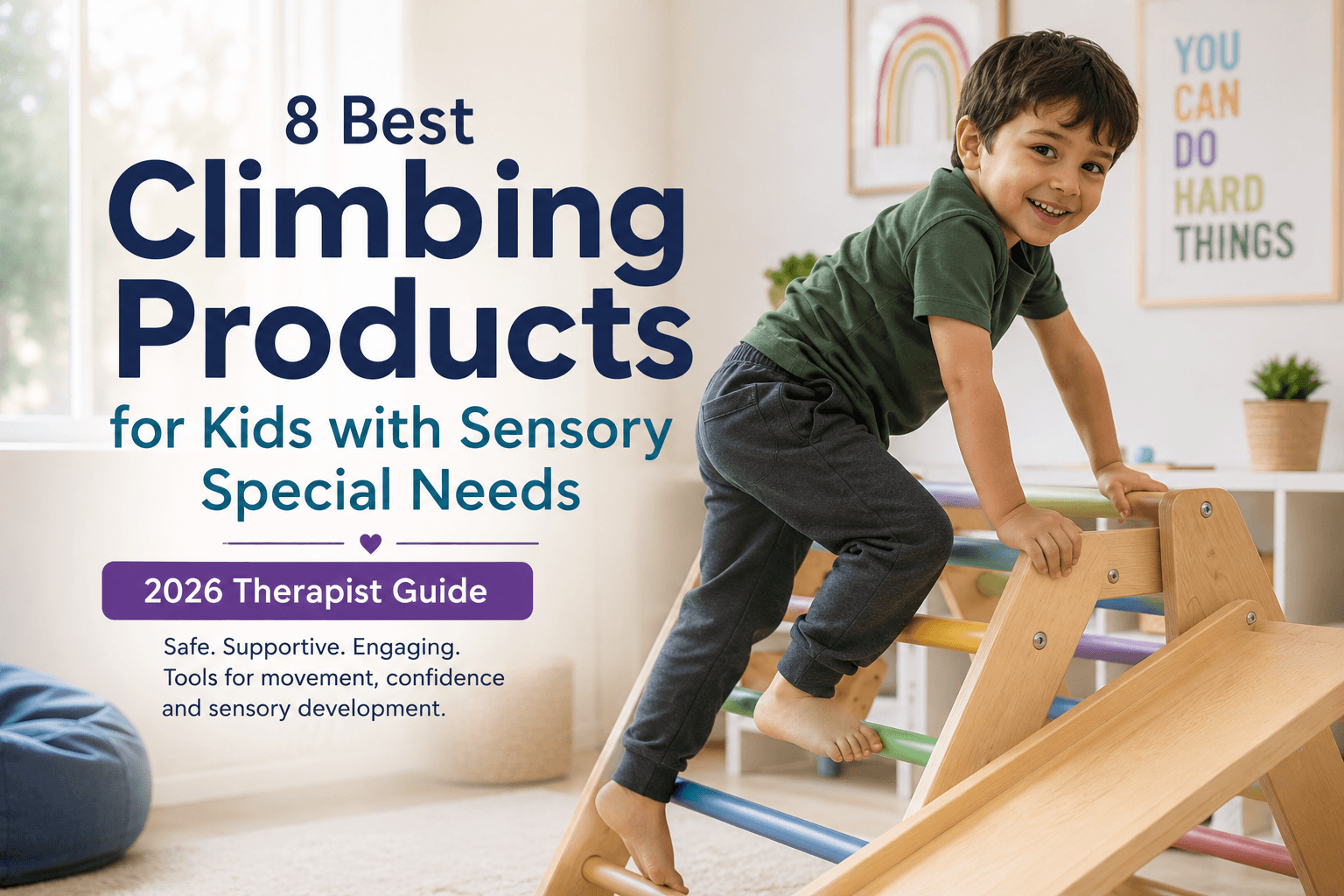
Climbing equipment can help children and adults build strength, coordination, confidence, balance, and body awareness through active movement. For individuals with autism, sensory processing needs, developmental delays, low muscle tone, motor planning challenges, or physical disabilities, climbing can provide an engaging way to practice gross motor skills in a structured, motivating environment.
At eSpecial Needs, the Climbing collection includes active play equipment for homes, schools, therapy clinics, gyms, sensory rooms, and special education spaces. From soft play climbers and ladders to adaptive climbing walls and indoor therapy gym equipment, these products can help users explore movement while working on important developmental skills.
Why Climbing Matters
Climbing is more than play. It requires the body and brain to work together. A child must reach, grip, pull, step, balance, shift weight, plan movement, and decide where to go next. These actions can support both physical development and problem solving.
Climbing activities may support:
Upper body strength
Lower body strength
Core stability
Balance
Coordination
Motor planning
Body awareness
Spatial awareness
Sensory motor development
Confidence
Focus
Perseverance
Active play
For many children, climbing feels exciting and rewarding. That motivation can make it easier to participate in movement based activities that might otherwise feel difficult.
Climbing Equipment for Special Needs
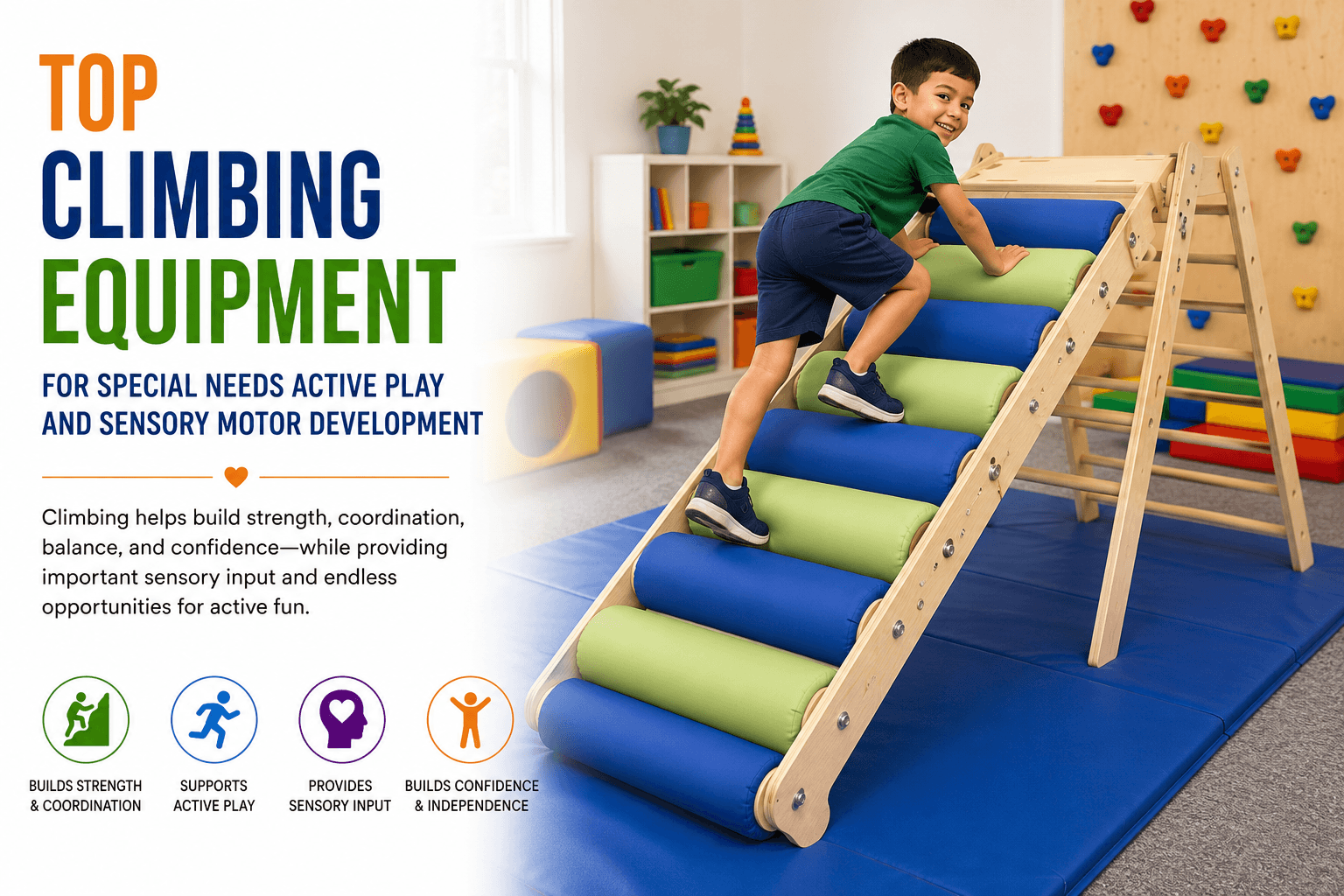
Climbing equipment for special needs should be chosen with safety, support, and access in mind. Some users may need low height soft play climbers. Others may benefit from structured climbing walls, ladders, or indoor gym equipment that encourages reaching, stepping, and weight shifting.
Helpful climbing equipment may include:
Soft play climbers
Foam climbing sets
Therapy ladders
Indoor climbing walls
Adaptive climbing walls
Rope ladders
Net climbers
Tunnel climbers
Indoor therapy gyms
Active play structures
The best option depends on the user’s age, size, strength, mobility, balance, confidence, and supervision needs.
Climbing for Sensory Motor Development
Many children seek movement because their bodies need sensory input. Climbing can provide proprioceptive input through pushing, pulling, gripping, and weight bearing. It can also provide vestibular input when the body changes position, moves upward, shifts balance, or transitions from one surface to another.
This type of sensory motor activity may be helpful for children who benefit from:
Heavy work activities
Whole body movement
Active sensory breaks
Obstacle courses
Strength building
Balance challenges
Body awareness practice
Structured movement routines
Climbing can pair well with Sensory Motor Tools, Movement Equipment, Balance Products, Crash Pads, and Soft Play Products.
Climbing Rock Walls
Climbing Rock Walls can create a structured physical challenge for children and adults who are ready for a more organized climbing activity. Rock walls encourage users to plan each reach and step while practicing balance, coordination, grip strength, core control, and problem solving.
A climbing wall may be useful in:
Therapy clinics
Schools
Sensory rooms
Indoor gyms
Adaptive recreation spaces
Special education programs
Home movement areas
The Adaptive Climbing Wall is designed to help include youth with special needs in climbing programs. It includes features such as a dry erase and magnet accepting surface for learning activities, adaptive holds for added stability, and color coded hand holds for different challenge levels.
Climbers and Soft Play Climbing Sets
Climbers and soft play climbing products can be helpful for younger children or users who need a more forgiving climbing surface. Foam and soft play climbers can encourage crawling, stepping, climbing, sliding, kneeling, and moving across different shapes.
Soft climbers may support:
Early gross motor development
Crawling and climbing practice
Balance exploration
Confidence with movement
Indoor play
Therapy activities
Preschool and daycare use
Sensory room movement zones
Products like soft play climbers and tunnel climbers can be especially useful when paired with mats, crash pads, and clear adult supervision.
Ladders and Indoor Gym Climbing Tools
Ladders and rope based climbing tools can help users practice grip strength, coordination, motor planning, and full body control. These tools may be used in indoor therapy gyms, sensory motor rooms, and active play spaces when installed and supervised properly.
Climbing ladders may support:
Hand strength
Bilateral coordination
Upper body engagement
Sequencing of movement
Motor planning
Confidence
Active play participation
For a more complete movement area, climbing tools may be paired with Indoor Therapy Gyms, Adaptive Swings and Gyms, Swing Frames, and Safety Mats.
Climbing Equipment for Schools and Therapy Clinics
Schools and therapy clinics often use climbing equipment to support gross motor development, sensory integration activities, physical education, therapy goals, and active play. In these environments, durability, supervision, safety surfaces, and proper setup are especially important.
Climbing equipment may be used for:
Occupational therapy
Physical therapy
Adaptive physical education
Special education movement breaks
Sensory room activities
Gross motor rooms
Indoor obstacle courses
Recreation therapy
Group play
Confidence building
Schools and organizations can also use eSpecial Needs resources for Quote Requests, Purchase Orders, and Schools and Government Agencies.
Climbing Equipment for Home Sensory Spaces
Families may add climbing equipment to a home sensory room, basement play area, therapy room, or indoor active play space. A climbing tool can help children get movement input in a more intentional area instead of climbing on furniture, counters, beds, or unsafe household surfaces.
Home climbing equipment may be useful for:
Sensory seeking movement
Indoor active play
Therapy carryover
Strength building
Daily movement breaks
Home obstacle courses
Confidence with movement
Gross motor practice
For home use, choose products that fit the room, match the child’s ability level, and leave plenty of safe space around the activity area.
Safety Tips for Climbing Equipment
Climbing equipment should always be used with adult supervision and a safe setup. Even supportive climbing products require clear rules, proper installation, and regular inspection.
Important safety tips include:
Choose equipment that matches the user’s size and ability
Review product weight limits
Use proper mats or protective flooring
Keep hard furniture away from climbing zones
Follow installation instructions carefully
Confirm wall mounted products are installed securely
Supervise climbing activities
Use one climber at a time when needed
Check equipment for wear or damage
Stop if the user becomes tired, unsafe, or upset
Keep the area clear of clutter and tripping hazards
For active climbing rooms, related safety products like Wall Padding, Protective Mats and Padding, and Crash Pads can help create a more supportive movement space.
How to Choose the Right Climbing Product
The best climbing equipment depends on the user and the space. A preschool classroom may need a low soft play climber. A therapy clinic may need a climbing wall, ladder, or indoor gym system. A home sensory room may need compact climbing equipment with safety mats.
Before choosing, consider:
User age and size
Weight capacity
Strength level
Balance skills
Grip ability
Motor planning needs
Height tolerance
Supervision level
Indoor or outdoor use
Room size
Floor padding
Wall protection
Installation requirements
Cleaning and maintenance
Therapy or classroom goals
If the user has complex physical or safety needs, a therapist or equipment professional can help guide product selection.
Shop Climbing Equipment at eSpecial Needs
The Climbing collection at eSpecial Needs includes climbing equipment for special needs, therapy, sensory rooms, schools, gyms, and home active play spaces. These products are designed to support strength, coordination, confidence, body awareness, and movement based learning.
You can also browse related categories such as Climbers, Ladders, Climbing Rock Walls, Movement Equipment, Active Play, Soft Play Products, Sensory Motor Tools, and Indoor Therapy Gyms.
FAQs
What type of climbing equipment is best for beginners?
Beginners often do best with low height, soft climbing equipment that allows them to crawl, step, climb, and explore without a high fall risk. Soft play climbers, foam steps, small ramps, and padded climbing shapes can be good starting options.
Can climbing equipment be used in a sensory room?
Yes. Climbing equipment can be used in a sensory room when there is enough space, proper supervision, protective flooring, and a clear safety plan. It works best in an active movement zone away from fragile calming tools or quiet seating areas.
Is climbing equipment helpful for children with autism?
Climbing equipment may be helpful for some autistic children who seek movement, heavy work, pressure through the hands and feet, or active sensory input. The equipment should match the child’s comfort level, motor ability, and safety awareness.
Does climbing equipment require mats?
Many climbing activities should be used with safety mats, protective flooring, or other approved padding. The need for mats depends on the height, product type, room layout, user ability, and manufacturer recommendations.
Where can I buy climbing equipment for sensory rooms and therapy spaces?
You can shop Climbing Equipment at eSpecial Needs. You can also browse Climbers, Climbing Rock Walls, Ladders, Soft Play Products, Sensory Motor Tools, and Indoor Therapy Gyms.