Table of Contents
- Key Takeaways: Signs a Child Has Outgrown a Special Needs Stroller
- How to Recognize When Your Child's Stroller No Longer Fits
- 1. The Seat Depth Is Too Short for Your Child's Thighs
- 2. The Trunk Supports No Longer Contact the Torso
- 3. The Headrest Sits Below the Top of the Head
- 4. Your Child Is Approaching the Maximum Weight Capacity
- 5. The Harness No Longer Holds a Secure Position
- 6. The Footrests Cannot Be Adjusted to the Correct Height
- 7. The Stroller Frame Shows Structural Wear or Damage
- 8. Your Child's Positioning Needs Have Changed
- What to Do When You Spot These Signs
- FAQs
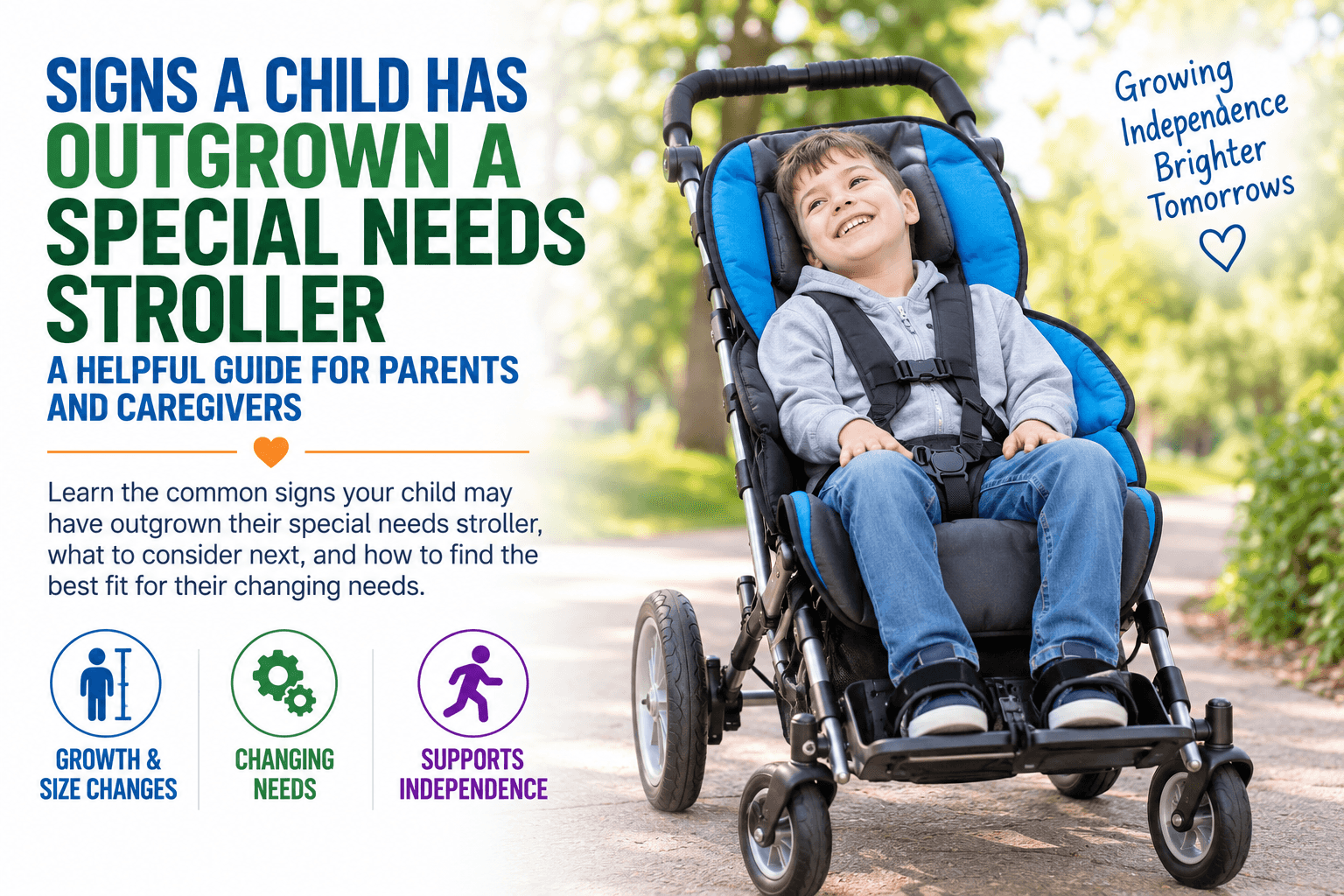
A special needs stroller that fit your child well two years ago may not be the right match today. Growth spurts, changing support needs, and daily wear can all affect how well a stroller works for your student or family member. eSpecial Needs carries adaptive strollers designed to support children and teens across a wide range of sizes and positioning needs. This article walks you through the clearest signs that a child may need a different stroller, so you can act before comfort or safety is affected.
Below, you'll find practical indicators that families, therapists, and school teams can apply during routine equipment checks.
Key Takeaways: Signs a Child Has Outgrown a Special Needs Stroller
- A child's knees extending past the seat edge signals that the seat depth no longer supports the thighs properly.
- Frequent sliding forward in the harness often means the pelvic positioning belt can no longer hold alignment.
- When the headrest sits below the crown, the stroller cannot protect the head during transport.
- Approaching the manufacturer's weight limit reduces frame stability, braking reliability, and overall safety over time.
- eSpecial Needs offers special needs stroller with growth-adjustable frames that can extend usable life by several years.
How to Recognize When Your Child's Stroller No Longer Fits
1. The Seat Depth Is Too Short for Your Child's Thighs
Proper seat depth keeps the thighs fully supported from hip to just behind the knee. When a child's legs extend well past the seat edge, pressure shifts to the back of the knees. This can restrict circulation and cause discomfort during longer outings.
You can check this by measuring the distance from the back of the seat to the crease behind your child's knee. If the gap is two inches or more, the seat is too short. Many adaptive strollers include adjustable seat depth, so confirming whether your current stroller has reached its maximum extension is a good first step.
2. The Trunk Supports No Longer Contact the Torso
Lateral trunk supports are designed to keep your child positioned in midline. As a child grows wider through the shoulders and ribcage, these supports may no longer make full contact with the torso. This gap reduces the stroller's ability to prevent leaning or tilting to one side.
If your child leans consistently to one side or needs extra padding to stay centered, the trunk supports may be too narrow. A postural support assessment with your child's occupational therapist can confirm whether the current frame still accommodates their body width.
3. The Headrest Sits Below the Top of the Head
A headrest should support the back of the skull at or above the midpoint of the head. When the headrest drops to neck level or lower, it cannot protect the head during sudden stops or uneven terrain. This is especially important for students who ride school buses while seated in their stroller.
Check headrest height with your child in their typical resting position. If the top of the headrest is more than an inch below the crown, the stroller frame may be too short. Some models allow backrest height extensions, so consult your stroller's specifications before deciding on a replacement.
4. Your Child Is Approaching the Maximum Weight Capacity
Every stroller has a manufacturer-rated weight limit, and approaching that limit affects frame integrity, wheel performance, and braking. A 2025 study published in Bioengineering found that assistive device needs shift significantly with growth, requiring frequent reassessment of equipment fit and function.
Therapists typically recommend upgrading when a child reaches 80% of the stroller's rated capacity. This leaves a margin for growth and ensures the frame handles daily use safely. You can find models with capacities up to 250 lbs through the strollers and wheelchairs collection at eSpecial Needs.
5. The Harness No Longer Holds a Secure Position
A five-point harness distributes force across the shoulders, hips, and between the legs. When a child grows taller, the shoulder straps may pull at an angle that allows the torso to slide upward. When they grow wider, the waist straps may not fasten snugly enough to keep the pelvis stable.
Signs of poor harness fit include frequent readjustment by caregivers, visible strap marks on the skin, and the child shifting out of position during transport. If the harness is at maximum extension and still not fitting correctly, the stroller has been outgrown.
6. The Footrests Cannot Be Adjusted to the Correct Height
Footrest position affects pelvic alignment and overall seated posture. When the footrests are too high, the knees push upward and tilt the pelvis backward. When they are too low, the legs dangle unsupported, pulling the body forward.
Measure from the crease behind the knee to the bottom of the foot while your child is seated. Compare this to the stroller's footrest range. If the footrest cannot reach the correct height at any setting, the stroller is no longer supporting proper lower body alignment.
7. The Stroller Frame Shows Structural Wear or Damage
Daily use takes a toll on any piece of mobility equipment. Bent frame joints, cracked plastic components, wobbly wheels, and worn brake pads all reduce safety. A stroller that tips more easily or pulls to one side may have structural issues from supporting a child who has outgrown it.
Regular maintenance checks can catch these problems early. If repairs are becoming frequent or parts are no longer available for your stroller model, replacing the unit is usually the more reliable option.
8. Your Child's Positioning Needs Have Changed
Growth is not the only factor. A child's muscle tone, postural control, and daily activity demands may change over time. A stroller that worked during early elementary years may not offer enough tilt-in-space or recline for an older student who fatigues more quickly during the school day.
According to school-based therapists, re-evaluating seating and positioning every two to three years helps catch changes that are not always obvious. If your child now needs pressure relief, more recline for rest breaks, or different trunk support, these are signs that a new stroller configuration may be needed.
What to Do When You Spot These Signs
Noticing one or two of these indicators does not always mean an immediate replacement is needed. Start by checking whether your current stroller has unused adjustment range. Many adaptive strollers include growth extensions for seat depth, backrest height, and footrest position.
If the stroller is fully extended and still not fitting, schedule an assessment with your child's occupational therapist or physical therapist. They can take accurate measurements and recommend a stroller that matches your child's current and projected needs. eSpecial Needs offers a quote request service where their specialists help match your child's measurements to the right equipment.
Choosing a stroller with room to grow can extend usable life and reduce the frequency of replacements. eSpecial Needs carries therapist recommended strollers for older children and teens with adjustable frames and higher weight capacities designed for long-term use.
FAQs
How often should you reassess a child's stroller fit?
Reassess stroller fit every six to twelve months, or whenever you notice changes in posture, comfort, or harness fit. Children grow at different rates, so regular checks help catch problems early.
School based therapists often include stroller assessments as part of annual IEP equipment reviews.
Can you extend the life of a special needs stroller with accessories?
Yes, many strollers accept aftermarket head supports, trunk pads, and harness extensions. These accessories can address minor fit issues and add a few months of usable life.
eSpecial Needs carries positioning accessories that work with many popular adaptive stroller models.
What measurements do you need for a new stroller fitting?
You need hip width, seat depth from hip to behind the knee, lower leg length, and back height measurements taken while the child is seated. These four numbers help match the child to the correct stroller size.
Is a stroller replacement covered by insurance or Medicaid?
Many adaptive strollers qualify for coverage through Medicaid, Medicaid waivers, or private insurance when a doctor's prescription and letter of medical necessity are included. Coverage policies vary by state.
What is the difference between outgrowing a stroller and needing a wheelchair?
Outgrowing a stroller means the current frame no longer fits or supports your child properly. Needing a wheelchair is a clinical decision based on your child's self-propulsion ability and daily mobility goals.
Your child's therapy team can help determine which mobility solution is the right next step.