Table of Contents
- Key Takeaways: How Adaptive Strollers Support Safety and Posture
- What Is an Adaptive Stroller?
- How Does Postural Support Work in Adaptive Strollers?
- Why Do Safety Harnesses Matter for Students with Special Needs?
- What Growth Adjustability Features Should Schools Look For?
- How Do Adaptive Strollers Compare to Regular Strollers?
- What Should School-Based Therapists Consider When Evaluating Adaptive Strollers?
- In Summary: Selecting Adaptive Strollers for School Use
- FAQs
Adaptive strollers are specifically designed mobility devices that help children with special needs maintain safe, supported positioning during daily activities. Unlike standard strollers, these medical-grade options include features like trunk support, secure harnesses, and adjustable seating systems that address the unique requirements of children with conditions such as cerebral palsy, muscular dystrophy, or developmental delays.
For K-12 special education teams and school-based therapists, understanding what makes adaptive strollers different from regular strollers is essential. eSpecial Needs offers a selection of special needs strollers designed with features that support postural control, safe transport, and participation in school and community activities. This article breaks down the key features that matter most for students who need additional mobility support.
Key Takeaways: How Adaptive Strollers Support Safety and Posture
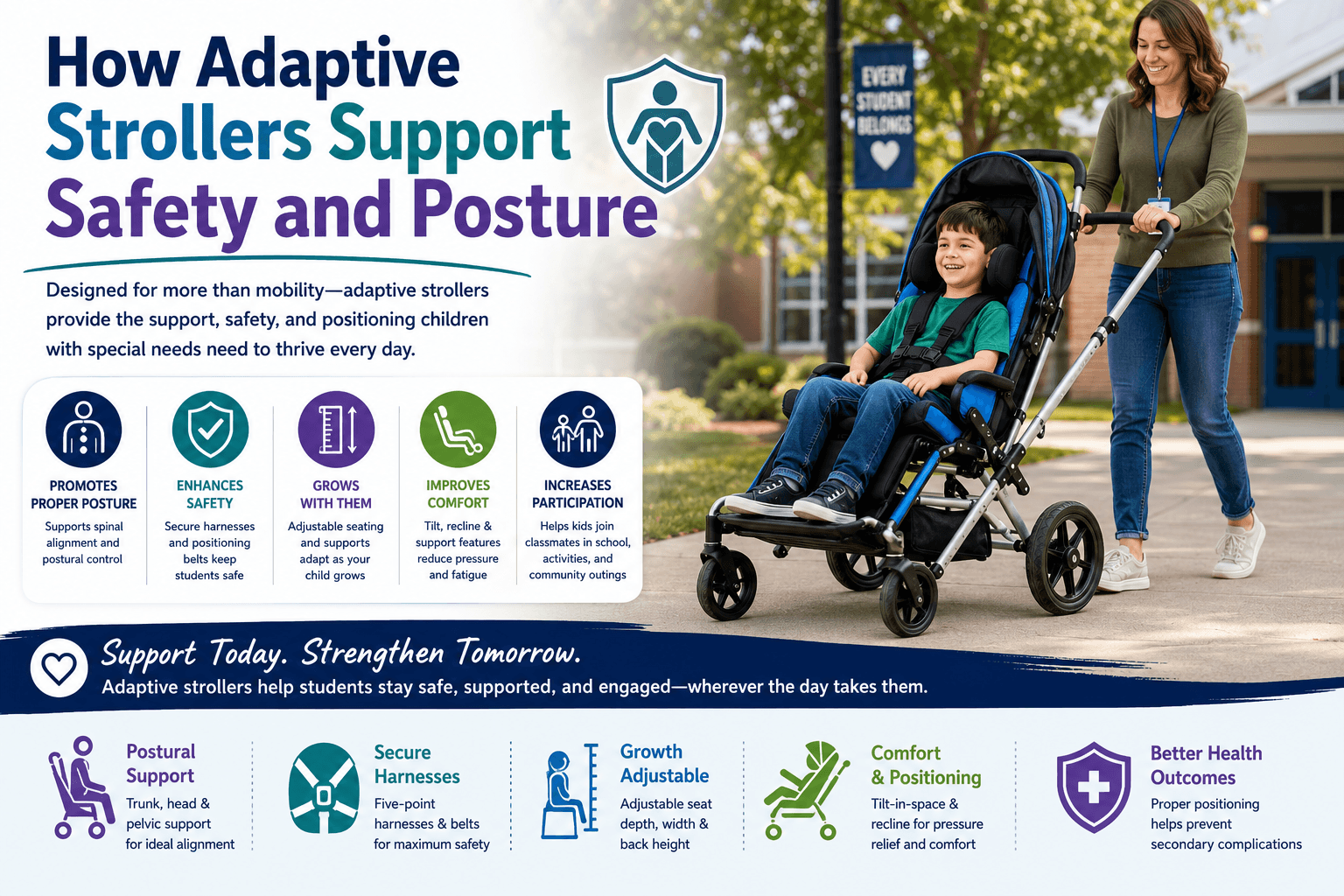
- Adaptive strollers feature trunk, head, and pelvic support systems that help maintain proper spinal alignment during seated transport.
- Safety harnesses with five-point systems and secure positioning belts keep students safely positioned throughout the school day.
- Growth-adjustable features like seat depth and backrest height allow the same stroller to support a child for multiple years.
- eSpecial Needs carries adaptive strollers with tilt-in-space, recline, and adjustable support options for diverse student needs.
- Proper stroller positioning can help prevent secondary complications like pressure sores, contractures, and respiratory issues over time.
What Is an Adaptive Stroller?
An adaptive stroller is a lightweight mobility device on wheels designed for children and adults who need more postural support than a standard stroller can offer. According to KidsHealth, adaptive strollers are appropriate for children ages 3 and older who need trunk or head support. These devices serve as an alternative to bulkier wheelchairs for everyday outings and school transportation.
For school settings, adaptive strollers help students move between classrooms, participate in activities, and join their peers during recess and field trips. The stroller is pushed by another person—typically a caregiver, teacher, or paraprofessional—while the child remains safely positioned.
How Does Postural Support Work in Adaptive Strollers?
Postural support refers to the features that help a child maintain proper body alignment while seated. In adaptive strollers, this includes adjustable supports for the head, trunk, and pelvis. These components work together to keep the spine in a neutral position and prevent slumping or leaning.
Proper positioning matters because it affects more than just comfort. Research published in the Journal of Clinical Medicine (2024) demonstrates that sitting postural management helps prevent hip migration in non-ambulatory children with cerebral palsy. When children sit with good alignment, they also breathe more easily, digest food better, and engage more actively with their surroundings.
Many adaptive strollers include tilt-in-space and recline functions. Tilt-in-space shifts the entire seat angle while maintaining the hip-to-back position, which helps redistribute pressure. Recline adjusts the back angle independently, allowing changes in position throughout the day.
Why Do Safety Harnesses Matter for Students with Special Needs?
Safety harnesses in adaptive strollers do more than keep a child from falling out. A well-designed harness system helps maintain the child's position, supports trunk stability, and ensures secure transport during movement.
Most adaptive strollers include a five-point harness system with straps over both shoulders, around the waist, and between the legs. This configuration distributes restraint force across the body's strongest points. For students with low muscle tone or limited trunk control, the harness acts as an external support system that reduces fatigue and allows them to sit more upright.
Positioning belts for the pelvis are another key feature. These belts angle downward across the hips to keep the pelvis stable at the back of the seat. Without proper pelvic positioning, children may slide forward or tilt to one side, which affects their overall posture and comfort.
What Growth Adjustability Features Should Schools Look For?
Children grow quickly, and their mobility equipment needs to grow with them. Adaptive strollers with growth-adjustable features can support a student for several years, making them a practical choice for schools and families. Key adjustments include seat depth, seat width, backrest height, and footrest position.
Seat depth adjustment is particularly important. As a child's legs grow longer, the seat needs to extend to support the thighs properly. A seat that's too short places pressure behind the knees, while a seat that's too deep pushes the child forward and reduces back support. Most adaptive strollers offer several inches of seat depth adjustment built into the design.
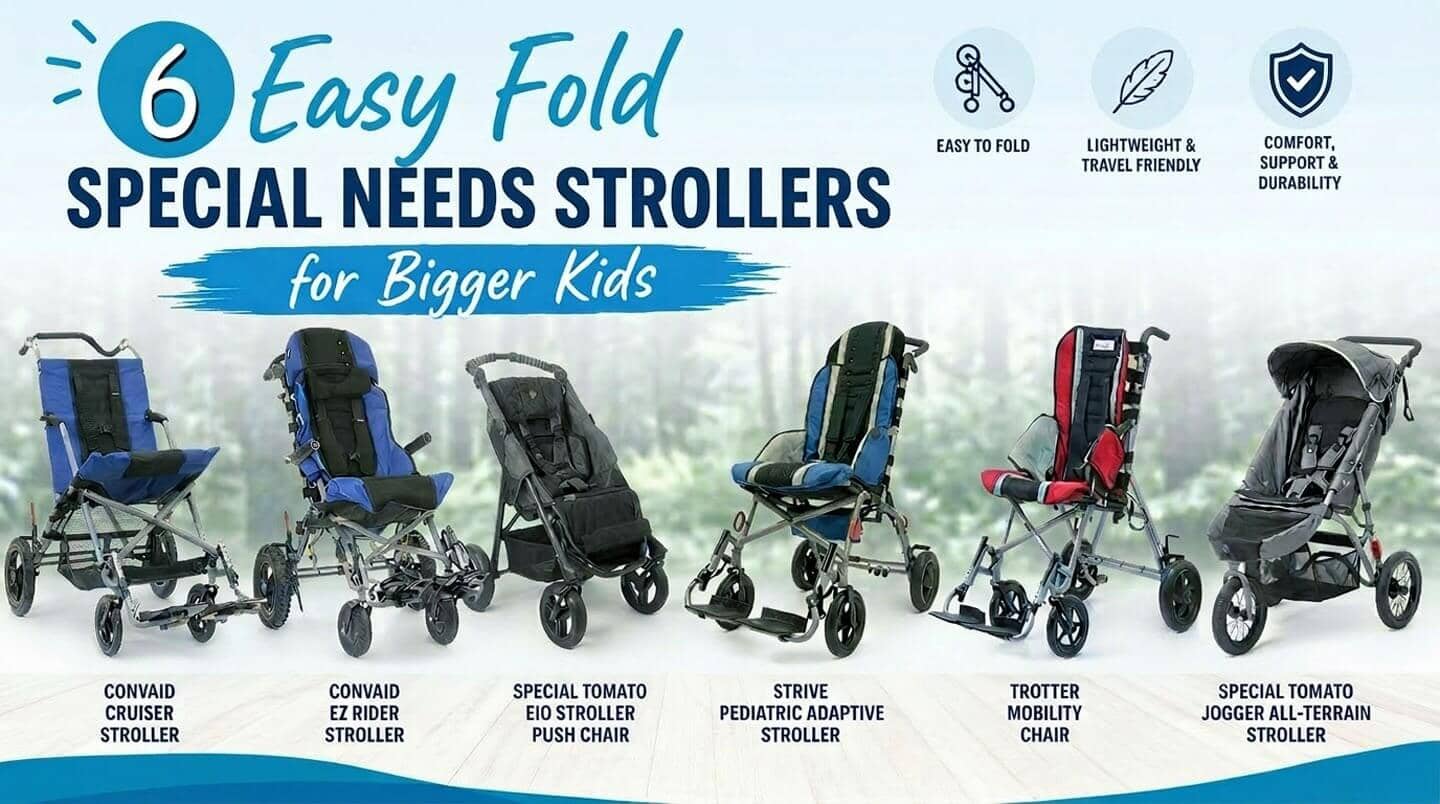
eSpecial Needs carries strollers like the Convaid Cruiser, which is designed to accommodate growth over multiple years. Features like adjustable supports and extendable seating help ensure the stroller continues to meet the student's needs as they develop.
How Do Adaptive Strollers Compare to Regular Strollers?
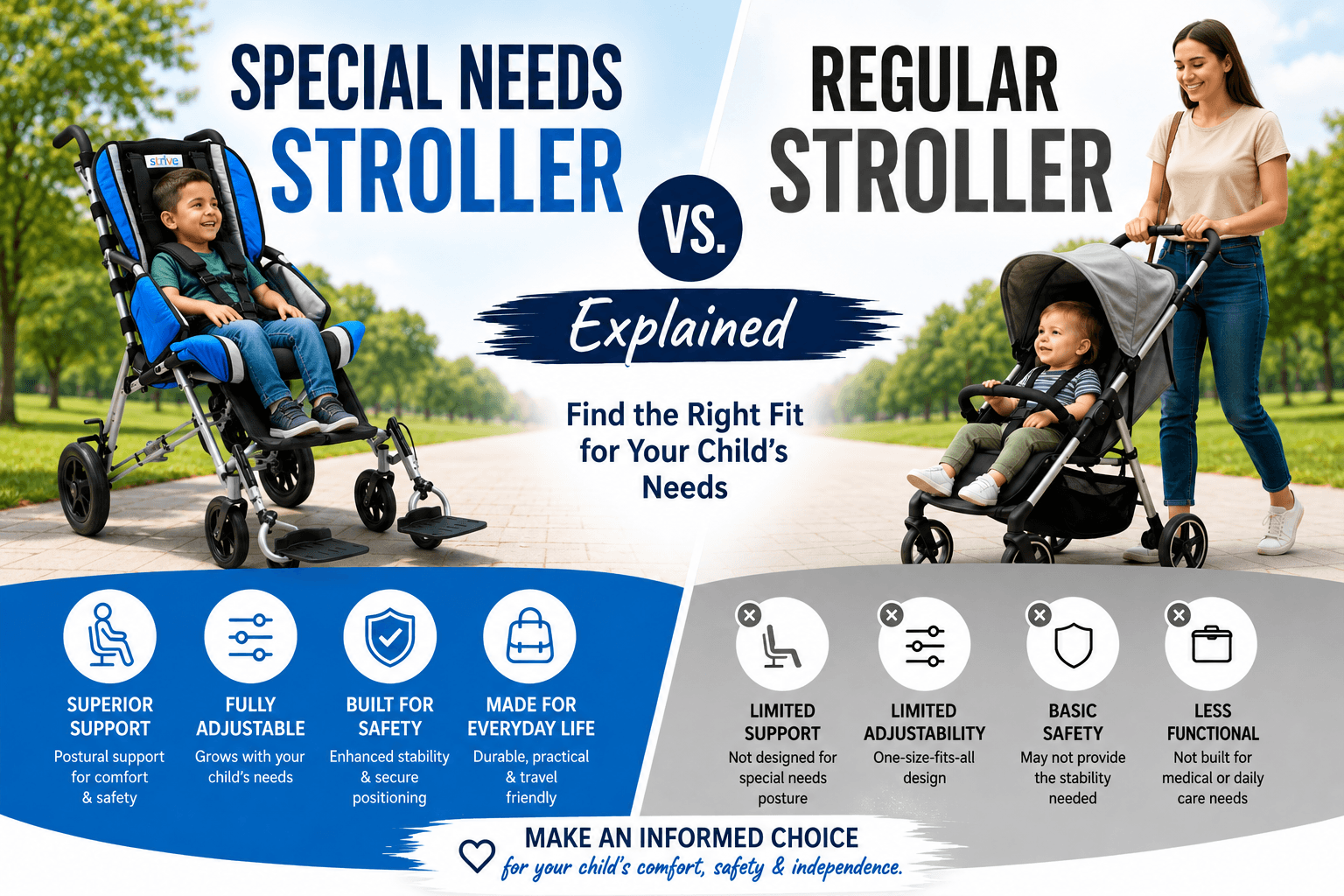
Regular strollers are designed for typically developing children who can sit independently and control their head and trunk. They lack the positioning features that students with special needs require for safe, supported seating.
Adaptive strollers include several features that regular strollers do not:
- Head and trunk support systems that hold the upper body in proper alignment
- Pelvic positioning belts that prevent sliding and maintain hip stability
- Tilt and recline options that allow position changes for comfort and pressure relief
- Higher weight capacities and larger seat sizes for older children and adults
- Crash-tested frames for safe vehicle transport
For students who cannot sit independently, a regular stroller simply cannot keep them safe or comfortable. The specialized features of adaptive strollers address specific physical needs while still allowing participation in daily activities.
Special Tomato EIO Stroller Push Chair - Adaptive Stroller
$921.50
$2,062.05
The Special Tomato EIO Stroller Push Chair is a lightweight adaptive stroller designed to provide comfortable mobility and positioning support from early intervention through preadolescence. Built for children who need more support than a standard stroller, the EIO combines everyday… read more

What Should School-Based Therapists Consider When Evaluating Adaptive Strollers?
Occupational therapists and physical therapists working in schools often help families and teams select appropriate mobility equipment. When evaluating adaptive strollers for a student, therapists typically consider the child's current support needs, growth patterns, and daily routine.
Key evaluation factors include:
- Does the student need head support, trunk support, or both?
- How much tilt or recline does the student need for comfort and function?
- Will the stroller fit in school hallways, buses, and classrooms?
- Can the stroller accommodate the student's projected growth over the next few years?
- Is the stroller lightweight and portable enough for daily use?
Many school teams re-evaluate mobility needs every 2-3 years or when the student's physical abilities change significantly. Regular assessment helps ensure that the stroller continues to support the student's postural and safety needs as they grow.
In Summary: Selecting Adaptive Strollers for School Use
Adaptive strollers offer students with special needs the postural support, safety, and adjustability they need to participate in school and community life. Features like trunk and head supports, secure harness systems, and growth-adjustable seating help children maintain proper positioning throughout the day.
For special education teams, understanding these features makes it easier to select appropriate equipment and advocate for student needs. eSpecial Needs offers a range of adaptive strollers designed for schools and families, with options that support everything from basic positioning to more complex support requirements.
FAQs
What is an adaptive stroller?
An adaptive stroller is a supportive mobility device designed for children, teens, or some adults who need more postural support than a standard stroller can provide. Adaptive strollers often include positioning features such as head support, trunk support, pelvic belts, harnesses, footrests, tilt, recline, and adjustable seating to help support safer seated transport.
How is an adaptive stroller different from a regular stroller?
A regular stroller is typically made for younger children who can sit with good head and trunk control. An adaptive stroller is designed for users who need extra support for posture, safety, comfort, and mobility. Adaptive strollers may offer higher weight capacities, larger seat sizes, supportive harness systems, adjustable footrests, tilt and recline features, and positioning accessories that are not usually found on standard strollers.
Who may benefit from an adaptive stroller?
An adaptive stroller may benefit children or adults with cerebral palsy, muscular dystrophy, developmental delays, low muscle tone, poor trunk control, limited endurance, mobility challenges, neurological conditions, or special needs that affect safe seated positioning. Families, schools, therapists, and caregivers may use adaptive strollers to support transport, participation, and daily routines.
How do adaptive strollers support posture?
Adaptive strollers support posture by helping position the head, trunk, pelvis, legs, and feet in better alignment. Features like lateral supports, pelvic positioning belts, headrests, footrests, and adjustable seat depth can help reduce sliding, leaning, slumping, and fatigue. Better posture can make it easier for the user to look around, communicate, breathe comfortably, and participate in daily activities.
Why is pelvic support important in an adaptive stroller?
Pelvic support helps keep the hips stable and positioned toward the back of the seat. When the pelvis slides forward or tilts, the rest of the body often follows, which can lead to slumping, poor trunk alignment, discomfort, and reduced head control. A properly positioned pelvic belt or support system can help improve seated stability and comfort.
What is tilt in space on an adaptive stroller?
Tilt in space allows the entire seat to change angle while keeping the user’s hip and back position supported. This can help redistribute pressure, improve comfort, support rest breaks, and assist users who fatigue during upright sitting. Tilt in space is different from recline because the seat and back move together rather than only changing the back angle.
What is recline on an adaptive stroller?
Recline changes the angle of the backrest. This may help with rest, positioning, comfort, or caregiver routines depending on the user’s needs. Recline should be used according to the stroller’s instructions and the user’s therapy or medical recommendations, especially if the child has feeding, breathing, tone, or postural concerns.