Table of Contents
- What Is Wheelchair Seating and Positioning?
- Defining Seating and Positioning in Rehabilitation
- Who Needs Seating and Positioning Support?
- What Does Proper Positioning Do for People?
- Physical Health Benefits of Correct Wheelchair Posture
- Cognitive and Functional Participation Benefits
- Risks of Poor Wheelchair Positioning
- Wheelchair Positioning Goals Explained
- Common Wheelchair Positioning Goals Examples
- Positioning Goals for Children vs. Adults
- Long-Term Care Positioning Considerations
- Types of Wheelchair Seating and Positioning Devices
- Wheelchair Posture Support Devices Overview
- Modular Seating Systems for Wheelchairs
- Lateral Supports, Headrests, and Trunk Support
- Cushions and Pressure Relief Seating
- Positioning Equipment for Children with Special Needs
- Assistive Technology for Seating and Positioning
- Power Tilt and Recline Systems
- Integrating AAC and Assistive Tech with Seating Systems
- The Role of Occupational Therapy in Seating and Positioning
- Seating and Positioning Occupational Therapy Assessment
- What to Expect at a Seating and Positioning Clinic
- Working with a Seating and Positioning Specialist
- How to Measure for Proper Wheelchair Seating
- Key Body Measurements for Wheelchair Fitting
- Using a Wheelchair Measurement Guide
- Common Fitting Mistakes to Avoid
- How to Choose the Right Seating and Positioning Equipment
- Questions to Ask Before Buying
- Working with an Adaptive Equipment Specialist
- Why Wheelchair Seating and Positioning Are Important
- FAQs
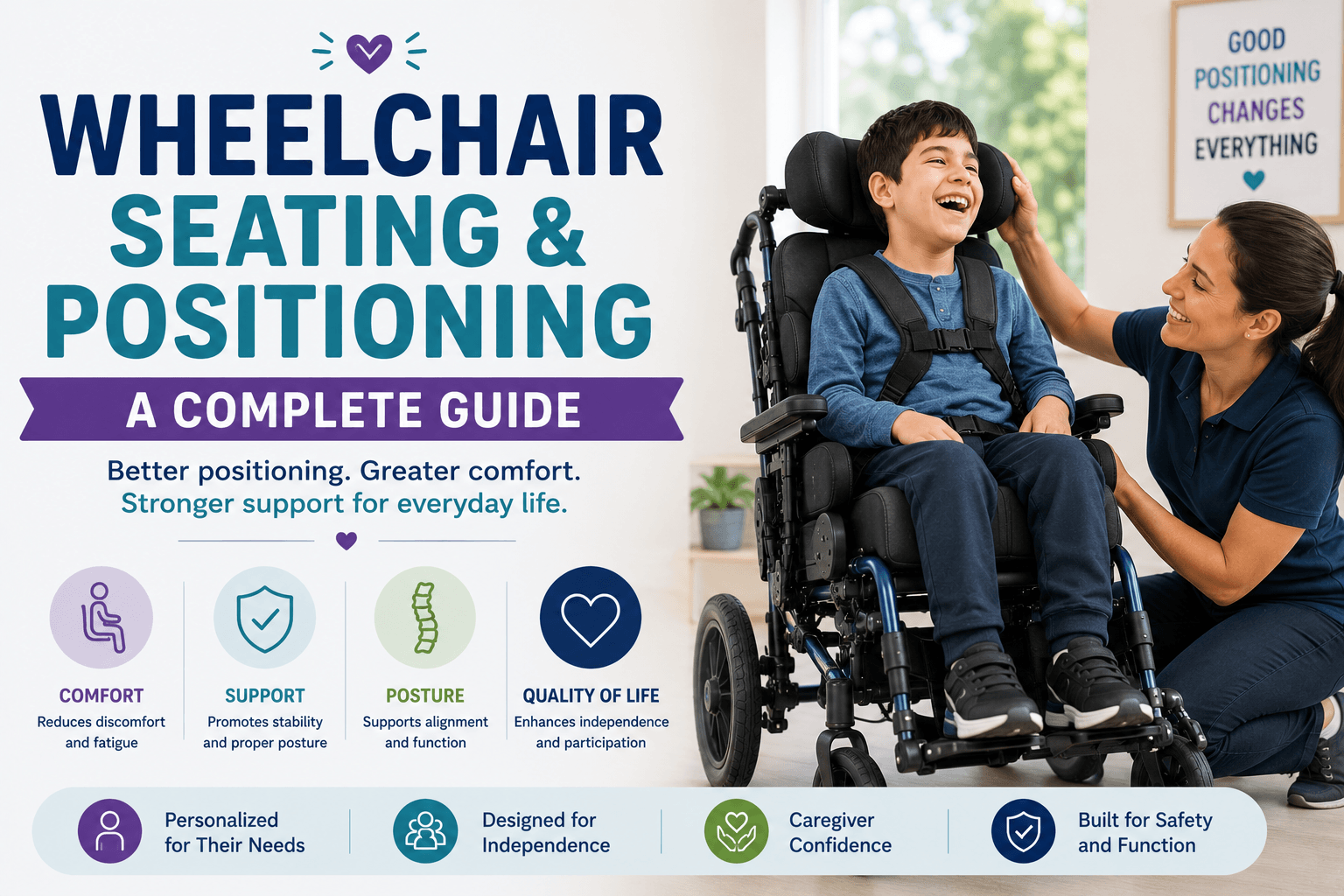
Wheelchair seating and positioning is the clinical process of fitting a wheelchair user with the right seat, back support, cushion, posture supports, and positioning equipment so they can sit safely, comfortably, and functionally throughout the day. Proper seating affects more than comfort. It can support breathing, digestion, pressure relief, communication, head control, hand use, learning, mobility, and participation in everyday activities.
For children and adults with disabilities, the wheelchair is often more than a mobility device. It may be the primary place where they eat, learn, communicate, travel, socialize, rest, and participate in daily routines. When the seating system does not fit correctly, it can lead to pain, pressure injuries, poor posture, fatigue, reduced independence, and long term orthopedic complications.
This wheelchair seating and positioning guide explains what proper positioning does for people, why posture support matters, which wheelchair positioning devices are available, how goals are set, what to expect at a seating and positioning clinic, and how families, caregivers, schools, and therapists can choose the right equipment.
What Is Wheelchair Seating and Positioning?
Wheelchair seating and positioning refers to the evaluation, selection, fitting, and adjustment of seating systems for people who use wheelchairs. The goal is to help the user maintain the safest, most functional, and most comfortable posture possible while seated.
A complete seating system may include:
- Wheelchair frame
- Seat cushion
- Back support
- Headrest
- Lateral trunk supports
- Pelvic belt
- Chest harness
- Foot supports
- Arm supports
- Abductor or pommel
- Tilt or recline system
- Pressure relief cushion
- Custom or modular seating system wheelchair components
The right combination depends on the user’s diagnosis, posture, tone, strength, skin integrity, mobility, daily activities, and long-term goals.
Defining Seating and Positioning in Rehabilitation
In rehabilitation, seating and positioning is a specialized area of practice that helps people sit in a way that supports health, safety, function, and participation. Occupational therapists, physical therapists, assistive technology professionals, rehabilitation engineers, and seating specialists may all be involved. Clinicians look at how the pelvis, spine, head, trunk, arms, legs, and feet are aligned. They also evaluate how the user moves, whether they can reposition independently, how much support they need, and whether their current chair is helping or creating problems.
Wheelchair seating and positioning is not simply about making someone sit upright. It is about creating a system that supports the whole person.
Who Needs Seating and Positioning Support?
Seating and positioning support may benefit children, teens, adults, and seniors who use wheelchairs or adaptive seating.
Common users include individuals with:
- Cerebral palsy
- Spinal cord injury
- Muscular dystrophy
- Spina bifida
- Multiple sclerosis
- Traumatic brain injury
- Stroke
- Low muscle tone
- Scoliosis
- Developmental disabilities
- Neuromuscular conditions
- Limited head or trunk control
- Pressure injury risk
- Long-term care needs
- Progressive medical conditions
Positioning equipment for children is especially important because their bodies are still growing. A poorly fitted chair can affect posture, comfort, participation, and orthopedic development over time.
What Does Proper Positioning Do for People?
Parents and caregivers often ask, “What does proper positioning do for people?” Proper positioning helps the body stay aligned so the person can breathe, move, communicate, interact, and participate with less strain.
Good wheelchair positioning may help:
- Improve posture
- Reduce pressure injury risk
- Support breathing
- Improve digestion
- Increase comfort
- Reduce pain
- Improve head and trunk control
- Improve use of hands and arms
- Support communication
- Increase alertness
- Reduce fatigue
- Improve participation in school or daily activities
- Reduce caregiver strain
- Protect skin and joints
- Support long-term orthopedic health
Wheelchair seating and positioning is often one of the most important parts of a person’s overall mobility and care plan.
Physical Health Benefits of Correct Wheelchair Posture
Correct wheelchair posture helps protect the body from avoidable stress. When the pelvis, spine, hips, legs, and feet are supported well, the user may experience better comfort and reduced risk of complications.
Proper wheelchair positioning may help reduce:
- Pressure injuries
- Sliding or sacral sitting
- Scoliosis progression concerns
- Hip discomfort
- Neck strain
- Shoulder pain
- Poor breathing posture
- Skin breakdown
- Uneven weight distribution
- Contractures
- Fatigue
- Difficulty swallowing or eating
A stable sitting position can also make transfers, hygiene, feeding, and communication easier.
Cognitive and Functional Participation Benefits
Positioning affects how a person interacts with the world. If someone is slumped, uncomfortable, or fighting to stay upright, it is harder to focus, communicate, use their hands, or participate.
Good seating may improve:
- Attention
- Alertness
- Eye contact
- Communication access
- AAC device use
- Feeding participation
- Hand function
- Classroom learning
- Social interaction
- Self-care skills
- Independence in mobility
For children in school, proper wheelchair seating and positioning can make a major difference in classroom engagement and IEP goal participation.
Risks of Poor Wheelchair Positioning
Poor positioning can create both short-term discomfort and long-term health concerns.
Risks may include:
- Pain
- Fatigue
- Skin breakdown
- Pressure injuries
- Poor head control
- Difficulty breathing
- Difficulty eating
- Reduced communication access
- Poor hand use
- Increased caregiver assistance
- Postural deformity
- Reduced mobility
- Less independence
- Limited participation
If a wheelchair user frequently slides forward, leans to one side, has red marks on the skin, appears uncomfortable, or struggles to use their hands, the seating system may need adjustment.
Fly-Lite Aluminum Transport Chair
$252.95
The Fly-Lite Aluminum Transport Chair is a lightweight wheelchair that can travel anywhere your special needs user can imagine. The adaptive equipment is only 14.5 lbs. and comes with many standard features, including convenient back release, swing-away footrests, wheel locks,… read more

Wheelchair Positioning Goals Explained
Wheelchair positioning goals are individualized outcomes that guide seating decisions. These goals help the care team choose the right wheelchair posture support devices and measure whether the seating system is working.
Goals should be based on the user’s body, diagnosis, daily routines, environment, and functional needs.
Common Wheelchair Positioning Goals Examples
Here are practical wheelchair positioning goals examples:
| Goal Area | Example Goal |
|---|---|
| Pelvic stability | Maintain a neutral pelvic position during seated activities |
| Pressure relief | Reduce pressure on bony areas during long periods of sitting |
| Head control | Support head alignment for communication, feeding, and visual attention |
| Trunk support | Improve upright posture and reduce leaning |
| Comfort | Decrease pain or fatigue during daily wheelchair use |
| Function | Improve arm and hand use for school, feeding, or communication |
| Safety | Reduce sliding, falls, or unsafe posture changes |
| Participation | Improve ability to participate in classroom, therapy, or community activities |
| Skin protection | Prevent redness, pressure injuries, and skin breakdown |
| Growth support | Allow safe growth adjustments for pediatric users |
Wheelchair seating and positioning goals should be reviewed regularly because needs may change over time.
Positioning Goals for Children vs. Adults
Children and adults may have different seating priorities.
For children, goals may include:
- Supporting growth
- Encouraging development
- Improving classroom participation
- Supporting feeding and communication
- Managing tone
- Preventing deformity
- Allowing adjustability over time
- Supporting family and school routines
For adults, goals may include:
- Comfort during long-term use
- Pressure management
- Independence
- Pain reduction
- Functional hand use
- Safe transfers
- Work or community participation
- Long-term skin protection
Positioning equipment for children should be selected with growth and developmental needs in mind.
Long-Term Care Positioning Considerations
In long-term care settings, seating and positioning often focuses on comfort, skin protection, pressure relief, safe transfers, and caregiver consistency.
Important considerations include:
- Repositioning schedules
- Pressure-relieving cushions
- Skin checks
- Head and trunk support
- Wheelchair fit
- Foot positioning
- Tilt and recline use
- Caregiver training
- Documentation of posture changes
- Regular equipment review
A wheelchair seating and positioning guide for long term care should include daily monitoring, staff training, and clear instructions for safe positioning.
Types of Wheelchair Seating and Positioning Devices
Wheelchair positioning devices come in many forms. The right setup may include standard supports, custom components, or a modular seating system wheelchair configuration.
Wheelchair Posture Support Devices Overview
Wheelchair posture support devices help maintain alignment and stability while seated.
Common devices include:
- Pelvic positioning belts
- Chest harnesses
- Lateral trunk supports
- Headrests
- Hip guides
- Abductor wedges
- Footrests
- Ankle supports
- Arm troughs
- Back supports
- Seat cushions
- Pommel supports
- Shoulder supports
These devices should be selected and adjusted by trained professionals whenever possible.
Modular Seating Systems for Wheelchairs
A modular seating system wheelchair setup uses adjustable components that can be configured around the user’s body. Modular systems are often recommended for users who need more support than a standard seat and back can provide.
They may include:
- Adjustable seat base
- Custom back support
- Lateral supports
- Pelvic supports
- Head support
- Leg positioning components
- Trays or arm supports
- Growth adjustments for children
Modular systems can be helpful for users with changing needs, complex postural support requirements, or growing bodies.
Lateral Supports, Headrests, and Trunk Support
Lateral supports help keep the trunk aligned and prevent leaning to one side. Headrests support head position, comfort, and safety. Trunk supports help users who have poor core strength, low muscle tone, scoliosis, or fatigue.
These supports may improve:
- Upright posture
- Head control
- Breathing
- Visual attention
- Communication
- Feeding
- Arm and hand use
- Comfort
Support should be firm enough to help alignment but not so restrictive that it causes discomfort or limits function unnecessarily.
Cushions and Pressure Relief Seating
Wheelchair cushions are a critical part of pressure management and comfort.
Common cushion types include:
- Foam cushions
- Gel cushions
- Air cushions
- Hybrid cushions
- Contoured cushions
- Custom molded cushions
The best cushion depends on the user’s pressure risk, posture, skin condition, sensation, weight distribution, and ability to reposition. A person at high risk for pressure injuries may need a more advanced cushion and a repositioning plan.
Positioning Equipment for Children with Special Needs
Positioning equipment for children may include both wheelchair-based and non-wheelchair supports.
Examples include:
- Pediatric wheelchair seating systems
- Adaptive standers
- Corner chairs
- Floor sitters
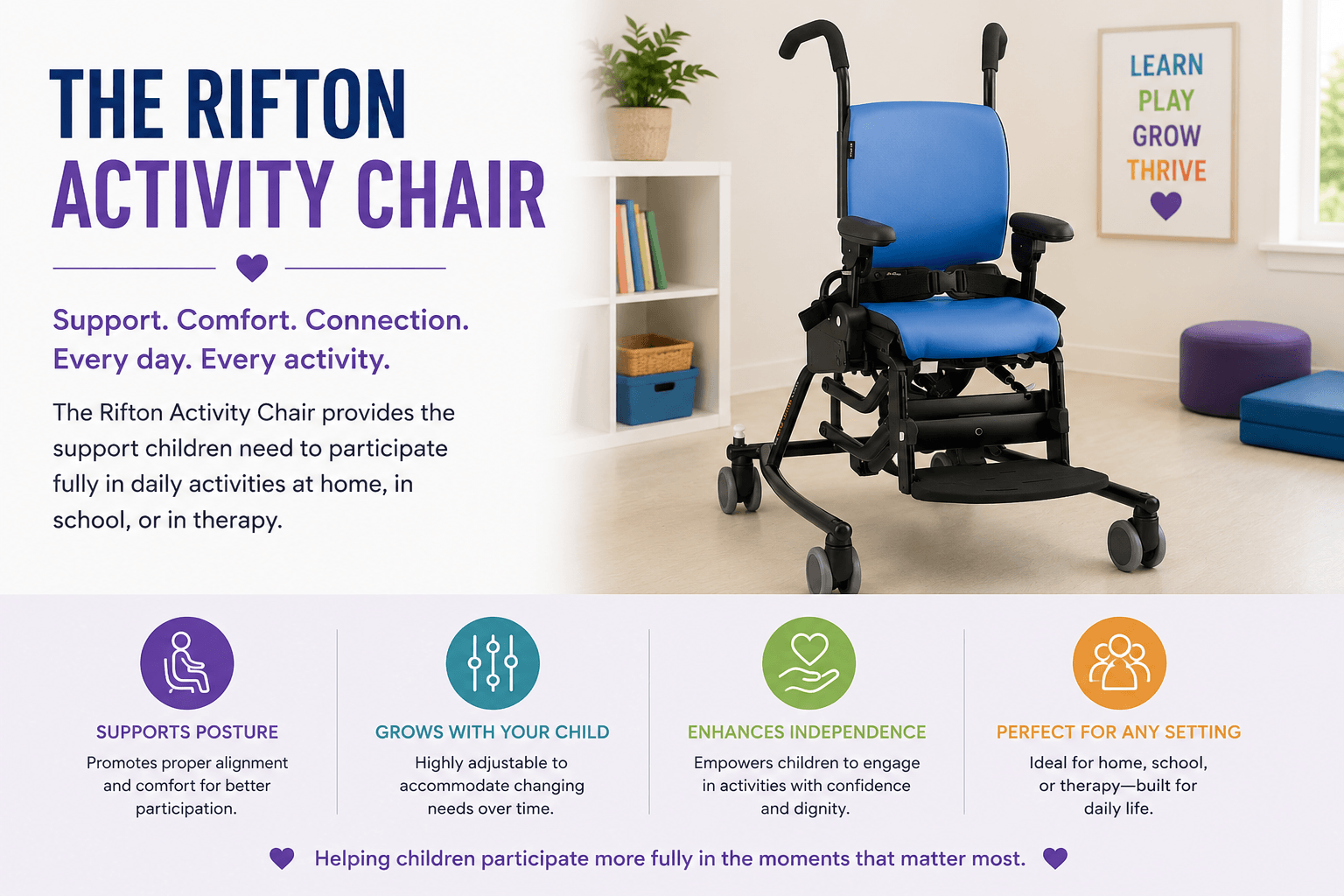
- Activity chairs
- Positioning wedges
- Lateral supports
- Head supports
- Foot supports
- Modular seating systems
- Adaptive strollers with positioning support
Children may need different equipment for school, therapy, home, transportation, and community outings.
Assistive Technology for Seating and Positioning
Assistive technology for seating and positioning can improve independence, comfort, access, and participation. This may include powered seating features, mounting systems, communication access, or smart wheelchair technology.
Power Tilt and Recline Systems
Power tilt and recline systems allow the user or caregiver to change body position while seated.
Tilt changes the angle of the whole seating system while keeping the body’s seated angles more consistent. Recline changes the back angle and opens the hip angle.
These features may help with:
- Pressure relief
- Fatigue management
- Comfort
- Rest breaks
- Postural support
- Caregiver access
- Position changes throughout the day
Power tilt and recline are often considered for users who cannot reposition independently or who sit for long periods.
Integrating AAC and Assistive Tech with Seating Systems
Seating affects communication access. If a user cannot maintain head, trunk, or arm position, it may be difficult to use AAC, switches, tablets, eye gaze systems, or communication devices.
A seating system may need:
- Mounting hardware
- Tray support
- Arm supports
- Head positioning
- Switch placement
- Eye gaze alignment
- Device access planning
- Cable management
For nonverbal users or individuals who rely on assistive technology, wheelchair seating and positioning can directly affect communication independence.
The Role of Occupational Therapy in Seating and Positioning
Occupational therapists play a key role in seating and positioning occupational therapy services. They evaluate how posture affects daily activities, communication, feeding, school participation, self-care, and independence.
An OT may help determine:
- What posture supports are needed
- Whether current seating limits function
- Which equipment improves participation
- How to support feeding or hand use
- How to integrate AAC access
- What caregiver training is needed
- How seating supports ADLs
Seating and Positioning Occupational Therapy Assessment
A seating and positioning occupational therapy assessment may include:
- Medical history review
- Postural assessment
- Range of motion check
- Tone and strength review
- Skin integrity review
- Sitting balance observation
- Pelvic and spinal alignment
- Functional activity observation
- Current wheelchair review
- Cushion and support assessment
- Equipment trials
- Caregiver interview
- Goal setting
The assessment helps determine whether the person needs a cushion change, positioning supports, a custom system, or a full wheelchair seating evaluation.
What to Expect at a Seating and Positioning Clinic
A seating and positioning clinic is a specialized appointment where a team evaluates wheelchair fit, posture, skin protection, comfort, and function.
The team may include:
- Occupational therapist
- Physical therapist
- Assistive technology professional
- Seating and mobility specialist
- Durable medical equipment provider
- Physician or rehabilitation specialist
- Family members or caregivers
During the visit, the team may measure the user, assess posture, review goals, trial equipment, discuss funding, and recommend a seating system.
Working with a Seating and Positioning Specialist
A seating and positioning specialist may include an ATP, SMS, certified rehab technology supplier, or clinician with advanced seating experience. These professionals work with therapists, families, schools, and medical teams to select and configure equipment.
They can help with:
- Equipment trials
- Wheelchair measurements
- Product selection
- Funding documentation
- Custom support options
- Adjustments
- Repairs or modifications
- Long-term follow-up
How to Measure for Proper Wheelchair Seating
Accurate measurement is essential for proper wheelchair positioning. A chair that is too wide, too narrow, too deep, or too shallow can create posture and safety problems.
Key Body Measurements for Wheelchair Fitting
Important measurements include:
- Seat width
- Seat depth
- Back height
- Lower leg length
- Hip width
- Shoulder width
- Chest width
- Footrest height
- Armrest height
- Head support height
- Overall user height
- User weight
Measurements should be taken while the user is seated in the best possible posture. A wheelchair measurement guide pdf can be useful, but professional guidance is best for complex needs.
Using a Wheelchair Measurement Guide
A wheelchair measurement guide helps translate body measurements into chair dimensions. It may show how to measure hip width, seat depth, back height, and lower leg length.
A good guide may include:
- Measurement diagrams
- Written instructions
- Recommended allowances
- Notes for growth
- Cushion considerations
- Common fitting warnings
- Space for therapist notes
Families searching for a wheelchair measurement guide pdf should use it as a starting point, not a replacement for clinical assessment.
Common Fitting Mistakes to Avoid
Common wheelchair fitting mistakes include:
- Seat too wide
- Seat too narrow
- Seat depth too long
- Seat depth too short
- Footrests too high or too low
- Back support not matching trunk needs
- Cushion not addressing pressure risk
- Pelvic belt placed incorrectly
- Headrest positioned poorly
- Growth room that reduces support
- Supports added without a clear goal
- Ignoring skin redness or discomfort
Proper wheelchair seating and positioning requires regular review because bodies, equipment, and functional needs change.
How to Choose the Right Seating and Positioning Equipment
Choosing seating equipment starts with the user’s body, not the product catalog. The equipment should support specific goals.
Consider:
- Diagnosis
- Age
- Growth needs
- Posture
- Muscle tone
- Skin risk
- Pain
- Sitting tolerance
- Head and trunk control
- Feeding needs
- Communication access
- Transportation needs
- School or home environment
- Caregiver support
- Funding requirements
- Long-term adjustability
Questions to Ask Before Buying
Before purchasing wheelchair positioning devices, ask:
- What problem are we trying to solve?
- Is the user sliding, leaning, collapsing, or uncomfortable?
- Does the user need pressure relief?
- Are there skin concerns?
- Can the user reposition independently?
- Does the seating support communication access?
- Will the chair be used at school, home, or in long-term care?
- Does the user need growth adjustability?
- Has an OT, PT, or seating specialist reviewed the setup?
- Is a letter of medical necessity required?
- Will insurance, Medicaid, or school funding be used?
- Can the product be adjusted over time?
Working with an Adaptive Equipment Specialist
An adaptive equipment specialist can help families, schools, clinics, and caregivers compare options and request quotes. This is especially helpful when choosing wheelchair posture support devices, modular seating systems, cushions, positioning equipment for children, or seating systems for complex needs.
When requesting help, provide:
- User age
- Height and weight
- Diagnosis
- Current wheelchair or seating system
- Seating challenges
- Postural concerns
- Skin concerns
- Therapy recommendations
- Setting where equipment will be used
- Funding source
- Budget range
Why Wheelchair Seating and Positioning Are Important
Wheelchair seating and positioning is one of the most important parts of wheelchair use. The right seating system can support posture, comfort, pressure relief, communication, feeding, mobility, learning, and independence. The wrong setup can create pain, fatigue, skin problems, poor alignment, and reduced participation.
Start with the user’s needs. Look at posture, comfort, function, skin health, daily routines, and long-term goals. Work with an occupational therapist, physical therapist, seating and positioning specialist, or adaptive equipment provider whenever possible.
With the right support, wheelchair seating and positioning can help users sit more comfortably, participate more fully, and move through daily life with greater safety and confidence.
FAQs
What is wheelchair seating and positioning?
Wheelchair seating and positioning is the process of fitting a wheelchair user with the right seat, cushion, back support, posture supports, and positioning equipment so they can sit safely, comfortably, and functionally. It helps support posture, pressure relief, mobility, communication, breathing, feeding, comfort, and daily participation.
Why is wheelchair seating and positioning important?
Wheelchair seating and positioning is important because poor posture can lead to pain, pressure injuries, fatigue, difficulty breathing, reduced hand use, poor communication access, and long-term postural problems. A properly fitted seating system can improve comfort, safety, health, and independence.
What does proper positioning do for people?
Proper positioning helps align the pelvis, spine, head, trunk, legs, and feet so the wheelchair user can sit with better stability and comfort. It may improve breathing, digestion, pressure relief, alertness, communication, arm use, feeding, learning, and participation in daily activities.
Who needs wheelchair seating and positioning support?
Wheelchair seating and positioning support may benefit children, teens, adults, and seniors with cerebral palsy, spinal cord injury, muscular dystrophy, spina bifida, multiple sclerosis, traumatic brain injury, stroke, scoliosis, low muscle tone, developmental disabilities, neuromuscular conditions, or pressure injury risk.
What are signs of poor wheelchair positioning?
Signs of poor wheelchair positioning may include sliding forward, leaning to one side, slumping, head dropping, feet not supported, red skin marks, pressure sores, discomfort, fatigue, difficulty using hands, trouble eating, poor communication access, or needing frequent repositioning.
What is proper wheelchair positioning?
Proper wheelchair positioning means the user’s body is supported in a safe, stable, and functional posture. This often includes a stable pelvis, supported trunk, aligned head, supported feet, appropriate seat depth, pressure-relieving cushion, and positioning devices that match the user’s needs.
What are wheelchair positioning goals?
Wheelchair positioning goals are individualized outcomes that guide seating decisions. Goals may include improving comfort, supporting posture, reducing pressure injury risk, improving head control, improving hand use, reducing sliding, supporting feeding, improving communication access, or increasing participation.
What are examples of wheelchair positioning goals?
Wheelchair positioning goals examples may include maintaining a neutral pelvis, reducing pressure on bony areas, improving upright posture, decreasing trunk leaning, supporting head alignment, improving access to an AAC device, increasing sitting tolerance, reducing pain, or improving classroom participation.
How are positioning goals different for children and adults?
Children may need positioning goals that support growth, development, classroom participation, feeding, communication, and prevention of future deformity. Adults may need goals focused on comfort, pressure relief, pain reduction, independence, safe transfers, work participation, and long-term skin protection.
Why is positioning equipment for children important?
Positioning equipment for children is important because children are still growing. Poor positioning can affect posture, comfort, mobility, development, school participation, and orthopedic alignment over time. Pediatric positioning equipment should allow support, growth, safety, and functional participation.
What is a seating and positioning clinic?
A seating and positioning clinic is a specialized appointment where a team evaluates wheelchair fit, posture, pressure relief, comfort, mobility, and function. The team may include an occupational therapist, physical therapist, seating specialist, assistive technology professional, equipment provider, and caregiver.
What happens at a seating and positioning clinic?
During a seating and positioning clinic visit, the team may review medical history, assess posture, measure the body, evaluate current equipment, check skin and pressure risks, discuss goals, trial cushions or supports, recommend equipment, and prepare documentation for funding.
Who performs a wheelchair seating assessment?
A wheelchair seating assessment may be performed by an occupational therapist, physical therapist, seating and mobility specialist, assistive technology professional, or certified rehabilitation technology supplier. Complex cases often involve a team approach.
What is seating and positioning occupational therapy?
Seating and positioning occupational therapy focuses on how wheelchair posture affects daily function. An OT may assess posture, hand use, feeding, communication, self-care, school participation, sensory needs, caregiver routines, and equipment needs.
How does an occupational therapist help with wheelchair seating?
An occupational therapist can evaluate seated posture, identify barriers to daily activities, recommend wheelchair positioning devices, support AAC or feeding access, document functional needs, train caregivers, and help create a seating plan that supports independence.
What is a seating and positioning specialist?
A seating and positioning specialist is a professional with advanced knowledge of wheelchair seating, mobility, posture, pressure management, and adaptive equipment. This may include an ATP, SMS, certified rehab technology supplier, OT, PT, or other trained clinician.
What are wheelchair positioning devices?
Wheelchair positioning devices are supports used to help maintain alignment, stability, safety, and comfort while seated. Examples include pelvic belts, chest harnesses, lateral supports, headrests, hip guides, abductor wedges, footrests, ankle supports, arm troughs, back supports, and cushions.
What are wheelchair posture support devices?
Wheelchair posture support devices help the user maintain a safer and more functional sitting position. They may support the pelvis, trunk, head, hips, legs, feet, or arms. These devices are often used to reduce leaning, sliding, slumping, or postural collapse.
What is a pelvic positioning belt?
A pelvic positioning belt helps stabilize the pelvis and reduce sliding or poor pelvic alignment. It is not the same as a vehicle seat belt. It should be positioned and adjusted correctly by a trained professional to support posture safely.
What are lateral supports?
Lateral supports are side supports placed near the trunk or hips to help keep the body aligned. They can reduce leaning, improve upright posture, and support users with poor trunk control, low tone, fatigue, or scoliosis-related positioning needs.
What is a wheelchair headrest used for?
A wheelchair headrest supports the head and neck. It may improve comfort, head control, visual attention, communication access, safety during transport, and rest during tilt or recline. Headrest shape and placement should match the user’s posture and needs.
What is an abductor wedge or pommel?
An abductor wedge, also called a pommel, helps position the legs and reduce excessive crossing or sliding. It may help maintain hip alignment and seated stability when clinically appropriate.
What are wheelchair cushions used for?
Wheelchair cushions support comfort, posture, pressure relief, and skin protection. Cushions may be made from foam, gel, air, hybrid materials, or custom-contoured designs. The right cushion depends on posture, pressure risk, skin condition, sensation, and sitting tolerance.
What type of wheelchair cushion is best?
The best wheelchair cushion depends on the user’s individual needs. Foam cushions may provide basic support, gel cushions may improve comfort and pressure distribution, air cushions may support high pressure relief needs, and hybrid cushions combine multiple materials. A clinician should help choose cushions for users at risk of skin breakdown.
What is pressure relief seating?
Pressure relief seating helps reduce concentrated pressure on bony areas of the body. It may include specialized cushions, tilt systems, recline systems, repositioning schedules, and skin monitoring. Pressure relief is especially important for users who sit for long periods or have reduced sensation.
What is a modular seating system wheelchair?
A modular seating system wheelchair uses adjustable seating components that can be configured to support the user’s posture and function. It may include adjustable back support, lateral supports, pelvic supports, headrests, cushions, foot supports, and growth options for children.
Who needs a modular seating system?
A modular seating system may be recommended for users with complex postural needs, growth needs, poor trunk control, scoliosis, low tone, high tone, difficulty maintaining alignment, or changing support needs. It is often used when standard wheelchair seating does not provide enough support.
What is power tilt in a wheelchair?
Power tilt changes the angle of the entire seating system while keeping the user’s seated body angles more consistent. Tilt may help with pressure relief, rest, posture, fatigue management, and caregiver access.
What is power recline in a wheelchair?
Power recline changes the angle of the backrest and opens the hip angle. Recline may help with rest, positioning, comfort, hygiene care, and medical needs. It is often used with clinical guidance because it can affect posture and pressure distribution.
What is the difference between tilt and recline?
Tilt moves the whole seating system backward while maintaining seated alignment. Recline changes the angle between the back and seat. Tilt is often used for pressure relief and postural support, while recline may be used for rest, care access, or specific medical needs.
What are Permobil seating and positioning solutions?
Permobil seating and positioning solutions may include advanced wheelchair seating, powered tilt, recline, elevating leg rests, programmable positions, and customizable support options. These systems are often considered for users with complex mobility and positioning needs.
What is assistive technology for seating and positioning?
Assistive technology for seating and positioning includes tools that improve wheelchair access, posture, function, and independence. Examples include power seating features, mounting systems, AAC device mounts, switch access, tray systems, pressure management technology, and smart wheelchair controls.
How does seating affect AAC access?
Good seating helps support head, trunk, arm, and eye position, which can make AAC access easier. If a user relies on a communication device, switch, tablet, or eye gaze system, seating must support the body position needed to use that device consistently.
How do you measure for proper wheelchair seating?
Key wheelchair measurements include seat width, seat depth, back height, lower leg length, hip width, shoulder width, chest width, footrest height, armrest height, head support height, user height, and user weight. Measurements should be taken while the user is seated in the best possible posture.
Why is seat width important?
Seat width affects comfort, posture, and support. A seat that is too narrow can cause pressure and discomfort. A seat that is too wide can reduce support, make propulsion harder, and allow the user to lean or slide.