Table of Contents
- What Are Sensory Wall Panels For Adults?
- The Science Behind Sensory Walls: How Sensory Input Helps Adults
- Sensory Walls vs. Full Sensory Rooms: What's Right for Adults?
- Who Can Benefit From Sensory Wall Panels for Adults?
- Adults With Autism Spectrum Disorder ASD
- Adults With Sensory Processing Disorder SPD
- Individuals With Anxiety, PTSD, or Trauma Histories
- Adults With Cognitive or Intellectual Disabilities
- Elderly Adults and Those in Memory Care
- Best Sensory Wall Ideas for Adults: By Sensory System
- Tactile Sensory Wall Ideas: Texture Panels and Touch Boards
- Visual Sensory Wall Ideas: Lights, Colors, and Fiber Optics
- Auditory Sensory Wall Features: Sound Tiles and Interactive Elements
- Proprioceptive and Deep Pressure Wall Elements
- Vestibular Friendly Wall Additions for Movement Engagement
- Sensory Wall Ideas for Adults by Environment
- Sensory Wall Ideas for Therapy and Occupational Therapy Rooms
- Sensory Wall Ideas for Care Facilities and Group Homes
- Sensory Wall Ideas for Schools and Adult Day Programs
- Sensory Wall Ideas for Adults at Home
- Outdoor Sensory Wall Ideas for Adults
- DIY Sensory Wall Ideas for Adults on a Budget
- DIY Sensory Board for Autism: Materials and Layout Tips
- DIY Sensory Wall Panels: Step by Step Guidance
- When to Choose Professional Sensory Wall Panels Over DIY
- How to Plan and Design Sensory Wall Panels for Adults
- Assessing Sensory Needs and Goals Before Building
- Choosing the Right Wall Location and Size
- Layering Sensory Inputs: Calming vs. Alerting Elements
- Safety Considerations for Adult Sensory Walls
- FAQs
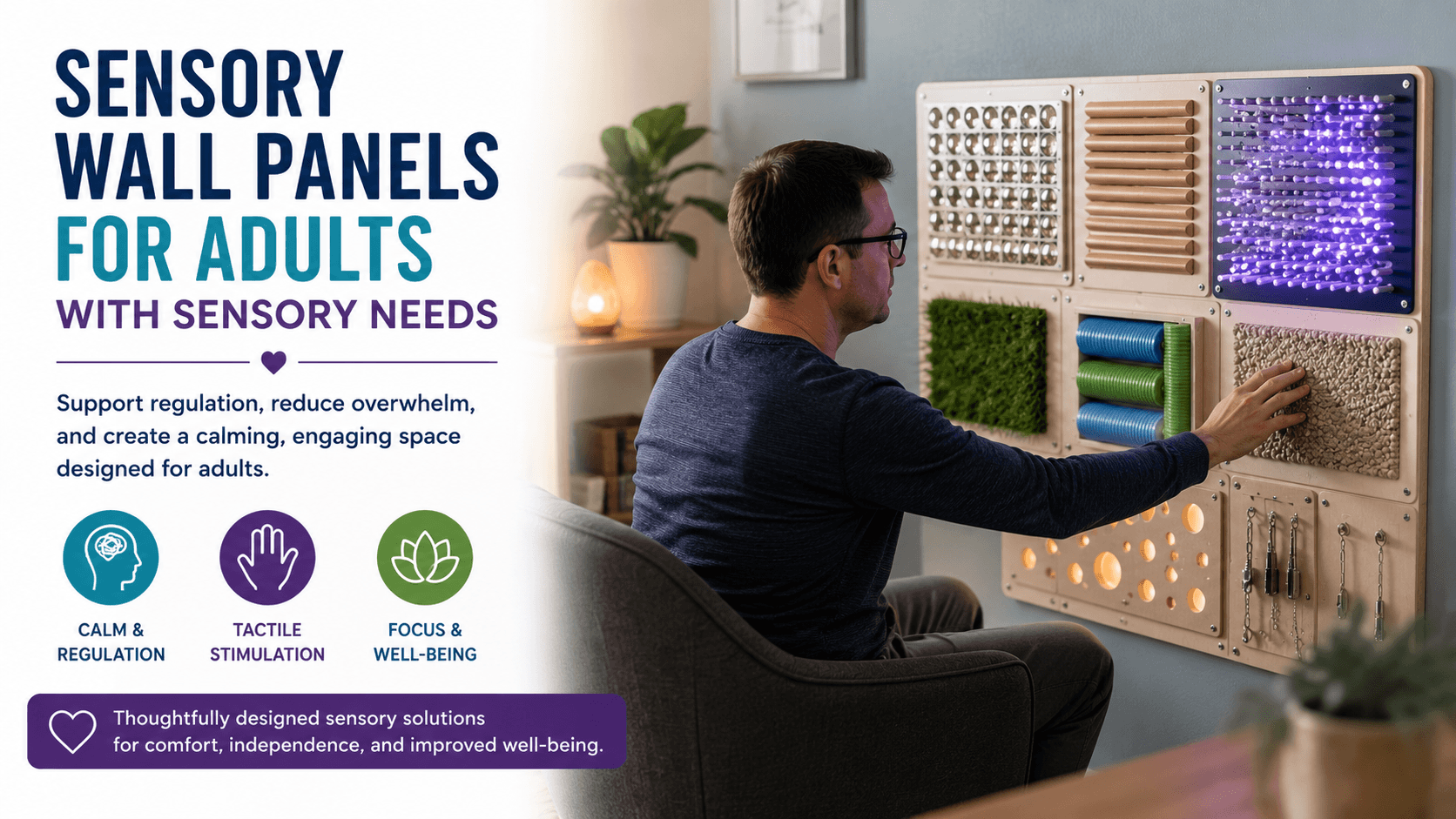
Sensory wall panels for adults can provide calming, engaging, and purposeful sensory input for people who benefit from tactile, visual, auditory, movement, or deep pressure support. While sensory walls are often discussed for children, adults with autism, sensory processing differences, anxiety, trauma histories, cognitive disabilities, memory care needs, or developmental disabilities may also benefit from a thoughtfully designed sensory wall.
An adult sensory wall can be used at home, in an occupational therapy room, group home, adult day program, school, clinic, care facility, or memory care setting. The goal is to create a safe, accessible space where adults can regulate, focus, explore, relax, communicate, and participate in meaningful activities.
Sensory wall panels for adults can be simple or advanced. Some adults may benefit from a small sensory board for autism with calming textures and quiet fidgets. Others may need professional sensory wall panels with durable construction, interactive features, fiber optics, sound elements, and therapy focused activities. The best design depends on the adult user’s sensory profile, environment, mobility, communication needs, safety needs, and personal preferences.
Explore Sensory Wall Panels, Sensory Room Equipment, Sensory Products, Tactile Stimulation Products, Deep Pressure Products, and Sensory Motor Tools at eSpecial Needs.
What Are Sensory Wall Panels For Adults?
Sensory wall panels for adults are wall based sensory tools designed to provide controlled sensory input in a compact, organized space. They may include textures, lights, mirrors, moving parts, fidgets, sound elements, switches, interactive panels, calming surfaces, or therapy based activities.
The purpose of sensory wall panels for adults is to support sensory regulation, focus, engagement, relaxation, and participation. For adults, this may mean creating a calming break area at home, a grounding station in a therapy room, an engagement wall in a group home, or a structured sensory area in a memory care community.
Sensory wall panels for adults may support:
- Tactile exploration
- Visual engagement
- Calming routines
- Grounding strategies
- Fine motor activity
- Cause and effect learning
- Communication
- Memory care engagement
- Sensory regulation
- Body awareness
- Focus during transitions
- Adult day program participation
- Occupational therapy goals
Adult sensory walls should be respectful, comfortable, accessible, and age appropriate. The design should reflect the adult’s preferences, not just what is commonly used for children.
Large Razzle-Dazzle Marble LED Sensory Wall Panel - Visual & Tactile Stimulation
$1,500.00
$1,650.00
The Large Razzle-Dazzle Marble LED Sensory Wall Panel is an interactive sensory wall panel designed to support visual, tactile, and auditory stimulation in sensory rooms, therapy spaces, classrooms, and care environments. With more than 2,000 colored marbles, built-in LED lighting,… read more

The Science Behind Sensory Walls: How Sensory Input Helps Adults
Sensory input is information the nervous system receives from the body and environment. This can include touch, movement, pressure, sound, light, texture, temperature, body position, and balance.
For some adults, the nervous system may respond strongly to everyday input. Sounds may feel too loud, lights may feel intense, clothing textures may feel uncomfortable, or busy environments may feel overwhelming. Other adults may seek more input to feel focused, alert, calm, or connected to their body.
Sensory wall panels can provide controlled input through:
- Tactile elements for touch
- Visual elements for focus or calming
- Auditory elements for sound exploration
- Proprioceptive elements for body awareness
- Movement based elements for vestibular engagement
- Interactive features for attention and participation
For adults with autism, sensory processing differences, cognitive disabilities, or anxiety, predictable sensory input may support regulation and emotional comfort. A sensory wall does not replace therapy or medical care, but it can be a practical environmental support.
Paradiddle Percussion Activity Wall Panel
$856.95
Explore rhythm and sound as your child creates their own musical masterpiece on our new Paradiddle Percussion Busy Board. This wall panel comes jam-packed with lots of ways to "jam," such as bells, drum panels, a xylophone, and much more.… read more

Sensory Walls vs. Full Sensory Rooms: What's Right for Adults?
A full sensory room is a dedicated space with sensory equipment such as bubble tubes, fiber optics, swings, seating, mats, lighting, projectors, sound systems, and tactile tools. A sensory wall uses one wall or one area to provide sensory activities in a more compact way.
Both can be helpful. The right choice depends on space, budget, setting, goals, and user needs.
Sensory Wall Panels for Adults
Sensory wall panels for adults may be best when you need:
- A compact sensory solution
- A calming area in a shared room
- Lower cost than a full sensory room
- Easy access in a home or care setting
- A structured sensory break space
- Tactile, visual, or interactive engagement
- A durable option for group use
- A starting point before building a full sensory space
Sound Wall Interactive Musical Sensory Panel
$3,930.00
The T21334 Sound Wall is an interactive musical sensory panel that lets users create sounds by touching colorful hand-shaped buttons. Designed for children and adults, this wall-mounted activity panel supports cause and effect learning, music exploration, auditory stimulation, and interactive… read more

Full Sensory Rooms
Full sensory rooms for adults may be best when you need:
- A dedicated sensory environment
- Multiple sensory systems addressed at once
- Larger movement activities
- Specialized lighting
- Sensory seating
- Therapy equipment
- Clinic or school based programming
- A more immersive experience
A sensory wall can be a practical first step for adults who do not have space for a full room or who need sensory support in an existing environment.
Who Can Benefit From Sensory Wall Panels for Adults?
Sensory walls can support many adults with sensory, cognitive, emotional, developmental, or mobility needs. The wall should be designed around the individual rather than assuming one solution works for everyone.
Adults With Autism Spectrum Disorder ASD
Adults with autism may benefit from sensory walls that offer calming input, safe stimming options, predictable routines, and a place to decompress from sensory overload.
Helpful features may include:
- Soft tactile panels
- Quiet fidgets
- Visual focus elements
- Fiber optic lighting
- Smooth repetitive movement pieces
- Low noise interactive panels
- Deep pressure tools nearby
- Simple layout with limited clutter
- Adult appropriate colors and materials
- Storage for preferred sensory tools
A sensory wall ideas for autism plan should respect the adult’s preferences, communication style, and sensory boundaries. Some adults may want low stimulation. Others may want stronger tactile or visual input.
Interactive LED Fanlite
$3,185.25
$3,299.00
The Interactive LED Fanlite is a sound-activated sensory light designed to support cause-and-effect learning, visual engagement, and vocal interaction. As users speak, sing, or make sounds, the Fanlite responds with bright LED color effects, making it a motivating tool for… read more

Adults With Sensory Processing Disorder SPD
Adults with sensory processing disorder may experience hypersensitivity, hyposensitivity, or a mix of both. A sensory wall can offer a controlled way to access input without relying on unpredictable environmental stimulation.
A sensory wall may help support adults who:
- Avoid certain textures
- Seek frequent tactile input
- Need visual focus to calm
- Benefit from repetitive hand activities
- Become overwhelmed by noise
- Need deep pressure or resistance
- Have difficulty transitioning between activities
- Need help maintaining alertness or calm
The best sensory wall should include choices. An adult with SPD may need calming textures at one time of day and more alerting input at another.
Individuals With Anxiety, PTSD, or Trauma Histories
Adults with anxiety, PTSD, or trauma histories may benefit from sensory wall elements that support grounding and emotional regulation. The wall should feel safe, predictable, and under the person’s control.
Calming options may include:
- Soft textures
- Slow moving visual elements
- Neutral colors
- Nature inspired materials
- Gentle lighting
- Quiet fidgets
- Breathing prompt visuals
- Grounding cards
- Weighted lap pad nearby
- Soothing tactile surfaces
Avoid sudden noises, flashing lights, unexpected movement, crowded layouts, or elements that could feel intrusive. Trauma informed design should prioritize choice, consent, comfort, and personal control.
Adults With Cognitive or Intellectual Disabilities
Adults with cognitive or intellectual disabilities may use sensory walls for engagement, communication, routine building, fine motor activity, and calming breaks.
Helpful features may include:
- Simple cause and effect panels
- Matching activities
- Familiar pictures
- Texture panels
- Large switches
- Music or sound choices
- Communication prompts
- Object based routines
- Easy to understand activity zones
- Durable materials
- Clear visual organization
For adults with communication needs, sensory walls can also support choice making. The user may point to a preferred activity, choose a texture, press a switch, or use AAC to request a sensory break.
Elderly Adults and Those in Memory Care
Elderly adults and memory care residents may benefit from sensory walls that support comfort, reminiscence, engagement, and emotional connection. Sensory input can be especially meaningful when it is familiar, calming, and linked to life experiences.
Ideas for memory care sensory walls include:
- Familiar fabrics
- Textures linked to hobbies
- Safe household style items
- Nature themed panels
- Soft lighting
- Music elements
- Photo based prompts
- Tactile memory boards
- Gentle fidgets
- Seasonal textures
- Simple interactive pieces
In memory care settings, sensory walls should be durable, easy to clean, safe for shared use, and designed to reduce agitation rather than overwhelm.
Best Sensory Wall Ideas for Adults: By Sensory System
The strongest sensory wall designs consider multiple sensory systems. Not every adult needs every type of input. Choose elements based on the adult’s preferences, sensory profile, and goals.
Tactile Sensory Wall Ideas: Texture Panels and Touch Boards
Tactile sensory walls focus on touch. They can help adults explore different textures, self soothe through repetitive touch, or engage hands during breaks.
Tactile ideas include:
- Soft fabric panels
- Faux fur textures
- Smooth leather like surfaces
- Corduroy strips
- Raised pattern tiles
- Silicone texture mats
- Bristle panels
- Carpet squares
- Foam textures
- Cool smooth surfaces
- Velcro strips
- Textured hand paths
- Tactile art boards
For adults, tactile panels should look and feel appropriate for the setting. Neutral colors, clean layouts, and mature materials may work better than bright child focused designs.
TFH Large Textured Tactile Wall
$2,299.00
The TFH Large Textured Tactile Wall allows kids to explore, play, learn, and discover new things. This tactile sensory wall is satisfying and soothing for fidgeting. Ideal for users who may have sensory processing difficulties. Features Fifteen different textures that… read more

Visual Sensory Wall Ideas: Lights, Colors, and Fiber Optics
Visual sensory input can be calming, focusing, or alerting depending on the design. Adults who enjoy visual input may benefit from lights, contrast, gentle movement, or color based panels.
Visual ideas include:
- Fiber optic strands
- Color changing lights
- Bubble tube nearby
- Soft LED panels
- Projected light effects
- High contrast patterns
- Mirrors designed for safe use
- Reflective surfaces
- Color sorting panels
- Slow visual motion elements
- Nature imagery
- Visual timers
For adults who are sensitive to light, avoid flashing, rapid movement, glare, and overly bright colors.
Explore Sensory Fiber Optic Lights and Strands, Universal Fiber Optic Lighting, Bubble Tubes, and Projectors.
Auditory Sensory Wall Features: Sound Tiles and Interactive Elements
Auditory elements can support engagement, rhythm, cause and effect learning, and communication. However, sound should be used carefully because some adults are sensitive to noise.
Auditory ideas include:
- Sound tiles
- Music panels
- Soft chimes
- Rhythm boards
- Drum style panels
- Switch activated sounds
- Quiet clicking elements
- Audio choice buttons
- Nature sound panels
- Headphone nearby listening station
In shared spaces, volume control is essential. Avoid sudden loud sounds, unpredictable audio, or repeating noises that cannot be turned off.
Proprioceptive and Deep Pressure Wall Elements
Proprioceptive input comes from muscles and joints. It can support body awareness, grounding, and calming for many adults.
Wall based proprioceptive ideas include:
- Push panels
- Pull handles
- Resistance bands secured safely
- Wall push activities
- Therapy putty station nearby
- Weighted lap pad storage
- Compression tools nearby
- Grip strength activities
- Stretch panels
- Heavy work task cards
Deep pressure and resistance activities should be chosen carefully based on strength, balance, mobility, and safety. Avoid any element that could wrap around the body, snap back unexpectedly, or pull loose from the wall.
Explore Deep Pressure Products, Weighted Products, and Sensory Motor Tools.
Vestibular Friendly Wall Additions for Movement Engagement
Vestibular input relates to movement and balance. Sensory walls themselves are usually stationary, but wall adjacent activities can support movement engagement.
Ideas include:
- Standing balance activities near the wall
- Side stepping along activity panels
- Reaching tasks at different heights
- Wall mounted target activities
- Rocker seating nearby
- Therapy ball nearby when supervised
- Floor path leading to the wall
- Gentle movement prompts
- Visual tracking activities
- Hand over hand movement routines when appropriate
Adults with balance concerns, seizure history, dizziness, or fall risk should use movement activities only with professional guidance and appropriate supervision.
Sensory Wall Ideas for Adults by Environment
A sensory wall should fit the environment where it will be used. A home sensory wall may look different from one used in an occupational therapy room, memory care center, adult day program, or group home.
Sensory Wall Ideas for Therapy and Occupational Therapy Rooms
Occupational therapy rooms often need sensory walls that support assessment, regulation, skill building, and therapist guided interaction.
Helpful therapy room features include:
- Modular panels
- Tactile exploration boards
- Fine motor activities
- Visual tracking elements
- Cause and effect panels
- Adjustable activity height
- Switch access options
- Communication supports
- Calming corner elements
- Deep pressure tools nearby
- Easy to clean surfaces
- Durable materials
Therapists can use the wall to support goals related to regulation, attention, hand use, transitions, communication, and daily living skills.
Sensory Wall Ideas for Care Facilities and Group Homes
Care facilities and group homes need durable, safe, and accessible sensory wall designs that can serve multiple adults with different needs.
Helpful features include:
- Heavy duty panels
- Easy cleaning
- Secure mounting
- Large interactive pieces
- Simple visual organization
- Low noise activities
- Calming textures
- Adult appropriate design
- Wheelchair accessible placement
- Staff supervision visibility
- Replaceable components
- Clear use guidelines
Shared sensory walls should be inspected regularly for damage, loose parts, or cleaning needs.
Sensory Wall Ideas for Schools and Adult Day Programs
Schools, transition programs, adult education programs, and adult day programs may use sensory walls to support focus, transitions, sensory breaks, fine motor skills, social participation, and structured routines.
Helpful features include:
- Calming tactile panels
- Visual schedules
- Choice boards
- Communication prompts
- Fine motor stations
- Cause and effect activities
- Quiet fidgets
- Sensory break zones
- Wheelchair accessible design
- Group friendly activities
- Durable surfaces
- Easy to clean materials
A sensory wall should support participation without becoming a distraction. Clear expectations and staff guidance are important.
Sensory Wall Ideas for Adults at Home
Home sensory wall panels for adults can be smaller, more personal, and more visually integrated into the living space. Adults may prefer a calm, mature design that blends with home décor while still offering meaningful sensory input.
Home ideas include:
- Neutral texture panels
- Tactile art boards
- Soft lighting
- Fiber optic corner
- Quiet fidget strip
- Nature inspired wall
- Weighted lap pad storage nearby
- Seating area next to the wall
- Communication support station
- Adult preferred colors
- Personalized interests
- Small sensory board for autism in a bedroom or calming corner
A home sensory wall can be built gradually and updated as preferences change.
Outdoor Sensory Wall Ideas for Adults
Outdoor sensory wall ideas can support nature based sensory input, movement, fresh air, and calming engagement. These designs may work well in gardens, patios, therapy courtyards, care facility outdoor areas, or group home yards.
Outdoor ideas include:
- Weather safe texture panels
- Smooth stones secured to boards
- Sealed wood textures
- Outdoor music panels
- Garden scent stations with safe plants
- Artificial turf squares
- Water play features with supervision
- Outdoor mirrors designed for safety
- Wind chimes placed safely
- Nature themed tactile boards
- Raised garden wall activities
- Weather resistant spinners
Outdoor sensory walls require regular inspection because weather can loosen, fade, rust, or damage materials.
DIY Sensory Wall Ideas for Adults on a Budget
A DIY sensory wall can be a cost effective option for adults who need sensory support but do not require a large professional installation. It can be built in small sections over time.
Budget friendly sensory wall ideas diy options include:
- Fabric texture boards
- Velcro activity panels
- Fidget strips
- Safe mirror panels
- Simple switch activities
- Large textured tiles
- Soft brush panels
- Color matching cards
- Nature texture boards
- Photo memory panels
- Hand exercise stations
- Quiet tactile boards
DIY designs should still be durable, safe, respectful, and appropriate for adult users.
DIY Sensory Board for Autism: Materials and Layout Tips
A sensory board for autism can be a small and manageable starting point. For adults, choose materials that are calming, easy to use, easy to clean, and age appropriate.
Materials may include:
- Soft fabric
- Textured silicone
- Faux leather
- Corduroy
- Smooth wood
- Felt
- Velcro
- Large switches
- Quiet fidgets
- Safe mirror material
- Smooth stones secured safely
- Large beads on fixed tracks
- Simple handles
- Visual choice cards
- Neutral background board
Layout tips:
- Keep the board uncluttered
- Group similar activities together
- Include both calming and alerting options
- Place favorite items within easy reach
- Use adult appropriate colors
- Avoid small removable pieces
- Consider seated access
- Label sections if helpful
- Include the adult user in design choices
A DIY sensory wall for autism should reflect the adult’s sensory preferences and dignity.
DIY Sensory Wall Panels: Step by Step Guidance
Sensory wall panels diy projects can be built one panel at a time. This makes the project easier to plan, test, and update.
Step 1: Identify Goals
Decide what the wall should support. Goals may include calming, focus, engagement, tactile exploration, communication, memory support, fine motor practice, or grounding.
Step 2: Choose the Location
Pick a wall that is accessible, visible, safe, and not blocking traffic. Consider lighting, seating, wheelchair access, supervision, and noise level.
Step 3: Select a Base Panel
Choose a strong, smooth base board that can hold the sensory elements. Sand rough edges and use non toxic finishes when possible.
Step 4: Choose Sensory Elements
Select tactile, visual, auditory, deep pressure, or interactive pieces based on the user’s needs. Do not add too many elements at once.
Step 5: Mount Securely
Use appropriate hardware for the wall type and panel weight. Heavy or pullable items should not rely on weak adhesives.
Step 6: Test for Safety
Pull, twist, press, and inspect every piece. Check for sharp edges, loose parts, pinch points, exposed batteries, cords, and choking hazards.
Step 7: Introduce Gradually
Show the adult user the wall slowly and allow choice. Watch for signs of comfort, disinterest, stress, or overload.
Step 8: Adjust Over Time
Rotate elements based on use, preference, therapy goals, and safety. Keep favorite calming pieces consistent when possible.
When to Choose Professional Sensory Wall Panels Over DIY
Professional sensory wall panels for adults may be a better choice when the sensory wall will be used often, used by multiple adults, placed in a clinic or care facility, or expected to meet durability and safety demands that are difficult to achieve with DIY materials.
Professional sensory wall panels for adults may be best for:
- Therapy clinics
- Occupational therapy rooms
- Group homes
- Adult day programs
- Schools
- Memory care communities
- Care facilities
- Waiting rooms
- Shared sensory spaces
- High use environments
- Projects that need quote documentation
- Buyers who want finished, durable products
DIY can work well at home, but professional panels may save time, reduce maintenance, and provide a cleaner finished appearance.
How to Plan and Design Sensory Wall Panels for Adults
Successful sensory wall panels for adults starts with the adult’s needs, not with the products. Before choosing panels or materials, identify the goal, setting, users, safety concerns, and preferred sensory input.
Assessing Sensory Needs and Goals Before Building
Ask these questions before designing the wall:
- What sensory input does the adult enjoy?
- What sensory input causes distress?
- Does the adult prefer quiet or active sensory input?
- Is the goal calming, alerting, engagement, or skill building?
- Will the wall be used independently or with support?
- Does the adult use a wheelchair?
- Are there mobility or balance concerns?
- Are there communication needs?
- Are there trauma triggers to avoid?
- Are there memory care goals?
- Will multiple people use the wall?
- How often will the wall be used?
- Who will maintain it?
Whenever possible, involve the adult user, caregivers, occupational therapists, and support staff in the planning process.
Choosing the Right Wall Location and Size
The best wall location depends on access, safety, lighting, traffic flow, and supervision.
Consider:
- Room size
- Wheelchair access
- Seating nearby
- Lighting
- Noise level
- Visibility for caregivers or staff
- Distance from exits
- Distance from hazards
- Flooring
- Wall strength
- Cleaning access
- Privacy
- Whether the wall is calming or active
Calming sensory wall panels for adults should be placed in a quieter area. An active engagement wall may work better in a therapy space or activity room.
Layering Sensory Inputs: Calming vs. Alerting Elements
Sensory wall panels for adults can include calming elements, alerting elements, or both. The key is to make the design intentional.
Calming elements may include:
- Soft textures
- Neutral colors
- Slow visual movement
- Gentle lighting
- Quiet fidgets
- Deep pressure tools nearby
- Nature imagery
- Grounding prompts
Alerting elements may include:
- Brighter colors
- Interactive switches
- Cause and effect panels
- Sound features
- Movement activities
- Higher contrast visuals
- Fine motor challenges
If the wall will be used by multiple adults, separate calming and alerting zones can help users choose the input they need.
Safety Considerations for Adult Sensory Walls
Safety is essential for both DIY and professional sensory wall panels.
Important safety considerations include:
- Secure mounting
- Proper wall anchors
- No sharp edges
- No loose screws
- No exposed batteries
- No long cords
- No breakable glass
- No small detachable parts when unsafe
- Non toxic materials when possible
- Easy cleaning
- Appropriate height
- Wheelchair accessibility
- Safe traffic flow
- Fall risk awareness
- Staff visibility in shared settings
- Regular inspection
- Replacement of damaged pieces
For adults with strong pulling, limited safety awareness, seizures, balance concerns, trauma histories, or high support needs, professional guidance is strongly recommended. Sensory wall panels for adults can be a great tool when used properly.
FAQs
How do sensory wall panels help adults?
Sensory wall panels may help adults access calming, organizing, or alerting sensory input in a predictable way. Depending on the design, they may support sensory regulation, focus, grounding, communication, fine motor activity, engagement, relaxation, and daily routine participation.
They do not replace therapy or medical care, but they can be a helpful environmental support.
Who can benefit from sensory wall panels for adults?
Sensory wall panels may benefit adults with autism, sensory processing disorder, anxiety, PTSD, trauma histories, cognitive disabilities, intellectual disabilities, developmental disabilities, memory care needs, neurological conditions, or sensory regulation challenges.
They may also be useful in occupational therapy, group homes, adult day programs, care facilities, and calming spaces.
Are sensory wall panels better than a full sensory room?
Not always. Sensory wall panels may be better for smaller spaces, shared rooms, lower budgets, care facilities, therapy rooms, or homes that need a compact sensory solution. A full sensory room may be better when users need a larger, more immersive space with seating, lighting, movement, and therapy equipment.
The right choice depends on the setting, goals, space, users, and budget.
What are the best sensory wall ideas for adults?
The best sensory wall ideas for adults depend on sensory needs, mobility, preferences, and the setting.
Popular ideas include:
- Tactile texture panels
- Quiet fidget boards
- Fiber optic lighting
- Soft LED panels
- Safe mirrors
- Sound panels with volume control
- Push and pull resistance activities
- Tactile art boards
- Nature themed panels
- Communication choice boards
- Memory care photo prompts
- Grounding cards
- Adult appropriate sensory boards
What are tactile sensory wall ideas for adults?
Tactile sensory wall ideas for adults may include soft fabric panels, faux fur, corduroy, smooth surfaces, leather like textures, silicone texture mats, carpet squares, raised pattern tiles, bristle panels, Velcro strips, tactile art boards, and textured hand paths.
For adult users, tactile panels should be respectful, easy to clean, and visually appropriate for the space.
What are visual sensory wall ideas for adults?
Visual sensory wall ideas may include fiber optic strands, soft LED panels, color changing lights, safe mirrors, reflective surfaces, nature imagery, visual timers, contrast patterns, projected light effects, and slow moving visual elements.
Avoid flashing lights, glare, or overstimulating effects for adults who are visually sensitive.
What are auditory sensory wall ideas for adults?
Auditory sensory wall ideas may include sound tiles, music panels, rhythm boards, soft chimes, switch activated sounds, quiet clicking elements, nature sound buttons, and headphone listening stations.
Sound features should have volume control and should not create sudden or repetitive noise that cannot be stopped.
What are good sensory wall ideas DIY builders can use?
Good sensory wall ideas DIY builders can use include fabric texture boards, Velcro panels, quiet fidget strips, safe mirror panels, simple switch activities, smooth wood textures, soft brush panels, color matching cards, grounding prompts, photo boards, hand exercise stations, and nature themed tactile panels.
Start small and add more pieces after seeing what the adult user prefers.