Table of Contents
- What Is a Sensory Room for Autism?
- Understanding Sensory Processing Differences in Autism
- How a Sensory Room Supports Regulation and Learning
- Sensory Rooms at Home vs. in Schools and Clinics
- Must Have Sensory Room Equipment Ideas for Autism
- Swings and Vestibular Movement Tools
- Platform Swings
- Cocoon and Pod Swings
- Bolster and Cuddle Swings
- Deep Pressure Products for Calming
- Weighted Blankets and Lap Pads
- Compression Vests and Body Socks
- Chill Out Chairs and Calming Pods
- Sensory Wall Panels and Interactive Surfaces
- Tactile Wall Panels
- Bubble Tubes and Visual Displays
- Soft Play and Gross Motor Equipment
- Crash Mats and Foam Pits
- Indoor Climbing and Balance Tools
- Sensory Furniture for Autism: Seating and Positioning
- Bean Bags and Floor Cushions
- Adaptive Seating and Positioning Chairs
- Calming Sensory Room Ideas: Lighting, Sound, and Scent
- Fiber Optic Lighting and LED Color Therapy
- Projectors and Star Ceiling Effects
- White Noise Machines and Therapeutic Sound Tools
- Aromatherapy and Scent Considerations
- Sensory Bedroom Ideas for Autism: Making the Most of Limited Space
- Small Space Swings and Wall Mounted Options
- Portable and Multi Use Sensory Tools
- Creating a Calming Corner in a Bedroom
- Sensory Room Ideas for Teens With Autism
- Age Appropriate Equipment for Older Users
- Teen Friendly Calming Sensory Room Ideas
- How to Plan and Budget Your Sensory Room
- Prioritizing Equipment Based on Sensory Needs
- Using a Quote Request Service to Stay Within Budget
- Purchase Orders for Schools and Therapy Clinics
- Sensory Room Equipment Ideas by Budget Level
- Shop Sensory Room Equipment at eSpecial Needs
- Explore Sensory Room Bundles and Kits
- Get Expert Guidance From Our Special Needs Professionals
- FAQs
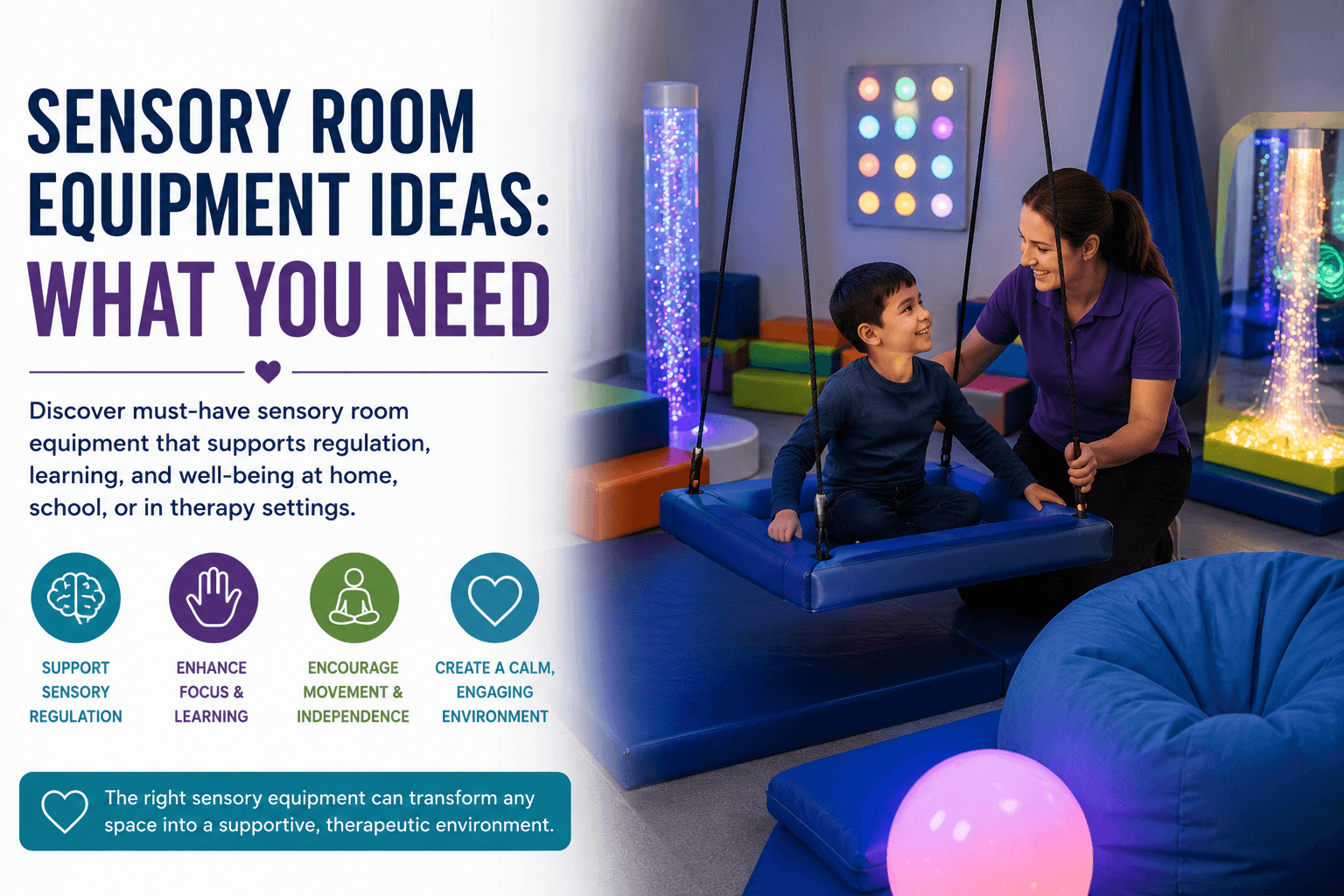
Sensory Room Equipment Ideas: What You Need
Sensory room equipment ideas can help families, schools, therapy clinics, and care teams create calming, engaging spaces for children and teens with autism or sensory processing needs. The right sensory room setup can support regulation, focus, movement, body awareness, comfort, and skill development in a safe and predictable environment.
A sensory room does not need to be large or expensive to be useful. Some families create a calming corner in a bedroom with a weighted lap pad, fiber optic lights, floor cushions, and fidgets. Schools and clinics may build larger rooms with swings, crash mats, sensory wall panels, bubble tubes, adaptive seating, soft play equipment, and sensory room bundles. The best sensory room ideas start with the individual user’s sensory profile, safety needs, age, space, and goals.
Explore Sensory Room Equipment, Sensory Room Packages, Sensory Bundles and Kits, Sensory Products, and Sensory Motor Tools at eSpecial Needs.
What Is a Sensory Room for Autism?
A sensory room for autism is a dedicated space or area designed to provide controlled sensory input. It may include lighting, sound, movement, tactile tools, calming furniture, deep pressure products, swings, mats, visual displays, and interactive equipment.
The purpose of a sensory room is to create an environment where sensory input can be adjusted to the user’s needs. For some children, that means a calm space with dim lighting, soft seating, and quiet fidgets. For others, it means movement equipment, crash pads, tactile tools, and vestibular activities that help them feel more organized and ready to participate.
A sensory room for autism may support:
Sensory regulation
Emotional calming
Focus and attention
Motor planning
Vestibular input
Proprioceptive input
Fine motor activity
Gross motor development
Communication
Transitions
Therapy goals
Relaxation
Independent sensory breaks
A sensory room is not a cure or replacement for therapy. It is a supportive environment that can help autistic individuals access sensory input in a more intentional and predictable way.
Understanding Sensory Processing Differences in Autism
Many autistic children and teens experience sensory input differently. Some may be hypersensitive, meaning they are easily overwhelmed by sounds, lights, textures, smells, movement, or touch. Others may be hyposensitive, meaning they seek more sensory input to feel alert, organized, or connected to their body. Many individuals experience both depending on the environment, time of day, stress level, and activity.
Examples of sensory processing differences may include:
Covering ears in noisy rooms
Seeking spinning, swinging, jumping, or crashing
Avoiding certain clothing textures
Enjoying deep pressure
Becoming overwhelmed by bright lights
Seeking strong tactile input
Avoiding strong smells
Needing movement before seated tasks
Having difficulty transitioning between activities
Becoming dysregulated in busy environments
A sensory room can be designed to meet these needs by offering specific sensory tools in a controlled space. Instead of relying on unpredictable input from the environment, the user can access calming or alerting input that is planned, safe, and adjustable.
How a Sensory Room Supports Regulation and Learning
A well designed sensory room can help children and teens regulate before, during, or after daily activities. Regulation is important because it affects attention, communication, learning, participation, behavior, and comfort.
A sensory room may help by providing:
A predictable place to take sensory breaks
Movement input before seated work
Deep pressure input for calming
Visual input for focus
Tactile input for exploration
Quiet space after overstimulation
Tools for transitions
Activities that support therapy goals
A safe area for gross motor movement
A calming environment for de escalation
In schools, sensory rooms may help students return to class more ready to learn. In therapy clinics, they can support occupational therapy goals. At home, they can become part of morning routines, after school decompression, bedtime preparation, or daily sensory breaks.
Sensory Rooms at Home vs. in Schools and Clinics
Sensory rooms can look different depending on where they are used. A home setup may be smaller and more personal. A school or clinic setup may need to support multiple users, therapy goals, safety standards, and staff supervision.
Sensory Rooms at Home
Home sensory rooms may focus on:
Calming routines
Bedroom sensory support
After school decompression
Sleep preparation
Movement breaks
Sensory friendly play
Family routines
Portable sensory tools
Small space solutions
A home sensory room might be a corner of a bedroom, a playroom wall, a basement area, or a small calm down space.
Sensory Rooms in Schools
School sensory rooms may focus on:
Regulation before returning to class
Sensory breaks
Occupational therapy support
Transitions
Student engagement
Group or individual use
Easy cleaning
Durable equipment
Staff visibility
Clear rules for use
Schools often need equipment that can handle repeated use and serve students with different needs.
Sensory Rooms in Therapy Clinics
Clinical sensory rooms may focus on:
Therapist guided activities
Assessment
Motor planning
Vestibular input
Proprioceptive input
Fine and gross motor skills
Adaptive equipment trials
Treatment goals
Skill building
Parent training
Therapy spaces may include more specialized equipment such as swings, climbing tools, crash mats, adaptive seating, and sensory integration tools.
Must Have Sensory Room Equipment Ideas for Autism
The best sensory room equipment ideas usually include a mix of movement, calming, visual, tactile, seating, and safety focused tools. Not every sensory room needs every item. Choose equipment based on the user’s sensory needs and the purpose of the space.
Core equipment categories may include:
Swings and vestibular movement tools
Deep pressure products
Sensory wall panels
Bubble tubes and visual displays
Soft play and crash mats
Gross motor equipment
Sensory furniture for autism
Adaptive seating
Calming lighting
Sound tools
Portable sensory items
Sensory room bundles and kits
Swings and Vestibular Movement Tools
Swings are a common part of sensory room design because they provide vestibular input, which relates to movement and balance. Some children seek swinging because it helps them feel calm, alert, or organized. Others may need movement introduced slowly and carefully.
Swinging may support:
Body awareness
Balance
Motor planning
Core strength
Calming
Focus
Regulation
Postural control
Coordination
Swings should always be selected, installed, and used with safety in mind. Proper mounting, weight capacity, supervision, and therapist guidance are important.
Explore Swings, Adaptive Swings, and Vestibular Motion.
Platform Swings
Platform swings provide a flat surface where a child may sit, lie, kneel, or participate in therapist guided movement activities. They are often used in therapy settings because they allow different positions and activities.
Platform swings may support:
Vestibular input
Core strength
Balance
Motor planning
Postural control
Bilateral coordination
Tummy time style activities
Reaching and grasping activities
A platform swing may be appropriate for children who need a larger, stable swing surface. Supervision and proper installation are essential.
Cocoon and Pod Swings
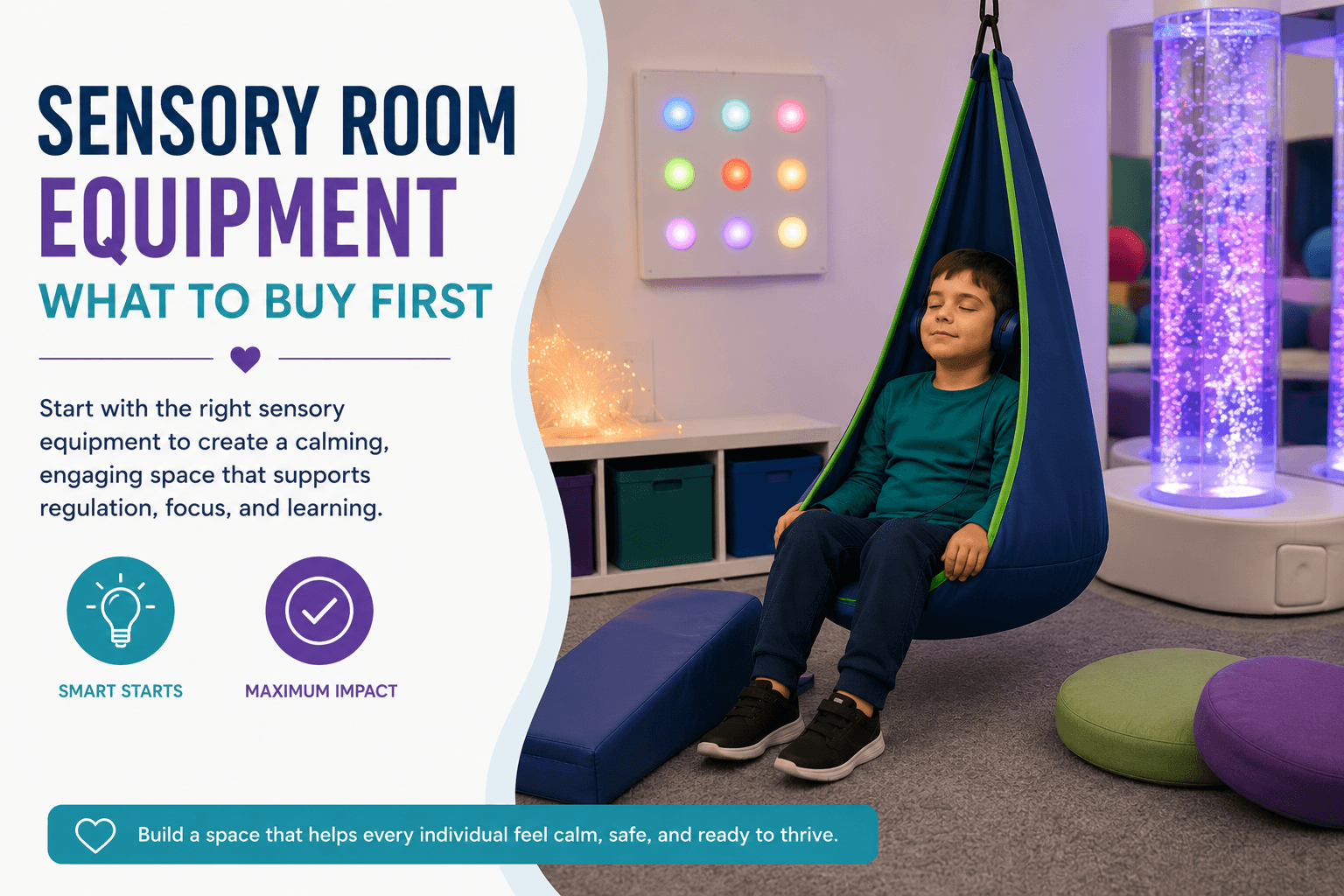
Cocoon and pod swings provide an enclosed space that may feel calming and secure for some autistic children. These swings often offer gentle movement combined with a snug, comforting feeling.
Cocoon and pod swings may support:
Calming sensory input
Body awareness
Reduced visual distraction
A sense of security
Gentle vestibular input
Quiet breaks
Self regulation
These swings can be helpful for children who enjoy enclosed spaces, but they should be introduced gradually for users who may feel restricted or anxious.
Bolster and Cuddle Swings
Bolster and cuddle swings can provide movement, deep pressure, and postural challenge depending on the design. Some encourage active holding, balance, and core engagement, while others provide a more calming wrapped or supported feeling.
They may support:
Core strengthening
Balance
Motor planning
Deep pressure input
Vestibular input
Calming breaks
Upper body engagement
Choose the swing based on the child’s motor ability, sensory needs, safety awareness, and therapist recommendations.
Deep Pressure Products for Calming
Deep pressure products provide firm, steady input that may help some children feel calmer and more organized. This type of proprioceptive input can be especially helpful for children who seek pressure, squeezing, compression, or heavy work.
Deep pressure tools may include:
Weighted blankets
Weighted lap pads
Compression vests
Body socks
Deep pressure seating
Calming wraps
Crash pads
Therapy balls
Resistance tools
Compression tools
Explore Deep Pressure Products, Weighted Products, Weighted Blankets, and Weighted Lap Pads.
Weighted Blankets and Lap Pads
Weighted blankets and lap pads may provide calming pressure for some users. Lap pads can be useful during seated activities, reading, homework, therapy, travel, or quiet time. Weighted blankets are often used during rest or calm routines when appropriate.
General safety considerations include:
Choose an appropriate weight based on professional or manufacturer guidance
Make sure the user can remove the item independently when needed
Do not cover the face
Avoid use when breathing, circulation, or medical concerns are present unless approved by a healthcare professional
Supervise children who may not communicate discomfort
Follow product instructions
Weighted products should feel calming, not restrictive.
Compression Vests and Body Socks
Compression vests and body socks provide consistent pressure and body feedback. They may help some children feel more aware of their body, calmer during transitions, or more focused during activities.
Compression tools may support:
Proprioceptive input
Body awareness
Focus
Calming
Transition support
Movement exploration
Use compression products according to sizing instructions and professional guidance. Stop use if the child shows discomfort, distress, overheating, or difficulty moving safely.
Chill Out Chairs and Calming Pods
Chill out chairs, calming pods, and enclosed seating can create a retreat within the sensory room. These spaces may help children decompress when they need reduced stimulation.
Helpful options may include:
Bean bags
Soft floor cushions
Enclosed pods
Cozy seating corners
Floor loungers
Calm down chairs
Padded reading nooks
Sensory tents
The goal is to provide a safe and comfortable space where the child can rest, regulate, and take a break.
Sensory Wall Panels and Interactive Surfaces
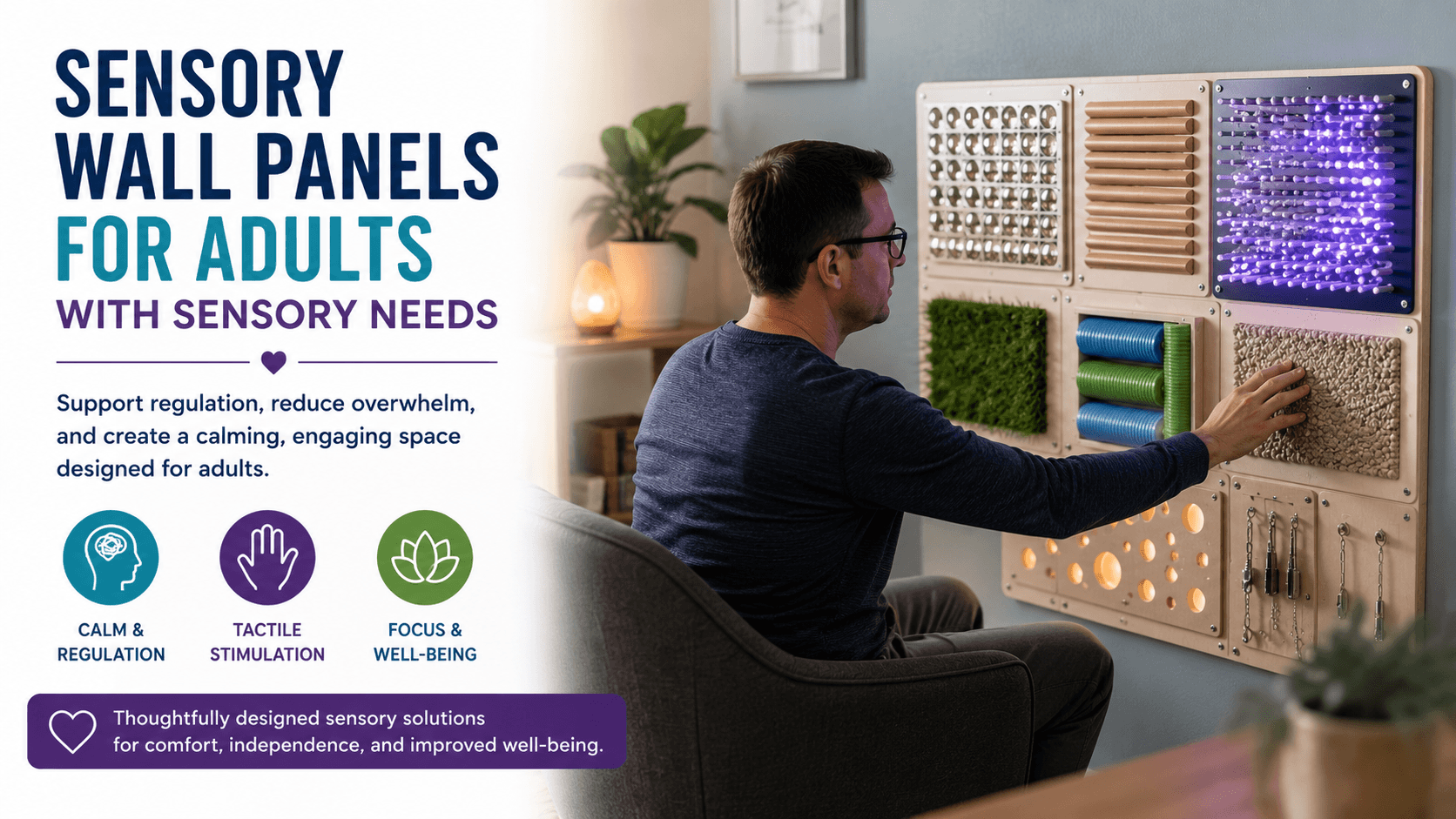
Sensory wall panels provide tactile, visual, and interactive input without taking up much floor space. They can be especially useful in homes, classrooms, clinics, waiting areas, and smaller sensory rooms.
Sensory wall panels may include:
Textures
Mirrors
Bead paths
Switches
Latches
Spinners
Lights
Fine motor activities
Cause and effect elements
Visual tracking features
Explore Sensory Wall Panels, Marble Sensory Wall, and Tactile Stimulation Products.
Tactile Wall Panels
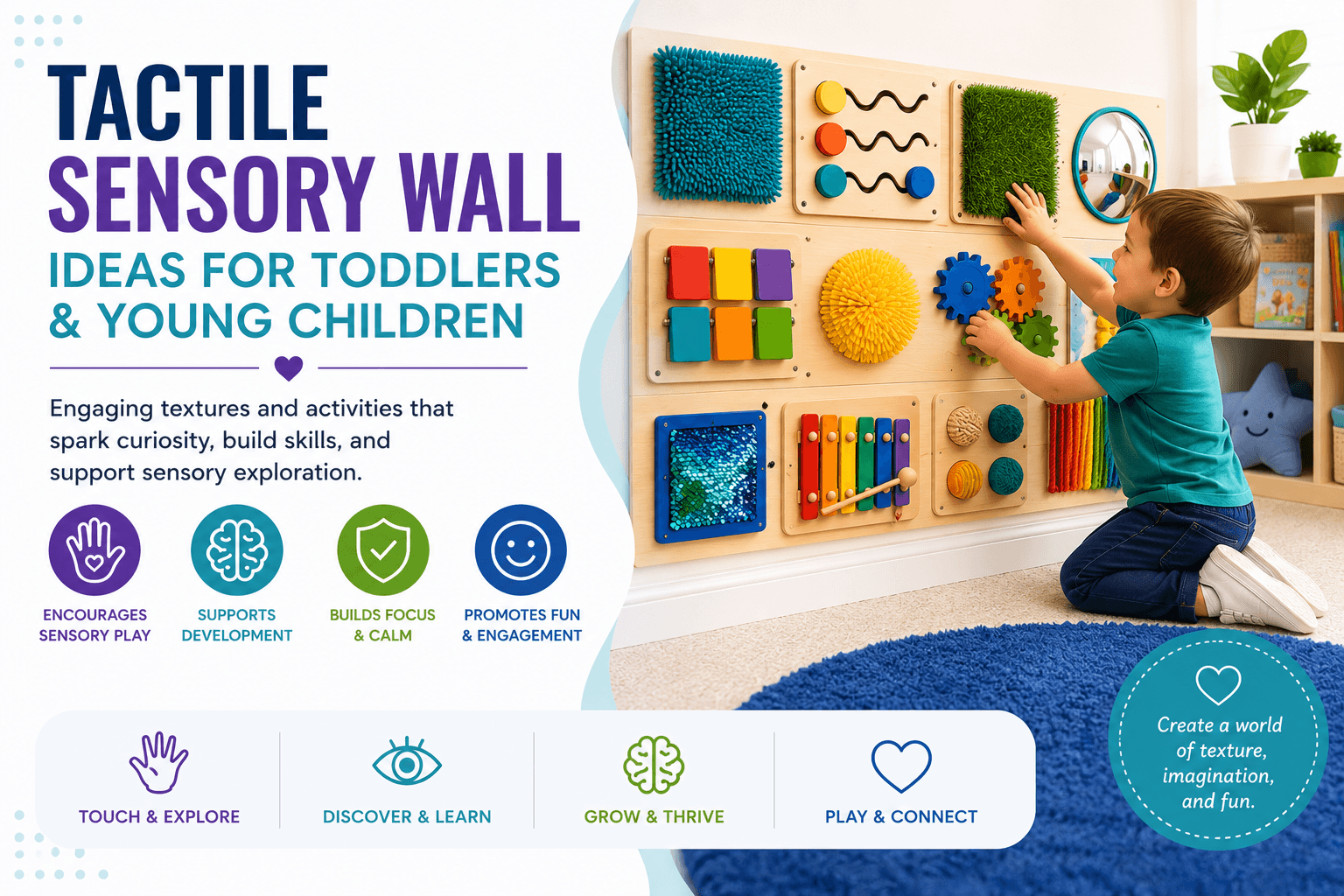
Tactile wall panels invite users to explore different textures through touch. These panels may support sensory exploration, fine motor engagement, visual attention, and independent play.
Tactile wall panel ideas include:
Soft textures
Rough textures
Smooth surfaces
Raised patterns
Spinners
Buttons
Beads
Mirrors
Interactive handles
Shape activities
Texture matching
For children who avoid touch, start with gentle textures and allow the child to explore at their own pace.
Bubble Tubes and Visual Displays
Bubble tubes and visual displays can provide calming visual input through color, light, bubbles, and movement. Many sensory rooms use bubble tubes as a central calming feature because they create a soothing focal point.
Bubble tubes may support:
Visual tracking
Relaxation
Attention
Calm sensory breaks
Cause and effect interaction when interactive
A calming room atmosphere
Explore Bubble Tubes, Sensory Fiber Optic Lights and Strands, and Lights.
Soft Play and Gross Motor Equipment
Soft play and gross motor equipment can give children safe ways to move, climb, crawl, balance, crash, roll, and explore body movement. This type of equipment can support sensory seekers who need more movement and proprioceptive input.
Soft play tools may include:
Foam blocks
Wedges
Tunnels
Mats
Crawling shapes
Balance equipment
Climbing forms
Crash pads
Ball pits
Indoor therapy gym pieces
Explore Soft Play, Crash Pads, Indoor Therapy Gyms, and Sensory Motor Tools.
Crash Mats and Foam Pits
Crash mats and foam pits can provide a safer place for impact seeking movement when used appropriately. Some autistic children seek jumping, crashing, or falling into soft surfaces because it provides proprioceptive input.
Crash mats and foam pits may support:
Heavy work
Body awareness
Proprioceptive input
Energy release
Motor planning
Safe movement routines
Sensory regulation
Supervision is important. The space should be clear of hard furniture, sharp edges, or unsafe climbing risks.
Indoor Climbing and Balance Tools
Indoor climbing and balance tools can support gross motor development, vestibular processing, body awareness, strength, coordination, and confidence.
Examples may include:
Balance beams
Foam steps
Climbing forms
Rocker boards
Therapy balls
Tunnels
Incline wedges
Stepping stones
Obstacle course pieces
Choose equipment based on age, ability, fall risk, and available supervision.
Sensory Furniture for Autism: Seating and Positioning
Sensory furniture for autism can help create a space that is comfortable, supportive, and regulating. Seating is especially important because posture affects attention, hand use, relaxation, feeding, communication, and participation.
Sensory furniture may include:
Bean bags
Floor cushions
Rocking chairs
Wobble chairs
Adaptive seating
Positioning chairs
Calm down pods
Floor mats
Soft seating
Supportive therapy chairs
Explore Sensory Seating, Seating, Active Seating, Kore Wobble Chairs, and Positioning Products.
Bean Bags and Floor Cushions
Bean bags and floor cushions offer flexible seating for reading, calming, resting, and sensory breaks. They may help create a softer, less formal room environment.
Benefits may include:
Flexible positioning
Soft body support
Calming comfort
Easy room arrangement
Cozy retreat areas
Relaxed seating for quiet activities
Choose options that are durable, easy to clean, and appropriate for the user’s size and safety needs.
Adaptive Seating and Positioning Chairs
Adaptive seating and positioning chairs can support children who need more structure than a bean bag or floor cushion can provide. Proper seating can improve stability and help children participate in play, therapy, learning, communication, and calming routines.
Adaptive seating may support:
Trunk alignment
Hip positioning
Foot support
Head support
Upright posture
Hand use
Visual attention
Comfort
Safety during activities
An occupational therapist or physical therapist can help determine what level of support is needed.
Calming Sensory Room Ideas: Lighting, Sound, and Scent
Calming sensory room ideas often focus on reducing overwhelm and creating a predictable atmosphere. Lighting, sound, and scent can shape how a room feels.
A calming sensory room may include:
Soft lighting
Fiber optic strands
Bubble tubes
Projectors
Quiet sound tools
Soft seating
Weighted lap pads
Deep pressure tools
Neutral colors
Low clutter
Clear organization
Optional scent only when tolerated
Not every child enjoys the same calming input. Watch the user’s response and adjust the space as needed.
Fiber Optic Lighting and LED Color Therapy
Fiber optic lighting and LED color features can create calming visual input without requiring bright overhead lighting. They may be used in sensory rooms, bedrooms, therapy spaces, or calming corners.
Visual lighting tools may support:
Relaxation
Visual tracking
Focus
Sensory breaks
Calm transitions
Room atmosphere
Avoid flashing lights or fast color changes for users who are sensitive to visual stimulation or have seizure concerns.
Projectors and Star Ceiling Effects
Projectors and star ceiling tools can create immersive visual environments. They may be used for calming routines, bedtime transitions, quiet time, or therapy guided relaxation.
Projector ideas include:
Star effects
Ocean scenes
Gentle moving lights
Nature scenes
Soft color washes
Calming ceiling visuals
Explore Projectors and Lights.
White Noise Machines and Therapeutic Sound Tools
Some children are sensitive to sudden sounds or background noise. White noise machines, calming music, nature sounds, or sound therapy tools may help mask unpredictable sounds and create a more consistent auditory environment.
Sound tools may support:
Calm routines
Focus
Relaxation
Sleep preparation
Reduced distraction
Sensory breaks
Volume should be adjustable, and sound should never be forced on a child who finds it uncomfortable.
Aromatherapy and Scent Considerations
Scent can be calming for some individuals and overwhelming for others. Aromatherapy should be used carefully in sensory rooms, especially for children with autism who may be sensitive to smells.
Before using scent, consider:
Allergies
Asthma
Migraine triggers
Sensory sensitivity
Skin sensitivity
Ventilation
Caregiver approval
School or clinic policies
Whether scent can be easily removed
If scent is used, keep it mild and optional. Many sensory rooms work best without added scent.
Sensory Bedroom Ideas for Autism: Making the Most of Limited Space
Sensory bedroom ideas for autism can help families create a calming space even when there is no extra room available. A bedroom sensory setup should support rest, regulation, and predictable routines without making the room too stimulating for sleep.
Small bedroom sensory ideas include:
Weighted lap pad
Soft floor cushion
Sensory lighting
Fiber optic strands
Small sensory wall panel
Quiet fidgets
Calm down basket
Noise reducing headphones
Visual schedule
Bedtime routine chart
Soft textures
Projector with gentle settings
Keep active movement equipment separate from sleep areas when possible if it makes bedtime harder.
Small Space Swings and Wall Mounted Options
Some families want vestibular input in a small room. Compact swings, doorway swings, and wall mounted options may help, but safety and installation are critical.
Before adding a swing to a bedroom, consider:
Ceiling or wall strength
Installation requirements
Weight capacity
Available clearance
Fall zones
Supervision
User safety awareness
Whether movement affects sleep
Professional installation needs
When a swing is not practical, consider portable movement tools such as therapy balls, rocking seating, balance tools, or sensory motor activities in another space.
Portable and Multi Use Sensory Tools
Portable and multi use tools can help families make the most of limited space.
Ideas include:
Weighted lap pads
Fidgets
Chewable sensory tools
Sensory bins
Noise reducing headphones
Body socks
Therapy balls
Compression tools
Foldable mats
Portable lights
Visual timers
Travel sensory kits
Explore Travel Sensory Kits, Fidget Toys, Sensory Chewies and Oral Stimming Tools, and Mobile Sensory Equipment.
Creating a Calming Corner in a Bedroom
A calming corner can be an effective alternative to a full sensory room. It can fit in a bedroom, playroom, classroom, or living room.
A calming corner may include:
Soft seating
Weighted lap pad
Small sensory wall panel
Visual timer
Calm down cards
Quiet fidgets
Low lighting
Soft textures
Noise reducing headphones
Simple breathing visuals
Preferred comfort items
Keep the space uncluttered and predictable.
Sensory Room Ideas for Teens With Autism
A sensory room for teens should feel age appropriate, respectful, and aligned with the teen’s interests. Many teens do not want a room that feels childish, even if they still benefit from sensory support.
A sensory room for teens may support:
Stress relief
Self regulation
Homework breaks
Sleep preparation
Sensory overload recovery
Movement breaks
Emotional regulation
Independence
Privacy
Decompression after school
Teens should be involved in choosing colors, lighting, seating, textures, music, and layout whenever possible.
Age Appropriate Equipment for Older Users
Older children and teens may need equipment that is larger, stronger, and more visually mature.
Teen friendly sensory equipment may include:
Neutral bean bags
Soft floor seating
Fiber optic lighting
Bubble tubes
Projectors
Weighted lap pads
Compression tools
Rocking seating
Quiet fidgets
Sensory wall panels
Music or sound tools
Exercise balls
Balance tools
Calming pods
Outdoor sensory activities
Equipment should fit the teen’s size, weight, sensory preferences, and desired level of privacy.
Teen Friendly Calming Sensory Room Ideas
Calming sensory room ideas for teens may include:
Soft LED lighting
Fiber optic strands
Star projector
Comfortable lounge seating
Weighted lap pad
Noise reducing headphones
Minimal visual clutter
Neutral wall colors
Tactile fidget station
Music corner
Journaling area
Sensory wall panel
Low shelf for preferred tools
Relaxation routine chart
The best sensory room for teens should feel like a supportive personal space, not a child focused playroom.
How to Plan and Budget Your Sensory Room
Planning a sensory room begins with the user’s needs, not the equipment list. Before buying products, identify the space, sensory goals, safety needs, and budget.
Ask:
Who will use the room?
What sensory input helps them calm?
What sensory input overwhelms them?
Does the room need movement equipment?
Is deep pressure helpful?
Is visual input calming or distracting?
Will the room be used at home, school, or clinic?
Is supervision required?
How much space is available?
What equipment must be installed?
What can be portable?
What is the budget?
Is funding documentation needed?
A thoughtful plan helps prevent overspending on equipment that does not match the user’s needs.
Prioritizing Equipment Based on Sensory Needs
Start with the sensory input that makes the biggest difference in daily life.
If the user seeks movement, prioritize swings, balance tools, crash mats, or sensory motor equipment.
If the user seeks deep pressure, prioritize weighted lap pads, crash pads, compression tools, or deep pressure products.
If the user is visually calmed by light, prioritize bubble tubes, fiber optics, projectors, or soft LED lighting.
If the user needs tactile input, prioritize sensory wall panels, fidgets, tactile tools, or texture boards.
If the user needs a calm retreat, prioritize soft seating, calming pods, low lighting, and noise support.
Using a Quote Request Service to Stay Within Budget
A quote request can help families, schools, clinics, and organizations choose equipment that matches their space, sensory goals, and budget. This can be especially helpful when planning a full sensory room or purchasing several products at once.
Before requesting a quote, gather:
User age
User size
Diagnosis or sensory needs when relevant
Primary sensory goals
Room dimensions
Ceiling height if swings are considered
Wall space
Flooring type
Budget range
Setting type
Funding or purchase order requirements
Preferred equipment categories
Timeline
Request help through eSpecial Needs Quote Requests.
Purchase Orders for Schools and Therapy Clinics
Schools, therapy clinics, government agencies, hospitals, and care organizations may need purchase order support for sensory room equipment. Purchase orders can help simplify institutional buying and documentation.
eSpecial Needs supports Purchase Orders, Schools and Government Agencies, and B2B Solutions.
Sensory Room Equipment Ideas by Budget Level
Sensory room planning can happen in stages. You do not need everything at once.
Low Budget Sensory Room Ideas
Low budget sensory room ideas may include:
Fidgets
Weighted lap pad
Soft floor cushion
Noise reducing headphones
Visual timer
Calm down cards
Small sensory wall panel
Portable projector
Sensory bin
Soft lighting
Chewable sensory tools when appropriate
Visual schedule
Mid Budget Sensory Room Ideas
Mid budget sensory room ideas may include:
Crash pad
Bean bag
Bubble tube
Fiber optic strands
Larger sensory wall panel
Body sock
Compression tools
Therapy ball
Balance tools
Soft play pieces
Calming pod
Portable sensory kit
Higher Budget Sensory Room Ideas
Higher budget sensory room ideas may include:
Swing system
Multiple sensory wall panels
Sensory room bundle
Bubble tube platform
Interactive lighting
Soft play gym
Crash mat system
Adaptive seating
Large fiber optic installation
Projector system
Full sensory room package
Explore Sensory Room Packages and Sensory Bundles and Kits for convenient planning options.
Shop Sensory Room Equipment at eSpecial Needs
eSpecial Needs offers sensory room equipment for families, schools, therapy clinics, hospitals, care facilities, and organizations. Whether you are building a small calming corner, a sensory bedroom, a classroom sensory area, or a complete therapy room, the right equipment can help create a safer and more supportive environment.
Shop sensory categories including:
Explore Sensory Room Bundles and Kits
Sensory room bundles and kits can make planning easier by grouping useful products together. They may help families, schools, and clinics avoid guessing which pieces work well together.
Bundles and kits may include combinations of:
Visual sensory tools
Tactile tools
Movement equipment
Deep pressure items
Sensory wall panels
Lighting
Soft seating
Calming tools
Therapy room equipment
Explore Sensory Room Packages, Sensory Bundles and Kits, and Mobile Sensory Equipment.
Get Expert Guidance From Our Special Needs Professionals
Choosing sensory room equipment can feel overwhelming because every user has different sensory needs. eSpecial Needs can help families, schools, clinics, and organizations compare product options and request a quote based on space, goals, and budget.
Get support through Quote Requests, Turnkey Sensory Room Installation, Purchase Orders, and B2B Solutions.
FAQs
What is visual and auditory stimulation in a sensory room?
Visual and auditory stimulation refers to sensory room equipment that engages sight and sound. These tools may include bubble tubes, fiber optic lights, projectors, LED lighting, calming music, sound panels, white noise machines, and interactive audio elements.
These tools can help create a calming, focusing, or engaging environment depending on the user’s sensory needs.
What sensory room equipment provides visual stimulation?
Visual sensory room equipment may include:
- Bubble tubes
- Fiber optic strands
- LED light panels
- Projectors
- Star ceiling effects
- Color changing lights
- Interactive light displays
- Safe mirrors
- Visual tracking tools
- Calming wall displays
Explore Bubble Tubes, Lights, Projectors, and Sensory Fiber Optic Lights and Strands.
What auditory tools can be used in a sensory room?
Auditory sensory room tools may include:
- White noise machines
- Calming music
- Nature sounds
- Sound panels
- Rhythm instruments
- Interactive sound buttons
- Musical wall panels
- Noise reducing headphones
- Therapeutic sound tools
Sound should be adjustable and optional. Some users find sound calming, while others may find it overwhelming.
What sensory room equipment supports vestibular movement?
Vestibular movement tools may include:
- Platform swings
- Pod swings
- Bolster swings
- Adaptive swings
- Rocking chairs
- Balance boards
- Therapy balls
- Tunnels
- Climbing equipment
- Vestibular motion tools
Explore Swings, Adaptive Swings, and Vestibular Motion.
What sensory room equipment supports proprioceptive movement?
Proprioceptive sensory equipment may include:
- Crash pads
- Foam mats
- Body socks
- Compression tools
- Weighted lap pads
- Weighted blankets
- Climbing structures
- Resistance bands when safely mounted
- Soft play shapes
- Therapy balls
- Push and pull activities
Explore Crash Pads, Soft Play, Deep Pressure Products, and Sensory Motor Tools.
Are bean bags good sensory room furniture?
Bean bags can be helpful for users who enjoy soft, flexible seating. They may support relaxation, calming breaks, reading, quiet time, and body comfort.
Choose bean bags that are durable, easy to clean, properly sized, and safe for the user’s mobility and support needs.
How do I choose between calming and active sensory equipment?
Choose calming equipment when the goal is relaxation, emotional regulation, rest, or recovery from overstimulation. Examples include soft seating, weighted lap pads, fiber optic lights, bubble tubes, and quiet fidgets.
Choose active equipment when the user needs movement, energy release, vestibular input, gross motor practice, or alerting input. Examples include swings, crash pads, balance tools, soft play equipment, and therapy balls.
Many sensory rooms include both calming and active zones.
What safety factors should I consider for sensory room equipment?
Important safety factors include:
- Weight capacity
- Age appropriateness
- Proper installation
- Secure mounting
- Supervision needs
- Fall zones around movement equipment
- No choking hazards
- No exposed batteries
- No sharp edges
- Easy cleaning
- User mobility and balance
- Medical considerations
- Manufacturer instructions
Safety should always come before adding more sensory input.