Table of Contents
- What Is a Tactile Sensory Wall?
- Why Tactile Play Matters for Toddlers
- Signs a Young Child May Enjoy a Tactile Sensory Wall
- Benefits of Tactile Sensory Walls for Young Children
- Tactile Sensory Wall Ideas for Toddlers
- Multi Texture Fabric Panels
- Spinners, Gears, and Rolling Features
- Latches, Doors, and Locks
- Bead Tracks and Sliding Pieces
- Mirror and Reflective Panels
- Light and Touch Panels
- Nature Inspired Texture Ideas
- Themed Tactile Sensory Walls
- Tactile Sensory Walls for Children With Autism
- Tactile Sensory Walls for Classrooms
- Tactile Sensory Walls for Therapy Clinics
- DIY Tactile Sensory Wall Ideas
- How to Build a Safe DIY Tactile Sensory Wall
- Safety Tips for Tactile Sensory Walls
- Ready Made Sensory Wall Panels vs DIY Panels
- Choosing the Right Sensory Wall Panel
- Sensory Wall Panels for Small Spaces
- Pairing Tactile Sensory Walls With Other Sensory Tools
- Can Schools Use Purchase Orders for Sensory Wall Panels?
- Funding Options for Sensory Wall Panels
- Where to Buy Tactile Sensory Wall Panels
- FAQs
Tactile Sensory Wall Ideas for Toddlers and Young Children
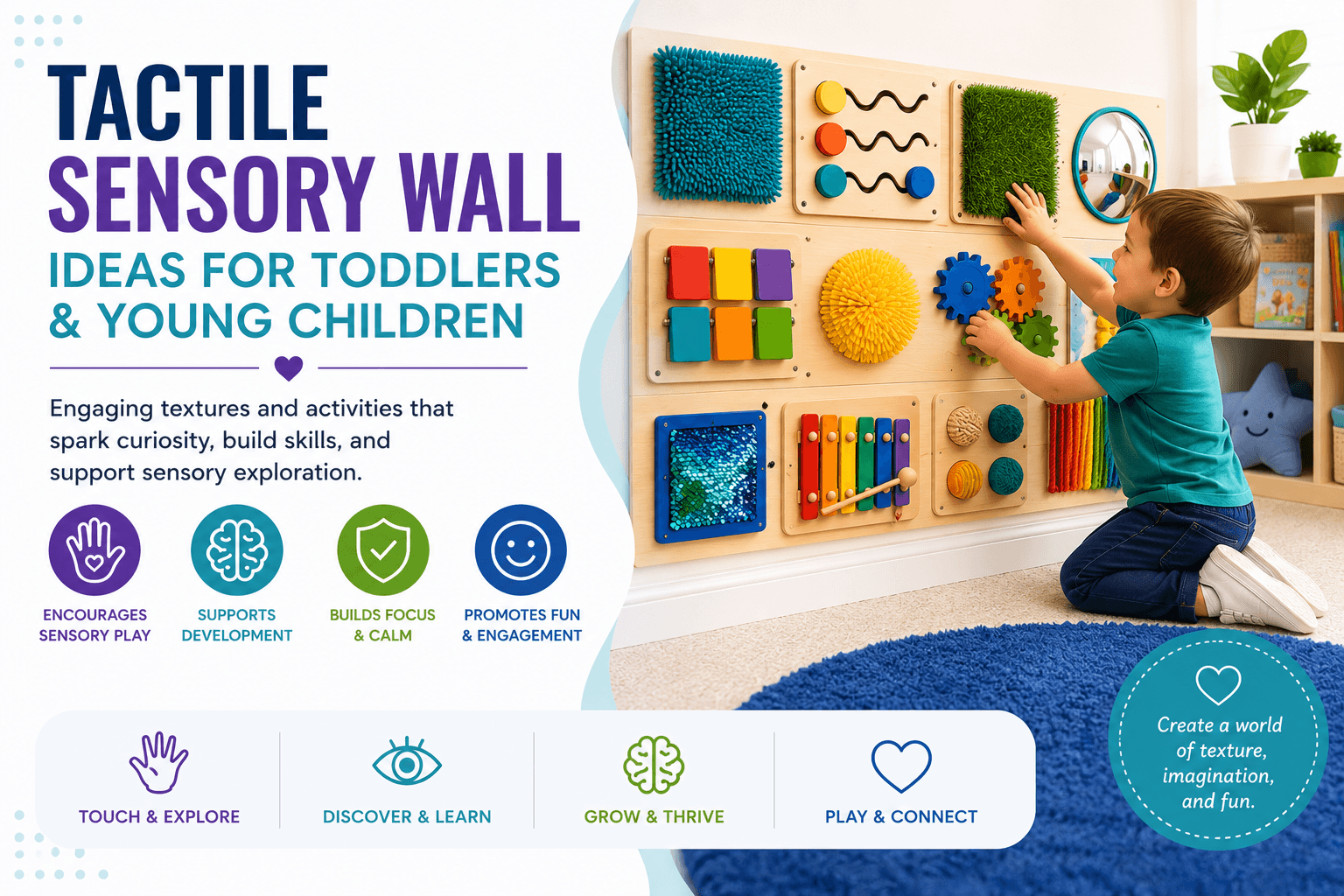
A tactile sensory wall gives toddlers and young children a safe, hands on place to explore textures, movement, colors, sounds, and simple cause and effect activities. Whether it is used in a playroom, bedroom, classroom, therapy clinic, or sensory room, a tactile sensory wall can encourage curiosity while supporting fine motor practice, visual attention, language development, and sensory exploration.
For young children, touch is one of the main ways they learn about the world. They want to press, spin, slide, turn, tap, pull, open, close, and compare different surfaces. A well planned tactile sensory wall can turn that natural curiosity into a structured activity that is easy to access throughout the day.
Families, educators, therapists, and care teams can explore ready made options through eSpecial Needs, including Sensory Wall Panels, Touch and Texture Sensory Room Tools, Sensory Room Equipment, Fine Motor Tools, Sensory Toys, and Sensory Room Packages.
What Is a Tactile Sensory Wall?
A tactile sensory wall is a wall mounted activity area that gives children opportunities to explore touch, movement, textures, and interactive features. It may include soft fabrics, textured panels, mirrors, spinning pieces, latches, gears, tracks, buttons, lights, rollers, puzzles, or themed activity panels.
A tactile sensory wall is different from a full sensory room because it focuses mainly on accessible wall based exploration. It can fit into smaller spaces and allows children to engage while standing, sitting, using supportive seating, or moving through a classroom or play area.
A tactile sensory wall may be used in:
Playrooms
Bedrooms
Daycares
Preschool classrooms
Special education classrooms
Therapy clinics
Waiting rooms
Libraries
Sensory rooms
Child care centers
Community programs
The best tactile sensory wall is one that matches the child’s age, height, interests, sensory preferences, and safety needs.
Paradiddle Percussion Activity Wall Panel
$856.95
Explore rhythm and sound as your child creates their own musical masterpiece on our new Paradiddle Percussion Busy Board. This wall panel comes jam-packed with lots of ways to "jam," such as bells, drum panels, a xylophone, and much more.… read more

Why Tactile Play Matters for Toddlers
Toddlers learn through movement and touch. They explore objects by pressing, grasping, turning, rubbing, tapping, and comparing how things feel. Tactile activities can make everyday play more engaging while encouraging children to use their hands in new ways.
Tactile sensory wall activities may support:
Fine motor practice
Hand strength
Finger isolation
Grasp and release
Hand eye coordination
Bilateral coordination
Visual tracking
Cause and effect learning
Vocabulary development
Curiosity
Attention during short activities
Sensory exploration
Children do not all respond to texture in the same way. Some may seek rough, bumpy, soft, smooth, or moving surfaces. Others may avoid certain textures. A tactile sensory wall should offer choices without forcing a child to touch materials that feel uncomfortable.
Gears Activity Wall Panel
$299.95
Take a spin with the Gears Activity Wall Panel! This activity wall panel lets kids engineer their own fun as they manipulate the colorful gears across the board. The Gears Wall Panel keeps children engaged while reinforcing hand-eye coordination and… read more

Signs a Young Child May Enjoy a Tactile Sensory Wall
A tactile sensory wall may be a good fit for a toddler or young child who:
Enjoys touching different materials
Likes opening and closing doors or containers
Spends time spinning objects
Seeks buttons, switches, or moving pieces
Loves puzzles and cause and effect toys
Needs more fine motor practice
Enjoys sensory bins or textured toys
Benefits from calm independent play
Needs a predictable activity during transitions
Uses sensory play as part of occupational therapy
Needs a hands on activity while waiting
A sensory wall can also be useful for children who are hesitant around new textures, as long as they can explore at their own pace.
Benefits of Tactile Sensory Walls for Young Children
Tactile sensory walls are popular because they provide engaging play without requiring a large amount of floor space. They can become a familiar activity that children return to throughout the day.
Fine Motor Skill Development
Turning knobs, sliding pieces, spinning wheels, pushing buttons, moving beads, and opening latches can help children practice hand movements used for daily tasks. These actions may support skills needed for dressing, feeding, drawing, cutting, and using classroom materials.
For related products, explore Fine Motor Tools, Handwriting Tools, and Scissors and Cutting Aids.
Sensory Exploration
A tactile wall can include smooth, soft, bumpy, ridged, firm, flexible, reflective, or moving materials. This gives children opportunities to compare textures and discover what types of touch they enjoy.
Language and Learning
Adults can build language during tactile play by naming what the child sees, feels, and does. Simple words such as soft, rough, smooth, turn, open, close, fast, slow, up, down, push, pull, red, blue, more, and all done can make the sensory wall a communication activity too.
Calm and Focused Play
Some children enjoy tactile wall play because it gives their hands something purposeful to do. A wall panel can be used during transitions, waiting periods, calm down routines, or short breaks between more active activities.
Accessible Activity Options
Wall mounted sensory activities can be easier to access than toys that need to be spread across the floor. With proper mounting height, they may be used by children who are standing, sitting, using mobility devices, or supported in adaptive seating.
Tactile Sensory Wall Ideas for Toddlers
A good tactile sensory wall does not need to include every possible feature. Choose a few activities that are safe, age appropriate, and interesting to the children who will use the space.
Multi Texture Fabric Panels
Fabric panels can introduce soft, smooth, fuzzy, ribbed, shiny, stretchy, or quilted textures. Materials may include fleece, satin, faux fur, corduroy, felt, foam, soft rubber, or textured vinyl.
TFH Large Textured Tactile Wall
$2,299.00
The TFH Large Textured Tactile Wall allows kids to explore, play, learn, and discover new things. This tactile sensory wall is satisfying and soothing for fidgeting. Ideal for users who may have sensory processing difficulties. Features Fifteen different textures that… read more

Helpful ideas include:
Soft and rough fabric squares
Lift the flap fabric panels
Matching texture pairs
Texture paths for little hands
Velcro compatible pieces
Color sorting fabric tabs
Large safe ribbons secured to the panel
Avoid loose pieces, fraying fabric, small decorative items, or materials that could become choking hazards.
Tactile Activity Busy Board Wall Panel
$550.00
The Spark Sensory Solutions Tactile Busy Board Activity Wall Panel offers several sensory experiences to explore in one place. Kids will love pulling the colorful tubes, tugging the ropes, manipulating the gears and abacus, gripping the hand web, or running… read more

Spinners, Gears, and Rolling Features
Spinners, gears, rollers, and rotating pieces can make a tactile wall more interactive. Children can use one finger, a whole hand, or both hands together to create movement.
These features may support:
Finger isolation
Wrist movement
Cause and effect learning
Visual tracking
Turn taking
Hand eye coordination
Sustained attention
Look for durable wall mounted panels with smooth edges and age appropriate moving components.
Latches, Doors, and Locks
Large latches, sliding doors, simple locks, and opening panels can be especially engaging for toddlers and preschoolers. These activities encourage children to grasp, pull, push, lift, twist, and coordinate both hands.
Latches and doors may support:
Fine motor development
Problem solving
Sequencing
Hand strength
Bilateral coordination
Early independence skills
Choose simple mechanisms that are easy for young children to use with supervision. Avoid anything that could pinch fingers or create access to unsafe storage areas.
Locks & Latches Busy Board Sensory Activity Panel
$249.95
The new Locks and Latches Busy Board from eSpecial Needs is loaded with motor skill developing activities that children with want to explore again and again. Featuring solid plywood construction and rust-proof hardware, each activity teaches children an everyday skill… read more

Bead Tracks and Sliding Pieces
Wall mounted bead tracks and sliding pieces give children a way to move objects from one side of the panel to the other. They can support visual tracking while giving hands a clear task.
Bead tracks may help children practice:
Reaching
Tracking movement
Crossing midline
Coordinating both hands
Color naming
Counting
Following simple directions
These panels can work well in waiting rooms, classrooms, therapy spaces, and sensory corners because they do not require loose pieces.
Mirror and Reflective Panels
Mirrors and reflective surfaces can make tactile play more engaging by adding visual feedback. Toddlers may watch their own facial expressions, hand movements, or reflections as they explore the panel.
Mirror features may support:
Self awareness
Visual attention
Imitation
Facial expression play
Social interaction
Hand movement observation
Use child safe mirrors designed for play spaces rather than standard household glass mirrors.
Light and Touch Panels
Some tactile sensory walls include lights, glowing elements, or visual effects that respond to touch or movement. These can be exciting for children who enjoy visual input, but they should not be the only feature in the space.
Light based wall features may support:
Visual attention
Cause and effect learning
Color recognition
Motivation for reaching
Interactive play
For visual sensory room equipment, explore Bubble Tubes, Sensory Fiber Optic Lights and Strands, Projectors, and Mirrors for Visual Stimulation.
Nature Inspired Texture Ideas
Nature inspired textures can help create a calming, familiar theme. Instead of using loose natural materials that may splinter or break apart, look for durable child safe alternatives.
Ideas include:
Artificial grass panels
Smooth wood texture panels
Leaf shaped fabric pieces
Soft tree bark style textures
Ocean wave rollers
Cloud shaped soft panels
Garden themed spinners
Animal track textures
A nature theme can work especially well in classrooms, waiting areas, playrooms, and outdoor learning spaces.
Themed Tactile Sensory Walls
A theme can make a tactile wall feel more inviting and help build language through play. Choose a theme based on the child’s interests or the room’s purpose.
Popular tactile sensory wall themes include:
Farm
Ocean
Jungle
Garden
Space
Weather
Transportation
Construction
Community helpers
Alphabet and numbers
Seasons
For example, an ocean themed wall might include wave textures, a spinning fish, a mirror panel, blue rollers, and a shell shaped texture panel.
Tactile Sensory Walls for Children With Autism
Tactile sensory walls can be helpful for some autistic toddlers and young children because they provide an organized, predictable way to explore touch and movement. However, sensory preferences vary widely. Some children may seek lots of tactile input, while others may prefer only one or two familiar textures.
When creating an autism friendly tactile sensory wall, consider:
Predictable layout
Clear visual boundaries
Limited clutter
Gentle color palette
A mix of familiar and new textures
Easy to understand activities
No sudden loud sounds
Options for independent play
Accessible height
Ability to move away easily
Visual schedule nearby if helpful
Do not assume that every child will enjoy textured surfaces. Offer choices and let the child lead the pace of exploration.
Tactile Sensory Walls for Classrooms
Classroom sensory wall panels can provide a low footprint activity area for students during centers, transitions, indoor recess, calm breaks, and therapy sessions. Because they stay on the wall, they can help reduce loose pieces and keep activity areas more organized.
Classroom sensory wall features may include:
Durable mounted panels
Easy clean materials
Multiple activity sections
Fine motor activities
Quiet moving pieces
Age appropriate visual elements
Accessible mounting height
Panels placed near a calm corner
Rotating themes throughout the year
Teachers can use sensory wall activities as part of a structured routine. For example, a student may use the wall for three minutes before circle time, after a noisy transition, or while waiting for a small group activity.
Explore Sensory Wall Panels, Education Products, Classroom Seating, and Sensory Room Equipment.
Tactile Sensory Walls for Therapy Clinics
Therapy clinics may use tactile sensory walls as part of occupational therapy, speech therapy, early intervention, or sensory motor sessions. Wall panels can be useful when therapists want a simple vertical activity that encourages reaching, grasping, turning, pointing, visual attention, and communication.
Therapy uses may include:
Reaching activities
Crossing midline
Fine motor practice
Vocabulary building
Color matching
Turn taking
Bilateral coordination
Standing tolerance activities
Supported sitting activities
Choice making
Cause and effect practice
The wall should be mounted at an appropriate height for the child and should match the therapy goal for the session.
DIY Tactile Sensory Wall Ideas
A DIY tactile sensory wall can be a budget friendly option for home use when built carefully. The most important priority is safety. All materials should be securely mounted, age appropriate, easy to clean, and checked often for wear.
Safe DIY material ideas may include:
Large fabric squares
Felt shapes
Smooth wooden blocks securely attached
Large child safe knobs
Wide ribbon loops
Large textured plastic sheets
Foam shapes
Velcro strips
Oversized zippers
Large safe latches
Child safe mirror sheets
Securely attached rollers
Avoid small beads, buttons, loose pom poms, sharp materials, magnets, splintering wood, glass, thin cords, loose sand, and anything that can detach easily.
How to Build a Safe DIY Tactile Sensory Wall
Choose a sturdy wall location away from doors, stairs, heaters, and crowded walkways.
Decide the child’s access height. Toddlers should be able to reach the main features safely while standing or seated.
Use a strong backing board if you are mounting several features together.
Select only large, durable materials that are appropriate for the child’s age.
Secure every item with hardware that is appropriate for the wall and item weight.
Check that there are no sharp edges, loose parts, pinch points, or choking hazards.
Test each feature before allowing a child to use it.
Inspect the wall often for loose screws, worn fabric, damaged surfaces, or broken pieces.
A DIY tactile sensory wall can be useful, but ready made wall panels may be a better choice when you need commercial durability, easy cleaning, or a multi user activity solution.
Safety Tips for Tactile Sensory Walls
Safety should guide every sensory wall decision, especially for toddlers and children who mouth objects or pull hard on materials.
Follow these safety tips:
Mount panels securely into appropriate wall supports
Choose age appropriate products
Avoid small detachable pieces
Check for choking hazards
Avoid sharp edges and splinters
Watch for finger pinch points
Use child safe mirrors
Keep cords and wires out of reach
Check materials for wear regularly
Clean panels routinely
Supervise toddlers as needed
Avoid overstimulating sound features in quiet settings
Keep the area around the wall clear
Match wall height to the users
For young children, a simple and safe wall is better than a crowded wall with too many features.
Ready Made Sensory Wall Panels vs DIY Panels
Both ready made and DIY sensory wall panels can be useful. The best option depends on budget, space, time, safety needs, and how often the wall will be used.
Ready made sensory wall panels may be a good choice when you need:
Durable construction
Professional design
Easy installation
Child safe materials
More complex interactive features
Commercial use in schools or clinics
Easy cleaning
Long term use
Coordinated panel sets
DIY sensory walls may be a good choice when you need:
A smaller home project
A custom theme
A low cost starter setup
A simple tactile activity
A temporary or flexible design
For long term classrooms, clinics, and high traffic spaces, ready made sensory wall panels often provide a more durable solution.
Choosing the Right Sensory Wall Panel
When shopping for sensory wall panels, focus on the child’s age, sensory preferences, setting, and safety needs.
Consider:
Child age
Mounting height
Available wall space
Texture preference
Fine motor goals
Visual needs
Sound sensitivity
Cleaning requirements
Indoor or outdoor use
Number of children using the panel
Weight and mounting requirements
Durability
Budget
Theme or room design
Need for modular panels
The best panel is one that children can use safely and repeatedly without becoming overwhelmed or frustrated.
Sensory Wall Panels for Small Spaces
A tactile sensory wall is a practical option when floor space is limited. It can add hands on sensory play to a bedroom, hallway, classroom corner, waiting room, or therapy room without requiring large equipment.
Small space ideas include:
One interactive wall panel near a reading corner
A short row of texture panels in a hallway
A small mirror and spinner section near a calm corner
A vertical fine motor panel beside a child sized table
A modular panel set in a therapy room
A mounted sensory board near an entryway for transition routines
Wall activities can work well in spaces where swings, crash pads, or large soft play equipment may not fit.
Pairing Tactile Sensory Walls With Other Sensory Tools
A tactile sensory wall can be part of a larger sensory space, but it does not need to do everything. Pairing a wall panel with a few complementary products can create a more balanced environment.
Helpful pairings may include:
Fine Motor Tools
Sensory Seating
Calming Sensory Products
For example, a calm corner may include a tactile wall panel, a soft seat, a visual timer, a few fidgets, and a small weighted lap pad.
Can Schools Use Purchase Orders for Sensory Wall Panels?
Schools, clinics, government agencies, and organizations may need a quote and purchase order process when ordering sensory wall panels or sensory room equipment. eSpecial Needs works with organizations that need support sourcing equipment for classrooms, therapy spaces, sensory rooms, and care programs.
Before placing an order, gather:
Product names or links
Quantity needed
Room measurements
Delivery requirements
Installation needs
Budget information
Contact information for purchasing staff
Any required quote details
For larger sensory room projects, explore Turnkey Sensory Room Installation.
Funding Options for Sensory Wall Panels
Funding availability varies depending on the equipment, the child’s needs, and the funding source. Some sensory wall products may be purchased through school budgets, therapy programs, grants, nonprofit support, community fundraising, flexible spending accounts, or direct purchase.
When a sensory wall is connected to specific functional goals, families may also ask a therapist or provider whether a letter of medical necessity could be useful for a funding request.
A strong request may explain:
The child’s sensory and functional needs
Why tactile exploration is part of the care or learning plan
How the equipment will be used
Why standard toys or furniture are not enough
The recommended products
The expected role in home, school, or therapy routines
For more guidance, visit Letters of Medical Necessity.
Where to Buy Tactile Sensory Wall Panels
eSpecial Needs offers tactile sensory wall panels and related sensory room products for toddlers, young children, classrooms, clinics, therapy programs, and home sensory spaces.
Helpful collections include:
Fine Motor Tools
Sensory Seating
FAQs
What is a tactile sensory wall?
A tactile sensory wall is a wall mounted activity area that gives toddlers and young children safe ways to explore textures, movement, colors, shapes, and simple cause and effect activities. It may include sensory wall panels, spinners, bead tracks, mirrors, textured surfaces, rollers, latches, sliding pieces, and other hands on features.
What are tactile sensory walls used for?
Tactile sensory walls can support sensory exploration, fine motor practice, hand eye coordination, language development, visual attention, cause and effect learning, calm play, and short activity breaks. They may be used in homes, classrooms, therapy clinics, sensory rooms, waiting rooms, and child care settings.
How do tactile sensory walls support fine motor skills?
Tactile sensory walls can encourage children to grasp, pinch, twist, slide, spin, press, pull, and move objects with their hands. These actions may support hand strength, finger isolation, grasp and release, bilateral coordination, visual motor skills, and hand eye coordination.
Can a sensory wall help with hand strength?
Yes. Turning gears, moving beads, opening latches, pressing buttons, sliding panels, and pulling large tabs can help children practice hand and finger movements. These activities may support the strength and coordination used for feeding, dressing, coloring, writing, cutting, and play.
Can tactile sensory walls support communication skills?
Yes. Tactile wall play can encourage requesting, turn taking, labeling, following directions, making choices, answering simple questions, and shared attention. Children who use AAC may benefit when communication buttons, picture cards, or core words are placed nearby and modeled during play.
What features should a toddler sensory wall include?
A toddler sensory wall may include large textured panels, rollers, simple spinners, bead tracks, child safe mirrors, sliding pieces, fabric textures, large latches, touch responsive lights, and easy to grip knobs. Features should be securely attached, easy to reach, and free from choking hazards or sharp edges.
What texture ideas work well for a tactile sensory wall?
Useful texture ideas include soft fabric, smooth plastic, felt, foam, ribbed surfaces, artificial grass, quilted material, flexible rubber, soft faux fur, textured vinyl, and raised shapes. Offer several safe textures but avoid forcing children to touch materials they find uncomfortable.
Can a sensory wall be used in occupational therapy?
Yes. Occupational therapists may use tactile sensory walls for reaching, fine motor activities, bilateral coordination, hand strength, visual attention, motor planning, sensory exploration, standing tolerance, communication, and cause and effect learning. Panels can be mounted at different heights to match therapy goals.
Can grants help pay for tactile sensory wall panels?
Funding options vary. Schools may use classroom or therapy budgets. Families and organizations may explore nonprofit grants, community fundraising, therapy programs, flexible spending accounts, health savings accounts, or direct purchase. A therapist may also help explain how sensory wall activities support functional or therapy goals.
Where can I buy tactile sensory wall panels?
Families, educators, therapists, clinics, and care teams can shop tactile sensory wall panels and related sensory products through eSpecial Needs.