Table of Contents
- What Is a Sensory Room?
- The Science Behind Sensory Rooms and Sensory Processing
- Who Benefits From Sensory Room Equipment?
- Sensory Rooms for Children With Autism or Sensory Processing Differences
- Sensory Room Equipment for Adults With Disabilities
- Setting Your Sensory Room Goals Before You Buy
- Calming and Regulation vs. Stimulation and Engagement
- Home Sensory Room Setup: What to Prioritize
- School and Classroom Sensory Room Considerations
- Clinic and Therapy Center Sensory Room Needs
- The Essential Sensory Room Equipment List
- Deep Pressure Products: The Highest Impact Starting Point
- Weighted Blankets, Vests, and Compression Items
- Chill Out Chairs and Calming Furniture
- Sensory Motor Tools for Vestibular and Proprioceptive Input
- Swings, Rockers, and Balance Equipment
- Indoor Therapy Gym Equipment for Gross Motor Development
- Visual and Auditory Sensory Equipment
- Bubble Tubes, Fiber Optics, and Projectors
- Sound Machines and Music Therapy Tools
- Tactile Sensory Items and Fine Motor Tools
- Sensory Bins, Textured Panels, and Fidget Tools
- Sensory Wall Panels and Interactive Environmental Features
- Sensory Bundles and Kits: A Smart Way to Start
- Sensory Room Equipment for Autism: Tailoring Your Setup
- Understanding Sensory Seeking vs. Sensory Avoiding Profiles
- Top Sensory Products Recommended for Autism
- Sensory Items for Adults With Autism
- Sensory Room for Adults With Disabilities: Sizing and Durability
- Sensory Room Packages vs. Building a Custom Equipment List
- Pros and Cons of Pre Built Sensory Room Packages
- How to Build a Prioritized Sensory Room Equipment List on a Budget
- Funding and Financial Resources for Sensory Room Equipment
- Letters of Medical Necessity and Insurance Coverage
- Medicaid Waivers, Grants, and School District Purchasing
- Flexible Financing Options for Families
- How to Get Expert Help Choosing the Right Sensory Equipment
- Where to Buy Sensory Room Products: What to Look for in a Supplier
- What are the Best Sensory Room Products?
- FAQs
Sensory Room Products: What to Buy First
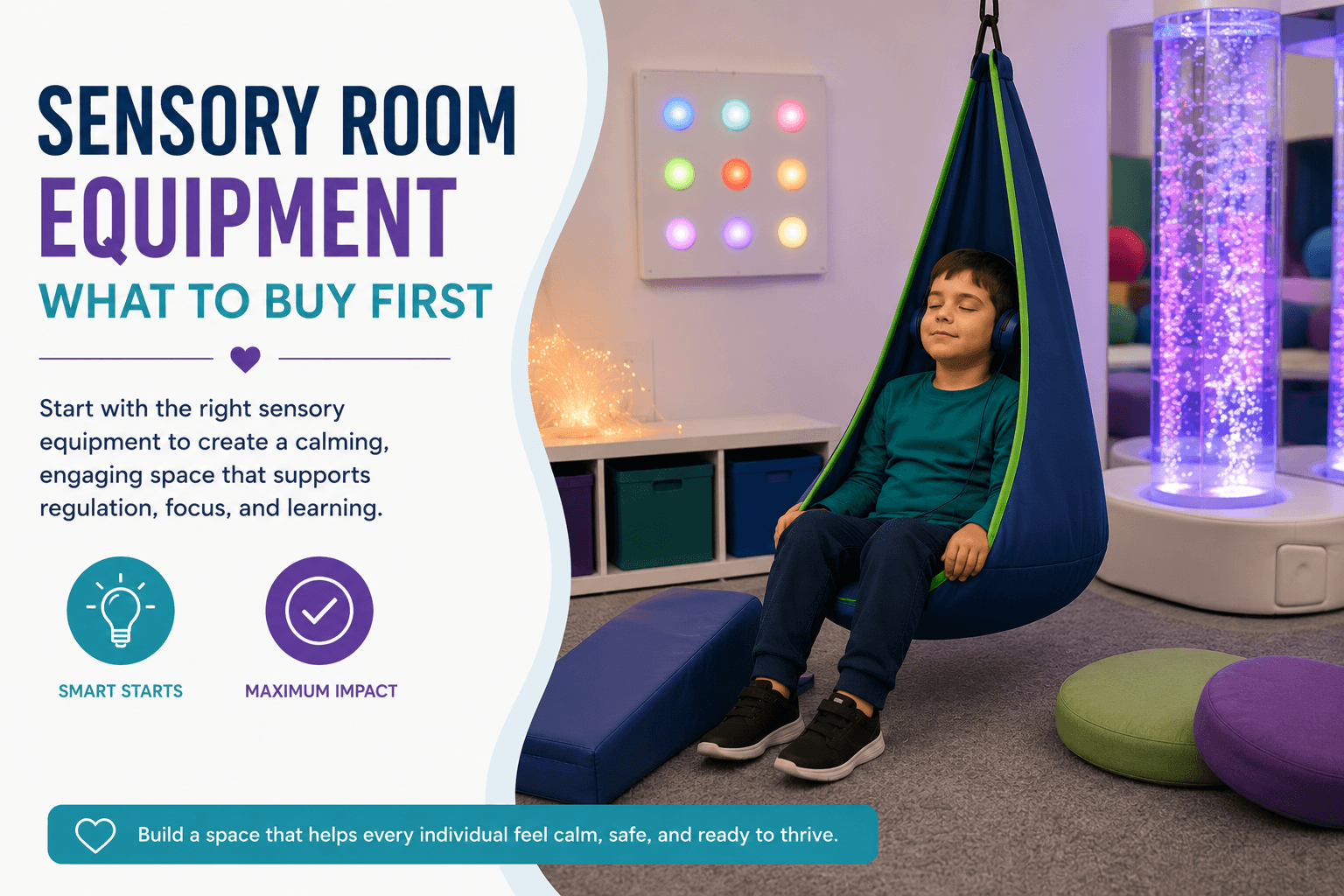
Sensory room equipment can help create a more supportive environment for children, teens, and adults who benefit from calming input, active movement, tactile exploration, visual engagement, or a predictable place to reset. Whether you are building a small sensory corner at home, planning a school sensory room, or equipping a therapy clinic, the best place to start is with equipment that matches the user’s daily needs.
A sensory room does not need to include every product category at once. The most effective spaces are built around a clear purpose. Some sensory rooms are designed for calming and regulation. Others support movement, therapy activities, fine motor practice, sensory exploration, or active engagement. Many spaces need a thoughtful balance of both calming and active sensory room products.
Families, schools, therapy clinics, and care programs can explore Sensory Room Equipment, Sensory Room Packages, Sensory Motor Tools, Sensory Wall Panels, Bubble Tubes, and Sensory Bundles and Kits through eSpecial Needs.
What Is a Sensory Room?
A sensory room is a dedicated space or designated area that offers controlled sensory experiences. It may include calming lights, tactile tools, movement equipment, supportive seating, deep pressure products, visual features, sound tools, or interactive activities.
Sensory rooms are used in homes, schools, therapy clinics, hospitals, day programs, libraries, and community spaces. The purpose is not to overwhelm the user with stimulation. The purpose is to offer sensory choices that support comfort, engagement, participation, and regulation.
A sensory room may be used for:
Calming after a busy activity
Taking a structured sensory break
Supporting movement needs
Encouraging body awareness
Practicing therapy skills
Improving access to learning
Supporting transitions
Building fine motor skills
Creating a quiet retreat
Offering positive sensory exploration
Supporting emotional regulation
Helping users prepare for daily activities
Sensory room equipment can be as simple as a weighted lap pad, calming chair, tactile wall panel, visual timer, and sensory tool basket. Larger sensory rooms may include bubble tubes, fiber optic lighting, swings, soft play equipment, crash pads, projectors, and interactive wall features.
The Science Behind Sensory Rooms and Sensory Processing
Sensory processing is the way the brain receives, filters, organizes, and responds to information from the body and environment. This information may come from touch, movement, sound, light, smell, taste, body position, balance, and pressure.
Some people may seek more sensory input because movement, pressure, texture, or visual activity helps them feel more alert and organized. Others may become overwhelmed by noise, bright lighting, unexpected touch, crowded spaces, or too much movement.
Sensory room equipment can help create a more controlled setting where users can access sensory input at a pace that feels manageable. The same product can feel calming for one person and alerting for another, which is why sensory rooms should be personalized.
A successful sensory room gives users choices. It may include a quiet place for reducing input, active equipment for movement, and tactile or visual tools for focused exploration.
Who Benefits From Sensory Room Equipment?
Sensory room equipment may benefit children, teens, and adults with a wide range of sensory, developmental, physical, communication, and learning needs.
Common users include people with:
Autism
Sensory processing differences
ADHD
Cerebral palsy
Developmental delays
Down syndrome
Low muscle tone
Intellectual disabilities
Anxiety
Neurological conditions
Brain injury
Mobility limitations
Communication needs
Fine motor challenges
Visual or hearing differences
Dementia or age related cognitive changes
Sensory room products can also be useful for people without a formal diagnosis who benefit from a quieter, more supportive environment for rest, focus, movement, or emotional regulation.
Sensory Rooms for Children With Autism or Sensory Processing Differences
Children with autism or sensory processing differences may have unique preferences around sound, light, movement, texture, pressure, and personal space. Some children seek movement, jumping, spinning, deep pressure, or tactile activities. Others may need a quiet, low stimulation space to rest and reset.
Sensory room equipment for autism should not be chosen based on diagnosis alone. Start by noticing what the child seeks, avoids, enjoys, and finds difficult.
A child who seeks movement may benefit from:
Adaptive swings
Therapy balls
Balance tools
Crash pads
Soft play equipment
Rocking or wobble seating
Sensory motor tools
A child who needs calming input may benefit from:
Weighted lap pads
Soft seating
Fiber optic lights
Bubble tubes
Quiet tactile tools
Sensory wall panels
Calm sensory kits
The best sensory room for autism gives the child a safe way to access preferred sensory input without forcing activities that feel uncomfortable.
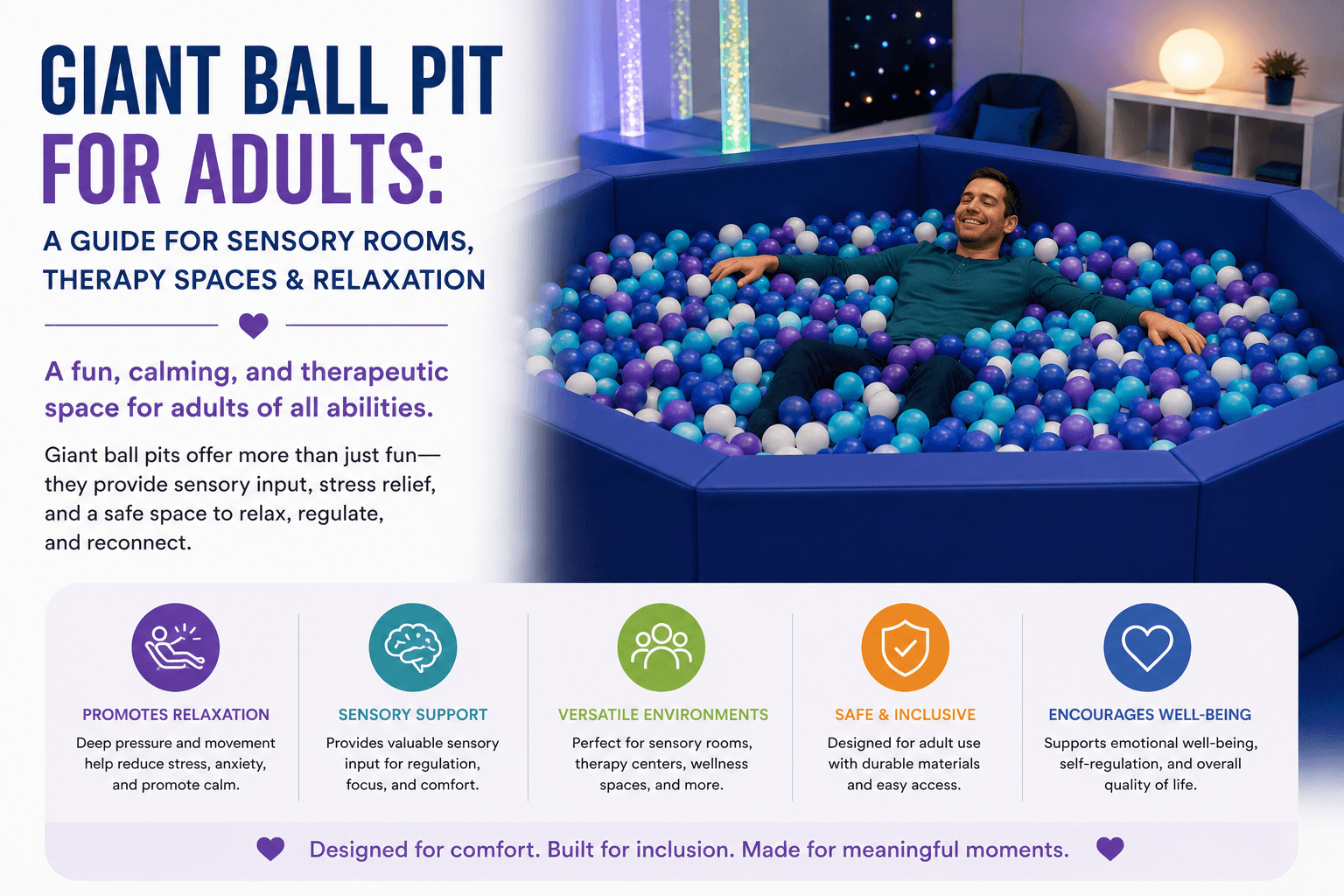
Mini Budget Ball Pit
$1,353.13
The Mini Budget Ball Pit is a durable, lower cost ball pit designed for sensory play, therapy activities, and active engagement in homes, schools, clinics, and care settings. It offers a smaller footprint than larger recreational ball pits while still providing… read more

Sensory Room Equipment for Adults With Disabilities
Sensory rooms are not only for children. Sensory room equipment for adults can support relaxation, comfort, body awareness, leisure, movement, communication, and meaningful activity in homes, day programs, supported living spaces, therapy clinics, schools, and community settings.
Sensory equipment for adults should be selected with attention to adult sizing, weight capacity, durability, comfort, dignity, and personal preference. Adults may prefer products that blend into a home, workplace, lounge area, or quiet room instead of equipment that appears designed only for young children.
Sensory room equipment for adults may include:
Adult sized calming seating
Larger weighted lap pads
Durable tactile tools
Fiber optic lighting
Bubble tubes
Visual projectors
Vibroacoustic equipment
Adult sized swings when appropriate
Supportive furniture
Sensory wall panels
Therapy and exercise balls
Relaxation tools
Music and sound supports
A sensory room for adults with disabilities should be built around real routines. The equipment may support a quiet break before a group activity, relaxation after a busy day, supported movement, communication access, or meaningful leisure.
Superactive LED Fiber Optic Wall Cascade
$2,654.25
$2,949.00
The Superactive LED Fiber Optic Wall Cascade creates a stunning, interactive sensory environment with stunning and stimulating visual effects. Mount over a doorway or on a wall for a fabulous addition to any sensory room. This fiber optic product comes… read more

Setting Your Sensory Room Goals Before You Buy
Before purchasing sensory room equipment, define what you want the space to accomplish. This helps prevent wasted spending on products that look exciting but do not fit the user’s needs.
Ask these questions:
Is the main goal calming, movement, focus, or active sensory play?
Who will use the room?
What ages and body sizes need to be supported?
Will the room be used by one person or multiple users?
Is the setting a home, school, clinic, or care program?
Does the user seek or avoid sensory input?
Is safety or supervision a concern?
Is mobility support needed?
Will the room be used for therapy goals?
How much floor space is available?
Is wall space available for panels or visual equipment?
What is the budget for the first phase?
Which products will be used every day?
Start with the highest impact products for the user’s current needs, then add equipment over time.
Calming and Regulation vs. Stimulation and Engagement
Most sensory rooms include products that support calming, active engagement, or both.
A calming and regulation focused sensory room may include:
Weighted lap pads
Comfortable seating
Bubble tubes
Fiber optic lights
Gentle visual projectors
Quiet tactile tools
Soft floor mats
Low stimulation wall panels
Relaxation music
Visual timers
A stimulation and engagement focused sensory room may include:
Interactive wall panels
Sensory motor tools
Swings
Balance equipment
Soft play pieces
Therapy balls
Tactile activities
Light up features
Cause and effect products
Interactive projectors
Many rooms need both types of equipment. The key is creating separate areas for active movement and quiet regulation when possible.
Home Sensory Room Setup: What to Prioritize
A home sensory room does not need to be large or expensive. A bedroom corner, playroom area, basement nook, or section of a living room can become a helpful sensory space when it includes the right tools.
For most home sensory rooms, prioritize:
One calming seating option
One deep pressure product
One tactile activity
One movement or heavy work tool
One visual support
Easy storage
Clear safety boundaries
A simple home sensory room setup may include a weighted lap pad, soft chair, tactile fidget kit, therapy ball, visual timer, and calming sensory light. Families can add larger sensory room products such as swings, wall panels, or bubble tubes as space and budget allow.
Helpful starting categories include Sensory Bundles and Kits, Tactile Stimulation Products, Fidget Toys, and Sensory Motor Tools.
TFH Budget Hurricane Tube
$729.00
The TFH Budget Hurricane Tube provides many of the benefits of bubble tubes but without all the maintenance and at a more affordable price. There's no water to change or tubes to clean! Instead, the TFH Budget Hurricane Tube features… read more

School and Classroom Sensory Room Considerations
School sensory rooms need to support multiple students, staff supervision, durability, cleaning, and predictable routines. The goal is to help students regulate and return to learning, not to create an unstructured play space.
School sensory room equipment should be selected for:
Multiple users
Different body sizes
Frequent cleaning
Commercial durability
Safe room layout
Staff supervision
Transition support
Student access
Clear usage routines
IEP and therapy goals
Storage needs
Purchase order requirements
Schools may benefit from sensory wall panels, calming seating, tactile tools, visual timers, sensory kits, soft play equipment, bubble tubes, and durable sensory motor tools.
For larger school projects, explore Sensory Room Packages and Turnkey Sensory Room Installation.
Clinic and Therapy Center Sensory Room Needs
Occupational therapy, physical therapy, speech therapy, early intervention, and rehabilitation programs may use sensory room equipment to support structured therapeutic goals. Clinics often need versatile products that can be used with different ages, abilities, and treatment plans.
Therapy centers may prioritize:
Adjustable equipment
Durable surfaces
Easy cleaning
Safe mounting
Weight capacity
Equipment that supports multiple goals
Products for active and calming sessions
Storage for smaller tools
Flexible room layout
Professional supervision
Clinic sensory room products may include swings, therapy balls, balance tools, tactile wall panels, fine motor activities, visual equipment, crash pads, soft play items, and supportive seating.
The Essential Sensory Room Equipment List
A sensory room equipment list should include products that cover the main sensory categories without overcrowding the space.
A practical starting list may include:
Deep pressure product
Calming seating
Tactile sensory tool
Fine motor activity
Sensory motor tool
Visual sensory product
Wall based activity
Storage system
Safety mat or padded flooring when needed
Visual timer or routine support
The best sensory room equipment list is based on the user’s specific needs, not the number of products in the room.
Deep Pressure Products: The Highest Impact Starting Point
For many sensory spaces, deep pressure products are among the most practical first purchases. Deep pressure input may feel calming, grounding, or organizing for some users when used appropriately.
Deep pressure sensory room products may include:
Weighted lap pads
Weighted blankets
Compression garments
Body socks
Soft crash pads
Large floor cushions
Bean bag seating
Supportive foam seating
Deep pressure sensory tools
Deep pressure products should always be used according to manufacturer guidance and individual needs. A therapist can help when users have medical, mobility, respiratory, positioning, or safety concerns.
Weighted Blankets, Vests, and Compression Items
Weighted blankets, weighted lap pads, weighted vests, and compression products may be used as part of a calm down routine, seated activity, transition plan, or sensory break.
Weighted blankets may be useful for quiet rest or relaxation routines. Weighted lap pads can be easier to use during seated work, reading, classroom activities, or travel. Compression items may provide a more consistent body based sensory experience for users who enjoy firm pressure.
Explore Weighted Blankets and Weighted Lap Pads for sensory room products that support seated and calming routines.
Chill Out Chairs and Calming Furniture
Calming furniture creates a predictable place where the user can sit, rest, read, use sensory tools, listen to music, or take a break from a busy environment.
Helpful calming furniture may include:
Bean bag chairs
Floor cushions
Soft lounge seating
Rocking chairs
Pod style seating
Supportive chairs
Soft foam furniture
Quiet reading chairs
Positioning chairs when needed
A calming chair can become one of the most used sensory room products because it provides a familiar place for regulation without requiring a large amount of equipment.
Place calming seating away from busy doorways, loud equipment, and active movement areas when possible.
Sensory Motor Tools for Vestibular and Proprioceptive Input
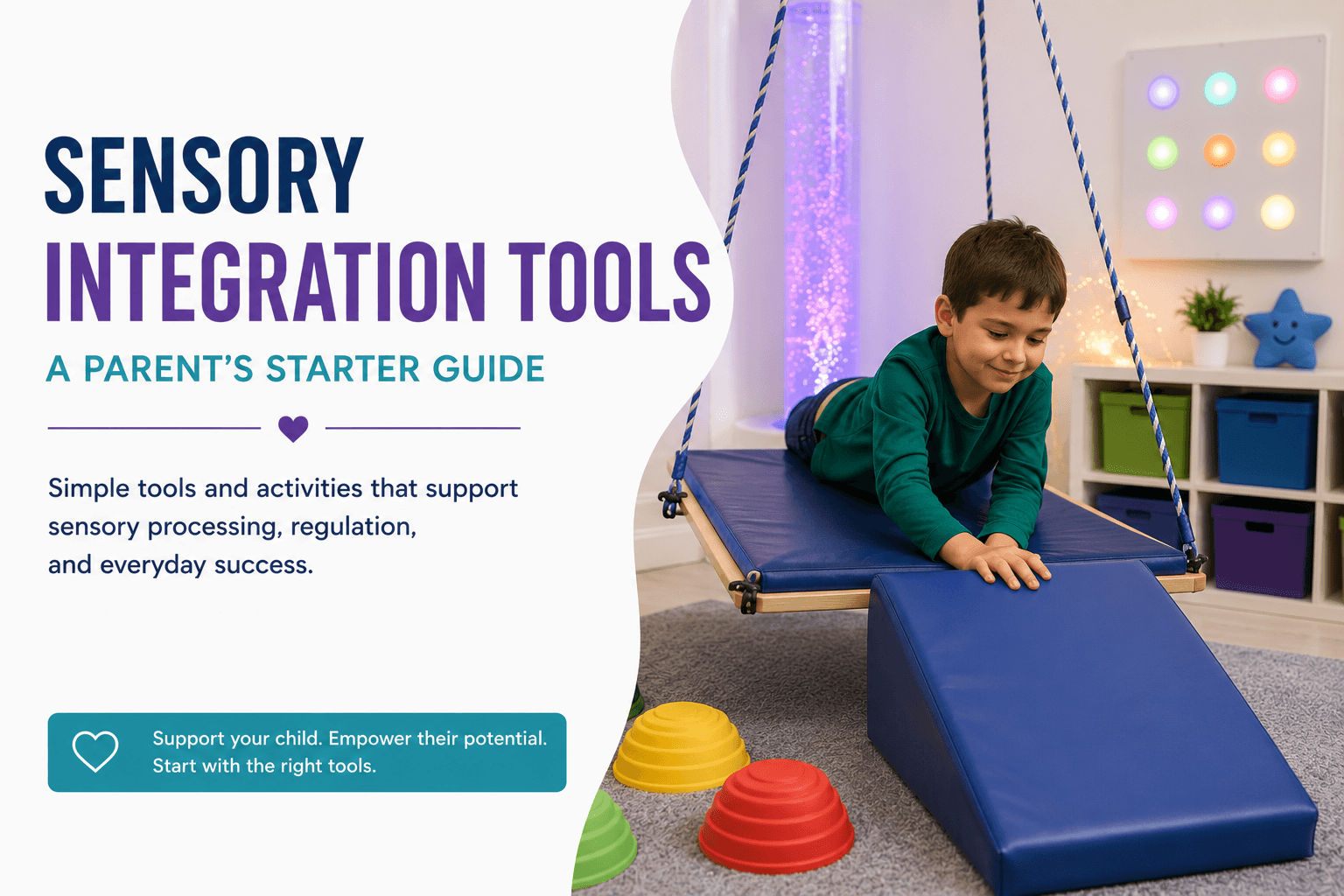
Sensory motor tools can support active movement, balance, body awareness, coordination, and motor planning. Vestibular input relates to movement and balance. Proprioceptive input relates to body position, muscle effort, and pressure through joints and muscles.
Many users benefit from movement before seated tasks, after long periods of sitting, or during planned sensory breaks.
Helpful sensory motor tools may include:
Therapy balls
Balance boards
Stepping stones
Resistance activities
Crawling tunnels
Scooters
Rockers
Movement games
Body socks
Exercise equipment
Gross motor toys
Heavy work activities
Explore Sensory Motor Tools for products that support movement and body awareness in home, school, and clinic spaces.
Swings, Rockers, and Balance Equipment
Swings, rockers, and balance tools can provide controlled movement experiences for users who enjoy vestibular input. These sensory room products should be selected carefully because movement may feel calming for some users and overstimulating for others.
Adaptive swings may support:
Movement breaks
Core strength
Motor planning
Balance
Body awareness
Calming routines
Active sensory play
Therapy activities
Before installing a swing, consider mounting needs, ceiling support, weight capacity, floor clearance, entry and exit safety, user mobility, and supervision.
Explore Adaptive Swings for supportive movement based sensory room equipment.
Indoor Therapy Gym Equipment for Gross Motor Development
Indoor therapy gym equipment can help support gross motor skills, active play, balance, coordination, crawling, climbing, and body awareness. These products are often helpful for children who need planned movement opportunities before returning to quieter activities.
Indoor therapy gym equipment may include:
Soft play blocks
Tunnels
Therapy balls
Balance tools
Crawling equipment
Crash pads
Stepping paths
Scooters
Climbing supports
Mats and padding
For homes with limited space, choose one or two versatile movement products rather than creating a crowded room. Clinics and schools may need larger equipment that supports group use and structured therapy sessions.
Visual and Auditory Sensory Equipment
Visual and auditory sensory equipment can shape the overall mood of a sensory room. Some users prefer soft, predictable visual input and low volume sound. Others enjoy more interactive light, music, or cause and effect features.
Visual sensory room equipment may include:
Bubble tubes
Fiber optic lights
Projectors
Sensory lights
Mirrors
Light panels
Interactive wall features
Auditory sensory room products may include:
Sound machines
Music players
Headphones
Music therapy tools
Noise reduction products
Simple sound based cause and effect tools
Always consider sound sensitivity and volume control. A sensory room should offer choice, not unavoidable noise.
Bubble Tubes, Fiber Optics, and Projectors
Bubble tubes, fiber optic lighting, and projectors can create a calming visual focal point or an engaging interactive experience. These products are commonly used in sensory rooms because they can transform a plain area into a more immersive environment.
Bubble tubes may provide visual movement, changing colors, and gentle bubbling effects. Fiber optic lights may offer soft visual exploration through safe strands of light. Projectors can display moving images, patterns, colors, or themed scenes on walls and ceilings.
Explore:
Visual products work best when they fit the room’s purpose. A quiet regulation space may use softer lighting and fewer effects. An active engagement space may use more interactive visual tools.
Sound Machines and Music Therapy Tools
Sound can either support regulation or create sensory overload, depending on the person. Sound machines and music tools can help create a more predictable auditory environment when used at a comfortable volume.
Some sensory rooms may use:
Nature sounds
White noise
Gentle music
Rhythm activities
Simple instruments
Headphones
Music therapy activities
Voice recording tools
Sound based cause and effect products
Keep volume controls accessible and avoid assuming all users will enjoy music. Some people need quiet more than sound.
Tactile Sensory Items and Fine Motor Tools
Tactile sensory items give users opportunities to touch, press, pull, squeeze, twist, roll, sort, and explore. These activities can support sensory exploration while also encouraging fine motor skill practice.
Helpful tactile sensory room products may include:
Fidget tools
Putty
Textured balls
Tactile panels
Sensory bins
Touch boards
Sorting tools
Fine motor toys
Therapy dough
Lacing activities
Textured fabrics
Tactile mats
Explore Tactile Stimulation Products and Fidget Toys for smaller sensory items that work well in home, school, clinic, and travel sensory kits.
Sensory Bins, Textured Panels, and Fidget Tools
Sensory bins, textured panels, and fidget tools are flexible sensory room products because they can be used in small spaces and adapted to different ages.
Sensory bins may include safe materials for scooping, pouring, sorting, searching, and tactile exploration. Textured panels can give users a wall based activity without taking up floor space. Fidget tools can be used during seated activities, transitions, waiting periods, or quiet breaks.
When choosing tactile items, consider:
Age appropriateness
Choking risk
Cleaning needs
Texture preferences
Fine motor goals
Number of users
Storage needs
Durability
For young children or individuals who mouth objects, choose products carefully and provide appropriate supervision.
Sensory Wall Panels and Interactive Environmental Features
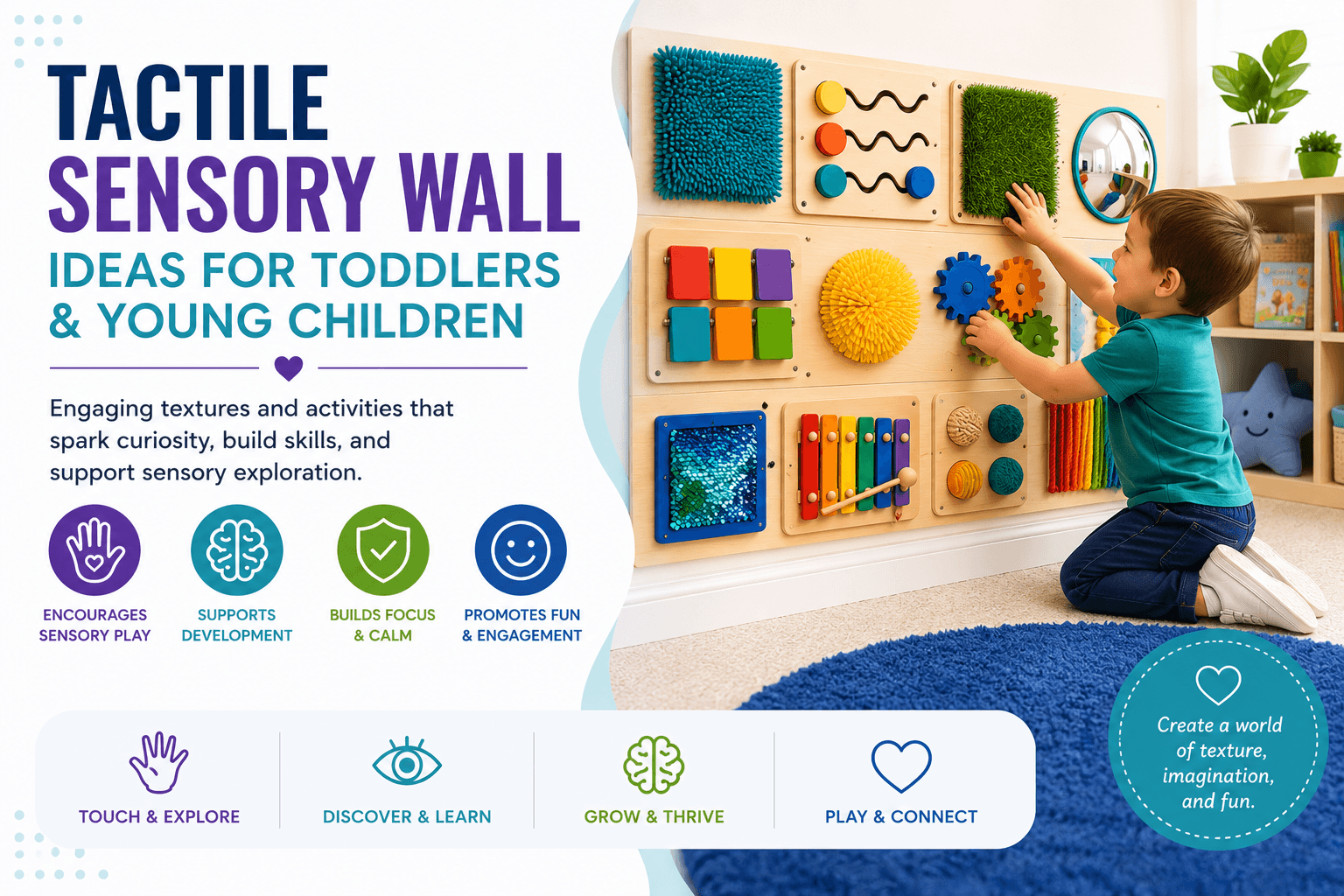
Sensory wall panels are one of the most space efficient ways to add interactive sensory activities to a room. They can include gears, bead tracks, mirrors, textured surfaces, spinning pieces, puzzles, visual effects, and fine motor activities.
Sensory wall panels may support:
Fine motor practice
Cause and effect learning
Visual tracking
Tactile exploration
Bilateral coordination
Reaching
Standing activities
Independent play
Classroom transitions
Waiting room engagement
Explore Sensory Wall Panels for wall based sensory room equipment that can work in smaller spaces, classrooms, therapy areas, and waiting rooms.
Sensory Bundles and Kits: A Smart Way to Start
Sensory bundles and kits can be a practical starting point when you are unsure which individual products to choose. They often combine several sensory categories into one purchase, helping families and professionals explore what the user responds to best.
Sensory bundles may include a mix of:
Tactile tools
Fidget toys
Visual products
Fine motor activities
Calming items
Movement tools
Sensory wearables
Oral motor products
Travel friendly supports
Explore Sensory Bundles and Kits for curated sensory room products that can help new buyers begin with a more balanced selection.
Sensory Room Equipment for Autism: Tailoring Your Setup
Sensory room equipment for autism should be selected around the person’s individual sensory profile, communication style, motor needs, and daily challenges. Avoid choosing products simply because they are popular or visually impressive.
A sensory room for autism may include:
Calming lighting
Deep pressure tools
Sensory seating
Tactile activities
Visual timers
Movement options
Fine motor tools
Noise reduction supports
Communication tools
Safe active play equipment
Clear visual boundaries
The most helpful sensory room equipment for autism is equipment that the person chooses to use and that supports real routines.
Understanding Sensory Seeking vs. Sensory Avoiding Profiles
Sensory seeking means a person may look for more sensory input. They may enjoy movement, deep pressure, textures, visual stimulation, sound, or active play.
Sensory avoiding means a person may become overwhelmed by certain sensory experiences. They may avoid noise, bright lights, busy rooms, unexpected touch, strong smells, or fast movement.
A sensory seeking user may benefit from:
Swings
Crash pads
Therapy balls
Tactile tools
Rockers
Balance products
Heavy work activities
Interactive wall panels
A sensory avoiding user may benefit from:
Soft lighting
Quiet seating
Lower stimulation visual tools
Weighted lap pads
Noise reduction supports
Gentle tactile options
Clear routines
Personal space
Many people have a mix of sensory seeking and sensory avoiding preferences. Observe what helps the person feel more settled and engaged.
Top Sensory Products Recommended for Autism
The best sensory products for autism depend on the individual, but these categories are often helpful starting points:
Weighted lap pads for seated calming routines
Bubble tubes for visual focus and relaxation
Fiber optic lights for soft visual exploration
Sensory wall panels for hands on activity
Tactile fidgets for quiet hand movement
Therapy balls for body awareness and movement
Adaptive swings for vestibular input
Calm seating for quiet breaks
Sensory bundles for trying multiple tools
Visual timers for predictable transitions
Rather than buying everything at once, start with products that address the most common need during the day.
Sensory Items for Adults With Autism
Sensory items for adults with autism should be selected with adult preferences, independence, comfort, and privacy in mind. Adults may prefer subtle sensory room products that fit into a bedroom, office, lounge, quiet room, or supported living environment.
Helpful sensory items for adults with autism may include:
Adult sized weighted lap pads
Durable fidget tools
Soft lighting
Fiber optic products
Visual projectors
Calming seating
Sound management tools
Tactile wall panels
Adult sized movement equipment
Therapy balls
Relaxation tools
Avoid assuming adults want child focused products. Ask about comfort, style, sensory preferences, and goals whenever possible.
Sensory Room for Adults With Disabilities: Sizing and Durability
A sensory room for adults with disabilities should include equipment that is appropriate for adult body size, weight capacity, mobility needs, and daily routines.
Before choosing sensory room equipment for adults, consider:
Product weight capacity
Seat width and depth
Transfer needs
Wheelchair access
Stability
Entry and exit support
Flooring
Staff support
Cleaning needs
Product durability
Privacy
Comfort
Adult appropriate design
Adult sensory room products may need to withstand regular use in day programs, residential settings, clinics, and shared spaces.
Sensory Room Packages vs. Building a Custom Equipment List
Sensory room packages can provide a curated starting point, while a custom equipment list gives buyers more flexibility. The right choice depends on budget, space, user needs, and how much guidance is needed.
Sensory room packages may be a good choice for buyers who:
Need a quicker starting point
Want coordinated products
Are building a new sensory room
Need help selecting a balanced mix of equipment
Have limited time for individual research
Want products designed to work together
A custom sensory room equipment list may be a better choice for buyers who:
Have specific therapy goals
Need specialized sizing
Have limited room space
Already own some sensory products
Need adult sized equipment
Want to focus on one sensory category first
Need to match a specific budget
Explore Sensory Room Packages to compare curated options before building a custom list.
Pros and Cons of Pre Built Sensory Room Packages
Pre built sensory room packages can make planning easier, but they are not always the best choice for every space.
Benefits may include:
Faster planning
Coordinated product selection
Better starting point for new buyers
Products chosen to work together
Useful for schools and clinics
Easier budgeting
Less time researching individual products
Considerations may include:
Some items may not fit the user’s exact needs
Packages may include products you already own
Room size may limit what fits
Specialized users may need custom supports
Adult spaces may need larger products
Therapy goals may require more targeted equipment
Review the package contents carefully and compare them to the user’s needs before purchasing.
How to Build a Prioritized Sensory Room Equipment List on a Budget
When budget is limited, choose sensory room equipment in phases.
Start with:
One calming seating or deep pressure product
One tactile or fine motor item
One sensory motor tool
One visual support
Storage and organization
Larger equipment as budget and space allow
A practical budget sensory room setup may include:
Weighted lap pad
Fidget kit
Therapy ball
Visual timer
Small sensory light
Soft floor cushion
Tactile wall panel
For a larger next phase, add a bubble tube, fiber optic lighting, crash pad, swing, soft play equipment, or a sensory room package.
Funding and Financial Resources for Sensory Room Equipment
Sensory room equipment can be a meaningful investment for families, schools, therapy programs, and care organizations. Funding may be available depending on the product, user need, setting, and documentation.
Potential funding sources may include:
Private insurance
Medicaid waivers
School district budgets
Special education funding
Therapy program budgets
Nonprofit grants
Local community grants
Parent teacher organizations
Civic organizations
Flexible spending accounts
Health savings accounts
Fundraising
Direct purchase
Financing options
Always confirm coverage requirements with the funding organization before assuming a product will qualify.
Letters of Medical Necessity and Insurance Coverage
A letter of medical necessity may help support a funding request for sensory room equipment that is connected to safety, positioning, mobility, daily living, communication, or therapy goals.
A strong letter may include:
Diagnosis or functional need
Current challenges
Recommended sensory room products
Why standard household items are not enough
Expected functional benefit
How the equipment will be used
Provider recommendation
Product quote
Information about safety or participation needs
Explore Letters of Medical Necessity for guidance on preparing documentation for potential funding requests.
Medicaid Waivers, Grants, and School District Purchasing
Medicaid waivers may help some families access sensory room equipment depending on the state, plan, waiver program, and purpose of the equipment. Coverage varies, and some products may be considered recreational while others may have stronger funding potential when linked to functional needs.
Schools may purchase sensory room products through district budgets, special education funds, therapy programs, grants, or purchase orders. Clinics may use operating budgets, grants, donations, or equipment funding programs.
For grant applications and school purchase requests, include:
The purpose of the sensory room
Who will use the equipment
Specific products requested
The expected role in daily routines
Safety and supervision planning
Therapist or teacher recommendations
Room measurements
Product quotes
Budget details
Flexible Financing Options for Families
Flexible financing can help families purchase sensory room equipment over time instead of paying the full cost at once. eSpecial Needs offers Affirm financing options for eligible purchases, subject to available terms and approval.
Financing may be useful when a family needs a larger item, such as a sensory room package, bubble tube, swing, or multiple sensory room products at the same time.
Before using financing, review the payment schedule, available terms, total cost, and eligibility requirements.
How to Get Expert Help Choosing the Right Sensory Equipment
Choosing sensory room equipment can feel overwhelming, especially when the user has complex sensory, mobility, communication, or safety needs. Professional guidance can help prevent mismatched products and make better use of the available budget.
Helpful sources of guidance may include:
Occupational therapists
Physical therapists
Speech language pathologists
Teachers
Behavior specialists
Rehabilitation professionals
Case managers
Sensory room design professionals
eSpecial Needs product specialists
For larger projects, schools, clinics, and organizations can explore Turnkey Sensory Room Installation for sensory room planning, equipment selection, and installation support.
Where to Buy Sensory Room Products: What to Look for in a Supplier
When shopping for sensory room products, choose a supplier that understands the needs of families, therapists, schools, clinics, and care programs.
Look for:
Broad selection of sensory room equipment
Products for children and adults
Sensory room packages
Clear product details
Safety information
Weight capacities
Product dimensions
Helpful customer support
Quote support
Purchase order options
Funding resources
Therapy and school experience
Sensory room design guidance
Trusted brands
Durable commercial products
eSpecial Needs offers sensory room equipment, sensory motor tools, bubble tubes, fiber optic lights, tactile products, sensory wall panels, sensory room packages, and related supports for home, school, clinic, and community settings.
What are the Best Sensory Room Products?
The best sensory room products are the ones that match the user’s needs, routines, comfort level, and environment. Start with a simple plan. Identify whether the main goal is calming, movement, tactile exploration, visual engagement, therapy support, or a combination of these needs.
For many people, the best first sensory room equipment includes a deep pressure product, calming seating, a tactile tool, a movement option, and a visual support. From there, you can add larger sensory room products such as bubble tubes, fiber optic lights, wall panels, swings, soft play equipment, and complete sensory room packages.
A sensory room does not need to be perfect on day one. Start with the tools that will be used most often, observe what helps, and build a space that supports meaningful comfort, confidence, activity, and participation.
FAQs
What is a sensory room?
A sensory room is a space designed to provide controlled sensory experiences that support calming, movement, focus, sensory exploration, therapy activities, and emotional regulation. Sensory rooms may be used in homes, schools, clinics, day programs, and community spaces.
What is sensory room equipment?
Sensory room equipment includes products that provide tactile, visual, auditory, movement, deep pressure, or calming input. Common examples include bubble tubes, fiber optic lights, weighted lap pads, sensory swings, sensory wall panels, fidget tools, therapy balls, crash pads, soft seating, projectors, and sensory motor tools.
What should I buy first for a sensory room?
For most sensory rooms, start with a few high use items instead of trying to buy everything at once. A practical starting setup may include one deep pressure product, one calming seating option, one tactile item, one movement tool, and one visual support such as a sensory light or visual timer.
What are the best sensory room products for autism?
Helpful sensory room products for autism vary by individual sensory preferences. Many people benefit from weighted lap pads, calming seating, bubble tubes, fiber optic lights, sensory wall panels, tactile fidgets, therapy balls, swings, visual timers, and sensory bundles. Choose products based on whether the user seeks or avoids certain types of sensory input.
What sensory room equipment is best for calming?
Calming sensory room equipment may include weighted lap pads, weighted blankets, soft seating, bean bags, bubble tubes, fiber optic lights, quiet sensory lights, soft floor cushions, tactile fidgets, visual timers, and low stimulation wall panels.
What sensory room products are best for movement?
Movement focused sensory room products may include adaptive swings, therapy balls, balance tools, crash pads, rockers, crawling tunnels, soft play equipment, stepping stones, scooters, and other sensory motor tools.
Are bubble tubes good for sensory rooms?
Bubble tubes are popular sensory room products because they provide gentle visual movement, changing colors, and bubbling effects. They may be used as a calming visual focal point or as part of an engaging sensory environment for children and adults.
What are fiber optic lights used for in sensory rooms?
Fiber optic lights provide soft visual input through glowing strands of light. They may be used for visual exploration, calming routines, tactile interaction, quiet sensory breaks, and creating a more immersive sensory room environment.
Are sensory wall panels worth buying?
Sensory wall panels can be a strong choice for sensory rooms because they add hands on activity without taking up much floor space. They may support fine motor practice, tactile exploration, visual tracking, reaching, bilateral coordination, cause and effect learning, and independent play.