Table of Contents
- What Is Pediatric Adaptive Equipment?
- Defining Pediatric Therapy Equipment and Adaptive Devices
- Conditions That Benefit From Pediatric Adaptive Equipment
- How Occupational and Physical Therapists Guide Equipment Choices
- Core Categories of Pediatric Therapy Equipment
- Sensory Motor Tools and Sensory Integration Equipment
- Adaptive Seating and Positioning Devices
- Indoor Therapy Gym and Gross Motor Development Equipment
- Deep Pressure Therapy Products and Calming Tools
- Pediatric Mobility Aids and Adaptive Wheelchairs
- Assistive Technology Devices for Nonverbal and Communication Needs
- Sensory Room Equipment for Home and Clinics
- Bathing, Toileting, and Daily Living Aids for Children
- Occupational Therapy Toys: Therapist Top Picks by Age
- Occupational Therapy Toys for 1 Year Olds
- Occupational Therapy Toys for 2 Year Olds
- Occupational Therapy Toys for 5 Year Olds and School Age Children
- Occupational Therapy Toys for Children With Autism
- Fine Motor vs. Gross Motor: Choosing the Right Therapy Toys
- Pediatric Therapy Equipment for Different Settings
- Best Pediatric Therapy Equipment for Home Use
- Pediatric Therapy Equipment for Clinics and Therapy Rooms
- Adaptive Equipment and Sensory Tools for Special Education Classrooms
- How to Choose the Right Pediatric Rehabilitation Equipment
- Matching Equipment to Diagnosis and Therapy Goals
- Understanding Your Pediatric Therapy Equipment Catalog Options
- What to Look for in a Pediatric Physical Therapy Equipment List
- Funding, Insurance, and Procurement for Pediatric Adaptive Equipment
- How to Get a Letter of Medical Necessity for Therapy Equipment
- Using Medicaid, Insurance, and Grants to Fund Adaptive Equipment
- Purchase Orders for Schools and Government Agencies
- Flexible Financing Options for Families
- Why eSpecial Needs Is a Trusted Source for Pediatric Occupational Therapy Solutions
- Expert Quote Request Service and Price Match Guarantee
- Broad Pediatric Therapy Supplies Catalog Under One Roof
- Shop Therapist Recommended Pediatric Adaptive Equipment Today
- FAQs
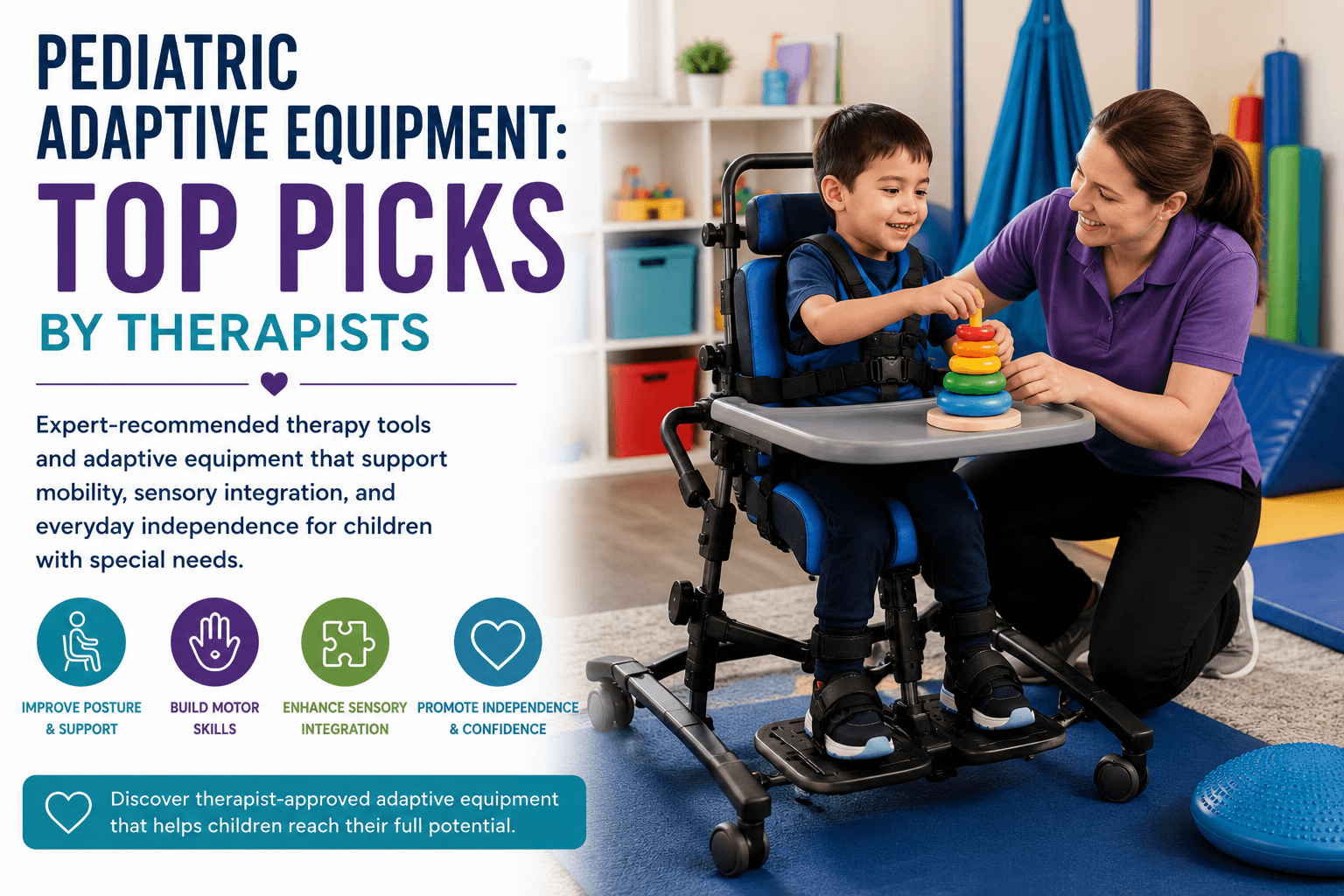
Pediatric Adaptive Equipment: Top Picks by Therapists
Pediatric adaptive equipment helps children with special needs participate more comfortably in play, therapy, school, self care, mobility, communication, and daily routines. Therapists often recommend adaptive equipment when a child needs extra support for posture, movement, sensory processing, communication, fine motor skills, gross motor development, bathing, toileting, or independence at home and school.
The right pediatric therapy equipment can help children build skills, access their environment, reduce daily barriers, and participate in activities that may otherwise be difficult or unsafe. For some children, that may mean adaptive seating for better posture. For others, it may mean sensory motor tools for regulation, AAC devices for communication, mobility equipment for movement, or daily living aids for personal care.
Choosing pediatric adaptive equipment should always begin with the child’s individual needs, therapy goals, home environment, school routines, and professional recommendations. Occupational therapists, physical therapists, speech language pathologists, teachers, physicians, and caregivers may all play a role in selecting the right products.
Explore Pediatric Adaptive Equipment, Sensory Motor Tools, Positioning Products, Mobility Products, AAC and Communication, and Daily Living Aids at eSpecial Needs.
What Is Pediatric Adaptive Equipment?
Pediatric adaptive equipment includes tools, devices, furniture, therapy products, and supports designed to help children with disabilities, developmental delays, sensory needs, mobility challenges, communication differences, or daily living needs.
This equipment may help children:
Sit with better support
Stand with assistance
Move more safely
Communicate wants and needs
Participate in therapy
Engage in sensory activities
Build fine motor skills
Practice gross motor skills
Access classroom routines
Eat with more independence
Bathe and toilet more safely
Play with adapted toys
Participate in family routines
Pediatric adaptive equipment is not one single category. It includes many product types that support different goals across a child’s day.
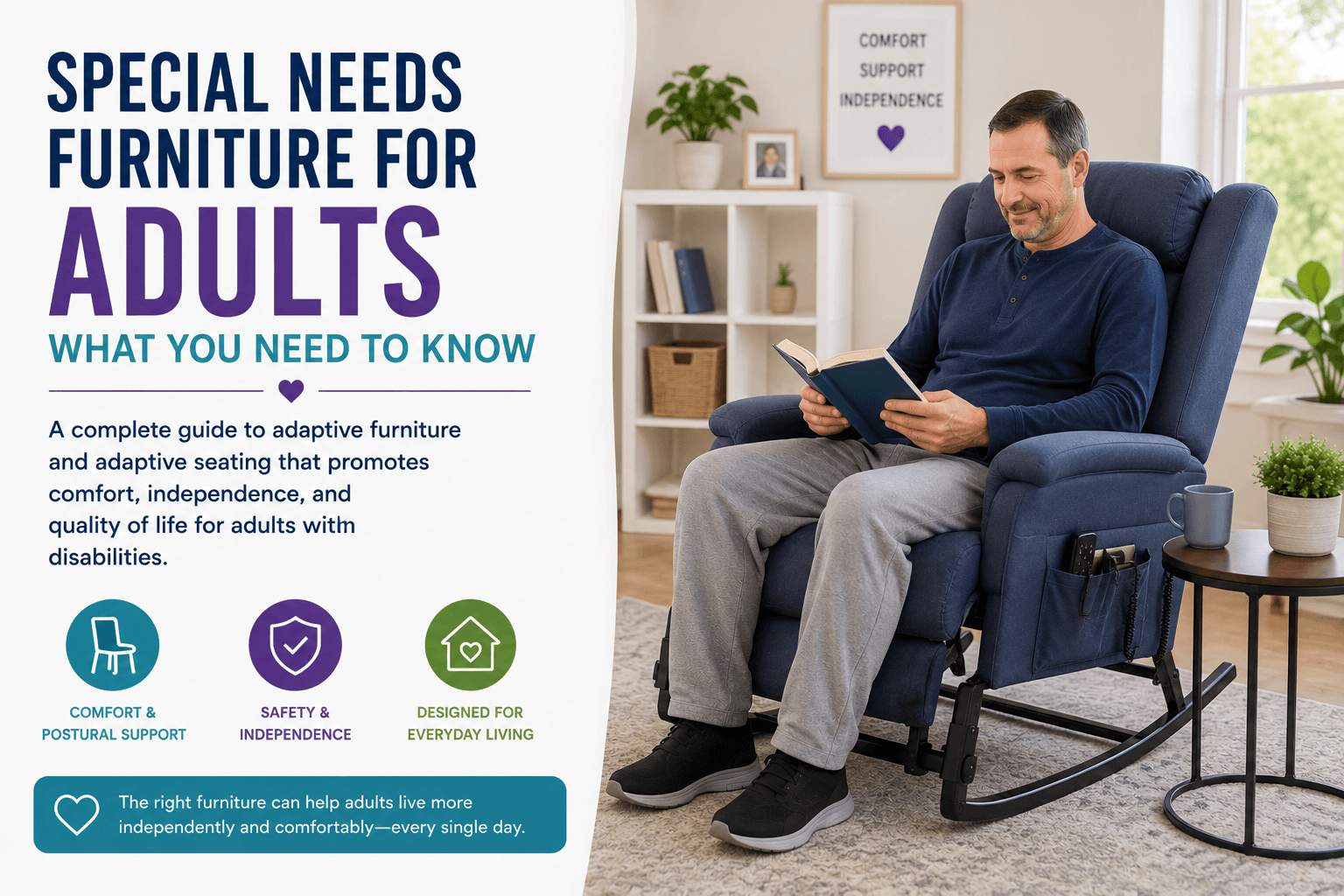
Big Bean Rocker Chair
$380.00
Just like a rocking chair, you can rock in this comfortable Big Bean Rocker Chair or you can turn it over for a peaceful stationary seat, with a quiet hideaway underneath. This sturdy birch frame has a heavy-duty Cordura® nylon… read more

Defining Pediatric Therapy Equipment and Adaptive Devices
Pediatric therapy equipment is often used by occupational therapists, physical therapists, speech language pathologists, and therapy teams to support specific developmental, sensory, motor, communication, or functional goals.
Examples may include:
Therapy balls
Wedges
Rolls
Bolsters
Swings
Standers
Gait trainers
Fine motor tools
Sensory integration equipment
Balance equipment
Adaptive seating
Therapy mats
Communication devices
Adaptive devices are products that help a child complete daily tasks or access activities in a more supported way.
Examples may include:
Adaptive utensils
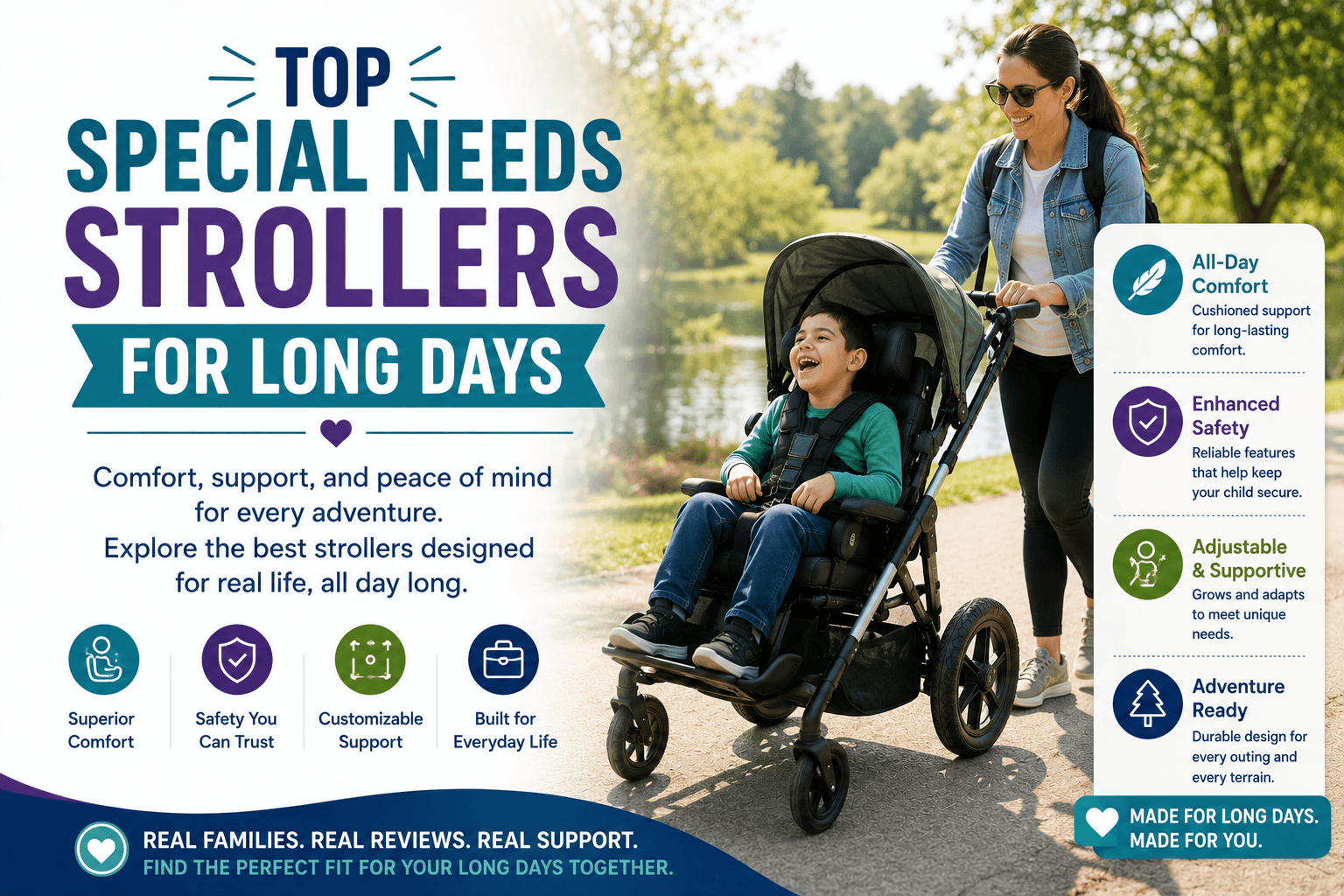
Special needs strollers
AAC devices
Switch adapted toys
Bath chairs
Toilet supports
Wheelchairs
Reachers
Grips and holders
Positioning chairs
Weighted lap pads
The two categories often overlap. A product may be used during therapy sessions and also support daily routines at home or school.
Height Adjustable Tilting Benches - Small
$249.95
The Height Adjustable Tilting Benches - Small provides supportive seating designed to help young children maintain better posture, stability, and alignment during seated activities, therapy sessions, and early developmental work. Created for children who do not need full back support… read more

Conditions That Benefit From Pediatric Adaptive Equipment
Many diagnoses and developmental needs may benefit from pediatric adaptive equipment. The specific product depends on the child’s function rather than diagnosis alone.
Children who may benefit include those with:
Autism
Cerebral palsy
Sensory processing disorder
Developmental delays
Down syndrome
Spina bifida
Muscular dystrophy
Rett syndrome
Genetic conditions
Brain injury
Spinal cord injury
Low muscle tone
High muscle tone
Visual impairment
Fine motor delays
Gross motor delays
Feeding challenges
Communication delays
Mobility limitations
Orthopedic differences
Multiple disabilities
For example, a child with autism may benefit from sensory tools, adaptive seating, or AAC devices. A child with cerebral palsy may need positioning equipment, standers, gait trainers, adaptive seating, or mobility supports. A child with low vision may need high contrast tools, communication supports, or adapted learning materials.
How Occupational and Physical Therapists Guide Equipment Choices
Occupational therapists and physical therapists help families choose equipment based on how the child moves, sits, plays, communicates, learns, and completes daily routines.
An occupational therapist may evaluate:
Fine motor skills
Hand strength
Sensory processing
Feeding position
Dressing skills
Bathing and toileting needs
Classroom access
Play skills
Daily living activities
Adaptive equipment use
Communication access
Seating for function
A physical therapist may evaluate:
Gross motor skills
Balance
Posture
Strength
Range of motion
Mobility
Walking
Transfers
Standing tolerance
Wheelchair positioning
Gait trainer use
Standers
Adaptive bikes
Therapists may recommend equipment trials, measurements, home programs, school supports, caregiver training, and documentation for funding.
Height Adjustable Tilting Benches - Medium
$289.95
The Height Adjustable Tilting Benches - Medium provides supportive seating designed to help children maintain better posture, stability, and alignment during seated activities, therapy sessions, and everyday developmental work. Created for users who do not need full back support but… read more

Core Categories of Pediatric Therapy Equipment
Pediatric therapy equipment includes many categories that support different parts of a child’s development and daily life. Some products are designed for movement. Others focus on sensory regulation, posture, communication, or self care.
Core categories include:
Sensory motor tools
Sensory integration equipment
Adaptive seating
Positioning products
Indoor therapy gym equipment
Deep pressure products
Mobility aids
Wheelchairs and strollers
AAC devices
Switch adapted toys
Sensory room equipment
Bathing and toileting products
Daily living aids
Fine motor tools
Gross motor therapy products
Sensory Motor Tools and Sensory Integration Equipment
Sensory motor tools help children engage the senses while supporting body awareness, balance, coordination, movement, tactile exploration, and regulation. These tools are commonly used in occupational therapy, sensory rooms, classrooms, and home sensory spaces.
Sensory motor tools may include:
Swings
Therapy balls
Balance boards
Scooter boards
Crash pads
Rockers
Tactile tools
Sensory tunnels
Fidget tools
Weighted lap pads
Vestibular equipment
Proprioceptive tools
Sensory wall panels
Sensory room items
Sensory integration equipment may help children explore touch, movement, pressure, sound, light, and body position in a structured way.
Explore Sensory Motor Tools, Swings, Therapy and Exercise Balls, Crash Pads, and Sensory Products.
Adaptive Seating and Positioning Devices
Adaptive seating and positioning devices help children sit, stand, lie, or participate with improved support. These products may support posture, trunk stability, head control, pelvic alignment, foot positioning, pressure management, and access to activities.
Common options include:
Adaptive chairs
Seating systems
Classroom seating
Positioning wedges
Rolls
Bolsters
Floor sitters
Corner seats
Headrests
Lateral supports
Footrests
Wheelchair cushions
Standers
Prone positioning boards
Adaptive seating may be used during meals, therapy, classroom tasks, communication, play, and daily routines.
Explore Positioning Products, Seating Systems, Chairs and Seating, and Classroom Seating.
Indoor Therapy Gym and Gross Motor Development Equipment
Indoor therapy gym equipment can help children work on strength, balance, coordination, motor planning, climbing, crawling, jumping, swinging, and body awareness. These products are often used in occupational therapy clinics, physical therapy clinics, schools, and home therapy spaces.
Common indoor therapy gym products include:
Therapy mats
Soft play equipment
Climbing blocks
Therapy swings
Balance beams
Rocking equipment
Scooter boards
Crash pads
Tunnels
Therapy balls
Trampolines designed for therapy use
Indoor gym systems
Gross motor equipment should be chosen based on the child’s age, motor abilities, safety needs, supervision, space, and therapy goals.
Explore Indoor Therapy Gyms, Soft Play, Sensory Motor Tools, and Vestibular Motion.
Deep Pressure Therapy Products and Calming Tools
Deep pressure products and calming tools may support body awareness, comfort, and regulation for some children. They are commonly used in home sensory spaces, classrooms, therapy clinics, and quiet areas.
Examples include:
Weighted lap pads
Weighted blankets
Compression products
Deep pressure products
Sensory seating
Calming sensory products
Body socks
Crash pads
Therapy cushions
Fidgets
Cozy seating
Deep pressure should always be used safely and voluntarily. Weighted products should match the child’s size, abilities, and supervision needs. When there are medical, breathing, circulation, seizure, mobility, or safety concerns, ask a healthcare professional before use.
Explore Deep Pressure Products, Weighted Lap Pads, and Calming Sensory Products.
Pediatric Mobility Aids and Adaptive Wheelchairs
Pediatric mobility aids help children move through the home, school, community, playground, clinic, and therapy environment with the level of support they need.
Common pediatric mobility products include:
Gait trainers
Walkers
Standers
Adaptive tricycles
Special needs strollers
Wheelchairs
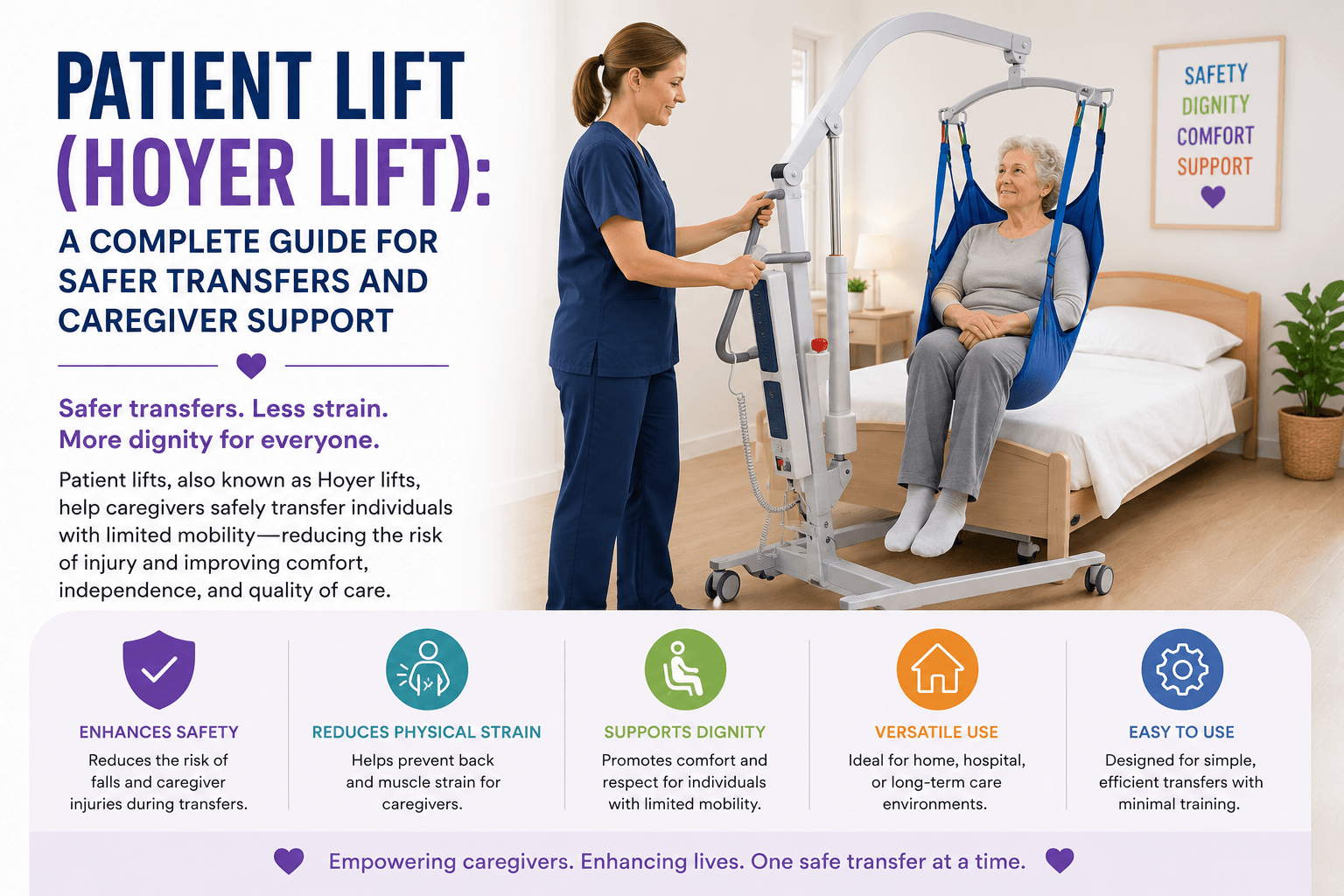
Transfer aids
Ramps
Canes and crutches
Positioning accessories
Mobility scooters for appropriate users
Mobility aids should be chosen with professional guidance because the wrong device may be difficult to use or may not provide appropriate support.
Explore Mobility Products, Special Needs Gait Trainers and Walkers, Special Needs Strollers, Wheelchairs, and Adaptive Tricycles.
Assistive Technology Devices for Nonverbal and Communication Needs
Assistive technology can help children communicate, make choices, participate in learning, access toys, and interact with others. For nonverbal children or children with limited speech, AAC tools can provide an important way to express needs, preferences, and ideas.
Communication supports may include:
Single message communicators
Sequential communicators
Choice making devices
Picture based supports
Switches
Wireless switches
Switch adapted toys
AAC devices
Mounts
Communication access tools
A speech language pathologist can help determine which communication system best fits the child’s needs.
Explore AAC and Communication, Single Message Communicators, Choice Making, Sequential Communicators, Wireless Switches, and Mounts.
Sensory Room Equipment for Home and Clinics
Sensory room equipment can create a dedicated space for sensory exploration, calming routines, therapy activities, and sensory motor play. Sensory rooms can be simple home spaces or larger clinic and school environments.
Common sensory room products include:
Bubble tubes
Fiber optic lights
Sensory wall panels
Projectors
Calming seating
Swings
Crash pads
Tactile tools
Sensory bundles
Sensory room packages
Interactive lighting
Mirrors
Soft play equipment
Explore Sensory Room Equipment, Sensory Room Packages, Sensory Wall Panels, Bubble Tubes, Lights, and Projectors.
Bathing, Toileting, and Daily Living Aids for Children
Daily living aids help children participate in personal care and daily routines with greater safety, comfort, and dignity. These products may support bathing, toileting, dressing, feeding, grooming, reaching, and household routines.
Common options include:
Bath chairs
Shower chairs
Toilet supports
Commode chairs
Adaptive utensils
Drinking cups
Dressing aids
Reachers
Grips and holders
Handwriting tools
Scissors and cutting aids
Fine motor tools
Explore Daily Living Aids, Bathing and Toileting, Bath Chairs, Toileting Products, Utensils, and Handwriting Tools.
Occupational Therapy Toys: Therapist Top Picks by Age
Occupational therapy toys are selected to support developmental skills through play. They may target sensory processing, hand strength, grasp, visual motor skills, problem solving, bilateral coordination, body awareness, social engagement, and early learning.
The best OT toys are chosen around a child’s developmental level, not just age. A therapist may recommend toys based on the child’s strengths, delays, sensory preferences, safety needs, and therapy goals.
Occupational Therapy Toys for 1 Year Olds
Occupational therapy toys for 1 year olds should support early sensory exploration, reaching, grasping, cause and effect play, crawling, sitting, and simple problem solving.
Helpful options may include:
Soft sensory toys
Large grasp toys
Textured balls
Cause and effect toys
Simple switches
Stacking toys
Shape sorters
Push toys
Tactile play items
Light and sound toys when tolerated
Large knob puzzles
Safe oral sensory tools when appropriate
Choose toys with large parts, easy to clean surfaces, and age appropriate safety features.
Occupational Therapy Toys for 2 Year Olds
Occupational therapy toys for 2 year olds may support hand eye coordination, grip strength, pretend play, early fine motor control, movement, and cause and effect understanding.
Helpful options may include:
Large peg toys
Bead mazes
Simple puzzles
Pop up toys
Push and pull toys
Therapy balls
Tactile bins
Shape sorters
Stacking toys
Sensory wall toys
Adaptive switch toys
Early matching games
At this age, toys should encourage exploration without overwhelming the child.
Occupational Therapy Toys for 5 Year Olds and School Age Children
Occupational therapy toys for 5 year olds and school age children may target more advanced fine motor, visual motor, sensory, cognitive, and social participation skills.
Helpful options may include:
Therapy putty
Fine motor games
Peg boards
Lacing activities
Adaptive scissors
Handwriting tools
Balance boards
Scooter boards
Fidget tools
Construction toys
Cause and effect games
Switch adapted toys
Social play activities
Sensory motor tools
Explore Fine Motor Tools, Handwriting Tools, Scissors and Cutting Aids, Adapted Toys Games and Equipment, and Fidget Toys.
Occupational Therapy Toys for Children With Autism
Occupational therapy toys for children with autism may support sensory regulation, communication, engagement, play flexibility, fine motor practice, and body awareness. The best options depend on the child’s sensory profile and interests.
Helpful options may include:
Fidget toys
Sensory chewies
Weighted lap pads
Tactile toys
Cause and effect toys
Switch adapted toys
Visual sensory tools
Sensory wall panels
Bubble tubes
Calming sensory products
Therapy swings
Deep pressure products
AAC tools
Explore Sensory Products, Fidget Toys, Sensory Chewies and Oral Stimming Tools, Adapted Toys Games and Equipment, and AAC and Communication.
Fine Motor vs. Gross Motor: Choosing the Right Therapy Toys
Fine motor toys support small muscle skills in the hands and fingers. Gross motor toys support larger body movements such as crawling, jumping, balancing, walking, climbing, and throwing.
Fine Motor Toys May Support
Grasp
Pinch
Finger strength
Hand eye coordination
Bilateral hand use
Writing readiness
Cutting skills
Tool use
Feeding skills
Gross Motor Toys May Support
Balance
Coordination
Strength
Motor planning
Body awareness
Endurance
Crawling
Climbing
Jumping
Walking
Postural control
Many children benefit from both categories. A therapist can help identify which skills should be prioritized first.
Pediatric Therapy Equipment for Different Settings
Pediatric therapy equipment may be used at home, in clinics, in schools, in sensory rooms, in classrooms, and in community spaces. The best equipment may change based on who will use it, how often it will be used, available space, and supervision.
Best Pediatric Therapy Equipment for Home Use
Home equipment should be practical, safe, easy to store, and useful during daily routines. Families often need products that fit into bedrooms, playrooms, living rooms, bathrooms, or small sensory corners.
Good home options may include:
Therapy balls
Wedges
Rolls
Bolsters
Adaptive seating
Fidgets
Weighted lap pads
Sensory chewies
Reachers
Adaptive utensils
Bath chairs
Toilet supports
Sensory wall panels
Small sensory room bundles
Communication devices
Home equipment should be easy for caregivers to set up and use consistently.
Pediatric Therapy Equipment for Clinics and Therapy Rooms
Clinics often need durable, adjustable, easy to clean equipment that can support many children with different needs.
Clinic equipment may include:
Therapy mats
Soft play systems
Indoor therapy gyms
Swings
Crash pads
Therapy balls
Scooter boards
Balance products
Standers
Gait trainers
Adaptive seating
Fine motor stations
Sensory rooms
AAC tools
Positioning products
Clinics should consider storage, cleaning procedures, durability, staff training, and multiple user sizing.
Adaptive Equipment and Sensory Tools for Special Education Classrooms
Special education classrooms often need equipment that supports learning, regulation, mobility, communication, and participation.
Helpful classroom products may include:
Adaptive seating
Classroom seating
Fidgets
Weighted lap pads
Visual timers
Sensory wall panels
AAC devices
Switches
Fine motor tools
Handwriting supports
Adaptive scissors
Gait trainers
Standers
Positioning supports
Calm corner items
Explore Education Products, Classroom Seating, Sensory Wall Panels, and Assistive Technology.
How to Choose the Right Pediatric Rehabilitation Equipment
Pediatric rehabilitation equipment should be selected based on the child’s diagnosis, abilities, environment, safety needs, and therapy goals. The most expensive product is not always the best option. The best product is the one that helps the child participate more safely and consistently.
Ask:
What skill or routine are we trying to support?
Is the goal sensory, motor, communication, mobility, posture, or daily living?
Will the product be used at home, school, clinic, or across settings?
Does the child need supervision?
Does the product fit the child’s body size?
Is the product adjustable?
Is it easy to clean?
Can caregivers and staff use it safely?
Does the product match therapist recommendations?
Will funding documentation be required?
Matching Equipment to Diagnosis and Therapy Goals
Diagnosis can guide equipment choices, but it should not be the only factor. Two children with the same diagnosis may have very different needs.
A child with cerebral palsy may need adaptive seating, standers, gait trainers, wheelchair supports, or bathing equipment. A child with autism may need sensory tools, calming products, AAC devices, or adaptive seating. A child with fine motor delays may benefit from handwriting tools, adaptive scissors, and therapy putty.
Therapy goals may include:
Improve sitting tolerance
Support hand use
Build strength
Improve balance
Support communication
Increase independence with dressing
Improve feeding access
Support sensory regulation
Improve mobility
Support classroom participation
Make bathing safer
Increase play engagement
Understanding Your Pediatric Therapy Equipment Catalog Options
A pediatric therapy equipment catalog can feel overwhelming because it may include seating, mobility, sensory, communication, therapy, and daily living products. Start by choosing the main goal area, then narrow by age, size, diagnosis, environment, and support level.
Helpful categories to review include:
Sensory products
Adaptive seating
Positioning
Mobility
Standing
Gait training
Communication
Fine motor tools
Gross motor tools
Daily living
Bathing and toileting
Education
Therapy room equipment
eSpecial Needs organizes products by use case so families, therapists, schools, and clinics can compare options more easily.
What to Look for in a Pediatric Physical Therapy Equipment List
A pediatric physical therapy equipment list should include products that support movement, posture, strength, balance, coordination, standing, mobility, and safe participation.
Look for:
Safety information
Size and weight guidance
Adjustability
Durability
Easy cleaning
Therapy use cases
Portability
Stability
Supervision needs
Professional recommendations
Compatibility with home or clinic space
Growth options
Replacement part availability when needed
A physical therapist can help prioritize which products are most important for a child’s current goals.
Funding, Insurance, and Procurement for Pediatric Adaptive Equipment
Pediatric adaptive equipment can be a significant investment. Some products may be covered by insurance, Medicaid, school programs, grants, waivers, or other funding sources when documentation requirements are met. Other items may be purchased directly by families or through schools, clinics, and agencies.
Possible funding options may include:
Private insurance
Medicaid
Medicaid waivers
Durable medical equipment benefits
School funding
Grants
Nonprofit assistance
State assistive technology programs
Government programs
Community fundraising
Health savings accounts
Flexible spending accounts
Direct purchase
Financing
Coverage is not guaranteed. Always verify requirements before purchasing equipment.
How to Get a Letter of Medical Necessity for Therapy Equipment
A letter of medical necessity is a provider written document explaining why a child needs a specific product or equipment category. It may be used for insurance, Medicaid, waiver, grant, or school funding requests.
A letter may include:
Child’s diagnosis
Functional limitations
Therapy goals
Requested product
Product accessories
Safety concerns
Daily routine challenges
Current equipment limitations
Why standard options are not enough
Expected functional benefits
Provider credentials
Supporting evaluations
Product quote
Families can review Letters of Medical Necessity for general template guidance. Requirements vary by payer, state, provider type, product category, and local rules.
Using Medicaid, Insurance, and Grants to Fund Adaptive Equipment
Medicaid and private insurance may cover some pediatric adaptive equipment when it is considered medically necessary and documentation requirements are met. This may include certain mobility, seating, positioning, communication, bathing, toileting, or durable medical equipment products.
Grants may help when insurance does not cover the product or when families need additional support.
Tips for funding requests:
Ask whether the product is covered
Ask if prior authorization is required
Ask what provider must sign the documents
Request a written documentation checklist
Get a detailed product quote
Include therapy evaluations when required
Keep copies of all forms
Track calls and reference numbers
Ask about appeal rights if denied
No funding source guarantees approval, and requirements can vary widely.
Purchase Orders for Schools and Government Agencies
Schools, therapy clinics, government agencies, hospitals, and care programs may purchase pediatric adaptive equipment through purchase orders.
Purchase orders may be used for:
Adaptive seating
Sensory room equipment
Classroom tools
Therapy mats
Gait trainers
Standers
AAC devices
Switches
Sensory wall panels
Fine motor tools
Bathing and toileting products
Daily living aids
eSpecial Needs supports Purchase Orders, Schools and Government Agencies, and B2B Solutions.
Flexible Financing Options for Families
Some families use financing when equipment is needed before funding approval, when insurance does not cover the item, or when purchasing products directly.
eSpecial Needs offers Affirm Financing for eligible purchases. Review payment terms, eligibility, total cost, and any applicable interest or fees before choosing financing.
eSpecial Needs also offers a Price Match Guarantee, subject to current policy terms and product eligibility.
Why eSpecial Needs Is a Trusted Source for Pediatric Occupational Therapy Solutions
eSpecial Needs offers a broad catalog of pediatric adaptive equipment for families, caregivers, therapists, schools, clinics, and agencies. Instead of searching across many unrelated marketplaces, buyers can explore therapy focused categories designed for children with special needs.
eSpecial Needs supports families and institutions looking for:
Sensory motor tools
Pediatric therapy equipment
Adaptive seating
Positioning products
Mobility equipment
AAC and communication devices
Sensory room equipment
Bathing and toileting aids
Daily living aids
Fine motor tools
Classroom tools
Adaptive toys and games
Expert Quote Request Service and Price Match Guarantee
Adaptive equipment can be difficult to compare without support. A quote request can help families, schools, clinics, and care teams gather product information, pricing, and documentation for funding or purchasing approval.
Before requesting a quote, gather:
Child’s age
Child’s height and weight
Diagnosis or functional needs when relevant
Therapy goals
Product category
Environment where equipment will be used
Space limitations
Budget range
Funding requirements
Product links if available
Request help through eSpecial Needs Quote Requests. Review the Price Match Guarantee when comparing eligible products.
Broad Pediatric Therapy Supplies Catalog Under One Roof
A comprehensive pediatric therapy supplies catalog can save time for families, therapists, schools, and clinics. eSpecial Needs offers products across sensory, mobility, seating, positioning, communication, therapy, daily living, education, bathing, and toileting categories.
Helpful starting points include:
Shop Therapist Recommended Pediatric Adaptive Equipment Today
Pediatric adaptive equipment can support children at home, school, therapy, and in the community. Whether your child needs adaptive seating, sensory motor tools, AAC devices, positioning products, mobility aids, therapy equipment, daily living supports, or classroom tools, the right product should match their needs, goals, and environment.
Explore eSpecial Needs for pediatric therapy equipment, sensory products, adaptive devices, mobility supports, communication tools, and quote request services for families, schools, clinics, and agencies.
FAQs
What is pediatric adaptive equipment?
Pediatric adaptive equipment includes tools, devices, therapy products, furniture, mobility supports, communication aids, and daily living products designed to help children with special needs participate more safely and comfortably in everyday activities.
It may support posture, movement, sensory processing, communication, bathing, toileting, dressing, feeding, play, school participation, and therapy goals.
What is the difference between pediatric therapy equipment and adaptive equipment?
Pediatric therapy equipment is often used by occupational therapists, physical therapists, speech language pathologists, and therapy teams to support developmental, motor, sensory, communication, or rehabilitation goals.
Adaptive equipment helps children access daily activities with more support. This may include adaptive seating, mobility aids, AAC devices, bathing supports, toileting aids, feeding tools, and classroom equipment.
Many products fit both categories because they can be used in therapy and daily routines.
Who can benefit from pediatric adaptive equipment?
Pediatric adaptive equipment may benefit children with autism, cerebral palsy, sensory processing disorder, Down syndrome, developmental delays, low muscle tone, high muscle tone, spina bifida, muscular dystrophy, brain injury, spinal cord injury, genetic conditions, communication delays, fine motor delays, gross motor delays, mobility limitations, feeding challenges, or multiple disabilities.
The right equipment should be chosen based on the child’s individual needs, not diagnosis alone.
Why do therapists recommend adaptive equipment for children?
Therapists may recommend adaptive equipment when a child needs support with posture, movement, sensory regulation, communication, fine motor skills, gross motor skills, self care, mobility, or participation at home and school.
The goal is to help the child access activities more safely, comfortably, and consistently.
How do occupational therapists help choose pediatric adaptive equipment?
Occupational therapists may assess fine motor skills, hand strength, sensory processing, feeding, dressing, bathing, toileting, classroom access, play skills, communication access, and daily living routines.
An OT may recommend adaptive seating, sensory tools, fine motor tools, feeding products, bathing supports, toileting products, AAC access supports, or classroom equipment based on the child’s goals.
What are the main categories of pediatric adaptive equipment?
Common categories include:
- Sensory motor tools
- Sensory integration equipment
- Adaptive seating
- Positioning products
- Indoor therapy gym equipment
- Gross motor development equipment
- Deep pressure products
- Pediatric mobility aids
- Special needs strollers
- Wheelchairs
- AAC and communication devices
- Switch adapted toys
- Sensory room equipment
- Bathing and toileting aids
- Daily living aids
- Fine motor tools
- Classroom equipment
What daily living aids help children with disabilities?
Daily living aids may support feeding, dressing, grooming, writing, cutting, reaching, bathing, toileting, and household routines.
Examples include adaptive utensils, drinking cups, grips and holders, handwriting tools, adaptive scissors, dressing aids, reachers, bath supports, and toileting aids.
What occupational therapy toys are good for 1 year olds?
Occupational therapy toys for 1 year olds may include soft sensory toys, large grasp toys, textured balls, simple cause and effect toys, stacking toys, shape sorters, push toys, tactile play items, large knob puzzles, and safe oral sensory tools when appropriate.
Toys should be age appropriate, easy to clean, and free of small removable parts.
What occupational therapy toys are good for 2 year olds?
Occupational therapy toys for 2 year olds may include large peg toys, bead mazes, simple puzzles, pop up toys, push and pull toys, therapy balls, tactile bins, shape sorters, stacking toys, sensory wall toys, switch toys, and early matching games.
These toys may support hand eye coordination, grip strength, cause and effect learning, and early problem solving.
What occupational therapy toys are good for 5 year olds?
Occupational therapy toys for 5 year olds and school age children may include therapy putty, fine motor games, peg boards, lacing activities, adaptive scissors, handwriting tools, balance boards, scooter boards, fidget toys, construction toys, switch adapted toys, and sensory motor tools.
These products may support fine motor skills, visual motor skills, balance, coordination, sensory regulation, and school readiness.
What adaptive equipment is useful in special education classrooms?
Special education classrooms may use adaptive seating, classroom seating, fidgets, weighted lap pads, visual timers, sensory wall panels, AAC devices, switches, fine motor tools, handwriting supports, adaptive scissors, gait trainers, standers, positioning supports, and calm corner items.
Equipment should match student needs, classroom routines, IEP goals, and staff support.