Table of Contents
- What Is No Rinse Shampoo?
- How No Rinse Shampoo Works
- Who Can Benefit from No Rinse Shampoo?
- Why No Rinse Shampoo Matters for Special Needs Care
- No Rinse Shampoo for Adults
- No Rinse Shampoo for Seniors
- No Rinse Shampoo Cap
- Cap Shampoo No Rinse Options
- Shampoo Cap No Rinse Benefits
- Shampoo Caps No Rinse for Caregivers
- CleanLife No Rinse Shampoo
- No Rinse Hair Shampoo vs Dry Shampoo
- No Rinse Shampoo and Body Wash
- When to Use No Rinse Shampoo
- No Rinse Shampoo for Bed Bound Care
- No Rinse Shampoo After Surgery
- No Rinse Shampoo for Wheelchair Users
- No Rinse Shampoo for Sensory Sensitivities
- No Rinse Shampoo for Travel
- How to Use No Rinse Shampoo
- How to Use a No Rinse Shampoo Cap
- Choosing the Best No Rinse Shampoo
- No Rinse Shampoo Safety Tips
- No Rinse Shampoo for Facilities
- No Rinse Shampoo and Caregiver Dignity
- Products to Pair With No Rinse Shampoo
- FAQs
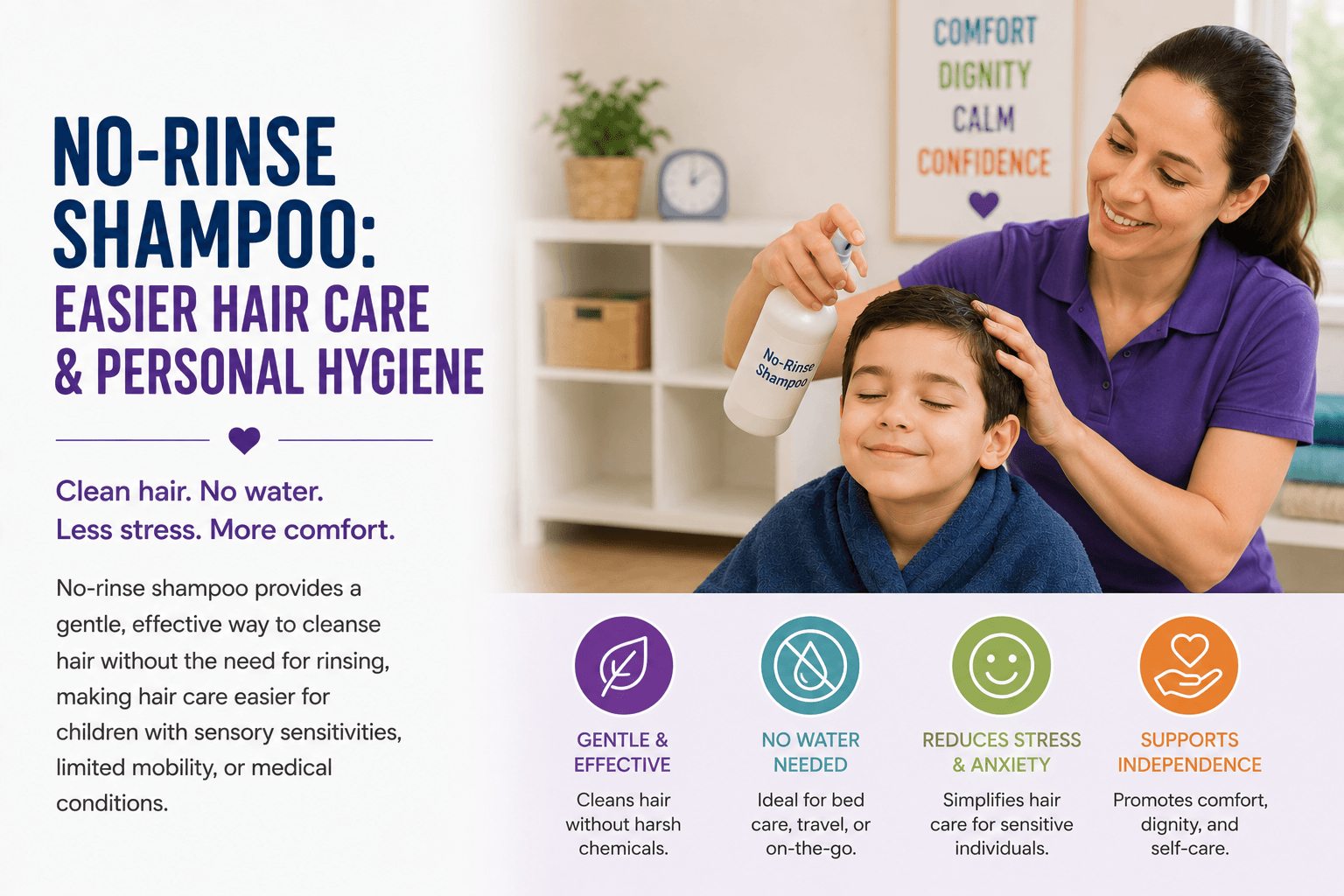
No rinse shampoo is a water free hair cleansing solution designed for people who need a simpler way to wash their hair without a traditional shower, bath, sink rinse, or full hair washing routine. It can be especially helpful for adults, seniors, children with special needs, people with disabilities, wheelchair users, caregivers, hospital patients, post surgery recovery, bed bound individuals, and anyone who has difficulty getting into the shower safely.
For many families and caregivers, hair washing can be one of the hardest personal care tasks. Transfers, wet floors, balance concerns, fatigue, sensory sensitivities, limited mobility, and bathroom access challenges can all make traditional shampooing difficult. A no rinse shampoo cap, cap shampoo no rinse option, shampoo cap no rinse product, or no rinse hair shampoo can help make hair care more manageable while supporting comfort and dignity.
Families, caregivers, schools, clinics, and care facilities can explore helpful personal care options through eSpecial Needs, including CleanLife No Rinse Products, Daily Living Aids, & Bathing and Toileting Aids.
What Is No Rinse Shampoo?
No rinse shampoo is a hair cleansing product that helps clean the hair and scalp without needing water for rinsing. Depending on the product, it may come as a liquid shampoo, foam, spray, or shampoo cap. After use, the hair is usually towel dried, combed, and styled as needed.
No rinse shampoo may be useful when a person:
Has difficulty showering
Cannot safely stand in the shower
Uses a wheelchair
Is recovering from surgery
Has limited mobility
Has fatigue or weakness
Has balance concerns
Needs bed based care
Has sensory sensitivities around water
Is traveling
Needs quick personal care support
Lives in a care setting
Needs caregiver assisted hygiene
The goal is to make hair care easier while helping the person feel clean, comfortable, and respected.
No Rinse Shampoo
$7.95
No Rinse Shampoo is an easy and hygienic way to keep hair clean when health or mobility is a concern. Just apply, lather, towel dry, and style completely clean hair with absolutely no water or rinsing required. The ingredients in… read more

How No Rinse Shampoo Works
No rinse shampoo is made to cleanse the hair without a traditional rinse. The product is applied to the hair and scalp, worked through gently, then removed by towel drying or combing depending on the product instructions.
A typical process may look like this:
Apply the no rinse shampoo to the hair
Massage gently into the scalp
Work through the hair
Towel dry
Comb or brush
Style as needed
A no rinse shampoo cap works differently. It is usually a pre moistened cap that is placed over the hair. The caregiver or user massages the cap over the scalp and hair, then removes it. The hair is towel dried or combed after use.
Always follow the specific product instructions.
Who Can Benefit from No Rinse Shampoo?
No rinse shampoo can be helpful for many people who need easier hair care.
Common users include:
Seniors
Adults with disabilities
Children with special needs
Wheelchair users
People recovering from surgery
People with limited mobility
People with chronic fatigue
Adults with neurological conditions
People with balance challenges
Bed bound individuals
Hospital patients
Rehab patients
Long term care residents
Caregivers supporting daily hygiene
Travelers who need a quick hygiene option
No rinse hair shampoo is also helpful when a full shower is not possible, safe, or practical.
No Rinse Hair Conditioner
$3.95
No Rinse Hair Conditioner is the perfect way to follow-up any shampoo, especially when health or mobility make hygiene difficult. Hospital tested and approved, all you have to do is massage into the hair, comb and style to provide silkiness,… read more

Why No Rinse Shampoo Matters for Special Needs Care
For people with special needs, traditional hair washing can involve more than basic hygiene. It may involve sensory discomfort, fear of water, difficulty with positioning, transfer challenges, communication barriers, or caregiver strain.
No rinse shampoo may help reduce stress during personal care by making the process:
Faster
Less physically demanding
Less messy
Easier to do from a chair or bed
More comfortable for the user
More predictable
More caregiver friendly
Easier during travel or outings
Helpful between full bathing routines
For children or adults with sensory sensitivities, the ability to clean hair without running water over the face or head may make hygiene routines feel less overwhelming.
No Rinse Peri-Wash Perineal Cleanser
$3.95
The No Rinse Peri-Wash Perineal Cleanser gently and safely provides an effective perineal wash solution that requires no water or rinsing. Its unique formula cleanses urine, vomit, and feces from the skin, leaving it sanitized and moisturized. A fantastic solution… read more

No Rinse Shampoo for Adults
No rinse shampoo can be helpful for adults who need hair care support because of disability, illness, injury, surgery, aging, or reduced mobility. It may be used at home, in hospitals, in rehab centers, in group homes, in assisted living, or in long term care settings.
Adults may benefit from no rinse shampoo when they:
Cannot easily get into a shower
Need help from a caregiver
Have limited endurance
Have difficulty standing
Need hair care while seated
Are recovering from surgery
Need hygiene support during travel
Need a quick refresh between showers
Have bathroom safety concerns
No rinse shampoo can help support hygiene while reducing the need for difficult transfers or full bathing routines every time hair needs attention.
No Rinse Shampoo for Seniors
Seniors may have balance changes, arthritis, weakness, pain, dizziness, or fear of falling in the bathroom. Hair washing can become a major challenge, especially when bending over a sink or standing in a shower is unsafe.
No rinse shampoo may support seniors by helping with:
Hair care from a chair
Hair care from bed
Less standing time
Reduced bathroom strain
Easier caregiver assistance
More frequent hygiene support
Comfort between showers
Personal dignity
Safer daily routines
Caregivers can combine no rinse shampoo with other bathing aids from Bathing and Toileting Aids.
No Rinse Bathing Wipes
$6.95
These gentle cleansing wipes provides moisturizing and deodorizing, too, all in one step. Warm the pack in a microwave or blanket warmer or use at room temperature. Leaves skin clean, refreshed and odor-free. Features Each package of No-Rinse Bathing Wipes… read more

No Rinse Shampoo Cap
A no rinse shampoo cap is a convenient hair washing cap that is usually pre moistened with cleansing solution. It is placed over the hair, then massaged through the cap to clean the hair and scalp. After removing the cap, the hair can be towel dried and combed.
A no rinse shampoo cap may be useful for:
Bed based care
Hospital care
Seniors
Adults with disabilities
People recovering from surgery
Caregiver assisted hygiene
Travel
Long term care
Emergency hygiene kits
Quick hair washing routines
Many caregivers like shampoo caps no rinse options because they help reduce spills, limit setup time, and simplify cleanup.
Cap Shampoo No Rinse Options
A cap shampoo no rinse product may be a good choice when liquid shampoo is harder to manage. Instead of pouring shampoo directly onto the hair, the cleanser is contained inside the cap. This can help caregivers clean the hair with less mess.
Cap shampoo no rinse options may be helpful when:
The user is lying in bed
The person has limited head control
Water access is limited
A sink rinse is not possible
The caregiver needs a fast routine
The bathroom is not accessible
The user is sensitive to water pouring
The care setting needs a simple hygiene process
A shampoo cap no rinse routine can be especially helpful for care facilities, home care providers, and families who need a more predictable hair washing option.
Shampoo Cap No Rinse Benefits
A shampoo cap no rinse product offers several practical benefits for personal care.
Benefits may include:
No traditional rinse needed
Less mess than regular shampoo
Easy caregiver use
Helpful for bed care
Useful during recovery
Convenient for travel
Supports scalp and hair freshness
Can reduce shower frequency when needed
Helpful for people with limited mobility
Can make hygiene routines less stressful
Shampoo caps no rinse options may also be useful when a full bath or shower is already physically demanding and hair washing needs to be separated into a different routine.
Shampoo Caps No Rinse for Caregivers
Caregivers often need products that are safe, quick, and practical. Shampoo caps no rinse options can reduce the amount of water, towels, positioning, and transfer effort involved in hair care.
Caregivers may use no rinse shampoo caps for:
Morning hygiene routines
Bed care
Post surgery recovery
Long term care residents
Adults with mobility limitations
Children with sensory sensitivities
Travel care kits
Emergency care supplies
Hygiene support between showers
A clear routine can help. Explain what will happen, warm the cap if product instructions allow, massage gently, and give the person time to respond if they are sensitive to touch.
CleanLife No Rinse Shampoo
CleanLife no rinse shampoo is part of the CleanLife personal care line available through eSpecial Needs. CleanLife products are designed to support hygiene when traditional bathing, rinsing, or water access is difficult.
CleanLife no rinse shampoo may be helpful for:
Adults with disabilities
Seniors
Caregivers
People with limited mobility
Bed based care
Travel
Rehab recovery
Personal care routines
Care facilities
Home health support
Browse CleanLife No Rinse Products to explore available personal care options, including water free shampoo and body care products.
No Rinse Hair Shampoo vs Dry Shampoo
No rinse hair shampoo and dry shampoo are sometimes confused, but they are not always the same thing. Dry shampoo is often used to absorb oil and refresh hair between washes. No rinse shampoo is intended to cleanse the hair and scalp without a traditional water rinse.
No rinse hair shampoo may be a better fit when the goal is personal care support for:
Limited mobility
Bed care
Post surgery recovery
Caregiver assisted hygiene
Disability support
Hospital or rehab routines
Senior care
More complete hair cleansing without rinsing
Dry shampoo may be convenient for cosmetic refreshing, but no rinse shampoo is often more relevant for care routines where washing access is limited.
No Rinse Shampoo and Body Wash
No rinse shampoo and body wash products can help simplify personal care when traditional bathing is difficult. Some products are designed only for hair. Others may be made for both hair and body use, depending on the formula.
A no rinse body wash routine may support:
Bed based bathing
Wheelchair users
Seniors with limited mobility
Adults with disabilities
People recovering from surgery
Caregiver assisted bathing
Travel hygiene
Emergency preparedness
Long term care routines
Always check whether a product is intended for hair, body, or both before use.
No Rinse Body Wash
$4.95
The No Rinse Peri-Wash Perineal Cleanser gently and safely provides a simple way to cleanse the body-- no water or rinsing required. Its a fantastic solution for individuals with special needs, the elderly, and those with severe mobility issues. Features… read more

When to Use No Rinse Shampoo
No rinse shampoo may be used when traditional hair washing is not practical, safe, or comfortable.
Helpful times may include:
After surgery
During illness
While traveling
Between full showers
During bed care
In hospital or rehab
During long term care
When water access is limited
After sweating
Before appointments
During caregiver visits
When bathing causes fatigue
When sensory needs make showers difficult
No rinse shampoo is not meant to replace all bathing for every person, but it can be a valuable part of a flexible hygiene routine.
No Rinse Shampoo for Bed Bound Care
For someone who is bed bound or temporarily unable to get up safely, hair care can be difficult. A no rinse shampoo cap can make the process easier because it does not require transferring the person to a shower or sink.
Bed care tips include:
Gather supplies before starting
Place a towel under the head
Explain each step
Use gentle pressure
Keep the person warm and comfortable
Follow product instructions
Towel dry hair after use
Comb gently
Dispose of single use items properly
Check for scalp sensitivity
Caregivers should protect privacy and dignity throughout the routine.
No Rinse Body Bath
$7.95
The No Body Bath provides a complete cleansing experience with no rinsing required. Mix just one ounce of water for a complete basin bath that leaves skin clean, refreshed, and odor-free. This safe and effective perineal cleanser is gentle enough… read more

No Rinse Shampoo After Surgery
After surgery, a person may be told to avoid showering for a certain period, limit movement, protect incisions, or avoid getting certain areas wet. In those situations, no rinse shampoo may help keep the hair feeling cleaner while following medical instructions.
No rinse shampoo may be useful after:
Hip surgery
Knee surgery
Back surgery
Shoulder surgery
Foot or ankle surgery
Hospitalization
Rehab stays
Procedures that limit showering
Always follow discharge instructions and ask the medical team if there are restrictions related to washing, movement, or skin care.
No Rinse Shampoo for Wheelchair Users
Wheelchair users may have difficulty accessing sinks, showers, or tubs depending on bathroom layout, transfer ability, strength, endurance, and caregiver support. No rinse shampoo can help make hair care possible without difficult or unsafe transfers every time.
It may support:
Seated hair care
Faster hygiene routines
Less caregiver strain
More frequent hair refreshing
Travel care
Bathroom access challenges
Greater comfort between full showers
Pairing no rinse shampoo with adaptive bathroom products from Bathing and Toileting Aids may help build a safer hygiene routine.
No Rinse Shampoo for Sensory Sensitivities
Some children and adults are sensitive to water on the head, water near the face, strong smells, wet hair, towel rubbing, or the sound of running water. No rinse shampoo may help reduce some of those triggers.
Tips for sensory friendly use:
Explain the routine first
Offer choices when possible
Use a calm voice
Let the person feel the product package first
Avoid strong rubbing
Use gentle pressure
Keep towels soft
Use a visual schedule
Stop if the person becomes distressed
Try again later with a shorter routine
For autistic users or anyone with sensory sensitivities, comfort and consent matter.
No Rinse Shampoo for Travel
No rinse shampoo can be helpful during travel because bathrooms, schedules, and water access may be unpredictable. It can help people stay fresh without needing a full shower every time.
Travel uses include:
Road trips
Hotel stays
Camps
Medical travel
Family vacations
Long flights
Emergency kits
Caregiver travel bags
Adaptive recreation trips
Pack no rinse shampoo with wipes, towels, adaptive clothing, extra personal care supplies, and any needed mobility or bathroom supports.
How to Use No Rinse Shampoo
Always follow the product label, but the general process often includes:
Place a towel around the shoulders or under the head
Apply the no rinse shampoo to hair and scalp
Massage gently
Work product through the hair
Towel dry
Comb or brush
Style as needed
For longer or thicker hair, use enough product to reach the scalp and work through sections carefully.
How to Use a No Rinse Shampoo Cap
A no rinse shampoo cap routine may include:
Open the package
Warm the cap if product instructions allow
Place the cap over the hair
Massage the scalp and hair through the cap
Remove the cap
Towel dry the hair
Comb or brush gently
Dispose of the cap if it is single use
The phrase cap shampoo no rinse or shampoo cap no rinse often refers to this same type of personal care product.
Choosing the Best No Rinse Shampoo
Choosing the best no rinse shampoo depends on the user, hair type, care setting, and comfort needs.
Consider:
Hair length
Hair thickness
Scalp sensitivity
Scent preference
Skin sensitivity
Whether a cap or liquid is easier
Whether body wash is also needed
Caregiver assistance level
Travel needs
Single use or bottle format
Storage space
Facility requirements
Product instructions
For some users, a liquid no rinse hair shampoo works well. For others, a no rinse shampoo cap may be easier and cleaner.
No Rinse Shampoo Safety Tips
No rinse shampoo is generally easy to use, but personal care products should still be used thoughtfully.
Safety tips include:
Follow product directions
Avoid contact with eyes
Stop use if irritation occurs
Do not use on broken skin unless directed by a provider
Check for allergies or sensitivities
Use gentle massage
Keep the person warm during care
Do not force use if the person is distressed
Store products safely
Dispose of single use items properly
Ask a provider if there are scalp conditions or medical concerns
If the user has wounds, scalp irritation, skin conditions, or recent surgery, ask a medical provider for guidance.
No Rinse Shampoo for Facilities
Hospitals, rehab centers, group homes, assisted living facilities, nursing care settings, schools, and adult day programs may use no rinse shampoo products to support hygiene when traditional bathing is difficult.
Facility benefits may include:
Faster care routines
Less water use
Reduced transfer demands
Support for bed care
Easier post procedure hygiene
Helpful for residents with limited mobility
More comfortable personal care
Practical caregiver workflow
Useful emergency supply option
Facilities should choose products that match care standards, user needs, and staff routines.
No Rinse Shampoo and Caregiver Dignity
Hair care is personal. For people who need help with hygiene, the way care is provided matters. No rinse shampoo can support dignity when caregivers use respectful routines and communicate clearly.
Dignity focused care includes:
Explaining each step
Asking permission
Offering choices
Protecting privacy
Using gentle touch
Keeping the person covered and warm
Avoiding rushed care
Listening to discomfort
Supporting independence when possible
Using age appropriate language
The product is only one part of good care. Respectful communication is just as important.
Products to Pair With No Rinse Shampoo
No rinse shampoo works well as part of a broader personal care routine. Depending on the user’s needs, families and caregivers may also consider:
No rinse body wash
Personal cleansing wipes
Adaptive clothing
Bathing supports
Shower chairs
Transfer benches
Handheld shower heads
Bathing aids
Toileting supports
Towels and grooming tools
Helpful eSpecial Needs categories include CleanLife No Rinse Products, Daily Living Aids, Bathing and Toileting Aids.
FAQs
What is no rinse shampoo?
No rinse shampoo is a hair cleansing product designed to clean the hair and scalp without needing a traditional shower, bathtub, or sink rinse. It is commonly available as a foam, liquid spray, cleansing cap, or shampoo cap.
No rinse shampoo can be useful for people with limited mobility, sensory sensitivities, recovery needs, bed based care needs, travel needs, or situations where standard hair washing is difficult.
Does no rinse shampoo work?
No rinse shampoo can help refresh hair, reduce oil, remove some buildup, and make hair feel cleaner between regular washes. Results can vary based on hair type, scalp condition, product formula, amount of buildup, and how the product is used.
It is usually best viewed as a practical alternative for times when traditional washing is difficult, rather than a complete replacement for regular shampoo and rinsing for every person.
How does no rinse shampoo work?
Most no rinse shampoo products use cleansing ingredients that help lift oil, sweat, and light buildup from the hair and scalp without requiring water rinsing. After applying the product, the user may massage it through the hair and scalp, then towel dry, comb through, or allow it to air dry depending on the instructions.
Some formulas are designed to leave the hair feeling refreshed with little residue. Always follow the product label because directions vary by product type.
What is a no rinse shampoo cap?
A no rinse shampoo cap is a pre moistened cap that contains cleansing solution inside. The cap is placed over the person’s hair and gently massaged to help clean the hair and scalp without requiring a shower or sink rinse.
Many shampoo caps are designed for one time use and may be warmed according to the manufacturer’s instructions before use, though not every product is intended to be heated.
How do no rinse shampoo caps work?
No rinse shampoo caps work by holding a cleansing solution against the hair and scalp while the caregiver or user massages the cap around the head. The solution helps refresh the hair and loosen light oil or buildup. After massaging, the cap is removed and the hair is towel dried, combed, or styled as directed. No water rinse is usually needed.
Always review the package instructions before use because warming directions, massage time, disposal guidance, and safety information can differ by brand.
How do I use no rinse shampoo?
General instructions may include:
- Read the product label before use
- Place a towel around the shoulders if needed
- Apply the foam, spray, or liquid shampoo to dry hair as directed
- Massage the product gently through the hair and scalp
- Use a comb or fingers to distribute the product
- Towel dry excess moisture if needed
- Allow hair to air dry or style as directed
Avoid getting the product in the eyes. Stop use if irritation occurs.
How do I use a no rinse shampoo cap?
General no rinse shampoo cap instructions may include:
- Read the package directions
- Check whether the cap may be warmed before use
- Place the cap over dry hair
- Massage the hair and scalp through the cap for the amount of time listed on the package
- Remove the cap
- Towel dry, comb, and style the hair as needed
- Dispose of the cap if it is single use
Do not use a warmed cap until you have checked its temperature carefully. It should feel comfortably warm, not hot.
Can no rinse shampoo be used on dry hair?
Many no rinse shampoo products are designed for dry hair, but directions vary. Some foam products, sprays, and shampoo caps are intended to be applied directly to dry hair and then massaged through.
Always follow the specific instructions for the product you are using.
Is no rinse shampoo safe for sensitive skin?
Some people with sensitive skin may tolerate no rinse shampoo well, while others may be sensitive to fragrance, preservatives, cleansing ingredients, or other product components.
Before first use, review the ingredient list and product warnings. A small patch test may be helpful when appropriate. Stop using the product if redness, itching, burning, rash, or irritation occurs.
For people with known skin conditions, scalp wounds, severe sensitivities, or active dermatology concerns, ask a healthcare professional which products may be appropriate.
Can no rinse shampoo be used after surgery?
No rinse shampoo may be useful after surgery when showering is difficult or restricted. However, post surgery hygiene instructions can vary depending on the procedure, incision location, medical equipment, mobility restrictions, and provider guidance.
Follow the instructions from the surgeon, nurse, or care team before using any hair care product after surgery.