Table of Contents
- What Are Daily Living Aids?
- Defining Daily Living Aids and ADLs
- Who Benefits From Daily Living Aids?
- The Importance of Assistive Devices for the Elderly
- Promoting Independence and Reducing Fall Risk
- Mental Health and Confidence Benefits
- Reducing Caregiver Burden
- Complete List of Senior Aids for Daily Living: Top Picks by Category
- Rollators, Walkers, and Canes
- Bathing and Toileting Aids for Elderly Safety
- Shower Chairs, Bath Benches, and Non Slip Mats
- Raised Toilet Seats and Commode Aids
- Dressing and Grooming Aids
- Button Hooks, Sock Aids, and Long Handled Tools
- Kitchen and Meal Preparation Aids
- Adaptive Utensils, Jar Openers, and Non Slip Cutting Boards
- Low Vision Products for Seniors
- Magnifiers, Talking Clocks, and High Contrast Tools
- Assistive Technology Devices for the Elderly at Home
- Communication Devices and Smart Home Aids
- Adaptive Seating and Positioning Products
- Devices for Seniors Living Alone: Safety and Emergency Aids
- Personal Emergency Response Systems and Fall Detectors
- How to Choose the Best Daily Living Aids for Seniors
- Assess Activities of Daily Living Challenges
- Evaluate the Home Environment
- Work With an Occupational Therapist for a Personalized Plan
- Consider Ease of Use, Durability, and Safety Ratings
- Shop Senior Aids for Daily Living at eSpecial Needs
- FAQs
Senior aids for daily living can make everyday routines safer, easier, and more manageable for older adults who want to remain active at home. The right products may help with mobility, bathing, toileting, dressing, meal preparation, reaching, communication, and emergency planning.
Many seniors want to continue living in familiar surroundings while maintaining as much independence as possible. Daily living aids can support that goal by reducing unnecessary strain, making routine tasks more accessible, and helping caregivers provide assistance more safely.
The best senior aids for daily living at home depend on the person’s mobility, hand strength, vision, balance, daily routines, home layout, and level of caregiver support. A small change, such as a shower chair, reacher, cane, raised toilet seat, non slip mat, or easy grip utensil, can make a meaningful difference in how confidently a person manages daily life.
Explore Daily Living Aids, Mobility Products, Grips and Holders, and Reachers at eSpecial Needs.
What Are Daily Living Aids?
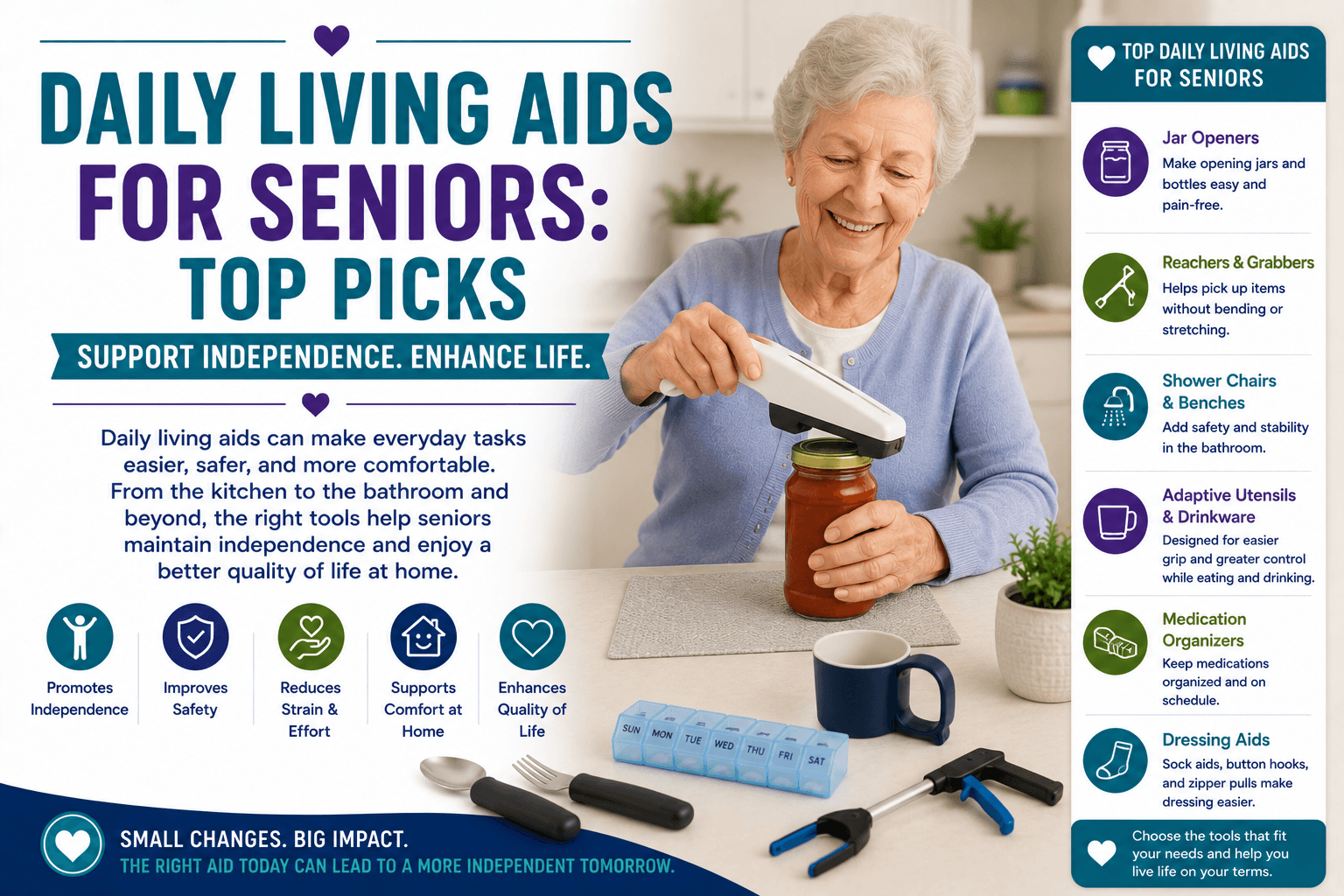
Daily living aids are products designed to help people complete routine tasks with more safety, comfort, control, or independence. They may support activities such as walking, bathing, dressing, preparing meals, reaching for items, writing, opening containers, getting in and out of a chair, using the toilet, and communicating with caregivers or family members.
Senior aids for daily living are often used by:
Seniors living independently
Adults with disabilities
People recovering from surgery or injury
Individuals with arthritis or reduced grip strength
People with low vision
Adults with balance concerns
Family caregivers
Occupational therapists
Physical therapists
Home health teams
Assisted living and residential care programs
The goal is not to replace independence. It is to make daily activities more accessible and reduce unnecessary difficulty.
Defining Daily Living Aids and ADLs
Activities of Daily Living, often called ADLs, are basic tasks people need to complete as part of everyday life.
Common ADLs include:
Bathing
Dressing
Toileting
Eating
Moving from one position to another
Walking
Grooming
Managing personal hygiene
Some people also need help with Instrumental Activities of Daily Living, often called IADLs. These are more complex everyday tasks that support independent living.
Common IADLs include:
Preparing meals
Shopping
Managing medication
Using a phone
Cleaning
Doing laundry
Managing transportation
Opening containers
Reaching items on shelves
Handling household tools
Senior aids for daily living can support both ADLs and IADLs by helping people complete tasks with less strain and more confidence.
Who Benefits From Daily Living Aids?
Daily living aids can benefit many people, not only seniors. They may be helpful for adults who experience mobility changes, reduced hand strength, limited range of motion, fatigue, balance concerns, vision loss, injury recovery, or disability related needs.
They can also help caregivers by making transfers, bathing, dressing, meal preparation, and daily routines safer and more manageable.
People who may benefit include:
Seniors aging at home
Adults living alone
People recovering from surgery
Adults with arthritis
People with Parkinson’s disease
Stroke survivors
Adults with multiple sclerosis
Individuals with cerebral palsy
People with spinal cord injuries
Adults with low vision
People with hand tremors
Individuals with chronic pain
Adults with balance concerns
Caregivers supporting aging parents
The Importance of Assistive Devices for the Elderly
The importance of assistive devices for elderly adults often becomes clear when everyday tasks start requiring more effort, more time, or more caregiver help. A person may still be able to complete a task, but may feel unsafe, fatigued, unsteady, or frustrated while doing it.
The right support can help a senior continue participating in familiar routines, including showering, preparing meals, getting dressed, walking through the home, reading, using the phone, and attending community activities.
Assistive devices may support:
Safer movement
Reduced strain
Better posture
Greater independence
Improved confidence
More manageable self care
Reduced caregiver lifting
More comfortable daily routines
Continued participation in hobbies
Easier communication
Better access to the home environment
Senior aids for daily living should be selected around the person, not simply their age. A product that works well for one senior may not be appropriate for another person with different strength, balance, cognition, vision, mobility, or home access needs.
Promoting Independence and Reducing Fall Risk
Many products for seniors living at home are chosen to support safer routines and reduce avoidable hazards. Falls are a significant concern for older adults, but home changes, clear walking paths, improved lighting, and properly selected support equipment can all be part of a broader fall prevention plan.
Helpful strategies may include:
Keeping pathways clear
Removing loose rugs or securing them properly
Improving hallway and bathroom lighting
Keeping frequently used items within easy reach
Adding stable support near high risk areas
Using mobility aids recommended by a qualified provider
Choosing sturdy footwear
Reviewing medication and vision concerns with a healthcare professional
Asking for help with tasks that feel unsafe
A cane, walker, shower chair, raised toilet seat, reacher, grab bar, transfer aid, or non slip surface may help support safer movement when chosen and installed correctly.
Mental Health and Confidence Benefits
Daily routines can feel emotionally difficult when a person has to give up activities they once completed independently. The right independent living aids for seniors may help preserve choice, privacy, confidence, and a sense of control.
For example, a dressing aid may help someone get ready without waiting for assistance. A jar opener may make meal preparation easier. A shower chair may help a person feel safer during bathing. A reacher may make it easier to pick up dropped items or access a shelf without bending or climbing.
These senior aids for daily living do not solve every challenge, but they can help seniors continue participating in their own care and household routines.
Reducing Caregiver Burden
Caregivers often help with personal care, transfers, cooking, medication routines, transportation, household tasks, and mobility. The right assistive products can reduce physical strain and make support more consistent.
Helpful caregiver focused products may include:
Shower chairs
Bath benches
Raised toilet seats
Transfer boards
Reachers
Grab bars
Patient lifts
Sit to stand aids
Easy grip utensils
Dressing aids
Mobility equipment
Positioning supports
Caregiver support should always be paired with safe techniques. For more complex transfers, lifting needs, or mobility changes, work with an occupational therapist, physical therapist, nurse, or qualified healthcare provider.

Complete List of Senior Aids for Daily Living: Top Picks by Category
The best assistive devices for elderly adults are usually the ones that solve a specific daily problem. Start by identifying which tasks feel difficult, unsafe, tiring, or frustrating.
Mobility Aids for Seniors Living at Home
Mobility aids can help older adults move more safely around the home, community, and care setting. The right device depends on strength, balance, endurance, hand function, pain, fall history, and ability to use the device safely.
Common mobility aids may include:
Canes
Quad canes
Folding canes
Walkers
Rollators
Gait trainers
Wheelchairs
Power wheelchairs
Mobility scooters
Transfer aids
Ramps
Grab bars
Bed rails
Explore Mobility Products for mobility aids that support home routines, community access, caregiver assistance, and everyday independence.
Grab Bars, Handrails, and Stair Assists
Grab bars and handrails can provide stable support in areas where seniors may need extra balance assistance. They are often considered for bathrooms, stairways, entryways, hallways, and near beds or seating areas.
Common uses may include:
Getting in and out of the shower
Standing from the toilet
Entering or leaving the home
Moving up or down stairs
Getting out of bed
Navigating a narrow hallway
Managing a step or threshold
Grab bars should be securely installed according to product instructions and the wall type. Suction style products may not provide the same support as permanently mounted products, so caregivers should choose based on the user’s safety needs.
Rollators, Walkers, and Canes
Canes, walkers, and rollators provide different levels of support.
Canes
Canes may help seniors who need light support for balance, stability, or reduced weight bearing on one side. They are often easy to transport but provide less support than a walker.
Walkers
Walkers provide a wider base of support and may be useful for people with greater balance concerns or lower body weakness. Some models have wheels, while others are designed for more stable step by step use.
Rollators
Rollators usually have wheels, hand brakes, storage, and often a seat. They may work well for people who can safely manage the brakes and want support during longer walks or community outings.
A physical therapist or occupational therapist can help determine whether a cane, walker, or rollator is the safest choice.
Bathing and Toileting Aids for Elderly Safety
Bathrooms can be challenging because they often include wet surfaces, tight spaces, low seating, tubs, and frequent transfers. Bathing and toileting aids can help seniors manage hygiene more safely and comfortably.
Helpful products may include:
Shower chairs
Bath benches
Handheld shower accessories
Non slip mats
Raised toilet seats
Toilet safety frames
Commode chairs
Grab bars
Transfer benches
Long handled bathing aids
Reachers
Dressing supports
Shower Chairs, Bath Benches, and Non Slip Mats
Shower chairs and bath benches can provide a stable place to sit during bathing. They may be helpful for people who fatigue easily, feel unsteady while standing, have trouble stepping into a tub, or need caregiver support.
A shower chair may be useful for walk in showers. A transfer bench may be useful when a person needs to move across the side of a bathtub while seated.
Before choosing bathing equipment, consider:
Bathroom dimensions
Tub or shower style
User weight
Transfer ability
Need for back support
Need for armrests
Seat height
Drainage
Caregiver space
Cleaning needs
Non slip mats can also support safer footing, but they should be secured properly and checked regularly for wear.
Raised Toilet Seats and Commode Aids
Raised toilet seats can reduce the distance a person needs to lower or lift their body when using the toilet. They may be helpful for people with limited leg strength, reduced balance, joint pain, hip precautions, or difficulty standing from low seating.
Commode aids may include:
Raised toilet seats
Toilet safety frames
Bedside commodes
Over toilet chairs
Drop arm commodes
Shower commodes
Grab bars
Transfer aids
The best choice depends on bathroom access, user weight, transfer needs, caregiver assistance, and whether the product will be used over a toilet, beside a bed, or in a shower setting.
Dressing and Grooming Aids
Dressing and grooming aids can help seniors manage clothing, footwear, personal hygiene, and appearance with less bending, reaching, gripping, or twisting.
These products may be helpful for people with:
Arthritis
Hand weakness
Tremors
Limited shoulder movement
Back pain
Balance concerns
Reduced flexibility
Stroke recovery needs
One handed use needs
Difficulty bending
Button Hooks, Sock Aids, and Long Handled Tools
Helpful dressing and grooming products may include:
Button hooks
Zipper pulls
Sock aids
Shoe horns
Long handled sponges
Reachers
Dressing sticks
Elastic shoelaces
Easy grip hair brushes
Long handled combs
Nail care supports
Built up handles
These independent living aids for seniors can help reduce the need to bend down, stretch overhead, grip small fasteners, or hold items tightly.
Explore Reachers and Grips and Holders for products that support dressing, grooming, reaching, holding, and everyday tasks.
Kitchen and Meal Preparation Aids
Kitchen tasks often require standing, gripping, opening, slicing, stirring, carrying, and reaching. Adaptive kitchen tools can help seniors continue preparing meals more safely and independently.
Helpful kitchen products may include:
Easy grip utensils
Built up handle utensils
Weighted utensils
Angled utensils
Jar openers
Non slip cutting boards
Plate guards
Spill resistant cups
Reachers
Lightweight cups
One handed kitchen tools
Non slip mats
Easy open containers
Kitchen aids should be selected based on the person’s hand strength, grip, vision, balance, reach, and comfort with food preparation tasks.
Adaptive Utensils, Jar Openers, and Non Slip Cutting Boards
Adaptive utensils may help people with arthritis, tremors, weakness, limited grip, or reduced coordination hold eating tools more comfortably. Jar openers can reduce the force needed to open containers. Non slip cutting boards can help stabilize food and reduce the need to use both hands with the same level of force.
These products may help seniors remain involved in meal preparation and eating routines while reducing frustration and strain.
Explore Daily Living Aids and Grips and Holders for products that support easier kitchen, dining, and household activities.
Low Vision Products for Seniors
Low vision products for seniors can support reading, medication management, meal preparation, communication, organization, and safer navigation at home.
Low vision aids may include:
Handheld magnifiers
Stand magnifiers
Large print calendars
Large button phones
Talking clocks
Talking timers
High contrast labels
High contrast cutting boards
Medication organizers
Bright task lighting
Labeling tools
Easy to see measuring tools
Low vision products should be selected based on the person’s specific vision needs. An eye care professional, occupational therapist, low vision specialist, or rehabilitation professional may help identify practical tools and strategies.
Magnifiers, Talking Clocks, and High Contrast Tools
Simple visual supports can help make everyday tasks easier.
A magnifier may help with reading prescription labels, mail, books, recipes, and product instructions. A talking clock can provide time information without relying on visual reading. High contrast tools may help make objects easier to identify during kitchen tasks, grooming, medication routines, and household organization.
Good lighting is also important. Increasing contrast and reducing glare may help some seniors feel more confident while moving through the home and completing daily activities.
Assistive Technology Devices for the Elderly at Home
Assistive technology devices for the elderly at home can help seniors stay connected, manage reminders, call for support, control parts of the home, and communicate with family or caregivers.
Technology options may include:
Large button phones
Amplified phones
Video calling tools
Voice activated devices
Medication reminders
Smart lighting
Automated reminders
Emergency response systems
Doorbell cameras
Home monitoring systems
Fall detection devices
Voice controlled calling tools
Technology should be matched to the person’s comfort level, hearing, vision, memory, dexterity, privacy preferences, and internet access.
Communication Devices and Smart Home Aids
Communication devices can help seniors maintain connection with family, friends, caregivers, and healthcare teams. Smart home tools may help with lighting, reminders, calling, or household controls.
Potential uses include:
Calling a caregiver
Receiving medication reminders
Turning lights on or off
Setting timers
Checking the weather
Making a shopping list
Contacting family
Using voice controls when hand use is limited
Communicating during an emergency
Technology should be introduced gradually. A device is only helpful when the person knows how to use it consistently and feels comfortable doing so.
Adaptive Seating and Positioning Products
Adaptive seating and positioning products can help seniors sit more comfortably during meals, hobbies, self care tasks, reading, conversation, and rest. Proper support may reduce fatigue and make it easier to use the hands for daily tasks.
Helpful products may include:
Supportive chairs
Seat cushions
Back supports
Positioning wedges
Arm supports
Foot supports
Reclining chairs
Lift chairs
Bed positioning supports
Transfer aids
Seating needs can be complex for seniors with reduced trunk control, pressure concerns, pain, mobility limitations, or postural changes. Occupational therapy, physical therapy, or medical guidance may be helpful before choosing specialized seating.
Devices for Seniors Living Alone: Safety and Emergency Aids
Devices for senior aids for daily living alone can provide reassurance for both the older adult and their family. The best setup depends on the person’s routines, home environment, ability to use technology, medical needs, and available support network.
Helpful safety options may include:
Personal emergency response systems
Fall detectors
Wearable alert buttons
Video doorbells
Large button phones
Medication reminders
Smart lighting
Home monitoring systems
Check in schedules
Accessible phone charging stations
Bedside reachers
Grab bars
Motion activated night lights
Senior aids for daily living devices should not replace regular communication, caregiver support, emergency planning, or medical care. It can be one part of a broader plan for safer independent living.
Personal Emergency Response Systems and Fall Detectors
Personal emergency response systems, sometimes called PERS, typically allow the user to press a wearable button to call for help. Some systems may also include fall detection features.
These devices may be useful for seniors who live alone, have a history of falls, spend time alone during the day, or want an additional way to contact emergency support.
Before choosing a system, consider:
Whether it works inside and outside the home
Monthly service costs
Battery charging needs
Fall detection features
Whether the user will wear it consistently
Cell service or landline requirements
Contact and response procedures
Waterproof features
Ease of use
How to Choose the Best Daily Living Aids for Seniors
The best senior aids for daily living solve real problems without adding unnecessary complication. Begin by identifying the daily tasks that are difficult, unsafe, tiring, painful, or frustrating.
Instead of buying many products at once, focus on the areas where support is needed most.
Assess Activities of Daily Living Challenges
Start by observing everyday routines.
Ask:
Is getting dressed difficult?
Does bathing feel unsafe?
Is the person struggling to stand from the toilet?
Are there problems with grip or hand strength?
Does meal preparation require too much effort?
Is reaching low or high items difficult?
Is walking through the home unsafe?
Are medications hard to read or organize?
Does the person need help during the night?
Are there recent falls or near falls?
Is fatigue limiting participation in daily routines?
Does the person avoid tasks they once enjoyed?
A clear list of challenges can help caregivers choose the most useful products first.
Evaluate the Home Environment
A home assessment can help identify barriers that may not be obvious until they create a problem.
Look at:
Bathroom layout
Toilet height
Shower or tub access
Bedroom setup
Hallway width
Lighting
Loose rugs
Floor transitions
Stairways
Storage height
Kitchen layout
Chair height
Bed height
Outdoor entryways
Pathways to the mailbox or vehicle
Location of frequently used items
The goal is to reduce unnecessary reaching, bending, climbing, twisting, and walking through cluttered areas.
Work With an Occupational Therapist for a Personalized Plan
An occupational therapist can help identify the activities that matter most to the individual and recommend strategies, home modifications, or equipment that support those goals.
An OT may help with:
Bathing and toileting routines
Dressing strategies
Kitchen access
Hand function
Low vision adaptations
Home safety
Mobility routines
Seating and positioning
Caregiver training
Adaptive equipment trials
Energy conservation
Daily routine planning
A physical therapist may also help with walking, balance, mobility device selection, transfers, strength, and fall prevention planning.
Consider Ease of Use, Durability, and Safety Ratings
Before buying a daily living aid, consider whether the person can use it safely and consistently.
Review:
Product dimensions
Weight capacity
Handle size
Grip style
Cleaning instructions
Installation requirements
Material quality
Warranty information
Return policy
Product reviews
Required caregiver support
Storage needs
Whether the product fits the home
Whether the product matches the user’s strength and mobility
A product can only support independence when it is accessible, comfortable, safe, and practical for the person’s routine.
Shop Senior Aids for Daily Living at eSpecial Needs
Senior aids for daily living can support safer routines, more comfortable self care, reduced caregiver strain, and greater confidence at home. From mobility aids and shower chairs to reachers, kitchen tools, toilet supports, grips, and adaptive equipment, the right product can help make a daily task feel more manageable.
Explore eSpecial Needs categories for:
Start with one daily task that has become difficult. A thoughtfully chosen assistive device can help seniors continue participating in the routines that make home feel comfortable, familiar, and independent.
FAQs
What are daily living aids for seniors?
Daily living aids for seniors are products that help older adults complete everyday tasks with more safety, comfort, and independence. They may support bathing, dressing, toileting, walking, meal preparation, reaching, reading, medication routines, communication, and emergency planning.
Common senior aids for daily living include shower chairs, raised toilet seats, reachers, canes, walkers, rollators, grab bars, adaptive utensils, button hooks, sock aids, magnifiers, and emergency alert systems.
What are ADLs?
ADLs are Activities of Daily Living. These are basic tasks people perform every day to care for themselves.
Common ADLs include:
- Bathing
- Dressing
- Toileting
- Eating
- Grooming
- Moving from bed to chair
- Walking
- Managing personal hygiene
Daily living aids can help seniors complete these tasks with less strain or less caregiver assistance.
Who can benefit from daily living aids?
Daily living aids can benefit seniors, adults with disabilities, people recovering from surgery or injury, individuals with arthritis, people with low vision, adults with balance concerns, and family caregivers.
They may also help people with Parkinson’s disease, stroke recovery needs, multiple sclerosis, hand tremors, chronic pain, mobility limitations, fatigue, reduced grip strength, or limited range of motion.
Why are assistive devices important for elderly adults?
The importance of assistive devices for elderly adults is often connected to safety, autonomy, confidence, and quality of life. A daily living aid may make it easier to keep bathing, dressing, eating, walking, cooking, or reaching for household items without needing as much help.
The right aid can also reduce physical strain for caregivers and help seniors remain active in familiar routines.
What mobility aids are best for seniors living at home?
Mobility aids for seniors living at home may include canes, walkers, rollators, wheelchairs, transfer aids, bed rails, grab bars, and ramps.
A cane may be appropriate for lighter balance support. A walker may provide a wider, more stable base. A rollator may help seniors who can safely use hand brakes and benefit from a seat during longer walks.
A physical therapist or occupational therapist can help determine the safest mobility option.
Do shower chairs help prevent bathroom falls?
Shower chairs may help some seniors bathe more safely by providing a stable seated surface during showering. They can be useful for people with fatigue, balance concerns, weakness, pain, or difficulty standing for long periods.
A shower chair should fit the shower properly and be used according to the manufacturer’s directions. Non slip flooring, grab bars, lighting, and safe transfer techniques can also be important parts of bathroom safety.
What is a bath transfer bench?
A bath transfer bench is a seated bathing aid that extends across the side of a bathtub. It can help a person sit down outside the tub and slide across the bench instead of stepping over the tub wall.
Transfer benches may be useful for seniors with limited balance, reduced leg strength, hip precautions, or difficulty lifting their legs over a bathtub edge.