Table of Contents
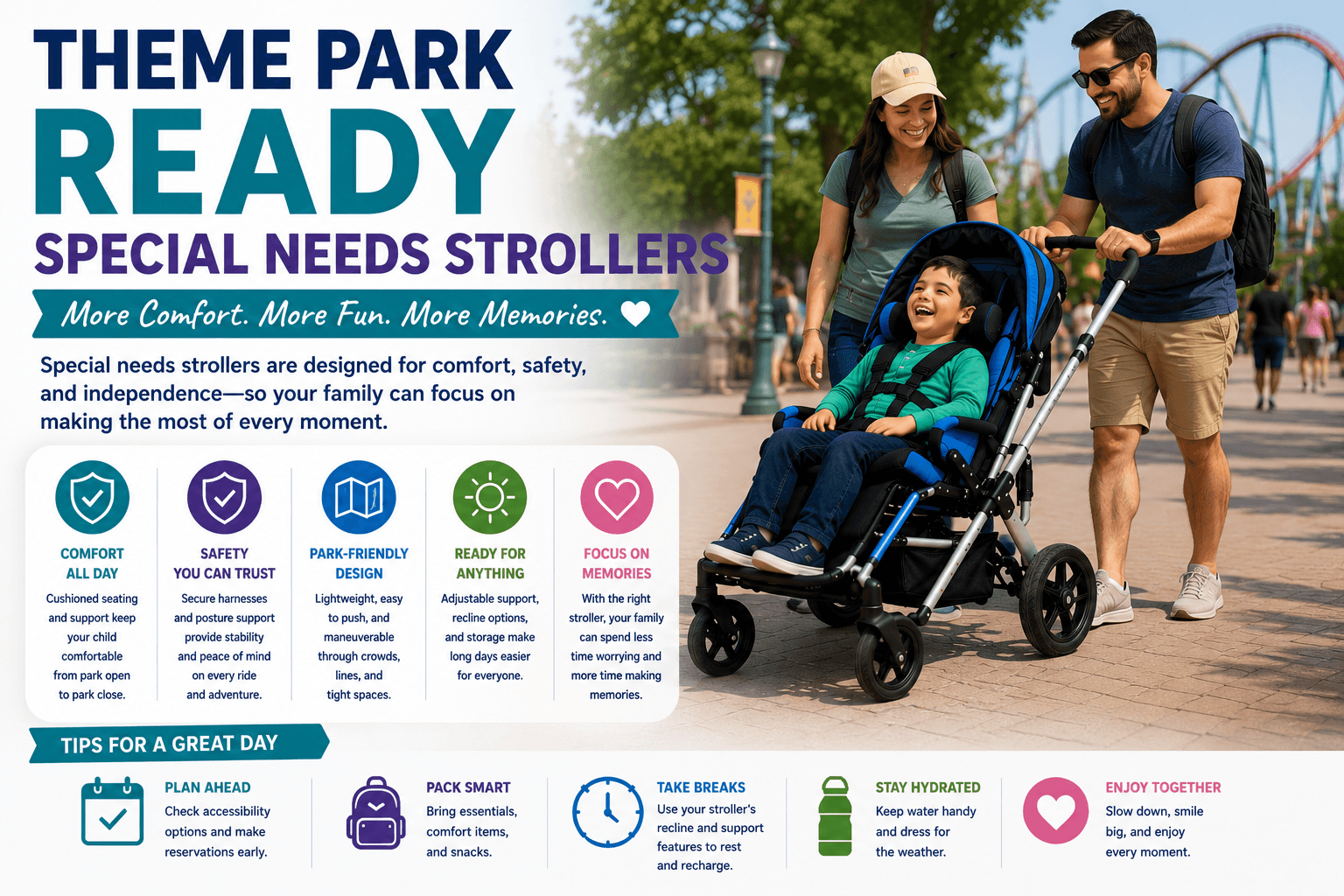
A day at a theme park can be exciting, memorable, and exhausting all at once. Long distances, crowded walkways, waiting in lines, and sensory overload can quickly become overwhelming for children with mobility or developmental needs. That is why many families rely on special needs strollers to help make theme park visits more comfortable and manageable. Designed with supportive seating, positioning features, and larger weight capacities, adaptive strollers can help children stay comfortable throughout a full day of activities.
Whether visiting a local amusement park or planning a major family vacation, the right stroller can help improve comfort, reduce fatigue, and support smoother outings for everyone involved.
Why Theme Parks Can Be Challenging
Theme parks often involve:
- Hours of walking
- Large crowds
- Bright lights and loud sounds
- Long wait times
- Uneven terrain
- Hot weather and sun exposure
For children with disabilities, these environments may lead to physical fatigue, sensory overload, or difficulty maintaining safe positioning during long outings. Supportive special needs strollers help provide a secure and comfortable place for children to rest and regulate throughout the day.
Benefits of Special Needs Strollers at Theme Parks
Comfortable Positioning for Long Days
Traditional strollers may not provide enough support for older children or children with positioning needs.
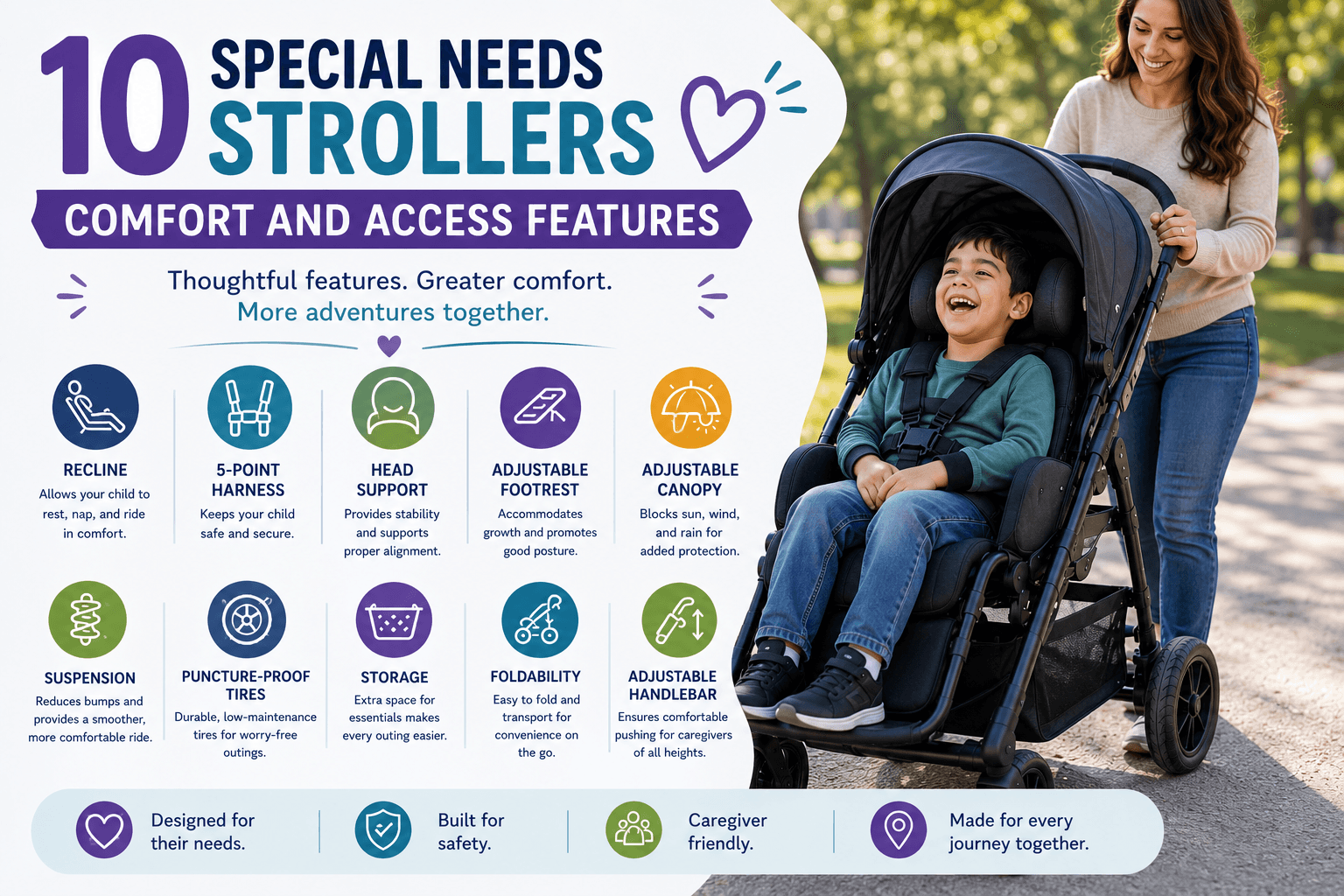
Many special needs strollers include features such as:
- Reclining seating
- Adjustable tilt
- Lateral trunk supports
- Headrests
- Foot positioning systems
- Padded seating
These features help children remain properly positioned and comfortable during extended outings.
Special Tomato EIO Stroller Push Chair - Adaptive Stroller
$921.50
$2,062.05
The Special Tomato EIO Stroller Push Chair is a lightweight adaptive stroller designed to provide comfortable mobility and positioning support from early intervention through preadolescence. Built for children who need more support than a standard stroller, the EIO combines everyday… read more

Reduced Fatigue
Theme park days often involve miles of walking. Even children who can walk independently may become overly tired during long outings.
Special needs strollers allow children to:
- Conserve energy
- Take breaks when needed
- Stay involved in activities longer
- Avoid unnecessary exhaustion
This can make the entire experience more enjoyable for both children and caregivers.
Support for Sensory Needs
Theme parks can be highly stimulating environments. Loud rides, crowds, and constant activity may become overwhelming for children with sensory sensitivities.
Adaptive strollers can provide:
- A familiar seating environment
- A calming space during overstimulation
- Sun canopies for visual reduction
- Recline options for relaxation
Having a secure and predictable seating space can help children feel more regulated throughout the day.
Easier Navigation Through Crowds
Special needs strollers are often designed with improved maneuverability and durability for busy public spaces.
Helpful features may include:
- Larger wheels
- Smooth steering
- Suspension systems
- Lightweight frames
- Easy folding mechanisms
These features can help caregivers move through crowded walkways and long park routes more comfortably.
Features to Look for in a Theme Park Adaptive Stroller
Lightweight and Foldable Design
Transportation is an important consideration when visiting a theme park. Many families prefer strollers that:
- Fold quickly
- Fit easily into vehicles
- Are lightweight for loading and unloading
- Store compactly when not in use
Travel-friendly designs can make transitions throughout the day much easier.
Higher Weight Capacities
Many standard strollers are not designed for older children or teens. Adaptive strollers often offer larger seating dimensions and higher weight capacities to support growing children comfortably.
This is especially important during full-day outings where frequent rest breaks are needed.
Durable Wheels and Suspension
Theme parks may include uneven pavement, ramps, outdoor pathways, and long walking distances.
Larger wheels and quality suspension systems help provide:
- Smoother rides
- Better shock absorption
- Easier handling
- Greater comfort over long distances
Sun Protection and Weather Coverage
Outdoor parks often mean long hours in the sun. Many adaptive strollers include:
- Extended canopies
- Weather protection accessories
- Ventilation features
- Optional rain covers
These additions can help children remain more comfortable throughout changing weather conditions.
Planning Ahead for a Better Theme Park Experience
Before visiting a theme park, families may benefit from:
- Reviewing accessibility services
- Checking stroller policies
- Bringing extra positioning supports if needed
- Packing hydration and comfort items
- Scheduling rest breaks throughout the day
Some parks also allow adaptive strollers to be treated as mobility devices, which may provide additional accessibility accommodations.
FAQs
What is a special needs stroller?
A special needs stroller is an adaptive mobility device designed for children or teens who need additional positioning, support, or transportation assistance during daily activities and outings.
Are special needs strollers allowed at theme parks?
Many theme parks allow adaptive strollers, and some parks may classify them as mobility devices. Families should check each park’s accessibility and stroller policies before visiting.
Can older children use adaptive strollers at theme parks?
Yes. Many special needs strollers are designed with larger seating options and higher weight capacities to comfortably support older children and teens during long outings.
What features are most important for theme park use?
Helpful features for theme park visits may include:
- Reclining seating
- Lightweight folding frames
- Large wheels
- Suspension systems
- Sun canopies
- Positioning supports
- Higher weight capacities
These features can improve comfort and make long days easier to manage.
How do adaptive strollers help with sensory needs?
Adaptive strollers can provide a secure and familiar space for children who experience sensory overload. Features like canopies, recline options, and supportive seating may help children remain calmer in crowded or noisy environments.
Are special needs strollers easy to transport?
Many modern adaptive strollers are designed for travel with lightweight frames and compact folding systems that make loading, unloading, and storage easier for families.
Do theme parks offer accommodations for adaptive strollers?
Some parks may provide accessibility accommodations for guests using adaptive strollers. This can vary by location, so families should review the park’s accessibility services before their visit.