Table of Contents
- What Are Sensory Wall Panels?
- Sensory Wall Panels Definition and Purpose
- How Sensory Wall Panels Differ From Other Sensory Room Equipment
- The Therapeutic Benefits of Sensory Wall Panels for Autism
- Supporting Sensory Integration and Self Regulation
- Tactile Stimulation and Fine Motor Skill Development
- Reducing Anxiety and Sensory Overload
- How Occupational Therapists Incorporate Sensory Wall Panels
- Types of Sensory Wall Panels Explained
- Tactile Sensory Wall Panels
- Visual and Fiber Optic Wall Panels
- Interactive and Cause and Effect Wall Panels
- Sensory Wall Toys and Modular Activity Panels
- Outdoor Sensory Wall Panels
- Sensory Wall Panels for Toddlers vs. Older Children vs. Adults
- How to Choose the Right Sensory Wall Panels for Your Child With Autism
- Assessing Your Child's Sensory Profile
- Matching Panel Features to Sensory Needs
- Safety Standards, Materials, and Durability
- Size, Mounting, and Space Planning
- Budget Considerations and Value for Money
- Sensory Wall Panels by Setting
- Sensory Wall Panels for Home Sensory Rooms
- Sensory Wall Panels for Schools and Special Education Classrooms
- Sensory Wall Panels for Therapy Clinics and Pediatric Offices
- Sensory Wall Panels for Adults With Autism or Disabilities
- Top Sensory Wall Panel Picks for Children With Autism
- Installation Tips for Sensory Wall Panels
- DIY vs. Professional Installation
- Combining Sensory Wall Panels With Other Sensory Room Equipment
- FAQs
Sensory wall panels for autism can create an engaging, space saving sensory activity area for children and adults who benefit from tactile exploration, visual input, fine motor practice, cause and effect learning, and predictable sensory routines. Unlike floor based sensory room equipment, wall mounted panels keep activities within reach while leaving open floor space for mobility devices, seating, movement breaks, and caregiver support.
A tactile sensory wall can be as simple as one panel in a bedroom, playroom, classroom, therapy room, or waiting area. It can also become part of a larger autism sensory room that includes calming seating, sensory lighting, sensory motor tools, fidgets, and other interactive equipment.
The best sensory wall panels for autism are selected around the user’s sensory profile, age, reach, interests, physical abilities, room layout, and safety needs. Some people enjoy textured surfaces and hands on fine motor activities. Others may prefer visual panels, spinning elements, lights, marble runs, music features, or calm repetitive actions.
Explore Sensory Wall Panels, Marble Sensory Wall Products, Sensory Room Equipment, Sensory Motor Tools, and Projectors at eSpecial Needs.
What Are Sensory Wall Panels?
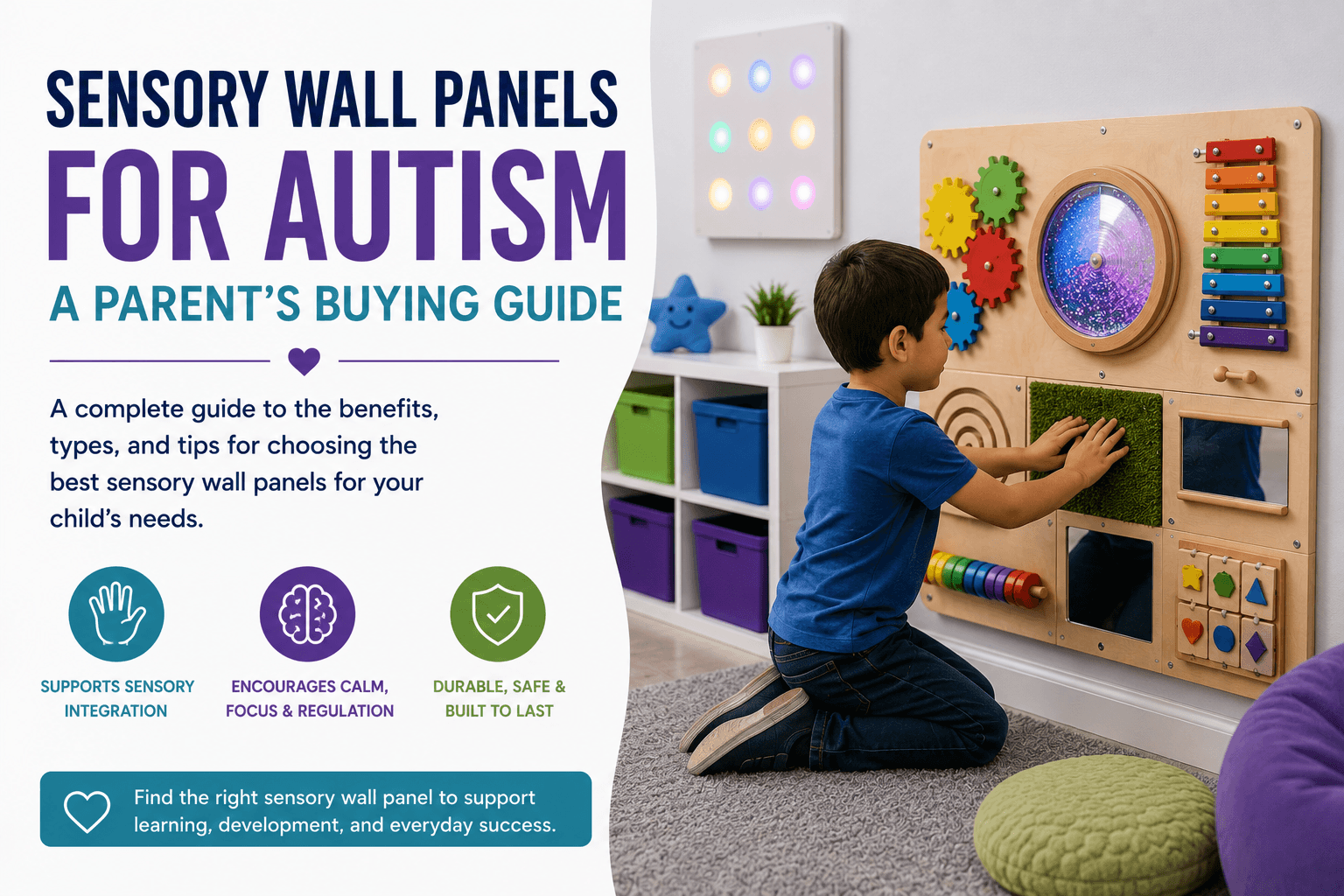
Sensory wall panels are wall mounted activity panels designed to provide tactile, visual, auditory, or interactive sensory input. They may include textures, gears, mirrors, bead tracks, movable pieces, spinning parts, lights, sounds, marble runs, switches, puzzles, and other hands on features.
Because they mount to a wall, sensory wall panels can provide meaningful sensory engagement without taking up much floor space. This makes them especially useful in smaller rooms, classrooms, hallways, therapy clinics, waiting areas, supported living settings, and home sensory corners.
A sensory wall panel may support:
Tactile exploration
Fine motor development
Hand strength
Bilateral coordination
Visual tracking
Cause and effect learning
Focus and attention
Calm engagement
Independent activity
Waiting time support
Sensory breaks
Classroom transitions
Therapy activities
Gears Activity Wall Panel
$299.95
Take a spin with the Gears Activity Wall Panel! This activity wall panel lets kids engineer their own fun as they manipulate the colorful gears across the board. The Gears Wall Panel keeps children engaged while reinforcing hand-eye coordination and… read more

Sensory Wall Panels Definition and Purpose
The purpose of sensory wall panels is to provide structured sensory input through hands on interaction. They can give children and adults a predictable activity that encourages touching, turning, pushing, pulling, sliding, spinning, tracing, sorting, watching, or listening.
For some autistic children, a sensory wall panel may become a preferred calm activity during transitions or after a busy school day. For others, it may provide a safe way to explore movement, texture, and cause and effect without needing a large sensory room setup.
Sensory wall panels for autism are not designed to force a specific response. They are designed to offer sensory choices that may support regulation, engagement, learning, and participation.
How Sensory Wall Panels Differ From Other Sensory Room Equipment
Sensory wall panels differ from many other sensory room products because they are fixed to the wall and designed for vertical interaction. They can be used while standing, sitting, using a wheelchair, or receiving caregiver support.
Other sensory room equipment may include:
Sensory swings
Bubble tubes
Fiber optic lights
Therapy balls
Crash pads
Weighted blankets
Calming seating
Fidget tools
Sensory projectors
Soft play equipment
Those products can be valuable, but they may require more floor space, storage, supervision, or setup. Sensory wall panels can be a practical choice when space is limited or when buyers need a durable activity that multiple people can use throughout the day.
Large Razzle-Dazzle Marble LED Sensory Wall Panel - Visual & Tactile Stimulation
$1,500.00
$1,650.00
The Large Razzle-Dazzle Marble LED Sensory Wall Panel is an interactive sensory wall panel designed to support visual, tactile, and auditory stimulation in sensory rooms, therapy spaces, classrooms, and care environments. With more than 2,000 colored marbles, built-in LED lighting,… read more

The Therapeutic Benefits of Sensory Wall Panels for Autism
Sensory wall panels for autism may support several important areas of development and daily participation. The specific benefits depend on the person, the panel features, and how the panel is used.
Potential benefits may include:
Hands on sensory exploration
Fine motor practice
Improved hand eye coordination
Cause and effect learning
Calm engagement during transitions
More predictable sensory input
Visual tracking
Reaching and upper body movement
Focus during quiet activities
Increased participation in therapy or classroom routines
An alternative activity during waiting periods
Support for self regulation routines
A sensory wall panel is not a replacement for occupational therapy, medical care, or an individualized sensory plan. It can be one useful tool within a broader support plan.
Supporting Sensory Integration and Self Regulation
Sensory wall panels can offer controlled sensory input that is easier to predict than a crowded classroom, noisy play area, or busy household environment. A child may use a spinning panel, textured surface, marble run, or visual feature as part of a calming routine before school, after school, before therapy, or during transitions.
For children who seek tactile or visual input, the panel may provide a structured activity that helps channel hands and attention. For children who avoid unpredictable touch or noise, a quieter tactile sensory wall may offer more control because the child can choose when and how to interact.
The goal is to help the user access sensory input in a way that feels safe, voluntary, and manageable.
Tactile Stimulation and Fine Motor Skill Development
A tactile sensory wall can support hands on exploration through different textures, movable parts, latches, sliders, gears, beads, mirrors, or shape activities. These features may encourage children to use fingers, wrists, hands, and both sides of the body together.
Tactile panels may support:
Pincer grasp
Finger isolation
Reaching
Hand strength
Wrist movement
Bilateral coordination
Visual motor coordination
Fine motor control
Problem solving
Attention to task
Sensory wall toys can be especially helpful for children who enjoy manipulating small objects, tracing paths, turning gears, moving beads, or opening and closing features.
Reducing Anxiety and Sensory Overload
A predictable sensory activity can be helpful when a child or adult feels overwhelmed by noise, crowds, changes in routine, or too much activity. Sensory wall panels may provide a familiar place to focus attention and take a break.
For example, a child may use a wall panel:
Before entering a busy classroom
After recess
While waiting for an appointment
During a transition between activities
Before a therapy session
During a calm down routine
After a difficult outing
Before bedtime in a home sensory space
A sensory panel should not be used as a punishment or isolation tool. It works best as a voluntary, supportive option within a calm and respectful environment.
How Occupational Therapists Incorporate Sensory Wall Panels
Occupational therapists may use sensory wall panels during sessions to support fine motor activities, reaching, hand eye coordination, sensory exploration, bilateral hand use, visual tracking, or cause and effect learning.
An OT may recommend a wall panel for home or school carryover when a child benefits from repeated practice in familiar settings. The therapist may also suggest panel placement, height, activity type, and how the panel can fit into a sensory routine.
An occupational therapist can be particularly helpful when choosing panels for children or adults with:
Limited mobility
Reduced hand strength
Visual impairment
Complex sensory needs
Safety concerns
Difficulty reaching
Wheelchair use
Communication needs
Significant developmental delays
Types of Sensory Wall Panels Explained
Sensory wall panels come in many styles. The right type depends on the user’s sensory interests, motor abilities, space, supervision needs, and intended setting.
Tactile Sensory Wall Panels
Tactile sensory wall panels are designed around touch, texture, and hands on interaction. They may include soft, rough, smooth, bumpy, ridged, flexible, or patterned surfaces.
Common tactile features include:
Textured materials
Bead tracks
Spinners
Gears
Sliding pieces
Shape paths
Touch boards
Mirror sections
Latches
Buttons
Sensory tiles
Fabric elements
Tactile puzzles
A tactile sensory wall can be useful for children who enjoy exploring with their hands or need practice with fine motor coordination.
Visual and Fiber Optic Wall Panels
Visual sensory panels may use lights, color, mirrors, reflective surfaces, moving elements, or interactive features to create visual interest. Some visual products are wall mounted, while others may be placed nearby as part of a larger sensory room.
Visual features may support:
Visual tracking
Calm focus
Cause and effect learning
Attention
Light exploration
Predictable visual routines
When selecting visual panels, think about whether the user prefers gentle, low stimulation light or more interactive visual activity. Avoid assuming that bright lights are always helpful. Some users may prefer simple, consistent visual input.
Interactive and Cause and Effect Wall Panels
Interactive sensory wall panels respond when the user touches, pushes, moves, turns, slides, or activates part of the panel. These panels can help teach that an action creates a result.
Cause and effect panels may include:
Buttons that activate a feature
Spinning components
Gear systems
Sliding objects
Marble runs
Musical elements
Lights
Mirrors
Moving shapes
Push and pull components
These sensory wall toys can encourage engagement, communication, problem solving, and repeated practice.
Sensory Wall Toys and Modular Activity Panels
Sensory wall toys are smaller wall mounted activities that may be used alone or grouped together to create a larger sensory wall. Modular activity panels can often be arranged based on the room layout, user height, available wall space, and sensory goals.
Modular options may be helpful for:
Hallways
Waiting areas
Classrooms
Therapy rooms
Playrooms
Bedrooms
Small sensory corners
Shared community spaces
A modular setup can be expanded gradually as budget and space allow.
Outdoor Sensory Wall Panels
Outdoor sensory wall panels are designed for playgrounds, courtyards, garden spaces, schools, parks, and outdoor therapy areas. They may provide tactile, visual, musical, or interactive activities while encouraging outdoor play and social participation.
Outdoor sensory wall panels should be chosen with attention to:
Weather resistance
Mounting requirements
Surface stability
Cleaning needs
Supervision
Heat exposure
Accessibility
Height and reach
Durability
User age range
Outdoor panels can be a useful addition to inclusive playgrounds or school activity areas because they create an accessible sensory option for children who may not use traditional climbing equipment or fast paced playground games.
Sensory Wall Panels for Toddlers vs. Older Children vs. Adults
The best panel type changes depending on age, reach, interests, hand skills, strength, supervision needs, and developmental goals.
Sensory Wall Panels for Toddlers
Sensory wall panels for toddlers should use large, durable, age appropriate features with no small removable pieces. Toddlers may enjoy:
Simple bead tracks
Large spinners
Mirrors
Texture boards
Large sliders
Easy push and pull features
Bright but not overwhelming visual elements
Simple cause and effect activities
Panels should be mounted at a height that supports safe supervised access.
Sensory Wall Panels for Older Children
School age children may enjoy more complex sensory wall toys that involve patterns, puzzles, marble runs, gears, fine motor tasks, music, or interactive movement.
Helpful features may include:
Detailed bead tracks
Gear panels
Magnetic activities
Musical panels
Latch boards
Pattern matching
Cause and effect activities
Interactive visual elements
Collaborative wall games
Sensory Wall Panels for Adults
Sensory wall panels for adults should reflect adult comfort, reach, mobility, strength, privacy, and sensory preferences. Adults may benefit from calming tactile panels, visual wall features, music elements, simple repetitive activities, and durable interactive panels.
Sensory wall panels for adults may be useful in:
Supported living homes
Group homes
Adult day programs
Rehabilitation settings
Community centers
Behavioral health programs
Residential care settings
Private homes
Adults should be involved in choosing colors, textures, sounds, panel height, and the type of activities that feel comfortable and respectful.
How to Choose the Right Sensory Wall Panels for Your Child With Autism
Choosing sensory wall panels for autism starts by thinking about your child’s sensory preferences and daily routines. The best panel is not always the one with the most features. It is the one your child can access safely and will actually use.
Ask:
Does my child seek touch, movement, visual input, sound, or fine motor activities?
Does my child avoid certain textures, sounds, or bright lights?
Will the panel be used for calm breaks, active play, therapy, waiting periods, or classroom transitions?
Does my child need seated access?
Does the panel need to be wheelchair accessible?
Is my child drawn to lights, gears, marble runs, mirrors, music, textures, or puzzles?
Will the panel be used independently or with support?
How much wall space is available?
What mounting surface is available?
What is the budget?
Assessing Your Child's Sensory Profile
A sensory profile describes the types of sensory input a child seeks, avoids, tolerates, or finds difficult. Understanding these patterns can help parents choose products that are more likely to fit the child’s needs.
A child who seeks tactile input may enjoy textured panels, bead tracks, gears, and tactile wall toys. A child who seeks visual input may enjoy mirrors, light features, or moving marble runs. A child who becomes overwhelmed by noise may prefer quiet tactile panels without sound effects.
Children can have mixed sensory needs. A child may seek movement but avoid certain textures. Another may enjoy visual input but dislike loud sounds. Choosing one or two panels based on observed preferences may be more helpful than building a large wall all at once.
Matching Panel Features to Sensory Needs
Different panel features can support different sensory preferences and therapy goals.
For Tactile Exploration
Consider:
Textured panels
Touch boards
Bead tracks
Tactile paths
Fabric panels
Sensory tiles
Shape activities
For Fine Motor Practice
Consider:
Gears
Latches
Sliders
Spinners
Bead mazes
Marble runs
Twist and turn activities
For Visual Engagement
Consider:
Mirrors
Light panels
Reflective surfaces
Visual patterns
Moving elements
Fiber optic features
For Cause and Effect Learning
Consider:
Buttons
Moving pieces
Interactive panels
Musical features
Light activated components
Simple switches
Push and pull activities
For Calming Engagement
Consider:
Quiet tactile panels
Soft visual features
Simple repetitive activities
Gentle bead tracks
Smooth textures
Low stimulation mirrors
Safety Standards, Materials, and Durability
Safety should be part of every purchase decision. Before buying sensory wall panels for autism, review the product description, manufacturer instructions, recommended age range, mounting requirements, materials, cleaning guidance, and supervision recommendations.
Look for:
Durable construction
Smooth finished edges
Secure mounting hardware
Non toxic materials when stated by the manufacturer
Easy to clean surfaces
Age appropriate design
No loose small parts for young children
Clear weight or load guidance when relevant
Accessible feature placement
Sturdy moving components
Replacement part availability when needed
Follow the manufacturer’s installation instructions. Do not modify panels or mounting hardware unless approved by the manufacturer or a qualified installer.
Size, Mounting, and Space Planning
Before choosing a panel, measure the available wall area and consider who will use it.
Important planning questions include:
How high should the panel be mounted?
Will the user access it while standing, sitting, or using a wheelchair?
Does the panel need caregiver access?
Is the wall strong enough for the mounting system?
Are there electrical outlets or switches nearby?
Is the panel near a doorway, walkway, or emergency exit?
Will the area stay clear of furniture?
Is there enough room for more than one child to use the panel?
Does the wall location support supervision?
For home use, a panel may fit in a bedroom, playroom, hallway, or living area. In schools and clinics, wall panels can be placed in calm corners, hallways, therapy rooms, waiting spaces, or activity areas.
Budget Considerations and Value for Money
Sensory wall panel prices can vary based on size, materials, number of features, durability, mounting needs, visual or interactive elements, and whether the product is designed for home or institutional use.
When comparing options, consider:
How often the panel will be used
Number of users
Whether the product can grow with the child
Whether the panel supports more than one skill area
Cleaning and maintenance needs
Installation costs
Durability
Available warranty
Whether it can be added to later
Whether it fits the existing sensory room
A simple tactile panel may be more useful than a larger interactive option if it matches the child’s strongest interests and can be used daily.
Sensory Wall Panels by Setting
The right sensory wall panel can vary based on where it will be used. A bedroom sensory corner, classroom, clinic, waiting area, outdoor space, and adult program may all need different features.
Sensory Wall Panels for Home Sensory Rooms
At home, families often need panels that fit into smaller spaces and can be used during everyday routines. A home tactile sensory wall may be placed in a playroom, bedroom, hallway, or calm corner.
Good home features may include:
Compact design
Quiet activities
Simple tactile elements
Easy cleaning
Straightforward mounting
Child friendly materials
Options for gradual expansion
Flexible placement
Minimal floor space use
A home sensory room does not need to be large. One well chosen panel, calming seating, and a few portable sensory products can create a meaningful support space.
Sensory Wall Panels for Schools and Special Education Classrooms
Sensory wall panels for schools should be durable, easy to clean, accessible for multiple students, and suitable for regular use throughout the school day.
Schools may benefit from panels that support:
Fine motor stations
Calm down spaces
Hallway activities
Transition support
Waiting time engagement
IEP goals
Occupational therapy activities
Inclusive classroom play
Multi student use
School teams should consider mounting height, student age range, hallway traffic, supervision, cleaning procedures, accessibility, and whether the panel can be used by students with different mobility levels.
Sensory Wall Panels for Therapy Clinics and Pediatric Offices
Therapy clinics and pediatric offices may use sensory wall panels to provide structured activity during appointments, therapy sessions, and waiting periods.
Clinical settings may benefit from panels that support:
Fine motor practice
Reaching and upper body movement
Cause and effect learning
Visual motor activities
Tactile exploration
Waiting room engagement
Therapy carryover
Multi user durability
Clinics should prioritize durable construction, easy cleaning, accessible placement, and features that can support a range of ages and abilities.
Sensory Wall Panels for Adults With Autism or Disabilities
Sensory wall panels for adults should be selected around adult sensory needs, body size, mobility access, and personal preferences. Adults may benefit from calming visual panels, tactile activities, music features, simple repetitive movements, or interactive wall elements.
A sensory wall panel for adults may be especially useful in supported living settings where residents need a quiet place for sensory breaks, leisure activities, or calming routines.
Consider:
Adult appropriate design
Wheelchair access
Mounting height
Strength and reach
Noise level
Privacy
Ease of cleaning
Durability
Staff support needs
Personal choice
Top Sensory Wall Panel Picks for Children With Autism
The best sensory wall panels for autism depend on the child’s needs. Rather than choosing based only on appearance, choose the type of panel that supports the child’s strongest interests and practical goals.
Best Tactile Wall Panels for Home Use
Tactile panels are often a strong choice for home sensory spaces because they can provide quiet, hands on activity without requiring a large room.
Look for panels with:
Textured surfaces
Bead tracks
Sliders
Gears
Mirrors
Large simple moving parts
Easy cleaning
Compact wall mounting
These features can support touch exploration, fine motor practice, and calm engagement.
Best Interactive Sensory Wall Panels for Classrooms
Interactive panels can work well in classrooms because they may engage more than one student and support structured activities during transitions, indoor recess, therapy time, or quiet work periods.
Look for:
Durable construction
Multiple activity features
Cause and effect components
Fine motor tasks
Easy to clean materials
Accessible mounting options
Low noise features when possible
Space for multiple users
Best Outdoor Sensory Wall Panels
Outdoor sensory wall panels should be designed for weather exposure, frequent use, and outdoor safety needs.
Look for:
Weather resistant materials
Secure mounting options
Easy cleaning
Large accessible features
Durable moving parts
Low maintenance design
Suitable height for intended users
Accessible pathways nearby
Outdoor panels can provide an inclusive sensory activity for children who may not be comfortable using climbing structures, swings, or high movement playground equipment.
Installation Tips for Sensory Wall Panels
Correct installation is essential for safety and long term use. Always review the product instructions before installation.
General planning tips include:
Confirm wall type before drilling
Use the manufacturer recommended mounting hardware
Mount the panel at an accessible height
Keep the area around the panel clear
Avoid mounting near door swings or emergency exits
Check that all components move properly after installation
Inspect screws and hardware regularly
Follow cleaning guidance
Supervise use when required
Do not exceed manufacturer recommendations
For larger or heavier panels, it may be helpful to work with a qualified installer or facilities professional.
DIY vs. Professional Installation
Some smaller sensory wall toys may be appropriate for home installation when the product includes clear mounting instructions and the wall surface can safely support the panel.
Professional installation may be a better choice when:
The panel is large or heavy
The wall requires special anchoring
Multiple panels are being installed
The setting is a school, clinic, or public space
Accessibility placement is important
Electrical components are involved
The panel will receive frequent multi user use
You are unsure whether the wall can support the equipment
When in doubt, choose the safer installation option.
Combining Sensory Wall Panels With Other Sensory Room Equipment
Sensory wall panels can work well as one part of a larger sensory room. They are especially useful because they add tactile and interactive activity while preserving floor space for other sensory equipment.
A balanced autism sensory room may include:
Sensory wall panels for tactile and fine motor activity
Bubble tubes or projectors for visual calming
Calming seating for quiet breaks
Fidget tools for portable sensory support
Therapy balls or balance tools for movement
Weighted lap pads for seated routines
Sensory motor tools for active play
Storage for organized access to smaller items
Explore Sensory Wall Panels, Marble Sensory Wall Products, Sensory Room Equipment, Sensory Motor Tools, and Projectors to build a sensory space that fits your home, school, clinic, or care setting.
FAQs
What are sensory wall panels?
Sensory wall panels are wall mounted activity boards designed to provide tactile, visual, auditory, or interactive sensory input. They may include textures, gears, bead tracks, mirrors, sliders, spinners, marble runs, lights, music features, or other hands on activities.
Sensory wall panels can be used in homes, classrooms, therapy clinics, waiting rooms, supported living settings, and sensory rooms.
How do sensory wall panels help autistic children?
Sensory wall panels for autism may provide predictable hands on activities that support tactile exploration, fine motor skills, visual tracking, cause and effect learning, calm engagement, and sensory breaks.
Some children may use a wall panel during transitions, after school, before therapy, while waiting, or as part of a calm down routine. The right panel depends on the child’s sensory preferences, physical abilities, and daily needs.
Are sensory wall panels only for autism?
No. Sensory wall panels may be useful for children and adults with sensory processing differences, developmental disabilities, ADHD, cerebral palsy, intellectual disabilities, fine motor challenges, communication needs, anxiety, or mobility limitations.
They can also be used in inclusive classrooms, pediatric offices, therapy rooms, day programs, and community spaces.
What is the difference between sensory wall panels and other sensory room equipment?
Sensory wall panels are mounted vertically on a wall, which helps save floor space and makes them useful for smaller rooms, hallways, waiting areas, classrooms, and therapy spaces.
Other sensory room equipment may include swings, bubble tubes, therapy balls, crash pads, sensory seating, weighted products, projectors, and fidget tools. Wall panels are often a good choice when buyers need a durable interactive activity without adding clutter to the floor.
Are tactile sensory wall panels good for fine motor skills?
Yes. Many tactile sensory wall panels include features such as beads, gears, spinners, sliders, latches, moving shapes, and tracing paths. These activities may support pincer grasp, finger isolation, wrist movement, reaching, hand strength, bilateral coordination, and visual motor skills.