Table of Contents
- What Is a Sensory Wall and How Does It Work?
- The Role of Sensory Walls in Autism and Sensory Processing Disorder
- How Sensory Walls Differ From Full Sensory Rooms
- Who Can Benefit From a DIY Sensory Wall?
- Key Benefits of a DIY Sensory Wall for Autism at Home
- Supports Sensory Regulation and Reduces Overload
- Encourages Fine and Gross Motor Skill Development
- Promotes Independent, Child Led Exploration
- Provides a Calming and Safe Space at Home
- Cost Effective Alternative to Full Sensory Room Setups
- Planning Your DIY Sensory Wall: What to Consider First
- Assessing Your Child's Sensory Needs and Preferences
- Choosing the Right Wall Space: Indoors vs. Outdoors
- Setting a Budget for Your DIY Sensory Board
- Safety Standards and Child Proofing Essentials
- Essential Materials for Building a DIY Sensory Wall
- Tactile Materials: Textures, Fabrics, and Surfaces
- Visual Elements: Colors, Mirrors, and Light Features
- Interactive Components: Locks, Zippers, Switches, and Fidgets
- Mounting Hardware and Wall Safe Adhesives
- Top DIY Sensory Wall Ideas for Autism at Home
- Tactile Texture Panel Wall
- Visual Stimulation and Light Sensory Board
- Interactive Busy Board for Cause and Effect Learning
- Deep Pressure and Calming Fidget Wall
- Sound Based Sensory Wall With Musical Elements
- Nature Inspired Outdoor Sensory Wall Ideas
- DIY Sensory Wall Ideas by Age and Setting
- DIY Sensory Wall for Babies
- DIY Sensory Wall for Toddlers
- Sensory Wall Ideas for Preschool
- Sensory Wall Ideas for School Age Children With Autism
- Sensory Wall Ideas for Adults
- Sensory Wall for Classroom Settings
- Step by Step Guide: How to Build a DIY Sensory Wall for Autism
- Step 1: Plan Your Layout and Select Sensory Zones
- Step 2: Gather and Prepare Your Materials
- Step 3: Mount Your Base Board or Panel Safely
- Step 4: Attach Sensory Elements and Test for Safety
- Step 5: Introduce the Wall Gradually
- Tips for Maintaining and Evolving Your Sensory Wall Over Time
- When to Rotate or Replace Sensory Elements
- Involving Your Child's Occupational Therapist in the Design
- DIY Sensory Wall vs. Professional Sensory Wall Panels
- Advantages of Pre Made Sensory Wall Panels
- How to Shop for Sensory Wall Panels and Sensory Integration Tools
- FAQs
A diy sensory wall for autism can help families create a calming, engaging, and practical sensory space at home without needing a full sensory room. With the right textures, interactive pieces, visual elements, and safety planning, a sensory wall can support tactile exploration, fine motor practice, cause and effect learning, sensory regulation, and child led play.
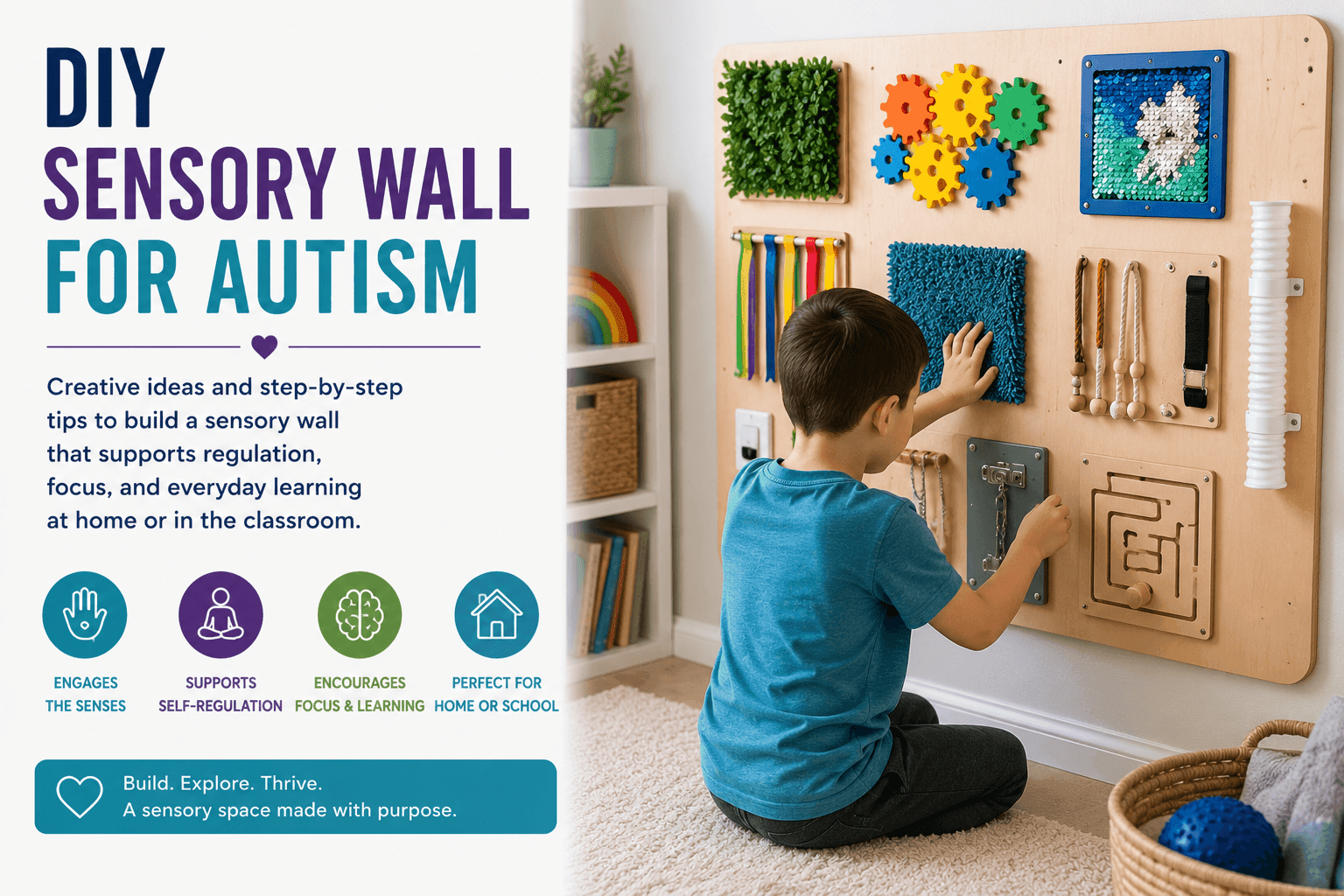
A sensory board for autism can be as simple as a small mounted panel with soft textures, zippers, mirrors, and fidgets. It can also become a larger diy sensory wall with separate zones for touch, movement, calming input, visual exploration, sound, and problem solving. The best sensory wall ideas for autism are not based on how many items you add. They are based on the child’s sensory profile, developmental stage, safety needs, interests, and daily routines.
Families often choose a diy sensory wall because it is more affordable and flexible than building an entire sensory room. A wall mounted design can fit in a bedroom, playroom, hallway, therapy corner, preschool classroom, or outdoor play space. It can also grow with the child as their preferences and skills change.
Explore Sensory Wall Panels, Sensory Room Equipment, Sensory Motor Tools, Sensory Products, and Tactile Stimulation Products at eSpecial Needs.
What Is a Sensory Wall and How Does It Work?
A sensory wall is a wall mounted sensory activity area designed to engage one or more senses through touch, sight, sound, movement, pressure, and hands on interaction. It may include textures, mirrors, lights, fidgets, switches, fabric, latches, zippers, bead tracks, spinners, gears, music elements, and other interactive materials.
A diy sensory wall works by giving a child a predictable place to access sensory input. Instead of keeping sensory toys and tools scattered around the room, a wall keeps them organized, visible, and easy to use.
A sensory wall may support:
- Tactile exploration
- Fine motor skills
- Hand eye coordination
- Cause and effect learning
- Visual tracking
- Auditory exploration
- Calming routines
- Sensory breaks
- Independent play
- Motor planning
- Reaching and standing
- Body awareness
- Self regulation
For children with autism, a sensory board for autism may become part of daily routines before school, after school, before bedtime, during transitions, or when the child needs a break from noise, crowds, or busy activities.
The Role of Sensory Walls in Autism and Sensory Processing Disorder
Children with autism or sensory processing disorder may respond to sensory input differently. Some children seek more input through movement, touch, pressure, lights, sounds, or repetitive actions. Others avoid certain textures, noises, visual stimulation, or unexpected sensations.
A diy sensory wall for autism can be designed around these needs. A child who seeks touch may enjoy textured panels, fabric squares, bead paths, and fidget pieces. A child who seeks visual input may enjoy mirrors, color blocks, light features, or moving pieces. A child who becomes overwhelmed easily may do better with soft textures, fewer colors, gentle repetitive activities, and a calm layout.
Sensory wall ideas for autism may help support:
- Sensory regulation
- Predictable sensory input
- Fine motor development
- Focused engagement
- Calm down routines
- Transition support
- Independent sensory breaks
- Therapy carryover at home
- Child led exploration
- More accessible sensory play
A sensory wall should never be used to force participation. It works best when the child can approach, explore, pause, and leave as needed.
HABA Pro Wall Ball Track Activity - Sensory Room Equipment
$326.30
The HABA Pro Wall Ball Track Activity (H1120262001) is a premium sensory wall panel designed to engage children in interactive play while developing essential cognitive and motor skills. This German-engineered activity track transforms any wall into an exciting learning environment,… read more

How Sensory Walls Differ From Full Sensory Rooms
A sensory room is usually a dedicated room filled with sensory equipment such as bubble tubes, swings, crash pads, lighting, seating, projectors, mats, and tactile tools. A sensory wall is smaller and usually takes up only one wall or one section of a room.
A diy sensory wall may be a better starting point for families who have limited space, limited budget, or a need for a simple sensory support area.
Sensory Wall
- Uses less floor space
- Can fit in a bedroom, playroom, hallway, classroom, or therapy corner
- Can be built gradually
- Often costs less than a full sensory room
- Easy to customize
- Good for tactile and fine motor activities
- Can support home routines
- Can be paired with portable sensory tools
Full Sensory Room
- Offers a larger sensory environment
- Can include lighting, movement, seating, and gross motor tools
- Requires more space
- Usually costs more
- May need more planning
- Often used in schools, clinics, therapy centers, and larger homes
Families do not need a full sensory room to create meaningful sensory support. A well planned diy sensory wall can be a practical first step.
TFH Large Textured Tactile Wall
$2,299.00
The TFH Large Textured Tactile Wall allows kids to explore, play, learn, and discover new things. This tactile sensory wall is satisfying and soothing for fidgeting. Ideal for users who may have sensory processing difficulties. Features Fifteen different textures that… read more

Who Can Benefit From a DIY Sensory Wall?
A diy sensory wall for autism can benefit children, toddlers, babies, teens, and adults when the design is safe, age appropriate, and matched to sensory needs.
Potential users include:
- Babies under close supervision
- Toddlers with sensory needs
- Preschool children
- School age children
- Teens with autism
- Adults with autism
- Adults with sensory processing needs
- Children with developmental delays
- Children with fine motor delays
- Children with ADHD
- Children with cerebral palsy
- Individuals with intellectual disabilities
- Therapy clients
- Classroom students
- Care setting residents
The design should change based on the user. A diy sensory wall for babies should use soft, safe, high contrast, non removable elements. A diy sensory wall for toddlers should use durable, larger, securely mounted pieces. A sensory wall for preschool should support early learning, group use, and easy cleaning. Sensory wall ideas for adults should feel calming, respectful, functional, and age appropriate.
Large Razzle-Dazzle Marble LED Sensory Wall Panel - Visual & Tactile Stimulation
$1,500.00
$1,650.00
The Large Razzle-Dazzle Marble LED Sensory Wall Panel is an interactive sensory wall panel designed to support visual, tactile, and auditory stimulation in sensory rooms, therapy spaces, classrooms, and care environments. With more than 2,000 colored marbles, built-in LED lighting,… read more

Key Benefits of a DIY Sensory Wall for Autism at Home
A diy sensory wall for autism can be helpful because it gives families control over the design, budget, size, materials, and sensory focus. You can start small and update the wall over time.
Supports Sensory Regulation and Reduces Overload
A sensory wall may help some children access calming input before they become overwhelmed. For example, a child may use a soft texture, slow spinner, familiar fidget, or visual focus item during transitions, after school, before bedtime, or after a noisy activity.
A diy sensory wall may support regulation by offering:
- Predictable activities
- A familiar sensory location
- Controlled sensory choices
- Repetitive movements
- Tactile input
- Visual focus
- Calming routines
- A break from busy environments
A sensory wall does not guarantee fewer meltdowns, and it should not be described as a cure. It can be one supportive tool within a broader plan that may include communication supports, sensory breaks, routines, therapy strategies, and caregiver observation.
Paradiddle Percussion Activity Wall Panel
$856.95
Explore rhythm and sound as your child creates their own musical masterpiece on our new Paradiddle Percussion Busy Board. This wall panel comes jam-packed with lots of ways to "jam," such as bells, drum panels, a xylophone, and much more.… read more

Encourages Fine and Gross Motor Skill Development
Many sensory wall ideas diy families use naturally encourage reaching, grasping, pushing, pulling, twisting, sliding, tracing, and turning. These actions can support hand skills, coordination, and motor planning.
Fine motor skills may be supported through:
- Zippers
- Buttons
- Latches
- Spinners
- Beads
- Textured paths
- Switches
- Velcro pieces
- Knobs
- Locks
- Shape matching
- Finger tracing
Gross motor skills may be supported through:
- Reaching upward
- Standing at the wall
- Squatting to lower panels
- Side stepping along the wall
- Crossing the midline
- Using both hands together
- Weight shifting
- Moving between sensory zones
Place elements at different heights only when safe and appropriate for the child’s abilities.
Gears Activity Wall Panel
$299.95
Take a spin with the Gears Activity Wall Panel! This activity wall panel lets kids engineer their own fun as they manipulate the colorful gears across the board. The Gears Wall Panel keeps children engaged while reinforcing hand-eye coordination and… read more

Promotes Independent, Child Led Exploration
A sensory board for autism can encourage the child to choose what they want to touch, move, or explore. This can support independence, curiosity, problem solving, communication, and confidence.
Child led exploration may include:
- Choosing a favorite texture
- Repeating a calming movement
- Discovering how a latch works
- Turning a gear
- Pressing a switch
- Watching a light change
- Moving from one sensory zone to another
- Communicating preferences through gestures, words, AAC, or behavior
Parents can observe which pieces the child returns to most often. Those preferences can guide future updates to the diy sensory wall.
Provides a Calming and Safe Space at Home
A diy sensory wall can become part of a calm corner, sensory break area, bedroom routine, or playroom setup. The space does not need to be large. A small wall section with soft textures, quiet fidgets, a mirror, a cushion nearby, and soft lighting may be enough for some children.
A calming sensory wall area may include:
- Soft tactile panels
- Quiet fidgets
- Visual focus items
- A cozy seat nearby
- A weighted lap pad when appropriate
- Low lighting
- A visual schedule
- A calm down card
- Noise reducing headphones nearby
- Simple communication supports
Keep the wall organized. Too many colors, sounds, lights, or moving pieces can make the wall overstimulating for some children.
Learning Advantage Crocodile Activity Wall Panel
$199.95
The Learning Advantage Crocodile Activity Wall Panel (model# 50346) features 8 different puzzles and effects. Children will be fascinated by the colorful, tactile manipulatives on this engaging crocodile! Develop motor, collaborative play, communication, language and early math skills. Comes as… read more

Cost Effective Alternative to Full Sensory Room Setups
A diy sensory wall for autism can be more affordable than building a full sensory room. Families can begin with one sensory board and a few carefully chosen materials, then add more elements over time.
Budget friendly materials may include:
- Fabric scraps
- Felt
- Faux fur
- Foam pieces
- Carpet squares
- Large buttons
- Velcro
- Zippers
- Ribbon
- Plastic chains
- Spinners
- Latches
- Child safe mirrors
- Large textured tiles
- Silicone fidgets
- Bead tracks
- Repurposed household items when safe
Safety should always come before cost. Avoid small loose parts, sharp edges, choking hazards, weak adhesives, toxic materials, breakable pieces, and anything that can detach easily.
Locks & Latches Busy Board Sensory Activity Panel
$249.95
The new Locks and Latches Busy Board from eSpecial Needs is loaded with motor skill developing activities that children with want to explore again and again. Featuring solid plywood construction and rust-proof hardware, each activity teaches children an everyday skill… read more

Planning Your DIY Sensory Wall: What to Consider First
Before building a diy sensory wall, think through your child’s sensory needs, the available wall space, your budget, safety risks, supervision, and whether the wall will be used at home, outside, or in a classroom.
Assessing Your Child's Sensory Needs and Preferences
Start by observing what your child seeks, avoids, enjoys, or becomes distressed by.
Ask:
- Does my child enjoy textures?
- Does my child avoid certain fabrics or surfaces?
- Does my child like lights or find them overwhelming?
- Does my child enjoy repetitive movement?
- Does my child seek deep pressure?
- Does my child like sound or become distressed by noise?
- Does my child enjoy opening, closing, twisting, or spinning objects?
- Does my child chew on objects?
- Does my child pull forcefully on toys or furniture?
- Does my child need a calming area or an active area?
- Does my child use a wheelchair or need seated access?
- Does my child need close supervision?
A sensory wall should reflect your child’s actual preferences, not just popular sensory wall ideas for autism.
Choosing the Right Wall Space: Indoors vs. Outdoors
Indoor DIY Sensory Wall
Indoor sensory walls are easier to control and maintain. They may work well in:
- Bedrooms
- Playrooms
- Hallways
- Therapy corners
- Living rooms
- Basements
- Classrooms
- Waiting areas
Choose a wall where your child can access the activities safely and where an adult can supervise when needed.
Outdoor Sensory Wall Ideas
Outdoor sensory wall ideas can support nature based sensory play, movement, fresh air, and outdoor exploration. They may work well on:
- Fences
- Patio walls
- Garden walls
- Outdoor play areas
- Outdoor classroom spaces
- Covered porches
Outdoor materials must be weather resistant, securely mounted, easy to clean, and safe in heat, cold, wind, and moisture. Avoid materials that can rust, splinter, overheat, fade quickly, or become slippery.
Setting a Budget for Your DIY Sensory Board
A sensory board for autism can be simple or detailed. Set a budget before purchasing materials so the project stays manageable.
Budget categories may include:
- Base board or wall panel
- Mounting hardware
- Tactile materials
- Interactive components
- Visual elements
- Fidgets
- Safety materials
- Cleaning supplies
- Replacement pieces
- Optional lighting
- Professional help if needed
Start with the most useful sensory goal first. If your child seeks tactile input, invest in safe textures and interactive touch pieces before adding lights or sound.
Safety Standards and Child Proofing Essentials
Safety is the most important part of any diy sensory wall for autism.
Check for:
- Secure mounting
- No choking hazards
- No sharp edges
- No loose screws
- No splinters
- Non toxic materials when possible
- Age appropriate pieces
- Strong attachment points
- No cords or strangulation hazards
- No small magnets
- No breakable glass
- No exposed batteries
- No heavy objects that can fall
- No pinch points
- Easy cleaning
- Supervision needs
Test every piece by pulling, twisting, pressing, and tapping it before allowing the child to use the wall. Inspect the wall often.
Essential Materials for Building a DIY Sensory Wall
A diy sensory wall can include tactile, visual, auditory, interactive, calming, and movement based elements. Choose materials that match the user’s needs and are safe for their age and abilities.
Tactile Materials: Textures, Fabrics, and Surfaces
Tactile materials are often the foundation of sensory wall panels diy projects. They invite touch and can support sensory exploration.
Ideas include:
- Felt
- Fleece
- Faux fur
- Smooth fabric
- Corduroy
- Velvet
- Foam
- Silicone textures
- Carpet squares
- Textured tiles
- Soft brushes
- Large textured mats
- Rubber grip pads
- Raised pattern surfaces
Avoid materials that shed, fray, break apart, or create choking hazards.
Visual Elements: Colors, Mirrors, and Light Features
Visual elements can support attention, tracking, visual engagement, and calm focus. Keep the wall visually organized so it does not become overwhelming.
Ideas include:
- High contrast patterns
- Child safe mirrors
- Reflective surfaces
- Color blocks
- Shape panels
- Visual tracking paths
- Secure push lights
- Glow strips
- Picture cards
- Color matching pieces
- Simple visual timers
For children who are visually sensitive, choose softer colors and fewer light based elements.
Interactive Components: Locks, Zippers, Switches, and Fidgets
Interactive components can support fine motor skills, cause and effect learning, and problem solving.
Ideas include:
- Zippers
- Large buttons
- Velcro strips
- Latches
- Door chains
- Spinners
- Gears
- Wheels
- Large switches
- Push lights with secure battery covers
- Fidget panels
- Buckles
- Snap straps
- Bead mazes
- Sliding pieces
- Textured knobs
Avoid complex locks that pinch fingers or cause frustration. Choose pieces that match the child’s current hand skills.
Mounting Hardware and Wall Safe Adhesives
The right mounting method depends on the wall type, board weight, and how forcefully the user may pull or push on the elements.
Possible mounting options include:
- Wall anchors
- Screws into studs
- French cleats
- Heavy duty picture hanging systems
- Mounting brackets
- Hook and loop strips for very lightweight pieces
- Removable adhesive strips for small, light items only
Do not rely on weak adhesives for heavy boards or pieces a child may pull. When unsure, ask a qualified installer or handyman for help.
Top DIY Sensory Wall Ideas for Autism at Home
These sensory wall ideas diy families can use are flexible. You do not need to build every section. Choose the ideas that fit your child’s needs, age, interests, and safety level.
Tactile Texture Panel Wall
A tactile texture panel wall focuses on touch. Create a series of small panels with different textures and place them at the user’s reach level.
Texture ideas include:
- Soft fleece
- Bumpy silicone
- Smooth satin
- Rough carpet
- Raised foam
- Corduroy strips
- Velcro patches
- Felt shapes
- Rubber grips
- Textured mats
This type of diy sensory wall may help children who seek touch input or benefit from tactile exploration.
Visual Stimulation and Light Sensory Board
A visual sensory board can include colors, shapes, mirrors, and lights. Keep it simple if your child becomes overwhelmed by too much visual input.
Ideas include:
- High contrast cards
- Child safe mirror
- Color matching sections
- Reflective surfaces sealed behind clear plastic
- Secure push lights
- Glow strips
- Visual tracking maze
- Color wheels
- Simple switches
- Picture based activity prompts
Always secure batteries and avoid exposed wiring.
Interactive Busy Board for Cause and Effect Learning
A busy board can help children practice fine motor skills, motor planning, cause and effect, and problem solving.
Ideas include:
- Latches
- Hinges
- Zippers
- Buckles
- Sliding locks
- Spinners
- Wheels
- Switches
- Doorstops
- Large beads on a fixed track
- Velcro matching pieces
- Flip doors with pictures underneath
Use large, durable parts and check regularly for loose screws or damage.
Deep Pressure and Calming Fidget Wall
A calming fidget wall can provide repetitive, soothing hand activities. This type of sensory board for autism may work well in a calm corner.
Ideas include:
- Silicone fidget strips
- Soft squeeze pads attached securely
- Textured hand pads
- Slow moving spinners
- Smooth stones secured in a panel
- Fabric flaps
- Soft brush panel
- Stretchy resistance bands secured safely
- Weighted lap pad nearby
- Compression pillow nearby
Avoid anything that can wrap around the neck, fingers, or limbs.
Sound Based Sensory Wall With Musical Elements
Sound can be helpful for some children and overwhelming for others. Keep sound elements optional and predictable.
Ideas include:
- Small drums mounted securely
- Chimes with short cords or no loose cords
- Bells attached safely
- Rainstick style panel sealed securely
- Xylophone panel
- Sound buttons with secure batteries
- Texture pieces that make soft sounds
- Tap and rhythm boards
For noise sensitive users, choose quieter sound elements or create a separate sound zone that can be covered or removed.
Nature Inspired Outdoor Sensory Wall Ideas
Outdoor sensory wall ideas can include natural textures, movement, sound, water play, and garden themes.
Ideas include:
- Smooth stones secured in a panel
- Large wood slices sealed safely
- Outdoor safe brushes
- Water play tubes with supervision
- Weather resistant spinners
- Outdoor music panels
- Garden themed textures
- Artificial turf squares
- Outdoor chalkboard
- Weather safe mirror
- Planter boxes with non toxic plants
- Wind chimes placed safely
Outdoor sensory walls should be inspected often because weather can loosen, fade, rust, or damage materials.
DIY Sensory Wall Ideas by Age and Setting
The best sensory wall ideas for autism should change based on developmental stage, safety level, setting, and sensory preferences.
DIY Sensory Wall for Babies
A diy sensory wall for babies should be simple, soft, and used only with close adult supervision. Avoid small parts, loose strings, removable pieces, hard corners, exposed batteries, and anything that can detach.
Ideas include:
- Soft fabric squares
- High contrast black and white shapes
- Child safe mirror
- Soft crinkle fabric sealed securely
- Smooth silicone textures
- Large soft flaps
- Gentle color panels
- Tummy time wall near floor level
For babies, the sensory wall should be a supervised sensory panel rather than an independent play station.
DIY Sensory Wall for Toddlers
A diy sensory wall for toddlers should include durable, large, securely attached elements that match a toddler’s curiosity and developing motor skills.
Sensory wall ideas for toddlers include:
- Large latches
- Big buttons
- Zippers
- Velcro matching pieces
- Large spinners
- Bead tracks with enclosed beads
- Texture squares
- Child safe mirror
- Color sorting pieces
- Push lights with secure battery covers
- Soft tactile panels
- Simple cause and effect features
Toddlers may pull hard on components, so secure mounting matters.
Sensory Wall Ideas for Preschool
A sensory wall for preschool should be easy to clean, durable, visually organized, and suitable for shared use. Sensory wall ideas for preschool can support early learning, regulation, social participation, fine motor development, and classroom routines.
Ideas include:
- Texture panels
- Shape matching
- Color matching
- Large latches
- Visual schedules
- Quiet fidgets
- Child safe mirrors
- Sensory wall panels
- Social play prompts
- Fine motor activities
- Calm corner elements
- Cause and effect panels
- Picture based choice boards
A sensory wall for classroom use should be placed where teachers can supervise and where it does not block walkways, doors, or emergency paths.
Sensory Wall Ideas for School Age Children With Autism
School age children may enjoy more complex activities that support problem solving, motor planning, sensory regulation, and attention.
Ideas include:
- Gear panels
- Maze boards
- Marble runs with enclosed pieces
- Locks and latches
- Pattern matching
- Visual timers
- Fidget panels
- Writing practice surfaces
- Switch activities
- Calming tactile sections
- Sequencing activities
- Quiet sensory break wall
- Communication choice boards
Let the child help choose preferred pieces when possible.
Sensory Wall Ideas for Adults
Sensory wall ideas for adults should be calming, respectful, functional, and age appropriate. Avoid overly childish designs unless the adult prefers them.
Ideas include:
- Neutral textured panels
- Smooth fidget strips
- Soft lighting
- Subtle color blocks
- Tactile art panels
- Calming visual features
- Quiet repetitive hand activities
- Outdoor garden sensory wall
- Music or rhythm panels
- Personalized interest based elements
- Wall mounted organization and regulation tools
- Comfortable seating nearby
Adults should be involved in design choices whenever possible.
Sensory Wall for Classroom Settings
A sensory wall for classroom use can support sensory breaks, fine motor activities, transitions, calm corners, group learning, and therapy carryover. It can be especially useful in preschool classrooms, special education classrooms, therapy rooms, and inclusive learning spaces.
Classroom sensory wall priorities include:
- Durability
- Easy cleaning
- Clear rules for use
- Age appropriate activities
- Quiet options
- Strong mounting
- Non removable small parts
- Teacher supervision
- Accessibility for seated and standing students
- Connection to classroom routines
- Space for more than one child when appropriate
A sensory wall for classroom use should not become a distraction during instruction. It works best when teachers set expectations and use it as part of a sensory support plan.
Step by Step Guide: How to Build a DIY Sensory Wall for Autism
A diy sensory wall for autism can be built in stages. You do not need to finish everything at once. Start with a safe base, add a few useful elements, then adjust based on your child’s response.
Step 1: Plan Your Layout and Select Sensory Zones
Sketch the wall before building. Divide it into zones based on your child’s needs.
Possible zones include:
- Tactile zone
- Visual zone
- Fine motor zone
- Calming zone
- Sound zone
- Cause and effect zone
- Gross motor reach zone
- Communication support zone
Place calming elements in one area and more active elements in another. Avoid overcrowding the wall.
Step 2: Gather and Prepare Your Materials
Before mounting anything, gather supplies and inspect every piece.
Possible supplies include:
- Base board
- Sandpaper for smoothing board edges
- Screws
- Wall anchors
- Drill
- Stud finder
- Measuring tape
- Level
- Non toxic paint or sealant when appropriate
- Fabric pieces
- Texture panels
- Child safe mirror
- Latches
- Zippers
- Velcro
- Switches
- Fidgets
- Cleaning wipes
- Safety covers
- Labels or visual supports
Prepare materials by smoothing edges, washing washable items, sealing rough surfaces, and removing unsafe parts.
Step 3: Mount Your Base Board or Panel Safely
A base board makes it easier to attach sensory elements and remove the wall later if needed. Use strong plywood, MDF, or another safe surface suited to the project.
Mounting tips:
- Find wall studs when possible
- Use appropriate anchors for the wall type
- Keep the board level
- Use enough fasteners to prevent shifting
- Make sure no screw tips are exposed
- Check that the board does not wobble
- Keep heavy elements low or avoid them
- Avoid placing the board near stairs or sharp furniture
- Leave clear floor space in front
If you are unsure how to mount the board safely, get help from a qualified installer.
Step 4: Attach Sensory Elements and Test for Safety
Attach each sensory item securely. Use screws, bolts, strong fasteners, or manufacturer approved mounting methods when appropriate.
After attaching each item:
- Pull on it firmly
- Twist it
- Push it
- Check for sharp edges
- Check for pinch points
- Check for loose parts
- Confirm batteries are inaccessible
- Confirm cords are not a hazard
- Confirm items do not break easily
- Confirm the child cannot remove small pieces
Recheck the entire diy sensory wall before each use during the first few weeks.
Step 5: Introduce the Wall Gradually
Some children may be excited right away. Others may feel overwhelmed by a new sensory area. Introduce the wall slowly.
Try:
- Showing one section at a time
- Letting the child watch you use an item first
- Naming the textures or actions
- Allowing the child to explore without pressure
- Keeping sessions short at first
- Offering breaks
- Watching for signs of overload
- Removing or covering elements that cause distress
- Celebrating preferred activities
- Adding choices over time
The sensory wall should feel inviting, not demanding.
Tips for Maintaining and Evolving Your Sensory Wall Over Time
A diy sensory wall should change as your child grows and their needs shift.
Maintenance tips include:
- Check screws and fasteners weekly
- Clean surfaces regularly
- Remove broken parts immediately
- Watch for frayed fabric
- Replace worn fidgets
- Keep batteries secure
- Rotate overstimulating items out when needed
- Remove items the child mouths if unsafe
- Update activities as skills improve
- Keep the layout organized
A sensory wall that worked for a toddler may need changes for a preschooler, school age child, teen, or adult.
When to Rotate or Replace Sensory Elements
Rotate or replace elements when:
- The child loses interest
- A piece becomes damaged
- The child outgrows the activity
- A texture becomes distressing
- The child starts pulling pieces off
- The wall becomes too visually cluttered
- Therapy goals change
- Safety concerns appear
- New preferences emerge
- The child needs more advanced fine motor challenges
Keep a few familiar favorites so the wall remains predictable.
Involving Your Child's Occupational Therapist in the Design
An occupational therapist can help you design a diy sensory wall for autism that matches your child’s sensory profile, fine motor goals, self regulation needs, and home routines.
An OT may suggest:
- Which sensory inputs to include
- Which inputs to avoid
- Height and placement
- Fine motor activities
- Calming strategies
- Sensory diet ideas
- Safety changes
- How to introduce the wall
- How to use it during transitions
- When to rotate items
OT input is especially helpful if your child has complex sensory needs, motor delays, safety risks, or frequent sensory overload.
DIY Sensory Wall vs. Professional Sensory Wall Panels
A diy sensory wall can be a great option for families who want a custom, budget friendly project. Professional sensory wall panels may be better when you need durability, cleaner installation, school use, clinic use, or less ongoing maintenance.
DIY Sensory Wall
Best for:
- Smaller budgets
- Custom interests
- Home use
- Gradual building
- Simple tactile exploration
- Parent led projects
Considerations:
- Requires careful safety checks
- May not be as durable
- May need frequent repairs
- Quality depends on materials and installation
- May not be ideal for every public, school, or clinic setting
Professional Sensory Wall Panels
Best for:
- Schools
- Clinics
- Waiting rooms
- Therapy spaces
- Shared environments
- High use areas
- Families who want ready made panels
- Buyers who need durable construction
- Spaces where appearance matters
- Projects that require quote documentation
Advantages of Pre Made Sensory Wall Panels
Pre made sensory wall panels can offer important advantages, especially for schools, clinics, and families who want a more durable option.
Advantages may include:
- Professionally designed activities
- Stronger materials
- Cleaner appearance
- More durable construction
- Easier product comparison
- Clear product dimensions
- Manufacturer guidance
- Less DIY assembly
- Better fit for shared spaces
- Quote request support
- Easier institutional purchasing
- Product category options
Professional panels may cost more than a sensory wall panels diy project, but they can save time and provide a more finished solution.
How to Shop for Sensory Wall Panels and Sensory Integration Tools
When shopping for sensory wall panels or sensory integration tools, compare features based on the user’s age, sensory profile, setting, safety needs, and space.
Look for:
- Age appropriate design
- Product dimensions
- Mounting requirements
- Material durability
- Cleaning instructions
- Tactile features
- Visual features
- Interactive components
- Noise level
- Weight and installation needs
- Indoor or outdoor use
- Suitability for home, school, or clinic
- Product support
- Quote availability
Explore Sensory Wall Panels, Sensory Room Equipment, Sensory Room Packages, Sensory Motor Tools, Tactile Stimulation Products, and Quote Requests at eSpecial Needs.
FAQs
What is a DIY sensory wall for autism?
A DIY sensory wall for autism is a wall mounted sensory activity area that families, teachers, or caregivers can build using textures, fidgets, mirrors, switches, lights, fabrics, latches, spinners, and other hands on materials.
It is designed to give children or adults with autism a predictable place to explore sensory input, practice fine motor skills, engage in calming activities, and access sensory breaks at home, school, or in a therapy space.
What is a sensory board for autism?
A sensory board for autism is a smaller version of a sensory wall. It is usually built on a board or panel and mounted to a wall, placed on a table, or used during supervised play.
A sensory board may include textures, zippers, buttons, Velcro, switches, mirrors, bead tracks, spinners, and fidget pieces. It can be a good starting point for families who do not have space for a full wall setup.
How does a sensory wall help children with autism?
A sensory wall may help children with autism by offering structured, predictable sensory input. Depending on the design, it may support tactile exploration, fine motor development, visual focus, cause and effect learning, motor planning, calming routines, and independent play.
Some children may use a sensory wall during transitions, after school, before bedtime, or when they need a break from a busy environment.
Can a DIY sensory wall reduce meltdowns?
A DIY sensory wall may help some children access calming sensory input before they become overwhelmed, but it does not guarantee fewer meltdowns. It should be used as one supportive tool within a broader plan that may include communication supports, routines, sensory breaks, therapy strategies, and caregiver observation.
A sensory wall should never be used as punishment or forced participation.
What is the difference between a sensory wall and a sensory room?
A sensory wall uses one wall or one wall section to provide sensory activities. A sensory room is a larger dedicated space that may include swings, bubble tubes, crash pads, lighting, seating, mats, projectors, and other sensory equipment.
A DIY sensory wall is often more affordable, more space efficient, and easier to build gradually than a full sensory room.
What are the best sensory wall ideas for autism?
The best sensory wall ideas for autism depend on the user’s sensory profile, age, safety needs, and interests.
Helpful ideas may include:
- Tactile texture panels
- Zippers and large buttons
- Velcro matching pieces
- Spinners and gears
- Child safe mirrors
- Push lights with secure battery covers
- Bead tracks with enclosed beads
- Fidget panels
- Color matching sections
- Cause and effect switches
- Soft calming textures
- Outdoor nature themed panels
Start with a few preferred activities instead of overcrowding the wall.
What materials can I use for a DIY sensory wall?
Common DIY sensory wall materials include felt, fleece, faux fur, foam, carpet squares, silicone textures, child safe mirrors, large buttons, zippers, Velcro, latches, spinners, gears, textured tiles, large switches, fidgets, ribbons, and secure bead tracks.
Choose durable, easy to clean, age appropriate materials that do not have sharp edges, choking hazards, exposed batteries, or loose parts.
What materials should I avoid on a DIY sensory wall?
Avoid materials that can break, splinter, shed, fray, pinch fingers, detach easily, or create choking hazards.
Avoid:
- Small loose parts
- Small magnets
- Sharp metal edges
- Breakable glass
- Long cords or strings
- Exposed batteries
- Weak adhesives for heavy items
- Toxic paints or finishes
- Items that can wrap around fingers, limbs, or the neck
- Heavy objects that could fall
Safety should always come before appearance or cost.
How do I make a sensory wall safe?
To make a sensory wall safer, mount the base board securely, use strong fasteners, avoid choking hazards, cover sharp edges, secure batteries, remove cords, choose non toxic materials when possible, and inspect the wall often.
Before use, pull, twist, push, and tap each item to make sure it is secure. Check the wall regularly for loose screws, damaged pieces, frayed fabric, or broken parts.
What is the best height for a DIY sensory wall?
The best height depends on the user’s age, reach, mobility, and whether they will use the wall while standing, sitting, or using a wheelchair.
For toddlers and preschoolers, mount activities low enough for comfortable supervised access. For school age children, include activities at natural reach height. For wheelchair users, make sure the wall has clear floor space in front and that key activities are within seated reach.
Can I build a DIY sensory wall for toddlers?
Yes. A DIY sensory wall for toddlers can be helpful when it uses large, durable, securely mounted materials. Toddler friendly sensory wall ideas include big buttons, zippers, large spinners, soft textures, Velcro matching pieces, child safe mirrors, simple latches, color sorting, and push lights with secure battery covers.
Avoid small removable parts because toddlers may mouth items or pull pieces off the wall.
What are good sensory wall ideas for toddlers?
Sensory wall ideas for toddlers may include:
- Large texture squares
- Big zippers
- Oversized buttons
- Velcro shapes
- Large spinners
- Child safe mirrors
- Simple bead tracks with enclosed beads
- Push lights with secure battery covers
- Soft tactile panels
- Color matching pieces
- Simple cause and effect switches
Choose pieces that are easy to grasp and hard to remove.
Can I build a DIY sensory wall for babies?
Yes, but a DIY sensory wall for babies should be simple, soft, and used only with close adult supervision. It should not include removable pieces, hard corners, small parts, cords, exposed batteries, or anything that could detach.
Baby friendly ideas include soft fabric squares, high contrast patterns, child safe mirrors, smooth silicone textures, large soft flaps, and gentle color panels near a supervised tummy time area.
What are good sensory wall ideas for preschool?
Sensory wall ideas for preschool may include:
- Texture matching
- Shape sorting
- Color matching
- Large latches
- Velcro activities
- Fine motor panels
- Child safe mirrors
- Quiet fidgets
- Picture choice boards
- Visual schedules
- Calm corner items
- Simple cause and effect activities
A sensory wall for preschool should be sturdy, supervised, and easy to clean.
What should be included in a sensory wall for classroom use?
A sensory wall for classroom use may include:
- Quiet fidgets
- Tactile panels
- Shape matching
- Color matching
- Fine motor tasks
- Visual schedules
- Choice boards
- Calm corner tools
- Sensory wall panels
- Cause and effect activities
- Simple interactive features
- Easy to clean surfaces
Classroom sensory walls work best when students have clear expectations for when and how to use them.