Table of Contents
- What Are Balance and Therapy Balls?
- What Can Therapy Balls Support?
- Therapy Balls for Core Strength and Posture
- Balance Balls for Coordination and Body Awareness
- Therapy Balls and Sensory Input
- Round Exercise Balls
- Peanut Balls and Saddle Rolls
- Exercise Balls With Feet
- Hopping and Jumping Balls
- Inflatable Balance Stones
- Balance Trainers
- Therapy Balls for Occupational Therapy
- Therapy Balls for Physical Therapy
- Therapy Balls in Special Education Classrooms
- Can a Therapy Ball Be Used for Active Seating?
- Choosing the Right Therapy Ball Size
- Inflation Changes How a Therapy Ball Feels
- Choosing a Therapy Ball for Children With Special Needs
- Therapy Balls for Adults
- Creating a Therapy Ball Exercise Area
- Therapy Ball Safety Tips
- How Therapy Balls Fit Into a Sensory Motor Space
- Shop Balance and Therapy Balls at eSpecial Needs
- FAQs
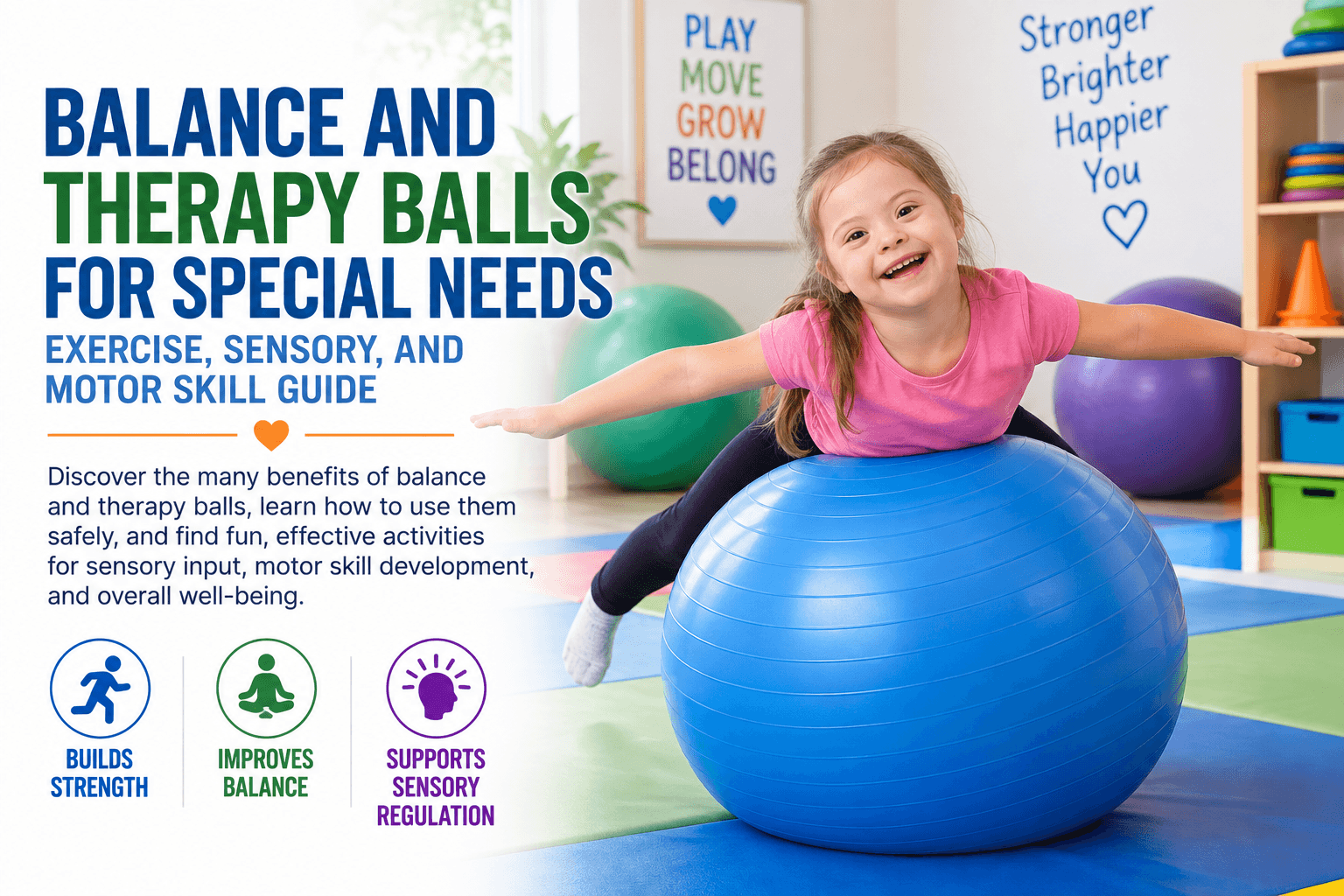
Balance and therapy balls are versatile movement tools that can support balance, core strength, coordination, posture, body awareness, and sensory activities for children and adults with special needs. From traditional round therapy balls to peanut shaped rolls, hopping balls, textured sensory balls, and balance trainers, different designs can create opportunities for movement at home, school, therapy, and adaptive fitness settings.
At eSpecial Needs, the Balance and Therapy Balls collection includes a wide variety of exercise and movement tools designed for different ages, abilities, and activity goals.
What Are Balance and Therapy Balls?
A therapy ball is an inflatable or supportive movement tool commonly used for exercise, therapy activities, balance practice, stretching, active sitting, and sensory motor activities.
You may also see these products described as:
- Exercise balls
- Balance balls
- Therapy balls
- Sensory balls
- Stability balls
- Gym balls
- Yoga balls
- Peanut balls
- Saddle rolls
- Hopper balls
Although these terms sometimes overlap, individual products can differ significantly in shape, stability, texture, size, and intended use.
Choosing the right design depends on what the user is trying to accomplish.
What Can Therapy Balls Support?
When used appropriately, balance and therapy balls may support activities involving:
- Core strength
- Postural control
- Sitting balance
- Coordination
- Gross motor skills
- Body awareness
- Weight shifting
- Motor planning
- Stretching
- Movement breaks
- Vestibular input
- Sensory exploration
- Reaching
- Upper body support
- Lower body strength
The current eSpecial Needs collection is designed around movement, balance, therapy, and sensory motor activities for children and adults.
Therapy Balls for Core Strength and Posture
Sitting on an unstable surface requires the body to make small adjustments to remain upright.
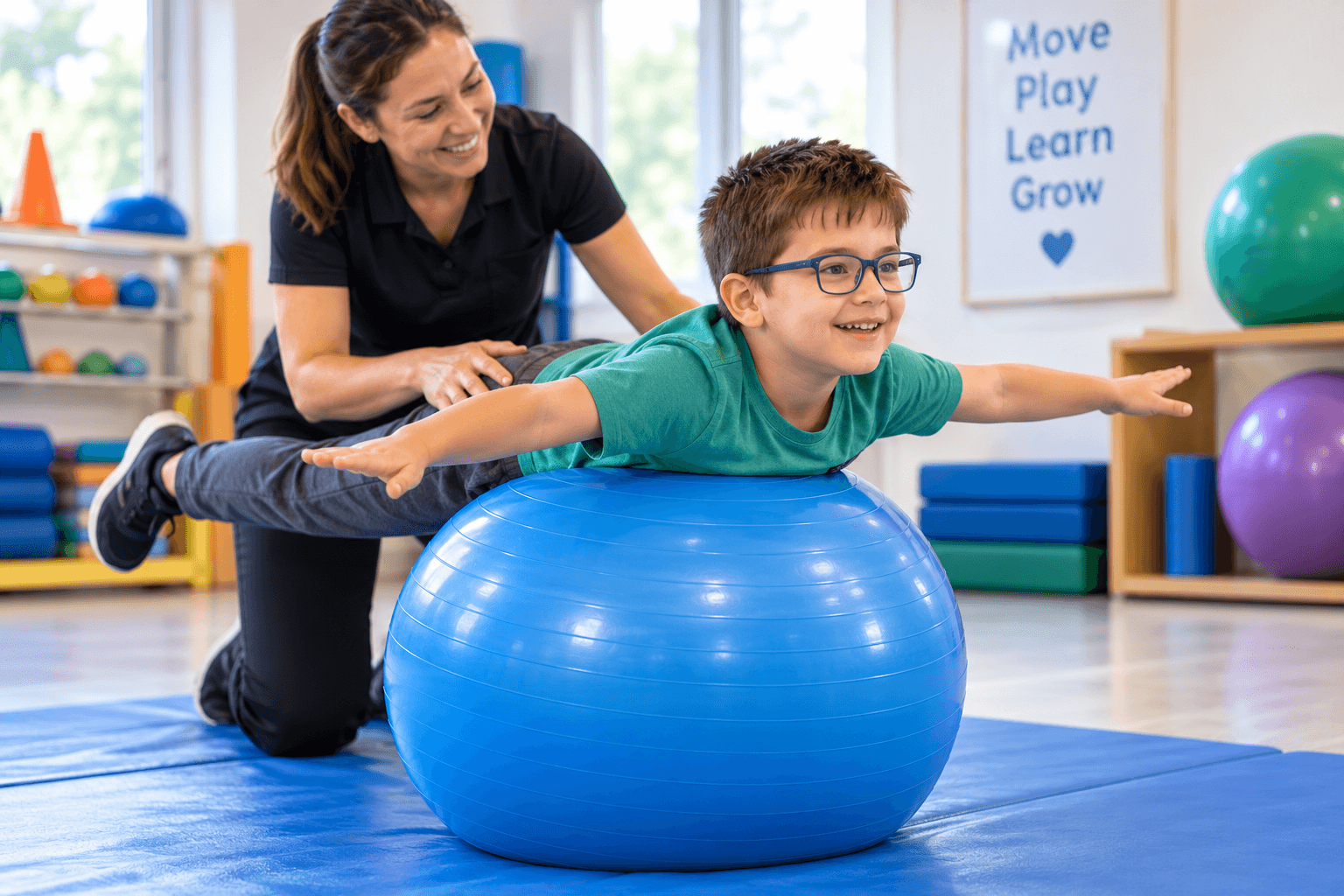
For some users, supervised therapy ball activities can encourage activation of the muscles involved in trunk stability and posture.
A therapist might use a therapy ball during activities involving:
- Upright sitting
- Reaching for objects
- Weight shifting
- Trunk rotation
- Supported bouncing
- Forward and side reaching
- Transition practice
- Strengthening activities
The amount of challenge can vary considerably depending on the size and shape of the ball, how much it is inflated, the activity being performed, and the amount of assistance provided.
Balance Balls for Coordination and Body Awareness
Balance activities require the body to process information about position and movement.
A balance ball can create a changing surface that encourages the user to adjust posture and respond to movement.
Activities may support awareness of:
- Where the body is in space
- How weight shifts from side to side
- How the trunk responds to movement
- How the arms and legs work together
- How much force is needed for different movements
This can make therapy balls useful within occupational therapy, physical therapy, adaptive physical education, and sensory motor programs.
Therapy Balls and Sensory Input
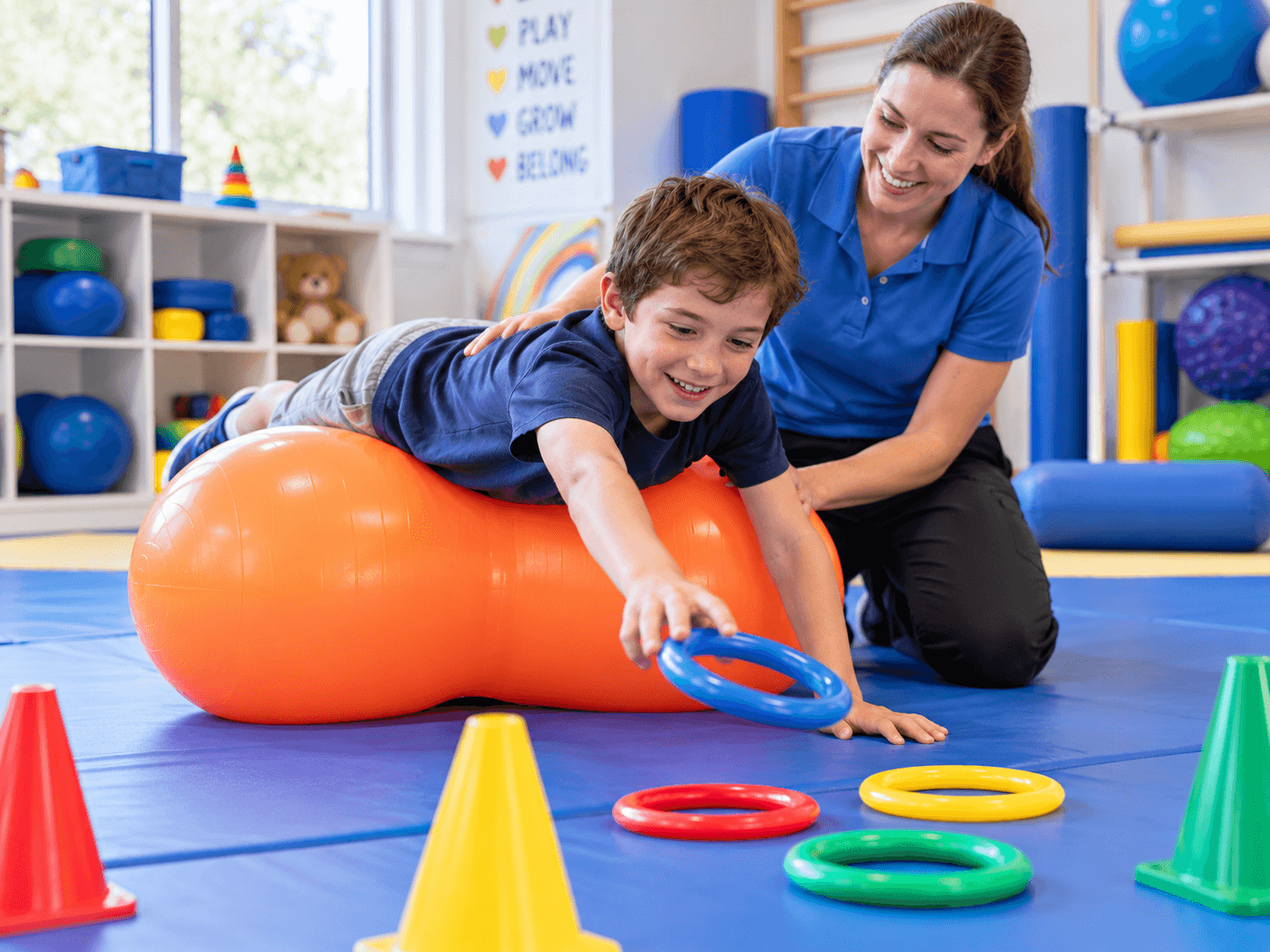
Movement on a therapy ball can provide vestibular and proprioceptive input.
Gentle rocking, bouncing, shifting, pushing, or rolling may feel organizing or engaging for some users. Others may find the same movement overwhelming.
There is no single sensory ball activity that works for everyone.
Sensory activities should be matched to the individual rather than assuming that more movement is always better.
For users with complex sensory, neurological, balance, or medical needs, an occupational therapist or physical therapist can help determine which activities are appropriate.
Round Exercise Balls
Traditional round exercise balls provide movement in multiple directions.
They can be used for:
- Sitting balance
- Core activities
- Stretching
- Supported movement
- Reaching
- Weight shifting
- Upper body exercises
- Gross motor activities
Because a round therapy ball can move forward, backward, and from side to side, it generally requires more control than some more stable therapy ball shapes.
The Exercise and Therapy Balls collection includes additional round and specialty exercise ball options for therapy and movement routines.
Peanut Balls and Saddle Rolls
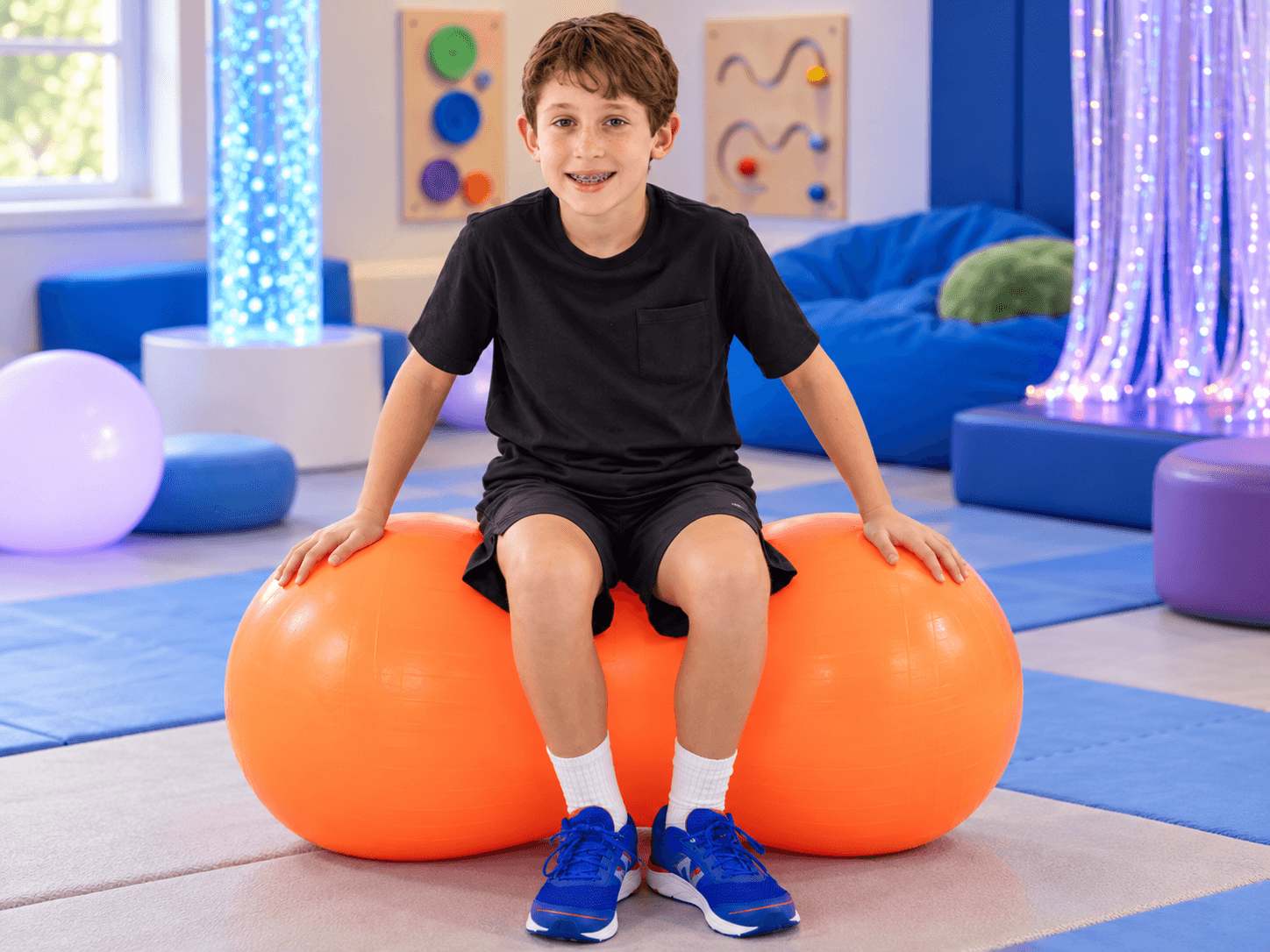
A peanut shaped therapy ball has an elongated shape with a narrower middle.
This shape limits some side to side movement compared with a traditional round ball, which can provide a more predictable base for certain activities.
The CanDo Inflatable Saddle Roll is one example currently offered in the collection. eSpecial Needs also features guidance from an occupational therapist demonstrating ways peanut shaped Saddle Rolls and Sensi Rolls can be incorporated into supported movement activities.
Peanut and saddle style therapy balls may be useful for activities involving:
- Rocking
- Sitting
- Weight shifting
- Reaching
- Trunk movement
- Supported balance
- Gross motor play
- Therapy positioning
For some users, the elongated shape may feel more stable and predictable than a spherical exercise ball.
Exercise Balls With Feet
Some exercise balls include small stabilizing feet.
The CanDo Inflatable Exercise Balls With Feet are currently part of the eSpecial Needs balance and therapy collection.
The feet can help keep the ball from rolling away when it is not being used.
This design may be useful in environments such as:
- Therapy clinics
- Classrooms
- Adaptive fitness programs
- Home exercise spaces
- Sensory motor rooms
Remember that stabilizing feet do not turn an exercise ball into a standard chair. Supervision and appropriate use are still important.
Hopping and Jumping Balls
Not every therapy ball is designed primarily for seated exercises.
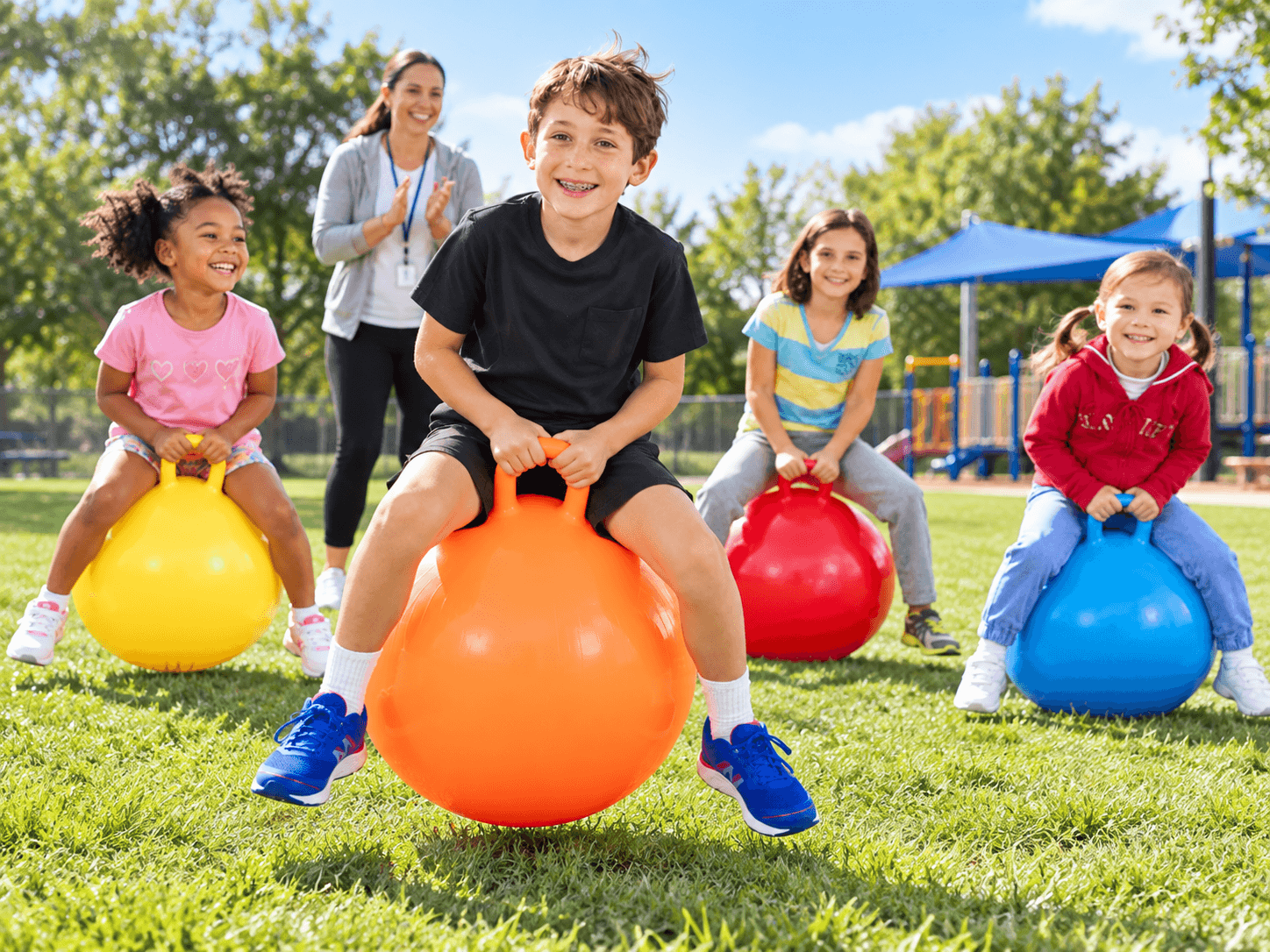
HOP and Jump Balls provide a more active movement experience and are currently among the products offered in the collection.
Hopping activities may involve:
- Balance
- Leg strength
- Coordination
- Motor planning
- Rhythmic movement
- Body awareness
- Active sensory input
These products can be engaging for children who enjoy bouncing and movement, but the activity area should provide adequate space and appropriate supervision.

Inflatable Balance Stones
Balance does not always have to involve sitting on a large ball.
CanDo Inflatable Balance Stones create smaller unstable surfaces that can be incorporated into stepping, balance, and movement activities. They are currently included in the collection alongside larger therapy balls.
Balance stones can be used to create activities involving:
- Stepping
- Weight shifting
- Foot placement
- Coordination
- Obstacle courses
- Balance practice
- Motor planning
They can also be paired with Balance Beams, Balance Boards, and other Balance and Coordination tools.
Balance Trainers
More challenging users may benefit from specialized balance training products.
The CanDo Board on Stone Balance Trainer combines an unstable inflatable component with a balance board style platform. The CanDo Cushy Air Training Ball provides another balance training option in the current collection.
These products may be incorporated into supervised activities involving:
- Standing balance
- Lower body control
- Weight shifting
- Coordination
- Postural responses
- Rehabilitation exercises
- Adaptive fitness
The more unstable the surface becomes, the more important it is to match the activity to the user's abilities.
Therapy Balls for Occupational Therapy
Occupational therapists may use therapy balls as part of activities involving movement, sensory processing, motor planning, posture, and functional participation.
Activities might involve having a child:
- Sit while reaching for objects
- Roll forward over the ball with support
- Push the ball against a wall
- Move objects from one side to another
- Practice controlled rocking
- Reach toward the floor and return upright
- Participate in movement before tabletop activities
Therapy balls can also be combined with other Sensory Motor Tools to create varied movement activities.
Therapy Balls for Physical Therapy
Physical therapists may incorporate exercise and therapy balls into activities related to strength, balance, coordination, mobility, and postural control.
The activity may look very different depending on the user.
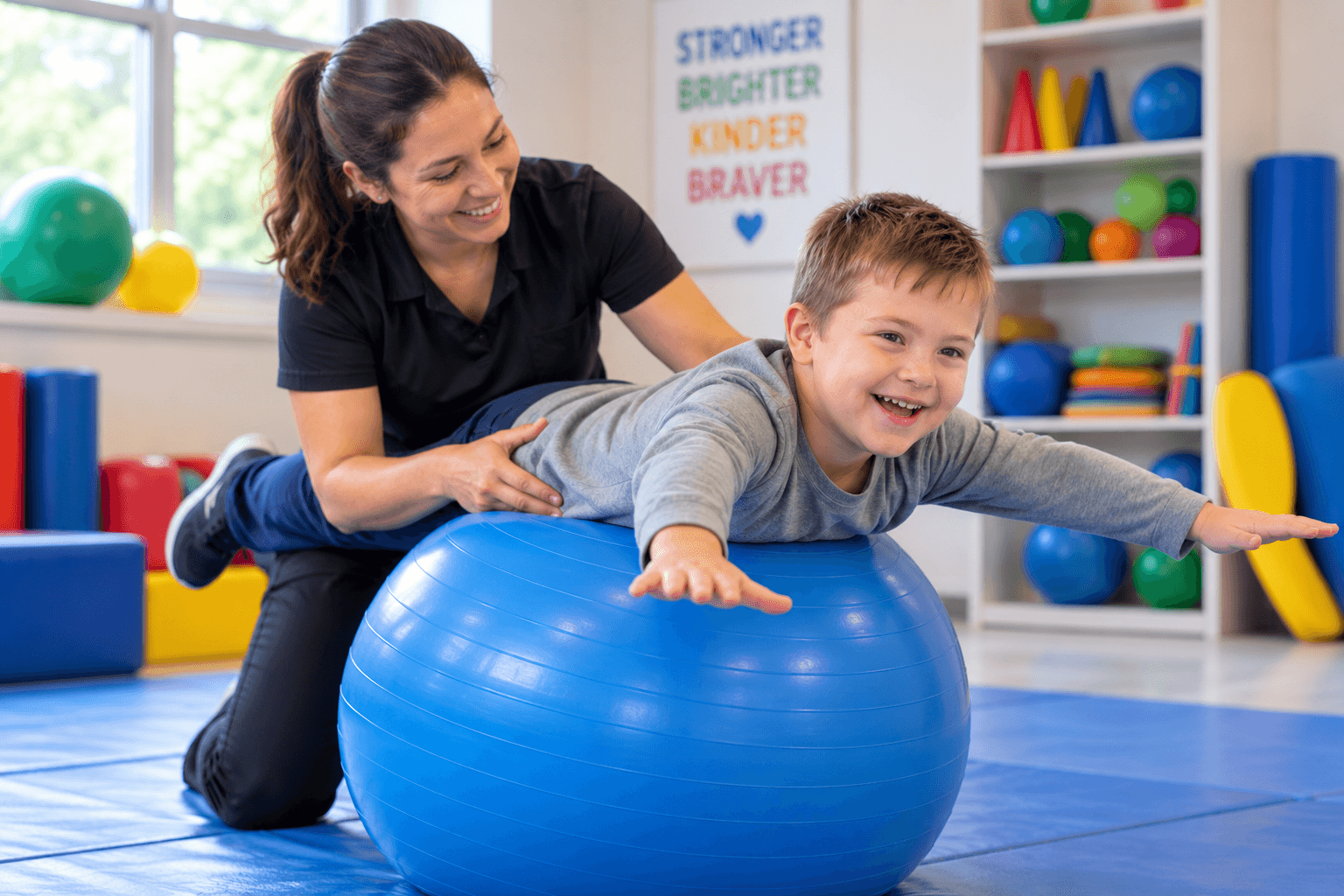
For one person, therapy may involve supported sitting. Another user may perform exercises while lying over the ball. A more advanced user may incorporate a balance trainer into standing exercises.
Because individual abilities vary widely, physical therapy exercises should follow the person's established therapy plan.
Therapy Balls in Special Education Classrooms
Balance and therapy balls may also have a place in school settings.
Possible uses include:
- Scheduled movement breaks
- Occupational therapy
- Physical therapy
- Adaptive physical education
- Sensory motor activities
- Gross motor stations
- Structured active seating
- Indoor movement activities
Teachers should establish clear expectations around how and when a therapy ball may be used. A ball that is helpful during a planned movement break can become distracting or unsafe when students use it without structure.
For broader school movement needs, explore Education, Classroom Seating, and Sensory Motor equipment.
Can a Therapy Ball Be Used for Active Seating?
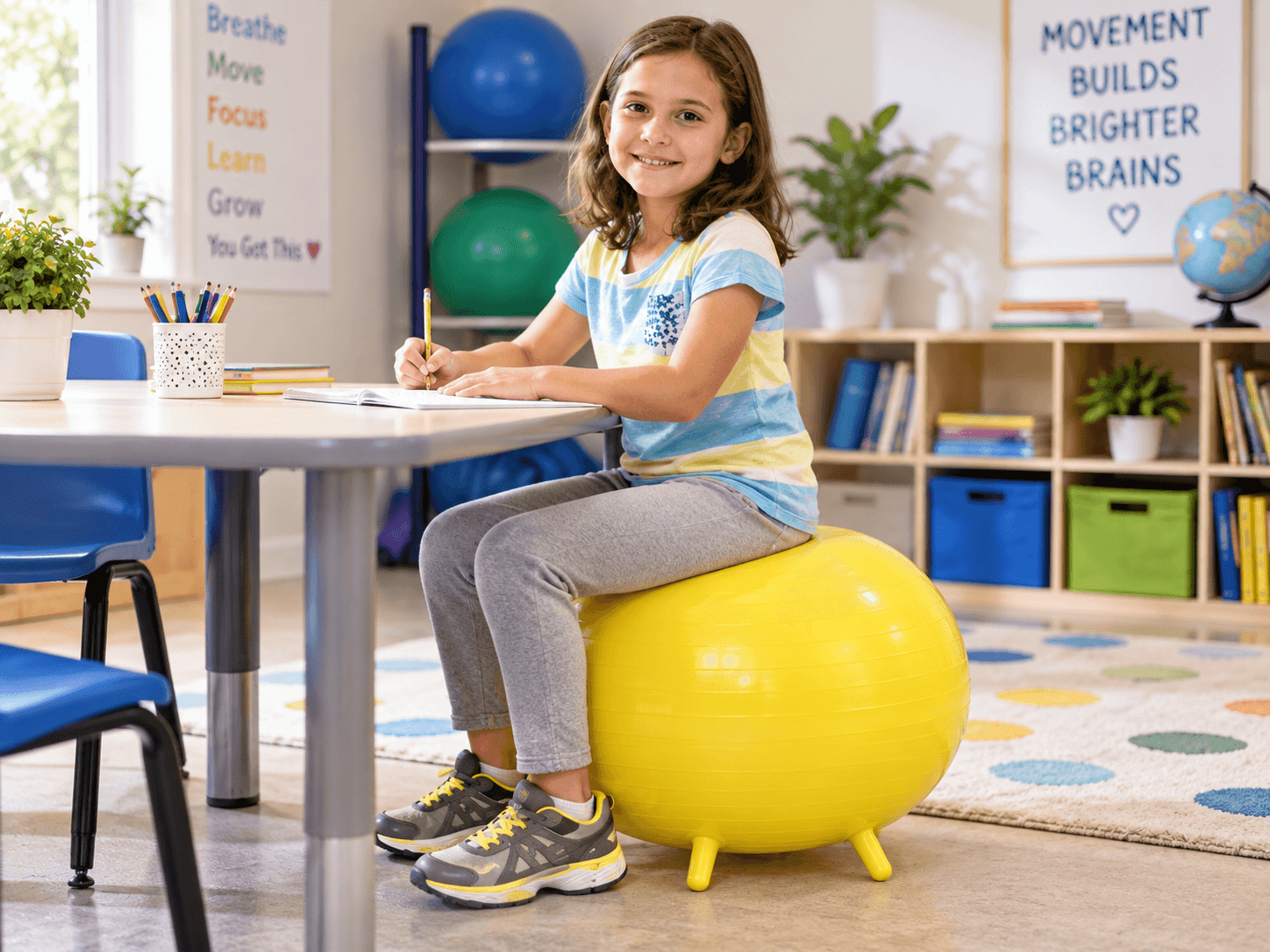
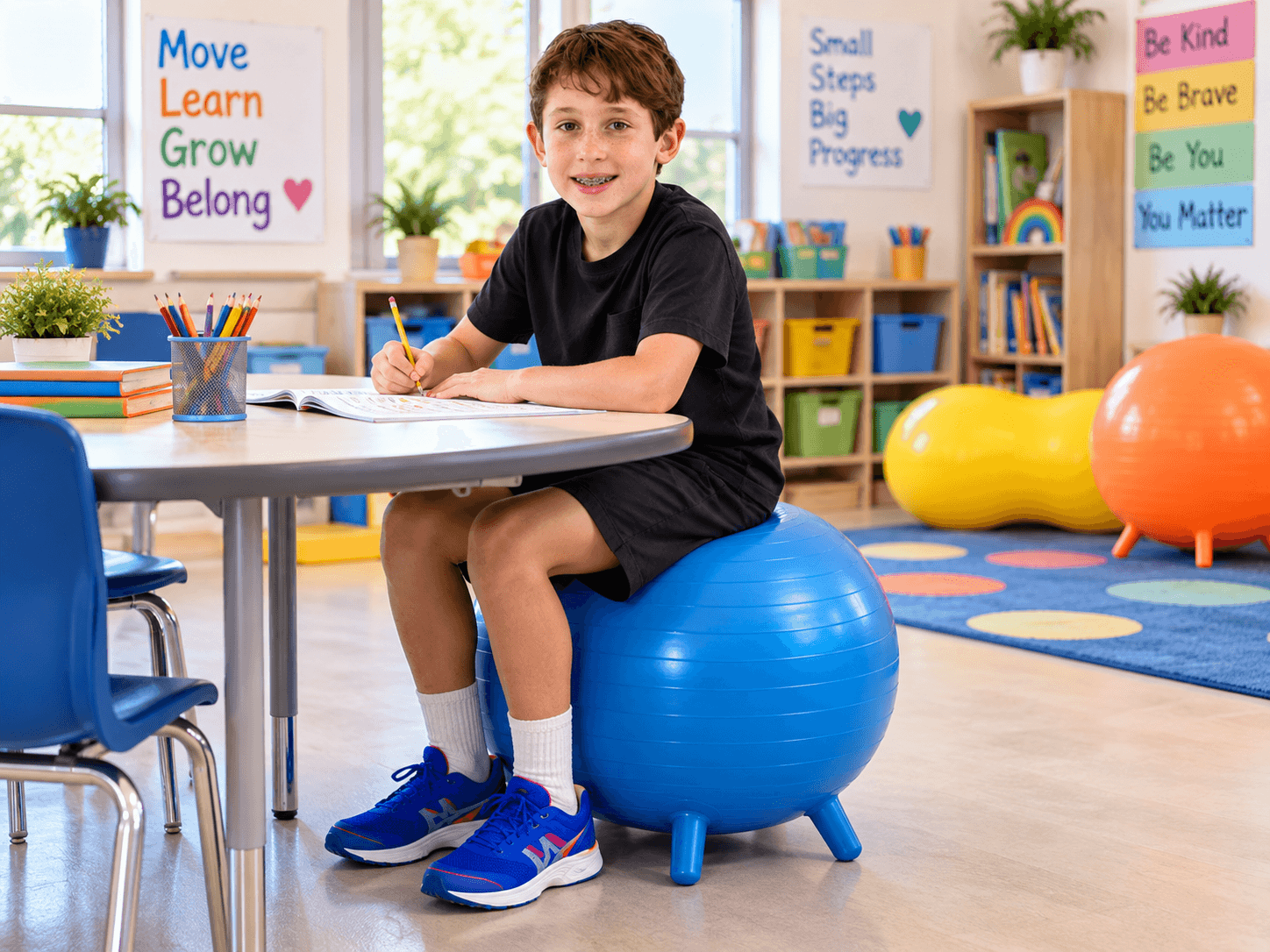
Some users enjoy sitting on an exercise ball because the surface permits continuous small movements.
This may provide an active seating experience, but a therapy ball is not automatically the right classroom seat for every child.
Consider:
- Balance ability
- Foot placement
- Desk height
- Attention
- Fall risk
- Ability to follow safety expectations
- Amount of adult supervision
- How long the ball will be used
For students who need movement while seated, purpose built Active Seating may also be worth comparing with exercise balls.
Choosing the Right Therapy Ball Size
Size matters.
A ball that is too large can make it difficult for a user to reach the floor or control movement. A ball that is too small may not provide the intended position for the activity.
When the ball is being used for sitting, factors may include:
- User height
- Leg length
- Hip position
- Foot contact
- Activity
- Amount of inflation
- Therapist recommendations
Do not select size by age alone.
Follow the sizing information provided for the specific product and activity.
Inflation Changes How a Therapy Ball Feels
The amount of air inside an inflatable therapy ball affects how it responds to movement.
A firmer ball generally offers less surface deformation, while a softer ball may provide a different stability and sensory experience.
However, a ball should always remain within the manufacturer's recommended inflation range.
Do not intentionally overinflate a therapy ball to make an exercise more challenging.
Choosing a Therapy Ball for Children With Special Needs
Before buying a therapy ball, consider what you actually want the ball to do.
Ask:
- Is it primarily for balance?
- Is it for therapy exercises?
- Is sensory movement the goal?
- Will the child sit on it?
- Is bouncing intended?
- Does the child need greater stability?
- Would a peanut shape be easier to control?
- Does the child need textured sensory input?
- Will it be used at school or home?
- How much supervision is available?
- What size does the manufacturer recommend?
Starting with the activity goal makes it much easier to choose among the many available designs.
Therapy Balls for Adults
Therapy balls are not limited to children.
The current eSpecial Needs collection includes products filtered for adolescent, adult, and senior age groups as well as younger users.
Adults may use exercise and balance balls during:
- Physical therapy
- Rehabilitation
- Adaptive exercise
- Stretching
- Core activities
- Balance training
- Fitness routines
Product dimensions, weight limits, medical considerations, and ability level should be reviewed before use.
Creating a Therapy Ball Exercise Area
A safer exercise area should provide enough room for movement without nearby furniture, sharp edges, or other obstacles.
Consider adding an Exercise, Gym and Therapy Mat beneath or near the activity area when appropriate.
A therapy space may also include:
- Exercise mats
- Balance beams
- Stepping stones
- Resistance equipment
- Therapy rolls
- Bolsters
- Wedges
- Balance boards
- Sensory motor tools
Equipment should be arranged according to the user's abilities rather than trying to include as much movement equipment as possible.
Therapy Ball Safety Tips
Balance and therapy balls create movement by design, so appropriate safety practices matter.
Consider these guidelines:
- Follow manufacturer instructions
- Use the correct ball size
- Check recommended weight capacity
- Inspect the ball before use
- Keep the activity area clear
- Avoid sharp objects
- Use adequate supervision
- Introduce new activities gradually
- Stop if the user becomes uncomfortable or fatigued
- Use a therapy mat when appropriate
- Do not attempt advanced exercises without proper instruction
Users with significant balance limitations, orthopedic concerns, seizures, recent surgery, or other medical considerations should follow guidance from the appropriate healthcare or therapy professional.
How Therapy Balls Fit Into a Sensory Motor Space
A therapy ball can be one part of a larger movement environment.
For example, a sensory motor area might include a therapy ball alongside:
- Balance Equipment
- Adaptive Swings
- Crash Pads
- Soft Play
- Climbing Equipment
- Exercise and Therapy Mats
- Vestibular Motion Equipment
Combining different types of equipment can create opportunities for balancing, pushing, pulling, climbing, bouncing, reaching, and other forms of movement.
Shop Balance and Therapy Balls at eSpecial Needs
The Balance and Therapy Balls collection at eSpecial Needs currently includes more than 40 products across traditional therapy balls, hopping balls, saddle rolls, exercise balls with feet, balance trainers, sensory balls, balance stones, and related equipment.
Popular options currently represented in the collection include:
- HOP and Jump Balls
- CanDo Inflatable Saddle Roll
- CanDo Inflatable Exercise Balls With Feet
- CanDo Board on Stone Balance Trainer
- CanDo Cushy Air Training Ball
- CanDo Inflatable Balance Stones
FAQs
What is a therapy ball used for?
A therapy ball can be used for activities involving balance, posture, core strength, coordination, body awareness, stretching, sensory movement, and gross motor skills. Therapy balls are commonly used at home, in schools, and during occupational or physical therapy.
What is the difference between a therapy ball and an exercise ball?
The terms are often used interchangeably. A therapy ball may be selected specifically for rehabilitation, sensory motor activities, positioning, or developmental exercises, while exercise balls are also commonly used for general fitness, stretching, and strengthening.
Are therapy balls good for children with special needs?
Therapy balls may provide useful opportunities for movement, balance practice, body awareness, and sensory activities for children with special needs. The appropriate ball and activity should match the child's size, abilities, sensory preferences, and therapy goals.
How do I choose the correct therapy ball size?
Choose size according to the manufacturer's recommendations, the user's height, leg length, activity, and intended position. When sitting on a therapy ball, appropriate foot contact and body position are important. Do not choose size based only on age.
Does a firmer therapy ball provide more challenge?
Not necessarily in every activity. Changing inflation can affect stability, movement, and how the surface responds to the user. The safest approach is to keep the ball within the manufacturer's recommended inflation range and adjust activities rather than overinflating the ball.
How much should a therapy ball be inflated?
Follow the manufacturer's inflation recommendations. Inflation affects how the ball responds to weight and movement. A ball should not be overinflated in an attempt to make an exercise more difficult.