Table of Contents
- Quick guide: 3 best school wheelchairs for bus transport
- How we chose the best school wheelchairs for bus transport
- The 3 best school wheelchairs for bus transport
- Comparison table: The best school wheelchairs for bus transport
- What should you look for in a school bus-compatible wheelchair?
- How can school districts fund adaptive wheelchair purchases?
- Why eSpecial Needs is the best choice for school wheelchairs
- FAQs
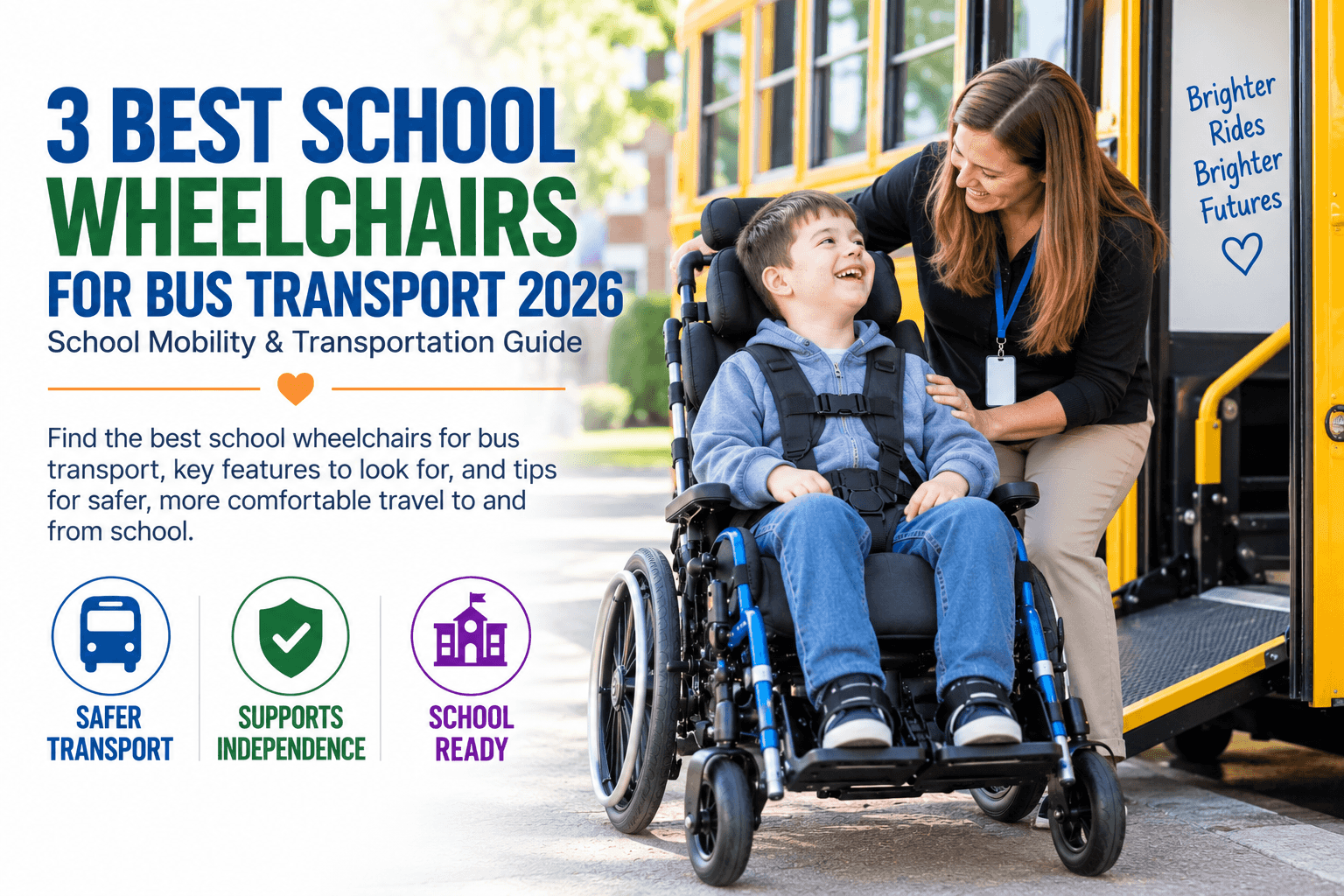
Choosing a wheelchair for a student who rides the school bus involves more than finding the right seat width. You need a chair that works with bus tie-down systems, supports proper positioning throughout the school day, and holds up across hallways, classrooms, and curb cuts. eSpecial Needs carries some of the best school wheelchairs designed for exactly these situations. This guide compares four options and walks you through what to look for when selecting a wheelchair for a student who depends on school bus transportation.
Each chair on this list was evaluated for bus securement compatibility, postural support, daily school use, and caregiver handling. If you are a special education coordinator, school therapist, or district buyer, you will find practical details here to help you make a confident decision.
Quick guide: 3 best school wheelchairs for bus transport
- Medline Excel Kidz Pediatric Wheelchair: The best overall school wheelchair for bus tie-down compatibility and daily campus mobility
- Ziggo Lightweight Pediatric Wheelchair: A lightweight folding option for portable school and clinic use
- Zippie Pediatric Wheelchairs: A configurable line with multiple frame sizes for growing students
How we chose the best school wheelchairs for bus transport
Every wheelchair on this list was selected based on how well it fits the daily reality of school transportation and campus use. We focused on features that matter most to special education teams, school therapists, and district procurement staff.
Here is what we evaluated:
- Bus tie-down compatibility: Can the chair work with standard four-point securement systems found on most school buses? This keeps students safer during transit.
- Postural support: Does the chair help students maintain a supported seated position during long school days, including meals, therapy sessions, and classroom activities?
- Durability for school environments: Will the frame, upholstery, and wheels hold up across tile floors, outdoor sidewalks, playground surfaces, and bus ramps?
- Caregiver and staff handling: Is the chair manageable for teachers, aides, and bus drivers who need to fold, lift, or reposition it throughout the day?
- Adjustability for growing students: Can the seat height, footrests, and armrests adapt as a student grows, extending the chair's useful life for the school district?
- Safety features: Does the chair include anti-tippers, wheel locks, and secure footrests that reduce risk during school bus loading, hallway travel, and classroom use?
The 3 best school wheelchairs for bus transport
1. Medline Excel Kidz Pediatric Wheelchair: Best overall school wheelchair for bus transport
The Medline Excel Kidz Pediatric Wheelchair from eSpecial Needs is designed to give school teams a dependable, transit-ready mobility solution for the realities of K-12 campus life. The dual-axle frame allows you to adjust seat height to hemi level, which can support students who need to use their feet for added stability or self-propulsion in hallways.
Its 250-pound weight capacity makes it appropriate for a range of student sizes, including older elementary and middle school students who may be larger than typical pediatric chair users. Swing-back desk-length arms fold out of the way during classroom activities, while detachable elevating leg rests support students who need their legs positioned higher for medical or comfort reasons.
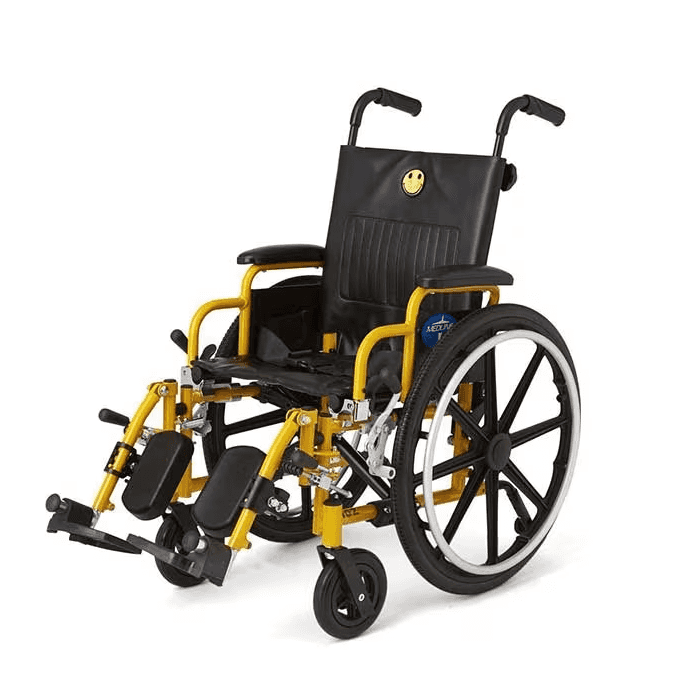
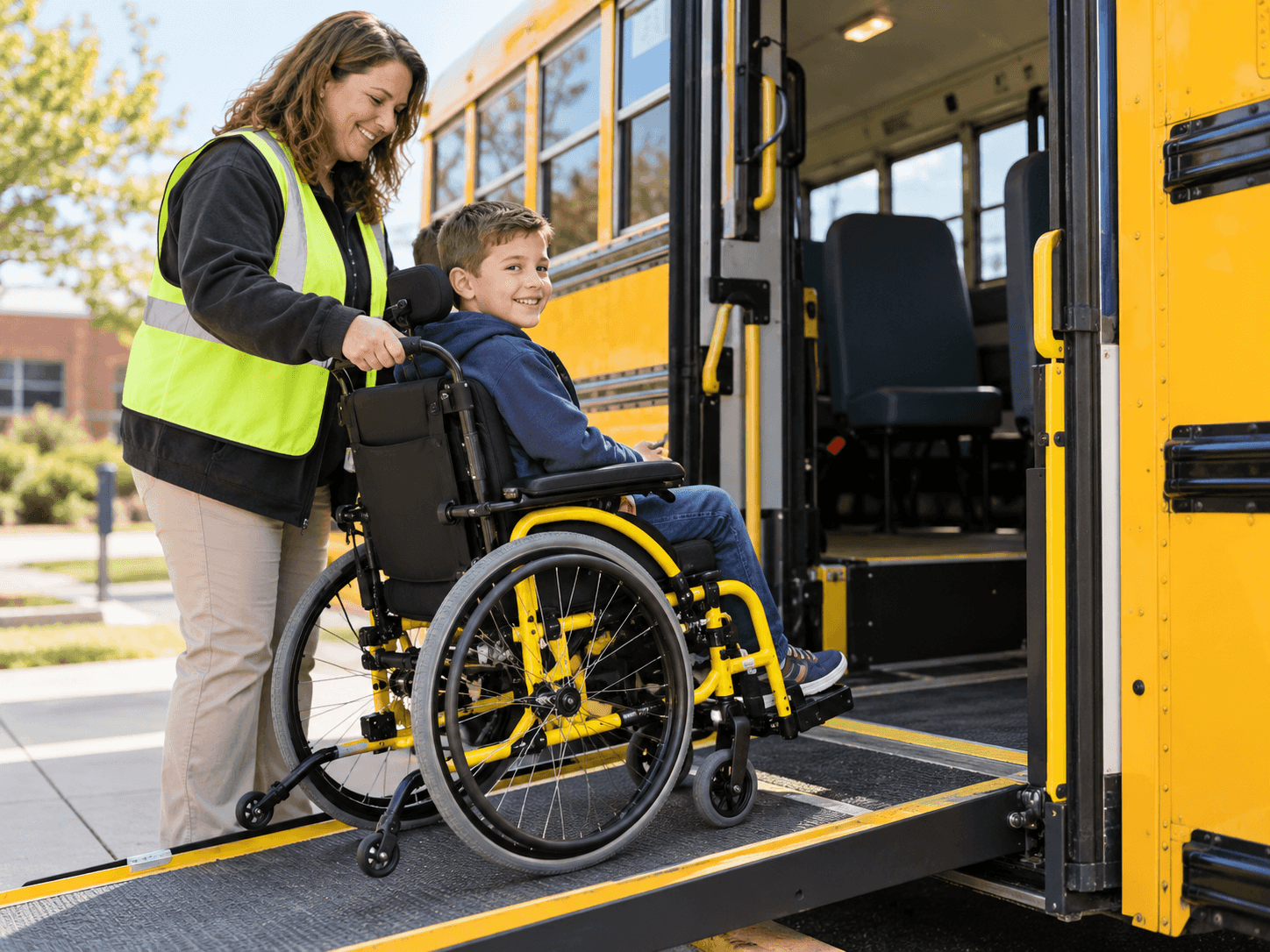
For school bus use, the chair's frame design is compatible with standard four-point strap-style securement hardware. Anti-tippers come included, adding stability during loading and unloading on bus ramps. Flat-free, treaded tires mean maintenance staff will not need to deal with tire replacements mid-semester.
eSpecial Needs also supports school purchasing through its B2B program, which accepts purchase orders and offers tax-exempt purchasing for qualified districts. For many school teams, this can make a meaningful difference in procurement timelines.
Medline Excel Kidz benefits
- Dual-axle seat height adjustment: Lets you set the seat to standard or hemi height, giving students who use their feet for mobility a lower starting point that supports more independent movement.
- Swing-back desk-length armrests: Flip out of the way so students can pull up to classroom desks and activity tables without obstruction.
- Detachable elevating leg rests: Remove or adjust leg rests based on the student's positioning needs, making transfers and desk access easier for aides and therapists.
- Flat-free treaded tires: Eliminate the need for air refills and reduce downtime caused by punctures on school grounds.
- Anti-tippers included: Add rear stability during ramp transitions, bus loading, and uneven outdoor surfaces around the school campus.
- Adjustable telescoping handles: Allow caregivers of different heights to push the chair comfortably during bus boarding, hallway travel, and campus transitions.
Medline Excel Kidz pros and cons
Pros:
- Frame is compatible with standard school bus tie-down securement systems
- Dual-axle system supports seat height changes as students grow or their needs shift
- Purchase orders and tax-exempt buying are available through eSpecial Needs for school districts
Cons:
- Available in a single 14-inch seat width, which may not fit every student; check measurements before ordering
- Does not include tilt-in-space positioning, so students with complex postural needs may require additional positioning supports
- Bright yellow frame color is not customizable, though some schools may appreciate the visibility during bus loading
2. Ziggo Lightweight Pediatric Wheelchair: A portable folding option for school and clinic settings
The Ziggo Lightweight Pediatric Wheelchair is a folding pediatric manual chair with a lighter aluminum frame. It folds compactly, which can make storage in school closets or therapy rooms simpler for staff managing multiple chairs.
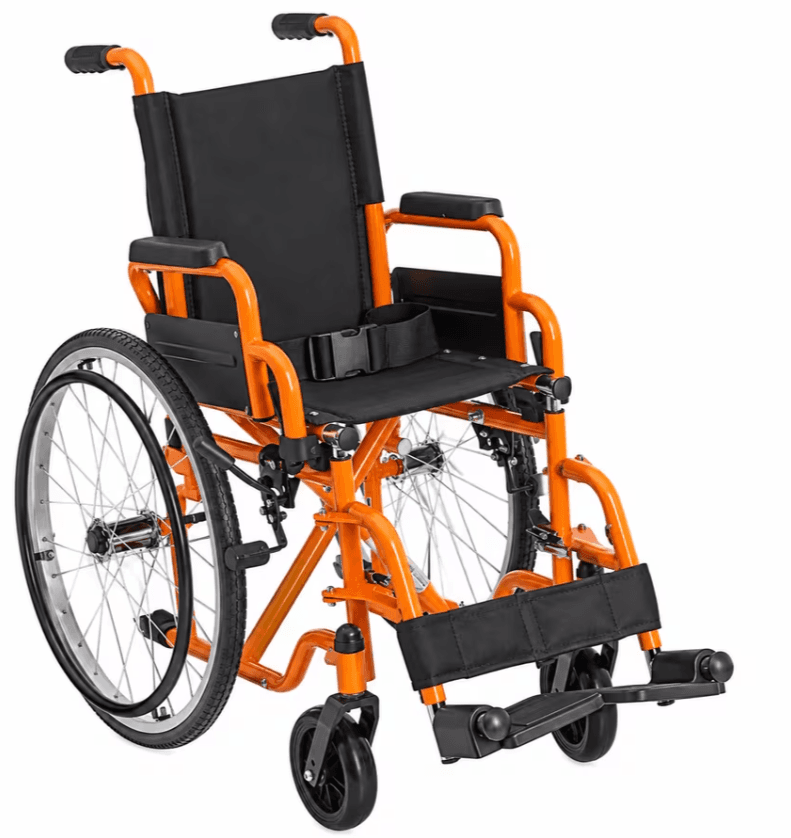
The chair is available in multiple seat widths, and the frame includes rear anti-tippers and a cross-brace folding mechanism. Footrests are swing-away and detachable. The lighter frame weight may make it easier for aides to lift into and out of vehicles.
Ziggo features
- Aluminum folding frame: Reduces overall chair weight for easier lifting and storage in school settings.
- Multiple seat widths: Offers sizing options that may accommodate students at different ages and sizes.
- Swing-away detachable footrests: Allow easier transfers between the wheelchair and classroom seating.
Ziggo pros and cons
Pros:
- Lighter frame weight makes daily handling simpler for school aides and therapists
- Compact folding design fits in tight school storage spaces
- Available in more than one seat width for different student sizes
Cons:
- Does not include elevating leg rests as a standard option
- The lighter frame has a lower overall weight capacity than some heavier-duty pediatric chairs
- Does not include tilt-in-space or reclining features for students who need more postural support
3. Zippie Pediatric Wheelchairs: A configurable line with multiple frame sizes
The Zippie line of pediatric wheelchairs, which includes several frame configurations. The Zippie line offers multiple seat widths and depths, and some models include options for tilt-in-space or growth kits that extend the chair's usable life.
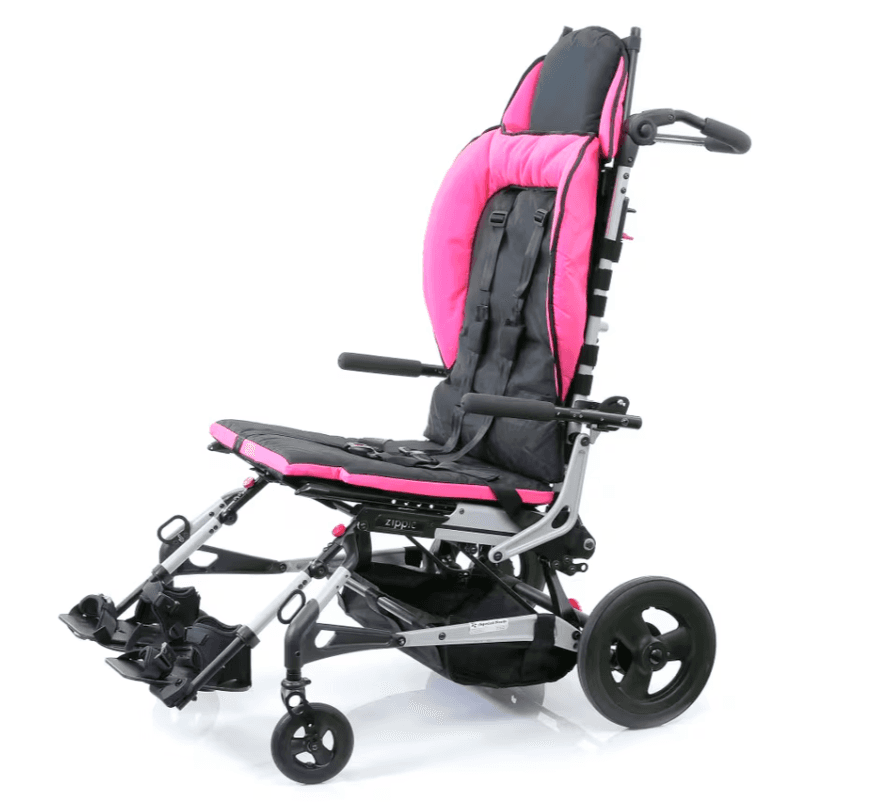
Zippie frames are used in both clinical and educational settings. Some models in the line are transit-tested, though availability of specific transit-rated models may vary depending on the configuration selected.
Zippie features
- Multiple frame configurations: Includes standard manual, tilt-in-space, and reclining options across the Zippie line.
- Growth-adjustable components: Some models include kits that allow seat width and depth adjustments as students grow.
- Transit-tested models available: Certain Zippie configurations have been tested for use with vehicle securement systems.
Zippie pros and cons
Pros:
- Offers a range of frame types and sizes across the Zippie product line
- Growth kits may extend the chair's usable life for school districts
- Some configurations include tilt-in-space for positioning support
Cons:
- Not all Zippie models are transit-tested, so schools must verify securement compatibility before purchasing
- Lead times for custom-configured chairs may be longer than for stock models
- Ordering specific configurations requires detailed knowledge of the student's seating measurements and support needs
Comparison table: The best school wheelchairs for bus transport
| Wheelchair | Dual-Axle Adjustment | Elevating Leg Rests | Telescoping Handles |
|---|---|---|---|
| Medline Excel Kidz | ✓ | ✓ | ✓ |
| Ziggo | ✗ | ✗ | ✗ |
| Zippie | ✗ | ✗ | ✗ |
What should you look for in a school bus-compatible wheelchair?
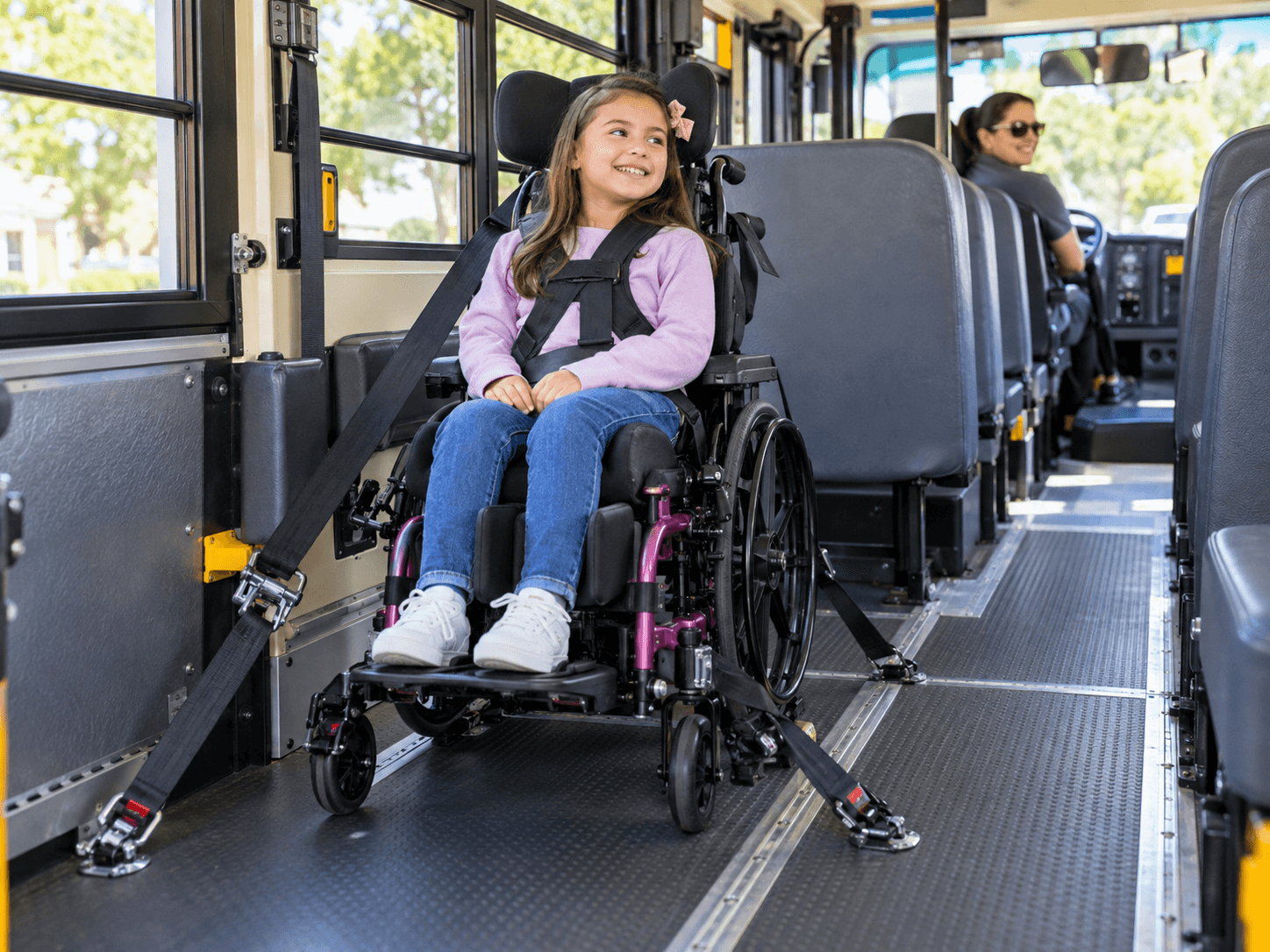
A school bus-compatible wheelchair needs a frame that works with the four-point strap-style securement hardware installed on most school buses. Federal Motor Vehicle Safety Standard (FMVSS) 222 requires school buses to include wheelchair securement anchorages at each designated wheelchair location.
When evaluating a chair for bus use, check that the frame includes solid tie-down points at both the front and rear. Rear anti-tippers can add stability during ramp loading, and wheel locks help keep the chair stationary during securement. According to FMVSS 222 published by NHTSA, each wheelchair location on a school bus must have at least four securement anchorages capable of withstanding 13,344 Newtons of force.
It is also worth confirming that the chair allows for proper occupant pelvic and upper torso restraints. The student should be securable in a forward-facing position with both wheelchair and occupant restraints in place.
How can school districts fund adaptive wheelchair purchases?
School districts can use several funding paths to cover the cost of adaptive wheelchairs and mobility equipment. Special education budgets, IDEA Part B funds, Medicaid reimbursement for school-based services, and state assistive technology programs are common sources.
Some districts also apply for grants through organizations that support assistive technology access in education. eSpecial Needs offers a funding resources page with information on grants, reimbursement programs, and other financial assistance options.
Before purchasing, confirm the chair's features match the student's documented needs in their Individualized Education Program (IEP) or medical necessity letter, since funding sources often require that documentation.
Why eSpecial Needs is the best choice for school wheelchairs
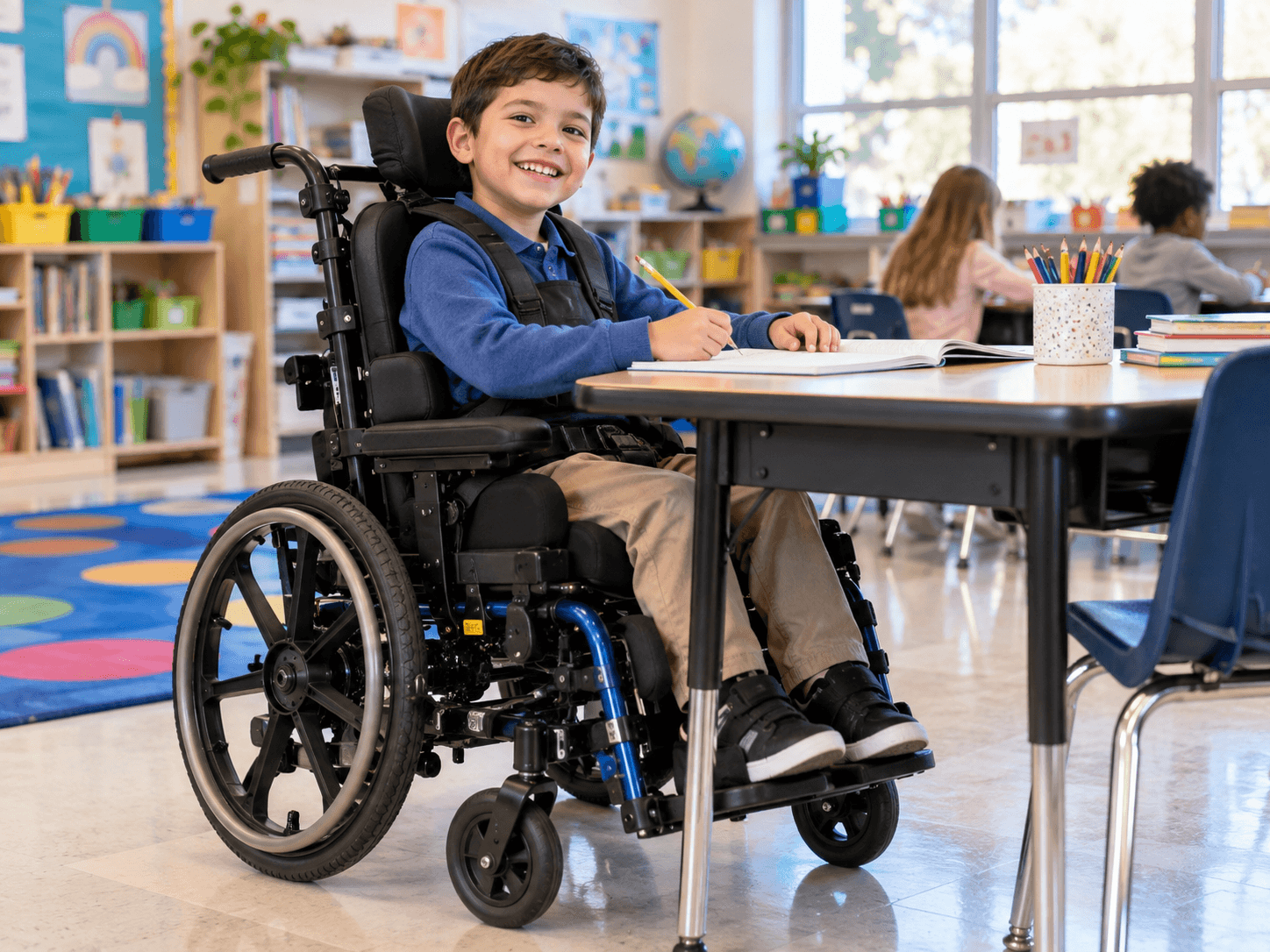
When your school district needs a wheelchair designed for daily hallway traffic, bus ramp loading, and classroom activities, eSpecial Needs gives you a carefully selected range of adaptive mobility solutions built for these exact situations. The Medline Excel Kidz stands out because it combines bus securement compatibility, dual-axle height adjustment, and included anti-tippers in a single pediatric package.
eSpecial Needs supports school purchasing directly. Purchase orders, tax-exempt transactions, and fast quoting make procurement simpler for special education coordinators and district buyers. You also get access to knowledgeable product support from a team that focuses specifically on adaptive mobility and special needs equipment.
For K-12 teams managing wheelchair selection alongside IEP timelines and bus route planning, eSpecial Needs makes the process more manageable. Browse the wheelchair collection or request a quote to get started.
FAQs
Do all wheelchairs work with school bus tie-down systems?
Not all wheelchairs are compatible with school bus securement hardware. You need a chair with a frame that allows four-point strap attachment at both the front and rear. eSpecial Needs carries wheelchairs with frame designs that support standard bus tie-down systems.
What federal standards apply to wheelchair securement on school buses?
FMVSS 222, administered by NHTSA, sets the requirements for wheelchair securement on school buses. It mandates at least four securement anchorages per wheelchair location and requires both pelvic and upper torso occupant restraints.
Can a school wheelchair also be used in the classroom?
Yes. A well-chosen school wheelchair can serve as the student's primary seat during classes, meals, and therapy sessions. eSpecial Needs offers chairs with swing-back desk arms and adjustable seating components that make classroom transitions easier.
How do I know what size wheelchair a student needs?
Measure the student's hip width, thigh depth, and lower leg length. These measurements determine the seat width, depth, and footrest position. A school-based occupational therapist or physical therapist can help ensure the right fit.