Table of Contents
- What Is a Sensory Room Bubble Tube?
- Why Bubble Tubes for Sensory Rooms Are So Popular
- Sensory Room Lights: Building the Right Atmosphere
- Fiber Optic Lights for Sensory Rooms
- Sensory Room Projector Ideas
- Sensory Room Furniture: Comfort, Safety, and Support
- Sensory Room Wall Padding and Safety
- Sensory Room Must-Haves
- Sensory Room Equipment List
- Sensory Room Packages vs. Buying Individual Items
- Schools with Sensory Rooms: What to Consider
- Sensory Room Rules for Schools and Clinics
- Sensory Rooms for Dementia
- Calming Sensory Room Ideas for Adults
- Items for a Sensory Room at Home
- Sensory Rooms on a Budget
- Bubble Tube Corner Ideas
- Turnkey Sensory Room Installation
- How to Choose the Right Sensory Room Setup
- Shop Sensory Room Equipment at eSpecial Needs
- How Sensory Rooms & Bubble Tubes Make A Difference
- FAQs
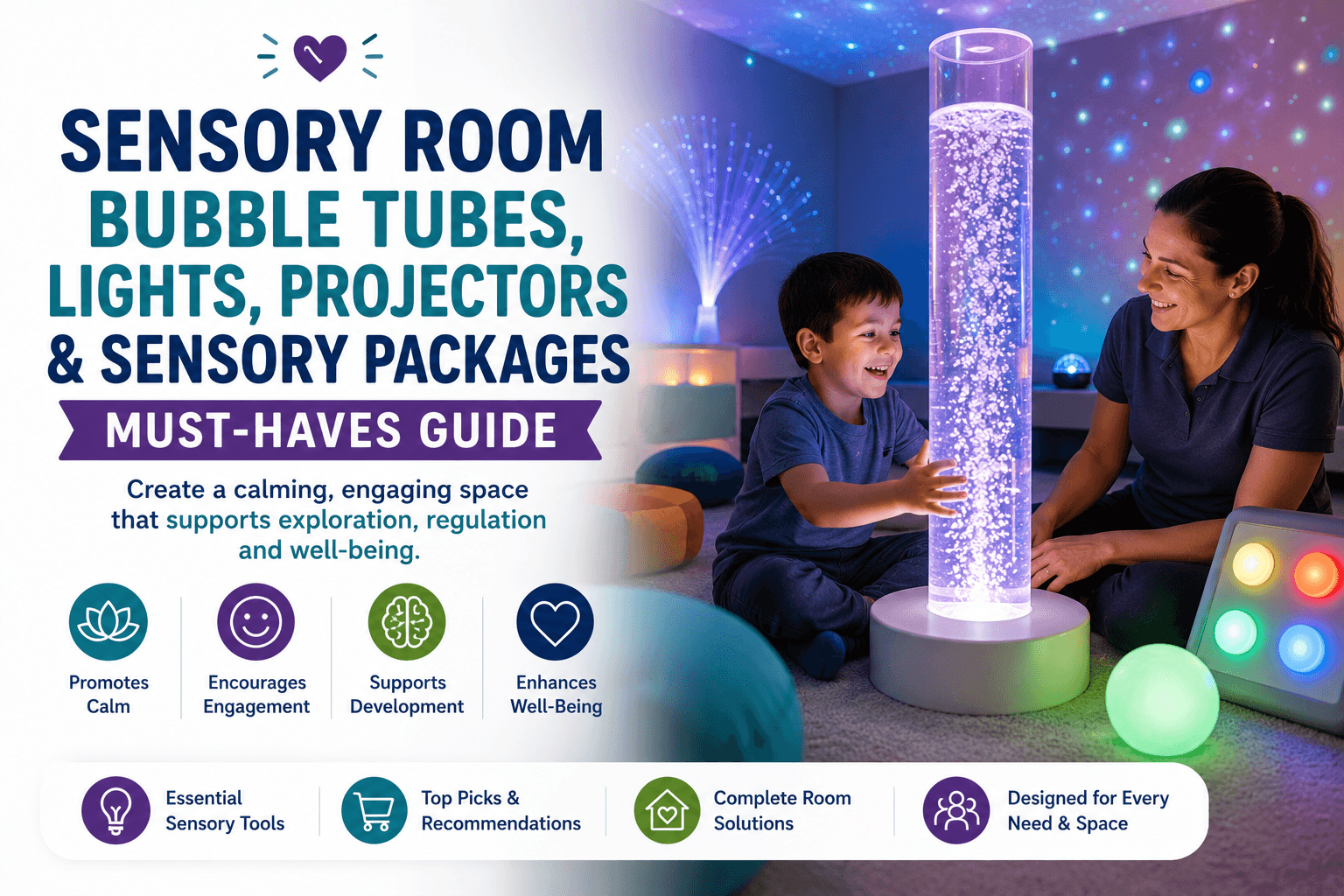
A sensory room bubble tube is one of the most popular centerpieces for creating a calming, visually engaging sensory space at home, in schools, in therapy clinics, and in dementia care environments. With moving bubbles, changing colors, soft vibration, and gentle visual stimulation, bubble tubes for sensory rooms can help create a peaceful focal point for relaxation, attention, sensory exploration, and emotional regulation.
For many families, educators, therapists, and care teams, designing a sensory room can feel overwhelming at first. There are sensory room lights, bubble lamps for sensory rooms, fiber optic lights for sensory rooms, sensory room projectors, sensory room furniture, wall padding, seating, mirrors, tactile panels, and sensory room packages to compare. The right setup depends on who will use the room, how much space is available, what sensory goals you want to support, and whether the room is for calming, engagement, therapy, memory care, or a mix of needs.
This guide explains how to choose a sensory room bubble tube, what lighting and equipment to include, how schools with sensory rooms can plan more effective spaces, how sensory rooms for dementia differ from child-focused rooms, and how to build sensory rooms on a budget without losing function.
What Is a Sensory Room Bubble Tube?
A sensory room bubble tube is a clear vertical tube filled with water, moving bubbles, and color-changing lights. The bubbles move upward through the tube while the lights change color, creating a soothing visual effect that many children and adults find calming.
A bubble tube for sensory room use may support:
- Visual tracking
- Calm focus
- Relaxation
- Sensory exploration
- Cause and effect learning
- Color recognition
- Emotional regulation
- Quiet observation
- Calming routines
- Multi-sensory engagement
Bubble tubes are often used in sensory rooms, special education classrooms, occupational therapy clinics, calming spaces, adult day programs, and dementia sensory rooms.
You can explore bubble tube options on the Sensory Bubble Tubes collection.
Why Bubble Tubes for Sensory Rooms Are So Popular
Bubble tubes for sensory rooms combine several sensory inputs in one product. They provide visual stimulation through color and movement, gentle sound from bubbles, and sometimes soft vibration when paired with a platform or padded base.
A sensory room bubble tube can work well because it is predictable. The motion is gentle, repetitive, and visually soothing. For users who become overwhelmed by chaotic environments, the steady movement of bubbles can provide a calming point of attention.
Bubble tubes may be especially useful in:
- Autism sensory rooms
- Special education classrooms
- Therapy rooms
- Calm-down corners
- Dementia care spaces
- Pediatric clinics
- Adult day programs
- Home sensory rooms
- Multi-sensory environments
For smaller spaces or budget-conscious setups, a product like the TFH Budget Bubble Tube or Portable Bubble Tube may be worth considering.
TFH Budget Hurricane Tube
$729.00
The TFH Budget Hurricane Tube provides many of the benefits of bubble tubes but without all the maintenance and at a more affordable price. There's no water to change or tubes to clean! Instead, the TFH Budget Hurricane Tube features… read more

Sensory Room Lights: Building the Right Atmosphere
Sensory room lights help set the mood of the space. Bright overhead lighting can feel harsh or overstimulating for many users, especially individuals with autism, sensory processing challenges, anxiety, dementia, or neurological differences. The right sensory room lighting can make a room feel calmer, softer, and easier to tolerate.
Common lights for sensory room setups include:
- Color-changing LED lights
- Bubble tubes
- Fiber optic strands
- Projector lights
- Soft lamps
- Wall wash lighting
- Interactive light panels
- Calming night lights
- Bubble lamps for sensory rooms
Sensory room lights should be adjustable whenever possible. Some users may need dim, slow-changing colors. Others may enjoy brighter interactive lighting for engagement and cause-and-effect activities.
Browse options in the Sensory Lights collection.
Shimmering Waters Projector
$399.00
This Shimmering Waters design works perfectly for people with special needs and when used as instructed, it offers years of fun and mesmerizing visuals! The Shimmering Waters Projector creates a multi-colored, calming, and relaxing environment and is ideal in areas… read more

Fiber Optic Lights for Sensory Rooms
Fiber optic lights for sensory rooms are another popular lighting option because they offer both visual and tactile sensory input. Users can often touch, hold, or explore the strands while watching the colors change.
Fiber optic lights may support:
- Tactile exploration
- Visual attention
- Fine motor engagement
- Calming routines
- Safe interactive lighting
- Sensory exploration without intense brightness
Fiber optics are especially helpful when you want lighting that feels immersive but not overwhelming. They can be used in school sensory rooms, home calming spaces, therapy clinics, and dementia sensory rooms.
Explore Sensory Fiber Optic Lights & Strands or Universal Fiber Optic Lighting.
UV Fiber Optic Waterfall - 118" Length
$1,750.00
Our UV Fiber Optic Waterfall creates a cascade of changing light that stretches into infinity with 150 sidelight UV reflective fiber optic strands. The acrylic mirrored panel is mounted in a drop ceiling grid and secured to the permanent ceiling… read more

Sensory Room Projector Ideas
A sensory room projector can transform walls or ceilings with moving images, soft colors, stars, water effects, clouds, or abstract patterns. Projectors are often used to create calming visual environments without requiring large equipment.
The best projectors to create a sensory space at home are usually simple, low-stimulation, and easy to control. For a bedroom or calming corner, choose a projector with soft movement and adjustable brightness. For a therapy room or classroom, a projector with multiple visual effects may be more useful.
A sensory room projector may help with:
- Visual engagement
- Calm-down routines
- Bedtime transitions
- Relaxation
- Low-cost sensory room design
- Themed sensory spaces
- Adult relaxation rooms
- Dementia-friendly calming spaces
When pairing a projector with a sensory room bubble tube, keep the room balanced. Too many lights moving at once can become overstimulating for some users.
Aurora LED Sensory Projector Bundle
$1,447.25
The Aurora LED Sensory Projector Bundle is an easy way to add colorful visual stimulation to sensory rooms, bedrooms, lounges, bathrooms, calming spaces, and multi-sensory environments. Designed to project engaging moving images onto walls or surfaces, this sensory projector bundle… read more

Sensory Room Furniture: Comfort, Safety, and Support
Sensory room furniture helps define how the room will be used. A calming space may need soft seating and quiet corners. A therapy room may need adaptive seating, mats, or positioning equipment. A school sensory room may need durable, easy-to-clean products that support multiple students.
Common sensory room furniture includes:
- Bean bag chairs
- Chill out chairs
- Adaptive seating
- Floor cushions
- Soft mats
- Crash pads
- Padded platforms
- Rocking chairs
- Supportive chairs
- Modular soft seating
- Therapy seating
- Storage furniture
The goal is to give users a safe, comfortable place to sit, rest, observe, regulate, or participate in sensory activities. Browse Adaptive Furniture for seating and furniture options.
Sensory Room Wall Padding and Safety
Sensory room wall padding can be helpful in rooms used by children or adults who seek movement, crash into surfaces, have poor body awareness, or need a safer calming space. Padding can reduce the risk of injury and make the room feel softer and more contained.
Wall padding may be useful in:
- Special education classrooms
- Therapy spaces
- Sensory gyms
- Calm-down rooms
- De-escalation spaces
- Autism support rooms
- Rooms used by movement-seeking children
Not every sensory room needs wall padding. A quiet room focused on lighting, music, and relaxation may not require it. A high-movement space with crash pads, climbing, or active sensory equipment may benefit from padded walls or protective surfaces.
Sensory Room Must-Haves
Every sensory room should be designed around the user, not just a product list. Still, there are several sensory room must-haves that work well in many spaces.
| Sensory Room Must-Have | Why It Helps |
|---|---|
| Bubble tube | Provides calming visual movement and color |
| Sensory room lights | Creates a softer, more regulated environment |
| Fiber optic lights | Adds safe tactile and visual input |
| Sensory room projector | Turns walls or ceilings into calming visual displays |
| Soft seating | Gives users a comfortable place to relax |
| Sensory wall panels | Adds interactive tactile and fine motor input |
| Weighted or deep pressure tools | Supports calming and body awareness |
| Wall padding or mats | Improves safety in movement-based spaces |
| Storage | Keeps the room organized and less visually overwhelming |
| Visual rules | Helps users understand expectations |
For wall-mounted activities, visit the Sensory Wall Panels collection.
Sensory Room Equipment List
A complete sensory room equipment list may include calming, active, tactile, visual, auditory, and safety tools.
Helpful items for a sensory room include:
- Sensory room bubble tube
- Bubble tube platform
- Bubble lamps for sensory rooms
- Sensory room lights
- Fiber optic lights
- Sensory room projector
- Bean bag chair
- Chill out chair
- Adaptive seating
- Weighted lap pads
- Weighted blankets
- Sensory wall panels
- Tactile boards
- Crash pads
- Floor mats
- Therapy balls
- Noise reduction headphones
- White noise machine
- Visual timer
- Fidgets
- Storage bins
- Wall padding
- Soft play equipment
For ready-made options, browse Sensory Room Packages.
Sensory Room Packages vs. Buying Individual Items
Sensory room packages can make planning easier because they bundle key items into one coordinated setup. This is especially useful for schools, therapy clinics, and organizations that need a complete sensory room package rather than a pieced-together list of products.
A sensory room package may include:
- Bubble tube
- Fiber optics
- Projector
- LED lighting
- Mirrors
- Seating
- Interactive controls
- Wall or corner equipment
Buying individual items may work better when you are building slowly, working with a smaller budget, or designing a home sensory corner.
For complete setups, explore:
- Sensory Room Packages
- Calming Sensory Room Bundle
- Superactive Sensory Room Bundle
- Premium Multi-Sensory Room Bundle
- IRiS Wireless Multi-Sensory Room Bundle
Schools with Sensory Rooms: What to Consider
Schools with sensory rooms need spaces that are safe, durable, accessible, and easy for staff to manage. A school sensory room may support students with autism, ADHD, sensory processing disorder, anxiety, developmental disabilities, emotional regulation needs, or physical disabilities.
Important planning questions include:
- Which students will use the room?
- Will the room be calming, active, or multi-sensory?
- How many students will use it each day?
- Will students use the room individually or in small groups?
- Will therapists, teachers, or aides supervise use?
- Are there IEP goals connected to the space?
- Is wall padding needed?
- Does the room need wheelchair access?
- How will equipment be cleaned?
- What sensory room rules will staff follow?
Schools should also plan storage, supervision, scheduling, cleaning, and staff training.
Sensory Room Rules for Schools and Clinics
Sensory room rules help keep the space safe, purposeful, and consistent. Rules should be simple, visual, and easy to follow.
Examples of sensory room rules include:
- Use the room with adult supervision.
- Choose equipment safely.
- Keep hands and feet to yourself.
- Use quiet voices when the room is for calming.
- Take turns with shared equipment.
- Put items away after use.
- Follow the timer or schedule.
- Tell an adult if something feels uncomfortable.
- Use equipment only as shown.
- Leave the room calmly when time is finished.
For younger users or non-readers, use picture-based rules.
Sensory Rooms for Dementia
Sensory rooms for dementia are designed differently than many pediatric sensory rooms. The goal is often comfort, memory support, orientation, relaxation, and reduced agitation rather than high-energy sensory exploration.
A dementia sensory room may include:
- Soft lighting
- Bubble tube
- Gentle music
- Comfortable seating
- Familiar textures
- Memory objects
- Fiber optic lights
- Calming projector effects
- Soft blankets
- Safe tactile items
- Low-glare lighting
- Simple visual cues
A sensory room bubble tube may be useful in dementia care because it provides gentle, predictable visual movement. However, the room should avoid overly bright, fast-moving, or confusing visual effects.
Calming Sensory Room Ideas for Adults
Calming sensory room ideas for adults should feel comfortable, respectful, and age appropriate. Adult sensory rooms may be used for autism, anxiety, dementia, developmental disabilities, sensory overload, trauma-informed care, or relaxation.
Helpful sensory room ideas for adults include:
- Soft seating with supportive posture
- Dim sensory room lighting
- Bubble tube or bubble lamp
- Fiber optic lights
- Weighted blanket or lap pad
- Calming wall projector
- White noise or soft music
- Low-clutter design
- Neutral or calming colors
- Tactile objects
- Comfortable floor or chair options
- Simple sensory room rules
Adult rooms should avoid overly childish designs unless the user prefers them. The best sensory room ideas for adults prioritize dignity, comfort, and personal preference.
Items for a Sensory Room at Home
Home sensory rooms do not need to be large or expensive. A bedroom corner, closet nook, basement area, or playroom section can become a helpful sensory space.
Useful items for a sensory room at home include:
- Portable bubble tube
- Sensory room projector
- Soft lamp
- Bean bag chair
- Weighted lap pad
- Fidgets
- Noise-reducing headphones
- Fiber optic strands
- Soft rug
- Visual timer
- Sensory bin
- Wall panel
- Small storage shelf
Start with the user’s biggest need. If they need calming, begin with lighting, seating, and deep pressure. If they need engagement, add tactile panels, interactive lights, and cause-and-effect tools.
Sensory Rooms on a Budget
Sensory rooms on a budget can still be effective. You do not need to buy everything at once.
Budget-friendly sensory room ideas include:
- Start with one sensory room bubble tube or small projector
- Use soft lamps instead of harsh overhead lights
- Add a bean bag or floor cushion
- Use storage bins to reduce clutter
- Add fidgets and tactile items
- Use a weighted lap pad instead of a larger weighted product
- Create a visual schedule
- Add one sensory wall panel at a time
- Use a small corner instead of a full room
- Build gradually with a sensory room package later
A budget sensory room should still be safe, organized, and matched to the user’s needs.
For smaller kits, browse Sensory Bundles and Kits.
Bubble Tube Corner Ideas
A bubble tube corner is one of the easiest ways to create a strong sensory focal point. This setup can work in homes, schools, therapy rooms, and dementia care spaces.
A bubble tube sensory room corner may include:
- Bubble tube
- Padded platform
- Acrylic mirrors
- Fiber optic lighting
- Soft seating
- Wall padding if needed
- Dim room lighting
- Visual timer
- Simple rules
A product like the Interactive Bubble Tube Corner can help create a more complete bubble tube sensory room setup. Another option is the Bubble Tube & Fiber Optic Sensory Platform, which combines bubble tube lighting with tactile fiber optic input.
Turnkey Sensory Room Installation
For schools, clinics, and organizations, planning a full sensory room can be complex. A turnkey service can help with layout, equipment selection, product sourcing, design, installation, and setup.
Turnkey sensory room planning may help with:
- School sensory rooms
- Therapy clinic sensory spaces
- Autism support rooms
- Dementia sensory rooms
- Multi-sensory environments
- Grant-funded projects
- Large room packages
- Custom layouts
- Staff training and planning
Learn more about Turnkey Sensory Room Installation.
How to Choose the Right Sensory Room Setup
Before choosing equipment, define the goal of the room.
Ask:
- Is the room for calming, engagement, therapy, or all three?
- Will children, adults, or seniors use it?
- Is the room for autism, dementia, anxiety, sensory processing, or general regulation?
- Do users need visual, tactile, auditory, vestibular, or deep pressure input?
- How much floor space is available?
- Do you need wall padding?
- Will the room need wheelchair access?
- Do you want individual products or a sensory room package?
- What is the budget?
- Who will supervise and maintain the room?
A sensory room should feel intentional. Every item should have a purpose.
Shop Sensory Room Equipment at eSpecial Needs
eSpecial Needs offers sensory room bubble tube options, bubble tubes for sensory rooms, sensory room lights, fiber optic lights, sensory room projectors, sensory room furniture, sensory wall panels, sensory room packages, and sensory bundles for homes, schools, clinics, and care environments.
Explore helpful categories:
- Sensory Bubble Tubes
- Sensory Lights
- Sensory Fiber Optic Lights & Strands
- Sensory Room Packages
- Sensory Wall Panels
- Adaptive Furniture
- Sensory Bundles and Kits
- Turnkey Sensory Room Installation
How Sensory Rooms & Bubble Tubes Make A Difference
A sensory room bubble tube can be the heart of a calming, engaging, and visually supportive sensory space. When paired with the right sensory room lights, projector, fiber optics, seating, wall panels, furniture, and safety features, it can help create an environment that supports regulation, relaxation, and participation.
Schools with sensory rooms may need durable packages, clear sensory room rules, and accessible equipment. Families may need budget-friendly items for a home sensory corner. Dementia care programs may need gentle lighting, familiar textures, and calming sensory input for adults. No matter the setting, the best sensory room is the one designed around the needs of the people who will use it.
Start with the goal, choose the right equipment, and build a sensory space that feels safe, supportive, and purposeful.
FAQs
What is a sensory room bubble tube?
A sensory room bubble tube is a clear tube filled with water, moving bubbles, and color-changing lights. It creates a calming visual effect that can support relaxation, visual tracking, sensory exploration, attention, and emotional regulation in sensory rooms at home, schools, therapy clinics, and care settings.
How does a sensory room bubble tube help?
A sensory room bubble tube may help by providing gentle movement, changing colors, predictable visual stimulation, and a calming focal point. Many children and adults find the slow bubbles soothing, especially during sensory breaks, relaxation routines, therapy sessions, or quiet observation time.
Who can benefit from bubble tubes for sensory rooms?
Bubble tubes for sensory rooms may benefit children with autism, sensory processing disorder, ADHD, anxiety, developmental delays, visual tracking needs, and emotional regulation challenges. They may also support adults with sensory needs, dementia, developmental disabilities, or anxiety.
Are bubble tubes good for autism sensory rooms?
Yes. Bubble tubes are commonly used in autism sensory rooms because they provide predictable, calming visual input. Some autistic children enjoy watching the bubbles, tracking the color changes, or using the tube as a focal point during regulation breaks.
Can adults use a bubble tube sensory room?
Yes. Adults can benefit from a bubble tube sensory room, especially when the space is designed with age-appropriate seating, gentle lighting, calming colors, and low stimulation. Bubble tubes may be helpful in adult sensory rooms, relaxation rooms, day programs, and dementia care spaces.
What is the difference between a bubble tube and a bubble lamp?
A bubble tube is usually larger and designed for sensory rooms, therapy spaces, schools, and clinics. A bubble lamp is often smaller and may be used as a calming light or decorative sensory item. Both provide moving bubbles and visual stimulation, but bubble tubes are often more durable and prominent in multi-sensory spaces.
What are bubble lamps for sensory rooms?
Bubble lamps for sensory rooms are smaller lighted bubble devices that create visual stimulation and calming movement. They can be useful in bedrooms, calming corners, small therapy spaces, or sensory rooms on a budget.
Where should I place a sensory room bubble tube?
A bubble tube should be placed in a stable, visible, and supervised area. Many rooms place the tube in a corner with mirrors, near soft seating, or as part of a calming visual station. Make sure cords are managed safely and the tube is placed where users cannot tip or climb on it.
Do bubble tubes need supervision?
Yes. Bubble tubes should be used with appropriate supervision, especially around children, individuals with poor safety awareness, or users who may pull, climb, push, or mouth equipment. Follow all manufacturer safety and maintenance instructions.
What sensory room lights are best?
The best sensory room lights are adjustable, calming, and matched to the user’s needs. Common options include bubble tubes, LED sensory lights, fiber optic lights, projectors, soft lamps, wall wash lights, and color-changing lights. Avoid overly bright, flickering, or fast-moving lights for users who are easily overstimulated.
Why is sensory room lighting important?
Sensory room lighting affects mood, attention, relaxation, and sensory regulation. Soft, adjustable lighting can make the room feel calmer and more comfortable, while harsh overhead lights may increase sensory overload for some users.
What are fiber optic lights for sensory rooms?
Fiber optic lights for sensory rooms are color-changing light strands that users can often touch, hold, or explore. They provide both visual and tactile input and are popular in sensory rooms, calming spaces, therapy clinics, and dementia sensory rooms.
Are fiber optic lights safe for sensory rooms?
Fiber optic lights can be safe when used according to manufacturer instructions and supervised appropriately. They are often preferred because the strands can provide interactive light without becoming hot like some traditional lighting. Always check product safety guidelines.
What is a sensory room projector?
A sensory room projector displays calming images, colors, patterns, stars, water effects, or moving visuals onto walls or ceilings. It can help create a relaxing visual environment without taking up much floor space.
What are the best projectors to create a sensory space at home?
The best projectors to create a sensory space at home are usually quiet, adjustable, easy to use, and not overly bright. Look for soft movement, calming colors, timer settings, and brightness controls. Choose gentle visuals for calming spaces and more interactive visuals for engagement areas.
Can a sensory room projector replace a bubble tube?
A projector can support visual relaxation, but it does not fully replace a sensory room bubble tube. A bubble tube provides a vertical focal point, moving bubbles, color changes, and sometimes vibration or interactive features. Many sensory rooms use both for different sensory effects.
What sensory room furniture should I include?
Helpful sensory room furniture may include bean bag chairs, chill out chairs, floor cushions, adaptive seating, soft mats, crash pads, rocking chairs, supportive chairs, and storage furniture. Choose furniture based on comfort, safety, support needs, cleaning requirements, and the age of the users.
What is sensory room wall padding?
Sensory room wall padding is padded wall protection used to make sensory spaces safer for users who crash, climb, fall, or seek movement input. Wall padding can help reduce injury risk in active sensory rooms, therapy gyms, calm-down spaces, and special education rooms.
Does every sensory room need wall padding?
No. Not every sensory room needs wall padding. A quiet visual room with lights and soft seating may not require it. A movement-based sensory room, calm-down room, sensory gym, or space used by children who crash into surfaces may benefit from padded walls or protective mats.
What are sensory room must-haves?
Common sensory room must-haves include a bubble tube, sensory room lights, fiber optic lights, soft seating, weighted or deep pressure tools, sensory wall panels, calming projector, mats or wall padding, fidgets, storage, and clear sensory room rules.
What should be on a sensory room equipment list?
A sensory room equipment list may include bubble tubes, sensory lights, fiber optics, projectors, sensory room furniture, weighted blankets, weighted lap pads, fidgets, sensory wall panels, tactile boards, crash pads, floor mats, therapy balls, noise-reducing headphones, visual timers, storage bins, and wall padding.
What items are best for a sensory room at home?
Good items for a sensory room at home include a small bubble tube, sensory projector, soft lamp, bean bag chair, weighted lap pad, fidgets, fiber optic lights, soft rug, noise-reducing headphones, visual timer, sensory bin, and small storage shelf.
What items are best for a school sensory room?
School sensory rooms may need durable, easy-to-clean, and supervised equipment such as bubble tubes, sensory room lights, wall panels, crash pads, mats, soft seating, visual timers, weighted lap pads, sensory bins, storage, wall padding, and clear rules.
What should schools with sensory rooms consider?
Schools with sensory rooms should consider student needs, supervision, scheduling, safety, accessibility, cleaning, sensory room rules, IEP goals, staff training, wall padding, equipment durability, and whether the room will be calming, active, or multi-sensory.
What are sensory room rules?
Sensory room rules are simple expectations that help users and staff use the space safely. Examples include use equipment safely, follow adult directions, take turns, use quiet voices in calming areas, put items away, follow the timer, and tell an adult if something feels uncomfortable.
Should sensory room rules be visual?
Yes. Visual rules are helpful for children, non-readers, autistic users, and individuals with communication or cognitive challenges. Use pictures, icons, simple words, and consistent routines.
What is a sensory room package?
A sensory room package is a bundled set of sensory equipment designed to help create a complete room or sensory space. Packages may include bubble tubes, fiber optics, projectors, lighting, seating, mirrors, wall panels, or interactive equipment.
Are sensory room packages worth it?
Sensory room packages can be worth it for schools, clinics, and organizations that need a coordinated setup quickly. They can save planning time and help ensure the room includes a balanced mix of visual, tactile, calming, and interactive equipment.
Should I buy a sensory room package or individual items?
Buy a sensory room package if you want a complete setup and have the budget for a coordinated design. Buy individual items if you are building slowly, working with a smaller space, or creating a sensory room on a budget.
How do I create sensory rooms on a budget?
To create sensory rooms on a budget, start with one or two high-impact items such as a bubble tube, soft lighting, projector, sensory bin, weighted lap pad, bean bag chair, or fidgets. Use a small corner instead of a full room and add equipment over time.
What is the best first item for a sensory room?
A sensory room bubble tube, soft seating, or sensory room projector can be a strong first item depending on your goal. Choose a bubble tube for visual calming, seating for regulation and comfort, or a projector for low-cost room transformation.
How do I choose sensory room equipment?
Choose sensory room equipment based on the users, goals, space, safety needs, sensory preferences, budget, and setting. Ask whether the room is meant for calming, engagement, therapy, movement, dementia care, school support, or adult relaxation.
What sensory room ideas work for adults?
Sensory room ideas for adults include soft seating, dim lighting, bubble tubes, fiber optic lights, weighted blankets, calming projectors, neutral colors, white noise, tactile objects, low clutter, and age-appropriate décor.
What are calming sensory room ideas for adults?
Calming sensory room ideas for adults include a bubble tube, soft lamp, supportive chair, weighted lap pad, quiet music, fiber optic lights, calming projector effects, blackout curtains, soft textures, and minimal visual clutter.
What is a dementia sensory room?
A dementia sensory room is a calming space designed to support comfort, memory, relaxation, orientation, and reduced agitation for people living with dementia. It may include soft lighting, familiar textures, gentle music, comfortable seating, memory objects, bubble tubes, and simple visual cues.
Are sensory rooms good for dementia?
Sensory rooms for dementia may support calm, engagement, comfort, and emotional well-being when designed carefully. The room should use gentle lighting, familiar objects, simple layouts, comfortable seating, and avoid confusing or overstimulating effects.
Can a bubble tube be used in a dementia sensory room?
Yes. A bubble tube may be used in a dementia sensory room as a gentle visual focal point. Choose slow, calming color changes and avoid overly bright or fast-moving effects that could confuse or overstimulate the user.
What sensory room lighting is best for dementia care?
Dementia sensory room lighting should be soft, low-glare, predictable, and calming. Avoid harsh overhead lights, flashing lights, and confusing visual patterns. Bubble tubes, fiber optics, and soft lamps may be useful when used gently.
How do you prevent overstimulation in a sensory room?
Prevent overstimulation by limiting the number of active sensory items at one time, using dimmable lights, offering quiet zones, reducing clutter, using timers, observing user responses, and choosing equipment that matches the person’s sensory needs.
Can sensory rooms be used for both calming and activity?
Yes. A sensory room can support both calming and activity if it is organized into zones. For example, one area may include a bubble tube and soft seating, while another area includes tactile panels, movement tools, or interactive equipment.
How large does a sensory room need to be?
A sensory room can be a full room, small classroom area, therapy room, bedroom corner, or quiet nook. The size depends on the equipment, number of users, accessibility needs, and whether the space is for calming, movement, or multi-sensory engagement.
Can a sensory room fit in a bedroom?
Yes. A bedroom sensory space can include a small bubble tube, projector, soft lamp, weighted blanket, fidgets, noise-reducing headphones, and calming seating. Keep cords safe and avoid overstimulating items near bedtime if sleep is a goal.
What safety issues should I consider in a sensory room?
Consider supervision, cord management, fall risk, wall padding, equipment stability, choking hazards, cleaning, weight limits, user age, accessibility, electrical safety, and manufacturer instructions.
How can eSpecial Needs help with sensory rooms?
eSpecial Needs offers sensory room bubble tubes, sensory room lights, fiber optic lights, sensory room projectors, sensory room furniture, sensory wall panels, sensory room packages, sensory bundles, and turnkey sensory room installation support for homes, schools, clinics, and care settings.