Table of Contents
- Key Takeaways: Travel Without a Special Needs Stroller What Gets Hard
- Why Airports Are Especially Challenging Without a Special Needs Stroller
- Public Transit Mobility Risks Without Adaptive Support
- Long Walking Days and the Toll They Take
- How Special Needs Strollers Differ from Regular Strollers
- Positioning and Restraint: Why They Matter During Travel
- What School Therapists Should Know About Travel Mobility
- Making Travel Accessible with the Right Equipment
- FAQs
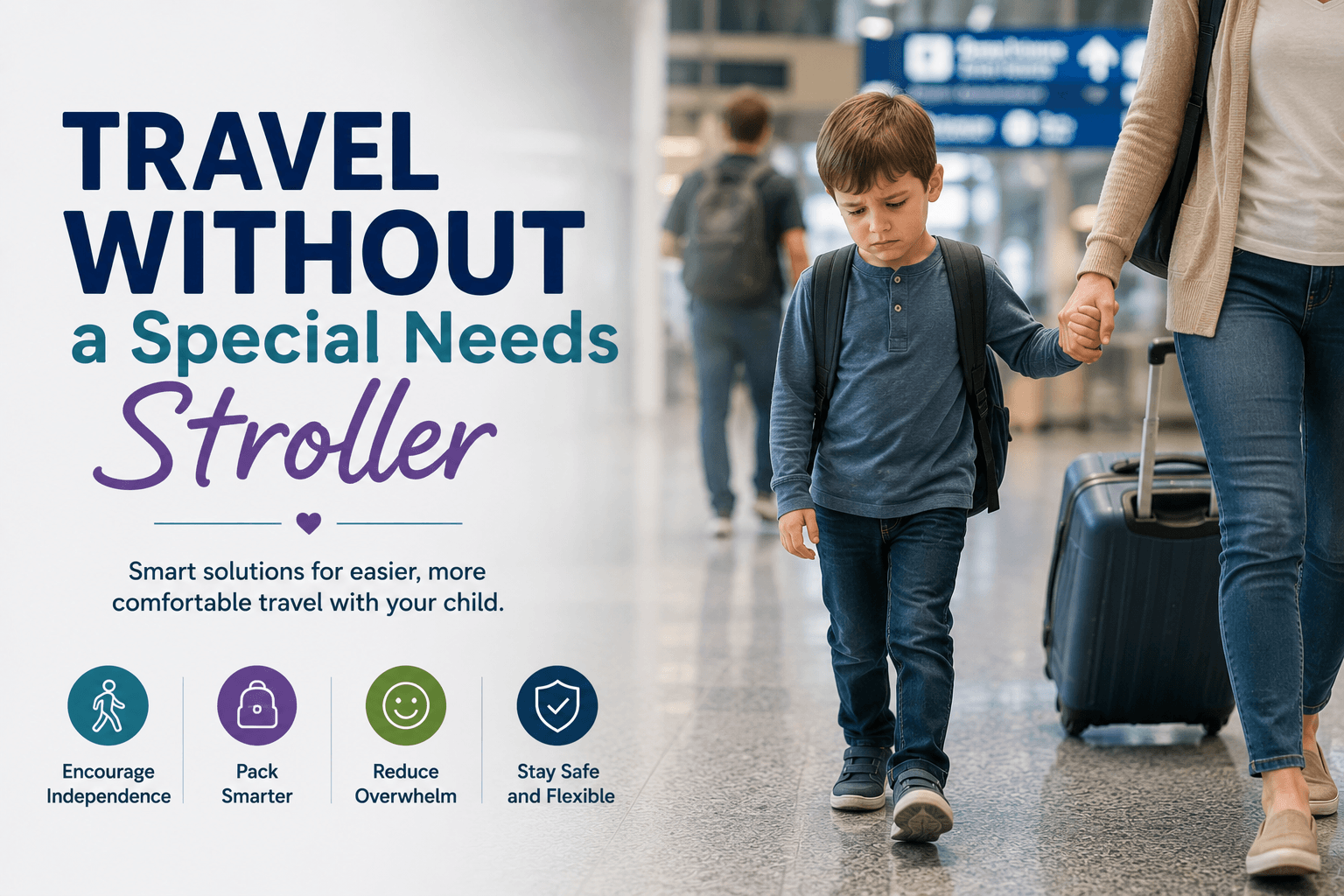
Taking a child with mobility challenges through an airport, onto public transit, or on a long walking day can quickly become overwhelming. Without the right support, even simple outings turn into exhausting logistical puzzles. eSpecial Needs helps families and school professionals understand exactly why special needs strollers matter and what happens when you try to travel without one.
This article covers the real world challenges you may face when traveling without an adaptive stroller. From fatigue and safety concerns to positioning problems, you'll learn how special needs strollers differ from regular strollers and why those differences are so important.
Key Takeaways: Travel Without a Special Needs Stroller What Gets Hard
- Airports, public transit, and all day walking create unique fatigue and positioning risks for children with mobility needs.
- Special needs strollers offer postural support, secure restraints, and comfort features that standard strollers cannot match.
- Regular strollers often lack head, trunk, and pelvic support required to prevent discomfort or injury during long outings.
- eSpecial Needs offers adaptive strollers designed to reduce strain on both children and caregivers during travel.
- Proper positioning equipment helps children participate more safely and comfortably in school trips and community activities.
Why Airports Are Especially Challenging Without a Special Needs Stroller
Airports demand long walking distances, extended wait times, and constant transitions between security, gates, and boarding areas. For a child with mobility challenges, this environment quickly becomes exhausting and disorienting.
A standard stroller often fails to keep the child positioned safely during these transitions. Without proper head and trunk support, children may slump or slide, increasing fatigue and discomfort. This makes gate to gate navigation far more difficult for everyone involved.
According to an MMGY Global study, 86% of travelers with mobility needs have faced airport challenges, including extended wait times for assistance. The right adaptive stroller can reduce these struggles by keeping your child secure and comfortable.
Public Transit Mobility Risks Without Adaptive Support
Buses, trains, and subways present a different set of obstacles. Sudden stops, crowded platforms, and limited space all create risks for children who need extra stability.
Standard strollers are not designed for secure positioning during these unpredictable movements. A child without proper pelvic and trunk support may shift position with each jolt, potentially causing discomfort or even injury over time.
Adaptive strollers address these issues with secure five-point harnesses, reinforced frames, and adjustable support systems. These features keep children safely positioned even when the transit environment is less than predictable.
Long Walking Days and the Toll They Take
Field trips, zoo visits, or theme park outings often involve hours of walking. For children with mobility challenges, this duration creates both physical and positioning fatigue that standard strollers simply cannot address.
Without tilt-in-space features or adjustable recline, a child may experience pressure buildup in certain areas. This can lead to discomfort, skin issues, and reduced participation in activities.
Special needs strollers from eSpecial Needs include positioning features that allow you to adjust the seating angle throughout the day. This helps manage fatigue and keeps the child comfortable during longer outings.
How Special Needs Strollers Differ from Regular Strollers
Regular strollers are built for children who can sit upright independently and have typical muscle tone. They lack the structural support that children with special needs require for safe, comfortable travel. Special needs strollers include adjustable head, trunk, and pelvic supports that maintain proper alignment. They also offer recline and tilt options that regular strollers do not have.
Many adaptive models are crash-tested to WC-19 standards, allowing them to be used safely in vehicles as transit seats. Standard strollers cannot meet these safety requirements.
Key Feature Differences at a Glance
Regular strollers typically have basic padding and a single seating position. Special needs strollers feature customizable postural supports, secure harness systems, and terrain ready wheels.
Adaptive strollers also accommodate medical equipment like oxygen tanks or ventilators. This functionality is essential for children who need ongoing medical support during outings.
Special Tomato EIO Stroller Push Chair - Adaptive Stroller
$921.50
$2,062.05
The Special Tomato EIO Stroller Push Chair is a lightweight adaptive stroller designed to provide comfortable mobility and positioning support from early intervention through preadolescence. Built for children who need more support than a standard stroller, the EIO combines everyday… read more

Positioning and Restraint: Why They Matter During Travel
Proper positioning prevents secondary complications such as muscle shortening, pressure sores, and spinal misalignment. During travel, maintaining this positioning becomes even more critical due to extended sitting periods.
Regular strollers do not offer the secure restraint systems needed to keep a child with special needs safely positioned. Without a proper five point harness and pelvic support, children can slide forward or to the side.
eSpecial Needs carries strollers with adjustable positioning belts and support cushions designed to maintain alignment throughout your journey. These features reduce strain on both the child and caregiver.
What School Therapists Should Know About Travel Mobility
For occupational therapists and physical therapists working in K-12 settings, understanding travel mobility challenges helps you better support students during field trips and community outings. A student who uses a standard stroller may experience positioning breakdown during a long school outing. This can affect their comfort, participation, and even their ability to focus once the activity begins.
Recommending an adaptive stroller with proper postural support ensures students can participate more fully in educational experiences outside the classroom. This equipment becomes part of the student's mobility plan, not just an afterthought.
Making Travel Accessible with the Right Equipment
Traveling without a special needs stroller creates real challenges at every turn from airport terminals to all day field trips. The fatigue, positioning risks, and safety concerns add up quickly when you're relying on equipment that wasn't designed for your child's needs.
An adaptive stroller addresses these issues by offering the postural support, secure restraints, and comfort features that standard strollers lack. For families and school professionals, choosing the right stroller means choosing better participation and reduced strain during travel.
eSpecial Needs offers a range of special needs strollers designed to make travel more accessible. Explore your options and find the right fit for your child's unique mobility requirements.
FAQs
Why is traveling without a special needs stroller difficult?
Traveling without a special needs stroller can be difficult because airports, public transit, theme parks, field trips, museums, zoos, and long walking days often require more endurance, positioning support, and safety than a standard stroller or walking alone can provide. Children with mobility challenges may fatigue quickly, become uncomfortable, slump, slide, or need caregiver support throughout the trip.
What is a special needs stroller?
A special needs stroller is an adaptive mobility stroller designed for children, teens, or larger users who need more support than a standard stroller provides. It may include postural support, a stronger frame, higher weight capacity, harnesses, adjustable footrests, recline, tilt, head support, trunk support, and accessories for comfort and safety.
How is a special needs stroller different from a regular stroller?
A regular stroller is usually designed for infants and toddlers who need basic transportation. A special needs stroller is designed for children with disabilities, mobility limitations, low tone, fatigue, positioning needs, sensory needs, or safety concerns. It provides more support, durability, and adjustability than a standard stroller.
Why are airports challenging without a special needs stroller?
Airports often involve long walking distances, security lines, crowds, noise, gate changes, boarding delays, and transitions between terminals. Without a special needs stroller, a child with mobility or sensory challenges may become physically tired, overwhelmed, uncomfortable, or difficult to support safely.
Can I bring a special needs stroller through airport security?
In many cases, families can bring a medically necessary stroller or adaptive stroller through airport security and to the gate, but procedures may vary. Contact the airline and airport before travel, explain the child’s mobility needs, and ask about screening, gate-checking, and stroller-as-mobility-device policies.
Can a special needs stroller be gate checked?
Many airlines allow strollers and mobility devices to be gate checked, but policies can vary by airline, aircraft, and stroller size. Families should contact the airline ahead of time, ask how adaptive strollers are handled, and request written confirmation when possible.
Is a special needs stroller considered medical equipment?
A special needs stroller may be considered mobility or medical equipment when it is used because of a child’s disability, mobility limitation, positioning need, or medical condition. Airline and venue policies vary, so caregivers should confirm requirements before travel.
Should I label my adaptive stroller before flying?
Yes. Label the stroller with the child’s name, caregiver contact information, destination, and any important handling notes. It may also help to bring photos of the stroller, product information, and a short letter explaining why the stroller is medically necessary.
What documents should I bring when traveling with a special needs stroller?
Helpful documents may include a doctor’s note, letter of medical necessity, equipment information, airline confirmation, stroller dimensions, emergency contacts, medication list, diagnosis information if needed, and copies of accommodation requests.
Can a regular stroller work for a child with special needs?
A regular stroller may work for some children with mild support needs, but it may not be enough for children who need postural support, secure positioning, higher weight capacity, head support, trunk support, foot positioning, recline, or all-day comfort. If the child slumps, slides, fatigues, or appears uncomfortable, a special needs stroller may be more appropriate.
What are the risks of using a regular stroller for travel?
Risks may include poor posture, sliding, discomfort, fatigue, pressure buildup, lack of trunk support, poor foot positioning, unsafe movement, inadequate harnessing, and caregiver strain. Standard strollers may also be too small or not durable enough for older children or longer outings.
Why does positioning matter during travel?
Positioning matters because a child may spend hours seated during travel days. Poor positioning can cause discomfort, fatigue, sliding, pain, pressure areas, reduced participation, and increased caregiver assistance. Proper support can help the child remain safer and more comfortable.
What stroller features help with travel fatigue?
Helpful travel features may include recline, tilt-in-space, padded seating, head support, lateral trunk support, adjustable footrests, strong harnessing, sun canopy, storage, all-terrain wheels, lightweight folding, and higher weight capacity.
What is tilt-in-space on a special needs stroller?
Tilt-in-space allows the seat angle to change while keeping the child’s body supported. It can help with rest, pressure relief, fatigue management, positioning, and comfort during long outings.
What is recline on a special needs stroller?
Recline changes the angle of the backrest. It may help a child rest, relax, or tolerate longer travel days. Recline can be useful for children who fatigue easily or need a more relaxed position during breaks.
Is tilt or recline better for travel?
The best choice depends on the child’s needs. Tilt-in-space may be better for postural support and pressure management, while recline may be helpful for rest. Some children benefit from both. A therapist or adaptive equipment specialist can help determine the best option.
Why are harnesses important in special needs strollers?
Harnesses help keep the child safely positioned. A five-point harness or positioning belt may reduce sliding, leaning, unsafe movement, and caregiver worry during travel, crowds, transitions, and uneven surfaces.
What is the best stroller for airport travel?
The best stroller for airport travel is one that fits the child properly, folds as needed, provides enough support, is manageable for caregivers, and meets airline or airport requirements. Important features include comfort, support, durability, maneuverability, and easy transport.
What is the best stroller for theme parks?
A good theme park stroller should provide all-day comfort, shade, storage, postural support, secure harnessing, easy maneuverability, and room for growth. Families should also check stroller size rules and accessibility policies before visiting.
Can special needs strollers be used at Disney or theme parks?
Many families use special needs strollers at Disney and other theme parks. Some parks may allow a stroller to be used as a wheelchair when approved. Always check current park rules, size limits, and disability accommodation policies before travel.
What is a stroller-as-wheelchair tag?
A stroller-as-wheelchair tag or accommodation allows a medically necessary stroller to be used in areas where standard strollers may not usually be allowed. Rules vary by venue, so families should ask guest services or accessibility staff before arrival.
Can special needs strollers help with sensory overload while traveling?
Yes. A special needs stroller can provide a familiar, secure, and supported space during busy travel environments. Features such as a canopy, supportive seating, and consistent positioning can help some children feel more regulated in airports, crowds, or noisy places.
Can special needs strollers help children who elope or wander?
Yes. For children who elope, wander, or have poor safety awareness, a special needs stroller can provide a safer place during busy travel days. It should still be used with close adult supervision and a broader safety plan.
What should I pack for travel with a child who uses a special needs stroller?
Helpful items may include medical documents, stroller tags, repair tools, extra straps if applicable, wipes, medications, snacks, water, sensory tools, communication supports, sun protection, rain cover, comfort items, headphones, visual schedule, and emergency contacts.
How can I protect a special needs stroller during air travel?
Ask the airline about gate-check procedures, use a protective travel bag if available, remove loose accessories, label the stroller clearly, take photos before handing it over, and document any damage immediately after return.
Can public transit be hard without a special needs stroller?
Yes. Buses, trains, and subways may involve sudden stops, crowded spaces, narrow aisles, steps, platforms, and limited seating. A child without proper support may shift, slump, fatigue, or become unsafe during unpredictable movement.
What stroller features help on public transit?
Helpful features include strong brakes, secure harnessing, compact size, durable frame, caregiver control, stable wheels, proper positioning, and easy maneuverability. Caregivers should also consider whether the stroller can safely navigate ramps, platforms, and tight spaces.
Are special needs strollers useful for school field trips?
Yes. Special needs strollers can help students participate in field trips, zoo visits, museums, parks, and community outings when walking long distances is difficult. They may support mobility, positioning, fatigue management, and safety.
What should school therapists know about travel mobility?
School therapists should consider the student’s endurance, posture, safety awareness, transfer needs, terrain, transportation, field trip duration, staff support, and whether adaptive mobility equipment is needed for participation.
Can a special needs stroller help a child participate more in outings?
Yes. When a child is properly supported, they may be able to stay engaged longer, conserve energy, reduce discomfort, and participate more fully in family trips, school activities, community events, and recreational outings.
How do I know if my child needs a special needs stroller for travel?
Your child may need a special needs stroller if they fatigue quickly, cannot walk long distances, need trunk or head support, slump in standard strollers, elope, have poor safety awareness, experience sensory overload, or require a safe rest space during outings.
What are signs a regular stroller is no longer enough?
Signs include the child exceeding the stroller’s weight or height limit, slouching, sliding, dangling legs, discomfort, poor posture, unsafe movement, broken frame strain, lack of foot support, or caregiver difficulty pushing and managing the stroller.
Can older children use special needs strollers?
Yes. Many special needs strollers are designed for older children, teens, and larger users. They often have higher weight capacities, wider seats, taller backs, stronger frames, and more supportive positioning features than standard strollers.
Are special needs strollers only for children who cannot walk?
No. Some children can walk but still need a special needs stroller for long distances, fatigue, safety, sensory regulation, elopement risk, pain, low endurance, or crowded environments.
What conditions may require a special needs stroller for travel?
A special needs stroller may be helpful for children with cerebral palsy, autism, muscular dystrophy, spina bifida, developmental delays, low muscle tone, seizure disorders, genetic conditions, mobility limitations, neurological conditions, or significant fatigue.
Can a child with autism benefit from a special needs stroller during travel?
Yes. Some autistic children benefit from a special needs stroller because it provides safety, structure, sensory regulation, fatigue support, and a familiar place to rest during overwhelming travel environments.
Can a child with cerebral palsy benefit from a special needs stroller during travel?
Yes. Children with cerebral palsy may benefit from postural support, head support, trunk support, foot positioning, recline, tilt, and fatigue management during long travel days.
Can a special needs stroller reduce caregiver strain?
Yes. A properly fitted stroller can reduce carrying, lifting, repositioning, and physical fatigue for caregivers. It can also make transitions, long walking days, and public outings easier to manage.
What stroller accessories are helpful for travel?
Helpful accessories may include sun canopy, rain cover, storage basket, tray, head support, lateral supports, foot straps, harness pads, cup holder, medical equipment holder, stroller bag, and sensory comfort items.
How do I choose the right special needs stroller for travel?
Consider the child’s height, weight, posture, trunk control, head control, endurance, sensory needs, safety awareness, and travel environment. Also compare stroller weight, fold size, wheel type, support features, accessories, and transportation requirements.
Should I work with a therapist before buying a travel stroller?
Yes, whenever possible. An occupational therapist, physical therapist, or adaptive equipment specialist can help determine the child’s positioning needs, stroller size, support features, and travel-related safety considerations.
Can insurance cover a special needs stroller?
Some special needs strollers may be covered by insurance, Medicaid, waiver programs, or other funding sources when medically necessary. Documentation may include a prescription, letter of medical necessity, therapy evaluation, product quote, and prior authorization.
What is a letter of medical necessity for a special needs stroller?
A letter of medical necessity explains why the stroller is needed for mobility, safety, positioning, fatigue management, or daily participation. It should include diagnosis, functional limitations, requested stroller, expected benefits, and why a standard stroller is not sufficient.
Can schools purchase special needs strollers?
Yes. Schools may purchase special needs strollers for field trips, transportation, therapy, mobility support, and community participation when equipment is needed for student safety and access. Purchase orders may be used for school procurement.
Where can I buy special needs strollers for travel?
Families should choose an adaptive equipment supplier that understands stroller sizing, positioning, accessories, funding documentation, and travel needs. A specialized supplier can help compare models and request quotes.
How can eSpecial Needs help with travel mobility?
eSpecial Needs offers special needs strollers, adaptive strollers, stroller accessories, mobility equipment, and expert quote support for families, caregivers, schools, and therapists. Families can compare options and find stroller solutions that support safer, more comfortable travel.