Table of Contents
- What Are Grab Bars and Rails?
- Why Bathroom Grab Bars Matter
- Suction Cup Grab Bars for Balance Assistance
- Bathtub Safety Rails
- Pivoting Grab Bars
- Floor to Ceiling Support Poles
- Where Wall Bars and Rails Can Be Used
- Choosing the Right Grab Bar or Rail
- Installation and Safety Tips
- Grab Bars for Caregiver Support
- Shop Grab Bars and Rails at eSpecial Needs
- FAQs
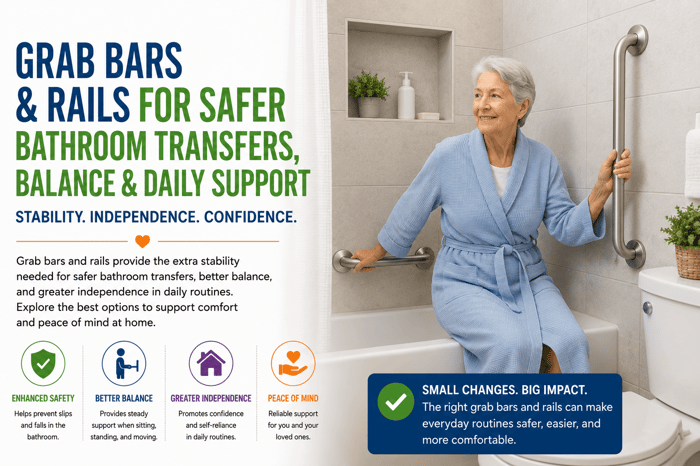
Grab bars and rails can help make bathrooms, bedrooms, hallways, and daily living spaces safer for individuals who need extra balance, stability, or transfer support. For children, adults, seniors, and individuals with special needs or disabilities, a well placed grab bar can provide a secure handhold during routines that may otherwise feel difficult or unsafe.
Bathrooms are one of the most common areas where extra support is needed. Wet floors, tubs, showers, toilets, and limited space can increase fall risk. Grab bars and safety rails can help users steady themselves, move from sitting to standing, step in and out of a tub, or maintain balance during personal care routines.
At eSpecial Needs, the Grab Bars and Rails collection includes supportive bathroom safety products and transfer aids designed to improve accessibility, reduce caregiver strain, and support greater independence.
What Are Grab Bars and Rails?
Grab bars and rails are support devices that provide a stable place to hold during transfers, standing, walking, bathing, toileting, or repositioning. They may be mounted to a wall, attached near a bathtub, secured with suction cups, or installed as a floor to ceiling pole depending on the product.
Grab bars and rails may help with:
Bathroom balance support
Shower safety
Bathtub transfers
Toilet transfers
Standing support
Sit to stand movement
Fall risk reduction
Caregiver assistance
Home accessibility
Daily living independence
The right product depends on the user’s strength, balance, transfer needs, bathroom layout, and whether permanent or temporary support is preferred.
Why Bathroom Grab Bars Matter
Bathroom routines often require a person to shift weight, turn, step, bend, stand, or transfer on surfaces that may be wet or slippery. A grab bar gives the user a dependable handhold during these moments.
Grab bars may be useful for individuals with:
Limited mobility
Poor balance
Weakness
Arthritis
Neurological conditions
Developmental disabilities
Recovery after surgery or injury
Aging related mobility changes
Need for caregiver assisted transfers
Difficulty stepping into tubs or showers
A grab bar does not replace supervision, professional transfer training, or a safe bathroom layout, but it can be an important part of a safer support plan.
Suction Cup Grab Bars for Balance Assistance
Adjustable Suction Cup Grab Bars can be useful when a user needs temporary balance assistance in the bathroom or while traveling. These grab bars use large rubber suction cups to attach to suitable smooth surfaces and can provide added support when entering or exiting the shower area.
Suction cup grab bars are helpful because they do not require permanent installation. However, they should be used only as a balance assist, not as a full weight bearing transfer device. Always check the suction before each use and follow product instructions carefully.
Best for:
Temporary bathroom support
Travel
Balance assistance
Smooth shower or tub surfaces
Non permanent setup needs
Bathtub Safety Rails
A bathtub safety rail can help users who need a stable handhold when stepping in or out of the tub. The Height Adjustable Bathtub Safety Rail Grab Bar is designed to attach to the side of the tub and provide added support during bathtub entry and exit.
Bathtub rails may be helpful for people who have difficulty lifting one leg over the tub wall, maintaining balance, or transitioning between standing and bathing positions.
Best for:
Bathtub transfers
Bathroom safety
Users who need a tub side handhold
Homes without walk in showers
Caregiver supported bathing routines
Pivoting Grab Bars
The Curve Grab Bar provides a space saving support option that pivots and locks against the wall when not in use. It includes four hand grips and five locking positions, helping users pull themselves up from sitting and maintain stability in the bathroom.
A pivoting grab bar can be helpful when a fixed straight grab bar does not provide the best angle or when the bathroom needs a support that moves out of the way after use.
Best for:
Sit to stand support
Small bathrooms
Toilet or bathroom transfers
Users who need multiple grip positions
Spaces where fold away support is helpful
Floor to Ceiling Support Poles
A floor to ceiling support pole can provide a vertical handhold in areas where wall mounted grab bars may not be enough or may not be positioned correctly. The HealthCraft SuperPole With SuperBar offers support that can be configured for different transfer styles, spaces, and user needs.
This type of support may be useful near beds, chairs, toilets, or other transfer points where a user needs help moving from sitting to standing or repositioning.
Best for:
Sit to stand transfers
Bedroom support
Bathroom support
Transfer assistance
Adjustable handhold placement
Users who need support in more than one direction
Where Wall Bars and Rails Can Be Used
Wall bars and rails are commonly used in bathrooms, but they may also be helpful in other areas of the home or care environment. The placement should match the user’s daily routine and the moments when support is needed most.
Common locations include:
Shower walls
Bathtub areas
Next to toilets
Near bathroom sinks
Beside beds
Near chairs
Hallways
Entry areas
Therapy spaces
Care rooms
For additional bathroom support, browse Bathroom Safety, Bathing and Toileting, Shower Chairs, Bath Chairs, Toilet Seats, and Commodes.
Choosing the Right Grab Bar or Rail
The best grab bar depends on how and where the user needs support. A person who needs help stepping into a tub may need a bathtub safety rail. Someone who needs balance support in the shower may use a properly installed wall bar or suitable suction cup balance assist. A person who needs help standing from a toilet, bed, or chair may benefit from a pivoting grab bar or support pole.
Before choosing, consider:
User height and weight
Strength and balance
Transfer needs
Bathroom layout
Wall structure
Tub or shower type
Need for permanent or temporary installation
Whether the device is weight bearing or balance assist only
Caregiver assistance needs
Cleaning and moisture resistance
Product weight capacity
Professional installation needs
For complex needs, an occupational therapist, physical therapist, contractor, or accessibility professional can help recommend placement and product type.
Installation and Safety Tips
These bars & rails must be installed and used correctly. A poorly installed grab bar may create a false sense of security and increase risk.
Helpful safety tips include:
Follow manufacturer installation instructions
Confirm weight limits before use
Install wall mounted bars into appropriate structural support
Check suction bars before every use
Do not use balance assist products for full weight bearing transfers
Inspect hardware regularly
Keep wet floors dry when possible
Pair grab bars with non slip mats when appropriate
Keep paths clear
Replace damaged products immediately
Ask a professional if installation is uncertain
Bathroom safety may also improve when grab bars are combined with Bath Mats, Transfer Aids, Daily Living Aids, and Home Safety Products.
Grab Bars for Caregiver Support
These do not only help the person using them. They can also help caregivers by making transfers more controlled and predictable. When a user has a stable handhold, caregivers may be able to assist with less strain and better body mechanics.
Caregiver support may include:
Easier bathroom transfers
Improved standing support
Safer bathing routines
Better toileting support
More confidence during personal care
Reduced need to physically lift or steady the user
Caregivers should still use safe transfer techniques and follow professional guidance when helping with mobility or personal care.
Shop Grab Bars and Rails at eSpecial Needs
The Grab Bars and Rails collection at eSpecial Needs includes bathroom safety rails, suction cup grab bars, bathtub grab bars, pivoting grab bars, and floor to ceiling support poles for individuals who need extra stability during daily routines.
You can also explore related categories, including Bathroom Safety, Bathing and Toileting, Daily Living Aids, Transfer Aids, Home Safety, and Mobility.
FAQs
What is the difference between a grab bar and a safety rail?
A grab bar is usually a fixed handhold installed on or near a wall, tub, shower, or toilet. A safety rail may refer to a broader support product, such as a bathtub rail, transfer rail, or floor to ceiling support pole. Both are designed to help with balance, stability, and safer movement.
Where should grab bars be placed in a bathroom?
Grab bars are commonly placed near the toilet, inside the shower, beside the bathtub, near the bathroom entrance, or anywhere the user needs help standing, turning, stepping, or transferring. Placement should match the user’s routine and the direction they naturally reach for support.
What is the best grab bar for a bathtub?
The best bathtub grab bar depends on the tub style and the user’s transfer needs. A tub mounted safety rail may help users step in and out of the tub, while wall mounted grab bars may support standing balance inside or near the bathing area.
What is the best grab bar for a shower?
A shower grab bar should provide secure support where the user needs help standing, turning, or entering the shower. Wall mounted grab bars are often preferred for stronger support, while suction options may be used only for light balance assistance when appropriate.
Do grab bars need to be installed into wall studs?
Many wall mounted grab bars must be installed into secure structural support, such as wall studs or appropriate blocking, depending on the product and wall type. Improper installation can make a grab bar unsafe, so professional installation may be needed.
How do I know if a grab bar is strong enough?
Check the product’s weight capacity, installation requirements, mounting method, and intended use. A grab bar used for full transfer support must be designed and installed for that purpose. Balance assist products should not be used as weight bearing supports.
Can grab bars be used outside the bathroom?
Yes. Grab bars and rails can also be helpful near beds, chairs, hallways, entryways, therapy spaces, or any area where a user needs extra support for standing, walking, or transfers.
Where can I buy grab bars and rails?
You can shop Grab Bars and Rails at eSpecial Needs. You can also browse Bathroom Safety, Bathing and Toileting, Transfer Aids, Daily Living Aids, and Home Safety.